Ethiopia Teeters on the Brink of Collapse
By Yemane Abselom
https://redseabeacon.com/ethiopia-teete ... -collapse/
November 9, 2025
Ethiopia stands at the edge of disintegration—undermined by interlocking crises of war, corruption, ethnic division, and economic decay. Once celebrated as Africa’s rising star, the nation is now haunted by its own history and by the failures of its current leadership.
An Empire Built on Conquest
Ethiopia Teeters on the Brink of Collapse
By Yemane Abselom
https://redseabeacon.com/ethiopia-teete ... -collapse/
November 9, 2025
Ethiopia stands at the edge of disintegration—undermined by interlocking crises of war, corruption, ethnic division, and economic decay. Once celebrated as Africa’s rising star, the nation is now haunted by its own history and by the failures of its current leadership.
An Empire Built on Conquest
Ethiopia’s modern history is deeply rooted in imperial conquest and forced unification. Emperor
Menelik II, often hailed as the “
father of modern Ethiopia,” expanded his Shoan kingdom through brutal military campaigns, supported by European powers and their modern weaponry. His forces massacred civilians, enslaved captives, and extracted gold, ivory, and slaves from conquered peoples. This “
unification” was, in truth, an internal colonization that sowed deep resentment among Ethiopia’s many ethnic groups—a resentment that still fuels the country’s instability today.
Cycles of Ethnic Favoritism and Repression
Each successive ruler, inherited and reinforced this cycle of ethnic domination. Emperor
Haile Selassie favored his Amhara kin, elevating them in education, government, and the military, while marginalizing others. The resentment this created, set the stage for later revolutions.
Colonel
Mengistu Hailemariam, though hailing from a minority background, continued the pattern of centralization and violence. His regime waged a catastrophic war against Eritrea, consuming national resources and lives while famine devastated the countryside. The Live Aid famine of 1983–1985 remains a tragic symbol of a government, that prioritized war over human survival.
When the Tigray People’s Liberation Front (TPLF) and its EPRDF coalition seized power in 1991, they promised ethnic federalism and local autonomy. In practice, they entrenched Tigrayan dominance. Tigrayans—barely 5% of the population—occupied most senior political, military, and economic positions. Ethiopia fractured further along ethnic lines, creating a tinderbox of rival identities and grievances.
Abiy Ahmed: Hope Turned Disillusionment
When Abiy Ahmed Ali rose to power in 2018, many hoped he would transcend these divisions. His rhetoric of peace, unity, and reform won international praise and even a Nobel Peace Prize. But optimism quickly faded. Instead of dismantling the ethnic power structures of the past, Abiy replaced them with a new one favoring his own Oromo group—the largest in Ethiopia. Once again, the promise of national unity was sacrificed for ethnic dominance.
The result is a state where every major ethnic group distrusts the other and views political power as an opportunity to “
eat”, before being replaced by another. Ethiopia’s politics remain a zero-sum game, not a shared national project.
Multiple Wars, One Nation in Chaos
This ethnic tension exploded into open warfare. In November 2020, TPLF forces attacked the Ethiopian army’s Northern Command, igniting a devastating two-year war that killed over a million people and displaced millions more. Before that conflict even ended, fighting erupted in the Amhara region after the government attempted to disband regional special forces—leaving Oromia and Tigray’s forces largely intact. Now, the Amhara and Oromo regions, the two largest ethnic homelands, are engulfed in violence and rebellion.
As of June 2024, an estimated 4.5 million Ethiopians were internally displaced, their lives uprooted by conflict, drought, and insecurity. The central government’s control now extends barely beyond the capital, Addis Ababa.
Hiding Behind GDP Growth
Abiy Ahmed’s government boasts of GDP growth, pointing to new infrastructure and rising population figures. But beneath these numbers lies a hollow economy crippled by corruption, ethnic exclusion, and financial mismanagement.
In today’s Ethiopia, an Amhara investor cannot safely open a business in Oromia, and vice versa. Corruption permeates every level of bureaucracy—officials openly demand bribes for basic services like electricity and water. Confidence in the banking system has evaporated: in 2023–2024 alone, over 1.3 billion birr was lost to fraud across 28 banks. By 2025, another $56 million vanished in fraudulent transfers from the National Bank itself.
Inflation hovers near 30%, eroding savings and crushing household budgets. The Ethiopian birr has collapsed from 54 to 153 per U.S. dollar in just five years, destroying purchasing power and investor confidence alike.
Debt, Default, and Decline
Ethiopia’s external debt has ballooned to $33 billion, a sixfold increase since the early 2000s. The country officially defaulted on its Eurobond in December 2023, after failing to pay a $33 million coupon. With a “
Restricted Default” credit rating, Ethiopia is shut out from global capital markets. Wars, corruption, and debt have drained its reserves, leaving it unable to fund development or maintain stability.
Drought and Misplaced Priorities
Despite abundant fertile land, Ethiopia remains a nation of hunger and dependency. Large tracts of farmland have been leased to foreign investors, while millions of Ethiopians face recurring drought and famine. The government continues to spend scarce foreign currency on drones and missiles, as if war could substitute for governance.
The Port Distraction: A Dangerous Illusion
Instead of addressing Ethiopia’s internal collapse, Prime Minister Abiy Ahmed has found a convenient scapegoat: the lack of a “
sea port.” His administration now portrays port “
ownership” as the key to national revival—an absurd claim that masks his inability to govern effectively.
Ethiopia already enjoys full access to the sea through Djibouti, Berbera, and Port Sudan. It has never once been denied access to maritime trade. The issue is not access, but accountability—corruption, war, and mismanagement. Abiy’s fixation on port ownership is a diversion, meant to rally nationalist sentiment and deflect public anger from his failures. But it risks reigniting war with Eritrea, a war both nations can ill afford.
Conclusion: A Nation on the Edge
Prime Minister Abiy Ahmed was entrusted with uniting a fractured nation and steering it toward peace and prosperity. Instead, he has deepened Ethiopia’s divisions, bankrupted its finances, and squandered its international goodwill. His administration’s obsession with port ownership is not a vision—it is a smokescreen, a desperate attempt to distract from a collapsing state.
Unless Ethiopia confronts its real problems—ethnic fragmentation, corruption, inflation, war, and institutional decay—it will soon become a failed state in both form and function. Abiy Ahmed’s refusal to face reality, and his reliance on empty symbolism, could push Ethiopia past the point of return. The question is no longer whether Ethiopia will survive as a unified state—but whether its leaders still care enough to save it.
______________
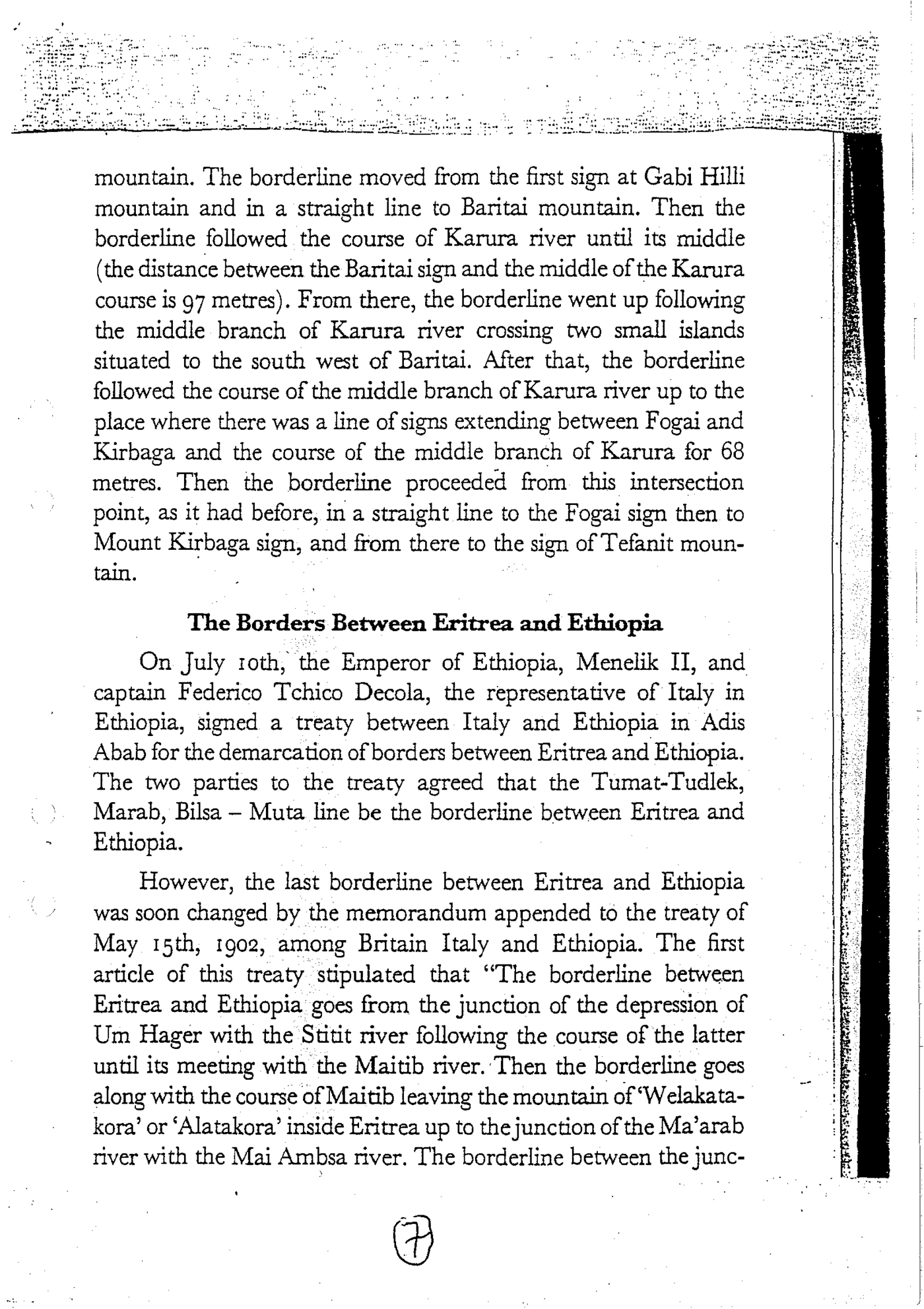

 Documents signed between Menelik II and Italy and Britain:
The Borders Between Eritrea and Ethiopia
Documents signed between Menelik II and Italy and Britain:
The Borders Between Eritrea and Ethiopia
On July 10th 1900,· the Emperor of Ethiopia,
Menelik II, and captain
Federico Tchico Decola, the representative of Italy in Ethiopia, signed a treaty between Italy and Ethiopia in Addis Ababa for the demarcation of borders between Eritrea and Ethiopia. The two parties to the treaty agreed that the Tumat-Tudlek, Marab, Bilsa - Muta line be the borderline between Eritrea and Ethiopia.
However, the last borderline between Eritrea and Ethiopia was soon changed by the memorandum appended to the treaty of May 15th, 1902, among Britain, Italy and Ethiopia. The first article of this treaty stipulated that
The borderline between Eritrea and Ethiopia goes from the junction of the depression of Um Hager with the Setitit river following the course of the latter, until its meeting with the Maitib river. Then the borderline goes along with the course of Maitib leaving the mountain of 'W elakatakora' or 'Alatakora' inside Eritrea up to the junction of the Ma'arab river with the Mai Ambsa river. The borderline between the junction of Setit and Maitib and the junction of Ma'arab and Mai Ambessa will be left up to Italian and Ethiopian delegates to determine, provided the Kunama tribe stay within Eritrean territory.
On May 16th, 1908, Menelik II and the representative of the Italian government in Addis Ababa,
Guiseppe Coli de Felesiano, signed a treaty between Italy and Ethiopia for the demarcation of borders between the colony of Eritrea and Ethiopia; The first article of this treaty stipulated that:
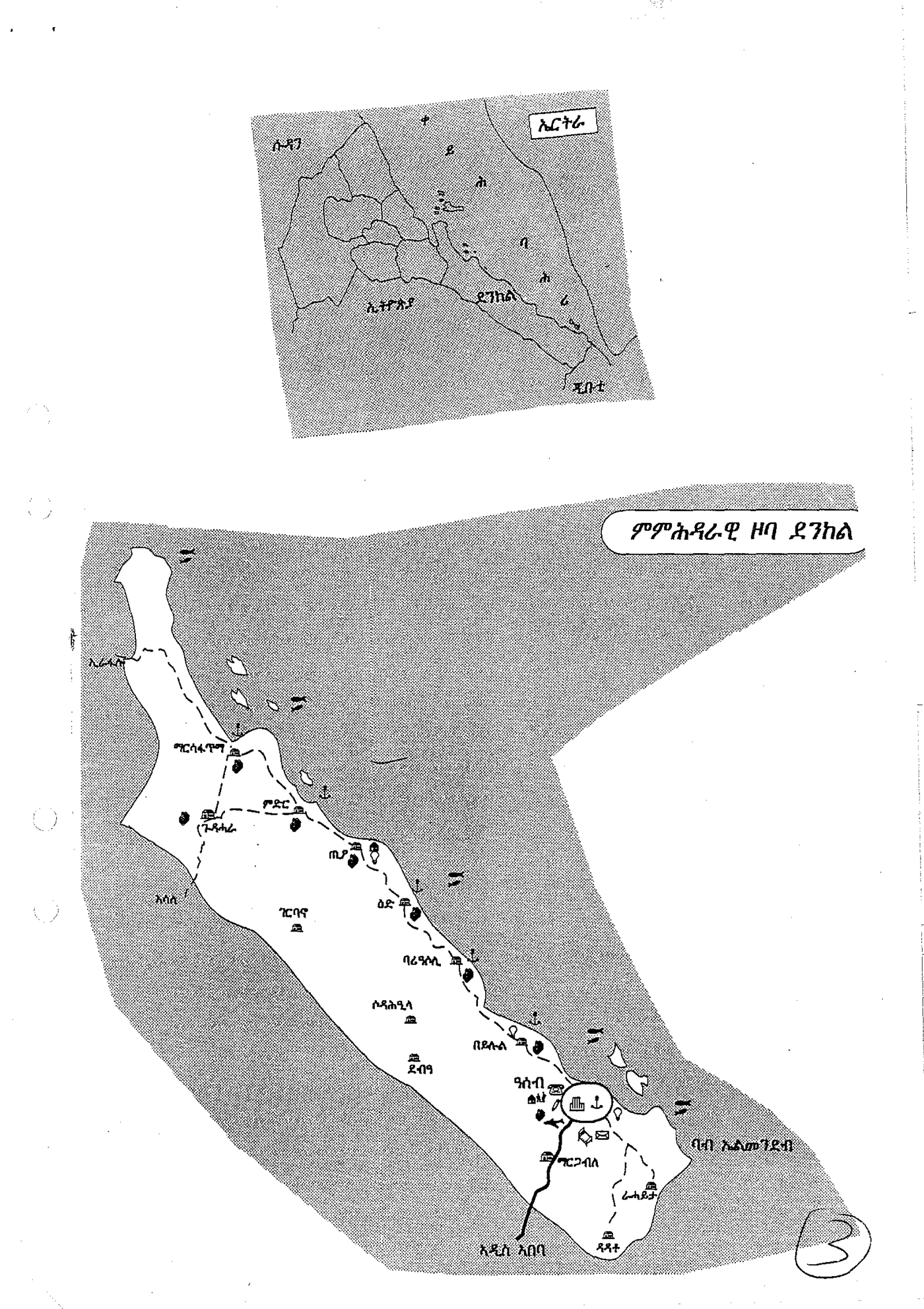
the borderline between the colony of Eritrea and the Tigrai province go from the furthest point east of Muta river south east ward in a direction parallel to the coast and sixty kilometers away from it, until it met the borders of French possessions in Somali-land [today's Djibouti].

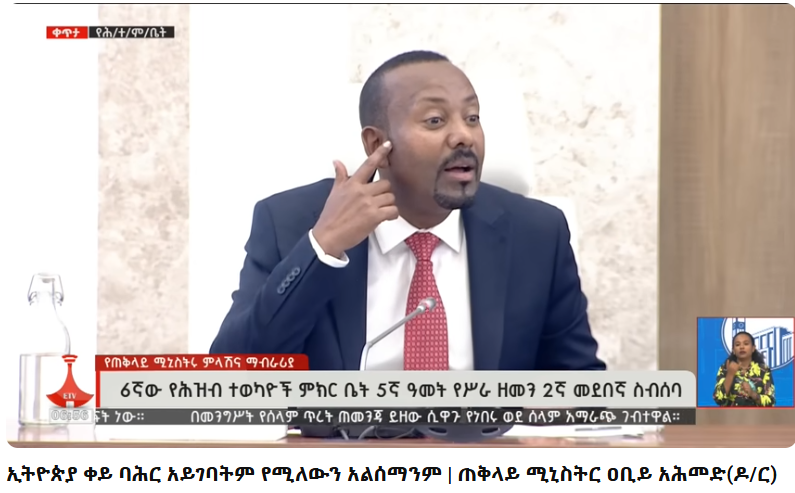
 A coordinated teachers’ strike over unpaid salaries has begun across much of Sidama, Arsi, Benishangul Gumuz, and several other regions in Ethiopia.