Re: ልምዓታዊ ንጥፈታት ዞባ ደቡባዊ ቀይሕ ባሕሪ - መደብ ህንጸትን ምዕባለን - ድምጺ ሓፋሽ ኤርትራ | Dimtsi Hafash Eritrea

Honored to meet w/ the new Minister of Education, H.E. Dr. Halima. Our discussion focused on Eritrea’s national education priorities as a cornerstone of development, & her insights shaped by a lifetime of service in the sector. @UNinEritrea is committed to continued partnership.
________
Youth Empowerment Program Registers Encouraging Outcomes
@shabait
20 Jan 2026

The youth empowerment program being implemented by the Youth Organization in Gash Barka Region is registering encouraging results, according to reports.
Mr. Marikos Ghirmatsion, Acting Head of the Regional Youth Organization, stated that youth empowerment initiatives in the region are being carried out through a range of vocational training programs alongside efforts to strengthen organizational capacity. He noted that the regional branch has been working in partnership with various stakeholders to organize vocational trainings and conduct awareness-raising campaigns.
The training programs include three- to six-month courses in First Aid, computer technology, beekeeping, beauty salon services, plumbing, editing, graphics, as well as dish and solar panel installation.
Mr. Marikos further reported that between 2022 and 2025, more than 2,300 young people—including 1,200 females—from the twelve sub-zones of Gash Barka Region successfully completed the training programs.
Beneficiary youth expressed satisfaction with the initiative, noting that the courses are offered at nominal fees and are yielding positive results. They called for the expansion of the programs in an organized and sustainable manner.
Re: ልምዓታዊ ንጥፈታት ዞባ ደቡባዊ ቀይሕ ባሕሪ - መደብ ህንጸትን ምዕባለን - ድምጺ ሓፋሽ ኤርትራ | Dimtsi Hafash Eritrea

Eritrea 's National Eye Hospital "Berhan Ayni" in Asmara successfully conducted a major eye care outreach from January 14–16, 2026, performing successful cataract surgeries on 357 citizens. Of these, 140 were treated at the hospital in Asmara, while 217 received care in the Loggo-Anseba sub-zone.


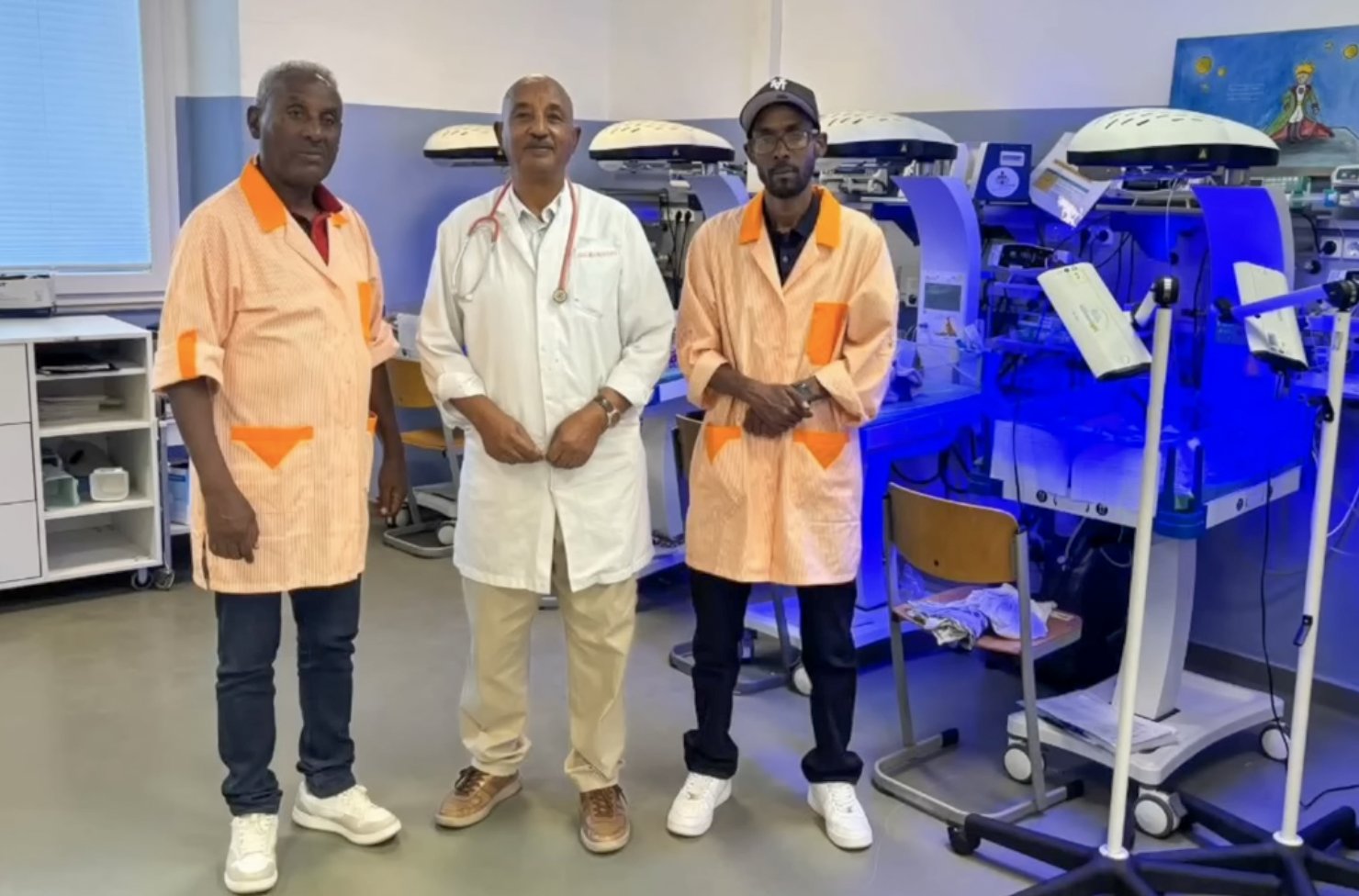
The Modern Maternity Wing at Orotta Hospital stands as a powerful affirmation of social justice and equitable healthcare services, in Eritrea.
This upgraded facility ensures advanced, accessible maternal and child health care for all citizens, reducing disparities and promoting dignity in reproductive health.
A true embodiment of Eritrea's commitment to inclusive, high-quality public health!
Re: ልምዓታዊ ንጥፈታት ዞባ ደቡባዊ ቀይሕ ባሕሪ - መደብ ህንጸትን ምዕባለን - ድምጺ ሓፋሽ ኤርትራ | Dimtsi Hafash Eritrea
__________

Opinion
Regional Vision: Cooperation Without Hierarchy — Moving the Horn of Africa Beyond Zero-Sum Thinking
By David Yeh
https://redseabeacon.com/regional-visio ... -thinking/
January 20, 2026
In a region long dominated by cycles of rivalry, shifting alliances, external intervention, and power based diplomacy, Eritrea has articulated a remarkably consistent, if often misunderstood vision for regional order: cooperation without hierarchy. This perspective challenges the dominant logic of the Horn of Africa, where political influence has traditionally been pursued through patronage networks, proxy conflicts, and the cultivation of client states. Eritrea’s approach imagines a regional landscape in which states interact as sovereign equals, unburdened by expectations of alignment, subordination, or ideological conformity. Even critics acknowledge, that this vision represents a departure from the patterns that have governed the area for decades.
At the heart of Eritrea’s philosophy, is the belief that sustainable peace and prosperity cannot emerge from systems of dominance. Whether rooted in military power, demographic size, or economic strength, hierarchical relations inevitably produce resentment, suspicion, and instability. Eritrea argues that the Horn of Africa must move beyond this historical cycle, if it is to achieve meaningful integration. Cooperation, from this standpoint, is not a concession imposed by stronger states or an obligation for weaker ones, but an organic process shaped by mutual benefit, respect for sovereignty, and recognition of distinct national paths. Trade should flow because it enhances prosperity, not because it cements dependency. Security cooperation should emerge from shared threats and responsibilities, not from one state’s desire to police or influence another. Integration should develop gradually, informed by local realities rather than external templates or geopolitical agendas.
This emphasis on sovereign equality explains why Eritrea has often maintained a posture of principled autonomy, even when participation in regional initiatives might have offered short term advantages. Eritrea’s historical engagement with the Intergovernmental Authority on Development (IGAD), a key East African bloc, illustrates this tendency. After withdrawing from IGAD in 2003 over disagreements about its mandate and instructions, Eritrea rejoined only to disengage again in late 2025, citing the organization’s failure to uphold its legal mandate or contribute meaningfully to regional stability. Asmara’s withdrawal underscores its unwillingness to be part of mechanisms it perceives as replicating hierarchical dynamics, rather than fostering genuine cooperation.
At the same time, Eritrea’s regional activities cannot be understood as isolationist. The 2018 Tripartite Agreement with Ethiopia and Somalia, for example, sought to promote political, economic, social, and security cooperation while affirming respect for independence, sovereignty, and territorial integrity. This arrangement was intended to build bridges among neighbors with very different political histories, pointing toward a framework of equal partnership rather than domination. Yet, when such arrangements falter or evolve into dynamics that seem to empower one state at another’s expense or marginalize Eritrea’s role, Asmara has made clear it will recalibrate its engagement reflecting not a rejection of cooperation, but a refusal to accept hierarchical patterns.
Eritrea’s stance stems from both experience and analytical conviction. Emerging from a long and costly struggle to reclaim independence from Ethiopia in 1991, the country views sovereignty as the foundational principle of national survival. The subsequent border war with Ethiopia from 1998 to 2000, followed by decades of tense relations, underscored for Eritrea the dangers of unresolved conflict and the corrosive effects of power struggles in the region. The Algiers Agreement of 2000 formally ended the war, but the mistrust it left in its wake took years to overcome and has lingered in bilateral dynamics. Eritrea’s experience with these violent ruptures informs its insistence that stability built on dominance whether military, political, or economic is inherently fragile.
At the same time, policy analysts note that Eritrea’s approach is not unique to its relations with Ethiopia but reflects a broader strategic pattern across the Horn. In Sudan, for instance, Eritrea has supported inclusive political settlements that respect unity and voluntary decentralization rather than encouraging fragmentation. In Somalia, Eritrea repeatedly called for Somali led reconciliation free from external engineering rather than pursuing opportunities to exploit state collapse for strategic gain. This underscores a pattern: Eritrea does not view regional politics as a contest of attrition where one state’s success inherently weakens another’s, but as a space where stability, sovereignty, and mutual respect are cumulative rather than competitive.
Yet, the contemporary context of the Horn complicates this vision. Ethiopia’s evolving foreign policy, shaped by its own internal conflicts and geopolitical ambitions, has had a significant impact on regional dynamics. Ethiopia’s pursuit of access to the Red Sea, a core element of its strategic autonomy given its landlocked status, has generated tensions with Eritrea, which views any attempt by its neighbor to secure a foothold on its coastal territory as a threat to its sovereignty. Addis Ababa’s 2024 memorandum of understanding with Somaliland, including a potential lease of Somaliland’s Berbera port, is part of this wider strategy, reflecting Ethiopia’s efforts to reshape its regional environment. These developments feed into broader regional recalibrations, as rising competition over access to maritime routes intersects with long‑standing rivalries.
The standoff over maritime access, also illustrates how zero sum thinking continues to shape rivalries in the Horn. Ethiopia frames ownership and access to sea routes as essential for its economic sovereignty, while Eritrea insists that coastal sovereignty is non – negotiable. Although Ethiopia’s prime minister has publicly said that he seeks peaceful resolution rather than conflict over Red Sea access, underlying tensions persist because of his conflicting narratives. These disputes, if mishandled, risk reverting regional cooperation back into logic dominated by competition and territorial leverage.
These geopolitical tensions are further complicated by domestic volatility in neighboring states like Ethiopia itself, where internal factional conflict in the Amhara, Oromo, Afar, and Tigray region has raised fears of renewed large – scale confrontation that could draw in neighboring military involvement and widen regional insecurity. In such an environment, Eritrea’s insistence on law based coexistence and strict respect for sovereignty resonates not as idealism, but as a cautious attempt to prevent local crises from escalating into multi state wars that devastate populations and destabilize entire economic zones.
The Horn’s future, whether dominated by renewed rivalries or a reimagined framework of regional partnership will depend on whether actors can transcend zero sum paradigms. Eritrea’s vision challenges the entrenched assumption, that a state must secure advantage at a neighbor’s expense. Instead, it posits that mutual respect for sovereignty, adherence to law based agreements, and equitable cooperation are not only ethical imperatives, but practical foundations for sustainable peace.
While Eritrea’s model may not provide immediate solutions to all conflicts in the region, it introduces an alternative logic. If neighboring states are willing to engage on equal terms recognizing each other’s sovereignty, respecting legal frameworks, and pursuing cooperation grounded in shared interests rather than dominance, the Horn of Africa can move beyond the cycles of antagonism that have too often defined its history. In a landscape historically overwhelmed by power struggles, this alternative logic offers a path not only toward stability, but toward a more dignified and sustainable regional order.
To conclude: Eritrea’s vision for the Horn of Africa cooperation without hierarchy offers a compelling alternative to the entrenched cycles of rivalry, domination, and zero-sum thinking that have long characterized the region. By insisting on equality among states, respect for sovereignty, and law-based engagement, Eritrea challenges both its neighbors and the international community to reconsider how stability and prosperity can be achieved. Eritrea’s model suggests that sustainable stability emerges not from power imbalances or short-term alliances, but from relationships built on mutual respect, predictable legal frameworks, and genuine cooperation. If the Horn of Africa embraces even elements of this vision, it could move toward a regional order where states interact as partners rather than adversaries, creating a foundation for enduring peace, economic growth, and regional dignity.