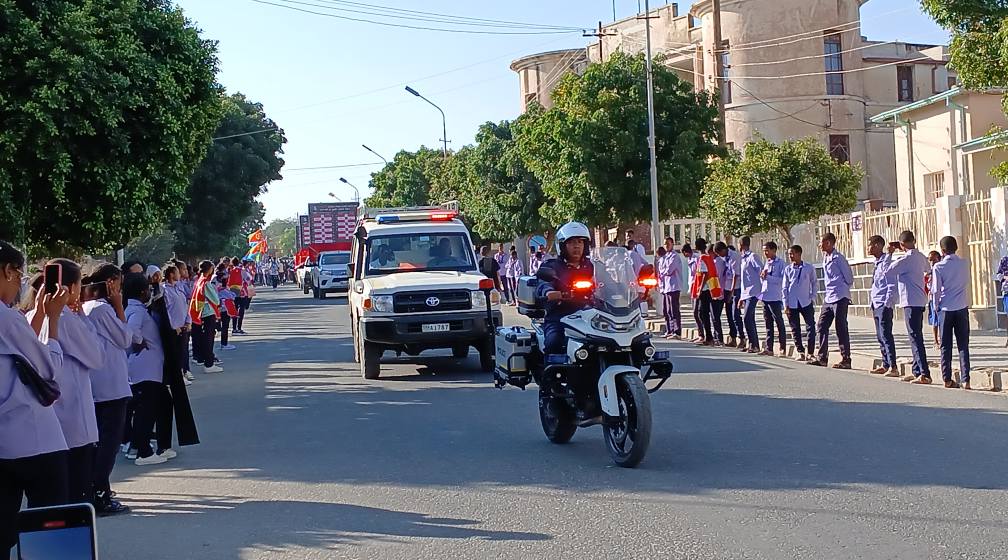
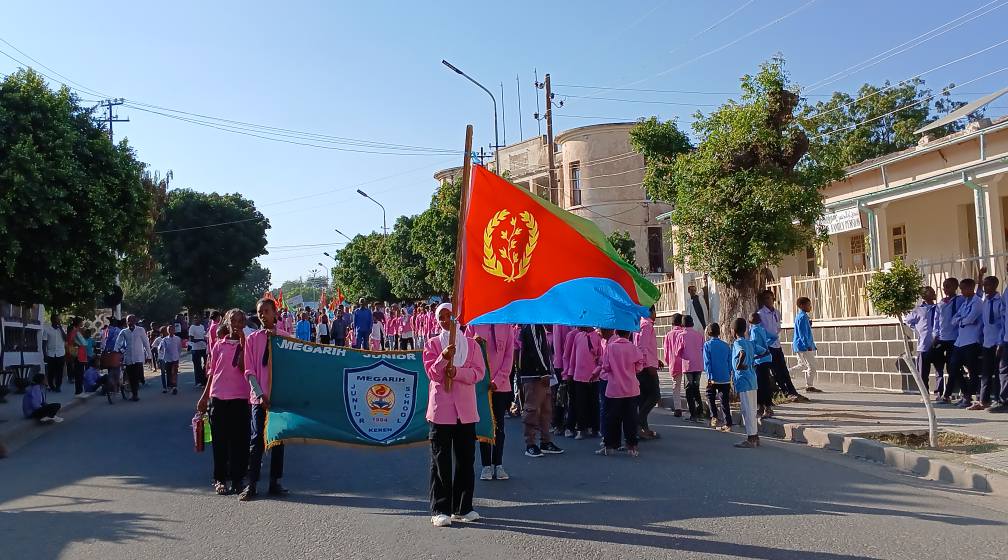
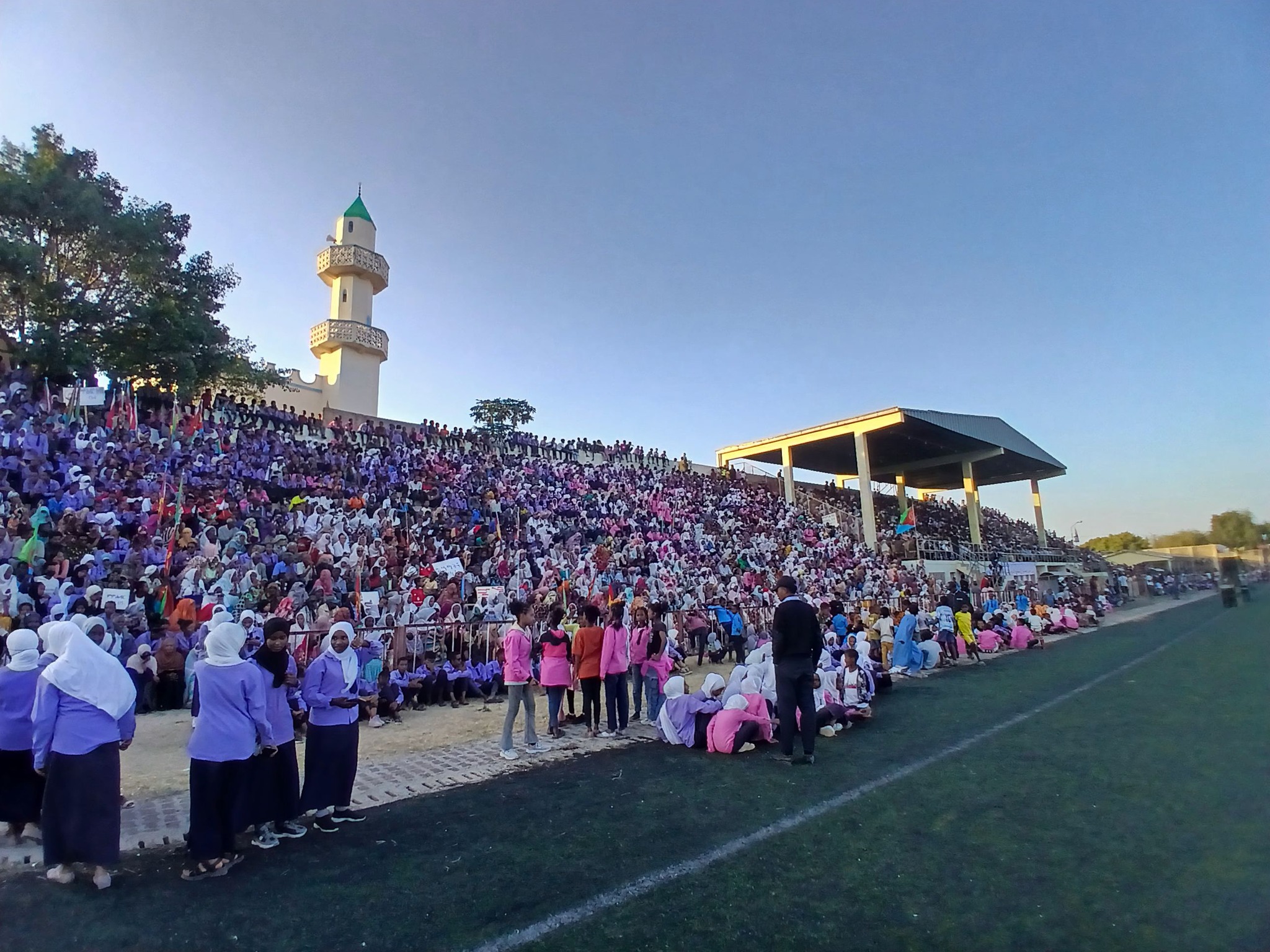
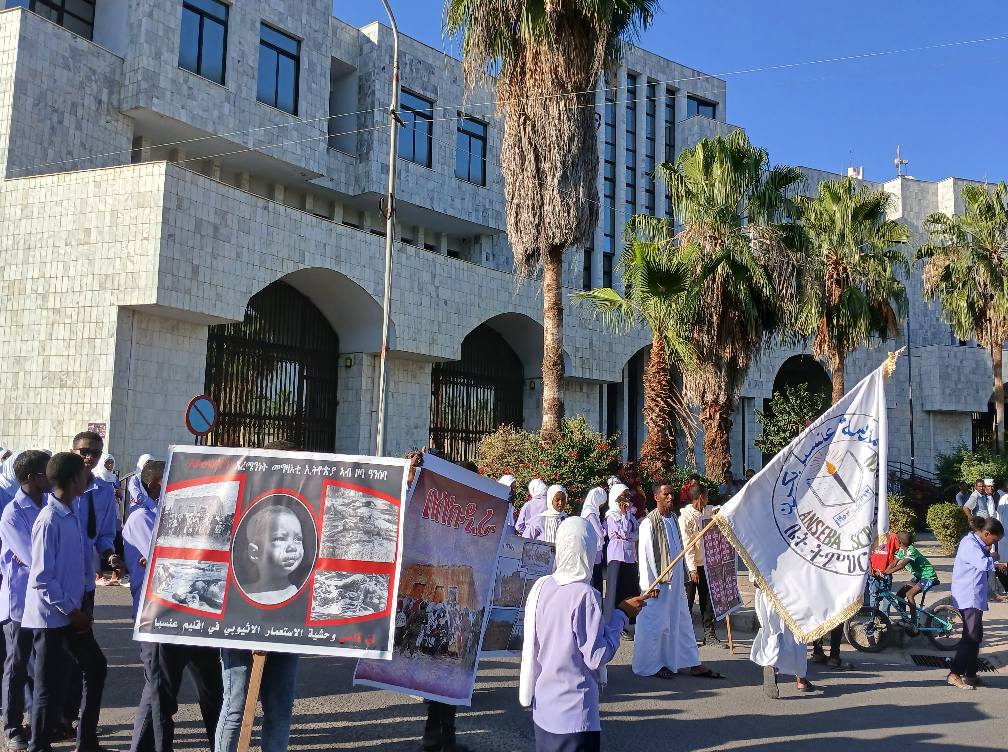
In Keren, people from the Anseba region commemorated the 55th solemn anniversary of the Ona / Besikdira massacre. The event was held under the theme:
We have not forgotten the savagery of the Ethiopian occupation/regime in the Anseba region.
 Dawit Cheway
_________

History
Remembering Ona and Besikdira
By Ghidewon Abay Asmerom
https://redseabeacon.com/remembering-ona-and-besikdira/
December 1, 2025

Fifty-five years ago, on November 30 and December 1, 1970, two small Eritrean villages, Besikdira and Ona, were erased from the map by the Ethiopian army of occupation. In barely 48 hours, nearly a thousand civilians, men, women, children, the elderly, were slaughtered. Families disappeared entirely; communities that had stood for centuries ceased to exist. And yet these atrocities, among the worst committed in the Horn of Africa in the twentieth century, remain largely unknown beyond Eritrea’s borders and denied by those who carried them out.
These massacres were not the fog of war. They were policy. They were the logical endpoint of a strategy designed in Addis Ababa, after Haile Selassie declared a state of emergency and vowed to crush Eritrea’s lawful demand for decolonization. The goal was simple and barbaric: destroy the population’s ability to resist Ethiopia’s illegal occupation. By 1967, Ethiopia’s army was conducting scorched-earth campaigns across Eritrea, burning villages, imprisoning and torturing civilians, killing livestock, destroying water sources, and forcing tens of thousands into exile.
Between February and April 1967 alone, Ethiopian soldiers burned 62 villages: Mogoraib, Zamla, Ad Ibrahim, Gerset Gurgur, Adi Bera, Asir, Fori, Ad Habab, to name only a few. Over hundreds of civilians were killed; some 60,000 cattle and camels were slaughtered with knives, gunfire, and flames. Local leaders documented the horrors as they unfolded.
On 11 July 1967, the villages of Eilet and Gumhot were burned, and thirty young men tied together and burned alive in a house. More villages were destroyed in the following days, with 51 civilians and 6,000 animals killed. In November 1967, the Second Ethiopian Army Division destroyed nearly every village in Senhit, 174 in total. In Kuhul and Amadi, soldiers forced residents to assemble and then bombed them from the air.
The events of 1970, unfolded against this backdrop of systematic brutality. When Eritrean fighters ambushed and killed General Teshome Ergetu, the architect of the infamous
doctrine, on 21 November 1970, the empire retaliated with a fury meant to terrorize the entire nation.burn all, kill all

On 30 November, soldiers entered Besikdira and ordered villagers to divide by religion. The people refused. Christians and Muslims insisted, as always, that they were one community. Their unity was answered with machine-gun fire: they were herded into the mosque and massacred using machine guns through the windows, about 130 people were killed in a matter of minutes. Only a few lived to tell what happened.
The next day, Ona met the same fate. It had become a refuge for those fleeing earlier operations. At dawn, soldiers encircled the village, torched the homes, and gunned down anyone running from the flames. By nightfall, 800-900 civilians were dead. It remains the deadliest single-day massacre in Eritrean history.
These crimes did not occur in isolation. They were two horrific days in a war that lasted 10,858 days—every one of them marked by Ethiopian atrocities against Eritrean civilians. The list of victims and ravaged communities is too long to recite in full. A handful of names convey the scale:
Merara (1965), Rora Bet Gebru (1966), Ad Ibrahim (1967), Emberemi (1967 & 1976), Lalokofta (1967), Hazemo (1967), Aylet-Gemhot (1967), Misyam (1967), Melebso (1967), Gheleb (1970), Kubub Ebena (1971), Ila Berid (1971), Dige Idie Atba (1971), Adi Shuma (1972), Um Hajer (1974), Asmara (1975), Weki Diba (1975), Agordat (1975), Hirgigo (1975 & 1976), Dekemhare (1975), Adi Qeyih (1975), Alalie (1976), Dbarwa (1977), Digsa (1977), Mendefera (1978), Damba (1981), Emba Hara (1983), Asmat (1983), Molqui (1984), Adi Qerets (1985), Ararieb (1985), Mogeraib (1985), Hamertoqo (1987), She’eb (1988), Massawa (1990).

And this list is only the surface of a far deeper, darker ledger. Eritreans carry these memories not as abstractions, but as lived history. The massacre sites have become places of mourning, reflection, and unity, spaces where the message is not revenge, but vigilance. “Never again” is not a slogan in Eritrea; it is a survival ethic.
Meanwhile, few Ethiopians today know what was done in their name during the thirty-year war. Independent researchers estimate that more than 250,000 Eritrean civilians were killed, numbers the Ethiopian state has neither acknowledged nor apologized for. Instead, astonishingly, new generations of Ethiopian leaders once again speak of Eritrean ports and territory as their “birthright,” threatening reoccupation and boasting openly of future conquests, as if the decades of massacres never occurred.
This amnesia, is not innocent. It is political. From 1941 to 1952, Ethiopia armed Andinet shiftas based in Tigray to terrorize Eritreans who demanded independence. After forcing federation in 1952 and dissolving it illegally in 1962, the empire deployed its army to terrorize Eritrean civilians. Villages were bombed with napalm and cluster munitions. Young people were strangled with piano wire. Asmara the capital saw a massacre of nearly 3000 people in a matter of a week of terror, in 1975. Mothers and children were crushed beneath tank treads. Thousands were executed in cold blood. Yet Ethiopian historians like Zewdie Reta later claimed Ethiopia
in forty years of occupation, an assertion so flagrantly false it mocks both truth and humanity and is contradicted by official Ethiopian records.never harmed a single Eritrean


Today, as some Ethiopian elites again fantasize about Eritrean territory, threaten to “correct” their landlocked status by force, and erase the very history that disproves their claims, Ona and Besikdira stand as a warning. Impunity breeds repetition. When the suffering of one people is denied, the door remains open for others to endure the same fate.
Eritrea’s martyrs of 1970 stood together in life—Muslim and Christian, neighbor and neighbor—and they stand together in memory. Their story must be told, retold, and carried forward not only for their sake, but for the sake of a region still struggling to learn what happens when powerful states believe that forgetting is the same as absolution.
Remembering is not an act of bitterness. It is an act of protection, of truth, of justice.
And it is long overdue.
Those who can read Tigrigna must read the books (ግፍዒ) Gefi, https://hdrimedia.com/product/gfei/ and (ዖናን በስክዲራን፡ ህልቂት ዓድታት ሰንሒት ብነጸረኣብ ኣዛዚ) Unan Beskidran, https://hdrimedia.com/product/ona-and-besik-dira/ those who can read Amharic can read an abbreviated translation of the book Gefi by the Late Tesfaye Gebreab ጃንሆይ እና ደርግ ያልተነገሩ መራር ታሪኮች. https://www.mereb.shop/rs/?prodet=true&pid=46823451