Re: Why are pro-UAE influencers targeting Sudan online? | MEE Explains
“The United Arab Emirates (UAE) increased its gold imports from Sudan by 70% last year,” reports DW Africa
Sudan is not an isolated case. Between 2020 and 2021, the UAE increased its gold imports from Ethiopia by a staggering 1,153% — from 1.3 tonnes in 2020 to 15 tonnes in 2021 (see graph).
What was happening in Ethiopia during that same period? The bloody Tigray civil war, during which an estimated one million people lost their lives.
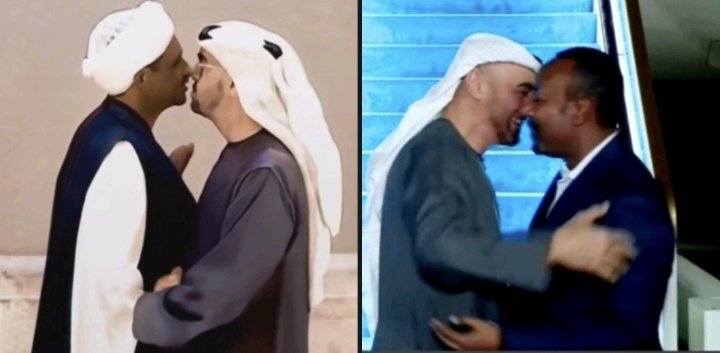
Whether in Sudan or Ethiopia, an increase in bloodshed seems to coincide with an increase in gold exports to the UAE. The Emirates has been supplying warlords such as Abiy Ahmed and Hemedti with weapons in exchange for gold and other natural resources. In Ethiopia’s case, beyond the gold payments, Abiy reportedly granted the UAE control over the entire Bale Zone — one of the country’s most fertile and resource-rich regions.
What in the actual f***?
Re: Why are pro-UAE influencers targeting Sudan online? | MEE Explains
The UAE was able to colonize Ethiopia without firing a single bullet, but its facing a fierce resistance in the Sudan that it had to hire Sudanese mercenaries to do its dirty work. I'm sure the Emirates are wondering why the Sudanese people are not docile like their Ethiopian neighbors. 
Re: Why are pro-UAE influencers targeting Sudan online? | MEE Explains
15 tons of gold are worth roughly US $1.6 billion today (give or take depending on exact purity & market)... 
Re: Why are pro-UAE influencers targeting Sudan online? | MEE Explains

Opinion | Sudan war
The UAE has taken Sudan to the brink. Now it must use its power to end the war
Andreas Krieg
https://www.middleeasteye.net/opinion/u ... d-war?s=09
7 November 2025
By doubling down on the RSF, Abu Dhabi expanded the brutal civil war. It should now leverage that entanglement to push for de-escalation

Sudanese RSF leader Mohamed Hamdan Dagalo (R) meets UAE President Mohammed bin Zayed in Abu Dhabi on 15 May 2022 (UAE Ministry of Presidential Affairs/AFP)
The fall of el-Fasher https://www.middleeasteye.net/opinion/u ... mpty-words has done more than redraw the map of western Sudan. https://www.middleeasteye.net/countries/sudan
It has crystallised a truth long visible to those watching Abu Dhabi’s statecraft up close: when confronted, the Emirati leadership does not climb down.
Despite two years of criticism and negative media coverage about its overt and covert entanglements in Sudan, Abu Dhabi has doubled down. Its primary surrogate, https://www.middleeasteye.net/news/suda ... -interests the Rapid Support Forces (RSF), now holds the logistical heart of Darfur - and with it, a power base that can be monetised in gold, protected by cross-border routes and leveraged against neighbours.
That outcome is not a fluke of battlefield luck. It reflects a governing ethos in Abu Dhabi that prizes assertiveness, retaliation against perceived slights, and the strategic accumulation of leverage over time.
Pragmatism, in the technocratic sense, is less important than prevailing. Fifteen years of Emirati statecraft in the era of Mohammed bin Zayed have shown that for the United Arab Emirates, https://www.middleeasteye.net/countries/uae the question is not whether it “wins” a capital; it is whether it can deny adversaries a decisive victory, lock in access to corridors and markets, and outlast the news cycle. Yemen https://www.middleeasteye.net/countries/yemen and Libya https://www.middleeasteye.net/countries/libya are cases in point.
This is why the popular shorthand that the UAE “seeks stability” so often misleads. In truly Machiavellian fashion, Abu Dhabi seeks advantage.
It does so with a style that is unapologetically transactional and, at the top, intensely personal. President Mohammed bin Zayed, the architect of this approach, operates as a strategist who sees deterrence and reputation as indivisible. https://academic.oup.com/book/41942/cha ... m=fulltext
Backing down invites predation; escalation resets the terms. Since the Arab Spring, https://www.middleeasteye.net/topics/arab-spring Mohammed bin Zayed has been consistent https://www.hurstpublishers.com/book/fr ... sultanism/: tie local actors to Emirati logistics and finance, reward compliance, punish betrayal, and cultivate multiple allies so you never lose your seat at the table.
Reputational cost
The mechanism is what some call “weaponised interdependence”. https://direct.mit.edu/isec/article/44/ ... l-Economic
Over the past decade, the UAE has built a web of ports, free zones, air hubs, trading houses and financial services that reach from the Red Sea to the Sahel, and deep into the Mediterranean - a multimodal axis of secessionists. https://www.middleeasteye.net/big-story ... region-how
Those physical and financial pipes are matched by a constellation of state-adjacent companies and private vehicles that can move money, people and materials with speed and deniability. When Abu Dhabi backs a partner, it is not only delivering cash or kit; it is opening pathways into an ecosystem centred on Emirati nodes. As long as those pathways remain open, time is on Abu Dhabi’s side.
Sudan shows the model in stark relief. The UAE has invested across multiple layers.
______________________

Money, mercenaries and mayhem: How Israel and UAE are investing in regional chaos
Read more: https://www.middleeasteye.net/opinion/m ... -chaos-how
______________________
It has engaged civilian figures who could front a technocratic reboot in Khartoum. It has cultivated ties to the regular army, the Sudanese Armed Forces (SAF), because no viable settlement can ignore the officer corps. And most powerfully, it has aligned with the RSF, the paramilitary that turned its Darfur patronage network into a war economy.
That last choice carries the highest reputational cost, for obvious reasons: the RSF’s genocidal conduct https://www.aljazeera.com/news/2025/11/ ... s-killings has been widely condemned. Yet the same elements that make the RSF toxic also make it useful to Abu Dhabi. It can police key corridors, extract rents from cross-border commerce and gold, and hold ground in the west, even if the centre of the country remains contested. For an external patron, it is a bet on endurance, rather than on a clean victory.
Criticism from Washington and London https://www.middleeasteye.net/news/uae- ... -sudan-war has not altered this course, nor have European warnings about sanctions or reputational damage in global markets.
The response from Abu Dhabi, when pressure mounts, is familiar: contest the facts, widen diplomatic channels, and reinforce facts on the ground to ensure that leverage does not slip. It is an attitude of defiance rather than accommodation, and it flows from a confidence born of structural depth.
Keeping options open
No regional capital can match the UAE’s current combination of liquidity, logistics and diplomatic access. That confidence explains another hallmark of the Emirati style: keep options live on both sides of a conflict.
In Yemen, Abu Dhabi cultivated southern secessionists, while hedging with anti-Houthi northern forces. In Libya, it backed renegade general Khalifa Haftar’s eastern campaign, while maintaining lines to businesspeople and municipal networks in the west.
In Sudan, it can talk to Abdalla Hamdok, https://hornpulse.com/2025/09/12/uae-al ... ns-hamdok/ the civilian ex-prime minister, and Mohamed Hamdan Dagalo (“Hemedti”) https://home.treasury.gov/news/press-releases/jy2772 of the RSF, while maintaining channels to General Abdel Fattah al-Burhan https://www.africaintelligence.com/east ... 460429-eve and his circle. If one door closes, another remains ajar.
But there is a price to this posture, and it is rising. Deniability - the lubricant of this kind of power - erodes with each drone video, cargo flight manifest and satellite image.
Neighbours have sensed the change. Qatar https://www.middleeasteye.net/countries/qatar and Oman https://www.middleeasteye.net/countries/oman now market themselves as conveners and mediators; Saudi Arabia, https://www.middleeasteye.net/countries/saudi-arabia wary of being trapped in its ally’s slipstream, has leaned into a broker’s role on Sudan, even as it keeps faith with Abu Dhabi on core security concerns.
The optics matter. When the neighbours play peacemaker, the actor most associated with patronage and rearmament becomes the story. And when the story hardens, leverage can stop being convertible: you may have influence, yet find fewer forums and fewer partners willing to legitimise its use.
Still, to understand why Abu Dhabi is unlikely to reverse itself without a real change in costs, you must see what “winning” looks like in its own terms. It is not a flag atop the presidential palace in Khartoum. It is veto power over outcomes that touch Emirati interests. It is ensuring that Red Sea shipping lanes, energy flows and data cables are buffered from shocks that others can exploit.
It is making sure that Islamist movements viewed by the leadership as existential threats do not consolidate. It is protecting revenue streams - both licit and illicit - that pass through Dubai’s markets. On that scorecard, an RSF stronghold in Darfur that can be leveraged towards a federal bargain, or towards a frozen conflict, can look like a tolerable equilibrium, especially if a civilian face can be put on a transition elsewhere.
El-Fasher stress test
There is a different way to read el-Fasher’s fall: as a stress test of Abu Dhabi’s model, and a chance to repurpose it.
If the UAE wishes to show that its strategic depth can deliver regional wins and not only private gains, Sudan offers an immediate stage. The same network that can keep a surrogate supplied https://globalwitness.org/en/campaigns/ ... l-network/ can enforce a ceasefire, if the patron wills it.
Closing the spigots is not glamorous statecraft, but it is decisive: shut down the airbridge and trucking lines, squeeze the monetisation of Darfur’s gold, and compel both the RSF and the SAF to accept a monitored truce. Use trusted channels to Egypt https://www.middleeasteye.net/countries/egypt to ensure that Cairo sees an off-ramp that protects the Nile heartland and excludes the Islamist currents it fears.
Use influence in Riyadh to align a Saudi-led mediation with real enforcement mechanisms, not just communiques. And elevate a credible civilian centre not as a fig leaf, but as the spine of a transition that demobilises command economies on both sides.
That pivot would not require Abu Dhabi to renounce its worldview. It would simply harness it.
If the animating impulse is to win, then “winning” in Sudan can be redefined as avoiding the worst outcomes while demonstrating that Emirati leverage is indispensable to a settlement the world can live with. That means accepting that some access will be traded away for legitimacy; some clients will be told no; some profits will be deferred. It also means showing that the UAE can be a constructive force for real and sustainable stability in the region.
The past decade has shown that Abu Dhabi does not scare easily. It is patient, relentlessly strategic, and comfortable with ambiguity. Those traits built an “axis” of relationships with non-state actors that can outlast governments. They also brought the UAE to a point where the global public spotlight outshines the cloak that once covered Emirati activities in Africa.
In Sudan, the instinct to double down has delivered a paramilitary redoubt and an expanding war. Turning that same instinct towards de-escalation would be the real demonstration of power: not a retreat, but a choice to convert entanglement into stability. This victory would serve Emirati interests much more in the long run.
The views expressed in this article belong to the author and do not necessarily reflect the editorial policy of Middle East Eye.
Dr. Andreas Krieg is an associate professor at the Defence Studies Department of King's College London and a strategic risk consultant working for governmental and commercial clients in the Middle East. He recently published a book called 'Socio-political order and security in the Arab World'.
Re: Why are pro-UAE influencers targeting Sudan online? | MEE Explains

World
The Price of Silence in Sudan
The United Arab Emirates is arming a militia committing genocide in Darfur. In exchange for US silence, Biden got a Middle East partner, and Trump got cryptocurrency cash.
Justin Lynch
https://www.thenation.com/article/world ... diplomacy/#
November 7, 2025

Students in Khartoum hold up the Sudan flag during a protest on November 3, 2025,against atrocities committed by the Rapid Support Forces in El Fasher .(Ebrahim Hamid / AFP via Getty Images)
On October 24, rumors spread that Sudan’s warring factions might sign a ceasefire in Washington, DC. The Sudanese Armed Forces (SAF) and the Rapid Support Forces (RSF) had fought for two and a half years. SAF has indiscriminately bombed https://www.hrw.org/news/2025/06/04/sud ... uth-darfur civilians, and their allied Islamist militias have executed https://sudan.un.org/en/288618-un-human ... toum-north civilians. In the city of El Fasher, North Darfur, people were forced to eat animal feed because of an 18-month blockade by the RSF. A young woman I spoke with from the town was raped by multiple RSF fighters. But despite the violence, for just a moment, there was hope for peace.
But after both sides thought they could gain by keeping up the fighting, the negotiations collapsed. Then two days later, the RSF overran the SAF’s last base in El Fasher, North Darfur. The SAF withdrew, and the killing began.
At the Saudi Maternity Hospital, a RSF fighter filmed himself stepping over bodies. An elderly man in white knelt on the floor. A soldier shot him in the head. The man fell. The soldier moved on. Another shot sounded. According to the World Health Organization, the RSF killed at least 460 people at the hospital.
We don’t yet know the full extent of the massacres, but satellite imagery has picked up blood-stained grounds. El Fasher held roughly 250,000 people, but only around 6,000 have escaped to Tawilah, a nearby town where they can receive aid. The RSF has trapped, held ransom, or executed many residents who have tried to flee. Aid workers say children arrive to Tawilah alone—their families murdered. In another video, an RSF soldier filmed bodies lining a road and said,
Since April 2023, Sudan has experienced systematic atrocities from both sides. RSF is slaughtering people with weapons provided by the United Arab Emirates. The SAF, according to the United States, has used chemical weapons. The SAF has received weapons and support from Egypt, Iran, Turkey, Russia, and Qatar.This is what genocide looks like.
State Department officials have attempted interventions, but neither the Biden nor Trump White House has provided the top-level political support to stem the flows of weapons from its allies—the UAE, Qatar, and Egypt.
The fall of El Fasher partitions Sudan. RSF holds Darfur in the West, SAF the east. It also reveals a policy failure. Shortly after the war began, the United States documented sophisticated arms shipments from the UAE to the RSF. Officials knew atrocities were likely. Stopping the flow of arms could have lowered the intensity of the conflict by eliminating the advanced drones and foreign fighters that the UAE has provided the RSF for its fight in El Fasher.
The UAE’s relationship with the RSF accelerated around 2017, when Abu Dhabi and Saudi Arabia hired the RSF leader, Mohammed Hamdan Dagalo (“Hemedti”), to provide soldiers for their campaign in Yemen. In return, the UAE provided billions of dollars of financial support to the RSF, a former intelligence official told me.
Within weeks of Sudan’s civil war erupting in April 2023, US intelligence detected a rapid increase in UAE weapons facilitation to the RSF via a Chadian airbase, according to a Biden administration official. Evidence accumulated through the summer.
Multiple officials at State, USAID, and other agencies wanted to use Washington’s leverage to stop UAE arms flows. The reasoning was direct: As the RSF’s sole external backer, Abu Dhabi offered the most efficient pressure point to influence the paramilitary group.
The pressure never materialized. Biden and his senior team—particularly Brett McGurk—blocked serious action, according to five US government officials. Internal memos and discussions involving the Gulf required McGurk’s clearance. He was pursuing a broader rapprochement between the UAE and Israel. Without the ability to use leverage over the UAE, US policy on Sudan defaulted to ceasefire mediation between the warring parties led by the State Department.
In June 2023, the RSF attacked Masalit displacement camps in El Geneina, West Darfur. Human Rights Watch documented https://www.hrw.org/report/2024/05/09/m ... umanity-el the killing of thousands of civilians—including infants, women, and the elderly—in less than two months. It was an example of the brutal atrocities the RSF were committing in Sudan. State Department officials tried to negotiate a ceasefire between the warring parties in El Fasher but were unsuccessful.
After October 7, 2023, the calculus shifted. Biden’s team wanted a Gaza ceasefire, which required UAE cooperation. McGurk felt that the UAE was providing critical humanitarian aid in Gaza and their political support was essential if a peace deal was going to happen. Separately, the administration pursued a technology deal: UAE divestment from Chinese systems in exchange for US microchips. Microsoft invested $1.5 billion https://www.reuters.com/markets/deals/m ... 024-04-16/ in the state-owned G42 AI firm in 2024. Sudan receded from the administration’s focus.
When US officials confronted UAE leaders about their support for the RSF, they issued repeated blanket denials. It was a bizarre lie from an apparent ally. The UAE’s support for the RSF was obvious, and the UAE’s denials were brazen. These lies continued all the way to the White House, according to Biden administration, State Department, and Defense Department officials who spoke with me. This included a September 23, 2024, meeting https://bidenwhitehouse.archives.gov/br ... -emirates/ between Vice President Kamala Harris and UAE President Mohamed Bin Zayed, a Biden administration official told me.
Biden never showed any real interest in Sudan, and he clearly prioritized a ceasefire between Israel and Hamas. Senior Biden foreign-policy aides felt their job was to execute their boss’s vision. They also felt that they were not given reasonable policy alternatives in Sudan that could succeed. Both Secretary of State Antony Blinken and national security adviser Jake Sullivan said privately that the United States shouldn’t “want to own” what was happening in Sudan, a former Biden and White House official told me. Some believed that pressure on the UAE would have unintended consequences elsewhere and could harm negotiations involving the UAE. US and foreign diplomats described incidents of Emirati officials overreacting to criticisms and being angry at benign Facebook posts or over not calling Abu Dhabi quickly enough.
Without the ability to use their leverage, US officials again tried persuasion. In 2024, the National Security Council and State Department attempted to convince Emirati counterparts that their Sudan policy harmed their own interests. The effort failed. Abu Dhabi proved so sensitive about Sudan that a planned 2024 bilateral meeting had to be reframed as an Africa summit. The meetings received high-level attention, but options like pressuring the UAE to end their support of the RSF remained off the table, so a real breakthrough to end the conflict was not possible.
one Biden official recalled.I was like, ‘It’s a genocide, though. What about the genocide?’
It was a frustration that Biden’s absolute vision for the Middle East meant the Sudan team had to prevent mass killings and end a war without the ability to coerce the conflicting parties. Officials working on Sudan felt there were intermediate options that would have pressured the UAE without sacrificing the broader relationship. Instead, they felt they were asked to fight with both hands tied behind their backs.
For Sudan officials, the final indignity came in the Biden administration’s closing days. McGurk wrote https://www.vanhollen.senate.gov/imo/me ... signed.pdf a letter to Senator Chris Van Hollen saying that the UAE told the Biden administration it was not arming the RSF. The letter did not go through the usual clearance process, two White House officials told me, and was an example of McGurk making Sudan policy on his own. He incorrectly called the “Rapid Support Forces” the “Rapid Sudan Forces” in the letter, which added to the embarrassment across the US government.
With the election of Donald Trump, the White House made its relationship with the UAE even more transactional. An investment fund controlled by UAE national security adviser Sheikh Tahnoun bin Zayed deposited https://www.nytimes.com/2025/09/15/us/p ... berty.html $2 billion into World Liberty Financial, a cryptocurrency venture founded by the Trump family and Middle East adviser Steve Witkoff, The New York Times reported. Two weeks later, the administration granted https://www.nytimes.com/2024/04/16/tech ... ae-ai.html the UAE access to American microchips critical for its AI ambitions. Massad Boulos, Tiffany Trump’s father-in-law, now serves as senior adviser on Africa and leads Sudan policy. Some State officials give him positive reviews, but he carries multiple portfolios and receives even less senior support than Sudan had under Biden.
The siege of El Fasher illustrates a familiar pattern: Attention arrives after prevention fails. Right now, negotiations between SAF and the RSF are unlikely to work because both sides think they can win. The US remains unwilling to use it leverage against foreign actors, like the UAE. Plans to support a technocratic civilian coalition have been tried before—and with more resources—but have repeatedly failed.
Pressure on the UAE to halt arms flows would not have ended conflict in Sudan. Even if a national peace deal is signed, fighting could continue for decades at the local level. But halting UAE and foreign arms flows would have at least eliminated the advanced weaponry that was being used to kill civilians. I know, because I was a small part of a project that mapped out the facilitation of weapons in Sudan.
In 2024, clever US officials devised a plan to expose UAE and Iranian weapons networks in Sudan. They proposed funding a report using open-source methods to document how the UAE was sending weapons to the RSF and Iran to the SAF. The report operated through a program with enough autonomy that senior Biden officials could not easily block publication.
Our report was published https://mars.gmu.edu/server/api/core/bi ... b4/content in October 2024 and detailed how an Emirati-backed flight network was “almost certainly” moving supplies to the RSF via an airport in Chad. The New York Times https://www.nytimes.com/2024/09/21/worl ... l-war.html and Reuters https://www.reuters.com/world/uae-fligh ... 024-12-12/ published similar findings around the same time. Within a few months, flights to the airstrip declined measurably. The UAE’s flights have now moved to another airstrip in southern Libya. The exposure did not end the war, but it did raise the cost of UAE and Iranian logistics operations that sustained the conflict.
The lesson from the Biden and Trump administrations is that there can be endless peace talks and technical, stopgap solutions. Without attention and action from the president and his senior staff, atrocities like El Fasher will still occur.
In the meantime, the United States and Western nations face a question. One of our allies, the UAE, is arming a genocidal militia. What is the price to keep the United States silent amid mass killing?
