Ethiopian News, Current Affairs and Opinion Forum
Zmeselo
Senior Member+
Posts: 36760
Joined: 30 Jul 2010, 20:43

UN in Eritrea

Post by Zmeselo » 12 Aug 2025, 07:21


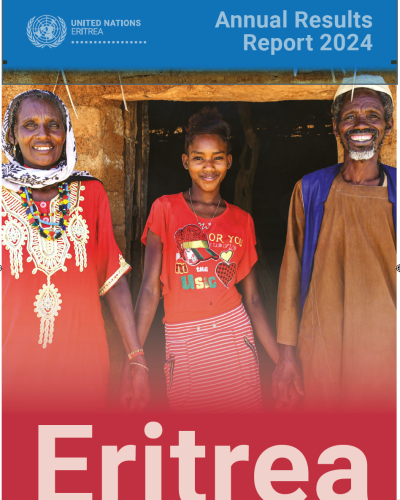
UN Eritrea 2024 UN Annual Results Report

27 May 2025


We are pleased to present the 2024 Annual Results Report of the United Nations in Eritrea, highlighting the tangible progress achieved under the UNSDCF 2022–2026. In the face of global challenges—from climate shocks to economic pressures—Eritrea has demonstrated remarkable resilience, and the UN has remained steadfast in its commitment to supporting inclusive development, focused on our shared priority of leaving no one behind.

Reflecting on our first year as UN Resident and Humanitarian Coordinator, we are deeply inspired by Eritrea’s resilience, self-reliance, and commitment to progress. The nation’s journey toward its 2030 aspirations underscores the transformative power of strategic partnerships and innovative solutions.

Throughout 2024, the United Nations Country Team worked closely with the Government of Eritrea and key stakeholders to advance the Sustainable Development Goals (SDGs). Our tailored interventions, in synergy with Eritrea’s self-reliant development model, have driven meaningful progress in key areas such as health, education, climate resilience, and food security, directly improving the lives of the most vulnerable. Together, we achieved the following results:

Health: The percentage of births attended at health facilities increased from 71% in 2023 to 81% in 2024, enabling over 61,000 women to safely give birth with professional care.

Education: Girls outperformed boys in school retention, with 87.8% of girls reaching Grade 5 compared to 82.7% of boys. This highlights significant progress in gender equality in education.

Women’s Rights: Eritrea achieved 94% village-level abandonment of Female Genital Mutilation (FGM) across all 2,840 villages nationwide in 2024—up from just 32% in 2015. This is a testament to the impact of legal enforcement, social mobilization, and community-led change.

WASH (Water, Sanitation, and Hygiene): Eritrea achieved 94% Open Defecation-Free (ODF) status across all 2,840 villages, up from just 32% in 2015, significantly improving rural sanitation, hygiene, and health outcomes.

Food security and economic inclusion: Fish production increased by 66.7%, from 16,000 tons in 2023 to 18,431.6 tons in 2024. This was made possible by the establishment of new ice production infrastructure, boosting incomes and job opportunities, particularly for women and youth.

These achievements are a result of the strong partnerships between the UN, the Government of Eritrea, development partners, and other stakeholders. Grounded in mutual respect and alignment with national priorities, Eritrea’s collaborative approach positions it to capitalize on emerging opportunities from global reforms and forward-thinking dialogues.

Looking ahead to 2025, the UN remains committed to supporting Eritrea’s SDG progress through five core priorities: food systems, data, climate, social protection, and communications. These initiatives, spanning four programmatic areas and one crosscutting theme, address immediate needs while unlocking long-term opportunities in emerging sectors such as tourism—ultimately fostering inclusive, sustainable development.

We extend our deepest gratitude to the Government of Eritrea, our development partners, and the communities for their invaluable collaboration. Together, we are building a future founded on dignity, opportunity, and shared progress for all Eritreans.
Last edited by Zmeselo on 12 Aug 2025, 13:01, edited 1 time in total.

Zmeselo
Senior Member+
Posts: 36760
Joined: 30 Jul 2010, 20:43

Re: UN in Eritrea

Post by Zmeselo » 12 Aug 2025, 07:30


From Punishment to Partnership, Eritrea and the West Reconsidered

By Hintsa Andebrhan

4 hours ago


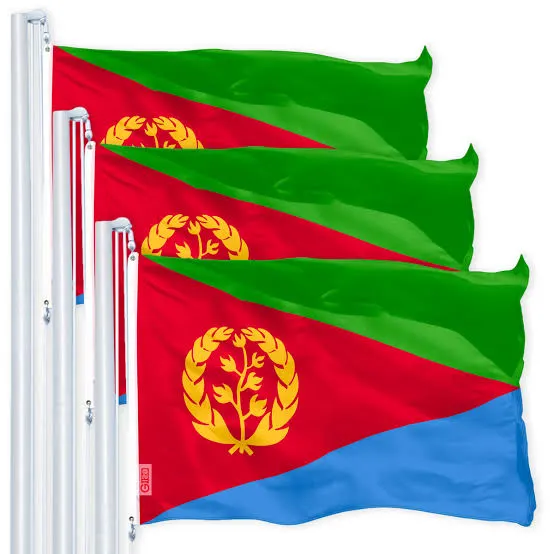
Eritrean flag

For decades, Africa’s political and economic sovereignty has been held hostage by Western powers, oscillating between generosity and punitive measures. The so-called “carrot and stick” approach is a modern extension of colonial control disguised as aid, free trade, and security. In reality, Africa’s political, economic, and social security is often compromised by this new form of colonialism.

Western diplomacy often resembles luring a rabbit out of its hole, only to chase it back in. Their aid programs drag African politics and economic sovereignty down a rabbit hole by approving debt under the guise of development assistance.

Firm policies imposed through the IMF and World Bank, leave African countries with little autonomy to craft their own macroeconomic strategies. Seeking financing from these institutions often means behaving like obedient schoolchildren expected to listen, not lead. Disobedience invites punishment.

The Western bloc has long played a strategic game with Africa’s monetary sovereignty, using the IMF as its conduit. Dominated by Western interests, the IMF deploys highly skilled experts to craft policies that appear technically sound and attractive to governments in financial distress.

These policies are often accompanied by multi-billion-dollar packages—but with strings attached. Conditions lie at the heart of national governance. The IMF embeds itself in political centers through advisors and insiders, gradually aligning national strategies with its recommendations. These include currency devaluation, tax restructuring, and trade liberalization—all under the banner of economic stability and growth.

But the billions promised are rarely unconditional. If a government resists or seeks to renegotiate, the IMF’s tone shifts. Carrots are replaced by sticks: funds are withheld, credit ratings threatened, and international pressure escalates. Disagreement is met not with dialogue, but with economic sanctions.

While many African countries have accepted IMF carrots and abandoned their own microeconomic policies, Eritrea a Horn of Africa nation and IMF member since 1994 has charted a different course. Its strategic disengagement and commitment to self-reliance, stand out.

In 2005, Eritrea expelled USAID a move widely seen as a rejection of Washington’s soft power strategy. Though the U.S. State Department did not publicly protest, the decision reflected a broader global pattern, Asmara refused incentives it neither requested nor cultivated. This act became a symbolic thread in a tapestry of mistrust, ideological divergence, and geopolitical friction between Eritrea and the Western bloc. For nearly 35 years, Eritrea has endured what many view as unjust sanctions punished for refusing externally imposed agendas.

Today, Africans are witnessing a shift in Western policy toward Eritrea, marked by growing political interest. This trend signals a potential validation of Eritrea’s long-standing self-reliance policy. Once a cautionary tale, Eritrea’s path is now being reconsidered as a legitimate and strategic approach.

In July 2025, the Trump administration sent a letter to President Isaias Afwerki expressing a desire for partnership based on mutual respect and regional cooperation; a notable departure from previous U.S. policy. Toward the end of its term, the Biden administration echoed this sentiment, highlighting Eritrea’s outreach and regional reintegration as opportunities for renewed collaboration. These gestures reflect growing recognition of Eritrea’s strategic importance in the Horn of Africa and along the Red Sea corridor.

Simultaneously, European interest has intensified. Italy’s signing of a Comprehensive Economic Agreement with Eritrea in July 2025 spans energy, infrastructure, agriculture, and maritime security underscoring a pragmatic and forward-looking approach to bilateral relations.

While it’s premature to declare a full policy transformation, these developments represent the early stages of a positive geopolitical shift. Eritrea, by steadfastly adhering to its principles, has achieved a diplomatic victory over the traditional Western “carrot and stick” approach and is steadily cementing its role in regional and global affairs.

Before I put down my pen, I urge African leaders to reject carrots they did not plant. Instead, they must craft strong economic and political policies rooted in self-determination policies, that can withstand the Western stick. Follow, Eritrea’s
bad example for good!
Be courageous! Resist modern colonialism!

About the Author

Hintsa Andebrhan worked as a researcher with the United Nations Population Fund and IPAS International Ethiopia. He is deeply interested in history and politics.
[email protected]


_______________


194 countries call themselves “sovereign,” but let’s be honest most can’t sneeze without asking Uncle Sam, the IMF, or their former colonizer for permission.

Only 5 run their shop with zero outside babysitters: 🇨🇳 China, 🇷🇺 Russia, 🇰🇵 North Korea, 🇪🇷 Eritrea, 🇧🇫 Burkina Faso.

Everyone else? Sovereignty with training wheels.

Who else makes your list? Please add

Last edited by Zmeselo on 12 Aug 2025, 12:48, edited 1 time in total.

Zmeselo
Senior Member+
Posts: 36760
Joined: 30 Jul 2010, 20:43

Re: UN in Eritrea

Post by Zmeselo » 12 Aug 2025, 07:35


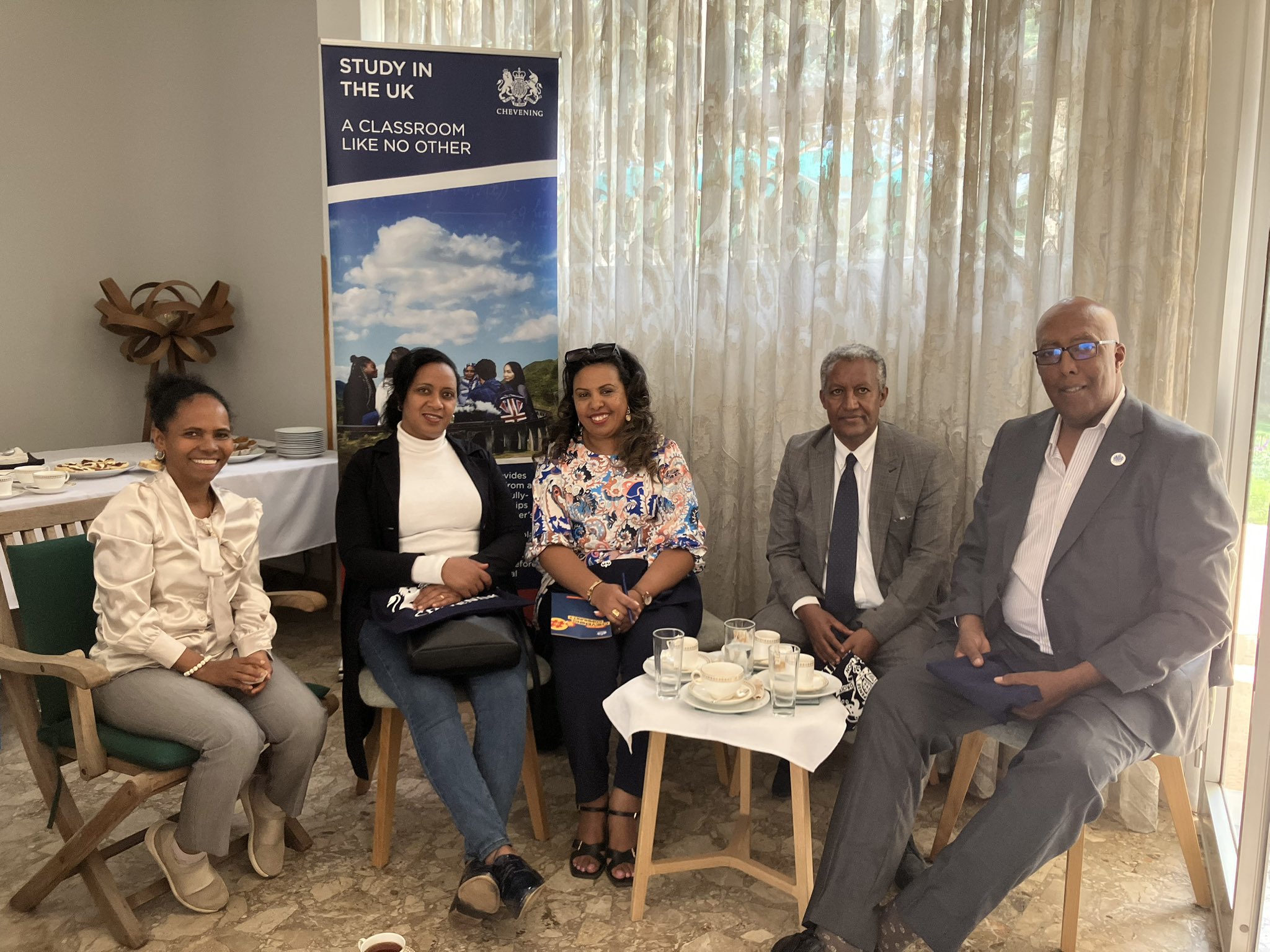
A pleasure to host an outreach event today to promote @CheveningFCDO, the UK government’s international scholarship programme. Applications are open until 7 October. @david_mcilroy


____________


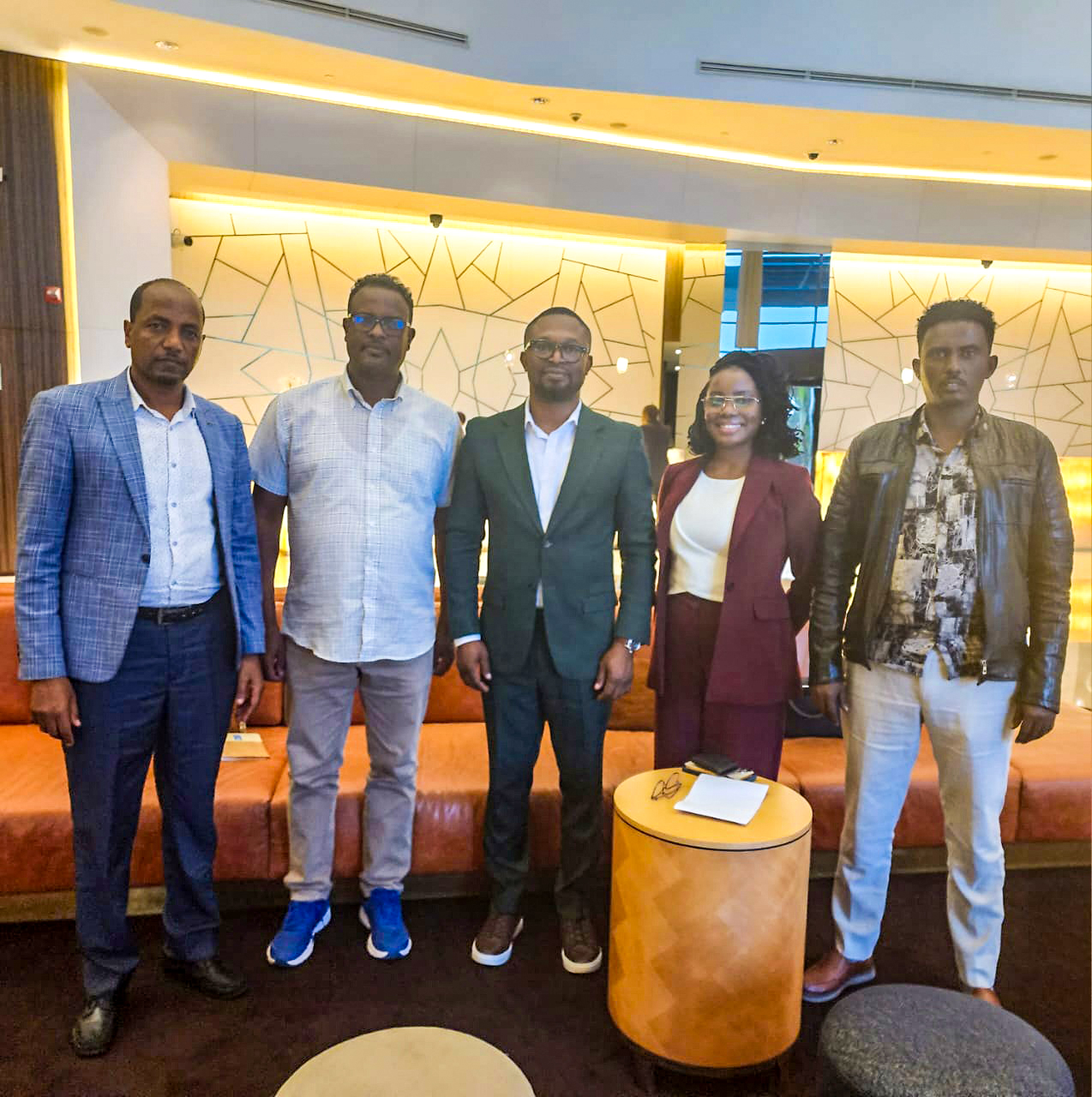
The Eritrean delegation to the African Youth Conference in Luanda held a productive meeting with Mr Bening Ahmed Wiisichong the Secretary-General of the Pan African Youth Union (PYU), and discussed key initiatives and foster collaboration for youth empowerment across the continent.

Zmeselo
Senior Member+
Posts: 36760
Joined: 30 Jul 2010, 20:43

Re: UN in Eritrea

Post by Zmeselo » 12 Aug 2025, 07:41


_____________


Threads of Courage: Eritrean Women, From Homeland to Horizon

When we say Eritrea, the very sound carries the echo of she. She is the mother who nurtures life, the guardian who shields her children, the unyielding spirit that bends but does not break. And in her reflection, we see the women of Eritrea: mothers, daughters, sisters, and fighters whose courage has shaped the destiny of a nation.

Art and love are the two universal languages that speak directly to the human heart and mind, bypassing all artificial mental and emotional divisions.

The story of Eritrean women cannot be confined to a single date or celebration. Their courage, sacrifice, and leadership span decades from the battlefields of the independence struggle to the fields, schools, and homes where they continue to shape the nation’s future. This post honors Eritrean women from all nine ethnic groups and the diaspora, not just for their role in the past, but for their ongoing contributions in times of rebuilding, cultural preservation, and community leadership.

It is a reminder that women’s participation in Eritrea’s story is not symbolic; it is foundational. By remembering and celebrating them, we recognize that the threads they wove through sacrifice are the same threads that now bind our homeland and diaspora together.

They stood where history demanded courage, and they answered.With rifles in hand, they fought beside their brothers, defying not only the enemy but the limitations the world tried to place upon them.They carried both life and liberation, their steps echoing through the mountains, deserts, and coasts of Eritrea.

From the highlands to the lowlands, women from all nine ethnic groups bore the same weight of freedom and shared the same vision of a sovereign homeland. In the diaspora, they carried that vision across oceans, organizing communities, advocating for justice, and ensuring that Eritrea’s story was told in every language and every land.

Today, these women stand together in a new chapter. The rifles have been replaced by books, tools, and seeds, yet the mission remains the same: to protect, build, and nurture. Their unity forms a single woven thread of red, blue, and green, connecting homeland to horizon.

They are mothers, daughters, fighters, teachers, leaders, and dreamers, the heartbeat of Eritrea.

Glory to our martyrs. Strength to our people. The stone moves because we move it.

Zmeselo
Senior Member+
Posts: 36760
Joined: 30 Jul 2010, 20:43

Re: UN in Eritrea

Post by Zmeselo » 12 Aug 2025, 07:45


Zmeselo
Senior Member+
Posts: 36760
Joined: 30 Jul 2010, 20:43

Re: UN in Eritrea

Post by Zmeselo » 12 Aug 2025, 08:07


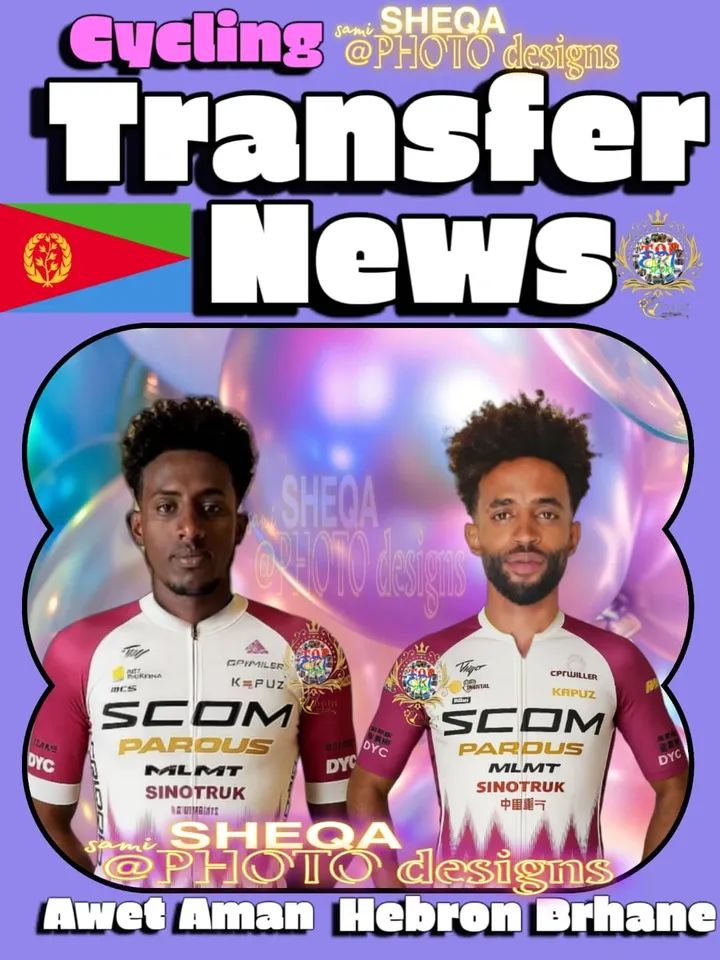
Eritrean Champion Joins Chinese Cycling Team

Eritrean cyclist Awet Aman, who has competed with the UCI World Cycling Centre's team, has signed with the Wuzishan SCOM MVMT, a Chinese Continental cycling team.

He is joined by Hebron Berhane from Sembel Cycling Club.

The Wuzishan SCOM MVMT is a professional cycling team registered in China, with the International Cycling Union (UCI).

As a Continental team, they compete in races on the UCI's Asia Tour, where they are ranked 38th.

This demonstrates their competitiveness on the regional stage. Awet Aman, the 2023 Eritrean national road race champion, brings his international experience to the team.

✍️ Nathenael-Zemichael CTTO 📸 WEDI-SHEQA

Deqi-Arawit
Senior Member
Posts: 15730
Joined: 29 Mar 2009, 11:10
Location: Bujumbura Brundi

Re: UN in Eritrea

Post by Deqi-Arawit » 12 Aug 2025, 08:23

While the sodomite is still doesn't know don't the the soil which are suitable to grow cotton , his mini skunis are reading unwritten script
Please wait, video is loading...

Zmeselo
Senior Member+
Posts: 36760
Joined: 30 Jul 2010, 20:43

Re: UN in Eritrea

Post by Zmeselo » 12 Aug 2025, 09:28


UAE
AI without internet: How graduate from UAE's MBZUAI creates smart apps that work offline

Daniel Gebre comes from a small city in Eritrea, where internet access was scarce, prompting him to think of how technology could be made to work in such environments

Fri 8 Aug 2025

By: Haneen Dajani
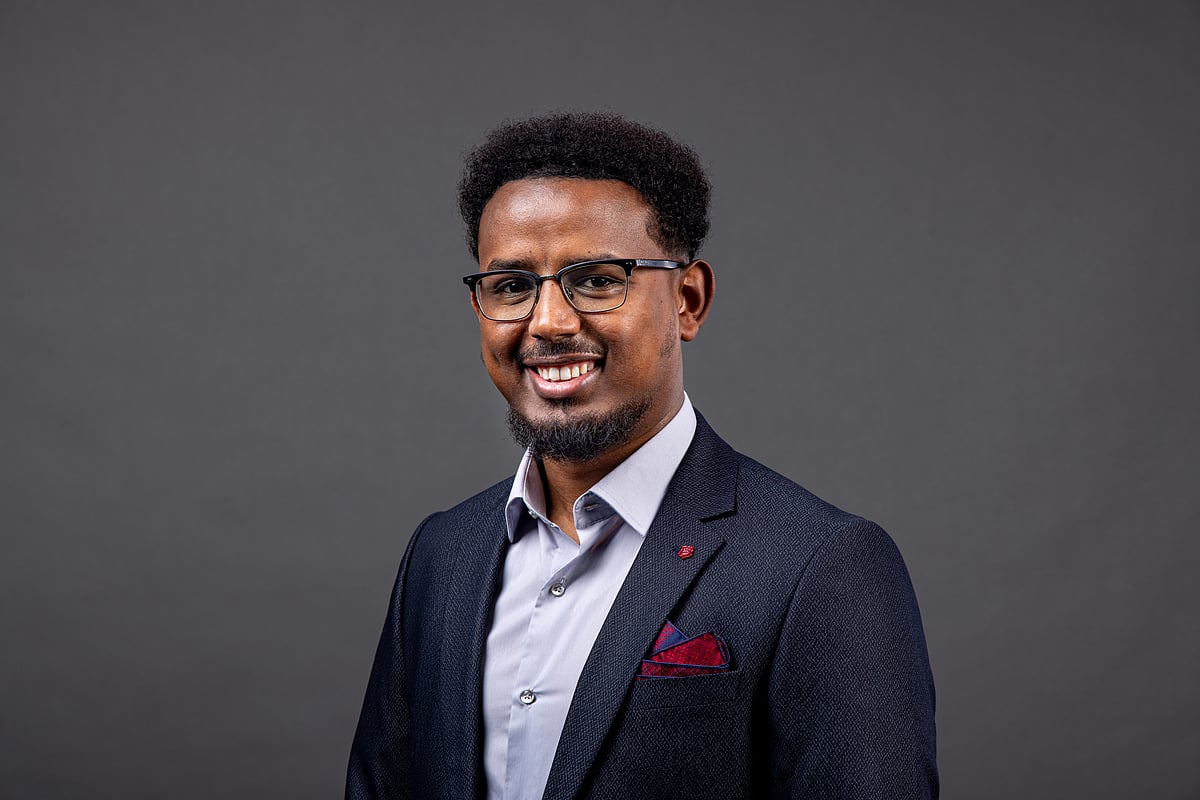

Photo: Daniel Gebre/MBZUAI

When Daniel Gebre was growing up in Dekemhare, a small city in Eritrea, internet access was a rare luxury. He and his classmates would take turns using a single campus connection, share downloaded files, and rely on offline copies of Wikipedia just to study.

That experience stayed with him — not as frustration, but as fuel.
Growing up in a place where internet access was scarce, I know the frustration of being curious and eager to learn but constantly being held back by limited digital resources,
he said.
That challenge pushed me to think about how technology could be made to work in environments like the one I came from.
Now 27, Gebre is a recent graduate of Mohamed bin Zayed University of Artificial Intelligence (MBZUAI), where he focused his master’s research on how to bring artificial intelligence (AI) tools to people without internet access.

His thesis project, iShrink, compresses large language models (LLMs) so they can run offline on mobile devices — an innovation aimed at students and professionals in low-connectivity areas.
There were times in Eritrea when even downloading a simple document or video was a challenge,
he said.
iShrink is about making sure people do not have to wait for internet access to be part of the AI conversation.
How it works
In simple terms, iShrink is a framework designed to make large language models smaller and more efficient without significantly affecting their performance,
Gebre explained.
It does this by identifying and removing parts of the model that are less important, then fine-tuning the remaining components so they still work well. This makes the models faster, lighter, and easier to run on devices with limited resources.
Shrinking smaller models poses a unique challenge, he said, because they contain fewer redundant parameters compared to larger models.
Despite this, we achieved about a 22.5 per cent and 19.7 per cent size reduction on models such as LLaMA 3.1-1B and Falcon 1B respectively.
iShrink currently supports LLaMA, Falcon, and Qwen models, with plans to expand to other open-source architectures in the future.
To test the tool, Gebre developed a mobile application that runs entirely on a local device.
The results were promising,
he said.
In the future, I aim to enhance it with voice and multimodal capabilities to make it even more useful in real-world scenarios,
he added,
I plan to make iShrink fully open source so it can be used and improved by the AI community.
Scholarship to the UAE

Gebre moved to the UAE in 2019 on a scholarship from the Ministry of Education, awarded to top engineering students in Eritrea. He completed his undergraduate degree in information technology at Zayed University with a focus on cybersecurity. It was during a research internship at MBZUAI that his direction changed.

Mentored by Dr Moayad Aloqaily and Professor Mohsen Guizani, he became immersed in the possibilities of AI and how it could address real-world problems.
They really encouraged me to explore AI more seriously,
he said.
I had planned to pursue my master’s elsewhere, but Professor Mohsen kept urging me to apply to MBZUAI. Eventually I did, and that decision changed everything.
Gebre described his first semester of graduate school as the most difficult academic experience of his life. He spent long nights reinforcing his math skills and adjusting to the pace of the programme.
I had to catch up fast,
he said.
There were days I studied until three in the morning just to stay afloat.
His perseverance paid off. He completed his thesis, co-authored three academic papers, and presented at international conferences, including the IEEE International Conference on Human-Machine Systems in Abu Dhabi.
You really grow when you take ownership of your learning,
he said.
It was difficult, but transformative.
From research to real-world impact

Since graduating in May 2025, Gebre has joined Inception, a G42 company, as an Applied Scientist. He is now working on domain-specific AI solutions for industry — a transition supported by a prior internship at the Technology Innovation Institute.
That was the first time I saw what it takes to bring AI into production,
he said.
It gave me a much clearer picture of how research turns into impact.
While his focus today is on refining his skills in industry, Gebre’s long-term mission remains unchanged: to expand access to technology for underserved communities.
In Eritrea, many students still have not heard of tools like ChatGPT or Gemini,
he said.
Even at college, they often have to gather around one internet access point to download materials. The gap is real, which means the potential is even greater.
Future plans
Absolutely,
he said, when asked whether he plans to return to Eritrea to work on digital infrastructure and education.
Given the current technology gap in our country, I want to be among the pioneers who lay the foundations for a thriving tech industry in Eritrea. My goal is to lead AI enablement programs across various domains and initiatives.
When it comes to Eritrea’s many ethnic groups and languages, he believes the lack of digital representation is an issue that can and should be addressed.
Our population is around six million, and while English is used in some areas, it is not universal,
he said.
The main challenges are data and computation. As a small population country, gathering sufficient data is not easy. Most of our literature in local languages exists in hard copy form, so collecting these materials, digitising them, and preparing them for training is a significant but achievable task. With adequate resources and collaboration, it is certainly possible to build such a model.
At the moment, I am fully engaged in my role at Inception. In the future, I plan to launch an initiative to bring together individuals with backgrounds in AI, machine learning, and natural language processing to contribute to open-source projects that develop models aligned with Eritrea’s diverse languages, cultures, and values.
Advice to students from under-served communities
During a panel discussion at MBZUAI, one of my professors said that the key to excellence in any field is mastering the fundamentals, no shortcuts. That advice completely changed my perspective, and I would pass it on to anyone starting out in AI,
he explained.
For students from backgrounds similar to mine, I would add that talent and good academic performance are not enough. The right mindset, consistent effort, strong interpersonal skills, and building a solid professional network are equally important in determining how far you can go.
When he received his degree, his mother was in the audience — a proud moment marking how far he had come.
I am so grateful to the UAE for giving me this opportunity,
he said.
It changed the course of my life.
He hopes his work is only the beginning.
If iShrink or any part of what I have done can help students like me learn, explore, and grow — no matter where they live or what resources they have — that’s the kind of impact I want to keep building.
Zmeselo
Senior Member+
Posts: 36760
Joined: 30 Jul 2010, 20:43

Re: UN in Eritrea

Post by Zmeselo » 12 Aug 2025, 09:57


General
Eritrea’s Statement during the public opening meeting of the 33rd Session of the Committee on the Rights of Persons with Disabilities 11 August, 2025

https://shabait.com/2025/08/12/eritreas ... gust-2025/

Aug 12, 2025


Madam Chair, Distinguished Members of the Committee,

I would like to begin by sincerely thanking the Secretariat of the Committee on the Rights of Persons with Disabilities (CRPD) for inviting Eritrea to deliver remarks during the opening segment of the 33rd session of the Committee. It is a distinct honour, and the Government of the State of Eritrea expresses its appreciation.

Questions may have arisen as to why Eritrea took time to ratify the Convention on the Rights of Persons with Disabilities, despite the significant work undertaken on the ground. This moment provides a meaningful opportunity to shed light on the context and considerations behind that timeline.

Eritrea’s engagement with the issue of disability is not new. Since the days of the struggle for independence, it has acquired valuable experience and insights regarding persons with disabilities (PWDs). The Eritrean People’s Liberation Front (EPLF), recognized the significance of disability within society and was among the first to advocate for the equal rights and full inclusion of PWDs. The EPLF, beyond mere expressions of solidarity, implemented concrete measures to ensure the active involvement of persons with Disabilities in the liberation movement, viewing them not as passive recipients of care, but as vital contributors to national progress and agents of transformative change.

Today, disability is understood and treated as a human rights issue in the country. Every human being is entitled to live in dignity and to enjoy equal access to opportunities and services. The Government of the State of Eritrea, believes that the challenges faced by persons with disabilities are best addressed through respect for individual rights and the equitable distribution of opportunities. Eritrea’s national approach is firmly grounded in its cultural values and rooted in principles of social justice, inclusivity, equity, self-reliance, and human dignity.

Across all regions of the country, efforts are underway to ensure that social services are accessible and inclusive for citizens with disabilities. Eritrea maintains that the responsibility of building inclusive societies, where persons with disabilities can thrive, contribute, and lead meaningful lives, is a collective one. This responsibility does not rest solely with the government or specific institutions, but is shared by every citizen and every sector of society.

Distinguished Members of the Committee,

The Government of Eritrea, has consistently demonstrated its commitment to the spirit and objectives of the Convention. Its participation in relevant discussions has always reflected our sincere dedication to advancing the rights enshrined in international human rights instruments. As a young nation, only 34 years since independence, Eritrea has had to navigate multiple and often simultaneous priorities: nation-building, institutional reconstruction, and development, all under complex and evolving circumstances. Yet, throughout this journey, Eritrea has remained focused on ensuring that no citizen is left behind, including those with disabilities.

It is important to underscore that the act of signing or not signing a treaty does not, in and of itself, encapsulate the full extent of a country’s engagement or commitment. In Eritrea’s case, substantial groundwork has long been underway, work that may not always be captured in formal international reporting but is nonetheless critical and ongoing. This nuance, must be acknowledged. While reporting obligations are indeed important, they should be approached not as mere formalities, but as sincere, reflective exercises rooted in actual lived realities.

Eritrea has made deliberate and sustained efforts to protect the rights and well-being of all its citizens, including persons with disabilities. At the same time, the country recognizes that ratifying international instruments entails a range of specific responsibilities, particularly regarding structured and periodic reporting. These responsibilities require sustained institutional capacity, technical expertise, and human resources. For developing nations still establishing foundational governance systems, such obligations can present practical challenges. It is essential that this reality be acknowledged—not as an excuse, but as context—while reaffirming the country’s determination to meet these responsibilities in a serious, measured, and effective manner.

Ladies and Gentlemen,

Those who will examine Eritrea’s trajectory with respect to the Convention will find a candid and transparent account of its progress, along with the recognition of the challenges that remain. Eritrea is encouraged by the distance it has travelled, and it is from this point of grounded confidence and demonstrated progress that the country now moves to the next phase, formally ratifying the Convention and assuming its reporting obligations.

This decision is not simply about meeting an international expectation; it reflects a genuine commitment to share national experiences, document progress, and contribute meaningfully to the global discourse. Eritrea also sees this as an opportunity to benefit from constructive feedback, strengthen its national systems, and continue its efforts in ways that are both impactful and responsive to its own realities. The country approaches this new phase with openness, humility, and a firm conviction in the power of collaboration and mutual learning.

We thank you once again for this opportunity.


(Speech delivered by: Nadja Micael, Senior Human Rights Officer at the Permanent Mission of Eritrea to the United Nations in Genève)
Last edited by Zmeselo on 12 Aug 2025, 13:02, edited 1 time in total.

Zmeselo
Senior Member+
Posts: 36760
Joined: 30 Jul 2010, 20:43

Re: UN in Eritrea

Post by Zmeselo » 12 Aug 2025, 12:46

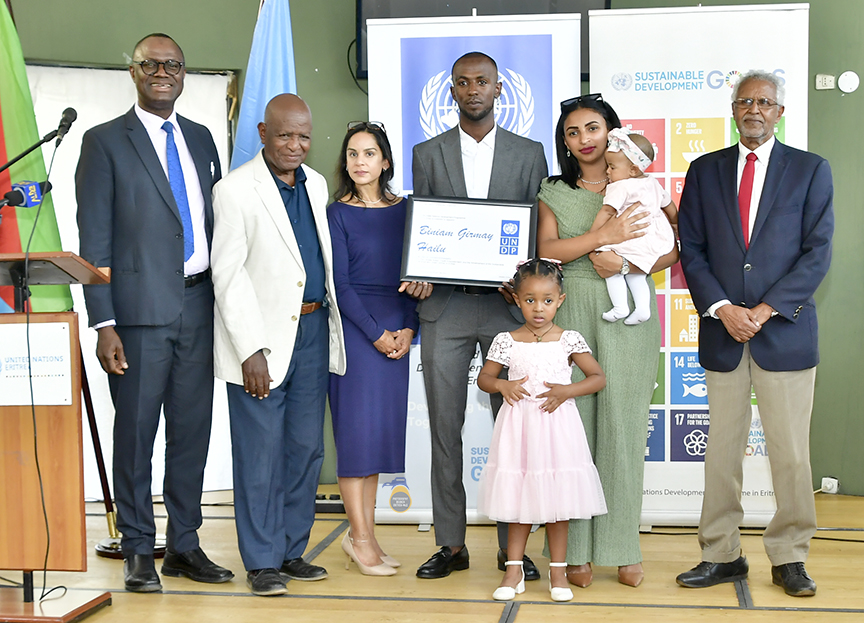
ኦሎምፒካዊ ተቐዳዳማይ ቢንያም ግርማይ፡ ሎሚ 12 ነሓሰ ኣብ ኣስመራ ኣብ ዝተኻየደ ስነ-ስርዓት፡ ናይ ክብሪ ኣምባሳደር ፕሮግራም ልምዓት ውድብ ሕቡራት ሃገራት (UNDP) ኣብ ኤርትራ ኰይኑ ተሰዪሙ።


Tour de France (2024) Green Jersey winner and Olympics cyclist Biniam Ghirmay has been appointed as UNDP National Goodwill Ambassador in a ceremony convened at NCEW HQ, this afternoon.


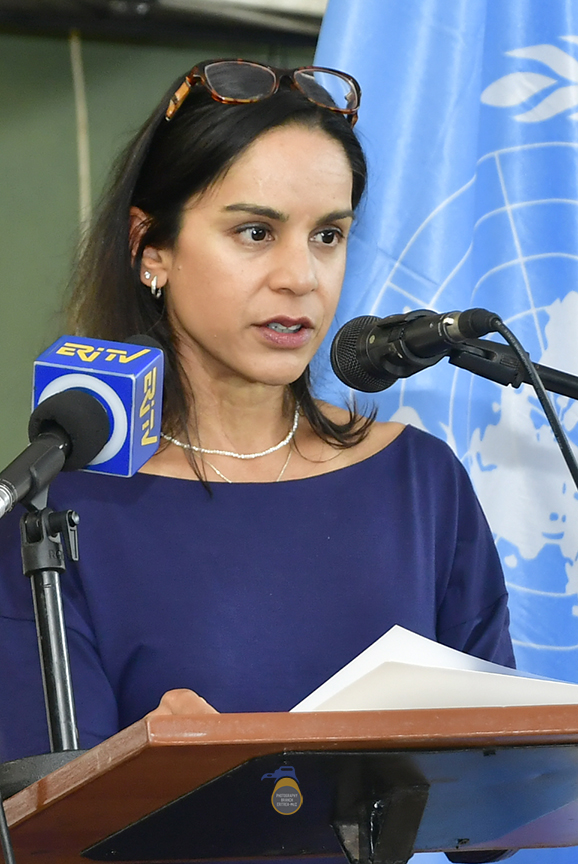
Speeches on the occasion by UNRC Ms. Nahla Valji; UNDP Res. Rep. Mr. Pa Lamin Beyai; and; the Commissioner of Culture and Sports, Amb. Zemede Tecle.


As iconic cyclist and UNDP first-ever Goodwill Ambassador, Biniam Ghirmay will leverage his status, in the words of the UNRC, Ms. Nahla Valji to:

1. Honour his legacy by investing in Eritrea's next generation of youth, promoting equal opportunities for girls and boys in sports:
2. Champion climate action, showcasing Eritrea's green initiatives from renewable energy to landscape restoration; and,
3. Demonstrate how sport can power sustainable development and the achievement of the SDGs.


Zmeselo
Senior Member+
Posts: 36760
Joined: 30 Jul 2010, 20:43

Re: UN in Eritrea

Post by Zmeselo » 12 Aug 2025, 13:15


Q & A
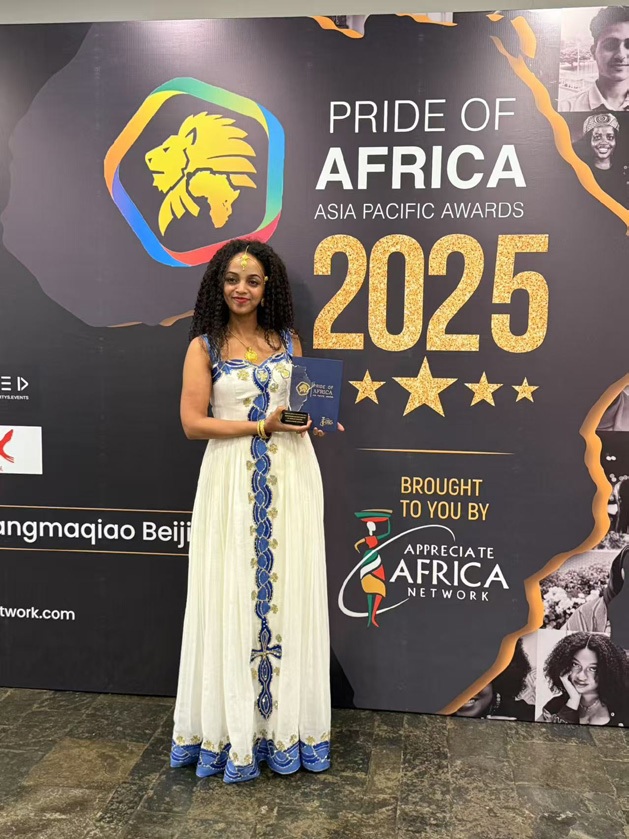
Marta Woldu: Winner of the “Pride of Africa Asia Pacific Awards 2025”

Andom Abrha: Compiled by: Mussie Efriem

https://shabait.com/2025/08/12/marta-wo ... ards-2025/

Aug 12, 2025


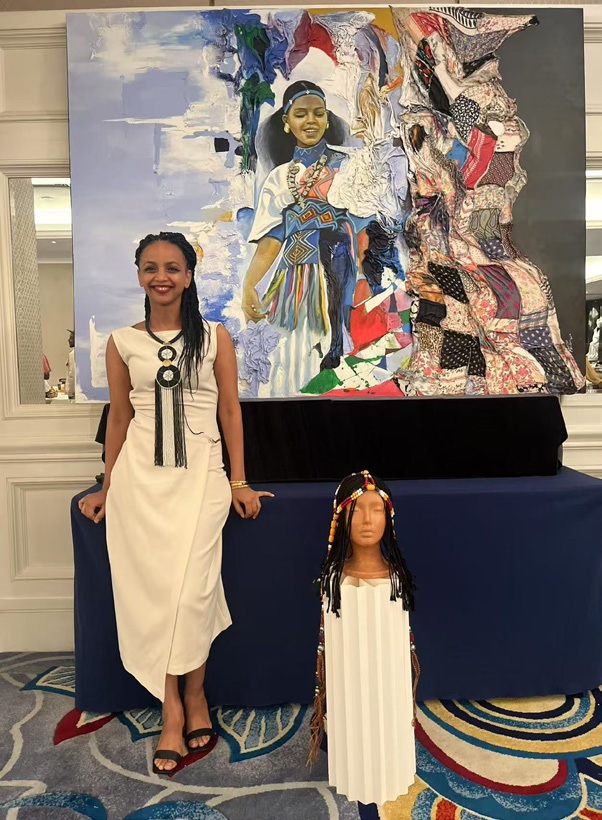
Meet Marta Woldu, an Eritrean artist whose exceptional talent and dedication have earned her the “Pride of Africa Asia Pacific Awards 2025.” This annual competition celebrates and recognizes outstanding achievements by Africans and their partners across the Asia Pacific region, highlighting contributions that foster cultural exchange, innovation, and collaboration. Marta Woldu’s recognition at this event underscores her significant impact in the arts and her role in strengthening the cultural ties between Africa and the Asia Pacific, marking a remarkable milestone in her career and inspiring future generations of artists.

* * *

I was born in Hawel’e, Sahel, to artist parents who greatly influenced my life. My father, Woldu Afwerki, was a teacher at the Eritrean School of Fine Arts, while my mother, Tirhas Iyasu, one of the pioneering female painters who passed away in 2008, played a significant role in both the armed struggle and post-independence Eritrea through her work in sculpture, painting, illustration, and ceramics. Growing up immersed in this vibrant artistic environment, I was exposed to Eritrea’s leading artists at a young age; which fostered my deep connection to the arts. My parents often share how I picked up a pencil and began drawing at just three years old.

After moving to Asmara, I enrolled at the Asmara School of Fine Arts in 1997. There, I was guided by Chinese art teachers who collaborated with our school, which intensified my immersion in the world of art. This foundation, paired with the vibrant influences I later discovered in China, shaped my evolving style and fueled my passion for painting. In 2004, when Chinese art scholars spotted my work at my mother’s exhibition, I was ultimately granted a scholarship. This opportunity opened doors to a new world of traditional and contemporary Chinese art. Initially, I majored in oil painting while also exploring sculpture and printmaking, graduating in 2008. After completing my art studies, I enrolled in Chinese language classes. Following that, I also worked as a flight attendant for a Chinese airline. Eventually, after welcoming my baby, I returned to my passion, art, reigniting my creative journey once again, opening my workshop called the Sip & Dip studio. We named our studio, after the beautiful traditional coffee ceremonies and the comforting glasses of wine shared during our gatherings. Each session becomes a mindful experience, blending art with the warmth of community.


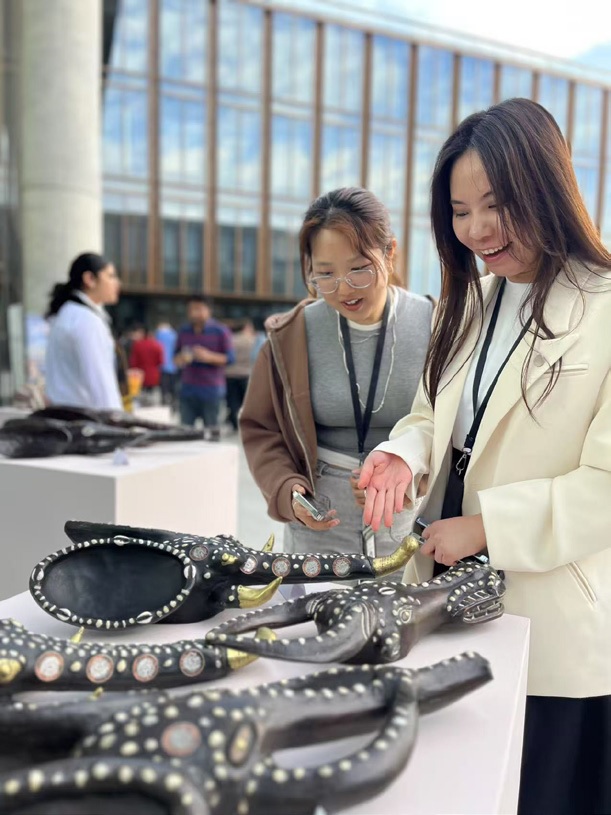
In my studio, I invite fellow artists to guide diverse workshops, covering painting, sculpture, lipstick creation, soap and candle making, and jewelry crafting. The atmosphere is enriched by inviting African drummers, enhancing the sensory experience for participants. A standout feature is the lotus leaf painting, allowing attendees to explore this unique medium, transforming traditional techniques into contemporary art forms. Each session blends creativity with cultural depth, offering a holistic and inspiring artistic journey for all involved. And every year, I conduct a cultural event that beautifully reflects the essence of Eritrean heritage. This vibrant celebration is dedicated to showcasing the rich history, diverse traditions, and stunning beauty of Eritrea. This event serves as a platform to showcase the beauty and richness of Eritrean culture, while also highlighting the potential of our art in the global market. I am excited to share my creations and connect with others, who appreciate the value of cultural diversity and artistic expression.

Can you tell us more about the recent “Pride of Africa Asia Pacific Awards 2025” that you were honored with? What does the award signify, and what process was involved in the nomination?

Yes, I was recently honored with the “Pride of Africa Asia Pacific Awards 2025”. That was the 11th anniversary of this initiative, founded by Dr. Samanta from Zimbabwe. The award aims to uplift and promote African culture, business, and music within Asia, recognizing outstanding individuals whose work significantly impacts these and other spheres. Selection occurs through a voting process, allowing the community to acknowledge its leaders and innovators. Receiving this recognition not only highlights my efforts, but also underscores the importance of celebrating African heritage and creativity within global contexts.

And how important is this for your future career?

Yes, this big award not only elevates the visibility of my products but also adds significant value to them. Being recognized for excellence in a foreign country is no small feat; it requires overcoming numerous challenges and navigating a new landscape. The journey to this point has been filled with obstacles, but each step has contributed to my growth and resilience. The art I create is not just a reflection of my heritage; it is also a reflection of passion. And competing in a market as dynamic and competitive as China, is also no easy task.


This competition was truly diverse and inclusive, featuring participants from various regions, including Africa, the Caribbean, Asia, and Europe, reflecting a broad spectrum of backgrounds and perspectives. It wasn’t limited to Africans alone; it also encompassed friends of Africa, such as former Chinese diplomats in Africa, and Chinese individuals who have contributed to Africa, such as professionals serving across different sectors. My achievement was in the “Art and Culture” category, and that highlights the rich creativity and unique perspectives that emerge when people from diverse backgrounds unite to celebrate and promote African heritage and artistic expression.

How were the celebrations during the ceremony?

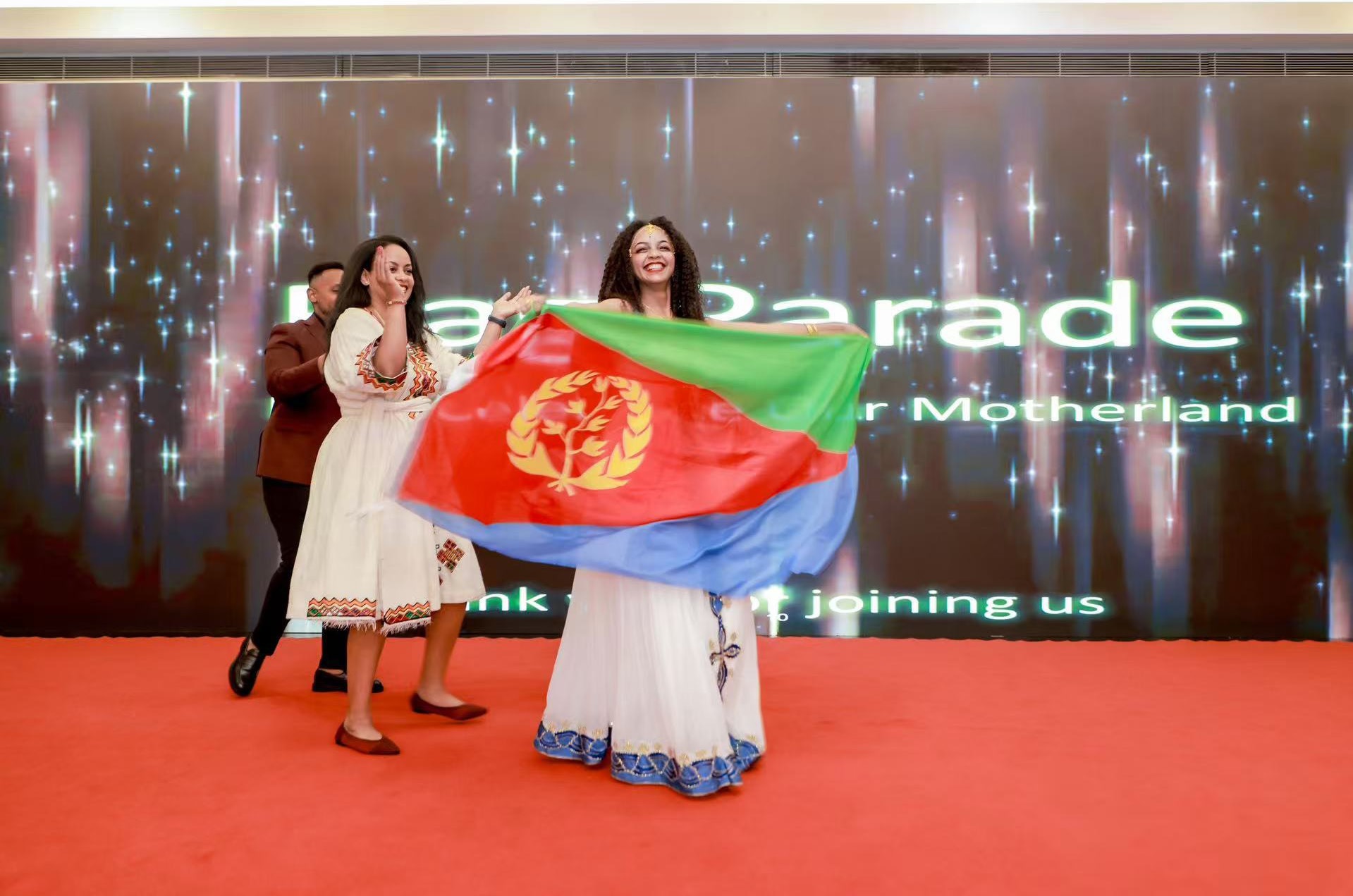
The celebration was truly remarkable; I was honored to go on stage with my Eritrean friends in China, holding the Eritrean flag, which filled me with pride. The ceremony was lively and meaningful, featuring the renowned Eritrean singer Abeba Hayle’s famous song “Abbey Eyu Adki,” which translates to “Where is your country,” symbolizing national pride. I was awarded a certificate and a trophy for my achievement, which has become a motivating force to push me further in my artistic pursuits. This recognition inspires me to expand my creative horizons, and I plan to organize more exhibitions that blend my artworks with those from various parts of Africa, especially Western Africa, fostering cultural exchange and showcasing the diverse richness of African art.

Any final remarks?

The award I have received holds deep personal significance for me, as it is a tribute to both my parents, whose influence has shaped who I am today. I wish I could have dedicated this honor to my late mother, whose pioneering spirit and artistic legacy continue to inspire me. Nevertheless, I want to dedicate this achievement to my father, whose guidance and teachings have been instrumental in my journey as an artist.


Zmeselo
Senior Member+
Posts: 36760
Joined: 30 Jul 2010, 20:43

Re: UN in Eritrea

Post by Zmeselo » 12 Aug 2025, 13:37

Over 56 Million Nakfa Disbursed to Families of Martyrs

@shabait

Aug 12, 2025


The Ministry of Labor and Social Welfare in the Central Region reported that in 2024, more than 56 million Nakfa was regularly disbursed to 13,708 families of martyrs in the region.

Mr. Tedros Fesehaye, head of social welfare, said that the program is being implemented in collaboration with partners including the Ministry of Defense, regional administration, and the National Insurance Corporation office. He added that over 2 million Nakfa, contributed by diaspora nationals, was distributed to families of martyrs.

Indicating that the program is implemented on a community-based approach, Mr. Tedros said that committees have been established in all sub-zones and administrative areas to monitor the situation of families of martyrs and war-disabled veterans. He also called on all nationals wishing to support these families to contact the unit responsible for the program.

Deqi-Arawit
Senior Member
Posts: 15730
Joined: 29 Mar 2009, 11:10
Location: Bujumbura Brundi

Re: UN in Eritrea

Post by Deqi-Arawit » 12 Aug 2025, 13:44

Zmeselo wrote:
12 Aug 2025, 13:37
Over 56 Million Nakfa Disbursed to Families of Martyrs

@shabait

Aug 12, 2025


The Ministry of Labor and Social Welfare in the Central Region reported that in 2024, more than 56 million Nakfa was regularly disbursed to 13,708 families of martyrs in the region.

Mr. Tedros Fesehaye, head of social welfare, said that the program is being implemented in collaboration with partners including the Ministry of Defense, regional administration, and the National Insurance Corporation office. He added that over 2 million Nakfa, contributed by diaspora nationals, was distributed to families of martyrs.

Indicating that the program is implemented on a community-based approach, Mr. Tedros said that committees have been established in all sub-zones and administrative areas to monitor the situation of families of martyrs and war-disabled veterans. He also called on all nationals wishing to support these families to contact the unit responsible for the program.
Wedi Medhin Berad skunks, please dont trade in the name of martyrs when you have turned the country to a country of prostitute and a bunch of spineless c™its.


Deqi-Arawit
Senior Member
Posts: 15730
Joined: 29 Mar 2009, 11:10
Location: Bujumbura Brundi

Re: UN in Eritrea

Post by Deqi-Arawit » 12 Aug 2025, 13:56

Before they traveled to Eritrea, these brothers were staunch regime supporters. They openly expressed their admiration for the Eritrean dictator by attending propaganda festivals and wearing clothing adorned with his portrait. However, after their arrival in Asmara, they were apprehended by the security police and accused of forming a group based on Hamasien affiliation with the aim of toppling the government.


The portrait looks like this.


Deqi-Arawit
Senior Member
Posts: 15730
Joined: 29 Mar 2009, 11:10
Location: Bujumbura Brundi

Re: UN in Eritrea

Post by Deqi-Arawit » 12 Aug 2025, 14:01

Here is the sodomite dictator explaining why he failed miserably why he cant replicate what the Italians have done in 1889.
Please wait, video is loading...

Deqi-Arawit
Senior Member
Posts: 15730
Joined: 29 Mar 2009, 11:10
Location: Bujumbura Brundi

Re: UN in Eritrea

Post by Deqi-Arawit » 12 Aug 2025, 14:11

Sensible and Eritreans with modest IQ are asking, what exactly can the sodomite dictator offer Eritreans except death, misery and agony. Weizero shitmeslo...........Skunis, tell us why should we be proud to be Eritreans_ is it because we have genocidal regime who is turning Eritrea to the laughing stock of the world_ or because the country has become the largest exporter of refugees_
Please wait, video is loading...

Post Reply