Inside and outside the American embassy compound in Ethiopia: my summer at USAID
By Alex Martinez"... I think a different kind of colonialism exists here today—one where thousands of foreigners with different visions of what is best for Ethiopia compete for the rights to experiment with the country’s villagers. I think you would be hard-pressed to find a single Ethiopian whose life hasn’t been touched by aid in some way, sometimes for the better.
From the outside, the American Embassy in Addis Ababa, Ethiopia, looks just like you would imagine. A high wall surrounds the complex and a series of gates and barriers mark the main entrance. All that’s visible behind the fortifications are the top few floors of a plain, government-style building. Outside, teenage boys herd groups of sheep through the streets towards the informal livestock markets in the center of town. Blue minibuses – carrying twice as many passengers as seats – pass by in all directions, weaving their way around the sheep. A few salesmen push handcarts laden with soaps, candy, cigarettes and SIM cards through the street, avoiding both the sheep and the minibuses as they go.
Inside the embassy, it’s easy to forget this is Ethiopia.
In addition to the main offices, there’s a smaller building that houses the embassy commissary, which is stocked with all the staples of an American diet (ketchup, sugary peanut [deleted], Gatorade and the like). A paved running path winds its way around the complex, weaving between basketball and tennis courts. There’s even an outdoor pool house where embassy employees can swim laps or just lounge, watch American television on flat screen TVs, and use the pool WiFi – assuming it’s working. Not even the American Embassy is immune to the constant blackouts that characterize Ethiopa’s state-run internet network.
All American employees of the embassy live in similar gated compounds (minus the swimming pools and tennis courts, of course). In theory, a U.S. government employee stationed in Ethiopia could spend their entire tour of duty – only two years, because Ethiopia is considered a “hardship” post – without ever stepping outside of a gated compound or a Land Cruiser.
Just over one month ago, I arrived in Addis Ababa to intern with the US Agency for International Development (USAID), as part of the Stanford in Government Stipends Program. One month is really not enough time to fully experience Addis Ababa, and certainly not enough time to fully experience Ethiopia or the field of international development. However, my time as an intern has allowed a glimpse into all three.
Since the beginning of my internship, it has been my mission to try to get a sense of what drives people to live and work overseas, and to figure out if I could make a career in international development. I’ve met and talked with quite a few Americans from USAID and other development agencies, but most don’t really want to talk about their work. Inevitably, our conversations drift towards how difficult it is to live in Addis Ababa.
Complaining – about blackouts, the long rainy season, the complete lack of traffic regulation in Addis Ababa and the poor service at restaurants and hotels – makes for easier conversation than intellectual forays into the role of foreign aid in Ethiopia’s development. If I ask how they feel about suggestions that foreign aid is be doing Ethiopia more harm than good, most expatriates tend to get suspicious, even the young professionals just a few months into their careers. Some answer thoughtfully, but others behave as if I’m mounting an assault on their character or their motives.
At first, I thought they simply didn’t want to be questioned by some kid with less than a summer’s worth of experience in international development (a totally reasonable reservation, I might add), but I’m beginning to wonder if this is simply the kind of question most expats would rather not ask themselves.
I think people have a romantic image of international development. Before my internship I certainly did, and to a certain extent I still do now. The draw of development is that you feel like you’re doing something meaningful – having a real impact. As everyone says, you’re making the world a better place.
But how do you know you actually are?
As an intern at USAID, I’ve been assigned to work on the SCOPSO project, more formally known as the School-Community Partnership Serving Orphans and Vulnerable Children Affected by HIV/AIDS. SCOPSO helps school communities provide services like school supplies, food support, loans, healthcare, and psychosocial counseling to schoolchildren and their families. During visits to primary schools I’ve seen lives changed by foreign aid firsthand – a single mother who turned a $50 loan from SCOPSO into a thriving small business, a child who gets the cost of his antiretroviral drugs reimbursed at school and a little girl who received a school uniform for the first time in her life.
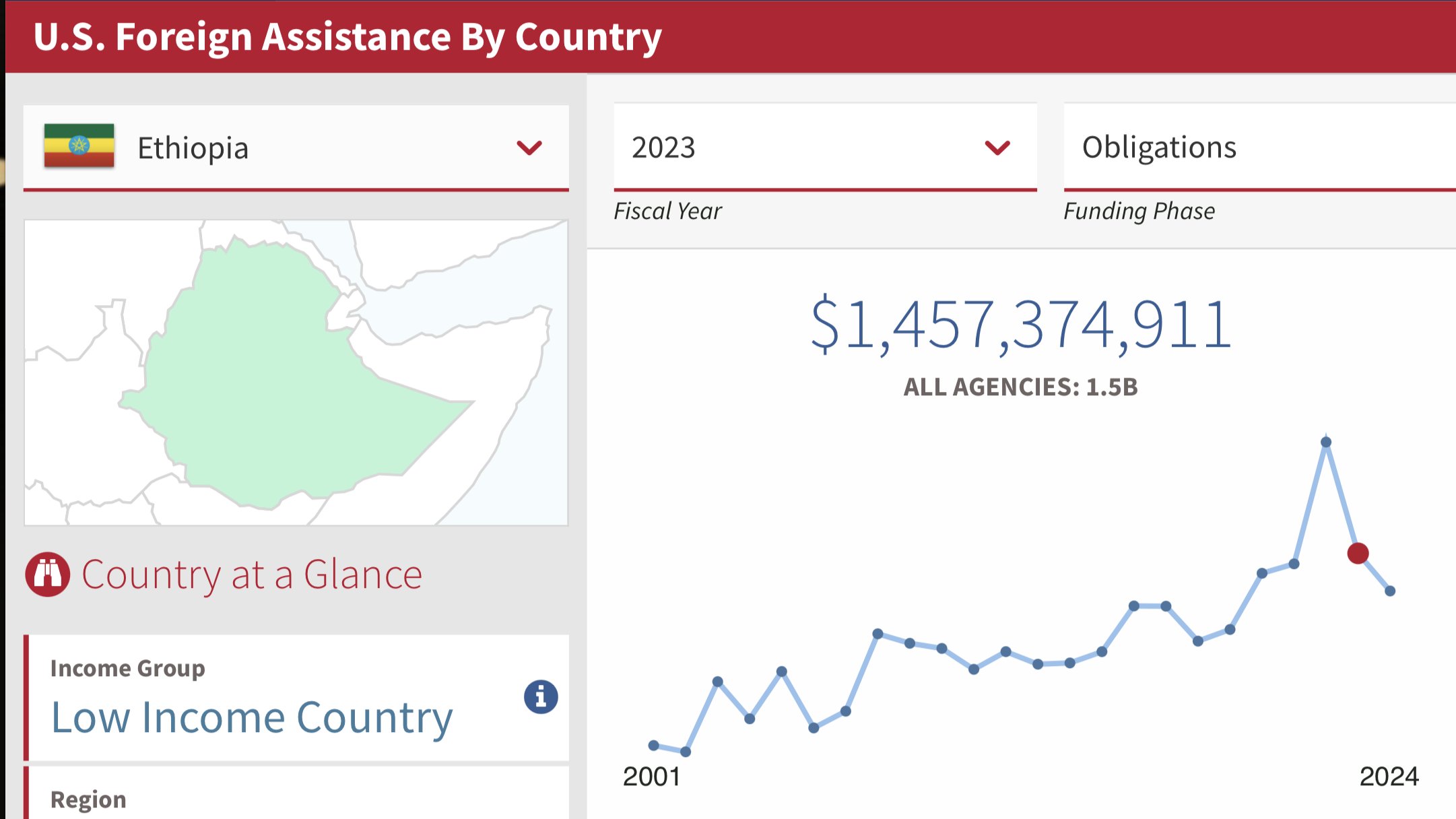
But for the majority of my internship, I’ve collected and analyzed data that will probably be ignored, and helped write reports that will most likely never be read. It’s incredibly frustrating trying to reconcile marginal improvements in healthcare, education and environmental sustainability with the billions of dollars of foreign aid flowing into Ethiopia each year ($3.5 billion, according to Global Humanitarian Assistance).
I’m beginning to understand why so many expats seem jaded. As a field, international development is incredibly degree-heavy. For example, nearly all entry-level positions with USAID require a master’s degree and several years of working experience. I’ve met several expats who invested so much time and education at the beginning of their careers only to get locked into a field that’s far less rosy than they expected. It’s taken me barely four weeks to become somewhat disillusioned with the field, and I can’t imagine coming to this realization after investing years of education in international development.
Most people starting a career in development never intend to lose touch with people out in the field, but nearly all career paths in development inevitably lead to less time on the ground and more time stuck behind a desk in some gated compound. As you gain experience, and move up the ranks in development organizations, it becomes easier and easier to distance yourself from the very people you’re supposedly trying to help.
Thankfully, my internship revolves around work on the ground. Although SCOPSO is funded by USAID, it’s actually carried out by an implementing partner, in this case an independent NGO called World Learning. That means I get to work with an all-Ethiopian staff. It also means that I actually get out to the field to visit schools. Every other week I pack a backpack of clothes, hop into the backseat of a Toyota Hillux, and spend five days driving all over Ethiopia with two World Learning program officers.
If there’s one thing I’ve learned during my internship, it’s that I only really experience Ethiopia when I leave Addis Ababa and everything it represents – hot water, internet cafés, pizza, my expat friends – behind. With no iPhone to distract me, I simply sit in the truck, chat with the program officers and listen to radio stations in Amharic, Ethiopia’s most widely spoken language. I’m always amazed how quickly the geography of Ethiopia changes, even during the course of a short car ride. My coworkers love to point out the different ethnic tribes as we drive by villages on our way to school visits.
When I first came to Ethiopia I pictured a relatively flat, dry country with one unified culture, populated by one group of people. In reality, it’s a country divided amongst a seemingly endless array of cultures, languages, and landscapes. It’s also a country divided by foreign aid. Even in the most rural parts of the country Ethiopia’s villages are divvied up between World Vision, USAID, South Korean Model Villages, Save the Children and many other development agencies.
Ethiopia was never colonized by a western power. Even so, I think a different kind of colonialism exists here today—one where thousands of foreigners with different visions of what is best for Ethiopia compete for the rights to experiment with the country’s villagers. I think you would be hard-pressed to find a single Ethiopian whose life hasn’t been touched by aid in some way, sometimes for the better.
My first week in Ethiopia, I interviewed a little boy at Yetimihirt Bilichta Primary School in Addis Ababa. The boy lost both his parents to AIDS and now lives in a rented bedroom with his older brother. Before USAID intervened at his school, he skipped class frequently, performing odd jobs to pay for food and rent. Now, using a shoeshine kit provided by SCOPSO, the boy shines shoes before and after school and on the weekends. He makes enough money ($.50 to $2.70 a day) to pay the rent, eat and attend class every day. He’s 11 years old.
At times during my internship, there are moments when I want to run away from international development completely. But how do you run away from a story like this?
As I near the halfway point of my time in Ethiopia I understand why so many expats struggle to share their perceptions of foreign aid. My thoughts change from day to day, and the more time I spend immersed in development the more confused and conflicted I become. I see the promise of foreign aid, and I see its peril. After this experience, I may never return to Ethiopia. I might go down an entirely different career path, but I’ll carry my experience this summer with me forever. I’ll always feel the constant draw of development forever pulling me back.
https://www.ethiopianreview.com/index/48111