Ethiopian News, Current Affairs and Opinion Forum
AbyssiniaLady
Member+
Posts: 7618
Joined: 04 Feb 2007, 05:44

Where is Eritrean government and where is the president

Post by AbyssiniaLady » 04 Mar 2024, 15:33

Fears of environmental disaster rise as ship sinks after Houthi attack


Updated March 3, 2024 at 12:11 p.m. EST|Published March 3, 2024 at 9:18 a.m. EST


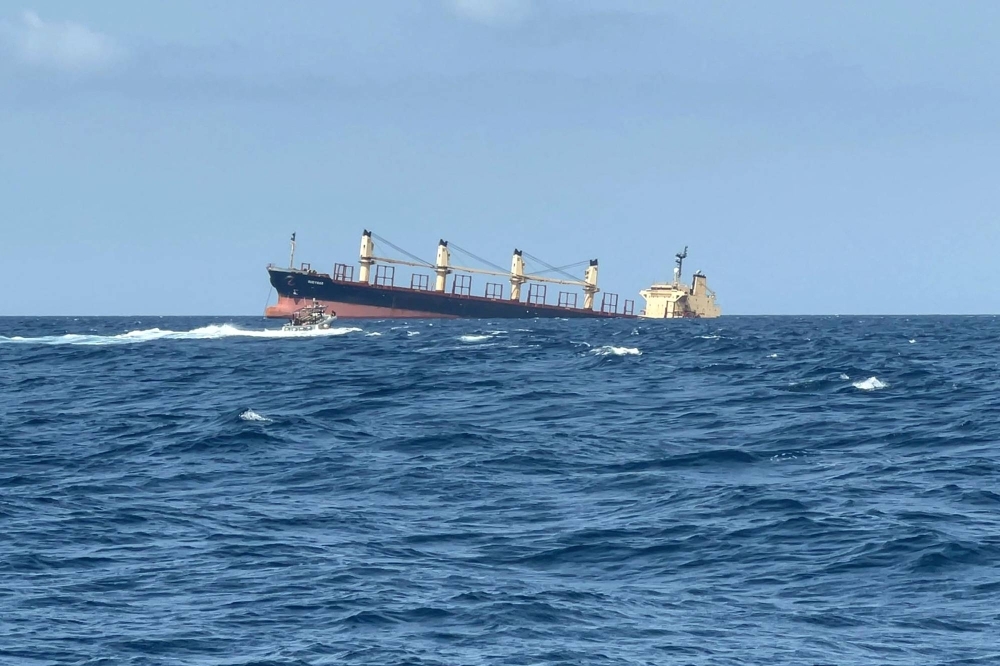
The Rubymar sinks in the Red Sea. (U.S. Central Command/AP)


A cargo ship sank in the Red Sea after an attack by Houthi militants, taking about 21,000 metric tons of fertilizer down with it, posing a significant environmental risk to one of the world’s busiest waterways and the home of many coral reefs.

The Rubymar was struck by an anti-ballistic missile fired by the Iranian-backed Houthis on Feb. 18 and sank early Saturday after “slowly taking on water” since the attack, U.S. Central Command said on social media early Sunday local time.

“The approximately 21,000 metric tons of ammonium phosphate sulfate fertilizer that the vessel was carrying presents an environmental risk in the Red Sea,” Centcom said, adding that the ship “also presents a subsurface impact risk to other ships transiting the busy shipping lanes of the waterway.”

The ship’s sinking “will cause an environmental disaster,” the Yemeni government said in a separate statement.


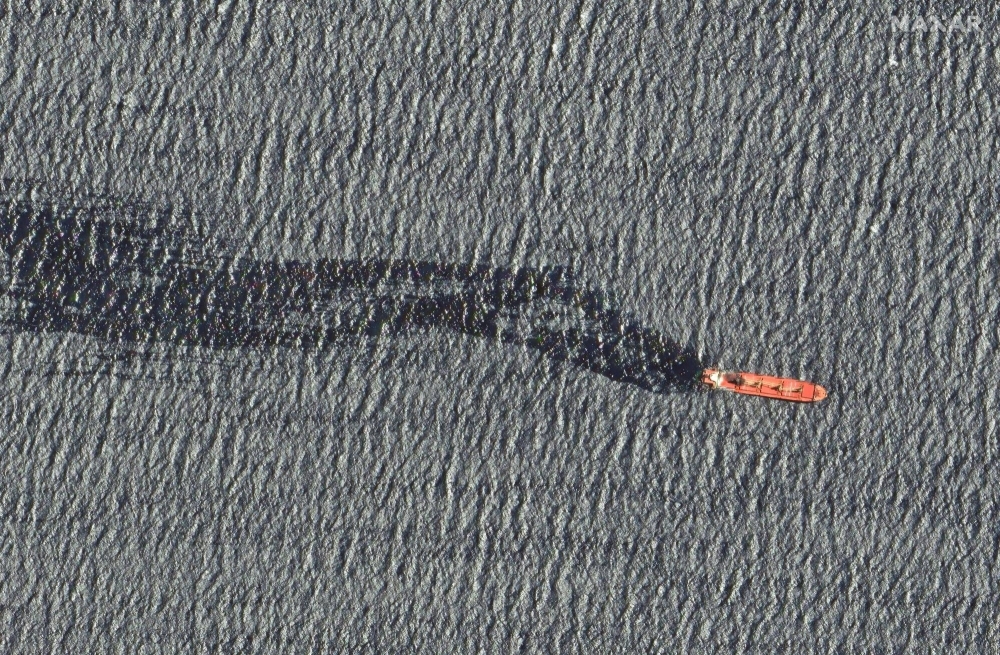
The Houthi attack last month caused an 18-mile oil slick and forced the crew to abandon the ship. The Djibouti Ports and Free Zones Authority, which coordinated the rescue of the Rubymar’s crew members, said the fertilizer onboard was classified as “very dangerous.”

It is believed to be the first time a vessel has been completely taken out by a Houthi strike. For months, the Houthis have been using missiles and drones to attack commercial and naval vessels traversing the Red Sea in protest of Israel’s war in Gaza.


The Rubymar founders off the coast of Yemen on Tuesday. (-/AFP/Getty Images)


“Yemen will continue to sink more British ships, and any repercussions or other damages will be added to Britain’s bill,” the Houthis’ deputy foreign minister, Hussein El-Ezzi, wrote Sunday on X.

However, a spokesperson with Britain’s Foreign, Commonwealth and Development Office said the Rubymar was not a British ship, but was operated by a Lebanese company, flagged to Belize and owned by a company registered in the Marshall Islands.

“We have been clear that any attacks on commercial shipping are completely unacceptable, and that the UK and our allies reserve the right to respond appropriately,” said the spokesperson, who also noted a high level of concern about the potential environment effects of the sinking.

Julien Jreissati, the program director at Greenpeace Middle East and North Africa, called for emergency response teams to be given “immediate access” to the site.

“As well as any further leaks of fuel oil from the engines, the sinking of the vessel could further breach the hull, allowing water to contact with the thousands of tons of fertilizer, which could then be released into the Red Sea and disrupt the balance of the marine ecosystems, triggering cascading effects throughout the food web,” Jreissati said.

“This disruption could have far-reaching consequences, affecting various species that depend on these ecosystems and, in turn, potentially impacting the very livelihoods of coastal communities.”


The Associated Press cited Ian Ralby, founder of maritime security firm I.R. Consilium, as saying that there were “many ways” the Red Sea could be harmed by the ship’s sinking and noted that if the ship remains intact underwater, the impact will be a slow trickle instead of a massive release.

Ralby noted that the sea has a circular water pattern, adding: “What spills in the Red Sea, stays in the Red Sea.”

The Rubymar was heading to Belarus from the United Arab Emirates when it was targeted, The Washington Post reported at the time. The British military’s United Kingdom Maritime Trade Operations confirmed in an update Saturday that “the vessel has dragged anchor … and is down by the stern.”


A satellite image shows the Rubymar in the Red Sea on Friday. (Maxar Technologies/Reuters)


The Houthis have said that ships linked to Israel or heading to its ports are legitimate targets, and the United States and Britain have launched several strikes against the group in an attempt to end the attacks — which do not appear to have stopped. On Saturday, Senior Houthi official Mohammed Ali al-Houthi slammed U.K. Prime Minister Rishi Sunak for Britain’s support of Israel and said Sunak was “responsible” for the ship’s fate. He also demanded that more humanitarian relief be allowed into Gaza.

Many large ships — which carry about 12 percent of all world trade — have altered their routes to avoid the Red Sea amid the Houthi threat, opting to travel the long way around southern Africa instead.

Such detours could add as much as a month in transit time, delaying the delivery of goods and further disrupting international commerce — a sector already grappling with the aftermath of the coronavirus pandemic, rising inflation and disruptions caused by Russia’s war in Ukraine.

“With fewer and fewer container ships to target, the odds of another spill with massive environmental impact has increased enormously,” Ralby told the AP.

https://www.washingtonpost.com/world/20 ... ck-red-sea


Stupid primitive Yemeni terrorists are polluting the Red Sea and Afar waters, I am angry, where is Isaias Afwerki?

kerenite
Member
Posts: 4680
Joined: 16 Nov 2013, 13:15

Re: Where is Eritrean government and where is the president

Post by kerenite » 04 Mar 2024, 16:08

AbyssiniaLady wrote:
04 Mar 2024, 15:33
Fears of environmental disaster rise as ship sinks after Houthi attack


Updated March 3, 2024 at 12:11 p.m. EST|Published March 3, 2024 at 9:18 a.m. EST


The Rubymar sinks in the Red Sea. (U.S. Central Command/AP)


A cargo ship sank in the Red Sea after an attack by Houthi militants, taking about 21,000 metric tons of fertilizer down with it, posing a significant environmental risk to one of the world’s busiest waterways and the home of many coral reefs.

The Rubymar was struck by an anti-ballistic missile fired by the Iranian-backed Houthis on Feb. 18 and sank early Saturday after “slowly taking on water” since the attack, U.S. Central Command said on social media early Sunday local time.

“The approximately 21,000 metric tons of ammonium phosphate sulfate fertilizer that the vessel was carrying presents an environmental risk in the Red Sea,” Centcom said, adding that the ship “also presents a subsurface impact risk to other ships transiting the busy shipping lanes of the waterway.”

The ship’s sinking “will cause an environmental disaster,” the Yemeni government said in a separate statement.


The Houthi attack last month caused an 18-mile oil slick and forced the crew to abandon the ship. The Djibouti Ports and Free Zones Authority, which coordinated the rescue of the Rubymar’s crew members, said the fertilizer onboard was classified as “very dangerous.”

It is believed to be the first time a vessel has been completely taken out by a Houthi strike. For months, the Houthis have been using missiles and drones to attack commercial and naval vessels traversing the Red Sea in protest of Israel’s war in Gaza.


The Rubymar founders off the coast of Yemen on Tuesday. (-/AFP/Getty Images)


“Yemen will continue to sink more British ships, and any repercussions or other damages will be added to Britain’s bill,” the Houthis’ deputy foreign minister, Hussein El-Ezzi, wrote Sunday on X.

However, a spokesperson with Britain’s Foreign, Commonwealth and Development Office said the Rubymar was not a British ship, but was operated by a Lebanese company, flagged to Belize and owned by a company registered in the Marshall Islands.

“We have been clear that any attacks on commercial shipping are completely unacceptable, and that the UK and our allies reserve the right to respond appropriately,” said the spokesperson, who also noted a high level of concern about the potential environment effects of the sinking.

Julien Jreissati, the program director at Greenpeace Middle East and North Africa, called for emergency response teams to be given “immediate access” to the site.

“As well as any further leaks of fuel oil from the engines, the sinking of the vessel could further breach the hull, allowing water to contact with the thousands of tons of fertilizer, which could then be released into the Red Sea and disrupt the balance of the marine ecosystems, triggering cascading effects throughout the food web,” Jreissati said.

“This disruption could have far-reaching consequences, affecting various species that depend on these ecosystems and, in turn, potentially impacting the very livelihoods of coastal communities.”


The Associated Press cited Ian Ralby, founder of maritime security firm I.R. Consilium, as saying that there were “many ways” the Red Sea could be harmed by the ship’s sinking and noted that if the ship remains intact underwater, the impact will be a slow trickle instead of a massive release.

Ralby noted that the sea has a circular water pattern, adding: “What spills in the Red Sea, stays in the Red Sea.”

The Rubymar was heading to Belarus from the United Arab Emirates when it was targeted, The Washington Post reported at the time. The British military’s United Kingdom Maritime Trade Operations confirmed in an update Saturday that “the vessel has dragged anchor … and is down by the stern.”


A satellite image shows the Rubymar in the Red Sea on Friday. (Maxar Technologies/Reuters)


The Houthis have said that ships linked to Israel or heading to its ports are legitimate targets, and the United States and Britain have launched several strikes against the group in an attempt to end the attacks — which do not appear to have stopped. On Saturday, Senior Houthi official Mohammed Ali al-Houthi slammed U.K. Prime Minister Rishi Sunak for Britain’s support of Israel and said Sunak was “responsible” for the ship’s fate. He also demanded that more humanitarian relief be allowed into Gaza.

Many large ships — which carry about 12 percent of all world trade — have altered their routes to avoid the Red Sea amid the Houthi threat, opting to travel the long way around southern Africa instead.

Such detours could add as much as a month in transit time, delaying the delivery of goods and further disrupting international commerce — a sector already grappling with the aftermath of the coronavirus pandemic, rising inflation and disruptions caused by Russia’s war in Ukraine.

“With fewer and fewer container ships to target, the odds of another spill with massive environmental impact has increased enormously,” Ralby told the AP.

https://www.washingtonpost.com/world/20 ... ck-red-sea


Stupid primitive Yemeni terrorists are polluting the Red Sea and Afar waters, I am angry, where is Isaias Afwerki?
AbyssiniaLady,

This is a homework for the whites. Eritrea can do nothing about it. As you can notice all the countries bordering the red sea are mum even egypt which is the most affected and which is losing half a billion US dollars every month from the suez canal revenue is tight-lipped.

Having said that,

"The primitive" Houthi made it clear that they want target any ship which is not bound to Israel. They several times declared that as soon as israel stops its genocidal campaign on GAZA they won't target any ship.

If the hypocrite whites genuinely want to bring peace to the red sea then they should put pressure on their little slave israel to stop the war.

Why do you blame the houthis only?

AbyssiniaLady
Member+
Posts: 7618
Joined: 04 Feb 2007, 05:44

Re: Where is Eritrean government and where is the president

Post by AbyssiniaLady » 04 Mar 2024, 19:45

kerenite
Why do you blame the houthis only?
I can't believe you have asked this question, Israel is clearly committing genocide in Gaza but Eritrea has nothing to do with the Israel-Hamas war and it shouldn't be made to pay the price for Israel's war on Gaza, the Yemeni terrorists are polluting the Sea, the air and destroying fish stocks and coral reefs, That British-owned cargo ship caused a significant oil spill into the Red Sea and almost sank near Assab, who is going to pay for the cleanup? the Houthis are playing with people's lives and it is unacceptable.

Eritrea must warn Yemeni Houthi militias.

Cigar
Senior Member
Posts: 12346
Joined: 19 Apr 2010, 00:03

Re: Where is Eritrean government and where is the president

Post by Cigar » 04 Mar 2024, 22:05

Abbysiniahoe, if I was the leader of Eritrea I will be on the side of the Houtis and shut the Red Sea completely.
The world needs to pay Eritrea and Yemen what is it paying to Egypt.
There is no international water between Eritrea and Yemen. International law says that countries which has sea access can only have a say in 20 miles radius. So there is not an inch of international water between Eritrea and Yemen and thus the world is at our mercy. 20 miles is owned by Eritrea and 20miles by Yemen. Actually it is like 15 miles each which debunks the 20 miles international water crap. I mean if I was the president of Eritrea.🇪🇷
Idiot now you grew heart and are worrying about fish? Obviously not. Get the fu’ck out.

AbyssiniaLady
Member+
Posts: 7618
Joined: 04 Feb 2007, 05:44

Re: Where is Eritrean government and where is the president

Post by AbyssiniaLady » 06 Mar 2024, 18:08

Yemen faces 'environmental disaster' as sunken ship threatens Red Sea


The Rubymar cargo ship sinking off the coast of Yemen on Feb. 27. The vessel had 21,000 metric tons of ammonium phosphate sulfate fertilizer on board. | AFP-Jiji


Aden –

The sinking of a bulk carrier off Yemen after a Houthi missile attack poses grave environmental risks as thousands of tonnes of fertilizer threaten to spill into the Red Sea, officials and experts warn.

Leaking fuel and the chemical pollutant could harm marine life, including coral reefs, and impact coastal communities that rely on fishing for their livelihoods, they said.

The Belize-flagged, Lebanese-operated Rubymar sank on Saturday with 21,000 metric tons of ammonium phosphate sulfate fertilizer on board, according to U.S. Central Command (CENTCOM).

It had been taking in water since a Houthi missile strike on Feb. 18 damaged its hull, marking the most significant impact on a commercial ship since the rebels started targeting vessels in November.

After already leaving a slick from leaking fuel while it was still afloat, the Rubymar now poses a new set of environmental threats underwater.

Abdulsalam al-Jaabi of the Yemeni government's environmental protection agency warned of "double pollution" that could impact 78,000 fishermen and their families — up to half a million people.

"The first pollution is oil pollution resulting from the large amount of fuel oil on board," he said, estimating the quantity to be over 200 metric tons.

The second risk is posed by the fertilizer, which is highly soluble and could harm "fish and living organisms such as coral reefs and seaweed" if released into the sea, Jaabi added.

The overall contamination could incur "significant economic costs," especially on coastal communities that depend on fishing for survival, the official warned.

Yemen's Iran-backed Houthi rebels seized the capital Sanaa in 2014, pushing the internationally recognized government south to Aden and prompting Saudi Arabia to lead a military coalition to help prop it up the following year.

A cease-fire since April 2022 has largely held.

The Rubymar is the first ship to sink since the Houthis started their Red Sea campaign that they say is in solidarity with Palestinians in the Gaza Strip amid the Israel-Hamas war.


A satellite image shows the Belize-flagged and U.K.-owned cargo ship Rubymar, which was attacked by Yemen's Houthis, according to the U.S. military's Central Command, before it sank, on the Red Sea, on March 1. | Maxar Technologies / via REUTERS


Plans to tow the vessel failed after port authorities in Aden, Djibouti and Saudi Arabia refused to receive the ship, according to Roy Khoury, the chief executive of Blue Fleet Group, the ship's Lebanese operator.

The Yemeni government's transport minister, Abdulsalam Humaid, said Aden's "refusal comes out of fear of an environmental disaster."

Djibouti also refused the ship over "environmental risks," said an official close to the country's presidency.

Saudi authorities were not immediately available for comment.

"Without immediate action, this situation could escalate into a major environmental crisis," warned Julien Jreissati, Middle East and North Africa program director at Greenpeace.

"The sinking of the vessel could further breach the hull, allowing water to contact with the thousands of tonnes of fertilizer," he added.

This would "disrupt the balance of the marine ecosystems, triggering cascading effects throughout the food web," Jreissati said.

U.N. Special Envoy Hans Grundberg said five experts from the United Nations Environment Programme were due in Yemen this week to conduct an assessment in coordination with the Yemeni environment ministry.

George Wikoff, the head of the U.S. Navy's Bahrain-based Fifth Fleet, warned that the "tonnes of chemicals carried on the sinking vessel Rubymar presents environmental risk to the Red Sea in the form of algae blooms and damaged coral."

Speaking during a conference in Doha on Tuesday, Wikoff said the ship also poses a threat to Red Sea navigation as it "presents a subsurface impact risk" to other ships transiting the critical waterway that normally carries around 12% of global trade.

It remains unclear who is ultimately responsible for the Rubymar, which was sailing from the United Arab Emirates to Bulgaria.

CENTCOM and maritime security firm Ambrey said the vessel was registered in Britain but its Lebanese operator said the ship was registered in the Marshall Islands.

Yemeni official Faisal al-Thalabi, a member of a crisis cell tasked with dealing with the Rubymar, said Yemen has been in contact with both the owner and operator but noted that the outreach "made no difference."

The owner "is part of the problem ... as he did not respond to official messages issued from Yemen," Thalabi said, without disclosing the owner's identity.

To contain a potential environmental crisis, Yemeni authorities will dispatch teams to collect water samples and survey beaches for pollution, Thalabi said.

Water sources and seawater desalination plants in coastal communities may also be affected, he cautioned.

"We have special containment booms and we are ready to place them in environmentally sensitive areas such as damaged islands" if they are contaminated, he said.

The "worst-case scenario is contamination," Thalabi said.


https://www.japantimes.co.jp/environmen ... ent-impact
Last edited by AbyssiniaLady on 06 Mar 2024, 20:33, edited 1 time in total.

AbyssiniaLady
Member+
Posts: 7618
Joined: 04 Feb 2007, 05:44

Re: Where is Eritrean government and where is the president

Post by AbyssiniaLady » 06 Mar 2024, 18:12

The dirty Yemeni terrorists must be stopped, Israel’s war on Gaza is none of our business, these animals are polluting Afar waters, The distance between Eritrea and Hanish Islands, where the British owned cardo ship was sunk is just 45 kilometers.

Deqi-Arawit
Senior Member
Posts: 15740
Joined: 29 Mar 2009, 11:10
Location: Bujumbura Brundi

Re: Where is Eritrean government and where is the president

Post by Deqi-Arawit » 06 Mar 2024, 18:17

AbyssiniaLady wrote:
06 Mar 2024, 18:12
The dirty Yemeni terrorists must be stopped, Israel’s war on Gaza is none of our business, these animals are polluting Afar waters, The distance between Eritrea and Hanish Islands, where the British owned cardo ship was sunk is just 45 kilometers.
Agame-lady!

We applaud our Yemeni neighbors for attacking the English in their shore because the same English awarded the Hanish island to Yemen. Hence, all and all.


AbyssiniaLady
Member+
Posts: 7618
Joined: 04 Feb 2007, 05:44

Re: Where is Eritrean government and where is the president

Post by AbyssiniaLady » 06 Mar 2024, 20:46

Diaper wearing elderly chimp.


The Rubymar ship was near Rahayta (Afar town in Eritrea) when it was struck on 18 February by one of two missiles, the 24-man crew were safely evacuated to Djibouti, however, the ship was disabled, leaking fuel and left to drift northwards for days while slowly taking on water – leaving a 29 kilometers oil slick in its wake before it finally succumbed to the damage and went under on 2 March in Hanish Islands, according to the United States military.


I know you don't care about coastal Afar people so please shut up your alcoholic mouth and focus on your non-existent
Agazian country.


Djibouti also refused the ship over "environmental risks," said an official close to the country's presidency.
Well done to Djibouti, money is not everything.

Deqi-Arawit
Senior Member
Posts: 15740
Joined: 29 Mar 2009, 11:10
Location: Bujumbura Brundi

Re: Where is Eritrean government and where is the president

Post by Deqi-Arawit » 06 Mar 2024, 20:58

AbyssiniaLady wrote:
06 Mar 2024, 20:46
Diaper wearing elderly chimp.


The Rubymar ship was near Rahayta (Afar town in Eritrea) when it was struck on 18 February by one of two missiles, the 24-man crew were safely evacuated to Djibouti, however, the ship was disabled, leaking fuel and left to drift northwards for days while slowly taking on water – leaving a 29 kilometers oil slick in its wake before it finally succumbed to the damage and went under on 2 March in Hanish Islands, according to the United States military.


I know you don't care about coastal Afar people so please shut up your alcoholic mouth and focus on your non-existent
Agazian country.


Djibouti also refused the ship over "environmental risks," said an official close to the country's presidency.
Well done to Djibouti, money is not everything.
Agame-qentir
Do we look concerned? if I was you, I would concentrate on the mini kilil which is engulfed with lawlessness and chaos. :arrow: :mrgreen:

Post Reply