Ethiopian News, Current Affairs and Opinion Forum
Zmeselo
Senior Member+
Posts: 37345
Joined: 30 Jul 2010, 20:43

"In Eritrea, corruption is 0%!": UNDP Staff

Post by Zmeselo » 13 Oct 2023, 08:17


Global development / Interview
‘Corruption is not an African issue’: bank chief says it’s time to believe in the continent’s future

Kenneth Mohammed

https://www.theguardian.com/global-deve ... nts-future

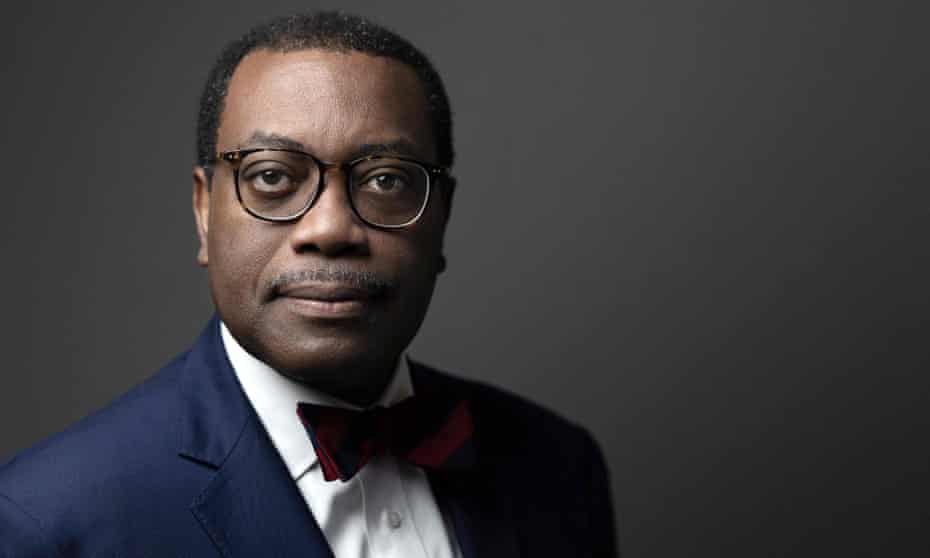
In an exclusive interview, Akinwumi Adesina, head of the African Development Bank and ‘optimist-in-chief’, says the outlook is good for a continent with both the workers of the future and the best investment opportunities

Fri 13 Oct 2023

A frica holds the future workforce for the ageing economies of the west, according to one of the continent’s leading financial figures, who also said it was time to ditch the myths around corruption and risk.

In an exclusive interview before this weekend’s World Bank https://www.theguardian.com/business/worldbank meetings in Morocco, Akinwumi Adesina said there was a resurgence of belief in Africa’s economic prospects and attacked negative stereotyping, adding that there was
every reason to be optimistic.
Now midway through his second five-year term as president of the African Development Bank (AfDB), the Nigerian former agriculture minister said the continent’s demographic advantage, expanding middle class, and vast investment opportunities meant a shift was under way.


The global financial crisis that brought the world down in 2008 – that was not in Africa. We have no Wall Street


And not before time – we’re tired of being at the bottom of the value chain,
Adesina said.
The fastest way to poverty is through exporting raw materials, but the highway to wealth is through global value chains by adding value to everything you have, from oil to gas to minerals to metals and food. We must add value.

The issue is we have to invest right; we have to make sure the governance environment is right; we have to make sure the incentives are right. Africa must take a position that it is no longer going to be at the bottom but at the top.
Established in 1964, the AfDB is Africa’s only AAA-rated financial institution, https://www.fitchratings.com/search/?query=afdb focused on what Adesina said were his “high fives”: enabling universal access to electricity, improving quality of life, industrialising, food self-sufficiency, and integrating the continent’s 54 countries to create larger and more efficient markets.
I don’t think that you can have development with pride unless you can feed yourself,
he said.


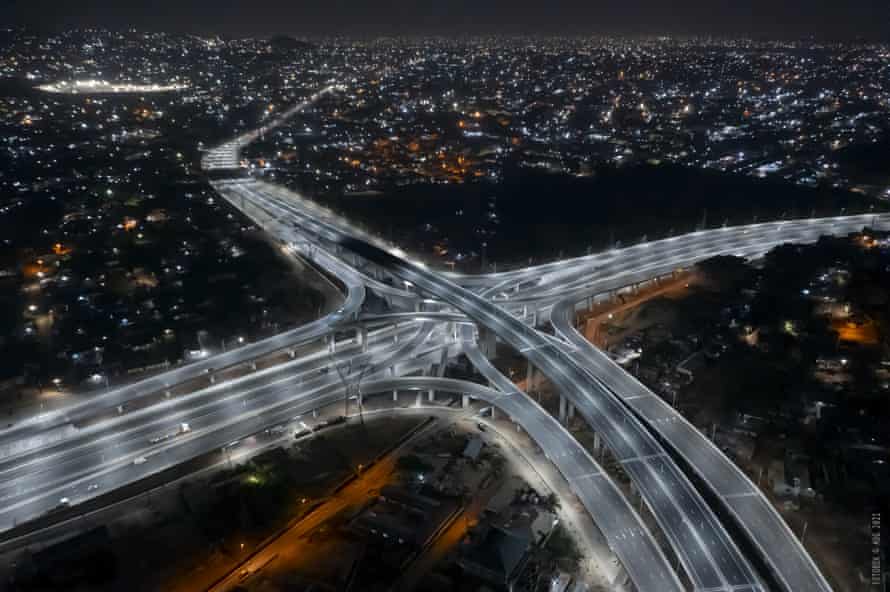
Ghana’s Pokuase interchange, near Accra. Africa’s default rate on infrastructure projects is the lowest in the world, says Adesina. Photograph: Courtesy of AfDB

He said the record-breaking amounts attracted from international investors in the past few years pointed to a renewed trust in the bank’s ability to fast-track development across Africa, particularly in the 37 low-income countries.
The 81 shareholders of the bank provided us with an increase in the bank’s capital at the end of 2019, from $93bn to $208bn [£76bn to £171bn] – the highest capital increase in the bank’s history. That was timely because little could we have imagined that we were going to move into the world of Covid.

So that increase allowed us very quickly to do an emergency support facility of $10bn in Covid crisis response for Africa and to immediately respond when the global food crisis was coming from the Russia’s war in Ukraine. We launched a $1.5bn emergency food-production facility to mitigate that global geopolitical crisis leading to a food crisis in Africa.


I’m an eternal optimist … Look at the numbers: Africa’s population is going to be 1.72bn by 2030. That’s larger than China, larger than India.


But he does want the international financial systems to be structured fairer, so that African nations have as equal access as the developed nations to reserves and liquidity. Adesina will be taking his call for equity to this weekend’s World Bank summit.
What is very important for us is the issue of the special drawing rights. Africa needs to have a lot more resources for financing climate, but what is actually out there it’s not enough. We have on the table right now the special drawing rights of the IMF. But when they were issued, US$650 billion were issued, Africa got US$33 billion. It’s 4.5%, it’s not good. You have small countries in Europe that got more and that is not fair and not inclusive.
With 190 member states in the IMF, Africa’s 54 countries should have been closer to receiving 25% of the special drawing rights.
African heads of state are asking for US$100 billion to be re channelled from the countries that got it and don’t use it, or need it,
Adesina said, and he believes this could be key to real progress.
We might think of maybe just adjusting it a little bit. And calling it supporting development revitalisation. That’s also SDRs.
Corruption, he said, is actually less in Africa than other parts of the world.
The global financial crisis that brought the world down in 2008 – that was not in Africa,
he said.
We have no Wall Street.
That collapse came from greed, from corruption, from fraud.

You have people cooking the books that are in the financial industry in Europe, not in Africa. Corruption is not an African issue.

The issue is, that’s not to say that there’s none. What you have to do is to continue to improve transparency, accountability and the use of public resources.
I just came back from Eritrea. https://www.theguardian.com/world/eritrea

I hear a lot of things about Eritrea but my first time there and I was talking to UN Development Programme staff. You know what they told me? That, in Eritrea, corruption is 0%. Why do we not talk about that? That’s the kind of thing that we want to do. For us as a development bank, we take good governance very, very seriously.

As far as I am concerned, people’s resources do not belong in other people’s pockets. Governments must be accountable to their people. There has to be transparency in how the resources are acquired and used. That’s why we have a governance programme. When you get money from us, we also support you technically. You are accounting for those resources.

I don’t want to minimise that Africa has a significant amount of illicit capital flows; it does – anything between $80bn and $100bn a year. But guess what? Those that are doing that are the multinational companies. And so what we have got to do is bring a searchlight to that.
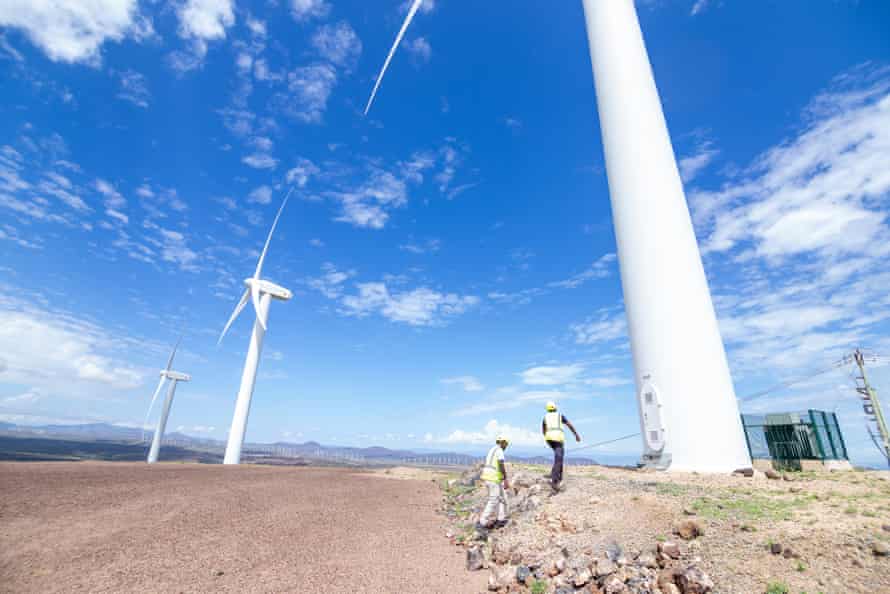
Three huge wind turbines against a blue sky
Wind turbines in Kenya’s Lake Turkana region. Renewable energy is a huge growth opportunity for Africa, Adesina says. Photograph: Muchura


However, the biggest challenge lay in the climate crisis, he said.
Africa today is losing $7bn to $15bn a year from climate change. And that’s going to rise to $50bn a year by 2030. Yet it receives only 3% of the global climate finance.
The African climate summit https://www.theguardian.com/global-deve ... ate-summit in Nairobi last month was a “great success”, he said.
For the first time, African countries got together to say we’re not going to talk about climate issues individually; we’re putting forward African issues collectively. That itself was a success.

I made a case at the summit that Africa’s wealth should be revalued based on the value of its natural capital; if you did that, these countries that are currently rich in natural capital, but are cash poor, will become richer. Many people think the largest carbon lung in the world is the Amazon. But it is the Congo basin forest. Now, if Africa is providing this global good, why is it not accounted for in its GDP?

I’m an eternal optimist – they call me Africa’s optimist-in-chief – because look at the numbers: Africa’s population is going to be 1.72 billion by 2030. Seven years from now. That’s larger than China, larger than India. 477 million of those are young people, between 15 and 35. That’s a skilled workforce; that would be the labour, a workforce for the world.

I can go into any country you have in Europe, or in Japan, and it’s a rapidly ageing workforce and they are looking for people. A skilled African population would be able to supply that. And when they do that, guess what: they put a lot of remittances back into the continent. So Africa is part of the solution of the lack of skills in the global labour market.
He said renewable energy and agriculture were also growth opportunities.
Africa has 60% of the world’s solar power. That is an $100bn investment opportunity for Africa to become able to light up itself, but also to harness a renewable energy and reduce global emissions.

Take food: the ability to feed the world by 2050 will not depend on the US or China, Japan or Europe, because 65% of the arable land left uncultivated in the world is in Africa. So what Africa then does with agriculture and how we all invest in agriculture will determine the future of food in the world.
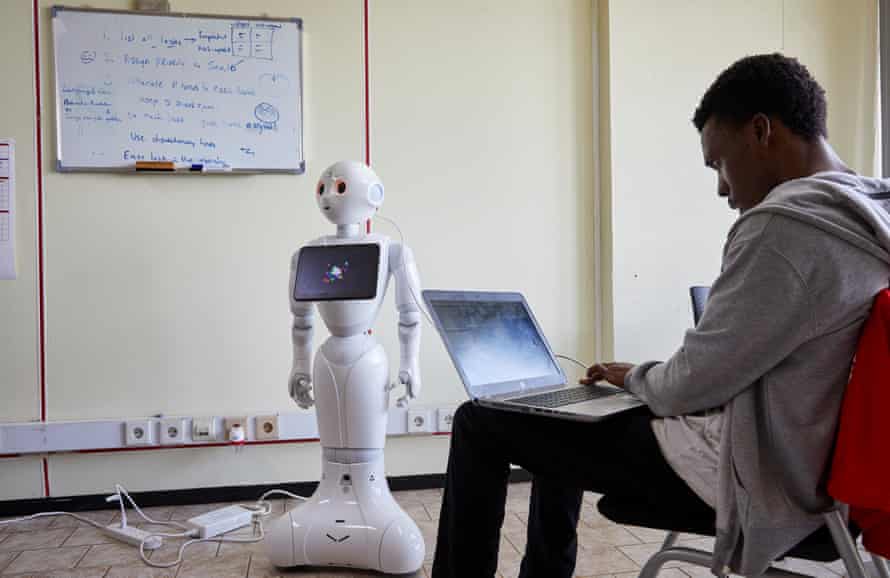
A Carnegie Mellon University Africa robotics project in Kigali, which has been financed by the African Development Bank as part of Rwanda’s ambitions to become an educational stronghold in information and computer technology. Photograph: Courtesy of AfDB
Also, take a look at other opportunities that Africa has: mobile money services, financial services – there’s tremendous growth. If you look at the number of people using mobile phones in Africa: 650 million. That is larger than the US and Europe together, and when you look at the financial services – whether mobile phone or e-health, insurance, digital payments – a revolution has happened in Africa.

You have $701bn just from digital payments in the world – 70% of digital payments in the world happening in Africa.

I go out and I see young people in the fintech industry that are leading today globally. So, my optimism, it’s realistic.

Take a look at electric vehicles. Guess what: the metals for all of that are in Africa. Africa has 80% of the world supply of platinum, 50% of copper, 40% of manganese. Huge amount of lithium all about.

We want to have investors globally investing. We have to make sure the governance environment is right, that incentives are right.

Don’t just believe what I say, believe what the data says. Bloomberg did an analysis of the default rates on infrastructure globally over the past 14 years, around the world. Guess what they found: Africa’s default rate is the lowest in the world – 2.1%. Eastern Europe: well over 10%. Asia: well over 8%.

We’re doing everything we can to make sure investments can land in Africa, like a plane on a smooth landing strip.

Zmeselo
Senior Member+
Posts: 37345
Joined: 30 Jul 2010, 20:43

Re: "In Eritrea, corruption is 0%!": UNDP Staff

Post by Zmeselo » 13 Oct 2023, 09:11


GENERAL
Somalia President Hassan Sheikh Mohamud’s Interview with Eritrean local media outlets

https://shabait.com/2023/10/13/somalia- ... a-outlets/

Oct 13, 2023

Earlier this week, the President of Somalia. H.E. Hassan Sheikh Mohamud paid a two-day successful working visit to Eritrea. During his visit, President Hassan Sheikh Mohamud engaged in extensive discussions with President Isaias Afwerki on the enhancement of bilateral relations and regional developments of shared interest. The President, was interviewed by local media at the end of his visit. Excerpts follow:

Q: Mr. President, first and foremost, we appreciate the opportunity you have given us amid your busy schedule. It’s well known, that Eritrea and Somalia have a deep historical connection. How do you assess, the current state of relations between the two nations?

A: Thank you very much. The relationship between Eritrea and Somalia has deep historical roots, going back to Eritrea’s struggle for independence and even further. We share a common heritage and numerous similarities, as neighboring nations. Eritrea has consistently supported Somalia since its independence, and this support continues today. Whenever there are initiatives aimed at fostering stability and peace in Somalia, Eritrea stands with us. Currently, Eritrea’s support for Somalia goes above and beyond what many other countries provide. The main challenge we face, is security. Eritrea may not be a large or resource-rich nation, but it is a genuine country with an immaculate heart for Somalia and has consistently shown genuine and unwavering support for Somalia; sharing its resources and assistance. Our relationship is stronger now than it has been in the 30 years, since Eritrea’s independence.

Q: There are collaborative programs, between Somalia and Eritrea. What are the most significant of these initiatives?

A: Eritrea and Somalia, both situated in the Horn of Africa along the Red Sea, share common interests in areas such as security, diplomacy, and regional integration. Our collaboration spans these shared interests, as well as cultural ties. However, our active joint efforts are primarily focused on security, regional integration, and diplomatic matters.

Q: Could you provide an assessment of Somalia’s current security situation?

A: Stability and security in Somalia are crucial, not only for the country itself but also for the entire region. Somalia, has moved beyond its internal civil war and now faces the challenge of combating global terrorism. Al-Shabaab, the terrorist organization, poses a threat that extends beyond Somalia’s borders. It is a regional, continental, and global menace. Eritrea, has been steadfast in supporting Somalia’s fight against this significant threat. Eritrea contributes morally, materially, through training, and by equipping our security forces, while also providing valuable advice on security techniques. Eritrea’s support, is solely aimed at ensuring Somalia can stand on its own feet and secure its own future. The people of Eritrea stand with the people of Somalia, in this struggle.


Q: Speaking of Al-Shabaab, Mr. President, could you elaborate on what Al-Shabaab is, its objectives, and why it is often used as a pretext for interference in Somali affairs?

A: Al-Shabaab, is an ideology-driven organization with goals that transcend borders and nationalities. Its threat extends far beyond Somalia’s borders. The reason Al-Shabaab is active in Somalia is due to the existence of a large, ungoverned territory within the country for an extended period. This ungoverned territory, provided a fertile ground for terrorists to operate when the state was weak and unable to control these areas. Al-Shabaab recruits not only Somalis but also individuals from neighboring countries, Asia, and Europe who share their extremist ideology. The presence of an ungoverned territory, where the state cannot exercise control allows these terrorists to flourish and providesthem breeding ground. Al-Shabaab thrives, when a territory lacks proper governance and security. Thus, it poses a threat not only to Somalia but to the entire region and the world at large.

Q: Who supports and funds, the Al-Shabaab movement?

A: Terrorist organizations around the world, have various supporters with hidden interests. Those who support global terrorists are, in essence, terrorists themselves, albeit with different motives. They may aim to weaken governments or alter existing conditions, whether for ideological or economic reasons. Al-Shabaab, capitalizes on recruiting unemployed youth and the impoverished and uneducated. In Somalia, we have developed a multi-faceted strategy to counter Al-Shabaab. This strategy encompasses military operations, ideological efforts, and economic measures. We emphasize the importance of demonstrating to our citizens, that Al-Shabaab’s ideology does not represent genuine Islam. On 14 October 2018, they killed almost a thousand people in just one incident. That was like a 9/11, for Somalia. These are the kind of people, who we are dealing with. So we need to tell our people that they are not who claim to be, but masking themselves as Muslims. These are mafia, terrorists, they have nothing to do with Islam. We work with religious scholars from diverse backgrounds, including Salafi, Sufi and Akhwan schools of thought, to denounce Al-Shabaab’s distorted interpretation of Islam. These scholars publicly declare that Al-Shabaab’s actions are not Islamic and do not align with the principles of Islam, such as the prohibition of killing fellow Muslims. We have a TV Channel where these scholars publicly explain that actions of al-Shabaab are not Islamic, and has nothing to do with Islam. This strategy has awakened many people who may not be deeply knowledgeable about Islam, but love and respect it. We aim to show them that Al-Shabaab is a violent and criminal organization, that misuses the name of Islam.

Additionally, we have implemented an economic strategy to combat Al-Shabaab. The organization raises substantial funds through extortion, intimidation, and threats against businesses. Their financial transactions are conducted through banks, remittances or through mobile money transfer systems. We have responded by controlling these financial flows within the system, closely monitoring suspicious financial activities, and taking appropriate actions. This approach, has limited their ability to collect and transfer funds freely.

In summary, we are pursuing a multi-pronged strategy to weaken Al-Shabaab’s ideological influence and financial capabilities while also conducting military operations against them.

Q: African Peacekeeping forces, are present in Somalia. How would you assess their role?

A: The African Union Mission in Somalia (AMISOM) has been in Somalia since 2007, and they have played a crucial role in the country’s stabilization. At the time of their arrival, Al-Shabaab held significant territory, and AMISOM successfully pushed them back; particularly in the capital, Mogadishu and other key areas. Most importantly, AMISOM provided Somalia with a valuable opportunity to organize and establish a functioning government. Their contribution has been significant, and they have sacrificed the lives of their citizens to help Somalia grow and progress.

We are deeply grateful for their support. Moreover, AMISOM’s involvement demonstrates that African problems can be addressed with African solutions. AMISOM’s mission in Somalia is a success story, and it has allowed Somalia to build the capacity to take over its own security responsibilities. Within 15 months, Somalia will assume full responsibility for its security.

Q: Your Excellency, you mentioned that the Somali government will assume the responsibility of security in the near future. How do you view the role of the Somali forces trained in Eritrea in this endeavor, especially those who have already completed their training and are currently serving in Somalia?

A: Eritrea has gone above and beyond, in its support of Somalia. Eritrea has trained and equipped over 10,000 Somali soldiers; including specialized forces, who will play vital roles in our future national army, naval forces, and air forces. Somalia was once known for its strong army, but circumstances have changed. With evolving global threats, Eritrea has provided the foundation for the rebuilding of our national military. While other nations have also contributed, Eritrea’s commitment has been particularly significant. We already have Eritrea-trained soldiers serving in Somalia, and they are performing exceptionally well.

Q: In conclusion, Mr. President, if you have a message for the Eritrean people or the Somali people in general during your visit to Eritrea, please feel free to share it.

A: I would like to express my heartfelt gratitude to the people of Eritrea for their unwavering support for Somalia, under the leadership of His Excellency President Isaias Afwerki. Eritrea’s contributions during our challenging times, will always be remembered and cherished.

To the Somali people, wherever they may be, Somalia is your country, and you are the ones who will restore it to its rightful place in the global community.

Zmeselo
Senior Member+
Posts: 37345
Joined: 30 Jul 2010, 20:43

Re: "In Eritrea, corruption is 0%!": UNDP Staff

Post by Zmeselo » 13 Oct 2023, 09:34


🇪🇷 Athletes Dawit seare and Filmon Kubrom will participate in The Bridgestone Great 10K in Berlin 🇩🇪 15 Oct, 2023.

Filmon kubrom, is Eritrean military 10000m champion 2023.


🇪🇷 Dawit Yemane of @bikeaid had a big day in the breakaway, securing the White Jersey at the Presidential Cycling Tour of Turkey. The Babadag climb, is one of the toughest in the world.
#TUR2023 #touroftürkiye

01 LUTSENKO Alexey Astana Qazaqstan Team 03:34:17
02 ZWIEHOFF Ben BORA-hansgrohe + 12
03 TEJADA Harold Astana Qazaqstan Team + 27
04 LIPOWITZ Florian BORA-hansgrohe + 48
05 BADILATTI Matteo Q36.5 Pro Cycling Team + 55
06 PELLIZZARI Giulio Green Project-Bardiani CSF-Faizanè + 01:24
07 OKAMIKA Ander Burgos-BH + 03:00
08 GUÉRIN Alexis Bingoal WB + 03:28
09 MEURISSE Xandro Alpecin-Deceuninck + 03:41
10 NOVAK Domen UAE Team Emirates + 03:44
11 PALZER Anton BORA-hansgrohe + 04:04
12 YEMANE Dawit BIKE AID + 05:18


Zmeselo
Senior Member+
Posts: 37345
Joined: 30 Jul 2010, 20:43

Re: "In Eritrea, corruption is 0%!": UNDP Staff

Post by Zmeselo » 13 Oct 2023, 12:58


LOCAL NEWS
Successful heart operations on children

https://shabait.com/2023/10/13/63152/

Asmara, 13 October 2023 – In cooperation with Italian and Eritrean physicians, Orotta National Referral Hospital successfully performed cardiac surgery on nineteen children.

According to Prof. Tsigereda Gebrehiwet, head of the hospital’s pediatrics unit, this is the second time the program has been run since the COVID-19 pandemic.

The members of the Italian non-governmental charity association, reported that the 25-member team of the association has conducted successful heart surgery on 25 children and that attests to the growing cooperation between the Italian and Eritrean medical teams.


On their part, the children’s parents expressed gratitude for the assistance given to their kids and the attention the medical staff showed throughout the procedure.

Indicating, that heart surgery has been performed on 1,600 children since 2002 and that the procedure significantly aided in the experience and technology transfer between the medical teams in Eritrea and Italy.


______________


Amb. Prakash Chand met Mr. Samuel Berhane Mebrahtu and Mr. Amanuel Eyob Gilamikael at the Embassy today and wished them all the best for their @ITECnetwork course at the Indian Institute of Remote Sensing, Dehradun.

Mr. Yosief Berhane Debesu will take a course at the National Institute of Micro Small and Medium Enterprises, Hyderabad.

Mr. Noah Berhane Twelde, course at the Centre for Development of Advanced Computing (C-DAC), NOIDA.

Mr. Biniam Weldeslasie Asgedom and Mr. Yemaneab Weldeab Ghebrewold course at the National Institute of Wind Energy, Chennai.

Mr. Semere Yohanes Gebresilasie and Mr. Tekie Tesfamariam Goitom courses at the Environment Protection Training and Research Institute, Hyderabad and the Indian Institute of Remote Sensing, Dehradun.

Mr. Mulugeta Gebrezgabiher Sibhatu, Mr. Mewael Debesay Semere, and Mr. Simon Kefela Beraki course at the National Institute of Solar Energy, Gurugram.

Mr. Dileep K. Gupta, Attache, met Mr. Jupiter Girmay Medhanie and Mr. Fiseha Tekleweyni Negash course at the Central Institute of Fisheries Technology, Cochin.

We wish them all the best!
@IndiaEritrea


_________________


Embassy of the State of Eritrea in the PRC welcomed and encouraged young Eritrean students, who have recently come to different Chinese Universities for their postgraduate studies. Ambassador Tsegai, explained the need for perseverance and hard work for outstanding results. @sirakhabtemich1
Last edited by Zmeselo on 13 Oct 2023, 15:49, edited 1 time in total.

Zmeselo
Senior Member+
Posts: 37345
Joined: 30 Jul 2010, 20:43

Re: "In Eritrea, corruption is 0%!": UNDP Staff

Post by Zmeselo » 13 Oct 2023, 15:48


Helen Haile (Eritrea)

Helen Haile holds a Bachelor’s in Aerospace Engineering and recently completed her Master’s in Space System Engineering. She is the SGAC NPoC for Eritrea, passionate about promoting the incredible benefits of space exploration for humanity. She actively contributes to the diversity and gender equality team at SGAC and advocates strongly for inclusivity, particularly in relation to gender and disability, as she firmly believes in equal opportunities for all. Her primary focus is raising public awareness and fostering a deeper understanding of the numerous advantages and positive impact that space endeavours have on our society. By combining her academic background, advocacy efforts, and continuous personal growth, she aims to make meaningful contributions to the advancement of space technology, positively influencing society. She is committed to shaping a more inclusive and forward-thinking future for all.
An inclusive society, is something we should all aspire to and inspire to make a change in things we should change.
https://spacegeneration.org/sgac-announ ... ovnG61g6vo


______


There’s never been a better time for the developing world to join, what was once a field reserved for the wealthiest of nations.

Post Reply