
Ethiopian News, Current Affairs and Opinion Forum
Zmeselo
Senior Member+
Posts: 37347
Joined: 30 Jul 2010, 20:43

Egyptians complain over Netflix depiction of Cleopatra as black

Post by Zmeselo » 20 Apr 2023, 18:38


Egyptians complain over Netflix depiction of Cleopatra as black


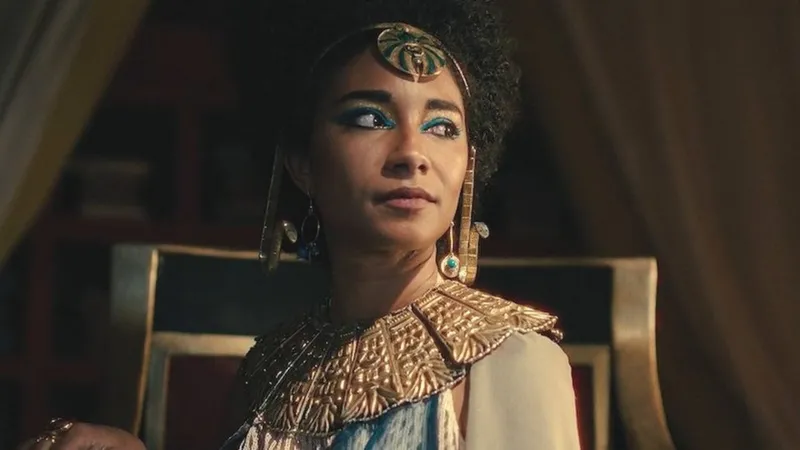
African Queens: Queen Cleopatra features British actress Adele James as the Egyptian ruler IMAGE SOURCE, NETFLIX

By David Gritten

https://www.bbc.com/news/world-middle-east-65322821

Published: 1 day ago

A Netflix docudrama series that depicts Queen Cleopatra VII as a black African has sparked controversy in Egypt.

A lawyer has filed a complaint that accuses African Queens: Queen Cleopatra of violating media laws and aiming to
erase the Egyptian identity.
A top archaeologist insisted Cleopatra was
light-skinned, not black.
But the producer said
her heritage is highly debated
and the actress playing her told critics:
If you don't like the casting, don't watch the show.
Adele James made the comment in a Twitter post featuring screengrabs of abusive comments that included racist slurs.

Cleopatra was born in the Egyptian city of Alexandria in 69 BC and became the last queen of a Greek-speaking dynasty founded by Alexander the Great's Macedonian general Ptolemy.

She succeeded her father Ptolemy XII in 51 BC and ruled until her death in 30 BC. Afterwards, Egypt fell under Roman domination.

The identity of Cleopatra's mother is not known, and historians say it is possible that she, or any other female ancestor, was an indigenous Egyptian or from elsewhere in Africa.

Netflix's companion website Tudum reported in February https://www.netflix.com/tudum/articles/ ... -cast-news that the choice to cast Adele James, a British actress who is of mixed race, as Cleopatra in its new documentary series was
a nod to the centuries-long conversation about the ruler's race.
Jada Pinkett Smith, the American actress who was executive producer and narrator, was meanwhile quoted as saying:
We don't often get to see or hear stories about black queens, and that was really important for me, as well as for my daughter, and just for my community to be able to know those stories because there are tons of them!
But when the trailer was released last week many Egyptians condemned the depiction of Cleopatra.

Zahi Hawass, a prominent Egyptologist and former antiquities minister, told the al-Masry al-Youm newspaper: https://www.almasryalyoum.com/news/details/2864818
This is completely fake. Cleopatra was Greek, meaning that she was light-skinned, not black.
Mr Hawass said the only rulers of Egypt known to have been black were the Kushite kings of the 25th Dynasty (747-656 BC).
Netflix is trying to provoke confusion by spreading false and deceptive facts that the origin of the Egyptian civilisation is black,
he added and called on Egyptians to take a stand against the streaming giant.

On Sunday, lawyer Mahmoud al-Semary filed a complaint with the public prosecutor https://www.cairo24.com/1783644?fbclid= ... WQ_UvMO41k demanding that he take
the necessary legal measures
and block access to Netflix's services in Egypt.

He alleged that the series included visual material and content that violated Egypt's media laws and accused Netflix of trying to
promote the Afrocentric thinking... which includes slogans and writings aimed at distorting and erasing the Egyptian identity.
Three years ago, plans for a movie about Cleopatra starring the Israeli actress Gal Gadot triggered a heated debate on social media, with some people insisting that the role should instead go to an Arab or African actress.

Gadot subsequently defended the casting decision, saying:
We were looking for a Macedonian actress that could fit Cleopatra. She wasn't there, and I was very passionate about Cleopatra.

Temt
Member+
Posts: 5480
Joined: 04 Jun 2013, 22:23

Re: Egyptians complain over Netflix depiction of Cleopatra as black

Post by Temt » 20 Apr 2023, 18:57

ኣየ ናይ ኣዕራብ ነገር! Do these people know that according to the European, American, Canadian, and New Zealanders doctrine, a minute drop of black persons' genes makes them illegible to be classified as the white race, which they apparently are trying to be part of? "ወቺ ጉድ"! ድዮም ዝበሉ ተዛረብቲ ኣምሓራ?

Zmeselo
Senior Member+
Posts: 37347
Joined: 30 Jul 2010, 20:43

Re: Egyptians complain over Netflix depiction of Cleopatra as black

Post by Zmeselo » 21 Apr 2023, 03:53

Temt wrote:
20 Apr 2023, 18:57
ኣየ ናይ ኣዕራብ ነገር! Do these people know that according to the European, American, Canadian, and New Zealanders doctrine, a minute drop of black persons' genes makes them illegible to be classified as the white race, which they apparently are trying to be part of? "ወቺ ጉድ"! ድዮም ዝበሉ ተዛረብቲ ኣምሓራ?
Are they aware too, that they call them sand ni66ers? :lol:

justo
Member
Posts: 3226
Joined: 05 May 2013, 17:54

Re: Egyptians complain over Netflix depiction of Cleopatra as black

Post by justo » 21 Apr 2023, 11:48

These people ar funny. They come with Alexander in 300 BC and from the deserts of Arabia in 600 AD and want to disown Bejas, Eris, Ethios, Somalis. But when it comes to Cleopatra, they are right. She is all theirs. As we Eris say, we don't claim anything that is not ours and do not give away that is ours.

Abere
Senior Member
Posts: 15434
Joined: 18 Jul 2019, 20:52

Re: Egyptians complain over Netflix depiction of Cleopatra as black

Post by Abere » 21 Apr 2023, 12:24

“To ask whether someone was ‘Black’ or ‘white’ is anachronistic and says more about modern political investments than attempting to understand antiquity on its own terms,” Rebecca Futo Kennedy, an associate professor of Classics at Denison University, tells TIME.

https://time.com/6273435/cleopatra-race-debate-netflix/
________________________________________________________________
Arabs named Ethiopian Keffa Coffee as "Coffe Arabica", but Coffee does not originate in Arabic country. Ethiopia is its origin.
We are tired of hearing thefts. Historically, Africa has been robber almost everything: faith, deity, architecture etc. In stead of appreciating their contribution, robbing and demeaning. These Egyptians guys should have watched it and just get the message out of it, but they make noises out of it.
____________________________________________________________

Zmeselo
Senior Member+
Posts: 37347
Joined: 30 Jul 2010, 20:43

Re: Egyptians complain over Netflix depiction of Cleopatra as black

Post by Zmeselo » 21 Apr 2023, 12:38

justo wrote:
21 Apr 2023, 11:48
These people ar funny. They come with Alexander in 300 BC and from the deserts of Arabia in 600 AD and want to disown Bejas, Eris, Ethios, Somalis. But when it comes to Cleopatra, they are right. She is all theirs. As we Eris say, we don't claim anything that is not ours and do not give away that is ours.
They actually never came to the area with Alexander, either. Maybe some, as mercenaries. The Romans took over after the Greeks & much later, came the Arabs.

As for Cleopatra although of greek origin, so many centuries after her ancestor Ptolemy, it's very possible that she became mixed/half caste.

The funny thing is even the Greeks don't seem bothered she's being played by a black actress, but the racist Arabs are.

justo
Member
Posts: 3226
Joined: 05 May 2013, 17:54

Re: Egyptians complain over Netflix depiction of Cleopatra as black

Post by justo » 21 Apr 2023, 15:00

Zmeselo wrote:
21 Apr 2023, 12:38
As for Cleopatra although of greek origin, so many centuries after her ancestor Ptolemy, it's very possible that she became mixed/half caste.
But do you think we need her, when we have Nefertiti and Hatshebsut. If they promise to leave Tie, Nefertiti and Hatshepsut alone, they can have her.

Zmeselo
Senior Member+
Posts: 37347
Joined: 30 Jul 2010, 20:43

Re: Egyptians complain over Netflix depiction of Cleopatra as black

Post by Zmeselo » 21 Apr 2023, 15:17

justo wrote:
21 Apr 2023, 15:00
Zmeselo wrote:
21 Apr 2023, 12:38
As for Cleopatra although of greek origin, so many centuries after her ancestor Ptolemy, it's very possible that she became mixed/half caste.
But do you think we need her, when we have Nefertiti and Hatshebsut. If they promise to leave Tie, Nefertiti and Hatshepsut alone, they can have her.
Personally, I don't care to be honest. I just found their squabble, interesting to share here.

Union

Re: Egyptians complain over Netflix depiction of Cleopatra as black

Post by Union » 21 Apr 2023, 16:01

The BBC is mocking the Egyptians for still thinking ancient Egyptians were them. The British know very well Egypt was known as lower ETHIOPIA up untill 320 after Jesus.

The British were hiding the truth for so long. The Egyptians believed the lies but the British now no longer want keep the lies going. It does not benefit them anymore, or they gave up fighting because Ethiopia is on her way back to her glory - the hidden cities are about to emerge out of Ethiopia!, at least.

Well, let the Egyptians cry. They must accept the truth or be miserable!

VIVA ETHIOPIA!!!

Abe Abraham
Senior Member
Posts: 14414
Joined: 05 Jun 2013, 13:00

Re: Egyptians complain over Netflix depiction of Cleopatra as black

Post by Abe Abraham » 21 Apr 2023, 16:30

  • A question of colour

    Is racial prejudice on the rise in Egypt, or are Egyptians merely obsessed with skin colour? Gamal Nkrumah (the son of President Kwame Nkrumah whose is Egyptian on his mother's side ) searches for answers
    --------------------------------------------------------------------------------

    It is not an entirely curious fact that most Egyptians seem fixated on blue-eyed blondes. For one thing, the country is peopled essentially by dark-skinned, dark-haired people, and familiarity does breed contempt. Blue-eyed blondes are an exotic rarity. Mind you, an ever increasing number of well-heeled Egyptian women are desperately resorting to skin-lightening creams, light coloured-tinted contact lenses and hair bleaching dyes in an often farcical attempt to attain the golden-locked look.

    Admittedly, all this is part of a global trend. Yellow-thatched Japanese youngsters are a common sight in Tokyo nowadays. Mercifully, the phenomenon hasn't quite caught on in Cairo, yet.

    The whitening of Egypt has become a lucrative industry. Television commercials bombard viewers with a baffling array of skin-lightening creams and hair-straightening contraptions, creams and shampoos to effect the "white" look.

    "Nothing is more dangerous than an idea when it's the only one you have," noted French philosopher Emile Chartier. Perhaps, he didn't have the single-minded struggle to be "white" in mind. To pass as white has become, for some, their veritable raison d'être.

    The Egyptians see themselves as essentially sumr, or "dark". However, for all intents and purposes this is a most confusing and contentious term. If an individual is described as asmar, the masculine, or samra, the feminine, they could range in colour from the southern Sudanese ebony or indigo black, a west African chocolate or mahogany black, the various copper and honey-toned Ethiopian and Somali types, to the olive or off-white dark-haired Mediterranean or Middle Eastern-looking type.

    Samara, or "Darkie", traditionally a term of endearment, has today taken on pejorative connotations in contemporary Egypt. The ugly forces of "shadism" are also at work in the country. Shadism, as a social and politico-economic occurrence was, and perhaps still is, pervasive in the Caribbean and among African Americans. Lighter-skinned blacks, who presumably had a greater infusion of white blood have been considered socially superior to darker, full-blooded blacks. Suspected of actually being the slave-masters' progeny, they have been encouraged to assume overseer roles over the unadulterated blacks. In due course, they were accorded special social status, assumed political leadership and monopolised what economic opportunities presented themselves to the black elites. Those who have "good hair", meaning straighter and less kinky hair were also favoured.

    In Egypt, no such historical tradition existed. But the perverted logic of shadism is sadly very much at work. Darker is uncouth, unpolished, crude and common. Lighter is, accordingly, more desirable, preferred, simply superior, and to ignore this is to ignore one of the salient features of contemporary Egypt.

    At some theoretical level it is understandable that black conjures up images of the ugly, pathetic and wretched in the Egyptian psyche. Egypt has become progressively whiter over the millennia. Even so, songs praising dark-skinned or black beauty ranging from the now classic "Asmar ya asmarani" [Dark one, oh dark one] sung by a coterie of now long-departed superstars including Faiza Ahmed and Abdel-Halim Hafez to the more contemporary "Habibi laun al-chocolata", [My love is the colour of chocolate], by Nubian singer Mohamed Mounir. This genre has always been a characteristic feature of Egyptian lyrical folklore.

    Songs such as "Asmar malek rouhi" [The dark one owns my soul], and "Alu al-samar ahla walla al-bayad ahla" [They asked whether darkness was more comely than whiteness], another popular song by Soad Mohamed, clearly indicate a collective acknowledgment of the attractiveness of darkness among Egyptians. Indeed, darkness is generally perceived to confer upon the individual the peculiarly Egyptian concept of damm khafif loosely translated as "charming" or "humorous". This is attested to by the popularity of references to darkness in the context of love and romance in the popular Egyptian song.

    "Asmar, asmar tayeb malu, walla samaru sirr gamalu" [So what if he is dark, that is the secret of his beauty], Mohamed Qandil's "Gamil wa asmar" [Beautiful and Dark], predated the "Black is Beautiful" slogan of the 1970s civil rights movement in the United States. Racism as an institutionalised political and economic phenomenon never existed in Egypt.

    There are many Nubian and Sudanese singers based in Cairo, the cultural capital of the Arab world, but their music is a different genre altogether. A few, such as Jawaher, a popular Sudanese singer, manage to penetrate the Egyptian pop-song market with smash hits such as "Ana bahebb al-asmarani" . Yet another is "Gani al-asmar gani" [The dark one came to me] a hit song sang by Etab, a Saudi singer who is herself black.

    Nevertheless, it has to be mentioned that even in the realm of the popular song where traditionally references to whiteness or lightness of skin are minimal, there are a few exceptions. "Al-oyoun al-khodr saharouni" [Her green eyes bewitched me], by Muharram Fouad is one such exception.

    Sadly, this fondness of darkness in popular songs is not reflected on the street. "I've never been called a nixgxger to my face more times in my life," Steffan, an African American studying in Cairo, told Al-Ahram Weekly. "Some Egyptian youth may listen to a lot of rap music and may not know how offensive the word is. But some of the young adults I've heard it from, I hold accountable. They understand how offensive the word is," he said. "It's telling that discussion of race is so minimal that people could get away with using ignorance as an excuse for using the word nigxgXer," he added.

    When black Africans are asked whether they felt they were subject to racial prejudice while in Egypt, most queried had terrible stories of personal experiences to tell. African Americans, on the whole, were less emphatic. Some said that they did not suffer from any form of racial discrimination when in Egypt.

    "Lighter-skinned Egyptians have treated me just fine. Speaking for myself, I have not experienced racism from Egyptians," said a friend from Oakland, California. "When I am in Egypt, it is as a visitor. Most Egyptians instinctively know that I am African American, but there are some who think I am Egyptian or Nubian. But, whatever they think I am, I believe they think I am rich," she explained. "So whether I am in Cairo, Luxor or Aswan, Egyptians are always kind and polite to me. In fact, a lot of them want to talk to me. The Nubians, of course, always call me their Nubian 'sistah'."

    The fact that shopkeepers, hoteliers and the public at large tend to equate Americans (be they black or white) with dollars and relative wealth might account for the impression that African Americans are less likely to face racial prejudice than sub-Saharan Africans in Egypt and are more likely to be accorded a warmer reception. "One other thing, I am always treated nicely by staff whether I am in a five-star hotel or a no-star hotel," my Californian friend said.

    Africans from countries south of the Sahara, including the southern Sudanese and not excepting the large African diplomatic community in Cairo, have more troubling tales to tell.

    However, racial prejudice is not exclusively directed at those from sub-Saharan Africa. Upper class Egyptians, often fairer than their poorer compatriots, invariably look down on lower class Egyptians who tend to be darker in complexion. There is a subtle correlation between lower income and darker complexion. The Egyptian upper classes and elites tend to be noticeably lighter in complexion than their poorer and working class compatriots. "They labour in the sun," is sometimes the cynical explanation.

    But, a more accurate explanation would be that Egypt has for thousands of years been ruled by foreign, and lighter-skinned, invaders -- Persians, Greeks, Romans, Arabs, Turks, the French and British. A large section of the pre-revolutionary Egyptian elite could trace their ancestry to Balkan, Caucasian and Turkish roots. Moreover, Napoleon Bonaparte's French expedition was notorious for sowing its seeds in places like the Delta city of Mansoura whose women are reputedly "exceptionally beautiful"; in Egyptian common parlance that means fair-skinned, with light-coloured eyes and hair.

    Not only are the poorer classes darker in complexion, but they tend to display more "African" cultural traits. Much of the music they enjoy has rhythmic beats that are reminiscent of those of the music of Africa south of the Sahara, with an emphasis on drums and percussion. The elite tend to favour classical Western-influenced music or Middle Eastern (Turkish and Persian) musical strains dominated by stringed instruments. While the poorer and working classes are more likely to dance spontaneously and with abandon in public, the elites tend to be more restrained. Much clapping and ululation accompanies street parties in low income areas, the elites, in sharp contrast, shun these "baladi" literally "country" traits, suggestive of the African.

    "The foremost issue is the darkness of your skin and your manner of dress. The darker your skin and the more ethnic, or African, your style of dress, the more stares and harassment you will receive," explained Thomas Ford, an African American resident in Cairo. "As a Black man, an African American, I have been fortunate enough not to have experienced anything first hand. I have been welcomed with open arms."

    Again, like many of his compatriots, he sees a qualitative difference between racism in Egypt and racism in his native US. "I will say that, in general, racism in Egypt is much less of an issue than in other parts of the world. But anyone who denies its existence is fooling himself." Ford spoke of a "subtle level of racism" that is "hard to define". Racism in Egypt, he said, was more prevalent among the educated and socioeconomic and political elites than among the poor and working classes. "In some ways it is almost non-existent compared to what I have experienced in the US, but at the same time there are some pervasive issues in Egypt involving race."


-
"Yet another is "Gani al-asmar gani"(ጃኒ ኣል-ኣስመር ጃኒ ) [The dark one came to me] a hit song sang by Etab (ዒታብ), a Saudi singer who is herself black."


https://www.youtube.com/watch?v=VM9MG3V_OF8

Zmeselo
Senior Member+
Posts: 37347
Joined: 30 Jul 2010, 20:43

Re: Egyptians complain over Netflix depiction of Cleopatra as black

Post by Zmeselo » 22 Apr 2023, 09:43


Ptolemaic Dynasty, The Royal Family of Cleopatra

By: Alexander Gale

https://greekreporter.com/2023/04/21/pt ... cleopatra/

April 21, 2023


Cleopatra, the most famous member of the Ptolemaic Dynasty. Credit: Mary Harrsch / Flickr CC BY 2.0

Cleopatra VII Philopator is one of the most famous figures of antiquity, but few people are familiar with the fascinating history of her ancestors.

The Ptolemaic Dynasty, to which she belonged, was founded by Ptolemy I Soter, one of the generals of Alexander the Great. This family, of Macedonian Greek origin, ruled Egypt for almost three centuries, leaving an indelible mark on one of the oldest civilizations in the world.

Ptolemaic Egypt was an interesting and complex mixture of cultures. On the one hand, the ruling Hellenistic elite could be incredibly insular, preferring to marry almost exclusively within their own circles and preferring to adhere to Greek customs. Yet the Ptolemies also embraced the syncretism of ancient Greek https://greekreporter.com/ancient-greece/ and Egyptian religious beliefs, aesthetic sensibilities, and culture.

Ptolemy I Soter and the foundation of Ptolemaic Egypt


Ptolemy I Soter depicted in the Hellenistic style (left) and Egyptian style (right). Credit: Public Domain / Wikimedia Commons (left) Stella / Wikimedia Commons CC BY-SA 4.0 (right)

Ptolemy (Greek: Πτολεμαῖος) was born https://www.livius.org/articles/person/ptolemy-i-soter/ in 367 BC to a Macedonian Greek https://greekreporter.com/2023/01/08/an ... ia-greece/ nobleman called Lagus and a woman called Arsionoe. He was present at the very beginning of Alexander the Great’s https://greekreporter.com/2023/04/18/de ... at-greece/ life and has been referred to as a youthful friend of the future king, although Ptolemy was about 11 years older so he more likely acted as an adviser throughout Alexander’s life.

Ptolemy accompanied Alexander during his military campaigns https://greekreporter.com/2022/10/03/al ... gaugamela/ where he earned the king’s trust as a dependable companion. In 330 BC he was appointed to be a somatophylax, https://www.livius.org/articles/concept ... bodyguard/ one of the seven bodyguards and deputies of Alexander.

During Alexander’s conquests, Ptolemy was entrusted with several other duties and took on independent command of forces on a number of occasions. During Alexander’s last campaign against the Cossaeans in the Zagros Mountains, Ptolemy was the second-in-command of the army.

After Alexander’s sudden and unexpected death https://greekreporter.com/2022/10/20/ne ... the-great/ on June 11, 323 BC, Ptolemy met with the other generals in Babylon to discuss the future of the late king’s empire. https://greekreporter.com/2022/12/31/ho ... at-empire/

They disagreed on how to proceed but eventually agreed on a compromise. Perdiccas, Alexander’s vizier, would rule as regent on behalf of Alexander’s mentally deficient brother, and the generals would each receive an important satrapy. Ptolemy was granted Egypt.


Coin depicting Ptolemy I Soter, the founder of the Ptolemaic Kingdom. Credit: Epiphanesnikophoros / Wikimedia Commons CC BY-SA 4.0

However, peace did not last and the generals were eager to establish their own kingdoms in the satrapies they had inherited. In 322 or 321 BC, Ptolemy seized the body of Alexander which Perdicass intended to bury in Macedon where he ruled as regent. Ptolemy knew that by burying Alexander in Egypt, he would greatly bolster his legitimacy in the eyes of both the Egyptians and Greeks.

This provocation could not go unanswered and Perdiccas invaded Egypt in 321 BC, initiating the first of the Wars of the Diadochi (“successors”). However, the Nile proved impassable and Perdiccas was murdered by his own troops, bringing an end to the war.

Ptolemy declared himself Pharaoh Ptolemy I between 305 and 304 BC. He would later be known as Soter, meaning “Saviour”. Throughout his reign, he faced threats posed by the other Diadochi, who had established their own separatist states across what was once Alexander’s empire. However, he was able to secure his rule in Egypt and establish strong foundations for almost three centuries of Ptolemaic rule.


Sibling marriage and the royal family


Bust of Ptolemy II (left) and pottery depiction of Arsinoe II (right). Credit: Naples National Archaeological Museum / Wikimedia Commons CC BY 2.5 (left) / Tilemahos Efthimiadis / Wikimedia Commons CC BY 2.0

The tradition of inbreeding and sibling marriage https://www.jstor.org/stable/30033343 appears to have begun with Ptolemy I’s son and the dynasty’s second ruler Ptolemy II Philadelphus, who married his older sister, Arsinoe II. The epithet, Philadelphus (Greek: Φιλάδελφος) means “sibling lover”.

The Ptolemies adopted this practice https://www.nature.com/articles/521008d from the Egyptians https://greekreporter.com/2023/02/03/mu ... res-egypt/ whom they had conquered, although this would ironically exclude the native Egyptians from royal power since the Ptolemies were of Macedonian Greek descent.

As noted https://www.jstor.org/stable/25605309 by historian Sheila L. Ager,
The Greeks clearly believed that incest was repugnant not only to the gods, but to all right-thinking humans.
Indeed, mythological stories like that of Oedipus warned against the practice and its tragic and disturbing consequences.

However, the practice of sibling marriage may have helped to cement power firmly in the hands of the Ptolemies and may also have bolstered their legitimacy as authentic pharaohs in the eyes of their Egyptian subjects.

There were also some Greek defenders of the practice. For example, Theocritus, a Greek poet from Sicily compared the marriage of Ptolemy II and Arsinoe II to the marriage of the god Zeus https://greekreporter.com/2023/01/22/bu ... pian-zeus/ to his sister Hera.

Although Ptolemy II and his sister Arsinoe II had married, it was not until the union of Ptolemy IV and Arsinoe III that this custom of incestuous marriage resulted in the birth of an heir when Ptolemy V was born in 210 BC. Earlier heirs to the Egyptian throne had generally been born to the ruling pharaoh and other noble Greek women.


Cultural exchange and civilizational achievements


Lighthouse of Alexandria by Philip Galle, 1572. Credit: Philip Galle / Public Domain / Wikimedia Commons

The Greek minority existed as a separate and privileged class in Ptolemaic Egypt and generally held the most important positions in the kingdom. As time went on, some Egyptians learned Greek and were able to secure more prominent positions.

The city of Alexandria, https://greekreporter.com/2022/06/30/22 ... iscovered/ which had been founded by Alexander the Great in 323 BC, was the administrative and cultural capital https://www.metmuseum.org/toah/hd/ptol/hd_ptol.htm of the Ptolemaic Kingdom. The city followed a Hellenistic style grid pattern and featured impressive temples, palaces, and libraries.

The most famous landmark was the Lighthouse of Alexandria https://greekreporter.com/2023/02/01/an ... lexandria/ built during the reign of Ptolemy II. At a height of at least 100 meters, it was one of the tallest structures in the world for centuries.

Another major landmark was the Great Library of Alexandria, which was dedicated to the Muses, https://greekreporter.com/2022/06/16/mu ... mythology/ the nine goddesses of the arts in ancient Greek mythology. https://greekreporter.com/tag/greek-mythology/

The Great Library, which may have contained up to 400,000 papyrus scrolls, contributed immensely to Alexandria’s reputation as the capital of knowledge and scholarly learning https://www.jstor.org/stable/643071 in the ancient world.


Although the Ptolemies and Greek elites who settled in Egypt maintained their Hellenistic identity, greek and Egyptian culture did mix and evolve during the period of Ptolemaic rule. In some cases, the Ptolemies themselves encouraged these cultural interactions.

One of the most important areas of interaction was religion. Ptolemy I encouraged the worship of Serapis https://www.jstor.org/stable/25209295 as the chief god of his new kingdom as a way to unify his Greek and Egyptian subjects. Serapis was a combination of Egyptian deities like Osiris, Apis, and Ptah but was more Greek in appearance, taking on a more human guise than the animal-headed gods favored by the Egyptians.

The Ptolemies also encouraged the continued worship of the traditional Egyptian deities and supported the preexisting priesthood and cults. Over the course of the first three Ptolemaic reigns, the Greek rulers built many temples and architectural projects in the style of the previous Egyptian dynasty.

When it came to how the Ptolemies depicted themselves, they used a mixture of Greek and Egyptian styles. Busts of the Ptolemaic kings and queens represent them in both Greek and Egyptian styles of dress, anatomy, and aesthetic presentation.

Cleopatra VII, the last Ptolemaic ruler of Egypt


Cleopatra on the Terraces of Philae, 1896. Credit: Frederick Arthur Bridgman / Public domain / Wikimedia Commons

Cleopatra VII Philopator https://greekreporter.com/2023/04/19/cl ... ent-egypt/ is today the most famous ruler of the Ptolemaic Dynasty and was the final member of the family to rule Egypt before it came under Roman dominion.

When Cleopatra came to the throne in 51 BC, the other major Diadochi powers had already collapsed. In 168 BC, Antigonid-ruled Macedon was finally defeated by Rome, and in 64 BC the remnants of the once mighty Seleucid Empire https://greekreporter.com/2022/06/20/gr ... yrgyzstan/ were also absorbed by Rome. Ptolemaic Egypt was thus one of the last remaining successor states of Alexander’s empire.

Cleopatra soon found herself in a precarious political position. Relations between Cleopatra and her brother and co-ruler Ptolemy XIII broke down so severely that a civil war erupted between the two.

The Roman general Julius Caesar was drawn into the conflict and eventually sided with Cleopatra with whom he was having an affair. In 47 BC Ptolemy XIII was defeated and killed at the Battle of the Nile and Cleopatra’s position in Egypt was secured.

Cleopatra had a child with Caesar named Caesarion who was born in the same year of the Battle of the Nile. He would go on to rule as the last Ptolemaic pharaoh of Egypt as a co-ruler with his mother.


It is probable that this painting of Cleopatra with red hair and her unique facial characteristics, depicted wearing a royal diadem and hairpins studded with pearls, found in Roman Herculaneum, Italy, and believed to date back to the 1st century AD, was created after her death. Credit: Ángel M. Felicísimo/ Public Domain / Wikimedia Commons

Caesar was assassinated in 44 BC, depriving Cleopatra of a powerful ally in Rome. However, she was able to ally herself with the Second Triumvirate of Rome who went to war and defeated Caesar’s assassins.

In 41 BC, Cleopatra had an affair with one of the Roman triumvirs, Mark Anthony. When Mark Anthony and his fellow triumvir Octavian went to war in 32 BC, the Ptolemaic Kingdom was dragged into the Roman civil war, with Cleopatra supporting her lover Mark Anthony.

In 31 BC, Octavian won a decisive victory at sea during the Battle of Actium, which effectively sealed Anthony and Cleopatra’s fates. By 30 BC, defeat was inevitable and the pair committed suicide.

Thus Octavian, who would become the first Roman emperor, Augustus Caesar, brought Egypt under Roman rule, and Ptolemaic Egypt was no more.

The details of Caesarion’s death are sketchy, but he was most likely executed on the orders of Octavian. Octavian styled himself as an heir of Caesar and allowing the alleged love child of the late Roman dictator to live could have threatened his position. Murdering the 17-year-old son of Cleopatra would have removed this threat.

Mesob
Member
Posts: 3024
Joined: 23 Dec 2013, 21:03

Re: Egyptians complain over Netflix depiction of Cleopatra as black

Post by Mesob » 22 Apr 2023, 13:44

The Arabs from the lowest goat-herder Rashayda to the highest president of Tunisia and the Egyptian minister such as the racist Hawaz hates the black and African skin so much, the Arab will do anything even to "defend" the skin color of a queen of Greek origin in a movie that had long occupied Egypt centuries ago.
The Arab racism to blacks is a daily occurrence where millions of black Muslims are its victims. What surprises me is the silence of the black Muslims of Sudan, Eritrea, Somalia and Ethiopia who act often as more Arab than the Arab by burning and hating their own African heritage, languages, identity in order to Arabize the region. The Arab slaves and concubines of this region will bend and bow to the Arab while the Arab spits and kicks them often on their faces. Such Arab slaves in the Eritrean ELF Jebha and its Muslim Jihadi groups, including the Tigrayan Jebertis of the al Nahda hate to hear and see any Eritrean and African languages used in schools and in the land.
The best thing Issaias Afeworki did was get rid off these Arab slaves who were acting more Arab than the Arabs, otherwise Eritrea would have seen horrible civil wars that we now witness in the Arab wannabe servants of north Sudan.
Zmeselo wrote:
20 Apr 2023, 18:38


Egyptians complain over Netflix depiction of Cleopatra as black


African Queens: Queen Cleopatra features British actress Adele James as the Egyptian ruler IMAGE SOURCE, NETFLIX

By David Gritten

https://www.bbc.com/news/world-middle-east-65322821

Published: 1 day ago

A Netflix docudrama series that depicts Queen Cleopatra VII as a black African has sparked controversy in Egypt.

A lawyer has filed a complaint that accuses African Queens: Queen Cleopatra of violating media laws and aiming to
erase the Egyptian identity.
A top archaeologist insisted Cleopatra was
light-skinned, not black.
But the producer said
her heritage is highly debated
and the actress playing her told critics:
If you don't like the casting, don't watch the show.
Adele James made the comment in a Twitter post featuring screengrabs of abusive comments that included racist slurs.

Cleopatra was born in the Egyptian city of Alexandria in 69 BC and became the last queen of a Greek-speaking dynasty founded by Alexander the Great's Macedonian general Ptolemy.

She succeeded her father Ptolemy XII in 51 BC and ruled until her death in 30 BC. Afterwards, Egypt fell under Roman domination.

The identity of Cleopatra's mother is not known, and historians say it is possible that she, or any other female ancestor, was an indigenous Egyptian or from elsewhere in Africa.

Netflix's companion website Tudum reported in February https://www.netflix.com/tudum/articles/ ... -cast-news that the choice to cast Adele James, a British actress who is of mixed race, as Cleopatra in its new documentary series was
a nod to the centuries-long conversation about the ruler's race.
Jada Pinkett Smith, the American actress who was executive producer and narrator, was meanwhile quoted as saying:
We don't often get to see or hear stories about black queens, and that was really important for me, as well as for my daughter, and just for my community to be able to know those stories because there are tons of them!
But when the trailer was released last week many Egyptians condemned the depiction of Cleopatra.

Zahi Hawass, a prominent Egyptologist and former antiquities minister, told the al-Masry al-Youm newspaper: https://www.almasryalyoum.com/news/details/2864818
This is completely fake. Cleopatra was Greek, meaning that she was light-skinned, not black.
Mr Hawass said the only rulers of Egypt known to have been black were the Kushite kings of the 25th Dynasty (747-656 BC).
Netflix is trying to provoke confusion by spreading false and deceptive facts that the origin of the Egyptian civilisation is black,
he added and called on Egyptians to take a stand against the streaming giant.

On Sunday, lawyer Mahmoud al-Semary filed a complaint with the public prosecutor https://www.cairo24.com/1783644?fbclid= ... WQ_UvMO41k demanding that he take
the necessary legal measures
and block access to Netflix's services in Egypt.

He alleged that the series included visual material and content that violated Egypt's media laws and accused Netflix of trying to
promote the Afrocentric thinking... which includes slogans and writings aimed at distorting and erasing the Egyptian identity.
Three years ago, plans for a movie about Cleopatra starring the Israeli actress Gal Gadot triggered a heated debate on social media, with some people insisting that the role should instead go to an Arab or African actress.

Gadot subsequently defended the casting decision, saying:
We were looking for a Macedonian actress that could fit Cleopatra. She wasn't there, and I was very passionate about Cleopatra.

quindibu
Member
Posts: 3279
Joined: 31 Dec 2010, 13:17

Re: Egyptians complain over Netflix depiction of Cleopatra as black

Post by quindibu » 22 Apr 2023, 15:10

Mesob wrote:
22 Apr 2023, 13:44
The Arabs from the lowest goat-herder Rashayda to the highest president of Tunisia and the Egyptian minister such as the racist Hawaz hates the black and African skin so much, the Arab will do anything even to "defend" the skin color of a queen of Greek origin in a movie that had long occupied Egypt centuries ago.
The Arab racism to blacks is a daily occurrence where millions of black Muslims are its victims. What surprises me is the silence of the black Muslims of Sudan, Eritrea, Somalia and Ethiopia who act often as more Arab than the Arab by burning and hating their own African heritage, languages, identity in order to Arabize the region. The Arab slaves and concubines of this region will bend and bow to the Arab while the Arab spits and kicks them often on their faces. Such Arab slaves in the Eritrean ELF Jebha and its Muslim Jihadi groups, including the Tigrayan Jebertis of the al Nahda hate to hear and see any Eritrean and African languages used in schools and in the land.
The best thing Issaias Afeworki did was get rid off these Arab slaves who were acting more Arab than the Arabs, otherwise Eritrea would have seen horrible civil wars that we now witness in the Arab wannabe servants of north Sudan.
It's perplexing to see how some people internalize others perception of them to the point of developing what some philosophers refer as Slave Morality. Slave morality is reactive, transvaluative, and non self-affirming.....And you, my friend, is the apogee of that slave morality, who perpetually suffers from its underlying malady - inferiority complex.

ethiopianunity
Senior Member
Posts: 10965
Joined: 30 Apr 2007, 17:38

Re: Egyptians complain over Netflix depiction of Cleopatra as black

Post by ethiopianunity » 22 Apr 2023, 16:02

Since the conquer of Libya, Nort Africa Arabs are forming Arab union with Middle east. They are going to conquer Sub sharan Africans under the leadership of Egypt. The conquering of Africans will start from Ethiopia. Make a note, Berbers, indigenous nations in North Africa believe they are Africans and not Arabs.

This protest of Egyptians about Cleopatra not being black is a big insult to Africans and Egypt not as land but people's white egyptians ( esp descendants of Rome, British, Turkish, a new added group, except Greeks, Armenians ) should be expelled from AU for this rejecting of African race while they reside on African land and part of AU. AU has never been weaker, foreigners have dignitary seat place in AU spying against Africans.

Anti Christ, illuminati Vatican is in links with Rome descendants ruling Egypt today and working against Ethiopia.

ethiopianunity
Senior Member
Posts: 10965
Joined: 30 Apr 2007, 17:38

Re: Egyptians complain over Netflix depiction of Cleopatra as black

Post by ethiopianunity » 22 Apr 2023, 16:10

quindibu wrote:
22 Apr 2023, 15:10
Mesob wrote:
22 Apr 2023, 13:44
The Arabs from the lowest goat-herder Rashayda to the highest president of Tunisia and the Egyptian minister such as the racist Hawaz hates the black and African skin so much, the Arab will do anything even to "defend" the skin color of a queen of Greek origin in a movie that had long occupied Egypt centuries ago.
The Arab racism to blacks is a daily occurrence where millions of black Muslims are its victims. What surprises me is the silence of the black Muslims of Sudan, Eritrea, Somalia and Ethiopia who act often as more Arab than the Arab by burning and hating their own African heritage, languages, identity in order to Arabize the region. The Arab slaves and concubines of this region will bend and bow to the Arab while the Arab spits and kicks them often on their faces. Such Arab slaves in the Eritrean ELF Jebha and its Muslim Jihadi groups, including the Tigrayan Jebertis of the al Nahda hate to hear and see any Eritrean and African languages used in schools and in the land.
The best thing Issaias Afeworki did was get rid off these Arab slaves who were acting more Arab than the Arabs, otherwise Eritrea would have seen horrible civil wars that we now witness in the Arab wannabe servants of north Sudan.
It's perplexing to see how some people internalize others perception of them to the point of developing what some philosophers refer as Slave Morality. Slave morality is reactive, transvaluative, and non self-affirming.....And you, my friend, is the apogee of that slave morality, who perpetually suffers from its underlying malady - inferiority complex.


My friend quindibu,

The result of North Africa becoming part of Arab country is the result of Arab control. You my friendd is another slave to Arab.

Mesob
Member
Posts: 3024
Joined: 23 Dec 2013, 21:03

Re: Egyptians complain over Netflix depiction of Cleopatra as black

Post by Mesob » 22 Apr 2023, 17:40

The Arabs from the lowest goat-herder Rashayda to the highest president of Tunisia and the Egyptian minister such as the racist Hawaz hates the black and African skin so much, the Arab will do anything even to "defend" the skin color of a queen of Greek origin in a movie that had long occupied Egypt centuries ago.
The Arab racism to blacks is a daily occurrence where millions of black Muslims are its victims. What surprises me is the silence of the black Muslims of Sudan, Eritrea, Somalia and Ethiopia who act often as more Arab than the Arab by burning and hating their own African heritage, languages, identity in order to Arabize the region. The Arab slaves and concubines of this region will bend and bow to the Arab while the Arab spits and kicks them often on their faces. Such Arab slaves in the Eritrean ELF Jebha and its Muslim Jihadi groups, including the Tigrayan Jebertis of the al Nahda hate to hear and see any Eritrean and African languages used in schools and in the land.
The best thing Issaias Afeworki did was get rid off these Arab slaves who were acting more Arab than the Arabs, otherwise Eritrea would have seen horrible civil wars that we now witness in the Arab wannabe servants of north Sudan.
Zmeselo wrote:
20 Apr 2023, 18:38

Egyptians complain over Netflix depiction of Cleopatra as black

A Netflix docudrama series that depicts Queen Cleopatra VII as a black African has sparked controversy in Egypt.

A lawyer has filed a complaint that accuses African Queens: Queen Cleopatra of violating media laws and aiming to
erase the Egyptian identity.
A top archaeologist insisted Cleopatra was
light-skinned, not black.
But the producer said
her heritage is highly debated
and the actress playing her told critics:
If you don't like the casting, don't watch the show.
Adele James made the comment in a Twitter post featuring screengrabs of abusive comments that included racist slurs.

Cleopatra was born in the Egyptian city of Alexandria in 69 BC and became the last queen of a Greek-speaking dynasty founded by Alexander the Great's Macedonian general Ptolemy.

She succeeded her father Ptolemy XII in 51 BC and ruled until her death in 30 BC. Afterwards, Egypt fell under Roman domination.

The identity of Cleopatra's mother is not known, and historians say it is possible that she, or any other female ancestor, was an indigenous Egyptian or from elsewhere in Africa.

Netflix's companion website Tudum reported in February https://www.netflix.com/tudum/articles/ ... -cast-news that the choice to cast Adele James, a British actress who is of mixed race, as Cleopatra in its new documentary series was
a nod to the centuries-long conversation about the ruler's race.
Jada Pinkett Smith, the American actress who was executive producer and narrator, was meanwhile quoted as saying:
We don't often get to see or hear stories about black queens, and that was really important for me, as well as for my daughter, and just for my community to be able to know those stories because there are tons of them!
But when the trailer was released last week many Egyptians condemned the depiction of Cleopatra.

Zahi Hawass, a prominent Egyptologist and former antiquities minister, told the al-Masry al-Youm newspaper: https://www.almasryalyoum.com/news/details/2864818
This is completely fake. Cleopatra was Greek, meaning that she was light-skinned, not black.
Mr Hawass said the only rulers of Egypt known to have been black were the Kushite kings of the 25th Dynasty (747-656 BC).
Netflix is trying to provoke confusion by spreading false and deceptive facts that the origin of the Egyptian civilisation is black,
he added and called on Egyptians to take a stand against the streaming giant.

On Sunday, lawyer Mahmoud al-Semary filed a complaint with the public prosecutor https://www.cairo24.com/1783644?fbclid= ... WQ_UvMO41k demanding that he take
the necessary legal measures
and block access to Netflix's services in Egypt.

He alleged that the series included visual material and content that violated Egypt's media laws and accused Netflix of trying to
promote the Afrocentric thinking... which includes slogans and writings aimed at distorting and erasing the Egyptian identity.
Three years ago, plans for a movie about Cleopatra starring the Israeli actress Gal Gadot triggered a heated debate on social media, with some people insisting that the role should instead go to an Arab or African actress.

Gadot subsequently defended the casting decision, saying:
We were looking for a Macedonian actress that could fit Cleopatra. She wasn't there, and I was very passionate about Cleopatra.

Abe Abraham
Senior Member
Posts: 14414
Joined: 05 Jun 2013, 13:00

Re: Egyptians complain over Netflix depiction of Cleopatra as black

Post by Abe Abraham » 23 Apr 2023, 01:37

ሱዳናዊት ጋዜጠኛ ሰፋእ ኣል-ፋሕል

  • ምስራውያን ንናይ ኩዕሶ ግጥም ክዕዘቡ ናብ ምስሪ ንዝወረዱ ሱዳናውያን ቲፎዞ " ደሓን ኩኑ ኦ ባራዩ ደቅዛ ረሳሕ !!/ ማዓ ሰላማ ያ ዓቢድ ያ ኣውላድ ኣል-ዊስኻ !! " ኢሎም ምስ ኣፋነውዎምን ንዲፕሎማት ናይ ሱዳን ኣብ ምስሪ ድማ " ኣብ 'ዚ እነሀለ እቲ ከልቢ!! " እንዳ በሉ ምስ ኣዋረድዎ ሓበሻ ትመስል ተባሂላ ዝተጠርጠረት ምጭውቲ ጋዜጠኛ ሰፋእ ኣል-ፋሕል ሕነ ክትፈዲ ኣብ ትሕቲ "መን እዩ ረሳሕ ወድዛ ረሳሕ" ዝብል ኣርእስቲ ንግብጻውያን ብቃላት ግርፍ ኣቢላቶም ። ካፉር ኣል-ኢኽሺዲ ውጹእ ጸሊም ገዛኢኹም ( ጀንደረባ ክንሱ ) ምሸት ምሸት ብዘይ ሓንቲ ጻዕዳ ምስራዊት ኣይድቅስን ኔሩ ኣይትገድፍ ፡ ባዕዳውያን ወረርቲ በዴታትኩም ተጻዊቶም ነቶም ኣብ ገማግም ማእከላይ ባሕሪ ትርከቡ ሕብርኹም ስጋዕ ትቕየሩ ጌሮምኹም ኣይትገድፍ .....


من هو الوسخان أبن الوسخة .. بقلم: صفاء الفحل
صفاء الفحل


من هو الوسخان أبن الوسخة


عصب الشارع -

يقول التاريخ بان كافور الاخشيدي حاكم مصر والذي كان (شديد السواد) لم يكن ينام ليلة والا في حضنه امرأة مصرية بيضاء أما اللون الأبيض الذي يعتز به المصريين، الذين يسكنون تخوم البحر الأبيض المتوسط اليوم فهو من بقايا الشراكز والأتراك والفرس والرومان الذين زنو أمهاتهم حتى غيروا الخارطة الجينية هناك حتى يأتي احفادهم ليهتفوا في وجوهنا باستاد القاهرة مع السلامة ياعبيد ياولاد الوسخة..

وعندما خرج المتنبئ من مصر ترك رسالة لحاكمها كافور الاخشيدي:
يقول فيها
أني نزلت بكذابين ضيفهم
عن القرى وعن الترحال محدود
جود الرجال من الأيدي وجودهم في اللسان
فلا كانوا ولا الجود
ما يقبض الموت نفساً من نفوسهم
إلا وفي يده من نتنها عود
من كل رخو وناء البطن منفتق
لا في الرحال ولا النسوان معدود
اكلما اغتال عبد السوء سيده أو خانه
فله في مصر تمهيد
صار الخصي إمام الآبقين بها
فالحر مستعبد والعبد معبود
نامت نوافير مصر عن ثعالبها
فقد بشمن وماتفنى العناقيد
العبد ليس لحر صالح بأخ
لو انه في ثياب الحر مولود
نحن نعتز ببشرتنا السوداء التي احرقتها شمس أفريقيا، ونعيش في أرضنا احرار لم (يغتصب) امهاتنا أحد ونشرب من النيل و(نتغوط فيه) قبل أن نرسله لغيرنا ليشرب منه فمن هو الوسخان أبن الوسخة.
عندما هرب المصريون امام اليهود خلال حرب الايام الستة، فتح السودان ذراعيه (للمنكوس) جمال عبدالناصر، فكانت لاءات الخرطوم الثلاثة لتعيد الدعم العربي لمصر، وفي حرب اكتوبر كانت القوات السودانية في مقدمة القوات على الضفة الاخرى من القناة، وظلت الحكومات المتعاقبة تمنح مصر خيراتنا بلا مقابل، وسكتت على اغراق التاريخ الفرعوني السوداني في وادي حلفا وعلى احتلال مصر لحلايب وشلاتين فكان ردهم ونظرتهم لنا.. يا عبيد يا ولاد الوسخة.

لقد تعدى الأمر النصر والهزيمة في المجال الرياضي الذي هو اخاء ومحبة الى الاساءة لأمة بأكملها دون يتحرك أحد ليعيد ويحفظ لهذه الأمة كرامتها ولم يتقدم أحد باعتذاره، وكأنهم راضون بما هتفت به الآلاف داخل الاستاد لا الاتحاد الافريقي ولا حتى اتحاد الكرة المصري أو النادي الأهلي ولن نصمت ما لم يتحرك اتحاد الكرة لدينا، وتتوقف الأندية الرياضية عن المشاركات الافريقية حتى يتم إيقاف هذه المهزلة.
ظللنا طوال التاريخ نحاول الحفاظ على العلاقات الازلية التاريخية، التي تربطنا بالشعب المصري وظل الشعب المصري، يرد لنا ذلك بالإساءة والتصغير ويعمل على إشعال الفتن الداخلية، والوقوف خلف الحكومات الدكتاتورية لإذلال الشعب السوداني، ولكن قد طفح الكيل وبلغ السيل الزُبي وعلينا منذ اليوم أن نتعامل الند بالند.. وأن نثبت بأننا لسنا عبيد أولاد وسخة كما تحمله الصورة الذهنية للمصريين عن السودان.

والثورة مستمرة
والقصاص للشهداء أمر حتمي

الجريدة


-

Post Reply