Ethiopian News, Current Affairs and Opinion Forum
-
Abe Abraham
- Senior Member
- Posts: 14414
- Joined: 05 Jun 2013, 13:00
Post
by Abe Abraham » 15 Jan 2023, 04:25
- World War III has begun
Interview by Alexandre Devecchio and published in Le Figaro on January 13, 2023
LE FIGARO. - Why publish a book on the war in Ukraine in Japan and not in France?
Emmanuel TODD. - Here, I have the absurd reputation of being a "rebel destroyer", whereas in Japan I am a respected anthropologist, historian and geopolitician, who speaks in all the major newspapers and magazines, and whose the books are published. I can express myself there in a serene atmosphere, which I did first in magazines, then by publishing this book, which is a collection of interviews. This book is called “The Third World War has already begun”, with 100,000 copies sold today.
Why this title?
Because this is the reality, World War III has begun. It is true that it started “small” and with two surprises. We went into this war with the idea that the Russian army was very powerful and that its economy was very weak. We thought that Ukraine was going to be crushed militarily and that Russia would be crushed economically by the West. But the reverse happened. Ukraine was not crushed militarily even if it lost 16% of its territory on that date; Russia was not crushed economically. As I speak to you, the ruble has gained 8% against the dollar and 18% against the euro since the day before the start of the war.
So there was a sort of misunderstanding. But it is obvious that the conflict, going from a limited territorial war to a global economic confrontation, between the whole of the West on the one hand and Russia backed by China on the other hand, has become a war world.
Aren't you exaggerating? The West is not directly engaged militarily…
We still provide weapons. But it remains true that we Europeans are above all committed economically. We also feel our real entry into war coming through inflation and shortages.
Putin made a big mistake early on, which is of immense sociohistorical interest. Those who worked on Ukraine on the eve of the war saw it, not as a nascent democracy, but as a society in decay and a "failed state" in the making. We wondered if Ukraine had lost 10 million or 15 million inhabitants since its independence. We cannot decide because Ukraine has not conducted a census since 2001, a classic sign of a society that is afraid of reality.
I think the Kremlin's calculation was that this decaying society would crumble at the first shock, or even say "welcome mom" to holy Russia. But what we have discovered, on the contrary, is that a society in decomposition, if it is fed by external financial and military resources, can find in war a new type of balance, and even a horizon, a hope. The Russians could not have foreseen it. No one could.
For a long time, you did not believe in the invasion of Ukraine by Russia…
I admit that I was taken aback by the start of the war, I couldn't believe it. Regarding the deep springs that led to the conflict, I share the analysis of the American "realist" geopolitician John Mearsheimer. The latter made the following observation: Ukraine, whose army had been taken over by NATO soldiers (American, British and Polish) since at least 2014, was therefore a de facto member of NATO, and the Russians had announced that they would never tolerate a NATO-member Ukraine. These Russians are therefore waging (as Putin told us the day before the attack) a war from their defensive and preventive point of view. Mearsheimer added that we would have no reason to rejoice in the eventual difficulties of the Russians because, since this is an existential question for them, the harder it was, the harder they would hit. The analysis seems to hold true. I would add a complement and a critique to Mearsheimer's analysis.
Which ?
For the complement: when he says that Ukraine was a de facto member of NATO, he does not go far enough. Germany and France had become minor partners in NATO and were unaware of what was going on in Ukraine militarily. French and German naivety has been criticized. Certainly, but because they did not know that Americans, British and Poles could allow Ukraine to be able to wage a larger war. The fundamental axis of NATO now is Washington-London-Warsaw-kyiv.
Now the criticism: Mearsheimer, like a good American, overestimates his country. He considers that, if for the Russians the war in Ukraine is existential, for the Americans it is basically only one “power game” among others. After Vietnam, Iraq and Afghanistan, one more or less debacle… what does it matter…? The basic axiom of American geopolitics is: “We can do whatever we want because we are sheltered, far away, between two oceans, nothing will ever happen to us. Nothing would be existential for America. Insufficiency of analysis which today leads Biden to a headlong rush. America is fragile. The resistance of the Russian economy is pushing the American imperial system towards the precipice. No one expected that the Russian economy would hold up against the “economic might” of NATO. I believe that the Russians themselves did not anticipate it.
If the Russian economy resisted the sanctions indefinitely and managed to exhaust the European economy, while it itself remained, backed by China, American monetary and financial controls of the world would collapse, and with them the possibility for United States to fund their huge trade deficit for nothing. This war has therefore become existential for the United States. They cannot withdraw from the conflict any more than Russia. This is why we are now in an endless war, in a confrontation whose outcome must be the collapse of one or the other. Chinese, Indians and Saudis, among others, are jubilant.
Many observers point out that Russia has the GDP of Spain; don't you overestimate its economic power?
Indeed, the GDP of Russia and Belarus represents 3.3% of Western GDP, practically nothing. One wonders how this insignificant GDP can cope and continue to produce missiles. The reason is that GDP is a fictional measure of production. If we take out of the American GDP half of its overbilled health expenditure, then the "wealth produced" by the activity of its lawyers, by the most full prisons in the world, then by an entire economy of ill-defined services including the " production” of its 15,000 to 20,000 economists with an average salary of 120,000 dollars, we realize that a large part of this GDP is water vapour.
War brings us back to the real economy, it allows us to understand what the real wealth of nations is, the production capacity, and therefore the capacity for war. If we come back to material variables, we see the Russian economy. In 2014, we put in place the first major sanctions against Russia, but then it increased its wheat production, which increased from 40 million to 90 million tons in 2020. While, thanks to neoliberalism, American wheat production, between 1980 and 2020, fell from 80 million to 40 million tonnes. Russia has also become the leading exporter of nuclear power plants. In 2007, the Americans explained that their strategic adversary was in such a state of nuclear decay that soon the United States would have a first-strike capability on a Russia that could not respond. Today, the Russians are in nuclear superiority with their hypersonic missiles.
The United States is now more than twice as populous as Russia (2.2 times in the student age groups). The fact remains that with comparable proportions by cohort of young people pursuing higher education, in the United States, 7% are studying engineering, while in Russia it is 25%. Which means that with 2.2 times fewer people studying, Russians train 30% more engineers. The United States fills the gap with foreign students, but who are mainly Indian and even more Chinese. This substitute resource is not safe and is already decreasing. This is the fundamental dilemma of the American economy: it can only face Chinese competition by importing skilled Chinese labor. The Russian economy, for its part, has accepted the operating rules of the market, but with a very large role for the State, and it also derives its flexibility from the training of engineers which allows adaptations, industrial and military.
Some think, on the contrary, that Vladimir Putin took advantage of the income from raw materials without having been able to develop his economy...
If that was the case, this war would not have happened. One of the striking things about this conflict, and which makes it so uncertain, is that it poses (like any modern war), the question of the balance between advanced technologies and mass production. There is no doubt that the United States has some of the most advanced military technologies, and which have sometimes been decisive for Ukrainian military successes.
But when we go into the long term, into a war of attrition, not only on the side of human resources but also material, the ability to continue depends on the production industry of less high-end weapons. And we find, coming back through the window, the question of globalization and the fundamental problem of the West: we have relocated such a proportion of our industrial activities that we do not know if our war production can follow. The problem is admitted. CNN, the New York Times and the Pentagon are wondering if America will be able to restart the production lines for this or that type of missile. But it is also unclear whether the Russians are able to keep up with the pace of such a conflict. The outcome and solution of the war will depend on the ability of both systems to produce armaments.
According to you, this war is not only military and economic, but also ideological and cultural…
I speak here mainly as an anthropologist. In Russia there were denser, communal family structures, certain values of which have survived. There is a Russian patriotic feeling that is something unimaginable here, fed by the subconscious of a nation family. Russia had a patrilineal family organization, that is to say in which men are central and it cannot adhere to all the neo-feminist, LGBT, [deleted] Western innovations...
When we see the Russian Duma pass even more repressive legislation on "LGBT propaganda", we feel superior. I can feel that as an ordinary Westerner. But from a geopolitical point of view, if we think in terms of soft power, it is a mistake. On 75% of the planet, the kinship organization was patrilineal and one can sense a strong understanding of Russian attitudes. For the collective non-Western, Russia asserts a reassuring moral conservatism. When we do geopolitics, we are interested in the energy, military, etc. balance of power. But there is also the ideological and cultural balance of power, what the Americans call “soft power”.
The USSR had a certain form of soft power, communism, which influenced part of Italy, the Chinese, the Vietnamese, the Serbs, the French workers… But communism basically horrified the whole of the Muslim world by its atheism and did not inspire anything particular to India. However, today, Russia as it has repositioned itself as the archetype of the great power, not only "anti-colonialist", but also patrilineal and conservative of traditional mores, can seduce much further. Americans today feel betrayed by Saudi Arabia, which refuses to increase its oil production, despite the energy crisis caused by the war, and in fact takes the side of the Russians: partly, of course, out of self-interest tanker. But it's obvious that Putin's Russia, having become morally conservative, has become sympathetic to the Saudis who I'm sure have a bit of a hard time with American debates over access for [deleted] women (defined as male to conception) in the ladies' room.
Western newspapers are tragically funny, they keep saying, “Russia is isolated, Russia is isolated.” But when we look at the votes of the United Nations, we see that 75% of the world does not follow the West, which then seems very small. We then see that this conflict, described by our media as a conflict of political values, is at a deeper level a conflict of anthropological values. It is this unconsciousness and this depth that make the confrontation dangerous.
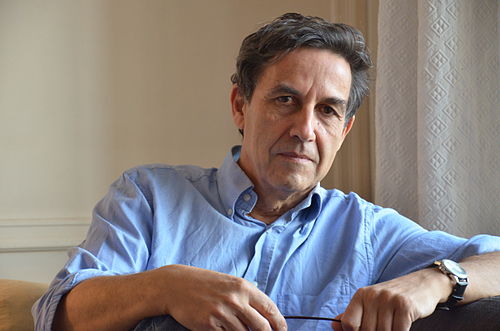
*Emmanuel Todd is an anthropologist, historian, essayist, futurist, author of numerous works. Several of them, such as "The Final Fall", "The Economic Illusion" or "After the Empire", have become classics of the social sciences. His latest book, "The Third World War Has Begun" was released in 2022 in Japan and sold 100,000 copies.