Who was Emperor Haile Selassie’s mother?
By Elyas Mulu Kiros
https://panafricanvisions.com/2012/07/w ... es-mother/
Who was Emperor Haile Selassie’s mother?
By Elyas Mulu Kiros
https://panafricanvisions.com/2012/07/w ... es-mother/
“
Who was Emperor Haile Selassie’s mother?” is the title of this Amharic article.
http://1p1c.blogspot.com/2012/06/blog-post_27.html
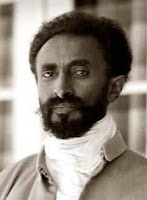
This is a controversial topic that many Ethiopians feel uncomfortable to talk about, due to its political heaviness. The article discusses how the emperor and writers of his biography never revealed his mother’s full name or her photograph in public during or after his reign, deliberately due to the sensitivity of the issue.
Why was it sensitive and why was the mother’s identity hidden from the public, unlike the emperor’s father? Simple answer: Because her religious and ethnic identities, would have been obstacles to Haile Selassie’s ascent to power. In addition, the emperor’s mother had no royal lineage, but his father
Ras Makonnen was a general and governor himself whose parents, though they had mixed heritage, were descended from nobility, which helped the emperor claim the throne.
According to the article:
1) The emperor’s mother had a mixed ethnic background, just like many Ethiopians; she was half-Guragie and half-Wara Iluu; thus, far from the then dominant ethnic group, or ruling class, the Amhara.
2) Her father, was a Muslim. Orthodox Christianity, was the de-facto official religion at the time.
Think of President
Barack (Hussein) Obama for a second and how the US media and the Republicans play with his middle name and mixed background, especially when he visits conservative states. That was, perhaps, the kind of scrutiny that the Emperor wanted to avoid, when he guarded his mother’s identity.
The emperor’s mother was called,
Yeshimebet Ali Gamcho. Yeshimebet is a Christian/Amharic name; Ali is Muslim; and Gamcho is ethnic/non-Amharic.
Why is it relevant to talk about this topic, today? Inorder to fully understand the ongoing political quagmire in Ethiopia and to devise some kind of meaningful solution, one must put the present in a historical context, as Professor
Markakis recently argued in an interview.
http://kweschn.wordpress.com/2012/06/25 ... nd-future/
One can use the past like a mirror to reflect the present on it, so one can see a clearer future.
Interestingly, both the current Prime Minister
Meles Zenawi and the former Colonel
Mengistu Hailemariam also come from a mixed background. Fortunately, after Mengistu assumed power he never had to worry about his ethnic origin, at least in public (though in private people did call him “
baria,” derogatory word, which means slave, because of his very dark skin). Colonel Menigstu purposely mobilized the country under socialist mantra, advocating “
one people, one country,” attempting to quell proponents of ethnic nationalism and to secure his power brutally; which he eventually failed.
On the other hand, Meles Zenawi, whose mother was Eritrean and father Ethiopian, isn’t as fortunate as Mengistu, dealing with his mixed identity. His mixed background, can be seen as standing on a landmine. Eventhough he was born and raised in Ethiopia, his opponents constantly accuse him of favoring his mother’s country, Eritrea, instead of the country he rules.
What is more problematic is: Meles is also blamed for favouring his father’s ethnic group, the Tigrayan community that brought him to power in collaboration with other ethnic groups that sacrificed thousands of youth during the armed struggle against the Mengistu regime. Opponents of Meles say he has created a ruling class that uses the Tigrayans as a power base — a power base that also includes members of the satellite parties of other ethnic groups, that make up his Ethiopian People’s Revolutionary Democratic Front (EPRDF) party.
Because of Meles Zenawi’s mixed background and uncontested stay in power, those who oppose him question his legitimacy to rule Ethiopia. His authoritarian rule aside, questioning his Ethiopian-ness is sort of similar to what the birthers in the US say about President Obama whose father was Kenyan.
In Ethiopia, politics, religion and ethnicity (or provinciality) have always been interwoven. The trio together, has played a major role in shaping Ethiopia’s history. During the monarchy, religion, particularly Orthodox Christianity, was the uniting force, upon which the kings legitimized their kingship. The royals, even if most had a mixed ethnic background, traced their lineage only to Christian nobles who rarely embraced their diverse ethnic identities, other than claiming to be either Amharas or Tigrayans in public.
Later, in the socialist revolution, the church was stripped of its power to influence national policy, but it still remained powerful enough that the socialists barely messed with it. After the revolution, ethnicity took religion’s place as a means to fight against the Mengistu dictatorship, to unseat the dictator through armed struggle, and to introduce a new system of governance that based itself entirely on ethnicity, hence, its name
ethnic- federalism, which has helped Meles to rule for twenty plus years.
Today’s opposition parties that want to get rid of the Meles government are equally affected by ethnicity, divided and disorganized mainly due to their failure to find a common ground — some of them want the full implementation of ethnic federalism, while others want to completely bury it. Religion, though now in the background, is still influential since majority of Ethiopians are deeply religious. One example is the recent clash between the government and the two major religious groups (Muslims and Orthodox Christians) — both groups have demanded the federal government to stop trespassing on their spaces.
Ethiopians who are unsatisfied with the current system have yet to find a common voice to come up with a better alternative, an alternative that leaves no room for ethnic loyalty and ethnic hegemony, but at the same time that guarantees the protection of both individual and group rights — rights to have fair economic and political opportunity, for example. What is lacking most is compromise — the emergence of moderate politicians who have realistic goals and can easily cross between party lines, for the common good. What we have instead is extremism — too many extremists from here and there, who only want to choke one another if they get a chance.
Disregarding the needs of Ethiopia’s diverse groups and without developing Ethiopian solutions for Ethiopian problems, simply copy-catting abstract ideas from other countries, will be practically fruitless as past and present experiences demonstrate. Whatever works in other nations doesn’t necessarily mean it will work in Ethiopia, unless customized to fit local needs.
The solution for Ethiopia’s unresolved political problems, lies in the causes of the problems. And one of the primary causes has always been the competition for power and control of resources, among ethnic elites. As a remedy, think of something like a vaccine — a curative substance for a disease, prepared from the causative agent of the disease — which means establishing a genuinely representative form of government that almost every citizen can welcome, unlike the present system that lets one party win 99.6% of seats in parliament. The diverse groups in the country must feel they have equal voice or fair representation in the national or federal government, both as leaders and followers; regardless of their population size, big or small.
Furthermore, increase the literacy rate; empower local self-governance systems that have been proven effective; internalize democratic principles; build strong institutions that secure democratization; abide by the constitution; create an environment of trust; encourage innovation in business and technology; fight poverty; let there be equal opportunity for any person anywhere in the country; never suffocate an individual or a group; allow freedom of expression and enjoy the freedom responsibly; respect and tolerate diversity (ethnic, religious, or free thinking); reward merit; say no to cronyism or nepotism; then expect a different kind of Ethiopia where the future generation will worry less about identity politics, but more about economic security, the arts, the environment, science, and technology.
Had Ethiopia achieved that before, perhaps the emperor would have embraced his mother’s identity in public, never hiding it to protect his power; perhaps the Colonel would not have sought revenge against those who called him “
baria” due to his dark skin; perhaps the Prime Minister would have been considered as a legitimate leader by all; perhaps the country would have avoided authoritarian governments altogether; and perhaps most educated Ethiopians who live abroad would have happily returned to build their homeland. Perhaps …!
*
Elyas Mulu Kiros blogs at http://www.kweschn.wordpress.com. Courtesy of Pambazuka