Putin at the initial phase of the Ukraine invasion sent hundreds of military hardware streached over 64 kms but failed and now he is under retreat. Abiy has been sending waves after waves of poorly organized and demotivated very big army and has been failing. Now we are hearing that Abiy plans to send 400,000 untrained and disorganized militias to Tigray and he shall miserably fail. Number in a war is a liability if it is not well organized, led and managed!
Putin and Abiy are following wrong war strategy, confusing comparative advantage with distinctive competitive edge
Both Abiy and Putin think they are fighting with a very small force and try to show force by using numbers not a distinctive war competitive advantage. Having a bigger force is comparative advantage not a competitive advantage!
Putin at the initial phase of the Ukraine invasion sent hundreds of military hardware streached over 64 kms but failed and now he is under retreat. Abiy has been sending waves after waves of poorly organized and demotivated very big army and has been failing. Now we are hearing that Abiy plans to send 400,000 untrained and disorganized militias to Tigray and he shall miserably fail. Number in a war is a liability if it is not well organized, led and managed!
Putin at the initial phase of the Ukraine invasion sent hundreds of military hardware streached over 64 kms but failed and now he is under retreat. Abiy has been sending waves after waves of poorly organized and demotivated very big army and has been failing. Now we are hearing that Abiy plans to send 400,000 untrained and disorganized militias to Tigray and he shall miserably fail. Number in a war is a liability if it is not well organized, led and managed!
Re: Putin and Abiy are following wrong war strategy, confusing comparative advantage with distinctive competitive edge
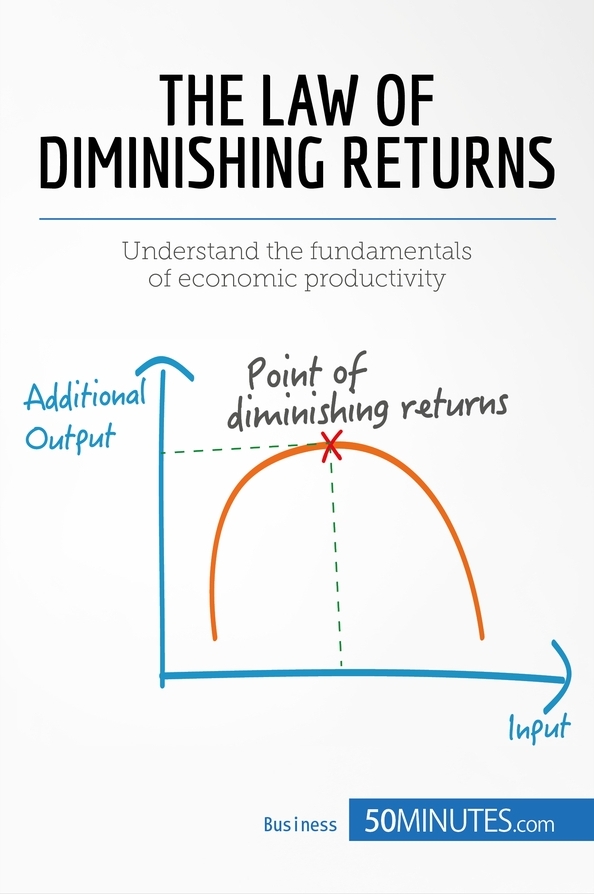
The huge pool of manpower Abiy thinks his army enjoys will actually stop being a comparative advantage when the military personnel number reaches the optimal level because of the "Law of Diminishing return". The principle applies to all areas of live.
The law of diminishing marginal returns is a theory in economics that predicts that after some optimal level of capacity is reached, adding an additional factor of production will actually result in smaller increases in output.
For example, a factory employs workers to manufacture its products, and, at some point, the company operates at an optimal level. Adding additional workers beyond this optimal level will result in less efficient operations.
In the classic example of the law, a farmer who owns a given acreage of land will find that a certain number of labourers will yield the maximum output per worker. If he should hire more workers, the combination of land and labour would be less efficient because the proportional increase in the overall output would be less than the expansion of the labour force. The output per worker would therefore fall. This rule holds in any process of production unless the technique of production also changes.
A couple months ago I heard Abiy saying he can have a 1 million army in weeks because Ethiopia has 110 million population. I felt sorry for the country as Abiy does not understand the idea of diminishing return. Please see the below blog on how the principle applies to military personnel numbers.
*************************
Human Factors In Warfare: Diminishing Returns In Combat
Posted on September 19, 2017 by Shawn Woodford
One of the basic problems facing military commanders at all levels is deciding how to allocate available forces to accomplish desired objectives. A guiding concept in this sort of decision-making is economy of force, one of the fundamental and enduring principles of war. As defined in the 1954 edition of U.S. Army Field Manual FM 100-5, Field Service Regulations, Operations (which Trevor Dupuy believed contained the best listing of the principles):
Economy of Force
Minimum essential means must be employed at points other than that of decision. To devote means to unnecessary secondary efforts or to employ excessive means on required secondary efforts is to violate the principle of both mass and the objective. Limited attacks, the defensive, deception, or even retrograde action are used in noncritical areas to achieve mass in the critical area.
How do leaders determine the appropriate means for accomplishing a particular mission? The risk of failing to assign too few forces to a critical task is self-evident, but is it possible to allocate too many? Determining the appropriate means in battle has historically involved subjective calculations by commanders and their staff advisors of the relative combat power of friendly and enemy forces. Most often, it entails a rudimentary numerical comparison of numbers of troops and weapons and estimates of the influence of environmental and operational factors. An exemplar of this is the so-called “3-1 rule,” which holds that an attacking force must achieve a three to one superiority in order to defeat a defending force.
Through detailed analysis of combat data from World War II and the 1967 and 1973 Arab-Israeli wars, Dupuy determined that combat appears subject to a law of diminishing returns and that it is indeed possible to over-allocate forces to a mission.[1] By comparing the theoretical outcomes of combat engagements with the actual results, Dupuy discovered that a force with a combat power advantage greater than double that of its adversary seldom achieved proportionally better results than a 2-1 advantage. A combat power superiority of 3 or 4 to 1 rarely yielded additional benefit when measured in terms of casualty rates, ground gained or lost, and mission accomplishment.
Dupuy also found that attackers sometimes gained marginal benefits from combat power advantages greater than 2-1, though less proportionally and economically than the numbers of forces would suggest. Defenders, however, received no benefit at all from a combat power advantage beyond 2-1.
Two human factors contributed to this apparent force limitation, Dupuy believed, Clausewitzian friction and breakpoints. As described in a previous post, friction accumulates on the battlefield through the innumerable human interactions between soldiers, degrading combat performance. This phenomenon increases as the number of soldiers increases.
A breakpoint represents a change of combat posture by a unit on the battlefield, for example, from attack to defense, or from defense to withdrawal. A voluntary breakpoint occurs due to mission accomplishment or a commander’s order. An involuntary breakpoint happens when a unit spontaneously ceases an attack, withdraws without orders, or breaks and routs. Involuntary breakpoints occur for a variety of reasons (though contrary to popular wisdom, seldom due to casualties). Soldiers are not automatons and will rarely fight to the death.
As Dupuy summarized,
It is obvious that the law of diminishing returns applies to combat. The old military adage that the greater the superiority the better, is not necessarily true. In the interests of economy of force, it appears to be unnecessary, and not really cost-effective, to build up a combat power superiority greater than two-to-one. (Note that this is not the same as a numerical superiority of two-to-one.)[2] Of course, to take advantage of this phenomenon, it is essential that a commander be satisfied that he has a reliable basis for calculating relative combat power. This requires an ability to understand and use “combat multipliers” with greater precision than permitted by U.S. Army doctrine today.[3] [Emphasis added.]
About Shawn Woodford
Shawn Robert Woodford, Ph.D., is a military historian with over a decade of research, writing, and analytical experience on operations, strategy, and national security policy. His work has focused on special operations, unconventional and paramilitary warfare, counterinsurgency, counterterrorism, quantitative historical analysis, nineteenth and twentieth century military history, and the history of nuclear weapon development.
Source http://www.dupuyinstitute.org/blog/2017 ... in-combat/
The law of diminishing marginal returns is a theory in economics that predicts that after some optimal level of capacity is reached, adding an additional factor of production will actually result in smaller increases in output.
For example, a factory employs workers to manufacture its products, and, at some point, the company operates at an optimal level. Adding additional workers beyond this optimal level will result in less efficient operations.
In the classic example of the law, a farmer who owns a given acreage of land will find that a certain number of labourers will yield the maximum output per worker. If he should hire more workers, the combination of land and labour would be less efficient because the proportional increase in the overall output would be less than the expansion of the labour force. The output per worker would therefore fall. This rule holds in any process of production unless the technique of production also changes.
A couple months ago I heard Abiy saying he can have a 1 million army in weeks because Ethiopia has 110 million population. I felt sorry for the country as Abiy does not understand the idea of diminishing return. Please see the below blog on how the principle applies to military personnel numbers.
*************************
Human Factors In Warfare: Diminishing Returns In Combat
Posted on September 19, 2017 by Shawn Woodford
One of the basic problems facing military commanders at all levels is deciding how to allocate available forces to accomplish desired objectives. A guiding concept in this sort of decision-making is economy of force, one of the fundamental and enduring principles of war. As defined in the 1954 edition of U.S. Army Field Manual FM 100-5, Field Service Regulations, Operations (which Trevor Dupuy believed contained the best listing of the principles):
Economy of Force
Minimum essential means must be employed at points other than that of decision. To devote means to unnecessary secondary efforts or to employ excessive means on required secondary efforts is to violate the principle of both mass and the objective. Limited attacks, the defensive, deception, or even retrograde action are used in noncritical areas to achieve mass in the critical area.
How do leaders determine the appropriate means for accomplishing a particular mission? The risk of failing to assign too few forces to a critical task is self-evident, but is it possible to allocate too many? Determining the appropriate means in battle has historically involved subjective calculations by commanders and their staff advisors of the relative combat power of friendly and enemy forces. Most often, it entails a rudimentary numerical comparison of numbers of troops and weapons and estimates of the influence of environmental and operational factors. An exemplar of this is the so-called “3-1 rule,” which holds that an attacking force must achieve a three to one superiority in order to defeat a defending force.
Through detailed analysis of combat data from World War II and the 1967 and 1973 Arab-Israeli wars, Dupuy determined that combat appears subject to a law of diminishing returns and that it is indeed possible to over-allocate forces to a mission.[1] By comparing the theoretical outcomes of combat engagements with the actual results, Dupuy discovered that a force with a combat power advantage greater than double that of its adversary seldom achieved proportionally better results than a 2-1 advantage. A combat power superiority of 3 or 4 to 1 rarely yielded additional benefit when measured in terms of casualty rates, ground gained or lost, and mission accomplishment.
Dupuy also found that attackers sometimes gained marginal benefits from combat power advantages greater than 2-1, though less proportionally and economically than the numbers of forces would suggest. Defenders, however, received no benefit at all from a combat power advantage beyond 2-1.
Two human factors contributed to this apparent force limitation, Dupuy believed, Clausewitzian friction and breakpoints. As described in a previous post, friction accumulates on the battlefield through the innumerable human interactions between soldiers, degrading combat performance. This phenomenon increases as the number of soldiers increases.
A breakpoint represents a change of combat posture by a unit on the battlefield, for example, from attack to defense, or from defense to withdrawal. A voluntary breakpoint occurs due to mission accomplishment or a commander’s order. An involuntary breakpoint happens when a unit spontaneously ceases an attack, withdraws without orders, or breaks and routs. Involuntary breakpoints occur for a variety of reasons (though contrary to popular wisdom, seldom due to casualties). Soldiers are not automatons and will rarely fight to the death.
As Dupuy summarized,
It is obvious that the law of diminishing returns applies to combat. The old military adage that the greater the superiority the better, is not necessarily true. In the interests of economy of force, it appears to be unnecessary, and not really cost-effective, to build up a combat power superiority greater than two-to-one. (Note that this is not the same as a numerical superiority of two-to-one.)[2] Of course, to take advantage of this phenomenon, it is essential that a commander be satisfied that he has a reliable basis for calculating relative combat power. This requires an ability to understand and use “combat multipliers” with greater precision than permitted by U.S. Army doctrine today.[3] [Emphasis added.]
About Shawn Woodford
Shawn Robert Woodford, Ph.D., is a military historian with over a decade of research, writing, and analytical experience on operations, strategy, and national security policy. His work has focused on special operations, unconventional and paramilitary warfare, counterinsurgency, counterterrorism, quantitative historical analysis, nineteenth and twentieth century military history, and the history of nuclear weapon development.
Source http://www.dupuyinstitute.org/blog/2017 ... in-combat/
Re: Putin and Abiy are following wrong war strategy, confusing comparative advantage with distinctive competitive edge
Thank you , very educative! Abiy is acting irresponsibly to the irreplaceable human lives and to the country .
Re: Putin and Abiy are following wrong war strategy, confusing comparative advantage with distinctive competitive edge
Axumamenzra stop your elementary stupi reverse psychology.
The idea of going to war is to win.
So if you think Ethiopia is wrong on the method of conducting the war, you shouldn’t advice it to correct it.
You shut your mouth and take advantage of the supposedly ‘error’ you wickedly telling yourself.
Atta adghi stop trying to try to know it all while you are begging for sit down talk with your master Ethiopia.
It is stupid to tell the guy who is raping your mom in your house while you are watching that your mom mitre (ems) had scissors which can cut a di’ck. If you are smart you should keep quite and let him stick his di’ck in your mom’s mitre (ems) and find out.
The idea of going to war is to win.
So if you think Ethiopia is wrong on the method of conducting the war, you shouldn’t advice it to correct it.
You shut your mouth and take advantage of the supposedly ‘error’ you wickedly telling yourself.
Atta adghi stop trying to try to know it all while you are begging for sit down talk with your master Ethiopia.
It is stupid to tell the guy who is raping your mom in your house while you are watching that your mom mitre (ems) had scissors which can cut a di’ck. If you are smart you should keep quite and let him stick his di’ck in your mom’s mitre (ems) and find out.
Re: Putin and Abiy are following wrong war strategy, confusing comparative advantage with distinctive competitive edge
Cigar I see you have a corrupted and uncultured brain. Get civilized and respect people while you are free to criticize their ideas !
Re: Putin and Abiy are following wrong war strategy, confusing comparative advantage with distinctive competitive edge
The huge pool of manpower Abiy thinks his army enjoys will actually stop being a comparative advantage when the military personnel number reaches the optimal level because of the "Law of Diminishing return". The principle applies to all areas of live.
The law of diminishing marginal returns is a theory in economics that predicts that after some optimal level of capacity is reached, adding an additional factor of production will actually result in smaller increases in output.
For example, a factory employs workers to manufacture its products, and, at some point, the company operates at an optimal level. Adding additional workers beyond this optimal level will result in less efficient operations.
In the classic example of the law, a farmer who owns a given acreage of land will find that a certain number of labourers will yield the maximum output per worker. If he should hire more workers, the combination of land and labour would be less efficient because the proportional increase in the overall output would be less than the expansion of the labour force. The output per worker would therefore fall. This rule holds in any process of production unless the technique of production also changes.
A couple months ago I heard Abiy saying he can have a 1 million army in weeks because Ethiopia has 110 million population. I felt sorry for the country as Abiy does not understand the idea of diminishing return. Please see the below blog on how the principle applies to military personnel numbers.
*************************
Human Factors In Warfare: Diminishing Returns In Combat
Posted on September 19, 2017 by Shawn Woodford
One of the basic problems facing military commanders at all levels is deciding how to allocate available forces to accomplish desired objectives. A guiding concept in this sort of decision-making is economy of force, one of the fundamental and enduring principles of war. As defined in the 1954 edition of U.S. Army Field Manual FM 100-5, Field Service Regulations, Operations (which Trevor Dupuy believed contained the best listing of the principles):
Economy of Force
Minimum essential means must be employed at points other than that of decision. To devote means to unnecessary secondary efforts or to employ excessive means on required secondary efforts is to violate the principle of both mass and the objective. Limited attacks, the defensive, deception, or even retrograde action are used in noncritical areas to achieve mass in the critical area.
How do leaders determine the appropriate means for accomplishing a particular mission? The risk of failing to assign too few forces to a critical task is self-evident, but is it possible to allocate too many? Determining the appropriate means in battle has historically involved subjective calculations by commanders and their staff advisors of the relative combat power of friendly and enemy forces. Most often, it entails a rudimentary numerical comparison of numbers of troops and weapons and estimates of the influence of environmental and operational factors. An exemplar of this is the so-called “3-1 rule,” which holds that an attacking force must achieve a three to one superiority in order to defeat a defending force.
Through detailed analysis of combat data from World War II and the 1967 and 1973 Arab-Israeli wars, Dupuy determined that combat appears subject to a law of diminishing returns and that it is indeed possible to over-allocate forces to a mission.[1] By comparing the theoretical outcomes of combat engagements with the actual results, Dupuy discovered that a force with a combat power advantage greater than double that of its adversary seldom achieved proportionally better results than a 2-1 advantage. A combat power superiority of 3 or 4 to 1 rarely yielded additional benefit when measured in terms of casualty rates, ground gained or lost, and mission accomplishment.
Dupuy also found that attackers sometimes gained marginal benefits from combat power advantages greater than 2-1, though less proportionally and economically than the numbers of forces would suggest. Defenders, however, received no benefit at all from a combat power advantage beyond 2-1.
Two human factors contributed to this apparent force limitation, Dupuy believed, Clausewitzian friction and breakpoints. As described in a previous post, friction accumulates on the battlefield through the innumerable human interactions between soldiers, degrading combat performance. This phenomenon increases as the number of soldiers increases.
A breakpoint represents a change of combat posture by a unit on the battlefield, for example, from attack to defense, or from defense to withdrawal. A voluntary breakpoint occurs due to mission accomplishment or a commander’s order. An involuntary breakpoint happens when a unit spontaneously ceases an attack, withdraws without orders, or breaks and routs. Involuntary breakpoints occur for a variety of reasons (though contrary to popular wisdom, seldom due to casualties). Soldiers are not automatons and will rarely fight to the death.
As Dupuy summarized,
It is obvious that the law of diminishing returns applies to combat. The old military adage that the greater the superiority the better, is not necessarily true. In the interests of economy of force, it appears to be unnecessary, and not really cost-effective, to build up a combat power superiority greater than two-to-one. (Note that this is not the same as a numerical superiority of two-to-one.)[2] Of course, to take advantage of this phenomenon, it is essential that a commander be satisfied that he has a reliable basis for calculating relative combat power. This requires an ability to understand and use “combat multipliers” with greater precision than permitted by U.S. Army doctrine today.[3] [Emphasis added.]
About Shawn Woodford
Shawn Robert Woodford, Ph.D., is a military historian with over a decade of research, writing, and analytical experience on operations, strategy, and national security policy. His work has focused on special operations, unconventional and paramilitary warfare, counterinsurgency, counterterrorism, quantitative historical analysis, nineteenth and twentieth century military history, and the history of nuclear weapon development.
Source http://www.dupuyinstitute.org/blog/2017 ... in-combat/
The law of diminishing marginal returns is a theory in economics that predicts that after some optimal level of capacity is reached, adding an additional factor of production will actually result in smaller increases in output.
For example, a factory employs workers to manufacture its products, and, at some point, the company operates at an optimal level. Adding additional workers beyond this optimal level will result in less efficient operations.
In the classic example of the law, a farmer who owns a given acreage of land will find that a certain number of labourers will yield the maximum output per worker. If he should hire more workers, the combination of land and labour would be less efficient because the proportional increase in the overall output would be less than the expansion of the labour force. The output per worker would therefore fall. This rule holds in any process of production unless the technique of production also changes.
A couple months ago I heard Abiy saying he can have a 1 million army in weeks because Ethiopia has 110 million population. I felt sorry for the country as Abiy does not understand the idea of diminishing return. Please see the below blog on how the principle applies to military personnel numbers.
*************************
Human Factors In Warfare: Diminishing Returns In Combat
Posted on September 19, 2017 by Shawn Woodford
One of the basic problems facing military commanders at all levels is deciding how to allocate available forces to accomplish desired objectives. A guiding concept in this sort of decision-making is economy of force, one of the fundamental and enduring principles of war. As defined in the 1954 edition of U.S. Army Field Manual FM 100-5, Field Service Regulations, Operations (which Trevor Dupuy believed contained the best listing of the principles):
Economy of Force
Minimum essential means must be employed at points other than that of decision. To devote means to unnecessary secondary efforts or to employ excessive means on required secondary efforts is to violate the principle of both mass and the objective. Limited attacks, the defensive, deception, or even retrograde action are used in noncritical areas to achieve mass in the critical area.
How do leaders determine the appropriate means for accomplishing a particular mission? The risk of failing to assign too few forces to a critical task is self-evident, but is it possible to allocate too many? Determining the appropriate means in battle has historically involved subjective calculations by commanders and their staff advisors of the relative combat power of friendly and enemy forces. Most often, it entails a rudimentary numerical comparison of numbers of troops and weapons and estimates of the influence of environmental and operational factors. An exemplar of this is the so-called “3-1 rule,” which holds that an attacking force must achieve a three to one superiority in order to defeat a defending force.
Through detailed analysis of combat data from World War II and the 1967 and 1973 Arab-Israeli wars, Dupuy determined that combat appears subject to a law of diminishing returns and that it is indeed possible to over-allocate forces to a mission.[1] By comparing the theoretical outcomes of combat engagements with the actual results, Dupuy discovered that a force with a combat power advantage greater than double that of its adversary seldom achieved proportionally better results than a 2-1 advantage. A combat power superiority of 3 or 4 to 1 rarely yielded additional benefit when measured in terms of casualty rates, ground gained or lost, and mission accomplishment.
Dupuy also found that attackers sometimes gained marginal benefits from combat power advantages greater than 2-1, though less proportionally and economically than the numbers of forces would suggest. Defenders, however, received no benefit at all from a combat power advantage beyond 2-1.
Two human factors contributed to this apparent force limitation, Dupuy believed, Clausewitzian friction and breakpoints. As described in a previous post, friction accumulates on the battlefield through the innumerable human interactions between soldiers, degrading combat performance. This phenomenon increases as the number of soldiers increases.
A breakpoint represents a change of combat posture by a unit on the battlefield, for example, from attack to defense, or from defense to withdrawal. A voluntary breakpoint occurs due to mission accomplishment or a commander’s order. An involuntary breakpoint happens when a unit spontaneously ceases an attack, withdraws without orders, or breaks and routs. Involuntary breakpoints occur for a variety of reasons (though contrary to popular wisdom, seldom due to casualties). Soldiers are not automatons and will rarely fight to the death.
As Dupuy summarized,
It is obvious that the law of diminishing returns applies to combat. The old military adage that the greater the superiority the better, is not necessarily true. In the interests of economy of force, it appears to be unnecessary, and not really cost-effective, to build up a combat power superiority greater than two-to-one. (Note that this is not the same as a numerical superiority of two-to-one.)[2] Of course, to take advantage of this phenomenon, it is essential that a commander be satisfied that he has a reliable basis for calculating relative combat power. This requires an ability to understand and use “combat multipliers” with greater precision than permitted by U.S. Army doctrine today.[3] [Emphasis added.]
About Shawn Woodford
Shawn Robert Woodford, Ph.D., is a military historian with over a decade of research, writing, and analytical experience on operations, strategy, and national security policy. His work has focused on special operations, unconventional and paramilitary warfare, counterinsurgency, counterterrorism, quantitative historical analysis, nineteenth and twentieth century military history, and the history of nuclear weapon development.
Source http://www.dupuyinstitute.org/blog/2017 ... in-combat/
-
Sam Ebalalehu
- Member
- Posts: 3639
- Joined: 23 Jun 2018, 21:29
Re: Putin and Abiy are following wrong war strategy, confusing comparative advantage with distinctive competitive edge
The argument seems to be the law of diminishing return does not apply to Tigray, meaning there are millions of expendable lives there. I disagree.