Kingdoms come and go - this is dialectical. We live and die. Nothing is constant. Everything changes except change itself. Change is absolute, a necessity for life to continue. The current war in Tigray will change Tigray bringing Tigray back to Aksumite Kingdom and it's legacy.
The evolution of social organization has it's own dynamics and it is naïve not to see them or expect them. The Aksumite Kingdom was founded in Aksum, Tigray. It is one of world's advanced civilization. It is well documented and not based on oral history. The Aksumite Kings from Tigray documented on stone inscriptions and each king had a crown which is stored at St. Mary of Zion when the king or queen dies. This is unique and a feature of a highly organized society.
The Bantu Migration to Aksumite Kingdom had a devastating effect on people living in the periphery, who were under the jurisdiction of the empire. It contributed to the decline of The Aksumite Empire, but had no effect on Tigray which is an enclave surrounded by savages and pagans from Eritrea, Sudan, Amara etc.
-
EthioRedSea
- Member
- Posts: 4089
- Joined: 31 Aug 2019, 11:55
-
EthioRedSea
- Member
- Posts: 4089
- Joined: 31 Aug 2019, 11:55
Re: Bantu Migration to Ethiopia and it's debilitating effect on The Aksumite Empire
Historical map of The Kingdom of Aksum

Aksumite coins 3rd Century CE

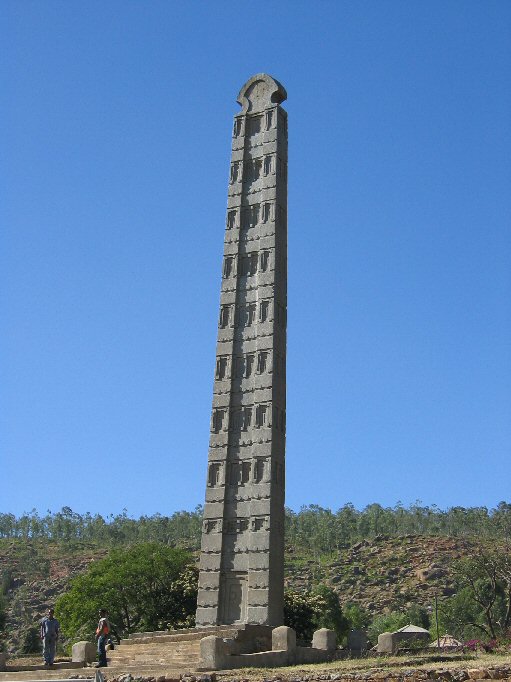
Aksumite Stellae built by King Abraha (Ezana)
Aksumite coins 3rd Century CE
Aksumite Stellae built by King Abraha (Ezana)
-
EthioRedSea
- Member
- Posts: 4089
- Joined: 31 Aug 2019, 11:55
Re: Bantu Migration to Ethiopia and it's debilitating effect on The Aksumite Empire
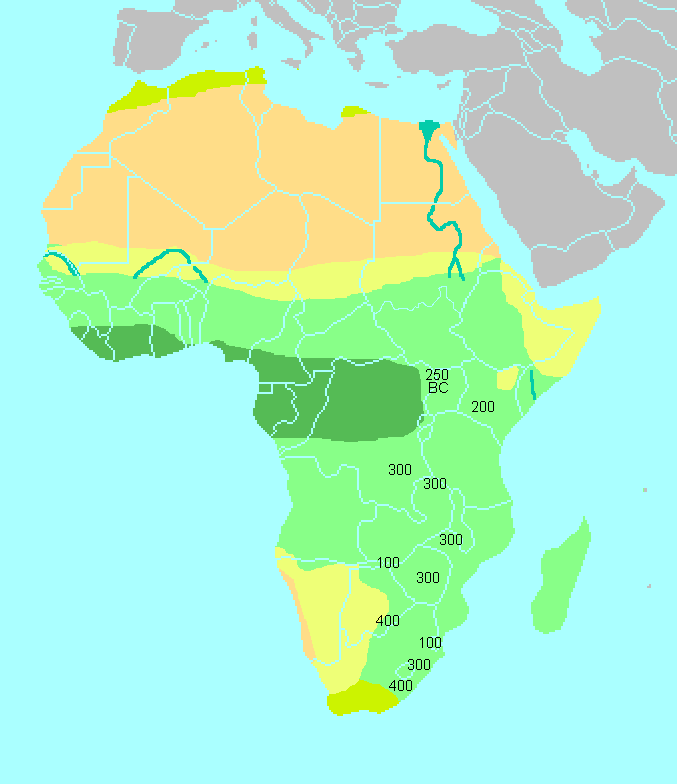
The Bantu expansion is the name for a postulated millennia-long series of migrations of speakers of the original proto-Bantu language group. The primary evidence for this expansion has been linguistic, namely that the languages spoken in sub-Equatorial Africa are remarkably similar to each other. Attempts to trace the exact route of the expansion, to correlate it with archaeological evidence and genetic evidence, have not been conclusive. Many aspects of the expansion remain in doubt or are highly contested. The linguistic core of the Bantu family of languages, a branch of the Niger-Congo language family, was located in the adjoining region of Cameroon and Nigeria. From this core, expansion began about 3,000 years ago, with one stream going into East Africa, and other streams going south along the African coast of Gabon, the Democratic Republic of the Congo, and Angola, or inland along the many south-to-north flowing rivers of the Congo River system. The expansion eventually reached South Africa as early as 300 CE.
-
EthioRedSea
- Member
- Posts: 4089
- Joined: 31 Aug 2019, 11:55
Re: Bantu Migration to Ethiopia and it's debilitating effect on The Aksumite Empire
Among the Bantu migrants that came to The Empire of Aksum or now Ethiopia, Oromo or Galla are the majority. Some percentage of The Amara might have migrated from Cameroon. The other tribes in South Ethiopia have distinct cultures different from Amara and Oromo or Galla. Some say they are aborigines. However, there is no evidence that they have been in south Ethiopia for so long without being influenced by Aksumite tradition and legacy as Aksumite Kingdom was around 5000 years. The other theory is they migrated to East Africa following the pressures from slave trade. We do not know where they came from. Clearly they are not Bantu African migrants as they were in South Ethiopia when The Oromos or Galla migrated to East Africa and marched to North Ethiopia, destroying and killing the tribes in South Ethiopia, specially Sidama and Guraghe.
The Oromo or Galla migration to Ethiopia started in around 1500. Around 1550, the Aksumite Empire was being attacked by Ottoman Turkey. The Ottoman Turks were supporting a local anti-Christian Muslims. The leader was called Ahmed Gragn. He destroyed many churches and slew many Christians specially from Amhara and Guraghe. Some were forced to convert to Islam. Ahmed Gragn's army controlled central parts of The Aksumite Kingdom. Most of Wello and Shewa were under the savage Ahmed Gragn's attack.
At the same time the Oromo/Galla migration was taking place. The Oromo or Galla are one of the tribes of Bantu Africans, that migrated from The Congo ( Luba Kingdom) to East Africa. They are pastoralists and warrior tribes. They are organized based on their war skills. They live on their cattle and wander from place to place searching grazing areas and water for their cattle. As warrior tribe, they have been killing other tribes and taking away their cattle. They would attack communities in The Aksumite Empire (Ethiopia) and whole villages will be plundered. Men were killed by the Oromo or Galla invaders. Women and children were taken as captives. Such migration of The Galla or Oromo has a devasting effect on citizens of The Aksumite Kingdom (Ethiopia).
The Galla/Oromo marched as far north to Gonder. The Gonder kings fought them back and finally The Galla/Oromo were subjugated and tolerated as slaves to live in the Empire. The Galla were slaves of The Amhara nobles until 1974.
The Oromo or Galla migration to Ethiopia started in around 1500. Around 1550, the Aksumite Empire was being attacked by Ottoman Turkey. The Ottoman Turks were supporting a local anti-Christian Muslims. The leader was called Ahmed Gragn. He destroyed many churches and slew many Christians specially from Amhara and Guraghe. Some were forced to convert to Islam. Ahmed Gragn's army controlled central parts of The Aksumite Kingdom. Most of Wello and Shewa were under the savage Ahmed Gragn's attack.
At the same time the Oromo/Galla migration was taking place. The Oromo or Galla are one of the tribes of Bantu Africans, that migrated from The Congo ( Luba Kingdom) to East Africa. They are pastoralists and warrior tribes. They are organized based on their war skills. They live on their cattle and wander from place to place searching grazing areas and water for their cattle. As warrior tribe, they have been killing other tribes and taking away their cattle. They would attack communities in The Aksumite Empire (Ethiopia) and whole villages will be plundered. Men were killed by the Oromo or Galla invaders. Women and children were taken as captives. Such migration of The Galla or Oromo has a devasting effect on citizens of The Aksumite Kingdom (Ethiopia).
The Galla/Oromo marched as far north to Gonder. The Gonder kings fought them back and finally The Galla/Oromo were subjugated and tolerated as slaves to live in the Empire. The Galla were slaves of The Amhara nobles until 1974.
-
EthioRedSea
- Member
- Posts: 4089
- Joined: 31 Aug 2019, 11:55
Re: Bantu Migration to Ethiopia and it's debilitating effect on The Aksumite Empire
Oromo migration to Aksumite Empire (Ethiopia)
Early expansions
The early expansions were characterized by sporadic raids by the Oromo on the frontiers of the Ethiopian kingdom. After capturing cattle and other booty, the raiding parties would quickly return to their homelands. Actual settlement of new territories would not begin until the gada of Meslé.
Mélbah (1522–1530) and Mudena (1530–1538)
According to Bahrey, the earliest Oromo expansion occurred under the Oromo luba Melbah, during the time of Emperor Lebna Dengel. He states that they invaded the neighboring Bale in the Southeast just before the invasions of Ahmad ibn Ibrahim al-Ghazi of Adal (also known as Ahmed Gurey) in the north. These early incursions (Oromo: razzia) were limited, however, as the encroaching groups returned to their homeland near the Shebelle River after each raid. Raids continued under Mudena past the Wabi Shebelle, but these groups also returned home shortly.
The reason for the Oromo's returning after their short conquests is because the Christian and Muslim kingdoms that surrounded Oromo pastoralists were deeply embroiled in jihadist wars. Instead of engaging with either kingdom directly, they targeted isolated communities that would go unnoticed, and allowed their enemies to destroy each other without Oromo intervention.
Three Stages of Oromo Movements
By the 1530s, the Oromo pastoralists had developed a three-staged method for territorial expansion; "scouting, night time surprise attack and settlement" . The introduction of scouting teams shows that the Oromo pastoralists had quickly become accustomed to border warfare. The night time attacks that would come to follow were unceasing and relentless, stripping the community of their "booty" and killing a large amount of the warrior class, then escaping before dawn as to avoid being followed back to their basecamps. Once the community under siege was broken down enough to be settled without resistance, the remaining peoples would quickly be integrated through Moggaasaa, having their status', material goods and general livelihoods returned to them. The remaining warriors would join the Oromo gada's troops. With each period of adoption into the fighting class, the Oromo's knowledge of the local terrain would increase drastically.
Kilolé (1538–1546)
After the death of Ahmed Gragn, Kilolé resumed his predecessor's raids, piercing further into Ethiopian territory. Aided by the weakening of both the Ethiopian Empire and Adal, he was able to raid as far as the province of Dewaro, north of Bali. Again, however, after each raid, the parties returned to their villages. Bahrey's dating might, however, be off, as Shihab ad-din, who wrote a decade before Ahmed Gragn's death, notes a locality named Werre Qallu, an Oromo name, in the province of Dawaro. Francisco de Almeida, however, agreed with Bahrey's dating, affirming that the Oromo first began migrating around the time of Ahmed Gragn's invasion (1527).
Bifolé (1546–1554)
During the time of luba Bifolé, the Oromo migration achieved its first major success. While all previous movements had been minor raids on neighboring provinces, under Bifolé new raids were undertaken that began to weaken Ethiopian control. All of Dewaro was pillaged and Fatagar to its north was attacked for the first time.[6] Furthermore, according to Bahrey, the inhabitants of the pillaged areas were enslaved, becoming gebrs (Ge'ez: ገብር gabr; Amh. ግብር gebr, Tgn. ግብሪ gebri), a term referring more precisely to "tax-paying serfs", similar to the serfs in Ethiopia during feudal times. Emperor Gelawdewos, however, campaigned in the south as a result of these attacks. According to his chronicle, the Emperor defeated the Oromo incursions and made subject to his rule those he captured, preventing further attacks for some time, with further incursions reduced to skirmishes. The initial attacks were significant, however, on a much larger and more devastating scale to the Ethiopian dynasty. Despite his reprisals, Gelawdewos was troubled and was forced to settle refugees in a town of Wej north of Lake Zway, around 1550-1.
Settlement
Meslé (1554–1562)
Meslé's time represent a fundamental change in the expansion of the Oromo. Not only were newly taken territories permanently settled by Oromo for the first time, but mules and horses began to be ridden by the first time. The adoption of horseback-riding from the north greatly increased the Oromo fighting power, putting them on par with Ethiopian troops, who were largely unequipped with firearms.[8] In the new phase of migration adopted under Meslé, the Oromo defeated Gelawdewos's troops in Jan Amora, allowing them to pillage a number of towns. Instead of returning to their homelands, however, they stayed in the new territories. Gelawdewos campaigned against the Oromo as a result, defeating them at 'Asa Zeneb (yet unidentified), but he was nevertheless unable to drive them from the frontier provinces and continued to build the new town in Wej for new refugees.
Oromo expansions were not restricted to Ethiopian territories either, as activities against Adal were also pursued. The forces of Nur ibn Mujahid (r. 1551/2–1567/8), the Amir of Harar, for instance, were soundly defeated by the Oromo. According to Bahrey, there had been "no such slaughter since the Oromo first invaded."
Harmufa (1562–1570) and Robalé (1570–1578)
During the luba of Harmufa rule, the Oromo advanced even deeper into Ethiopian territory. With the use of horses, they were able to attack the province Amhara, and Angot. Further advances were made under Robalé, during whose time Shewa was pillaged and Gojjam attacked. For the first time, Oromo advances were devastating core Ethiopian provinces, whereas their earlier incursions were simply against frontier provinces. Despite the deeper attacks, the core provinces remained under Ethiopian control, and Emperor Sarsa Dengel carried out punitive expeditions in return. One such reprisal in 1573 involved the engagement of the Oromo near Lake Zway in a frontier province, whom he defeated, and taking their cattle he distributed the herd among his subjects who are described in his chronicle as "becoming rich" as a result.
Adal period (1562–1579)
At the same time, Barentu Oromo groups attacked Adal Sultanate, which was weakened by its wars with the Abyssinians and Portuguese Empire leading to no potential resistance. Only a few small groups of Muslims were able to flee to Zeila and survive within the fortified city. The greater part of the Muslim population was assimilated by the Oromos.
The city Dire Dawa was originally called Dir Dhabe and used to be part of Adal Sultanate during the medieval times and was exclusively settled by Dir which is a major Somali clan and after the weakening of Adal Sultanate, the Oromos took advantage and were able to penetrate through the city and settle into these areas and also assimilate some of the local Gurgura clan.
The Hawiye and Dir clans used to be the predominant inhabitants of Hararghe Highlands in the medieval times until the weakening of Adal Sultanate the opportunist Oromos took advantage of the crippling state and decided to invade and occupy the Haraghe Highlands and assimilate the local native Somali clan population which were Jarso, Akisho, Gurgura, Nole, Metta, Oborra and Bursuk who were all sub-clans of Dir a major Somali tribe and were later confederated into Oromo tribe, the Afran Qallo clan.
Reprisals under Sarsa Dengel
Forced to fight the Ottomans in the north of his Empire, Sarsa Dengel turned to curb the spread of Oromo in the south in the 1570s. The first mention of his actions is in his short Royal chronicle, which states that he fought a force of Borana Oromo at Lake Zway under a luba named Ambissa. Learning that, after the 1572 rains, the Oromo had taken Wej, the Emperor gathered his forces from throughout Ethiopia to form an army at Gind Beret. From there, Sarsa Dengel headed south, where he found that the Oromo had also taken Maya.[9] Despite the size of his army, he was able to defeat the Oromo in the area, pushing them back to Fetegar, and capture a large number of cattle. Sarsa Dengel again learned in 1574 of Oromo incursions in Shewa, and the pillaging of cattle in lowland Zéma. The Emperor sent Azzaj Halibo with 50 cavalry to the area, who forced the Oromo to flee sent the heads of 80 to the Emperor as trophies. Sarsa Dengel was again forced to head north with his army to confront the Ottoman-backed Bahr Negus Yeshaq, but later returned to Wej in 1577-8 to fend off Oromo advances in the area.[13] As a result of the battle in the Mojjo Valley (just east of modern Addis Ababa) against the Borana Oromo, corpses were strewn all over the surrounding countryside. The Emperor then fended off an attack in Dembiya by the Abati Oromo at a place called Weyne Deg'a and as a result of the battle, according to Bahrey, less than ten Oromo survived.
Birmajé (1578–1586)
Despite Sarsa Dengel's military campaigns, the Oromo expansion continued to spread northward during this time. It was under luba Birmajé that the Oromo first began to use body-length ox-hide shields. These shields allowed the Oromo to resist arrows and therefore successfully defeat the Mayas. During this time period, the Oromo often came into conflict with Daharagot, one of Sarsa Dengel's commanders, who was often successful. Nevertheless, during this time, the Oromo pillaged Ar'ine in Wej, killing Ethiopian couriers in the process. Further advances were made around Lake Tana, Dembiya, and (old) Damot, which was surrounded and some of whose inhabitants were enslaved.
Mul'eta (1586–1594)
Under luba Mul'eta a large raid (Oromo: dulaguto) was made on Gojjam south of Lake Tana. With the Ottoman situation in the north largely under control, Sarsa Dengel again took the initiative against the Oromo in the south, where he forced the Dawé (or Jawé) Oromo in Wej to flight. Bahrey praised Sarsa Dengel's campaign, stating that he "did not act according to the custom of the kings his ancestors, who, when making war were in the habit of sending their troops ahead, remaining themselves in the rear with the pick of their cavalry and infantry, praising those who went forward bravely and punishing those who lagged behind." Despite Bahrey's praise, Sarsa Dengel was forced to use coercion to draw troops, announced decree that anyone who failed to heed his call to arms would have his house pillaged and property confiscated.
Early expansions
The early expansions were characterized by sporadic raids by the Oromo on the frontiers of the Ethiopian kingdom. After capturing cattle and other booty, the raiding parties would quickly return to their homelands. Actual settlement of new territories would not begin until the gada of Meslé.
Mélbah (1522–1530) and Mudena (1530–1538)
According to Bahrey, the earliest Oromo expansion occurred under the Oromo luba Melbah, during the time of Emperor Lebna Dengel. He states that they invaded the neighboring Bale in the Southeast just before the invasions of Ahmad ibn Ibrahim al-Ghazi of Adal (also known as Ahmed Gurey) in the north. These early incursions (Oromo: razzia) were limited, however, as the encroaching groups returned to their homeland near the Shebelle River after each raid. Raids continued under Mudena past the Wabi Shebelle, but these groups also returned home shortly.
The reason for the Oromo's returning after their short conquests is because the Christian and Muslim kingdoms that surrounded Oromo pastoralists were deeply embroiled in jihadist wars. Instead of engaging with either kingdom directly, they targeted isolated communities that would go unnoticed, and allowed their enemies to destroy each other without Oromo intervention.
Three Stages of Oromo Movements
By the 1530s, the Oromo pastoralists had developed a three-staged method for territorial expansion; "scouting, night time surprise attack and settlement" . The introduction of scouting teams shows that the Oromo pastoralists had quickly become accustomed to border warfare. The night time attacks that would come to follow were unceasing and relentless, stripping the community of their "booty" and killing a large amount of the warrior class, then escaping before dawn as to avoid being followed back to their basecamps. Once the community under siege was broken down enough to be settled without resistance, the remaining peoples would quickly be integrated through Moggaasaa, having their status', material goods and general livelihoods returned to them. The remaining warriors would join the Oromo gada's troops. With each period of adoption into the fighting class, the Oromo's knowledge of the local terrain would increase drastically.
Kilolé (1538–1546)
After the death of Ahmed Gragn, Kilolé resumed his predecessor's raids, piercing further into Ethiopian territory. Aided by the weakening of both the Ethiopian Empire and Adal, he was able to raid as far as the province of Dewaro, north of Bali. Again, however, after each raid, the parties returned to their villages. Bahrey's dating might, however, be off, as Shihab ad-din, who wrote a decade before Ahmed Gragn's death, notes a locality named Werre Qallu, an Oromo name, in the province of Dawaro. Francisco de Almeida, however, agreed with Bahrey's dating, affirming that the Oromo first began migrating around the time of Ahmed Gragn's invasion (1527).
Bifolé (1546–1554)
During the time of luba Bifolé, the Oromo migration achieved its first major success. While all previous movements had been minor raids on neighboring provinces, under Bifolé new raids were undertaken that began to weaken Ethiopian control. All of Dewaro was pillaged and Fatagar to its north was attacked for the first time.[6] Furthermore, according to Bahrey, the inhabitants of the pillaged areas were enslaved, becoming gebrs (Ge'ez: ገብር gabr; Amh. ግብር gebr, Tgn. ግብሪ gebri), a term referring more precisely to "tax-paying serfs", similar to the serfs in Ethiopia during feudal times. Emperor Gelawdewos, however, campaigned in the south as a result of these attacks. According to his chronicle, the Emperor defeated the Oromo incursions and made subject to his rule those he captured, preventing further attacks for some time, with further incursions reduced to skirmishes. The initial attacks were significant, however, on a much larger and more devastating scale to the Ethiopian dynasty. Despite his reprisals, Gelawdewos was troubled and was forced to settle refugees in a town of Wej north of Lake Zway, around 1550-1.
Settlement
Meslé (1554–1562)
Meslé's time represent a fundamental change in the expansion of the Oromo. Not only were newly taken territories permanently settled by Oromo for the first time, but mules and horses began to be ridden by the first time. The adoption of horseback-riding from the north greatly increased the Oromo fighting power, putting them on par with Ethiopian troops, who were largely unequipped with firearms.[8] In the new phase of migration adopted under Meslé, the Oromo defeated Gelawdewos's troops in Jan Amora, allowing them to pillage a number of towns. Instead of returning to their homelands, however, they stayed in the new territories. Gelawdewos campaigned against the Oromo as a result, defeating them at 'Asa Zeneb (yet unidentified), but he was nevertheless unable to drive them from the frontier provinces and continued to build the new town in Wej for new refugees.
Oromo expansions were not restricted to Ethiopian territories either, as activities against Adal were also pursued. The forces of Nur ibn Mujahid (r. 1551/2–1567/8), the Amir of Harar, for instance, were soundly defeated by the Oromo. According to Bahrey, there had been "no such slaughter since the Oromo first invaded."
Harmufa (1562–1570) and Robalé (1570–1578)
During the luba of Harmufa rule, the Oromo advanced even deeper into Ethiopian territory. With the use of horses, they were able to attack the province Amhara, and Angot. Further advances were made under Robalé, during whose time Shewa was pillaged and Gojjam attacked. For the first time, Oromo advances were devastating core Ethiopian provinces, whereas their earlier incursions were simply against frontier provinces. Despite the deeper attacks, the core provinces remained under Ethiopian control, and Emperor Sarsa Dengel carried out punitive expeditions in return. One such reprisal in 1573 involved the engagement of the Oromo near Lake Zway in a frontier province, whom he defeated, and taking their cattle he distributed the herd among his subjects who are described in his chronicle as "becoming rich" as a result.
Adal period (1562–1579)
At the same time, Barentu Oromo groups attacked Adal Sultanate, which was weakened by its wars with the Abyssinians and Portuguese Empire leading to no potential resistance. Only a few small groups of Muslims were able to flee to Zeila and survive within the fortified city. The greater part of the Muslim population was assimilated by the Oromos.
The city Dire Dawa was originally called Dir Dhabe and used to be part of Adal Sultanate during the medieval times and was exclusively settled by Dir which is a major Somali clan and after the weakening of Adal Sultanate, the Oromos took advantage and were able to penetrate through the city and settle into these areas and also assimilate some of the local Gurgura clan.
The Hawiye and Dir clans used to be the predominant inhabitants of Hararghe Highlands in the medieval times until the weakening of Adal Sultanate the opportunist Oromos took advantage of the crippling state and decided to invade and occupy the Haraghe Highlands and assimilate the local native Somali clan population which were Jarso, Akisho, Gurgura, Nole, Metta, Oborra and Bursuk who were all sub-clans of Dir a major Somali tribe and were later confederated into Oromo tribe, the Afran Qallo clan.
Reprisals under Sarsa Dengel
Forced to fight the Ottomans in the north of his Empire, Sarsa Dengel turned to curb the spread of Oromo in the south in the 1570s. The first mention of his actions is in his short Royal chronicle, which states that he fought a force of Borana Oromo at Lake Zway under a luba named Ambissa. Learning that, after the 1572 rains, the Oromo had taken Wej, the Emperor gathered his forces from throughout Ethiopia to form an army at Gind Beret. From there, Sarsa Dengel headed south, where he found that the Oromo had also taken Maya.[9] Despite the size of his army, he was able to defeat the Oromo in the area, pushing them back to Fetegar, and capture a large number of cattle. Sarsa Dengel again learned in 1574 of Oromo incursions in Shewa, and the pillaging of cattle in lowland Zéma. The Emperor sent Azzaj Halibo with 50 cavalry to the area, who forced the Oromo to flee sent the heads of 80 to the Emperor as trophies. Sarsa Dengel was again forced to head north with his army to confront the Ottoman-backed Bahr Negus Yeshaq, but later returned to Wej in 1577-8 to fend off Oromo advances in the area.[13] As a result of the battle in the Mojjo Valley (just east of modern Addis Ababa) against the Borana Oromo, corpses were strewn all over the surrounding countryside. The Emperor then fended off an attack in Dembiya by the Abati Oromo at a place called Weyne Deg'a and as a result of the battle, according to Bahrey, less than ten Oromo survived.
Birmajé (1578–1586)
Despite Sarsa Dengel's military campaigns, the Oromo expansion continued to spread northward during this time. It was under luba Birmajé that the Oromo first began to use body-length ox-hide shields. These shields allowed the Oromo to resist arrows and therefore successfully defeat the Mayas. During this time period, the Oromo often came into conflict with Daharagot, one of Sarsa Dengel's commanders, who was often successful. Nevertheless, during this time, the Oromo pillaged Ar'ine in Wej, killing Ethiopian couriers in the process. Further advances were made around Lake Tana, Dembiya, and (old) Damot, which was surrounded and some of whose inhabitants were enslaved.
Mul'eta (1586–1594)
Under luba Mul'eta a large raid (Oromo: dulaguto) was made on Gojjam south of Lake Tana. With the Ottoman situation in the north largely under control, Sarsa Dengel again took the initiative against the Oromo in the south, where he forced the Dawé (or Jawé) Oromo in Wej to flight. Bahrey praised Sarsa Dengel's campaign, stating that he "did not act according to the custom of the kings his ancestors, who, when making war were in the habit of sending their troops ahead, remaining themselves in the rear with the pick of their cavalry and infantry, praising those who went forward bravely and punishing those who lagged behind." Despite Bahrey's praise, Sarsa Dengel was forced to use coercion to draw troops, announced decree that anyone who failed to heed his call to arms would have his house pillaged and property confiscated.
-
EthioRedSea
- Member
- Posts: 4089
- Joined: 31 Aug 2019, 11:55
Re: Bantu Migration to Ethiopia and it's debilitating effect on The Aksumite Empire
Oromo Migration and it's impact
In the mid-sixteenth century, its political and military organization already weakened by the Muslim assault, the Christian kingdom began to be pressured on the south and southeast by movements of the Oromo (called Galla by the Amhara). These migrations also affected the Sidama, Muslim pastoralists in the lowlands, and Adal. At this time, the Oromo, settled in far southern Ethiopia, were an egalitarian pastoral people divided into a number of competing segments or groups but sharing a type of age-set system of social organization called the gada system, which was ideally suited for warfare. Their predilection toward warfare, apparently combined with an expanding population of both people and cattle, led to a long-term predatory expansion at the expense of their neighbors after about 1550. Unlike the highland Christians or on occasion the lowland Muslims, the Oromo were not concerned with establishing an empire or imposing a religious system. In a series of massive but uncoordinated movements during the second half of the sixteenth century, they penetrated much of the southern and northern highlands as well as the lowlands to the east, affecting Christians and Muslims equally.
These migrations also profoundly affected the Oromo. Disunited in the extreme, they attacked and raided each other as readily as neighboring peoples in their quest for new land and pastures. As they moved farther from their homeland and encountered new physical and human environments, entire segments of the Oromo population adapted by changing their mode of economic life, their political and social organization, and their religious adherence. Many mixed with the Amhara (particularly in Shewa), became Christians, and eventually obtained a share in governing the kingdom. In some cases, royal family members came from the union of Amhara and Oromo elements. In other cases, Oromo, without losing their identity, became part of the nobility. But no matter how much they changed, Oromo groups generally retained their language and sense of local identity. So differentiated and dispersed had they become, however, that few foreign observers recognized the Oromo as a distinct people until the twentieth century.
In a more immediate sense, the Oromo migration resulted in a weakening of both Christian and Muslim power and drove a wedge between the two faiths along the eastern edge of the highlands. In the Christian kingdom, Oromo groups infiltrated large areas in the east and south, with large numbers settling in Shewa and adjacent parts of the central highlands. Others penetrated as far north as eastern Tigray. The effect of the Oromo migrations was to leave the Ethiopian state fragmented and much reduced in size, with an alien population in its midst. Thereafter, the Oromo played a major role in the internal dynamics of Ethiopia, both assimilating and being assimilated as they were slowly incorporated into the Christian kingdom. In the south, the Sidama fiercely resisted the Oromo, but, as in the central and northern highlands, they were compelled to yield at least some territory. In the east, the Oromo swept up to and even beyond Harer, dealing a devastating blow to what remained of Adal and contributing in a major way to its decline.
In the mid-sixteenth century, its political and military organization already weakened by the Muslim assault, the Christian kingdom began to be pressured on the south and southeast by movements of the Oromo (called Galla by the Amhara). These migrations also affected the Sidama, Muslim pastoralists in the lowlands, and Adal. At this time, the Oromo, settled in far southern Ethiopia, were an egalitarian pastoral people divided into a number of competing segments or groups but sharing a type of age-set system of social organization called the gada system, which was ideally suited for warfare. Their predilection toward warfare, apparently combined with an expanding population of both people and cattle, led to a long-term predatory expansion at the expense of their neighbors after about 1550. Unlike the highland Christians or on occasion the lowland Muslims, the Oromo were not concerned with establishing an empire or imposing a religious system. In a series of massive but uncoordinated movements during the second half of the sixteenth century, they penetrated much of the southern and northern highlands as well as the lowlands to the east, affecting Christians and Muslims equally.
These migrations also profoundly affected the Oromo. Disunited in the extreme, they attacked and raided each other as readily as neighboring peoples in their quest for new land and pastures. As they moved farther from their homeland and encountered new physical and human environments, entire segments of the Oromo population adapted by changing their mode of economic life, their political and social organization, and their religious adherence. Many mixed with the Amhara (particularly in Shewa), became Christians, and eventually obtained a share in governing the kingdom. In some cases, royal family members came from the union of Amhara and Oromo elements. In other cases, Oromo, without losing their identity, became part of the nobility. But no matter how much they changed, Oromo groups generally retained their language and sense of local identity. So differentiated and dispersed had they become, however, that few foreign observers recognized the Oromo as a distinct people until the twentieth century.
In a more immediate sense, the Oromo migration resulted in a weakening of both Christian and Muslim power and drove a wedge between the two faiths along the eastern edge of the highlands. In the Christian kingdom, Oromo groups infiltrated large areas in the east and south, with large numbers settling in Shewa and adjacent parts of the central highlands. Others penetrated as far north as eastern Tigray. The effect of the Oromo migrations was to leave the Ethiopian state fragmented and much reduced in size, with an alien population in its midst. Thereafter, the Oromo played a major role in the internal dynamics of Ethiopia, both assimilating and being assimilated as they were slowly incorporated into the Christian kingdom. In the south, the Sidama fiercely resisted the Oromo, but, as in the central and northern highlands, they were compelled to yield at least some territory. In the east, the Oromo swept up to and even beyond Harer, dealing a devastating blow to what remained of Adal and contributing in a major way to its decline.