Ethiopian News, Current Affairs and Opinion Forum
Zmeselo
Senior Member+
Posts: 37345
Joined: 30 Jul 2010, 20:43

Eritrea & Israel

Post by Zmeselo » 14 Feb 2021, 05:19

This day in Eritrea's History.

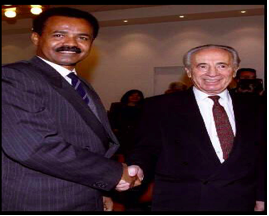
On Feb 5, 1995, President Isaias Afwerki went to Israel and met PM Shimon Peres & President Ezer Weizman. PM Peres planned to reciprocate by visiting Eritrea in Nov 1995, but the trip was canceled following the assassination of PM Rabin.


Jews first settled in Eritrea in the late 19th century, emigrating from Yemen in search of economic & commercial opportunities. In 1905, the Asmara Hebrew Congregation was formed. During the 1930s, many Jews arrived in Eritrea fleeing Nazi persecution in Europe.

On June 26, 1943 Great Britain proposed the creation of Jewish colonies in Eritrea as the extension of Jewish settlement in Palestine. But, this proposal did not materialize.

In Nov, 1947 Ethiopia abstained in the UNGA vote on the partitioning of Palestine, which sanctioned the establishment of the State of Israel. In 1952 Israel abstained in Res.390 (V) the UN Resolution that federated Eritrea with Ethiopia. In 1993, Israel recognized Eritrea.

During Emp Hailesellasie's Imperial Regime, Israel had a dozen or more advisers on counterinsurgency based in Eritrea. They organized, trained and supplied Ethiopian commandos & frontier guards-men, whose members numbered 3,200 and 1,200 respectively.

In Feb 1978, after Israeli Foreign Minister Moshe Dayan's public acknowledgement of Israeli-Ethiopian military ties, despite Derg's official anti-Zionism policy, Mengistu ordered the expulsion of Israelis.

In a Dec 1989 statement, former US President Jimmy Carter, who was mediating between the EPLF & Ethiopia disclosed that Israel provided Ethiopia with cluster bombs that the Ethiopian Air Force used in Eritrea.

In Sep, 1998, despite pleas from Eritrea, PM Netanyahu decided to allow Elbit Systems to supply upgraded MiG-21 fighter jets to the Ethiopian air force during the war b/n Eritrea & weyane's Ethiopia. Eritrea protested the act, as taking sides in the war

In the 1940s the British set up an internment camp in Eritrea for the Irgun & the Stern groups that were attacking British targets. One of these prisoners was the late Israeli PM Yitzhak Shamir, who attempted to escape but was captured.


(History of Eritrea ታሪኽ ኤርትራ.تاريخ إريتريا: @Erihistory)
Last edited by Zmeselo on 14 Feb 2021, 11:28, edited 4 times in total.

Sabur
Member
Posts: 1364
Joined: 11 Aug 2018, 07:41

Re: Eritrea & Israel

Post by Sabur » 14 Feb 2021, 05:47


The Kanzens "እንዳ ካንዘን" was one of the Jewish Business in Asmara that I remember.

Zmeselo
Senior Member+
Posts: 37345
Joined: 30 Jul 2010, 20:43

Re: Eritrea & Israel

Post by Zmeselo » 14 Feb 2021, 08:51


Mamo Afete, an Ethiopian PoW of '77 @ Afabet. Spent 5 yrs taking political lessons & became a member of the EPLF till 1991, giving political lessons 2 other PoWs who hold key positions in Ethiopia today. Also married, to an Eritrean EPLF fighter.
(Eritrea Compass: @eritreacompass)

Zmeselo
Senior Member+
Posts: 37345
Joined: 30 Jul 2010, 20:43

Re: Eritrea & Israel

Post by Zmeselo » 14 Feb 2021, 10:52


ብዙሕ ኮመንት ኣየድልን፡፡

Report from the Economist Intelligence Unit July 22, 2003.

US & EU: ባድመ ኣብ መሬትኩም ክንሃንጸልኩም፣ ኩሉ መዳያዊ ሓገዝ ክንውስኽልኩም፣ ንብረትኩም ብዓሰብ ክኣቱ ክወጽእ ምስ ኤርትራ ክትዘራራቡ ባይታ ክነጣጥሓልኩም ተባሂሎም፡ ግን ሕጂ....


Temt
Member+
Posts: 5480
Joined: 04 Jun 2013, 22:23

Re: Eritrea & Israel

Post by Temt » 14 Feb 2021, 11:41

Zmeselo wrote:
14 Feb 2021, 05:19
This day in Eritrea's History.
...
In Feb 1978, after Israeli Foreign Minister Moshe Dayan's public acknowledgment of Israeli-Ethiopian military ties, despite Derg's official anti-Zionism policy, Mengistu ordered the expulsion of Israelis.
...
(History of Eritrea ታሪኽ ኤርትራ.تاريخ إريتريا: @Erihistory)
ብጻይ Zmeselo, እስከ እዛ ኣመልኪተላ ዘለኹ ምልእቲ ሓሳባት (Statement)፡ ንዓይ ትርጉማ ንጽርቲ ኣይኮነትን። ምናልባት ዝጐደላ ቃል (ቃላት) ኮነ ወይ ስርዓተ ፊደላት (spelling) እንተዘይኮይኑ፡ እተን "despite"ን "ordered the expulsion" ነቲ ምሉእ ሓሳባት (Statement) ዘጋጭወኦ እመስለኒ። መርገጺ መንግስቱን እታ ንሱ ዝመርሓ ደርግን ሓደ ካብ ኮነ "despite"ን "ordered the expulsion" ብሓደ ዝኸዳ ኣይመስለንን። What do you think brother?

Zmeselo
Senior Member+
Posts: 37345
Joined: 30 Jul 2010, 20:43

Re: Eritrea & Israel

Post by Zmeselo » 14 Feb 2021, 11:51

Alexander Isak scored his 9th goal of the season today, against Getafe. He has now scored in 5 matches, in a row.


La liga's top 10 scorers, thus far:

https://www.topscorersfootball.com/la-liga

1. Luis Suárez- 16 goals
2. Lionel Messi- 15
3. Youssef En-Nesyri- 13
4. Gerard Moreno- 12
5. Karim Benzema- 11
6. José Luis Morales- 10
7. Mikel Oyarzabal- 10
8. Alexander Isak- 9
9. Iago Aspas- 9
10. Roger Martí- 9

Real Sociedad is now in 5th place, with 1 more game played:

https://www.bbc.com/sport/football/span ... liga/table

________________________


FenkilForGenerations! Etihad won the cup for 31st anniversary of Fenkil operation 2021. Eritrean community Khartoum, Sudan
(Ismail Mussa: @IsmailM55208988)
Last edited by Zmeselo on 14 Feb 2021, 15:36, edited 6 times in total.

Zmeselo
Senior Member+
Posts: 37345
Joined: 30 Jul 2010, 20:43

Re: Eritrea & Israel

Post by Zmeselo » 14 Feb 2021, 12:02

Temt wrote:
14 Feb 2021, 11:41
Zmeselo wrote:
14 Feb 2021, 05:19
This day in Eritrea's History.
...
In Feb 1978, after Israeli Foreign Minister Moshe Dayan's public acknowledgment of Israeli-Ethiopian military ties, despite Derg's official anti-Zionism policy, Mengistu ordered the expulsion of Israelis.
...
(History of Eritrea ታሪኽ ኤርትራ.تاريخ إريتريا: @Erihistory)
ብጻይ Zmeselo, እስከ እዛ ኣመልኪተላ ዘለኹ ምልእቲ ሓሳባት (Statement)፡ ንዓይ ትርጉማ ንጽርቲ ኣይኮነትን። ምናልባት ዝጐደላ ቃል (ቃላት) ኮነ ወይ ስርዓተ ፊደላት (spelling) እንተዘይኮይኑ፡ እተን "despite"ን "ordered the expulsion" ነቲ ምሉእ ሓሳባት (Statement) ዘጋጭወኦ እመስለኒ። መርገጺ መንግስቱን እታ ንሱ ዝመርሓ ደርግን ሓደ ካብ ኮነ "despite"ን "ordered the expulsion" ብሓደ ዝኸዳ ኣይመስለንን። What do you think brother?
ብሓጺሩስ ብጻይ Temt: Moshe Dayan ኣፈዲሑዎ ንመንጌ:: ብደገ ጸረ ጽዮናዉያን ክመስል እንዳደለየ: ንሕግዞ ኢና ስለዝበለ: ኣንጸርጺሩ ኣባሪሩዎም::

tarik
Senior Member+
Posts: 37124
Joined: 26 Feb 2016, 13:04

Re: Eritrea & Israel

Post by tarik » 14 Feb 2021, 12:25

Zionist israel has always been enemy of us Eritreans, starting with it's assistant 2 derg's aiding it with cluster bombs 2 destroy EPLF and earlier it created Komandis 2 destory ELF and later it supported meles war against Eritrea in 1998. And also z youth flooding 2 israel was done with z help of zionist isreal 2 destory eritrean youth and empty eritrea. Eritrean youth r still mis-treated by zionist isreal 2 this day. Look how it aided derg with cluster bombs in 6 werar and later in massawa. Eritrea must rethink her relations with zionist israel.
=========================================================================================================
Dispatch from Eritrea: Did Israel help create Africa’s secret Aleppo?
Article was from MADOTE.

Mural of an Eritrean resistance fighter, themed with the country's colors, facing the Red Sea. Credit: Gabriel Pogrund


Israel stands accused of supplying Ethiopia’s murderous dictator Mengistu with cluster bombs in the early 1990s in exchange for airlifting Ethiopian Jews out of the country.


By Gabriel Pogrund | Haaretz

MASSAWA, ERITREA − Massawa is a broken city.

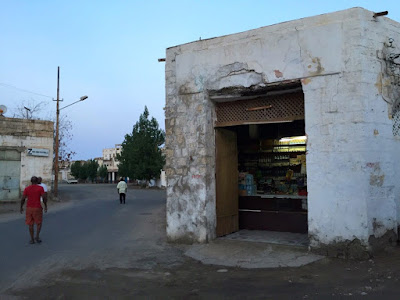
Half of its once busy port is rubble and the surviving buildings struggle to stand up. Iron rods and barbed wire prod out of their crumbling Ottoman facades, as if to warn visitors “come no further.” But few visit anyway.

The streets are empty, the 44 degrees Celsius heat too oppressive for anyone to come out. It is silent, save for the caw of crows and the soft purr of a café’s electricity generator. Even the Red Sea doesn’t make a sound.

This is Africa’s secret Aleppo, and like that infamous Syrian city, it was devastated by the indiscriminate weapon which most of the world’s countries have had the good sense to ban: cluster bombs.

Today, few outside of Eritrea remember the massacre at Massawa, where 50,000 people still live, but in this abandoned port, the bombed-out Ottoman buildings and their residents bear witness to what happened with such clarity, it is difficult to forget.

The bombardment in 1990 was a last-ditch attempt by Ethiopia to demoralize the Eritrean guerrilla movement, which had liberated Massawa and stood on the cusp of winning independence after one of the longest-running guerilla wars in history.

Warplanes circulated around the bay for days, relentlessly bombing civilian areas. Napalm instantly incinerated buildings – and their inhabitants – at temperatures of 1,000 degrees Celsius. Cluster bombs landed and sent lethal ‘sub-explosives’ propelling in random directions, killing children and blowing off their parents’ limbs.

“Mengistu [Haile Mariam] has decided to burn us like wood,” a resident said of Ethiopia’s Marxist dictator at the time. Massawa was indeed some bonfire: Unpublished pictures from the massacre show a confused child whose back has been turned into raw flesh, a survivor whose face has been burnt off, and bodies lying face-down on the blood-stained streets.

Who armed the murderous Ethiopian warlord Lieutenant Colonel Mengistu, now convicted of killing half a million of his own citizens during his regime’s death throes?

It wasn’t Washington. It wasn’t the Kremlin. As memos, foreign press reports and the person who brokered the deal have since revealed, it was the Israeli Knesset.

Israel would not confirm the allegations levelled against it at the time. Ruth Yaron, its spokesperson in Washington, told an LA Times reporter in 1990: “We don’t sell cluster bombs to Ethiopia, and we don’t give them either.” Probed on whether Israel had sent them in the past, she replied, “I wouldn’t be able to answer that.” This was little surprise, as Israel had historically declined to say whether it was sending arms and military advisors to Ethiopia.

But a confidential Congressional document leaked to Washington’s Jewish press, as well as foreign reports by newspapers and human rights organizations provided details about the alleged events. And the historical literature written since – including the memoirs of Herman Cohen – has examined them in depth.

By 1989, the Ethiopian communist regime was in terminal decline, embattled by coordinated Eritrean and Tigray ethnic uprisings and practically bankrupt: The government was spending over half of its revenue on arms, and servicing its debt took $530,500,000 per year.

Now it had also lost its superpower sugar daddy, the Soviets, who themselves stood on the brink of financial collapse and would not bankroll their communist client state as it tried to repel these secessionist movements. Their 15- year-long alliance abruptly ended.

The Americans wouldn’t become Ethiopia’s superpower patron again either, even as Mengitsu came to them cap in hand begging for weapons, citing humanitarian concerns about arming his military and, as Herman Cohen writes, privately believing the “countdown to regime collapse” was well and truly underway.

Running out of luck and out of friends, Mengitsu, Israel and America arranged a quid pro quo, which, according to foreign reports, went as follows: Israel would covertly arm his government and in return the Israel Defense Forces could airlift the Ethiopian Jews, directly out of Ethiopia to Israel. America would give a “wink and a nudge,” Cohen wrote in his memoirs, and in return Israel would not supply any “lethal” weapons.

Israel responded by furnishing the Ethiopian military with 150,000 bolt-action rifles, according to foreign reports. The IDF in turn received permission to enter the country and begin airlifts on a scale and scope previously impossible – in 1991 the Washington Report on Middle East Affairs reported that 1,000 Ethiopian Jews were leaving per month, up from 250 on average across the previous year.

Israel then ignored Washington’s explicit warnings about destructive weapons, “the ones which really worried us,” writes Cohen, and handed the Ethiopians a big, ribbon-wrapped present: a hundred or so cluster bombs.

America sternly reminded Israel of its original commitments. According to former Harvard fellow and Africa researcher Alex de Waal, the White House even commissioned one of its former presidents to help. “You don’t need to sell Mengistu fragmentation bombs in order to persuade him to let your people go,” Jimmy Carter is quoted as saying to MK Dedi Zuker.

But by then it was too late. Mengistu had developed his “scorched earth” policy and would soon begin indiscriminately bombing civilian areas in Massawa.

While brutal, the bombings did not deter the Eritreans, whose guerilla forces advanced up the coast and defeated the mutinous Ethiopian army at Asmara weeks later. Independence was inevitable: Mengistu fled to a farm in Zimbabwe, where he received political asylum from his old friend Robert Mugabe, and Ethiopia’s interim government agreed to hold a referendum on Eritrean statehood – later won by a 99.8-percent landslide.

Twenty five years after declaring independence, Eritrea is one of the most isolated countries in the world. The result of its policy of so-called “self-sufficiency” is that it is doubly forgotten: by time and the international community.

Even in this context, Massawa is especially imprisoned by its past. Walking through the port you see several suited men with one trouser leg neatly rolled up and stapled closed, the fabric flapping in the wind – their legs blown off by either cluster bombs or mines.

Most of the buildings are also unable to stand on their own, so structurally unsound they have been abandoned. Those which still stand tend to be homes – although many of the city’s residents have left – or cafes whose customers are Eritreans from the capital or seamen passing through the port on cargo ships heading up the Gulf of Aden.

“Where are you from? Have you come from the ships?” Tesfay, an excited English teacher still living in the city, asks. “No one else comes here, only a few cargo ships.” People like him live the reality of this ghost town every day. They are its ghosts.

The exact motive behind Israel’s decision to reportedly supply such lethal weapons remains unclear. Wrong, the foreign correspondent specializing in Africa, says Israel was “excited” by the surge in Ethiopian arrivals and wanted to up the number of airlifts at any cost.

Similarly, de Waal says Israel was motivated by a desire to remove Jews from Ethiopia as rapidly as possible because the country’s communist regime was so unstable and when it fell, there could be anti-Semitic reprisals by the new government.

Yet 10,000 Ethiopian Jews still remain in the transit camps of Addis Ababa and Gonda waiting to travel to Israel, and none of the allegedly feared reprisals took place against those people. It was only this year, over two decades on, that Prime Minister Benjamin Netanyahu finally pledged to bring them all to Israel.

Many see the Ethiopian Jews’ movement to Israel as one of the most triumphant events in Jewish history. But the way it reportedly took place was arguably one of the least flattering. Congressional aide Steve Morrison asked at the time, “How many Ethiopian lives can be justified for the sake of an Ethiopian Jew having the opportunity to reunify with his family in Israel?”

In the port of Massawa, Eritreans sit in crumbling Ottoman buildings and sip on Italian coffee. They drive rusting East German cars, eat Ethiopian flatbread and watch English soccer. There are endless external influences in this hermetically sealed country.

But the imprint of war is what’s not here – no electricity, no running water, still no people on the streets. In this sense, in a city invisible to the world, the massacre of Massawa is there for anyone to see.

Temt
Member+
Posts: 5480
Joined: 04 Jun 2013, 22:23

Re: Eritrea & Israel

Post by Temt » 14 Feb 2021, 12:31

Zmeselo wrote:
14 Feb 2021, 12:02
Temt wrote:
14 Feb 2021, 11:41
Zmeselo wrote:
14 Feb 2021, 05:19
This day in Eritrea's History.
...
In Feb 1978, after Israeli Foreign Minister Moshe Dayan's public acknowledgment of Israeli-Ethiopian military ties, despite Derg's official anti-Zionism policy, Mengistu ordered the expulsion of Israelis.
...
(History of Eritrea ታሪኽ ኤርትራ.تاريخ إريتريا: @Erihistory)
ብጻይ Zmeselo, እስከ እዛ ኣመልኪተላ ዘለኹ ምልእቲ ሓሳባት (Statement)፡ ንዓይ ትርጉማ ንጽርቲ ኣይኮነትን። ምናልባት ዝጐደላ ቃል (ቃላት) ኮነ ወይ ስርዓተ ፊደላት (spelling) እንተዘይኮይኑ፡ እተን "despite"ን "ordered the expulsion" ነቲ ምሉእ ሓሳባት (Statement) ዘጋጭወኦ እመስለኒ። መርገጺ መንግስቱን እታ ንሱ ዝመርሓ ደርግን ሓደ ካብ ኮነ "despite"ን "ordered the expulsion" ብሓደ ዝኸዳ ኣይመስለንን። What do you think brother?
ብሓጺሩስ ብጻይ Temt: Moshe Dayan ኣፈዲሑዎ ንመንጌ:: ብደገ ጸረ ጽዮናዉያን ክመስል እንዳደለየ: ንሕግዞ ኢና ስለዝበለ: ኣንጸርጺሩ ኣባሪሩዎም::
Thank you, bro, for clarifying it to me. BTW, I am not surprised that መንጌ did that for that is his kinds do - dishonesty. LOL!

Zmeselo
Senior Member+
Posts: 37345
Joined: 30 Jul 2010, 20:43

Re: Eritrea & Israel

Post by Zmeselo » 14 Feb 2021, 13:48


Abe Abraham
Senior Member
Posts: 14414
Joined: 05 Jun 2013, 13:00

Re: Eritrea & Israel

Post by Abe Abraham » 14 Feb 2021, 14:31

tarik wrote:
14 Feb 2021, 12:25
Zionist israel has always been enemy of us Eritreans, starting with it's assistant 2 derg's aiding it with cluster bombs 2 destroy EPLF and earlier it created Komandis 2 destory ELF and later it supported meles war against Eritrea in 1998. And also z youth flooding 2 israel was done with z help of zionist isreal 2 destory eritrean youth and empty eritrea. Eritrean youth r still mis-treated by zionist isreal 2 this day. Look how it aided derg with cluster bombs in 6 werar and later in massawa. Eritrea must rethink her relations with zionist israel.
=========================================================================================================
Dispatch from Eritrea: Did Israel help create Africa’s secret Aleppo?
Article was from MADOTE.

Mural of an Eritrean resistance fighter, themed with the country's colors, facing the Red Sea. Credit: Gabriel Pogrund


Israel stands accused of supplying Ethiopia’s murderous dictator Mengistu with cluster bombs in the early 1990s in exchange for airlifting Ethiopian Jews out of the country.


By Gabriel Pogrund | Haaretz

MASSAWA, ERITREA − Massawa is a broken city.

Half of its once busy port is rubble and the surviving buildings struggle to stand up. Iron rods and barbed wire prod out of their crumbling Ottoman facades, as if to warn visitors “come no further.” But few visit anyway.

The streets are empty, the 44 degrees Celsius heat too oppressive for anyone to come out. It is silent, save for the caw of crows and the soft purr of a café’s electricity generator. Even the Red Sea doesn’t make a sound.

This is Africa’s secret Aleppo, and like that infamous Syrian city, it was devastated by the indiscriminate weapon which most of the world’s countries have had the good sense to ban: cluster bombs.

Today, few outside of Eritrea remember the massacre at Massawa, where 50,000 people still live, but in this abandoned port, the bombed-out Ottoman buildings and their residents bear witness to what happened with such clarity, it is difficult to forget.

The bombardment in 1990 was a last-ditch attempt by Ethiopia to demoralize the Eritrean guerrilla movement, which had liberated Massawa and stood on the cusp of winning independence after one of the longest-running guerilla wars in history.

Warplanes circulated around the bay for days, relentlessly bombing civilian areas. Napalm instantly incinerated buildings – and their inhabitants – at temperatures of 1,000 degrees Celsius. Cluster bombs landed and sent lethal ‘sub-explosives’ propelling in random directions, killing children and blowing off their parents’ limbs.

“Mengistu [Haile Mariam] has decided to burn us like wood,” a resident said of Ethiopia’s Marxist dictator at the time. Massawa was indeed some bonfire: Unpublished pictures from the massacre show a confused child whose back has been turned into raw flesh, a survivor whose face has been burnt off, and bodies lying face-down on the blood-stained streets.

Who armed the murderous Ethiopian warlord Lieutenant Colonel Mengistu, now convicted of killing half a million of his own citizens during his regime’s death throes?

It wasn’t Washington. It wasn’t the Kremlin. As memos, foreign press reports and the person who brokered the deal have since revealed, it was the Israeli Knesset.

Israel would not confirm the allegations levelled against it at the time. Ruth Yaron, its spokesperson in Washington, told an LA Times reporter in 1990: “We don’t sell cluster bombs to Ethiopia, and we don’t give them either.” Probed on whether Israel had sent them in the past, she replied, “I wouldn’t be able to answer that.” This was little surprise, as Israel had historically declined to say whether it was sending arms and military advisors to Ethiopia.

But a confidential Congressional document leaked to Washington’s Jewish press, as well as foreign reports by newspapers and human rights organizations provided details about the alleged events. And the historical literature written since – including the memoirs of Herman Cohen – has examined them in depth.

By 1989, the Ethiopian communist regime was in terminal decline, embattled by coordinated Eritrean and Tigray ethnic uprisings and practically bankrupt: The government was spending over half of its revenue on arms, and servicing its debt took $530,500,000 per year.

Now it had also lost its superpower sugar daddy, the Soviets, who themselves stood on the brink of financial collapse and would not bankroll their communist client state as it tried to repel these secessionist movements. Their 15- year-long alliance abruptly ended.

The Americans wouldn’t become Ethiopia’s superpower patron again either, even as Mengitsu came to them cap in hand begging for weapons, citing humanitarian concerns about arming his military and, as Herman Cohen writes, privately believing the “countdown to regime collapse” was well and truly underway.

Running out of luck and out of friends, Mengitsu, Israel and America arranged a quid pro quo, which, according to foreign reports, went as follows: Israel would covertly arm his government and in return the Israel Defense Forces could airlift the Ethiopian Jews, directly out of Ethiopia to Israel. America would give a “wink and a nudge,” Cohen wrote in his memoirs, and in return Israel would not supply any “lethal” weapons.

Israel responded by furnishing the Ethiopian military with 150,000 bolt-action rifles, according to foreign reports. The IDF in turn received permission to enter the country and begin airlifts on a scale and scope previously impossible – in 1991 the Washington Report on Middle East Affairs reported that 1,000 Ethiopian Jews were leaving per month, up from 250 on average across the previous year.

Israel then ignored Washington’s explicit warnings about destructive weapons, “the ones which really worried us,” writes Cohen, and handed the Ethiopians a big, ribbon-wrapped present: a hundred or so cluster bombs.

America sternly reminded Israel of its original commitments. According to former Harvard fellow and Africa researcher Alex de Waal, the White House even commissioned one of its former presidents to help. “You don’t need to sell Mengistu fragmentation bombs in order to persuade him to let your people go,” Jimmy Carter is quoted as saying to MK Dedi Zuker.

But by then it was too late. Mengistu had developed his “scorched earth” policy and would soon begin indiscriminately bombing civilian areas in Massawa.

While brutal, the bombings did not deter the Eritreans, whose guerilla forces advanced up the coast and defeated the mutinous Ethiopian army at Asmara weeks later. Independence was inevitable: Mengistu fled to a farm in Zimbabwe, where he received political asylum from his old friend Robert Mugabe, and Ethiopia’s interim government agreed to hold a referendum on Eritrean statehood – later won by a 99.8-percent landslide.

Twenty five years after declaring independence, Eritrea is one of the most isolated countries in the world. The result of its policy of so-called “self-sufficiency” is that it is doubly forgotten: by time and the international community.

Even in this context, Massawa is especially imprisoned by its past. Walking through the port you see several suited men with one trouser leg neatly rolled up and stapled closed, the fabric flapping in the wind – their legs blown off by either cluster bombs or mines.

Most of the buildings are also unable to stand on their own, so structurally unsound they have been abandoned. Those which still stand tend to be homes – although many of the city’s residents have left – or cafes whose customers are Eritreans from the capital or seamen passing through the port on cargo ships heading up the Gulf of Aden.

“Where are you from? Have you come from the ships?” Tesfay, an excited English teacher still living in the city, asks. “No one else comes here, only a few cargo ships.” People like him live the reality of this ghost town every day. They are its ghosts.

The exact motive behind Israel’s decision to reportedly supply such lethal weapons remains unclear. Wrong, the foreign correspondent specializing in Africa, says Israel was “excited” by the surge in Ethiopian arrivals and wanted to up the number of airlifts at any cost.

Similarly, de Waal says Israel was motivated by a desire to remove Jews from Ethiopia as rapidly as possible because the country’s communist regime was so unstable and when it fell, there could be anti-Semitic reprisals by the new government.

Yet 10,000 Ethiopian Jews still remain in the transit camps of Addis Ababa and Gonda waiting to travel to Israel, and none of the allegedly feared reprisals took place against those people. It was only this year, over two decades on, that Prime Minister Benjamin Netanyahu finally pledged to bring them all to Israel.

Many see the Ethiopian Jews’ movement to Israel as one of the most triumphant events in Jewish history. But the way it reportedly took place was arguably one of the least flattering. Congressional aide Steve Morrison asked at the time, “How many Ethiopian lives can be justified for the sake of an Ethiopian Jew having the opportunity to reunify with his family in Israel?”

In the port of Massawa, Eritreans sit in crumbling Ottoman buildings and sip on Italian coffee. They drive rusting East German cars, eat Ethiopian flatbread and watch English soccer. There are endless external influences in this hermetically sealed country.

But the imprint of war is what’s not here – no electricity, no running water, still no people on the streets. In this sense, in a city invisible to the world, the massacre of Massawa is there for anyone to see.


If we were to cut our diplomatic ties with those countries which committed injustice against us then we would have no relationship with many important countries in the world specially in our region.

We Eritreans won our independence against all odds. We defeated all of our enemies starting with ELF. The criminal ELF and the jihadists betrayed the Eritrean people. I would rather focus on jihadists than Israel. The world is changing we can not be anti-Zionist while there are no anti-Zionists left in the Arab world.

Abe Abraham
Senior Member
Posts: 14414
Joined: 05 Jun 2013, 13:00

Re: Eritrea & Israel

Post by Abe Abraham » 14 Feb 2021, 15:24


دبلوماسي عربي سفيراً لإسرائيل لدى إريتريا

بعد أسابيع من الاعتداء العنصري عليه

الثلاثاء - 17 ذو القعدة 1441 هـ - 07 يوليو 2020 مـ

ዲፕሎማት ኢስማዒይል ኻሊዲይ ፡ ኣምባሳደር እስራኤል ኣብ ኤርትራ ፡ ንመጀመርታ ግዜ ሓደ ካብ ናይ እስራኤል ዓረብ ደቂ በደው ናይ ኣምባሳደርነት ቦታ ዝሓዘ ።


تل أبيب: «الشرق الأوسط»

بعد 3 أسابيع من الاعتداء العنصري عليه، قررت لجنة التعيينات في وزارة الخارجية الإسرائيلية اختيار الدبلوماسي العربي، إسماعيل خالدي، سفيراً لها لدى إريتريا؛ ليكون بذلك أول عربي من أصول بدوية يشغل منصب سفير إسرائيلي.
وخالدي، وهو في التاسعة والأربعين من العمر وأب لثلاثة أولاد، يعمل في الخارجية الإسرائيلية منذ سنة 2004، ومع أنه يخدم في الخارجية الإسرائيلية بدرجة نائب سفير، فإنه يحتفظ بآراء مستقلة ويوجه انتقادات علنية للسياسة الإسرائيلية الرسمية، جنباً إلى جنب دفاعه المستميت عن إسرائيل في الخارج. عندما خدم بالسفارة الإسرائيلية في لندن تولى مهمة مكافحة حملة لمقاطعة إسرائيل. وكان يقول إنه يرى في إسرائيل دولة رائعة لكنه يحارب النواقص الكثيرة، مثل التمييز العنصري ضد المواطنين العرب. ولم يُخف رأيه هذا وكتبه في صفحته على «فيسبوك». ذات مرة نشر صورة لقريته «عرب الخوالد» القريبة من الناصرة، وهي تظهر بشوارعها الترابية وكتب تحتها تعليقاً: «قررت لجم نفسي وفرملة لساني لأنني لا أريد أن أقول: أبرتهايد». وكتب مرة أخرى: «دولتي قوية بكونها مجتمعاً ديمقراطياً منفتحاً، لكنها تعاني من نقص بارز هو فقدان المساواة». وانتقد قانون القومية اليهودية الذي سن عام 2018. وقد جرى استدعاؤه مرات عدة لجلسات استماع وتوبيخ، لكنه لم يفصل.

احتل اسمه العناوين، قبل 3 أسابيع، عندما تعرض لاعتداء شرس من 4 رجال أمن يهود في محطة القطار بالقدس، وهو في طريق عودته من العمل باتجاه بلدته العربية البدوية عرب الخوالد في الشمال. وروى يومها أن الحراس أسقطوه أرضاً وانقض عليه أحدهم وهو يضع ركبته على رقبته. وقال: «راح يضغط لدرجة أنني شعرت بالاختناق. وقام رفيقاه بتشديد الضغط بالقدمين على كتفي ورأسي. وقد شعرت بالدوار وبقرب فقدان الوعي، ورحت أصيح بأنني لم أعد قادراً على التنفس. ولولا تدخل الناس لصرت في العالم الآخر».

وفي حينه زاره وزير الخارجية، غابي أشكنازي، واستنكر الاعتداء عليه. ويبدو أن اختياره للترقية وإرساله إلى إريتريا سفيراً، جاء تعبيراً عن رفض الاعتداء عليه. وقد عقب وزير الخارجية الأسبق، رئيس حزب «يسرائيل بيتنو»، أفيغدور ليبرمان، على قرار تعيين خالدي، في تغريدة له كتب فيها: «خالدي عمل مستشاراً لي في (الخارجية). إنه معروف بوصفه وطنياً إسرائيلياً يدافع عن الدولة بإصرار في جميع أنحاء العالم».

kerenite
Member
Posts: 4680
Joined: 16 Nov 2013, 13:15

Re: Eritrea & Israel

Post by kerenite » 14 Feb 2021, 15:29

tarik wrote:
14 Feb 2021, 12:25
Zionist israel has always been enemy of us Eritreans, starting with it's assistant 2 derg's aiding it with cluster bombs 2 destroy EPLF and earlier it created Komandis 2 destory ELF and later it supported meles war against Eritrea in 1998. And also z youth flooding 2 israel was done with z help of zionist isreal 2 destory eritrean youth and empty eritrea. Eritrean youth r still mis-treated by zionist isreal 2 this day. Look how it aided derg with cluster bombs in 6 werar and later in massawa. Eritrea must rethink her relations with zionist israel.
=========================================================================================================
Dispatch from Eritrea: Did Israel help create Africa’s secret Aleppo?
Article was from MADOTE.

Mural of an Eritrean resistance fighter, themed with the country's colors, facing the Red Sea. Credit: Gabriel Pogrund


Israel stands accused of supplying Ethiopia’s murderous dictator Mengistu with cluster bombs in the early 1990s in exchange for airlifting Ethiopian Jews out of the country.


By Gabriel Pogrund | Haaretz

MASSAWA, ERITREA − Massawa is a broken city.
Half of its once busy port is rubble and the surviving buildings struggle to stand up. Iron rods and barbed wire prod out of their crumbling Ottoman facades, as if to warn visitors “come no further.” But few visit anyway.

The streets are empty, the 44 degrees Celsius heat too oppressive for anyone to come out. It is silent, save for the caw of crows and the soft purr of a café’s electricity generator. Even the Red Sea doesn’t make a sound.

This is Africa’s secret Aleppo, and like that infamous Syrian city, it was devastated by the indiscriminate weapon which most of the world’s countries have had the good sense to ban: cluster bombs.

Today, few outside of Eritrea remember the massacre at Massawa, where 50,000 people still live, but in this abandoned port, the bombed-out Ottoman buildings and their residents bear witness to what happened with such clarity, it is difficult to forget.

The bombardment in 1990 was a last-ditch attempt by Ethiopia to demoralize the Eritrean guerrilla movement, which had liberated Massawa and stood on the cusp of winning independence after one of the longest-running guerilla wars in history.

Warplanes circulated around the bay for days, relentlessly bombing civilian areas. Napalm instantly incinerated buildings – and their inhabitants – at temperatures of 1,000 degrees Celsius. Cluster bombs landed and sent lethal ‘sub-explosives’ propelling in random directions, killing children and blowing off their parents’ limbs.

“Mengistu [Haile Mariam] has decided to burn us like wood,” a resident said of Ethiopia’s Marxist dictator at the time. Massawa was indeed some bonfire: Unpublished pictures from the massacre show a confused child whose back has been turned into raw flesh, a survivor whose face has been burnt off, and bodies lying face-down on the blood-stained streets.

Who armed the murderous Ethiopian warlord Lieutenant Colonel Mengistu, now convicted of killing half a million of his own citizens during his regime’s death throes?

It wasn’t Washington. It wasn’t the Kremlin. As memos, foreign press reports and the person who brokered the deal have since revealed, it was the Israeli Knesset.

Israel would not confirm the allegations levelled against it at the time. Ruth Yaron, its spokesperson in Washington, told an LA Times reporter in 1990: “We don’t sell cluster bombs to Ethiopia, and we don’t give them either.” Probed on whether Israel had sent them in the past, she replied, “I wouldn’t be able to answer that.” This was little surprise, as Israel had historically declined to say whether it was sending arms and military advisors to Ethiopia.

But a confidential Congressional document leaked to Washington’s Jewish press, as well as foreign reports by newspapers and human rights organizations provided details about the alleged events. And the historical literature written since – including the memoirs of Herman Cohen – has examined them in depth.

By 1989, the Ethiopian communist regime was in terminal decline, embattled by coordinated Eritrean and Tigray ethnic uprisings and practically bankrupt: The government was spending over half of its revenue on arms, and servicing its debt took $530,500,000 per year.

Now it had also lost its superpower sugar daddy, the Soviets, who themselves stood on the brink of financial collapse and would not bankroll their communist client state as it tried to repel these secessionist movements. Their 15- year-long alliance abruptly ended.

The Americans wouldn’t become Ethiopia’s superpower patron again either, even as Mengitsu came to them cap in hand begging for weapons, citing humanitarian concerns about arming his military and, as Herman Cohen writes, privately believing the “countdown to regime collapse” was well and truly underway.

Running out of luck and out of friends, Mengitsu, Israel and America arranged a quid pro quo, which, according to foreign reports, went as follows: Israel would covertly arm his government and in return the Israel Defense Forces could airlift the Ethiopian Jews, directly out of Ethiopia to Israel. America would give a “wink and a nudge,” Cohen wrote in his memoirs, and in return Israel would not supply any “lethal” weapons.

Israel responded by furnishing the Ethiopian military with 150,000 bolt-action rifles, according to foreign reports. The IDF in turn received permission to enter the country and begin airlifts on a scale and scope previously impossible – in 1991 the Washington Report on Middle East Affairs reported that 1,000 Ethiopian Jews were leaving per month, up from 250 on average across the previous year.

Israel then ignored Washington’s explicit warnings about destructive weapons, “the ones which really worried us,” writes Cohen, and handed the Ethiopians a big, ribbon-wrapped present: a hundred or so cluster bombs.

America sternly reminded Israel of its original commitments. According to former Harvard fellow and Africa researcher Alex de Waal, the White House even commissioned one of its former presidents to help. “You don’t need to sell Mengistu fragmentation bombs in order to persuade him to let your people go,” Jimmy Carter is quoted as saying to MK Dedi Zuker.

But by then it was too late. Mengistu had developed his “scorched earth” policy and would soon begin indiscriminately bombing civilian areas in Massawa.

While brutal, the bombings did not deter the Eritreans, whose guerilla forces advanced up the coast and defeated the mutinous Ethiopian army at Asmara weeks later. Independence was inevitable: Mengistu fled to a farm in Zimbabwe, where he received political asylum from his old friend Robert Mugabe, and Ethiopia’s interim government agreed to hold a referendum on Eritrean statehood – later won by a 99.8-percent landslide.

Twenty five years after declaring independence, Eritrea is one of the most isolated countries in the world. The result of its policy of so-called “self-sufficiency” is that it is doubly forgotten: by time and the international community.

Even in this context, Massawa is especially imprisoned by its past. Walking through the port you see several suited men with one trouser leg neatly rolled up and stapled closed, the fabric flapping in the wind – their legs blown off by either cluster bombs or mines.

Most of the buildings are also unable to stand on their own, so structurally unsound they have been abandoned. Those which still stand tend to be homes – although many of the city’s residents have left – or cafes whose customers are Eritreans from the capital or seamen passing through the port on cargo ships heading up the Gulf of Aden.

“Where are you from? Have you come from the ships?” Tesfay, an excited English teacher still living in the city, asks. “No one else comes here, only a few cargo ships.” People like him live the reality of this ghost town every day. They are its ghosts.

The exact motive behind Israel’s decision to reportedly supply such lethal weapons remains unclear. Wrong, the foreign correspondent specializing in Africa, says Israel was “excited” by the surge in Ethiopian arrivals and wanted to up the number of airlifts at any cost.

Similarly, de Waal says Israel was motivated by a desire to remove Jews from Ethiopia as rapidly as possible because the country’s communist regime was so unstable and when it fell, there could be anti-Semitic reprisals by the new government.

Yet 10,000 Ethiopian Jews still remain in the transit camps of Addis Ababa and Gonda waiting to travel to Israel, and none of the allegedly feared reprisals took place against those people. It was only this year, over two decades on, that Prime Minister Benjamin Netanyahu finally pledged to bring them all to Israel.

Many see the Ethiopian Jews’ movement to Israel as one of the most triumphant events in Jewish history. But the way it reportedly took place was arguably one of the least flattering. Congressional aide Steve Morrison asked at the time, “How many Ethiopian lives can be justified for the sake of an Ethiopian Jew having the opportunity to reunify with his family in Israel?”

In the port of Massawa, Eritreans sit in crumbling Ottoman buildings and sip on Italian coffee. They drive rusting East German cars, eat Ethiopian flatbread and watch English soccer. There are endless external influences in this hermetically sealed country.

But the imprint of war is what’s not here – no electricity, no running water, still no people on the streets. In this sense, in a city invisible to the world, the massacre of Massawa is there for anyone to see.


Indeed well said!!!

Yes the commandis were trained in deqemhare by special israeli agents. They. armed them with the best machinery then notably the famous israeli machine gun known as ouzi were put at their disposal, whereas our eri fighters facing them then were carrying first world war guns such as abu ashara etc..


The commandis sadly were eritreans but later most of them distanced themselves from serving the midget sellassie when they noticed the massacre which was committed against innocent eri christians at weki dibba and other places. Consequently they joined the fronts. Ironically most of them joined the ELF whom they were brainwashed to fight.

Above is for the record.

Post Reply