Ethiopian News, Current Affairs and Opinion Forum
AbyssiniaLady
Member+
Posts: 7665
Joined: 04 Feb 2007, 05:44

Ethiopia’s experimentation with federalism system

Post by AbyssiniaLady » 19 Dec 2020, 16:12

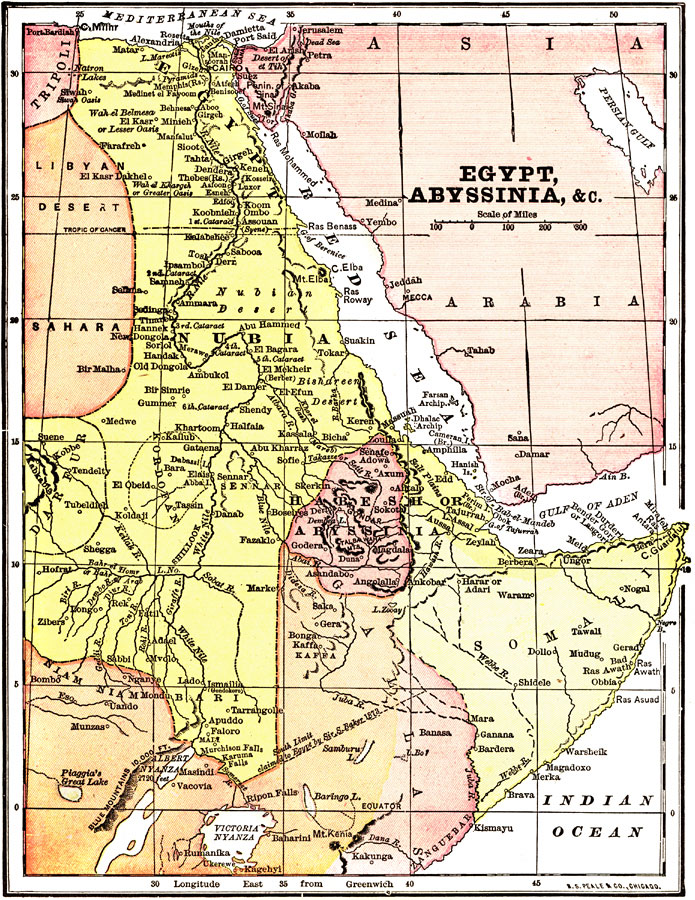
Before the corrupt Italian arrived in Assab in 1869, there was no such country as Eritrea, Eritrean people or Eritrean history etc.


(Abyssinia map, Before the Italian arrived in Assab)


Ethiopia’s experimentation with federalism began in the 1950s when Emperor Haile Selassie decided to expand the Ethiopian empire when the future of Eritrea came up for discussion at the United Nations. Eritrea had been an Italian colony for 50 years but had gained some degree of self-identity under the British caretakers after the defeat of the Italians in 1941.The Muslim more than half of the population supported the idea of an independent Eritrean state proposed by Arab countries while the Christian half tended to support unification with Ethiopia. The emperor intervened on the claim that Eritrea had after all historically been part of the empire. The UN also chose the option of forming a federation linking Ethiopia and Eritrea, “under which the Ethiopian government was given control of foreign affairs, defense, finance, commerce, and ports while Eritrea was allowed its own elected government and assembly to deal with local affairs.”

(Meredith 2011, 209) Emperor Selassie, nevertheless, always saw the federation as only a step towards unification, and by 1959 he had discarded the Eritrean flag and imposed Ethiopian law. Eritrea’s two main languages, Arabic, and Tigrinya were replaced by Amharic, and finally, “in 1962 the Eritrean Assembly was persuaded to vote for the dissolution of the federation and its own existence for annexation by Ethiopia” (Meredith 2011, 209). The formal federal arrangement had lasted only ten years.

The annexation would, nevertheless, from then on face a great deal of resistance and revolts in the name of the Eritrean insurgency. Well-equipped militarily and ideologically, the insurgency gained prominence for declaiming against what it regarded as the imperialist oppression of Ethiopia’s Emperor Haile Selassie. In 1974, the Emperor was overthrown by a radical military group under Colonel Mengistu Haile Mariam.

(And Eritrea was finally liberated by the Eritrean women, that's right, by the women.)

sarcasm
Senior Member
Posts: 11594
Joined: 23 Feb 2013, 20:08

Re: Ethiopia’s experimentation with federalism system

Post by sarcasm » 19 Dec 2020, 17:32

Wasn’t the Neguse Negest system a federalist system where the Neguses have autonomy on their territories and pay taxes to the Neguse Negest (federal government)? The Neguse Negest looks after common defense and international relations. Actually, it looks like it was HS who ended the federalist system when he fired the Neguses but still kept the Neguse Negest title. He introduced a centralized state system. The Neguse Negest system is a decentralized system.

Zmeselo
Senior Member+
Posts: 37567
Joined: 30 Jul 2010, 20:43

Re: Ethiopia’s experimentation with federalism system

Post by Zmeselo » 19 Dec 2020, 17:52

This 25¢ hoe, is losing it!


Shut up, you túrd! :lol:
AbyssiniaLady wrote:
19 Dec 2020, 16:12
Before the corrupt Italian arrived in Assab in 1869, there was no such country as Eritrea, Eritrean people or Eritrean history etc.


(Abyssinia map, Before the Italian arrived in Assab)


Ethiopia’s experimentation with federalism began in the 1950s when Emperor Haile Selassie decided to expand the Ethiopian empire when the future of Eritrea came up for discussion at the United Nations. Eritrea had been an Italian colony for 50 years but had gained some degree of self-identity under the British caretakers after the defeat of the Italians in 1941.The Muslim more than half of the population supported the idea of an independent Eritrean state proposed by Arab countries while the Christian half tended to support unification with Ethiopia. The emperor intervened on the claim that Eritrea had after all historically been part of the empire. The UN also chose the option of forming a federation linking Ethiopia and Eritrea, “under which the Ethiopian government was given control of foreign affairs, defense, finance, commerce, and ports while Eritrea was allowed its own elected government and assembly to deal with local affairs.”

(Meredith 2011, 209) Emperor Selassie, nevertheless, always saw the federation as only a step towards unification, and by 1959 he had discarded the Eritrean flag and imposed Ethiopian law. Eritrea’s two main languages, Arabic, and Tigrinya were replaced by Amharic, and finally, “in 1962 the Eritrean Assembly was persuaded to vote for the dissolution of the federation and its own existence for annexation by Ethiopia” (Meredith 2011, 209). The formal federal arrangement had lasted only ten years.

The annexation would, nevertheless, from then on face a great deal of resistance and revolts in the name of the Eritrean insurgency. Well-equipped militarily and ideologically, the insurgency gained prominence for declaiming against what it regarded as the imperialist oppression of Ethiopia’s Emperor Haile Selassie. In 1974, the Emperor was overthrown by a radical military group under Colonel Mengistu Haile Mariam.

(And Eritrea was finally liberated by the Eritrean women, that's right, by the women.)

Post Reply