Ethiopian News, Current Affairs and Opinion Forum
Zmeselo
Senior Member+
Posts: 37043
Joined: 30 Jul 2010, 20:43

NRS Region: Encouraging blindness prevention efforts

Post by Zmeselo » 13 Oct 2020, 14:01


NRS Region: Encouraging blindness prevention efforts

https://shabait.com/2020/10/13/nrs-regi ... s/#Eritrea

LOCAL NEWS


Asmara, 13 October 2020 – Encouraging outcome is being registered from the integrated effort being exerted in the Northern Red Sea Region, with the view to expand eye treatment services and prevent blindness.

Speaking to Erina, Dr. Samuel Kebede, an ophthalmologist at Massawa Hospital said that a total of 31,000 nationals from all walks of life were given eye treatment out of whom 3,200 received successful surgeries in Massawa, Afabet, and Nakfa Hospitals.


Pointing out that residents of Gelalo, Shieb, Gindae and Massawa sub zones receive treatment at Massawa Hospital while residents of Afabet, Nakfa, Qarora and Adobha received treatment through eye treatment campaign, Dr. Samuel noted that most eye diseases result from lack of sanitation and could easily be avoided through preventive mechanisms and medical treatment.

He went on to say that thanks to the promotional activities and effective health services being provided, the prevalence of Trachoma in Nakfa sub zone has decreased from 11% to 0.1%.

Dr. Samuel also reminded the public to avoid harmful practices that could lead to eye blindness and practice proper preventive medications.

In related news, preparations have been finalized to conduct eye treatment services in Afabet Hospital, and eyeglass manufacturing activity has begun in Massawa Hospital, the report added.

____________


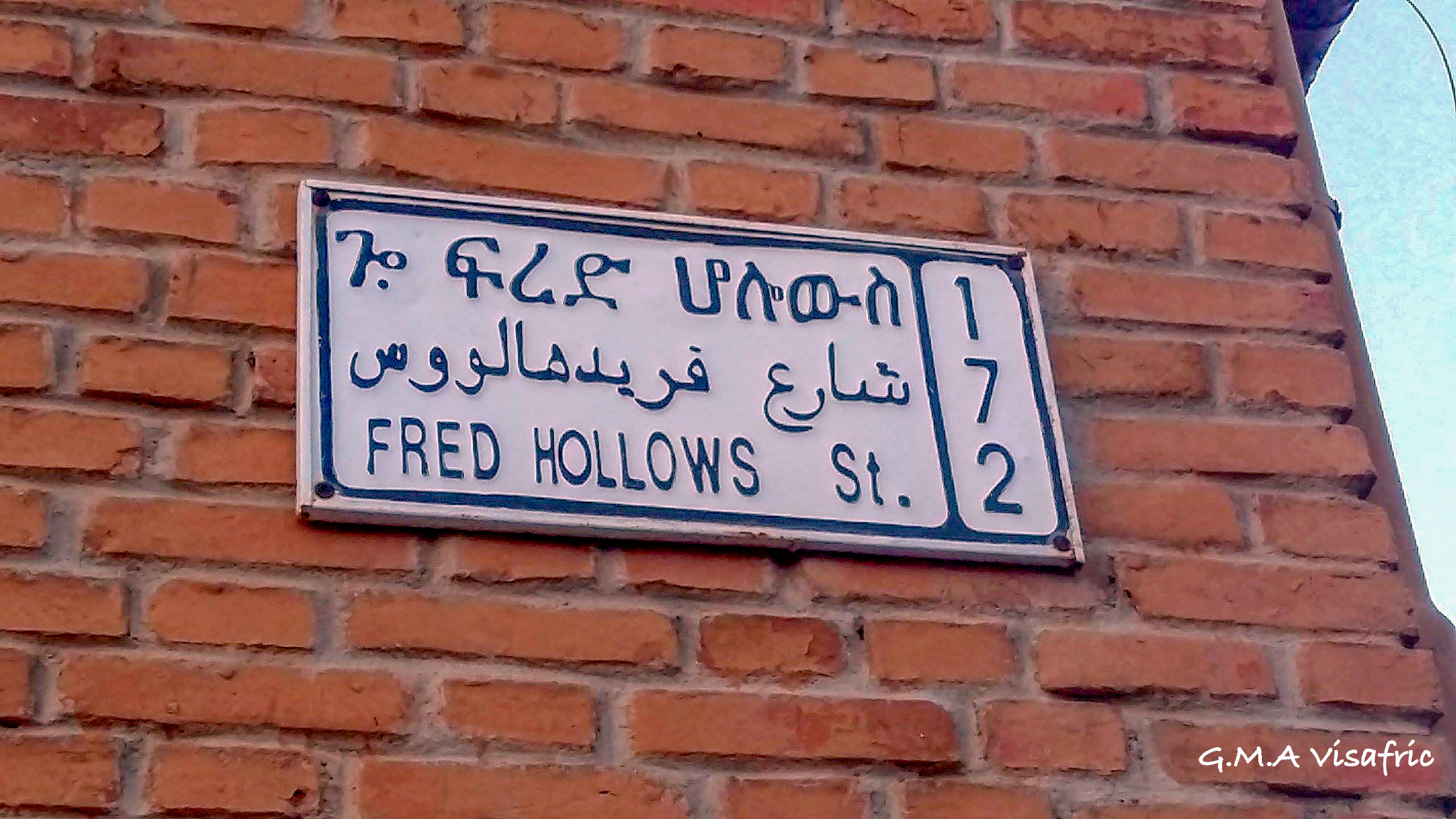
The Fred Hollows IOL Lab was established in 1994 with the help of a long time friend of Eritrea, Prof Hollows. Eritrea is the only country in Africa, that produces Intraocular lenses. His legacy lives on in the street, kindergarten & lens factory named after him. @FredHollows
We were in a NYC taxi years ago with an Eritrean driver. When he found we came from Australia, he spoke with awe about Fred. I said Fred had died and he replied in a shaky voice, Fred Hollows will never die. It brought tears to our eyes!
Writes Toni about her #MyFredMoments.


Since entering commercial operations in 1995, the Lab has exported hundreds of thousands of IOLs. They have been used throughout the world and also been tested by leading international authorities in ophthalmology. Here is what some of them have to say:
You have chosen a design which we think is absolutely state of the art. In terms of surface finish and general SEM appearance, I have never seen better lens manufacture
Professor David J Apple, MD-Professor & Chairman, Department of Ophthalmology, Medical University of South Carolina, USA, Director, WHO Collaborative Center for the prevention of Blindness
Since the last couple of years, my colleagues and I have been using many different types of IOLs from Germany, England, America, France & India. Now I can say that the Fred Hollows lens is one of the best lenses I have used. The Physical and optical specifications of the lens are magnificent
Dr. Pham Binh, Director Da Nang Ophthalmology Center, Vietnam
Having used the Fred Hollows lens in an eye camp in Tibet, I would put one in my eye
Dr. Marty Spencer, MD-SEVA Foundation, Canada; Inventor of the Spencer Single-Piece Pc-IOL design
The design of the lens is perfect-absolutely perfect. It goes in like a dream. I feel safe with the Fred Hollows lens. It is absolutely fantastic lens that I would be happy to use for any extra-capsular surgery
Dr. Geoff Tabin, Associate Professor of Ophthalmology, University Hospital, Burlington, Vermont, USA
The finish of the lens surface is good and power is correct. Insertion was done very easily and smoothly
Dr. Akira Momos, Director, Institute of Clinical Ophthalmology, Japan
Last edited by Zmeselo on 13 Oct 2020, 23:38, edited 3 times in total.

Zmeselo
Senior Member+
Posts: 37043
Joined: 30 Jul 2010, 20:43

Re: NRS Region: Encouraging blindness prevention efforts

Post by Zmeselo » 13 Oct 2020, 14:12


______________


Last edited by Zmeselo on 14 Oct 2020, 07:47, edited 3 times in total.

Zmeselo
Senior Member+
Posts: 37043
Joined: 30 Jul 2010, 20:43

Re: NRS Region: Encouraging blindness prevention efforts

Post by Zmeselo » 13 Oct 2020, 17:28


It is our duty and obligation to promote Eritrea as a destination of tourism, investment & business opportunities for Japanese people. Thanks Minato City, for continued support & cooperation with エリトリア Embassy in Minato International Culture Exibition: “Festivals in the World”!
(Ambassador Estifanos: @AmbassadorEstif)

_____________


_____________


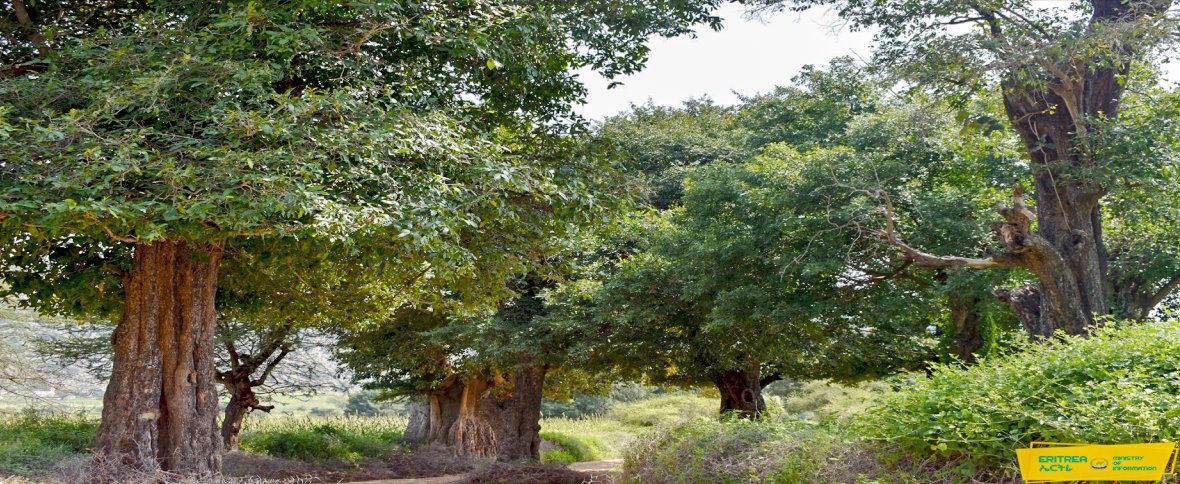
ኣብ ዞባ ዓንሰባ፡ ብኮም ዝተወደበ ንጥፈታት ምዕቃብን ምክንኻንን ኣግራብ፡ ኣብ ምስሳን ሃብቲ ገረብ ብሓፈሻ ነዊሕ ዕድመ ዘለዎም መበቈላውያን ኣግራብ ድማ ብፍላይ ጽቡቕ ውጽኢት ይርከቦ ኣሎ።

______________


ጥንታዊ ቅርሲ ኣዱሊስ፡ ኣብ ግዜ ኩዕታ፡፡ ኣዱሊስ፡ ኣብ ንኡስ ዞባ ፎሮ፡ ካብ ባጽዕ 53 ኪሎ ሜተር ሪሒቃ ትርከብ፡፡

Zmeselo
Senior Member+
Posts: 37043
Joined: 30 Jul 2010, 20:43

Re: NRS Region: Encouraging blindness prevention efforts

Post by Zmeselo » 13 Oct 2020, 18:29


UCI Ranking of African Cycling Teams, 2020!


___________

What a gem!


____________


Eritrean girls in CI-NHERI, Chinese Dance Competition.
(Lucy Liu: @Lucyliu0866)

______________


Eritrea 🇪🇷 wild animals! Beauty at its peak! Gazelle & warthog.
(zaraNetCom: @zaranetcom)

Last edited by Zmeselo on 14 Oct 2020, 12:09, edited 7 times in total.

Zmeselo
Senior Member+
Posts: 37043
Joined: 30 Jul 2010, 20:43

Re: NRS Region: Encouraging blindness prevention efforts

Post by Zmeselo » 13 Oct 2020, 23:30


Renovation of the Egla (Adi-Keyih) - Demhena - Foro road, underway. Construction of this critical artery & concomitant building of water reservoirs, schools & new health station has significantly enhanced access to social services to residents of remote villages in Foro sub-zone.
(Yemane G. Meskel: @hawelti)

_________________


Eritrea: Overview of its National Curriculum

By: Habtom Tesfamichael

https://shabait.com/2020/10/14/eritrea- ... m/#Eritrea

NATION BUILDING

Oct 14, 2020


The Government of the State of Eritrea considers education the cornerstone of all national development efforts, and has adopted a national education policy that advances the knowledge and skills required for a vibrant and competitive economy. It has been making significant investments in the development of human resources by providing education and health services for the entire people so that they can fully participate in the civic, cultural, political, social and economic affairs of their nation.

The national policy of education of the State of Eritrea states that the provision of sound basic education is both a human right and a tool that raises the overall awareness of citizens, which enhances productivity. It also emphasizes that education at middle and secondary schools should integrate knowledge and skills in order to prepare students for higher education, on the one hand, and occupation in different fields of work, on the other.


At all the levels efforts have been made to include innovative ways of integrating theory with practice, focusing on the process of inquiry, analysis, interpretation, problem solving, communication and other essential learning skills.

The general aims of the National Curriculum are to:

• promote a sense of unity in diversity, collective identity and loyalty to the nation;

• provide all learners with an enabling environment for the development of autonomous learning and problem-solving skills;

• develop the necessary knowledge, understanding, skills and attitudes which could serve as bases for continuing learning and productive work in adult life;

• foster the total development (e.g. physical, cultural, aesthetic) of the individual learner’s potential, including those with special needs;

• support the development of desirable moral and social values;

• contribute to the development of democracy and social justice, including cooperation, tolerance, mutual understanding and service to others;

• contribute to the development of democracy and social justice; and

• promote the study of science and technology along with the development of an informed concern for the conservation of the environment, nature and natural resources.

The structure of the education system in Eritrea has three bands — basic, secondary and higher education. Basic education, which encompasses pre-school, elementary and middle school levels, is free and compulsory for all school-age children.

Pre-school Education, which runs for two years, is an integral part of the education system for children between ages 4 and 5. The emphasis at this level is on laying the foundation for language and concept development, social relationships and the holistic development of the child in a thematic approach.

Elementary Level Education is a five-year school cycle with the mother tongue as the medium of instruction, and it is viewed as an important formative period in the social, emotional and intellectual development of learners. The core learning areas provided at this level are Mother Tongue, English, Mathematics, General Science, Social Studies, Citizenship Education, Life Skills Education, Arts and Sports and Physical Education.


Middle Level Education is the end of the basic education cycle which goes from grade six to eight. The medium of instruction from this level onwards is English. This cycle offers a broad-based general education with opportunities for learners to begin to identify their interests for further education and flexible skills of learning. Vocational orientation topics are integrated in various subjects. A national examination is given at the end of grade 8 and serves as an entrance exam for secondary education.

Secondary Education is structured as a four-year program of core and enrichment learning areas. Work-related practical studies, with relevance to individual learner interests and national development needs, are an integral part of the curriculum. In Eritrea, secondary education is designed to serve both as preparation for further education and the world of work. Therefore, upon completion of their Secondary Education, school leavers have the option of either seeking employment or pursuing further education and training.

Students at grades 9 and 10 of the secondary school education take the same subjects as common courses and in grade 11 are assigned to either the Natural Science or Social Science streams which provide them with in-depth learning according to their interests, aptitude and the national development needs.

At the end of this cycle, learners sit for the Eritrean Secondary Education Certificate Examination (ESECE), which enables the authorities to assess the education standards and to channel learners who fulfill the admission criteria into institutions of higher education in line with their interests and aptitudes and the development needs and priorities of the country.

Finally, on top of the core learning areas listed in the curriculum, learners are engaged in co-circular activities by joining Green, Health, Debating, Arts and Sciences, Drama and Sports clubs in their schools. Co-circular activities are given strong consideration as they are convenient vehicles for complementing and strengthening learning within the context of the formal curriculum and contribute towards the physical, social and intellectual and affective development of the learners.
Last edited by Zmeselo on 14 Oct 2020, 07:30, edited 2 times in total.

Zmeselo
Senior Member+
Posts: 37043
Joined: 30 Jul 2010, 20:43

Re: NRS Region: Encouraging blindness prevention efforts

Post by Zmeselo » 14 Oct 2020, 07:22


Our Environment is Always Worthy of Attention

By: Dr. Fikrejesus Amahazion

https://shabait.com/2020/10/14/our-envi ... attention/

GENERAL

Oct 14, 2020


About two weeks ago, Tesfai Ghebreselassie, Eritrea’s Minister of Land, Water, and Environment delivered an address to the United Nations Summit on Biodiversity. During his statement, which was delivered through a prerecorded video message, Minister Tesfai touched upon a number of important issues, including how the ongoing COVID-19 global pandemic and the destruction of biodiversity are intricately related, the growing challenge of the global climate crisis, and the need for closer cooperation between developed and developing countries in addressing numerous environmental challenges. In addition, toward the end of his address, he stated:
In conclusion, I would like to draw the attention of this important gathering to the precarious condition of an abandoned oil tanker moored in the Red Sea waters near the Yemeni port of Al Hudaydha. Eritrea calls for a united stand to urge the concerned Yemeni political forces to cooperate in the safe unloading of the tanker, in order to preclude marine ecological catastrophe and socioeconomic damage that could result by spill dispersion of over one million barrels of crude oil from the tanker into the waters of southern Red Sea.
This issue is of fundamental significance to Eritrea for several reasons and should be put into proper context.

To begin, not only is it unfolding extremely close to home, the coastal areas are some of Eritrea’s most unique, richly diverse, and important regions. Although the country is not the largest in terms of geographic area, it does contain a wide range of ecosystem types. One of the most important is the coastal marine and island ecosystems of the Red Sea. Eritrea’s northeastern and eastern areas have an extensive coastline spanning approximately 1,900 km along the Red Sea directly across from Saudi Arabia and Yemen. In fact, the country’s coastline is one of the longest in all of Africa, behind only Madagascar, Somalia, South Africa, Mozambique, and Egypt. Moreover, Eritrea has well over 350 islands of varying sizes, most of them concentrated in the Dahlak archipelago, east of Massawa. (The largest of the islands is Dahlak Kebir). The waters off Eritrea contain over 1,100 fish species and 44 genera of hard coral, resulting in one of the highest recorded levels of endemism and species diversity for a water body. Remarkably, around 18 percent of fish species and 20 percent of coral species are reported to be endemic to these waters. Of course, the coastal region is also home to a large number of Eritreans, a vital source of livelihood for many, of considerable and growing socioeconomic importance, and host to Eritrea’s two main ports, Massawa and Assab.

Second, the risks and dangers posed by the aging oil tanker can only be regarded as clear, very serious, and worthy of continued close attention. Built-in the 1970s, the rusting, decaying vessel is loaded with more than a million barrels of crude oil (approximately 1.1 million barrels) and has had virtually no maintenance for over five years due to the ongoing conflict. Both officials from the United Nations and a slew of experts have warned of a potential humanitarian, environmental, and economic catastrophe in the region if the tanker should leak, rupture, or explode.


Last August, the UN Secretary-General, António Guterres, warned that the fallout from a tanker spill or oil slick could
severely harm Red Sea ecosystems relied on by 30 million people across the region,
while the ship, which is basically a ticking time bomb in the middle of a conflict zone, also threatens one of the world’s busiest and most strategic international shipping routes.

According to some estimates, the Red Sea ecology would need over 30 years to recover from the ensuing dire consequences of a massive oil spill. For a sobering comparison, fears have been raised that the tanker could lead to an environmental disaster in the Red Sea four times greater than the Exxon Valdez oil spill. The 1989 Exxon Valdez disaster was one of the largest oil spills in US history, with the large tanker spilling nearly 300,000 barrels of toxic crude oil, polluting hundreds of miles of shoreline, devastating local ecosystems, and destroying the livelihoods of many engaged in the local fishing sector.

Thus, within the overall context described in the preceding paragraphs, Minister Tesfai’s comments and appeals seem more than reasonable and well-placed.

As a final point, it is worth recalling that concern and regard for the local and surrounding natural environment is not a passing fad or recent trend in Eritrea. Rather, the environment has always been a critical topic for Eritrea. For instance, the National Charter (1994) states,
We are committed to economic growth, but in conjunction with social justice and the protection of the natural environment.
Additionally, Eritrea is party to numerous environment-related international agreements, including, inter alia, the following: Convention on International Trade in Endangered Species of Wild Fauna and Flora (acceded 22 January 1995); United Nations Framework Convention on Climate Change, 1992 (acceded 24 April 1995); Convention on Biological Diversity (approved 21 March 1996); United Nations Convention to Combat Desertification in those Countries Experiencing Serious Drought and/or Desertification, Particularly in Africa, 1994 (signed 14 October 1994 and ratified 14 August 1996); World Heritage Convention, 1972 (accepted 24 October 2001); Stockholm Convention on Persistent Organic Pollutants, 2001 (acceded 10 March 2005); Cartagena Protocol on Biosafety to the Convention on Biological Diversity, 2000 (acceded 10 March 2005); Kyoto Protocol to the United Nations Framework Convention on Climate Change, 1997 (acceded 28 July 2005); Paris Agreement, 2015 (signed 22 April 2016); Doha Amendment to the Kyoto Protocol, 2012 (accepted 3 May 2018); Nagoya Protocol on Access to Genetic Resources and the Fair and Equitable Sharing of Benefits Arising from their Utilization to the Convention on Biological Diversity, 2010 (acceded 13 March 2019).

In addition to these important commitments, environmental activities have been a fundamental plank of development programs and national policies in the country. For example, tree planting and terracing campaigns are regularly conducted across the country to address land degradation and deforestation, while during the early 2000s, Eritrea banned the production, importation, sale, or distribution of plastic bags, making it one of the first countries in all of Africa, and one of the few in the world, to do so. Furthermore, the Eritrean People’s Liberation Front and then the Eritrean Government banned the hunting and trapping of wild animals and the cutting of live trees, declared areas of the Red Sea coast as protected marine reserves and set aside large parts of the country as protected national parks and conservatory areas.


_________________


Promoting Solar Energy in Eritrea

By: Ruth Abraham

https://shabait.com/amp/2020/10/14/prom ... ssion=true

October 14, 2020


Globally, the use of solar power as an alternative source of energy is growing. In Africa, Egypt, Morocco, Ghana and South Africa are leading in their extensive use of solar energy. Morocco is home to Africa’s biggest solar plant, Noor Solar Complex, and South Africa hosts eight of the ten largest solar plants in Africa. The Noor Solar Complex in Morocco is a 500 MW solar park, which is the biggest concentrated solar power plant in the world.

Eritrea’s major source of energy is petroleum, which drains the foreign currency reserves of the country and is globally a major cause of pollution. The government of Eritrea has been making efforts to promote the use of alternative sources of energy, especially solar energy, to mitigate the problems associated with the use of fossil fuel. A major benefit of solar energy is that it does not pollute the environment and saves money in the long run even if its installation cost is quite high.

Eritrea’s weather, characterized by long sunny days throughout the year, makes it suitable for harnessing solar power. Data from the wind and solar monitoring stations installed in many parts of Eritrea show that the country has a great potential, around 6 kwh/m2 of solar energy. Based on studies carried out by the Ministry of Energy and Mines (MEM) meteorological sites for the detection of potential solar sites have been set.


The MEM has been working to provide modern, affordable and sustainable energy to previously off-grid villages and rural towns of Areza and Maidma in Debub region. The project targets over 40,000 residents in 40 villages, over 513 small enterprises, 15 schools, 2 kindergartens, 2 community hospitals, 5 health stations and 80 organizations.

Solar energy plants have been installed around Logo and Misilam dams, and a similar plant is in the making in Kerkebet. The excess energy generated at the plants near Logo and Misilam dams is channeled to the national grid. The use of solar energy is increasingly becoming common that many households have home solar systems.

As part of its efforts to promote the use of alternative sources of energy, the MEM built in April 2018 a photovoltaic plant east of Asmara. The plant generates an average of 11- thousand kilowatt hours of electricity per day. Moreover, in Asmara, more than 400 solar powered streetlights, covering a distance of 13 kilometers, have been installed.

Alternative sources of energy such as solar energy do not pollute the environment and save money in the long run even if their installation cost is quite high.

Although Eritrea may have a long way to go in its exploitation of environment-friendly alternative sources of energy, it has demonstrated its commitment by the projects carried out that emphasize the use of solar and wind energies. The two power plants, one in Areza (1.5 acres) and another in Maidma (2.5 acres), showcase the use of solar hybrid power systems to provide continuous power supply to rural communities in those areas.


Going forward, the MEM plans to boost its power generation capacity by departing from its dependence on fossil fuels and by intensifying its efforts to look for alternative sources of energy that are renewable.

In its short term plan, it intends to increase the amount of solar and wind energy that will enhance the national capacity. The plan includes a 20-30 MW wind and solar hybrid power at Dekemhare, a10 MW wind power at Assab, a 10-20 MW solar power at Asmara, Adikeih, Debarwa and Barentu, a 5 MW solar power at Gerset, a 5 MW wind and solar hybrid at Kerkebet and a 2-3 MW solar diesel hybrid at Nakfa, which will be linked to the national grid.

The MEM also plans to increase energy efficiency in Eritrea through the expansion of rural electrification by the extensive installation of solar systems, the rehabilitation of Asmara’s power distribution system, the establishment of an assembling plant for batteries and other appliances as well as facilities for in-house capacity building.

In the long run, the MEM intends to give universal access of modern energy in Eritrea by extending the national grid throughout the country.

Zmeselo
Senior Member+
Posts: 37043
Joined: 30 Jul 2010, 20:43

Re: NRS Region: Encouraging blindness prevention efforts

Post by Zmeselo » 14 Oct 2020, 12:11


On Oct 14, 1993, Amb Andemikael Kahsai presented his credentials as Eritrea's 1st ambassador to Italy to President Oscar Luigi Scalfaro. On Aug. 26, 1993 Mr. Giovanni Germano presented his credentials to President Isaias Afwerki as Italy's first Ambassador to Eritrea.
Ambassador Andemikael Kahsai was a mult- talented, multi-lingual patriot of high caliber.
Served his country from early 70s as a fighter, then as a plenipotentiary Ambassador to USA & Italy, then as a mayor to Asmara & many duties wth full vigour & devotion.
RIP, btsay! 🙏
AMB. Beyene Russom: @BeyeneRussom


On Oct. 12, 2018, Italy's PM Giuseppe Conte visited Eritrea to support the rapprochement with Ethiopia. Italy colonized Eritrea from 1890-1941. On Apr 27, 1993 Italy, along the USA, Egypt & the Sudan, was one of the first countries to recognize Eritrean independence.
(History of Eritreaታሪኽ ኤርትራ.تاريخ إريتريا: @Erihistory)

________________

HoA TV - "Our Vision for a Peaceful & Stable Horn of Africa" (Tigrinya) - Elias Amare, Oct 14 2020


Post Reply