Re: Why The US Democracy Can’t Free Eritrean Journalists Jailed By The Dictator

Donald J. TrumpSusan Rice, who was a disaster to President Obama as National Security Advisor, is now telling us her opinion on what to do in Syria. Remember RED LINE IN THE SAND? That was Obama. Millions killed! No thanks Susan, you were a disaster.
]
Re: Why The US Democracy Can’t Free Eritrean Journalists Jailed By The Dictator
Tell this "educated" yet ignorant ghanian slave, the country he's begging to is not a democracy but a Republic.
What he wrote about Eritrea, is not worthy of any response.
What he wrote about Eritrea, is not worthy of any response.
Re: Why The US Democracy Can’t Free Eritrean Journalists Jailed By The Dictator
You're bickering about semantics while your Agame junta is the worst savage in the continent? What an idiot.

Re: Why The US Democracy Can’t Free Eritrean Journalists Jailed By The Dictator
Agricultural Activities in the Sub-Zone of Mendefera
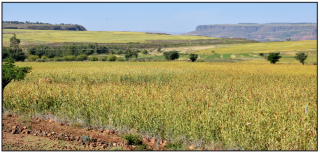
- The total land area of the sub-zone is 496 sq.km of which around 13,400 hectares is arable land.
- Last year around 14 thousand hectares of land was planned to be cultivated and around 79% of this was used to grow cereals and the remaining to grow pulses and vegetables.
- The sub-zone is endowed with water resources and many small and big dams have been constructed.
- Last year, a record high amount of rainfall (1141 mm) was registered in 84 days.
- Traditional farming results in a poor yield of about 12 quintals per hectare. With improved seeds, combined with appropriate farming techniques, yields per hectare reached 30 quintals. Last year, an exemplary farmer harvested 44 quintals from a hectare of land.
- The tissue culture laboratory at the National Agricultural Research Institute (NARI) is contributing to this result by cleaning seeds to make them free from pathogens such as viruses, bacteria and fungi.
- The sub-zone of Mendefera is known for its dairy production owing to its abundant forage. The MoA has distributed inter-breed cows that can give higher amount of milk, and it gives the farmers training to familiarize them with modern type of farming. Around 276 thousand liters of milk was produced last year.
- Chicken and honey production are also practiced and encouraged by the MoA branch of the sub-zone. The sub-zone is suitable for the production of honey.
- As part of the efforts to secure the nutritional needs of families, every farmer is expected to have one bee hive.
- Farmers have reported that they harvest up to 30 kg of honey from one bee hive.
- There are around 1000 bee hives in the sub-zone and last year around eight thousand quintals of honey was harvested. Activities are underway to replace the traditional bee hives with modern ones.
Source: http://shabait.com/articles...
- The total land area of the sub-zone is 496 sq.km of which around 13,400 hectares is arable land.
- Last year around 14 thousand hectares of land was planned to be cultivated and around 79% of this was used to grow cereals and the remaining to grow pulses and vegetables.
- The sub-zone is endowed with water resources and many small and big dams have been constructed.
- Last year, a record high amount of rainfall (1141 mm) was registered in 84 days.
- Traditional farming results in a poor yield of about 12 quintals per hectare. With improved seeds, combined with appropriate farming techniques, yields per hectare reached 30 quintals. Last year, an exemplary farmer harvested 44 quintals from a hectare of land.
- The tissue culture laboratory at the National Agricultural Research Institute (NARI) is contributing to this result by cleaning seeds to make them free from pathogens such as viruses, bacteria and fungi.
- The sub-zone of Mendefera is known for its dairy production owing to its abundant forage. The MoA has distributed inter-breed cows that can give higher amount of milk, and it gives the farmers training to familiarize them with modern type of farming. Around 276 thousand liters of milk was produced last year.
- Chicken and honey production are also practiced and encouraged by the MoA branch of the sub-zone. The sub-zone is suitable for the production of honey.
- As part of the efforts to secure the nutritional needs of families, every farmer is expected to have one bee hive.
- Farmers have reported that they harvest up to 30 kg of honey from one bee hive.
- There are around 1000 bee hives in the sub-zone and last year around eight thousand quintals of honey was harvested. Activities are underway to replace the traditional bee hives with modern ones.
Source: http://shabait.com/articles...
Re: Why The US Democracy Can’t Free Eritrean Journalists Jailed By The Dictator
Why The US Democracy Can’t Free Eritrean Journalists Jailed By The Dictator
By Joel Savage. 17.01.2020 FEATURE
LISTEN 8 HOURS AGO
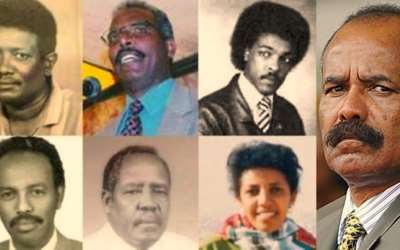
A few of over hundred of political prisoners under the rule of the tyrant Eritrean dictator, Isaias Afewerki
The United States of America seeks to give up active support for the spread of democracy in the world, which both Democrats and Republicans adhered to, at least to a large extent, all the US presidents.
However, despite all the important elements of American democracy support policies, such as diplomatic measures to protect democracy in countries where it encounters obstacles; the same US government doesn’t care about certain countries under dictatorship regimes, why?
About Human Rights Violations, everyone has the right to freedom of movement and residence within the borders of each State and everyone has the right to leave any country, including his own, and to return to his country.
About Freedom of Thought, everyone has the right to freedom of thought, conscience, and religion; this right includes freedom to change his religion or belief, and freedom, either alone or in community with others and in public or private.
Yet in Eritrea, one of the poorest countries in Africa which acquired its independence from Ethiopia in 1993, after having imposed a civil war on it, systematically has deprived citizens political freedom, freedoms of expression and basic human rights.
Arbitrary arrests, torture, and disappearances of political opponents, putting innocent journalists behind bars, are frequently done by the Eritrean government, which constitute crimes against humanity, yet the US government pretends they don’t know what is happening under the tyrant, corrupt, power-thirsty dictator Isaias Afewerki.
After winning, in 1991, a 30-year war of independence against Ethiopia, at the head of the Popular Front for the Liberation of Eritrea (FPLE), Isaias Aferworki became president in 1993 and has remained so since, without opposition, nor election.
In the absence of independent media, even freedom of religion is threatened.
Described by a former US ambassador as a "provocative imbalance", Afewerki, 69, then founded the country's only political party, the Popular Front for Democracy and Justice, which he leads with an iron fist.
Even before the UN-imposed sanctions in 2009, the Eritrean economy, almost entirely state-controlled, was in tatters. In 2013, Eritrea was 181st out of 187 in the UN human development ranking.
More than 33,000 Eritrean refugees were registered in Ethiopia in 2014, by the United Nations High Commissioner for Refugees (UNHCR), a considerable exodus for this small country of six million inhabitants.
The Democratic US government, on the contrary, doesn't care about the cruelty pangs of dictatorship the leader has unleashed on the innocent population. Barely a thousand Eritrean refugees in Ethiopia were offered resettlement in the United States or Canada, through the UNHCR, in 2014.
The only European countries that often welcome Eritrean refugees are France, Norway, and Switzerland.
Just as I keep asking the reason a country that preaches about Democracy has refused to speak against this tyrant government, the same many governments and humanitarian organizations around the world, bodies supporting and protecting journalists have also raised the same issues.
Below are the simple reasons America, the father of Democracy doesn’t care about Eritreans.
Even though the country has deposits of barite, copper, asbestos, silver, lead, iron ore, potash, zinc, talc, and feldspar, the US government is not interested to engage in business with a dictator.
Eritrea is one of the poorest countries in Africa. It has no gold like Ghana, it has no diamond, like Sierra Leone, has no oil like Nigeria and no Cobalt like Congo.
Eritrea remains one of the world’s most difficult places to do business. Poor governance and lack of commitment to reform hamper economic freedom and drive many Eritreans into the informal sector.
Eritrea is one of the most closed countries in the world, which faces a very difficult economic situation due to chronic droughts, a sharp reduction in Diaspora remittances, autarkic policies and past tensions with Ethiopia.
The country's growth depends largely on raw materials, notably the performance of the Bisha mine. In regards to such conditions, America will not waste time to fight for the release of the innocent journalists languishing in jail.
The economy of Eritrea is heavily penalized by a large public debt, estimated at nearly 131% of GDP in 2018, which places the country in a situation of over-indebtedness. The budget deficit was brought down to around 12.6% of GDP in 2018, compared to 13.8% in 2017 (AfDB).
Public expenditure is burdened by the military budget, which represents 25% of public expenditure. Inflation is stable at around 9%. It remains high due to the insufficient food supply and the financing of part of the public deficit by monetary creation and is accentuated by the lack of foreign exchange.
The government has tried to manage macroeconomic imbalances by controlling and regulating prices, which has resulted in a shortage of foreign exchange and reduced activity in the private sector.
Political instability caused by an armed conflict over controversial borders and accusations of terrorist financing, which had led to support for the Somali group Al-Shabab has significantly weakened Eritrea's economic progress.
https://youtu.be/Dujr-s9uQPE
In 2009, the United Nations Security Council imposed sanctions on the country arms embargo travel bans, asset freezes, which were lifted in November 2018 to commend the peace efforts, yet the corrupt regime of Isaias Afewerki continues abusing Human Rights and throwing innocent journalists into prison.
If the US Government America says they are interested in Democracy, then the government must encourage and pursue democratic policies in both poor and rich countries in Africa, not Congo because it has rich cobalt or Sierra Leone because it has a diamond.
What does the US government expect in a country which has not held an election since 1993? The world is watching America, therefore, let this hypocrisy come to an end.
Like other US presidents, Trump has criticized many countries, including North Korea for Human Rights violations but not Eritrea because they have no cobalt, the precious element which has led to the deliberate destruction of people and property in Congo with Ebola, the biological weapon, they lied to the world that bats are responsible.
America must, therefore, free the jailed innocent journalists and other political prisoners in Eritrea, that will surely add another significant recognition of their previous impossible achievements.
Joel Savage, © 2020
Joel Savage is a Ghanaian-Belgian journalist and author. The accredited press-card holder of the Flemish Journalists Association once contributed regularly to the features column of the Daily Graphic, The Mirror, Ghanaian Times and the Weekly Spectator. The writer currently lives in Belgium.,
-
Tog Wajale
- Member
- Posts: 4919
- Joined: 23 Dec 2017, 07:23
Re: Why The US Democracy Can’t Free Eritrean Journalists Jailed By The Dictator
Ghana named the second most corrupt country in Africa on Corruption Perception Index.
report by the Transparency International (TI) has said Ghana has been rated as the second most corrupt country in Africa, followed by Nigeria, with South Africa perceived as the most corrupt nation on the continent.
The Corruption Perception Index (CPI) noted about 71 per cent of people living in Ghana saying corruption had increased over the last 12 months.
The report revealed how people on the continent perceived their countries as far as corruption was concerned and what their leaders were doing to minimise the unpleasant act.
a man holding a microphone: Ghana named the second most corrupt country in Africa on Corruption Perception Index
© Provided by Genesis Media Ghana named the second most corrupt country in Africa on Corruption Perception Index
It noted that the act of corruption was so endemic that all the respondents wished that the leaders in their various countries would acted swiftly to end the canker.
Most governments across Africa were also seen as failing in their duty to stop the abuse of power, bribery and secret deals.
Read more stories from Nigeria
Install or browse Microsoft News App
The majority (58 per cent) of Africans in the surveyed countries said corruption had increased over the past 12 months.
In other news, the photo of a woman who delivered triplets has surfaced on social media and has since generated some pleasant reactions since it was shared into a popular Facebook group.
Related Slideshow: The 20 most and 20 least corrupt countries in the world (Provided by StarsInsider)
Good country, bad country: More than two-thirds of the world's countries have a serious corruption problem. From blatant bribery and rigged elections to embezzling public funds and intimidating or even bumping off political opponents and journalists, unethical dealings run rife across the planet. Using the latest data from Transparency International’s annual Corruption Perceptions Index (CPI), we count down the world’s least and most corrupt places.
While the woman’s identity is yet to be known, social media user Suzy Nana Ahoofe Yaa, took to popular Facebook group, Tell it All, to share a photo of the woman and her adorable newborn babies.
The photos has since gone viral and has generated interesting remarks from some members of the group.
by Taboola Promoted Links You May Like
report by the Transparency International (TI) has said Ghana has been rated as the second most corrupt country in Africa, followed by Nigeria, with South Africa perceived as the most corrupt nation on the continent.
The Corruption Perception Index (CPI) noted about 71 per cent of people living in Ghana saying corruption had increased over the last 12 months.
The report revealed how people on the continent perceived their countries as far as corruption was concerned and what their leaders were doing to minimise the unpleasant act.
a man holding a microphone: Ghana named the second most corrupt country in Africa on Corruption Perception Index
© Provided by Genesis Media Ghana named the second most corrupt country in Africa on Corruption Perception Index
It noted that the act of corruption was so endemic that all the respondents wished that the leaders in their various countries would acted swiftly to end the canker.
Most governments across Africa were also seen as failing in their duty to stop the abuse of power, bribery and secret deals.
Read more stories from Nigeria
Install or browse Microsoft News App
The majority (58 per cent) of Africans in the surveyed countries said corruption had increased over the past 12 months.
In other news, the photo of a woman who delivered triplets has surfaced on social media and has since generated some pleasant reactions since it was shared into a popular Facebook group.
Related Slideshow: The 20 most and 20 least corrupt countries in the world (Provided by StarsInsider)
Good country, bad country: More than two-thirds of the world's countries have a serious corruption problem. From blatant bribery and rigged elections to embezzling public funds and intimidating or even bumping off political opponents and journalists, unethical dealings run rife across the planet. Using the latest data from Transparency International’s annual Corruption Perceptions Index (CPI), we count down the world’s least and most corrupt places.
While the woman’s identity is yet to be known, social media user Suzy Nana Ahoofe Yaa, took to popular Facebook group, Tell it All, to share a photo of the woman and her adorable newborn babies.
The photos has since gone viral and has generated interesting remarks from some members of the group.
by Taboola Promoted Links You May Like