Opinion
Red Sea Realpolitik: Ideology, Intervention, and the War Over Eritrea (1977)
What the Derg, Israel, and the Cold War Reveal About Power, Proof, and the Price Paid
By Alula Frezghi
https://redseabeacon.com/red-sea-realpo ... trea-1977/
February 18, 2026
Opinion
Red Sea Realpolitik: Ideology, Intervention, and the War Over Eritrea (1977)
What the Derg, Israel, and the Cold War Reveal About Power, Proof, and the Price Paid
By Alula Frezghi
https://redseabeacon.com/red-sea-realpo ... trea-1977/
February 18, 2026
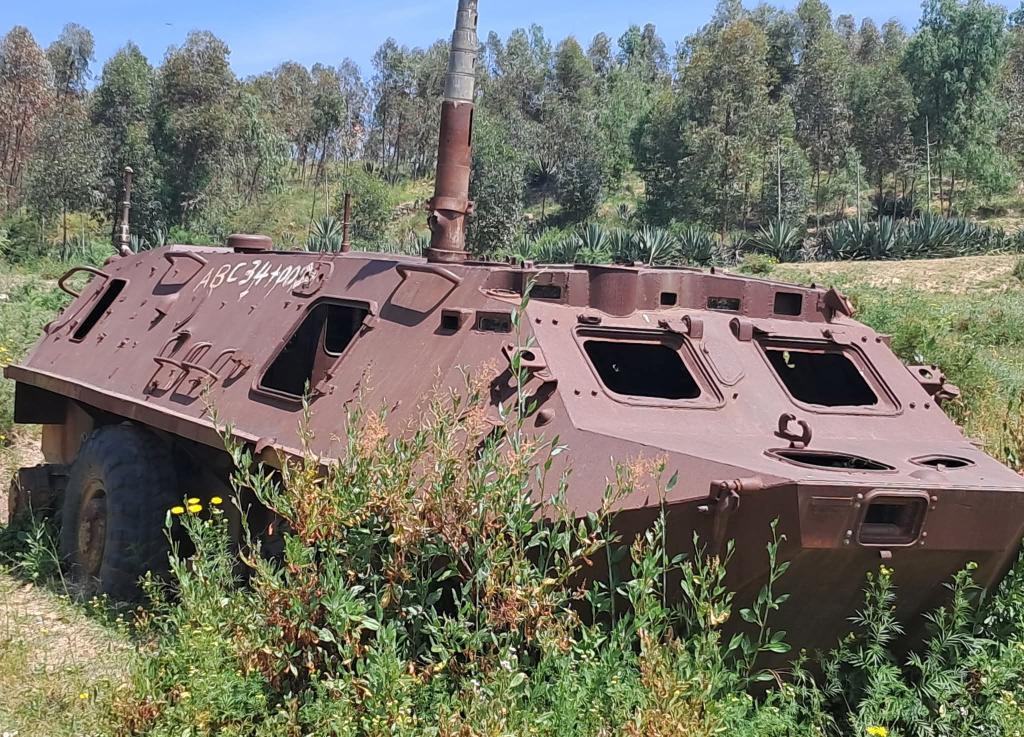
In 1977, as Eritrea burned and the Horn of Africa convulsed, ideology was loud, but geopolitics was louder.
The military junta, known as the Derg, had overthrown Emperor
Haile Selassie and declared a Marxist revolution. Addis Ababa denounced imperialism, while proclaiming socialist solidarity. Yet the war over Eritrea and the Red Sea, was never merely ideological. It was strategic, maritime, and global.
Any serious account of 1977 must distinguish three layers: documented alliances, historical precedent, and contested claims. Collapsing them into one narrative may be rhetorically powerful, but it weakens historical credibility.
What Is Established
By late 1977, Ethiopia had pivoted decisively toward the Soviet Union. Moscow organized one of the largest military airlifts in African history, delivering weapons, advisers, and logistical support. During the Ogaden War, large Cuban expeditionary forces were deployed to support Ethiopia against the Western Somali Liberation Front (WSLF); which was trying to liberate the Somali Region of Ethiopia backed by Somalia. Somali forces had overrun Ethiopian defenses and captured vast territory, in what is today Ethiopia’s Somali Region. In response, Ethiopia received extensive external assistance; including approximately 1,500 Soviet military advisers, 12,000–18,000 Cuban troops, and more than 2,000 South Yemeni forces, all fighting on Ethiopia’s side.
Ethiopia suffered heavy losses during the conflict. More than 6,000 Ethiopian soldiers were killed, nearly 8,200 wounded, and over 2,500 captured. The Ethiopian military also lost 23 jet aircraft (
Tareke 2000). Beyond military casualties, the war exacted a severe civilian toll: an estimated 25,000 civilians were killed, and roughly 500,000 Somali inhabitants of Ethiopia were displaced. Somalia’s losses were of a comparable scale. On the Somali side, 6,453 soldiers were killed, 2,409 wounded, and 275 captured. Somalia also lost 34 aircraft (
Ayele 2014).
Meanwhile, the Eritrean liberation movements—the Eritrean Liberation Front (ELF) and the Eritrean People’s Liberation Front (EPLF)—had overrun most Ethiopian government positions, bringing nearly all of Eritrea under their control. Ethiopian forces were reduced to a handful of encircled strongholds, including Assab, Barentu, Adi Keyih, parts of Massawa, and Asmara- the latter surrounded within a radius of approximately 10 kilometers.
As these military setbacks mounted, the bombardment of civilian areas intensified across Eritrea. Towns and regions such as Mendefera, Agordat, Segeneyti, Massawa, Denkalia, Keren, and others were subjected to sustained aerial attacks. The Ethiopian Air Force carried out these operations using U.S.-supplied aircraft inherited from the imperial era, including the Northrop F-5E Tiger II. The Soviets were also supplying Ethiopia with bombs and bombers, like MiG 21s and MiG 23s.
These facts are not disputed. Soviet and Cuban intervention is well documented in diplomatic archives and military scholarship. The air campaign over Eritrea is part of the historical record.
The Israeli Connection: Context and Continuity
Before 1974, Ethiopia under Haile Selassie maintained substantive security cooperation with Israeli advisers assisted with training, intelligence coordination, and reportedly naval development along the Red Sea littoral. The partnership was rooted in perceived shared strategic concerns, including Arab nationalism, maritime security, and regional isolation.
The maritime importance of the Dahlak islands off the Eritrean coast near Massawa, was central to this cooperation. Control over these islands meant influence over one of the world’s most sensitive shipping corridors, linking the Suez Canal to the Bab el-Mandeb strait. In Cold War terms, this was not peripheral geography. It was leverage.
That Israeli–Ethiopian military cooperation existed prior to the revolution, is historically documented. Israel was training Ethiopian commando forces to fight against Eritrean fronts, and Ethiopian intelligence personnel were trained by the Israelis.
The Contested Allegation
Italian journalist
Fulvio Grimaldi alleged in 1977 that Israeli advisers remained active in Ethiopia and that Israeli pilots may have flown F-5E combat missions over Eritrea, amid pilot shortages and defections in the Ethiopian Air Force.
This claim has circulated in political narratives, particularly within Eritrean discourse. However, publicly accessible archival scholarship has not produced definitive, verifiable evidence confirming Israeli pilots conducting combat sorties for the Derg in 1977.
The distinction matters. Cold War proxy conflicts frequently involved covert arrangements. Plausibility is not the issue. Proof is. A rigorous argument must clearly separate substantiated history from unresolved allegation.
Ideology Versus Survival
What is beyond dispute is the structural contradiction. The Derg proclaimed anti-imperialism, while navigating the most pragmatic form of state survival. In 1977–78, Ethiopia faced simultaneous external war in the Ogaden, Liberation Fronts in Eritrea and Tigray, and internal consolidation through the Red Terror.
Securing the Red Sea coast was existential. Loss of Eritrea would have meant landlockedness, economic vulnerability, and geopolitical diminishment. In that context, Ethiopia was desperate and foreign involvement, whether Soviet, Cuban, Israeli, or through residual security networks was- could do. It was structurally embedded in the conflict.
Eritrea at the Center
For Eritreans, this is not a theoretical debate, about Cold War maneuvering. It is about sustained aerial bombardment, displacement, and villages reduced to ash. The nationality of the pilot in the cockpit, is historically significant. The devastation on the ground was existential.
The Red Sea basin was and remains a contested maritime arena. In the 1970s, it was a Cold War hinge connecting superpower rivalry to regional conflict. Eritrea was not peripheral to that struggle; it was the fulcrum.
What Responsible History Demands
An evidence-conscious account of the events of 1977 requires careful distinction, between what is firmly established and what remains contested. Soviet, Cuban and South Yemeni intervention is well documented, as is Israeli–Ethiopian military cooperation prior to 1974. By contrast, claims of direct Israeli combat participation during the Derg era remain disputed, in the absence of verifiable archival confirmation. Throughout these dynamics, Eritrea was not treated as peripheral or collateral terrain but as the strategic core of the conflict.
The Horn of Africa in 1977, was not a morality play of socialism versus imperialism. It was a contest over coastline, sea lanes, and strategic depth. Ideology, framed the rhetoric. Strategy, drove the decisions. Civilians, paid the price.
History remembers who controlled the skies. It must also remember who documents the record and who demands proof.
What is documented is that in the late 1980s—particularly between 1989 and 1990—Israel supplied the Derg regime with military equipment, including cluster munitions and white phosphorus. This assistance was driven by strategic considerations, notably facilitating the emigration of Ethiopian Jews (Beta Israel) and preventing an independent Eritrea from aligning with Arab states (
Lefebvre 1991). Contemporary reports indicate that the Ethiopian Air Force used these weapons in northern Ethiopia and Eritrea, including attacks on civilian areas such as Massawa.
Investigations by Human Rights Watch, along with reporting by the
New York Times https://www.nytimes.com/1990/01/21/worl ... bombs.html and
Los Angeles Times https://www.latimes.com/archives/la-xpm ... story.html from Jan. 21, 1990, confirm continued Israeli military support during this period, including the provision of cluster munitions. These weapons, designed to disperse submunitions over wide areas, caused indiscriminate civilian harm; one reported strike in Massawa alone resulted in more than 50 civilian deaths. This sustained assistance, despite the Derg’s Marxist alignment, underscores how strategic interests often outweigh ideology in state decision-making (
HRW 1990).
Reference
•
Ayele, Fantahun (2014).
The Ethiopian Army: From Victory to Collapse, 1977–1991. Northwestern University Press.
•
Human Rights Watch. 1990. ETHIOPIA: “Mengistu has Decided to Burn Us like Wood” Bombing of Civilians and Civilian Targets by the Air Force.
https://www.hrw.org/reports/archives/af ... PIA907.htm
https://www.hrw.org/reports/archives/af ... PIA907.htm
•
Lefebvre, Jeffrey A. 1991.
ARMS FOR THE HORN: U.S. Security Policy in Ethiopia and Somalia 1953-1991.
Pittsburgh, University of Pittsburgh Press.
•
Tareke, Gebru (2000). “
The Ethiopia-Somalia War of 1977 Revisited” (PDF).
https://warwick.ac.uk/fac/arts/history/ ... tareke.pdf
International Journal of African Historical Studies. 33 (3): 635–667. doi:10.2307/3097438. JSTOR 3097438. S2CID 159829531