Ethiopian News, Current Affairs and Opinion Forum
Zmeselo
Senior Member+
Posts: 36744
Joined: 30 Jul 2010, 20:43

Keren: Massacre Commemorated!

Post by Zmeselo » 02 Dec 2025, 15:21


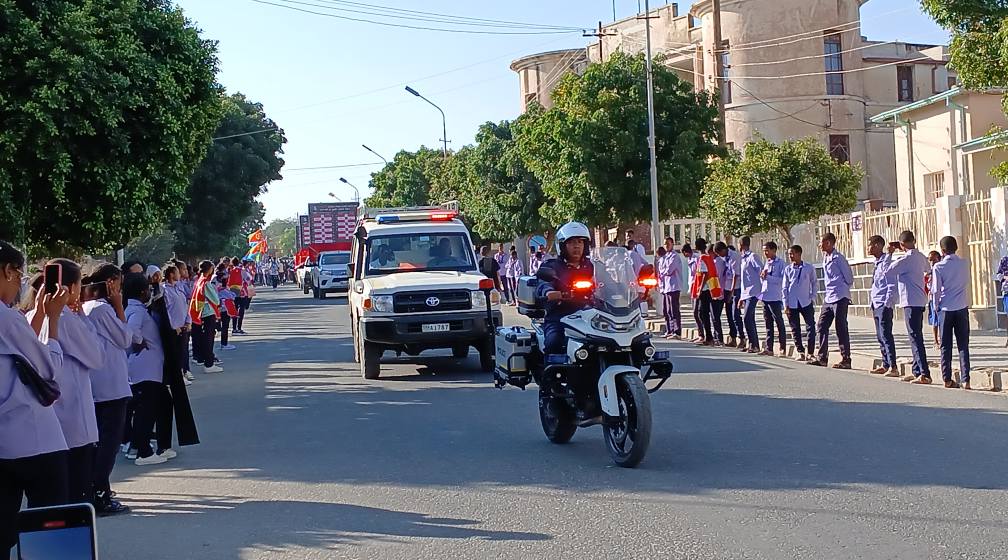
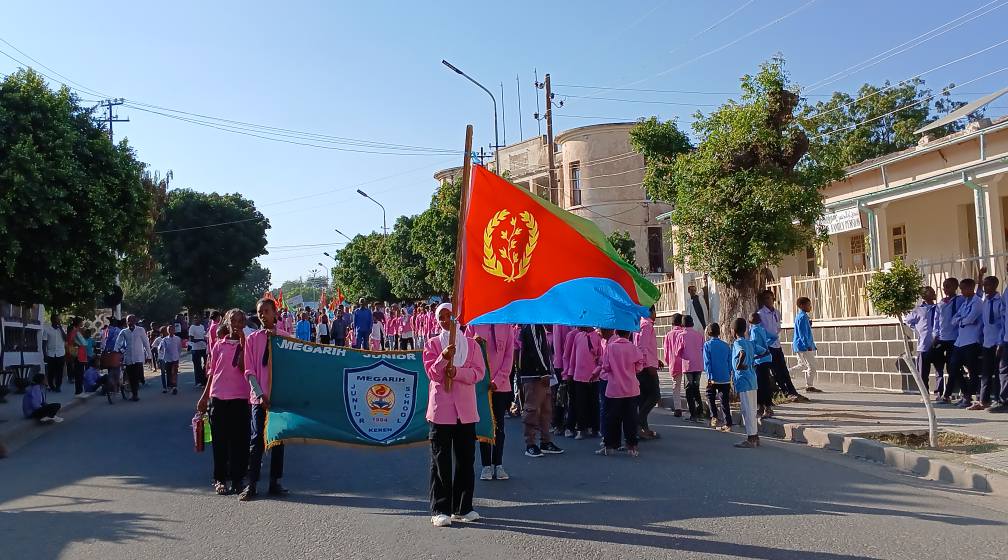
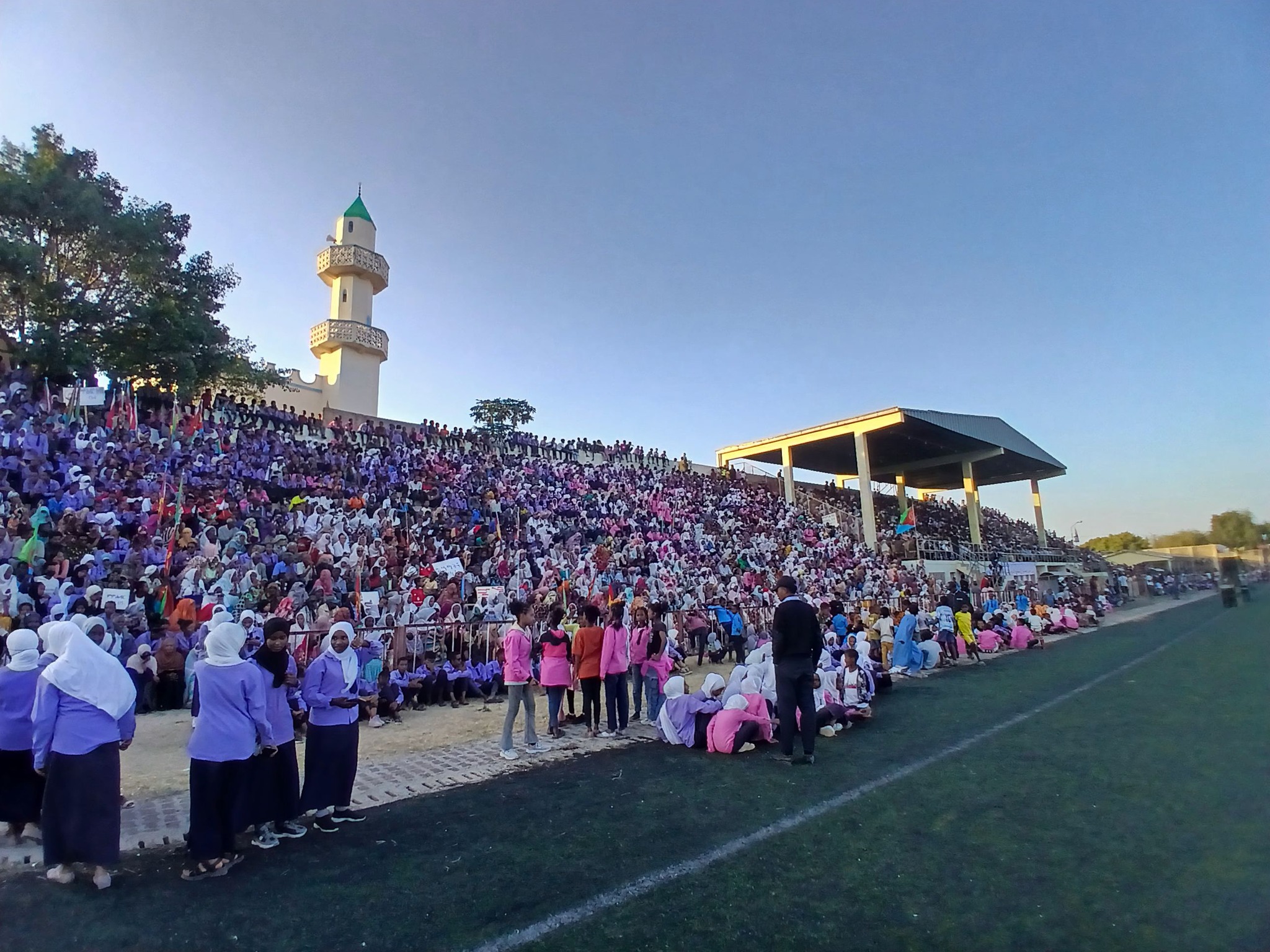
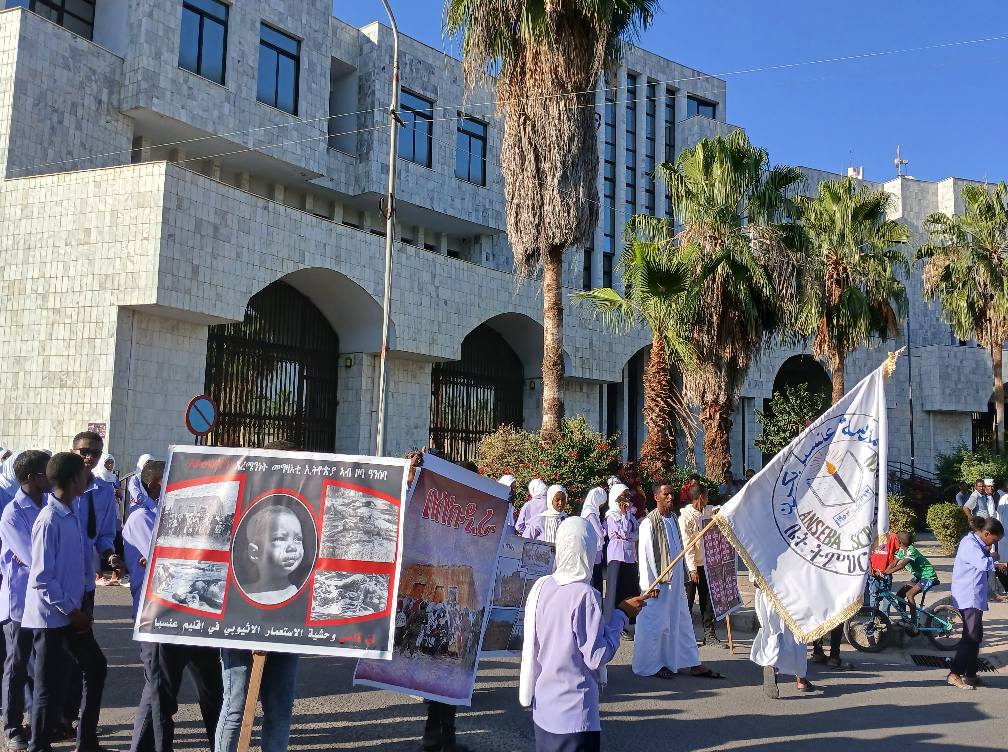
In Keren, people from the Anseba region commemorated the 55th solemn anniversary of the Ona / Besikdira massacre. The event was held under the theme:
We have not forgotten the savagery of the Ethiopian occupation/regime in the Anseba region.
📷 Dawit Cheway


_________


History
Remembering Ona and Besikdira

By Ghidewon Abay Asmerom

https://redseabeacon.com/remembering-ona-and-besikdira/

December 1, 2025


Fifty-five years ago, on November 30 and December 1, 1970, two small Eritrean villages, Besikdira and Ona, were erased from the map by the Ethiopian army of occupation. In barely 48 hours, nearly a thousand civilians, men, women, children, the elderly, were slaughtered. Families disappeared entirely; communities that had stood for centuries ceased to exist. And yet these atrocities, among the worst committed in the Horn of Africa in the twentieth century, remain largely unknown beyond Eritrea’s borders and denied by those who carried them out.

These massacres were not the fog of war. They were policy. They were the logical endpoint of a strategy designed in Addis Ababa, after Haile Selassie declared a state of emergency and vowed to crush Eritrea’s lawful demand for decolonization. The goal was simple and barbaric: destroy the population’s ability to resist Ethiopia’s illegal occupation. By 1967, Ethiopia’s army was conducting scorched-earth campaigns across Eritrea, burning villages, imprisoning and torturing civilians, killing livestock, destroying water sources, and forcing tens of thousands into exile.

Between February and April 1967 alone, Ethiopian soldiers burned 62 villages: Mogoraib, Zamla, Ad Ibrahim, Gerset Gurgur, Adi Bera, Asir, Fori, Ad Habab, to name only a few. Over hundreds of civilians were killed; some 60,000 cattle and camels were slaughtered with knives, gunfire, and flames. Local leaders documented the horrors as they unfolded.

On 11 July 1967, the villages of Eilet and Gumhot were burned, and thirty young men tied together and burned alive in a house. More villages were destroyed in the following days, with 51 civilians and 6,000 animals killed. In November 1967, the Second Ethiopian Army Division destroyed nearly every village in Senhit, 174 in total. In Kuhul and Amadi, soldiers forced residents to assemble and then bombed them from the air.

The events of 1970, unfolded against this backdrop of systematic brutality. When Eritrean fighters ambushed and killed General Teshome Ergetu, the architect of the infamous
burn all, kill all
doctrine, on 21 November 1970, the empire retaliated with a fury meant to terrorize the entire nation.


On 30 November, soldiers entered Besikdira and ordered villagers to divide by religion. The people refused. Christians and Muslims insisted, as always, that they were one community. Their unity was answered with machine-gun fire: they were herded into the mosque and massacred using machine guns through the windows, about 130 people were killed in a matter of minutes. Only a few lived to tell what happened.

The next day, Ona met the same fate. It had become a refuge for those fleeing earlier operations. At dawn, soldiers encircled the village, torched the homes, and gunned down anyone running from the flames. By nightfall, 800-900 civilians were dead. It remains the deadliest single-day massacre in Eritrean history.

These crimes did not occur in isolation. They were two horrific days in a war that lasted 10,858 days—every one of them marked by Ethiopian atrocities against Eritrean civilians. The list of victims and ravaged communities is too long to recite in full. A handful of names convey the scale:

Merara (1965), Rora Bet Gebru (1966), Ad Ibrahim (1967), Emberemi (1967 & 1976), Lalokofta (1967), Hazemo (1967), Aylet-Gemhot (1967), Misyam (1967), Melebso (1967), Gheleb (1970), Kubub Ebena (1971), Ila Berid (1971), Dige Idie Atba (1971), Adi Shuma (1972), Um Hajer (1974), Asmara (1975), Weki Diba (1975), Agordat (1975), Hirgigo (1975 & 1976), Dekemhare (1975), Adi Qeyih (1975), Alalie (1976), Dbarwa (1977), Digsa (1977), Mendefera (1978), Damba (1981), Emba Hara (1983), Asmat (1983), Molqui (1984), Adi Qerets (1985), Ararieb (1985), Mogeraib (1985), Hamertoqo (1987), She’eb (1988), Massawa (1990).


And this list is only the surface of a far deeper, darker ledger. Eritreans carry these memories not as abstractions, but as lived history. The massacre sites have become places of mourning, reflection, and unity, spaces where the message is not revenge, but vigilance. “Never again” is not a slogan in Eritrea; it is a survival ethic.

Meanwhile, few Ethiopians today know what was done in their name during the thirty-year war. Independent researchers estimate that more than 250,000 Eritrean civilians were killed, numbers the Ethiopian state has neither acknowledged nor apologized for. Instead, astonishingly, new generations of Ethiopian leaders once again speak of Eritrean ports and territory as their “birthright,” threatening reoccupation and boasting openly of future conquests, as if the decades of massacres never occurred.

This amnesia, is not innocent. It is political. From 1941 to 1952, Ethiopia armed Andinet shiftas based in Tigray to terrorize Eritreans who demanded independence. After forcing federation in 1952 and dissolving it illegally in 1962, the empire deployed its army to terrorize Eritrean civilians. Villages were bombed with napalm and cluster munitions. Young people were strangled with piano wire. Asmara the capital saw a massacre of nearly 3000 people in a matter of a week of terror, in 1975. Mothers and children were crushed beneath tank treads. Thousands were executed in cold blood. Yet Ethiopian historians like Zewdie Reta later claimed Ethiopia
never harmed a single Eritrean
in forty years of occupation, an assertion so flagrantly false it mocks both truth and humanity and is contradicted by official Ethiopian records.


Today, as some Ethiopian elites again fantasize about Eritrean territory, threaten to “correct” their landlocked status by force, and erase the very history that disproves their claims, Ona and Besikdira stand as a warning. Impunity breeds repetition. When the suffering of one people is denied, the door remains open for others to endure the same fate.

Eritrea’s martyrs of 1970 stood together in life—Muslim and Christian, neighbor and neighbor—and they stand together in memory. Their story must be told, retold, and carried forward not only for their sake, but for the sake of a region still struggling to learn what happens when powerful states believe that forgetting is the same as absolution.

Remembering is not an act of bitterness. It is an act of protection, of truth, of justice.

And it is long overdue.

Those who can read Tigrigna must read the books (ግፍዒ) Gefi, https://hdrimedia.com/product/gfei/ and (ዖናን በስክዲራን፡ ህልቂት ዓድታት ሰንሒት ብነጸረኣብ ኣዛዚ) Unan Beskidran, https://hdrimedia.com/product/ona-and-besik-dira/ those who can read Amharic can read an abbreviated translation of the book Gefi by the Late Tesfaye Gebreab ጃንሆይ እና ደርግ ያልተነገሩ መራር ታሪኮች. https://www.mereb.shop/rs/?prodet=true&pid=46823451

Zmeselo
Senior Member+
Posts: 36744
Joined: 30 Jul 2010, 20:43

Re: Keren: Massacre Commemorated!

Post by Zmeselo » 02 Dec 2025, 15:33

Eri101: Algiers Agreement

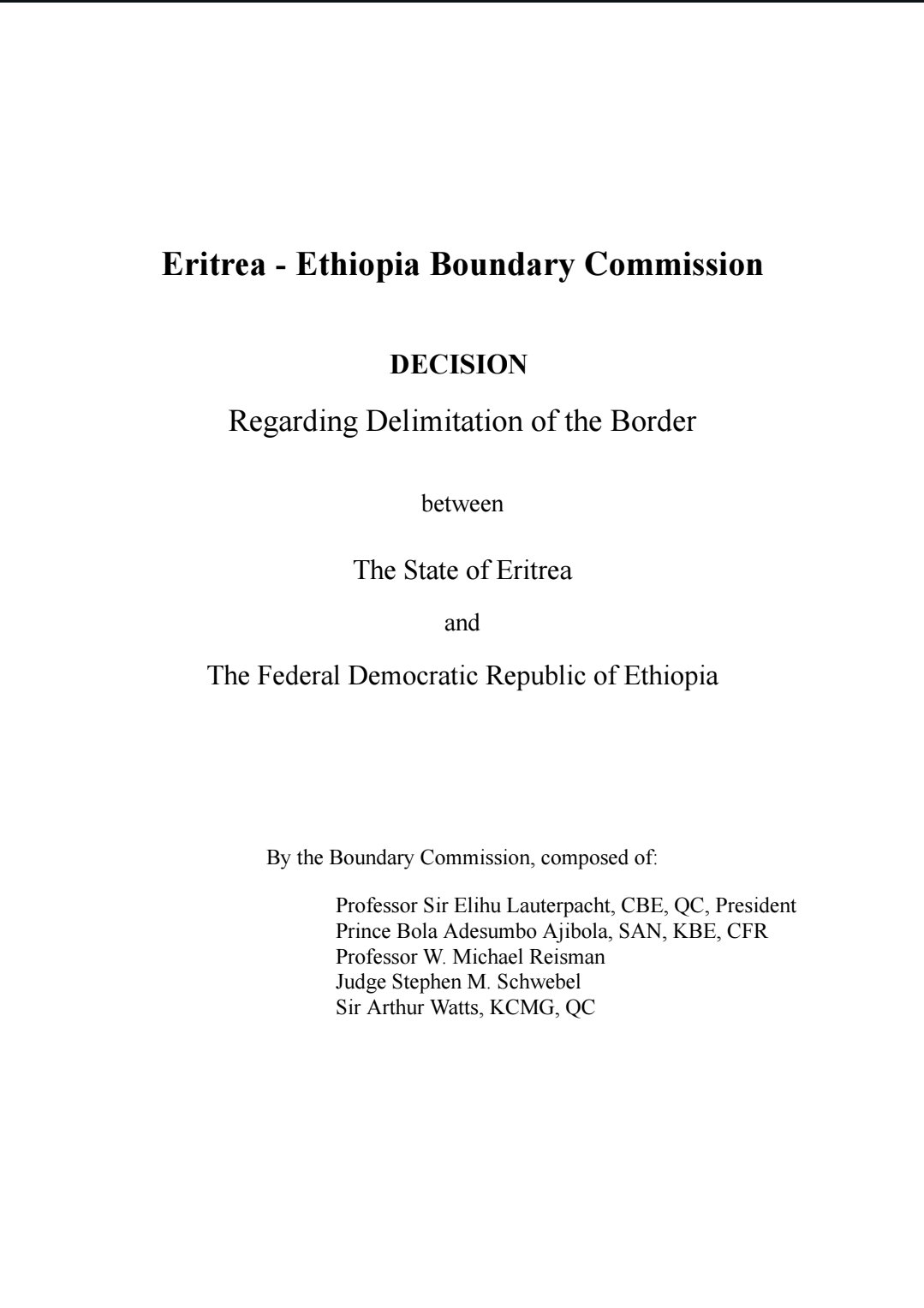
13 April 2002 - The Eritrea-Ethiopia Boundary Commission (EEBC) delivered its Final & Binding Delimitation Decision

30 November 2007 - The EEBC announced the boundary between Eritrea & Ethiopia stands as demarcated.

Final & Binding

Case Closed!


In stipulating that the boundary now automatically stands as demarcated by the boundary points, the Commission considers that it has fulfilled the mandate given to it.


Sir Elihu Lauterpacht


________


The Eritrea and Ethiopian boundaries commission exposed by former @AmbJohnBolton in his book.

Zmeselo
Senior Member+
Posts: 36744
Joined: 30 Jul 2010, 20:43

Re: Keren: Massacre Commemorated!

Post by Zmeselo » 02 Dec 2025, 15:46

Two historical declassified secret documents from the Council of Foreign Ministers — the body established after WWII to make major political decisions — that reveal the earliest stages of Haile Selassie’s effort to absorb Eritrea. The first document is an internal memorandum sent to the U.S. Secretary of State on 10 April 1946, outlining discussions between the State Department and Aklilu Habtewold (Ethiopia’s Vice Foreign Minister). The second is the Peace Treaty with Italy, specifically the section dealing with the disposition of Italy’s former colonies 30th April 1946 in Paris.

As a result of the January 1946 meeting between Aklilu Habtewold and Assistant Secretary of State Dunn — together with Haile Selassie’s earlier and highly influential meeting with President Franklin D. Roosevelt in February 1945 in Egypt — the decision on Eritrea’s independence was postponed. Another striking detail is that Haile Selassie blatantly misled the Council of Foreign Ministers by claiming that Italian Somaliland had always been part of Ethiopia, invoking supposed historical ties, geographic “naturalness,” ancient Ethiopian–Somali interactions, imperial expansion narratives, and strategic ambitions for Indian Ocean access.

[First Document]


April 11, 1946, from London, Assistant Secretary of State Dunn reported on his conversation with Ethiopian Vice Minister for Foreign Affairs Ato Aklilou Abte Wold in London on January 25, 1946. Vice Minister Aklilou wished to ascertain when it might be possible for the Ethiopians to present their case to the Council of Foreign Ministers. He brought up particularly the Ethiopian Government’s interest in the future disposition of Eritrea and its request for the incorporation of that territory into Ethiopia. Dunn assured Aklilou, that full consideration would be given to any requests that the Ethiopian Government might wish to make.

The second document is very important, since it is the first time the Council of Foreign Ministers discussed officially in Paris on the 30th April 1946 the disposition of Italian Colonies.


(1) Italy shall renounce her Sovereignty over all her colonies.

(2) Libya, which comprises, Cyrenaica and Tripolitania, shall be created as an independent State. Consultations shall take place with the representatives of the inhabitants for the establishment of a constitution and consideration of the necessary steps to assist the new State in establishing her administration. Provision should be made for a special régime to safeguard minorities.

(3) Red Sea Colonies.

(a) Eritrea: It having been brought to the notice of the Foreign Ministers that Ethiopia is making claim to Eritrea, it is suggested that the Ethiopian Government should be heard before a final decision on the future of Eritrea is taken.

(b) Italian Somaliland: There should be a study by the Deputies as to the possibility of the creation of a new territory to be known as United Somalia, consisting of British Somaliland, Italian Somaliland, the Ogaden, the Reserved Areas, the last two now being under the sovereignty of Ethiopia, in order to provide an economic and ethnic unit in the interests of the people. Should there be agreement on this proposal, the United Kingdom should be given the trusteeship for United Somalia, (i) on the grounds that the area was liberated by British Commonwealth Forces, and (ii) since the United Kingdom would be voluntarily placing the protectorate of British Somaliland under the trusteeship system in the interests of the wider area. If, after investigation agreement was not reached on this scheme, the British offer would be withdrawn.

Paris, 29 April 1946.

Deqi-Arawit
Senior Member
Posts: 15693
Joined: 29 Mar 2009, 11:10
Location: Bujumbura Brundi

Re: Keren: Massacre Commemorated!

Post by Deqi-Arawit » 02 Dec 2025, 19:16


The Sodomite has killed more innocent civilian Eritreans than the Derg and Haile Selassie combined. Therefore, we do not need any staged or meaningless stunt designed by wedi medhin berad pussies to create news out of thin air.

In psychology, there is what experts calls Diffuse Noxious Inhibitory Controls . It means that when the body experiences a new, stronger source of pain, the brain shifts its attention to the new pain and reduces the perception of the previous one. In simple terms, a new pain can temporarily overshadow an old pain.
Likewise, supporters of the sodomite are asking us to do the unthinkable: they want us to enter a mourning process over events that took place 40–50 years ago while ignoring the ongoing genocide which is committed by the sodomite againt our people.

Unlike the sodomite sadistic barbarian, the derg allowed people to take the remaining of the deceased for burrial. Unlike the sodomite, the derg allowed relatives of prisoner to visit him....

For this reason.....We say. [deleted] you!

Deqi-Arawit
Senior Member
Posts: 15693
Joined: 29 Mar 2009, 11:10
Location: Bujumbura Brundi

Re: Keren: Massacre Commemorated!

Post by Deqi-Arawit » 02 Dec 2025, 19:24


Wedi Medhin berad pussies...........Where are is the money? Dont tell me, the sodomite cant afford a suit and a Dolce gabana shoes when he is a billionare.

Deqi-Arawit
Senior Member
Posts: 15693
Joined: 29 Mar 2009, 11:10
Location: Bujumbura Brundi

Re: Keren: Massacre Commemorated!

Post by Deqi-Arawit » 02 Dec 2025, 19:28

I am in state of mourning for Keren massacre...........Aye wedi medhin berad pussies? all of a sudden, you remembered that southerners committed crime against our people........ you are like a robot where you can be switched off and on.

Fiyameta
Senior Member
Posts: 19731
Joined: 02 Aug 2018, 22:59

Re: Keren: Massacre Commemorated!

Post by Fiyameta » 02 Dec 2025, 22:10


Fiyameta
Senior Member
Posts: 19731
Joined: 02 Aug 2018, 22:59

Re: Keren: Massacre Commemorated!

Post by Fiyameta » 02 Dec 2025, 22:50

They massacred 250,000 Eritrean civilians. :evil:

They bombed and burned 174 villages to the ground with people inside. :evil:

They killed this author because they didn't want the Ethiopian people to know what was been done in their name.


Mesob
Member
Posts: 2589
Joined: 23 Dec 2013, 21:03

Re: Keren: Massacre Commemorated!

Post by Mesob » 03 Dec 2025, 00:57

Truth should be told as it without white washing and selective outrage. The Jebha and Shaebia Shifta leaders had killed and enslaved tens of thousands of Eritreans than any previous administration in Midre Bahri or current Eritrea, except the Jihadi Muslim invasions of Ahmad Gragn, the ruthless Ottoman Turk Muslims and the savage opportunist Arab Egyptians.


Fiyameta
Senior Member
Posts: 19731
Joined: 02 Aug 2018, 22:59

Re: Keren: Massacre Commemorated!

Post by Fiyameta » 03 Dec 2025, 11:09


Zmeselo
Senior Member+
Posts: 36744
Joined: 30 Jul 2010, 20:43

Re: Keren: Massacre Commemorated!

Post by Zmeselo » 03 Dec 2025, 11:47

Lily Yohannes vs. Italy:


Deqi-Arawit
Senior Member
Posts: 15693
Joined: 29 Mar 2009, 11:10
Location: Bujumbura Brundi

Re: Keren: Massacre Commemorated!

Post by Deqi-Arawit » 03 Dec 2025, 13:18

Fiyameta wrote:
03 Dec 2025, 11:09
This is a lie.

Haile Selasie killed less than 40 University students. [

The Derg probably 100 000 non combatants hence where did the pussies of wedi medhin berad brought this figure.

Wedi medhin berad?
1.5 million refugees
120 000 innocent civilians.

Hence, wedi medhin berad pussies are the last pussies to care about our people

Fiyameta
Senior Member
Posts: 19731
Joined: 02 Aug 2018, 22:59

Re: Keren: Massacre Commemorated!

Post by Fiyameta » 03 Dec 2025, 14:00


Zmeselo
Senior Member+
Posts: 36744
Joined: 30 Jul 2010, 20:43

Re: Keren: Massacre Commemorated!

Post by Zmeselo » 03 Dec 2025, 21:07


Opinion
Ethiopia Owes Eritrea Billions in Restitution

By Yemane Abselom

https://redseabeacon.com/ethiopia-owes- ... stitution/

December 3, 2025

When the Eritrean People’s Liberation Front (EPLF) liberated Eritrea in 1991 after thirty years of war, it made a conscious and historic choice: to prioritize peace over retribution. Eritreans chose to begin state-building, without demanding payment for the immense destruction inflicted upon them by successive Ethiopian governments. It was an act of restraint rooted in Eritrean cultural wisdom—“መባእስተይ ለባም ግበረለይ”—
May God make my opponent wise for my sake.
In truth, the Ethiopian people are fortunate that the Eritrean government chose reconciliation over revenge, restraint over retaliation, and nation-building over punishment.

What is almost never acknowledged inside Ethiopia, is that Eritrea’s choice to forgive did not mean it lacked a legitimate claim. On the contrary, over decades, Eritrea accumulated a reparations ledger worth billions. International law makes this clear: when a state commits internationally wrongful acts—unlawful annexation, violation of self-determination, destruction of civilian infrastructure, occupation of foreign territory—it is obliged to make full reparation for the damage it causes. This is not unusual. Germany paid restitution after both World Wars; Iraq was forced to compensate Kuwait after 1991; Japan has paid compensation in multiple post-war settlements. Restitution is not an Eritrean invention—it is the normal global practice for states that have committed serious violations.

Eritrea has simply never demanded, what international norms already entitle it to.

Haile Selassie’s Regime: Illegal Annexation and Economic Sabotage

When the UN federated Eritrea with Ethiopia in 1952, it gave Eritrea autonomous powers with the right to manage its own domestic affairs and retain revenues from its ports. Emperor Haile Selassie, immediately violated the federal arrangement. He centralized port revenues in Addis Ababa, depriving Eritrea of its main source of income, and systematically relocated or shut down Eritrean industries to prevent economic development. When Eritreans protested these violations, the regime resorted to repression, including the early massacres that triggered the first waves of refugees.

The Emperor’s illegal dismantling of the federation and subsequent annexation of Eritrea in 1962, constituted a clear denial of the Eritrean people’s right to self-determination. Under international legal principles, Ethiopia owed Eritrea reparation for lost revenues, destroyed livelihoods, the shuttering of industries, and the violent suppression that followed. Eritrea claimed none of it. It bore the loss and continued fighting for its independence.

The Derg Regime: Scorched Earth and Systematic Destruction

If Haile Selassie undermined Eritrean autonomy, the Derg set out to destroy Eritrea’s existence as a functioning society. For seventeen years, Mengistu Hailemariam’s junta launched scorched-earth campaigns across Eritrea—burning villages, bombing markets, destroying roads and bridges, executing youth, and emptying entire regions. These were not battlefield clashes; they were deliberate attacks on Eritrean civilians, agriculture, and infrastructure.

International humanitarian law treats such acts, as grave violations. Victims of these violations have the right to reparation. Ethiopia, as the state responsible, would in any normal post-conflict framework be required to compensate Eritrea for destroyed towns, ruined economies, mass displacement, and the enormous human losses that resulted from its campaigns. Yet again, Eritrea sought no reparations when independence was achieved. It focused on rebuilding from ruins, rather than litigating the past.

The Weyane (TPLF/EPRDF) Regime: War, Occupation, and False Accusations

After independence, Eritrea tried to build a cooperative relationship with Ethiopia. It had even helped the TPLF/EPRDF overthrow the Derg. But in 1998, a local border incident was escalated by Ethiopia into a full-scale war, despite Eritrea’s repeated calls for arbitration. The war devastated both countries, but the legal record is clear: in 2002, the Eritrea–Ethiopia Boundary Commission ruled that Badme—the symbolic center of the conflict—belongs to Eritrea. Ethiopia had no legal reason to wage war, to retain a territory that international law recognized as Eritrean. Under the Algiers Agreement, Ethiopia was responsible for the consequences of its decision to go to war.

Instead of complying, the Weyane regime refused to implement the ruling and held Eritrean land for years. Continued occupation of recognized foreign territory is, in itself, a wrongful act requiring compensation for lost agricultural production, displaced communities, and the denial of sovereign use of land. During the same period, the Weyane government spearheaded a global campaign accusing Eritrea of supporting Al-Shabaab—allegations that led to UN sanctions in 2009. For years, UN monitoring groups repeatedly reported they had found no conclusive evidence of Eritrean involvement. Yet the sanctions stayed in place until 2018, restricting foreign investment and slowing Eritrea’s economic development. In any normal international framework, Ethiopia’s role in promoting these false allegations would trigger responsibility for the economic damage caused. Eritrea asked for no compensation.

The Abiy Ahmed Regime: A Return to Reckless Rhetoric

Prime Minister Abiy Ahmed entered office, with the opportunity to close the book on decades of conflict. Ethiopia finally accepted the border ruling, and both countries briefly entered a period of peace. Yet within a few years, Abiy revived irredentist rhetoric about a supposed “existential need” for access to the Red Sea and implied that Eritrea’s sovereignty over its own coastline is negotiable—or forceable.

International law is categorical: the acquisition of territory by force is inadmissible. Threatening war to take another country’s land or coast is a peremptory violation. If Ethiopia were to act on such rhetoric, Eritrea would again be entitled to full reparation for any resulting loss or injury.

The deeper tragedy, however, is that Ethiopia’s political class behaves as though past wars carried no cost—because in practice, they haven’t. Eritrea never demanded restitution for decades of devastation. That absence of accountability has created a dangerous illusion inside Ethiopia: the illusion that war is cheap, that Eritrea has no leverage, and that threatening its sovereignty carries no lasting consequences. It is no accident that leaders who never paid for the last war are now toying with the next one.

Eritrea Deserves Restitution—And Ethiopia Needs Accountability

Across imperial, military, and minority led – governments, Ethiopia caused Eritrea immense material and human loss: stolen revenues, destroyed infrastructure, burned villages, displaced populations, and years of illegal occupation. Under international norms, Eritrea is entitled to restitution for these harms. The sums—if properly calculated—would run into the billions. Eritrea has simply never pursued them.

But this restraint has had a cost. Ethiopians are largely unaware of how much Eritrea has already let go. They do not feel the weight of the wars waged in their name, nor the material consequences their governments should have borne. This lack of historical accountability, makes it easier for new leaders to revive old fantasies and propose new confrontations. Had Ethiopia, even once, been forced to pay for the devastation inflicted on Eritrea, today’s reckless rhetoric about “sea access” would find far fewer willing ears.

Eritrea’s patience, has never been weakness. It has been a strategic choice for peace. But peace cannot survive indefinitely, in an environment where one side believes its past aggressions have no price.

For the sake of regional stability, for the sake of truth, and for the sake of future generations, Ethiopia must one day reckon with the enormous debt it owes the people of Eritrea.
Last edited by Zmeselo on 03 Dec 2025, 22:03, edited 1 time in total.

Fiyameta
Senior Member
Posts: 19731
Joined: 02 Aug 2018, 22:59

Re: Keren: Massacre Commemorated!

Post by Fiyameta » 03 Dec 2025, 21:57

In 1952 Germany was ordered to pay $90 billion dollars in compensation to its WW2 victims.

$90 billion dollars in the 1950s is equivalent in the purchasing power of about $1 Trillion dollars today.

Demanding $1 Trillion dollars in compensation from Ethiopia for its crimes against the Eritrea people sounds like a reasonable amount. We can literally own the country for the next 100 years until we squeeze out every penny to satisfy the $1 Trillion dollar owed to the Eritrean people.

Post Reply