Ethiopian News, Current Affairs and Opinion Forum
Zmeselo
Senior Member+
Posts: 36744
Joined: 30 Jul 2010, 20:43

Slavery in Ethiopian history.

Post by Zmeselo » Yesterday, 22:04


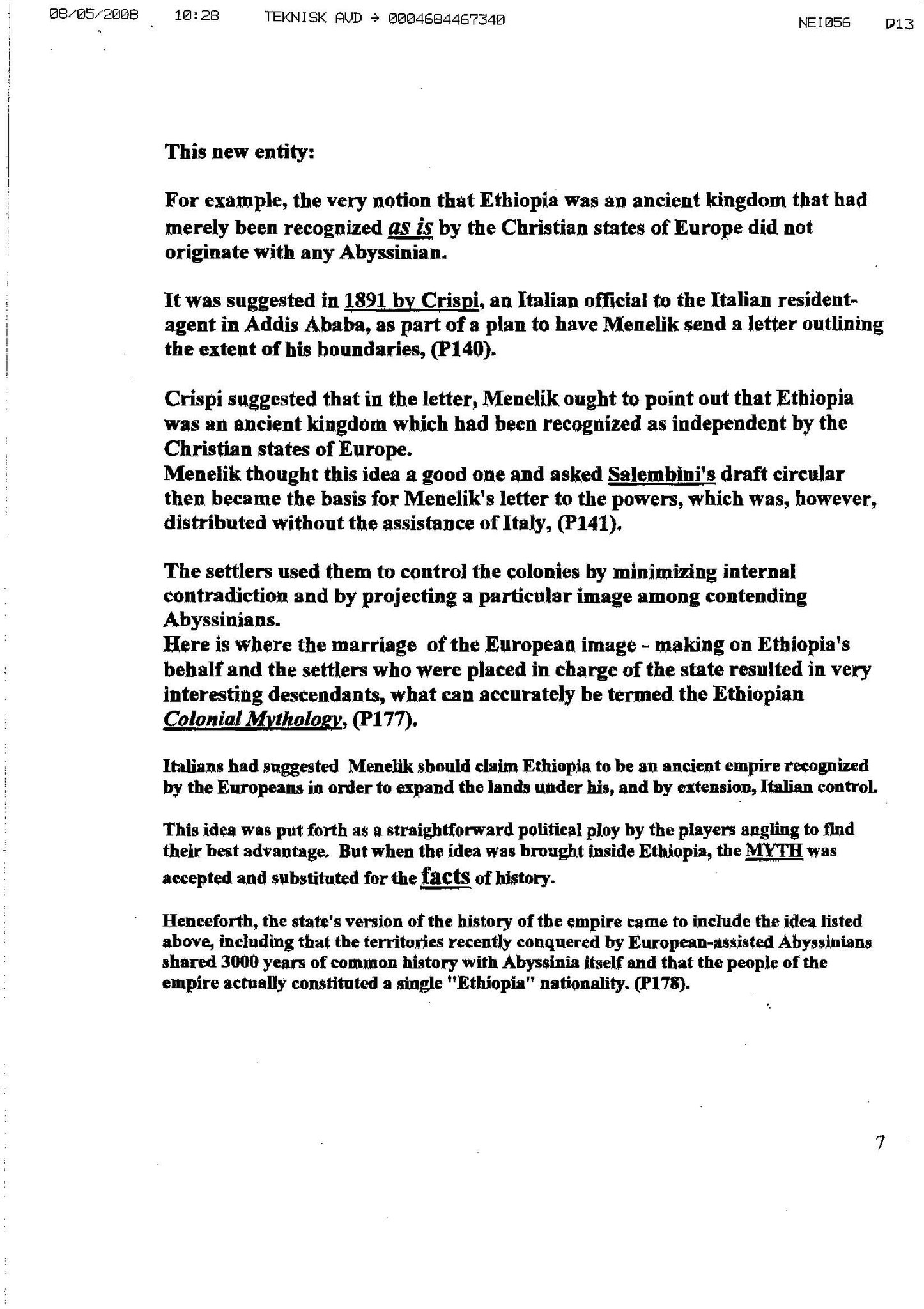
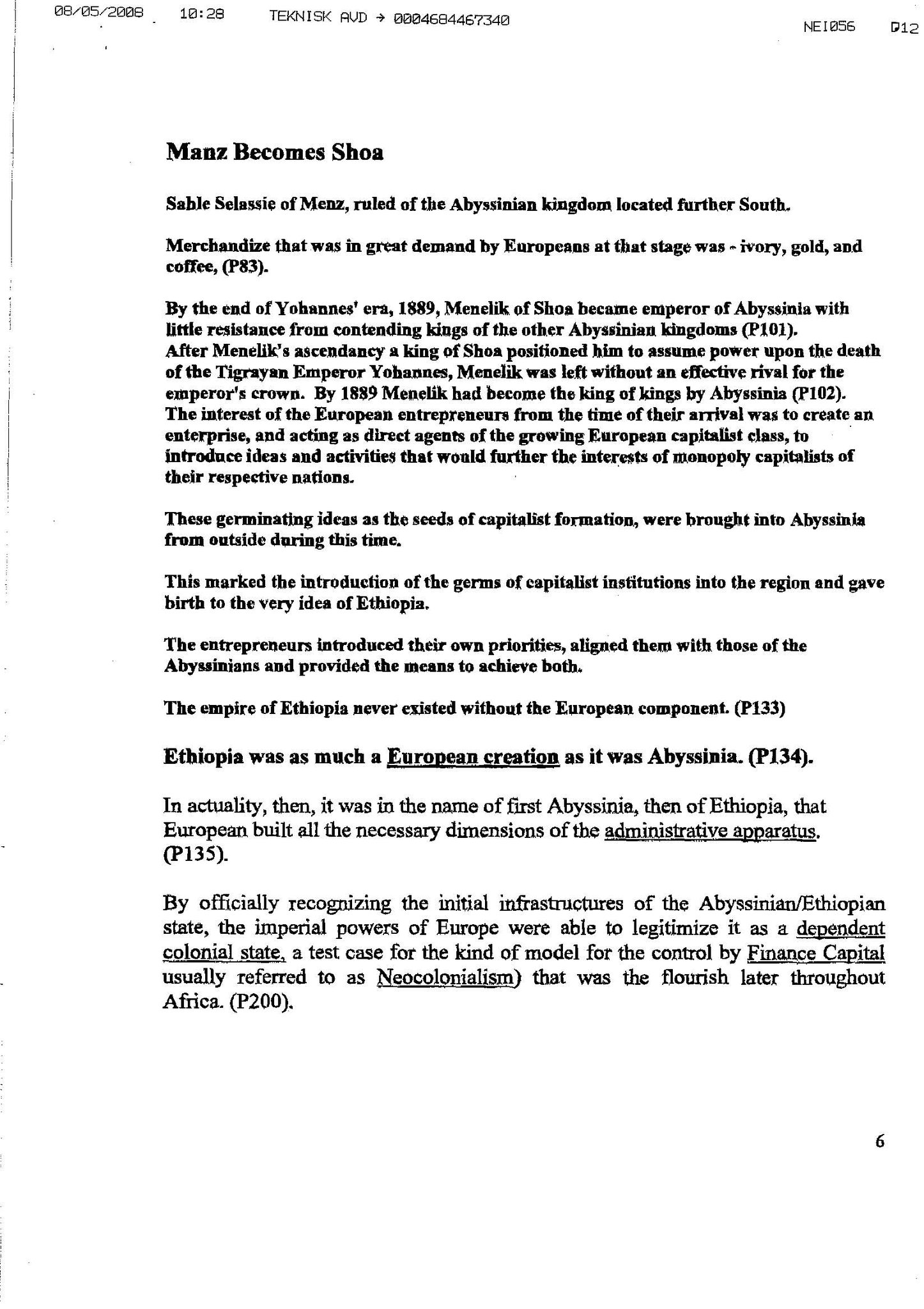
When some Ethiopians use derogatory terms about Eritreans or other Africans —such as “Askaris” or “Italian construct”—it is worth looking honestly at their own history.

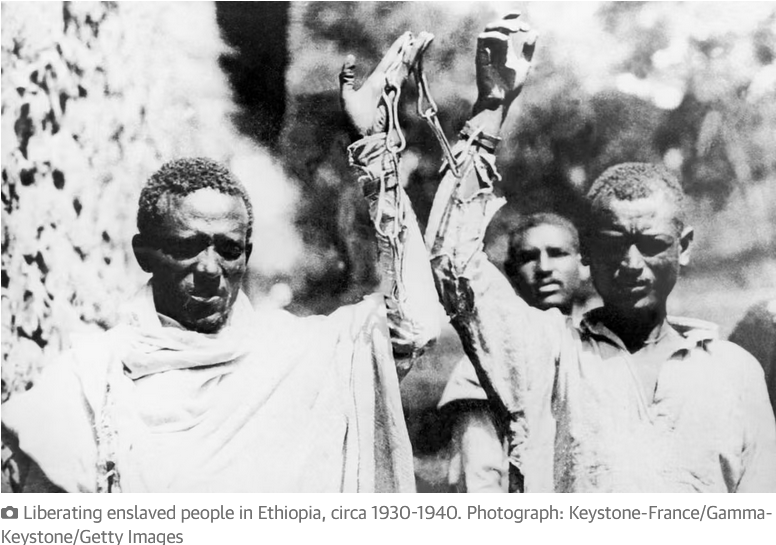
Historical records show that until the Italian invasion of 1935, slavery and the slave trade remained deeply embedded in the Ethiopian/Abyssinian culture and economy, with estimates suggesting that up to a quarter of the population lived in slavery. It was, in fact, Fascist Italy that finally abolished the practice during its occupation—an uncomfortable but well-documented historical reality that is often overlooked when mentioning

3,000 years of uninterrupted history.


Although Menelik II and Haile Selassie issued proclamations against slavery, these were never genuinely enforced. When Ethiopia joined the League of Nations in 1922, it was required to abolish slavery within ten years, yet slavery continued. In 1932, the League formally reprimanded Haile Selassie for failing to carry out this obligation. Both Menelik and Haile Selassie were themselves slave owners, as widely reported by contemporary observers and historians.

Today, public discourse in Ethiopia rarely confronts this part of its past, nor the long-term social consequences it created—issues that still affect the country’s stability and cohesion. Below are several historical quotations, that shed light on Ethiopia’s history with slavery.

Harold G. Marcus:

Menelik’s palace was staffed with many hundreds of slaves… captured during the southern campaigns.

The Life and Times of Menelik II

Harold G. Marcus:

Haile Selassie, like all Ethiopian nobles of his era, possessed slaves in his household until the 1930s.

By 1935, despite proclamations, slavery remained widespread. Perhaps two million Ethiopians lived in some form of bondage.


A History of Ethiopia

Richard Pankhurst:

Slave-taking was intrinsic to the expansion of Menelik’s empire. Tens of thousands of Oromo, Sidama, and other southerners were taken as slaves, many of whom entered the imperial household.

Most slaves were obtained from the southern and southwestern regions… including the Oromo, Sidama, Gurage, Kafa, and various Nilotic groups.


Economic History of Ethiopia, Vol. I

British Foreign Office Report (1934):

Even in the household of the Emperor, slaves continue to serve despite proclamations declaring abolition.


Christopher Clapham:

Domestic slavery persisted in the imperial family well into Haile Selassie’s reign.


Transformation and Continuity in Revolutionary Ethiopia
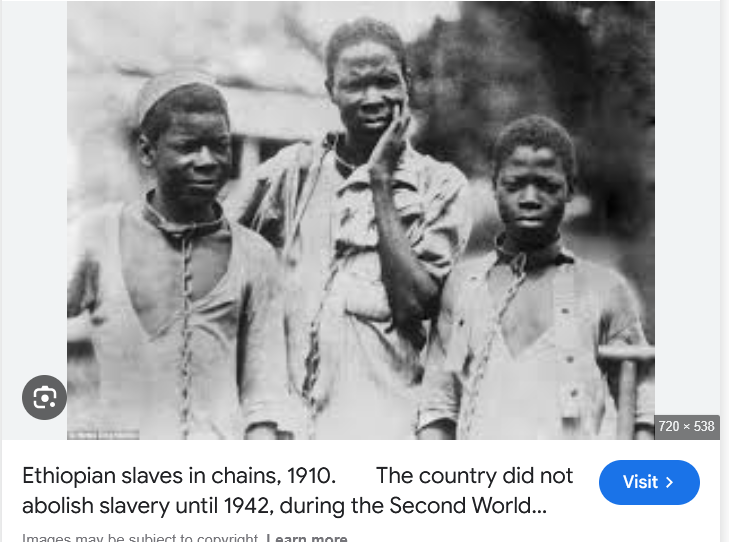


League of Nations evidence:

In 1932–1935, the League of Nations repeatedly criticized Haile Selassie for:

- failing to suppress slave trading
- keeping domestic slaves at the imperial palace
- allowing nobles to continue owning slaves

The League’s 1935 report states:

Slavery exists even in the household of the Emperor.


Haile Selassie formally abolished slavery again in 1942 (under British pressure). By the mid-1940s, domestic slavery in the palace had largely ended, though forced labor persisted under other names.
Fiyameta
Senior Member
Posts: 19731
Joined: 02 Aug 2018, 22:59

Re: Slavery in Ethiopian history.

Post by Fiyameta » Today, 00:49


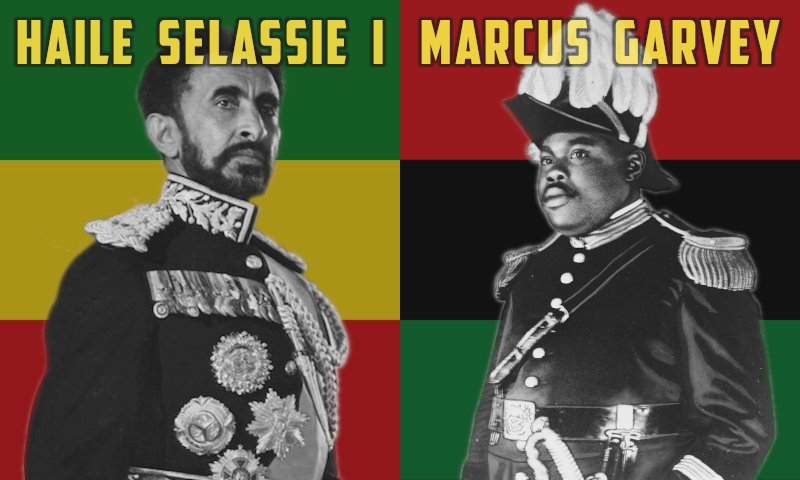
The Failure of Emperor Haile Selassie

By Marcus Garvey

It is a pity that a man of the limited intellectual calibre and weak political character like Haile Selassie became Emperor of Abyssinia at so crucial a time in the political history of the world. A cringing, white slave hero worshipper, visionless and disloyal to his country, this is the impression the serious minded political student forms of the conduct of the ex-Emperor of Abyssinia.

We must admit that we glorified Haile Selassie when the war started, fought his battles to win international support, but we ever felt deep down in our hearts that he was a slave master. We had hoped that if Abyssinia had won that we would have forced the Government of Abyssinia to free the black whom they held as slaves. We would have preferred this than seeing the country taken by Mussolini or any European power; but now that the country is temporarily lost and the Emperor has cowardly exiled himself, the truth must be told.

In truth, the Emperor is out of place in democratic England. He wants to be once more in the environment of the feudal Monarch who looks down upon his slaves and serfs with contempt.

The Africans who are free can also appreciate the position of slaves in Abyssinia. What right has the Emperor to keep slaves when all the democratic sections of the world were free, when men had the right to live, to develop, to expand, to enjoy all the benefits of human liberty?

After all, Haile Selassie is just an ordinary man like any other human being. What right has he to hold men as slaves? It is only the misfortune of the slaves that causes him to be a slave master. Negroes who have the dignity of their race at heart resent the impertinence of anyone holding the blacks as slaves.

Haile Selassie ought to realize this and abolish his foolish dream of being an Emperor of slaves and serfs and try to be an Emperor of noble men, and for him to be that he must himself be the noblest of them all.

When the war started in Abyssinia all Negro nationalists looked with hope to Haile Selassie. They spoke for him, they prayed for him, they sung for him, they did everything to hold up his hands, as Aaron did for Moses; but whilst the Negro peoples of the world were praying for the success of Abyssinia this little Emperor was undermining the fabric of his own kingdom by playing the fool with white men, having them advising him; having them telling him what to do, how to surrender, how to call off the successful thrusts of his Rases against the Italian invaders.

Yes, they were telling him how to prepare his flight, and like an imbecilic child he followed every advice and then ultimately ran away from his country to England, leaving his people to be massacred by the Italians, and leaving the serious white world to laugh at every Negro and repeat the charge and snare – “he is incompetent,” “we told you so.” Indeed Haile Selassie has proved the incompetence of the Negro for political authority, but thank God there are Negroes who realize that Haile Selassie did not represent the truest qualities of the Negro race. How could he, when he wanted to play white? How could he, when he surrounded himself with white influence? How could he, when in a modem world, and in a progressive civilization, he preferred a slave State of black men than a free democratic country where the black citizens could rise to the same opportunities as white citizens in their democracies?

https://www.africaresource.com/rasta/se ... nt-page-1/

Post Reply