Ethiopian News, Current Affairs and Opinion Forum
Zmeselo
Senior Member+
Posts: 36810
Joined: 30 Jul 2010, 20:43

The Red Sea Corridor and the Battle for the Region’s Soul

Post by Zmeselo » 01 Sep 2025, 15:38


The Red Sea Corridor and the Battle for the Region’s Soul


Composed: UAE President Sheikh Mohamed bin Zayed Al Nahyan's and Ethiopia's PM Abiy Ahmed.

By Ternafi Hadelibi

https://mesobjournal.com/the-red-sea-co ... ions-soul/

August 30, 2025

There are battlefields defined by tanks and trenches, and there are those fought in boardrooms, backchannels, and behind closed doors – silent but no less brutal.

The Red Sea corridor is one such battleground. It is not simply a waterway. It is the spine of global commerce, the artery of Africa’s future, and the object of intense geopolitical obsession. And once again, Eritrea sits at the eye of the storm – not as a pawn, but as the immovable piece that refuses to play the empire’s game.

In his July 2025 interview, President Isaias Afwerki pulled no punches in exposing what he called “audacious” plans to control this corridor. He didn’t speak in vague diplomatic euphemisms. He named names.
It would be inappropriate to lay the blame broadly on the UAE,
he said.
It is the UAE president who specifically bears responsibility.
According to President Isaias, the UAE’s leader is not merely investing in ports – he is attempting to control them, end to end, from Suez to Dar es Salaam.

Let that sink in: Jeddah, Hudaydah, Massawa, Assab, Djibouti, Berbera, Mogadishu, Kismayo, Lamu, Mombasa. A straight line of strategic choke points, being quietly consolidated through cash, coercion, and covert deals. The aim? Hegemony – regional dominance without bullets, but with balance sheets and bribery.

It’s not speculation. Eritrea was approached directly. The proposal was simple: allow Ethiopia exclusive use of Assab, and in return, undercut Djibouti’s $4 billion port revenue stream. Divide to conquer. Cripple your neighbor, profit from their collapse. But Eritrea refused.
This notion is a moral taboo to us,
President Isaias declared.
We harbor no such intentions.
That refusal isn’t just policy. It’s identity. Eritrea’s foreign policy is built on principles few others in the region have dared to maintain: non-alignment, mutual respect, zero subservience. It will not sabotage neighbors. It will not trade justice for dollars. And it will not permit foreign actors to use Eritrean soil as a launchpad for regional destabilization.

This is what makes Eritrea dangerous—not because it threatens, but because it refuses to be threatened.

Meanwhile, other regional players – some embattled, others complicit – are being drawn into the game. Somaliland, Kismayo, Sudan, Kenya. President Isaias alluded to “reckless notions” and “covert messages” being fed to the Ethiopian regime, promising influence, funding, and strategic leverage – if only they play along.

And the money is flowing. Unlimited UAE resources are being funneled into Ethiopian war preparations, Kenya’s political sphere, and Sudan’s disintegration. The objective is clear: install loyalists, destabilize independents, and stitch together a network of proxy regimes loyal not to their own people, but to Abu Dhabi’s geopolitical ambitions.

But Eritrea sees the game. And unlike most, it dares to call it out.

The accusations now hurled against Eritrea – of preparing for war, of aggression – are not Ethiopian in origin.
This is not the agenda of the Ethiopian government or the Prosperity Party,
President Isaias emphasized.
It is the agenda of others.
What’s more, this isn’t new.

These machinations have long existed, repackaged under new names with new financiers, but driven by the same old imperial logic: control the sea, and you control the region.

It’s a logic Eritrea rejects outright.

While others rush to build naval bases for foreign powers, Eritrea focuses on sovereign development. While others sell access to intelligence agencies, Eritrea protects its ports as national assets. While others let themselves be used as chess pieces, Eritrea flips the board.

President Isaias warned of spiraling destabilization, if this madness continues. And he’s right. You cannot flood the region with arms, pit states against each other, and expect peace.

From Massawa to Mogadishu, the air is thick with schemes. But Eritrea’s answer remains unchanged:
We will not be pulled into their campaigns. We will focus on a constructive path.
That constructiveness isn’t passive. It’s active refusal. Eritrea won’t play rival to Djibouti. It won’t sabotage Somalia. It won’t let Ethiopia drag it into a war of distraction. But make no mistake – it will defend itself. What’s being marketed as “access to the sea” is a front for something far more dangerous: the re-balkanization of the Horn under a foreign yoke.

Eritrea’s message to the world, and especially to its neighbors, is this: look deeper. What you’re being sold is not development, but dependence. Not unity, but usurpation. If the Red Sea becomes a battlefield again, it won’t be because Eritrea started it – but it may very well be Eritrea that ends it.

Last edited by Zmeselo on 01 Sep 2025, 20:26, edited 1 time in total.

Zmeselo
Senior Member+
Posts: 36810
Joined: 30 Jul 2010, 20:43

Re: The Red Sea Corridor and the Battle for the Region’s Soul

Post by Zmeselo » 01 Sep 2025, 15:46


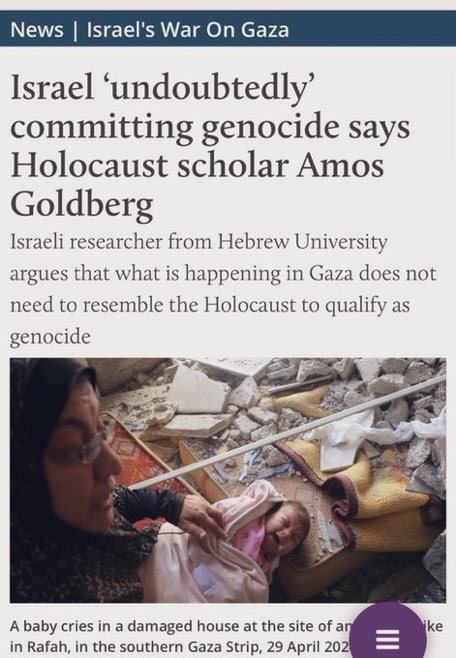
Israel committing genocide in Gaza, world's leading experts say

2 hours ago

Emir Nade BBC News, Jerusalem

https://www.bbc.com/news/articles/cde3e ... ocial_Flow


The genocide scholars cited, among other elements, Israel's attacks on Gaza's healthcare, aid, and educational sectors

The world's leading association of genocide scholars has declared that Israel is committing genocide in Gaza.

A resolution passed by the International Association of Genocide Scholars (IAGS) states that Israel's conduct meets the legal definition as laid out in the UN convention on genocide.

Across a three-page resolution, the IAGS presents a litany of actions undertaken by Israel throughout the 22-month-long war that it recognises as constituting genocide, war crimes and crimes against humanity.

The IAGS is the world's largest professional association of genocide scholars and includes a number of Holocaust experts. Out of its 500 members, 28% took part in the vote and 86% of those who voted supported the resolution.

In a summary of Israeli policies and actions, the declaration notes the widespread attacks on both the personnel and facilities needed for survival, including in the healthcare, aid, and educational sectors.

Among many other elements, it notes the 50,000 children killed or injured by Israel, as highlighted by UN aid organisation Unicef, which impacts the ability of Palestinians in Gaza to survive as a group and regenerate.

The resolution also highlights the support among Israeli leaders for the forced expulsion of all Palestinians from Gaza, alongside Israel's near-total demolition of housing in the territory.

The IAGS notes the statements by Israeli leaders dehumanising Palestinians in Gaza, characterising them all as the enemy, alongside promises to "flatten Gaza" and turn it into "hell".

The Israeli Foreign Ministry said the report was based on "Hamas lies" and poor research, calling it an
embarrassment to the legal profession.
A spokesperson added that it was Israel itself which is the victim of genocide.

Israel has regularly denied that its actions in Gaza amount to genocide and says they are justified as a means of self-defence.

The IAGS scholars state that while the 7 October 2023 Hamas attack - in which about 1,200 people were killed and 251 others taken hostage - was itself a crime, Israel's response has not only been directed against Hamas but has targeted Gaza's entire population.

The 1948 UN Genocide Convention, which was adopted following the mass murder of Jews by Nazi Germany, defines genocide as crimes committed
with intent to destroy, in whole or in part, a national, ethnical, racial or religious group.
A number of leading rights organisations, including two Israeli organisations, https://www.bbc.co.uk/news/articles/c776xkvz6vno have also declared they believe Israel is committing genocide.

The UN and a number of Western nations have said that they will only consider a ruling by a court that genocide is taking place as authoritative.

The UN's top court, the International Court of Justice, is currently considering a case brought by South Africa in 2023 that argues that Israel is committing genocide. The ICJ has not yet made a determination on the subject and has granted Israel an extension until January 2026 to present its defence.

Israel has accused the case of having antisemitic motivations, calling it a "blood libel", in reference to historic allegations that Jewish communities ritually murder Christian children.

The IAGS say their resolution has no bearing on any case put forward to an international court.

On Monday, the Hamas-run Ministry of Health said that 63,557 people had been killed and 160,660 injured during the war so far. The ministry's numbers are widely considered reliable yet they do not distinguish between civilians and fighters.

In August, the UN-backed food monitor, the IPC, confirmed that famine was taking place in parts of Gaza. Israel is accused of causing the famine through ongoing restrictions on food and medical aid entering Gaza.

Israel controls all border crossings into the Gaza Strip, and as the occupying power bears responsibility for protecting civilian life under international law, which includes the prevention of starvation.


______________


The rest of the world:


Fiyameta
Senior Member
Posts: 19816
Joined: 02 Aug 2018, 22:59

Re: The Red Sea Corridor and the Battle for the Region’s Soul

Post by Fiyameta » 01 Sep 2025, 18:50

Good read, thanks for sharing.
Zmeselo wrote:
01 Sep 2025, 15:38


The Red Sea Corridor and the Battle for the Region’s Soul


Composed: UAE President Sheikh Mohamed bin Zayed Al Nahyan's and Ethiopia's PM Abiy Ahmed.

By Ternafi Hadelibi

https://mesobjournal.com/the-red-sea-co ... ions-soul/

August 30, 2025

There are battlefields defined by tanks and trenches, and there are those fought in boardrooms, backchannels, and behind closed doors – silent but no less brutal.

The Red Sea corridor is one such battleground. It is not simply a waterway. It is the spine of global commerce, the artery of Africa’s future, and the object of intense geopolitical obsession. And once again, Eritrea sits at the eye of the storm – not as a pawn, but as the immovable piece that refuses to play the empire’s game.

In his July 2025 interview, President Isaias Afwerki pulled no punches in exposing what he called “audacious” plans to control this corridor. He didn’t speak in vague diplomatic euphemisms. He named names.
It would be inappropriate to lay the blame broadly on the UAE,
he said.
It is the UAE president who specifically bears responsibility.
According to President Isaias, the UAE’s leader is not merely investing in ports – he is attempting to control them, end to end, from Suez to Dar es Salaam.

Let that sink in: Jeddah, Hudaydah, Massawa, Assab, Djibouti, Berbera, Mogadishu, Kismayo, Lamu, Mombasa. A straight line of strategic choke points, being quietly consolidated through cash, coercion, and covert deals. The aim? Hegemony – regional dominance without bullets, but with balance sheets and bribery.

It’s not speculation. Eritrea was approached directly. The proposal was simple: allow Ethiopia exclusive use of Assab, and in return, undercut Djibouti’s $4 billion port revenue stream. Divide to conquer. Cripple your neighbor, profit from their collapse. But Eritrea refused.
This notion is a moral taboo to us,
President Isaias declared.
We harbor no such intentions.
That refusal isn’t just policy. It’s identity. Eritrea’s foreign policy is built on principles, few others in the region have dared to maintain: non-alignment, mutual respect, zero subservience. It will not sabotage neighbors. It will not trade justice for dollars. And it will not permit foreign actors to use Eritrean soil as a launchpad for regional destabilization.

This is what makes Eritrea dangerous—not because it threatens, but because it refuses to be threatened.

Meanwhile, other regional players – some embattled, others complicit – are being drawn into the game. Somaliland, Kismayo, Sudan, Kenya. President Isaias alluded to “reckless notions” and “covert messages” being fed to the Ethiopian regime, promising influence, funding, and strategic leverage – if only they play along.

And the money is flowing. Unlimited UAE resources are being funneled into Ethiopian war preparations, Kenya’s political sphere, and Sudan’s disintegration. The objective is clear: install loyalists, destabilize independents, and stitch together a network of proxy regimes loyal not to their own people, but to Abu Dhabi’s geopolitical ambitions.

But Eritrea sees the game. And unlike most, it dares to call it out.

The accusations now hurled against Eritrea – of preparing for war, of aggression – are not Ethiopian in origin.
This is not the agenda of the Ethiopian government or the Prosperity Party,
President Isaias emphasized.
It is the agenda of others.
What’s more, this isn’t new.

These machinations have long existed, repackaged under new names with new financiers, but driven by the same old imperial logic: control the sea, and you control the region.

It’s a logic Eritrea rejects outright.

While others rush to build naval bases for foreign powers, Eritrea focuses on sovereign development. While others sell access to intelligence agencies, Eritrea protects its ports as national assets. While others let themselves be used as chess pieces, Eritrea flips the board.

President Isaias warned of spiraling destabilization, if this madness continues. And he’s right. You cannot flood the region with arms, pit states against each other, and expect peace.

From Massawa to Mogadishu, the air is thick with schemes. But Eritrea’s answer remains unchanged:
We will not be pulled into their campaigns. We will focus on a constructive path.
That constructiveness isn’t passive. It’s active refusal. Eritrea won’t play rival to Djibouti. It won’t sabotage Somalia. It won’t let Ethiopia drag it into a war of distraction. But make no mistake – it will defend itself. What’s being marketed as “access to the sea” is a front for something far more dangerous: the re-balkanization of the Horn under a foreign yoke.

Eritrea’s message to the world, and especially to its neighbors, is this: look deeper. What you’re being sold is not development, but dependence. Not unity, but usurpation. If the Red Sea becomes a battlefield again, it won’t be because Eritrea started it – but it may very well be Eritrea that ends it.

Post Reply