Why Sanctions on Eritrea Make No Sense

Eugene Puryear
https://www.breakthroughnews.org/post/w ... e-no-sense
1 hour ago

Commercial activities in Asmara | Photo: BT News
Eritrea is one of the most demonized countries on earth. The very fact that in the West it is often referred to as the
speaks volumes.North Korea of Africa
It too is wrapped in a web of decontextualized, distorted and falsified information all in the service of an isolation and containment policy.
Following a brief trip to the country, nothing could be more clear to me that the sanctions regime against Eritrea, which operates both formally and informally, is hurting the lives of the Eritrean people, and the recently announced intensification of these sanctions will only compound the country’s socioeconomic challenges. Progressive forces must advocate instead for a policy of engagement and cooperation with Eritrea, which ultimately, means abandoning the imperial conceits of U.S. policy in the Horn of Africa and on the global stage.
There is no shortage of articles online alleging human rights violations in Eritrea. I will not attempt to sustain or refute those claims here — I can report only on what I saw and heard from those I met. I raise the more fundamental question: is it credible to assume that U.S. policy towards Eritrea is actually motivated by concern for human rights? If not, what is?
The list of mass human rights violators, military dictators, unelected monarchs backed lavishly by the West is a mile long — in the Middle East and throughout sub-Saharan Africa generally. To assert that the United States has a special soft spot in their hearts for the people of Eritrea is simply absurd.

Market in Asmara | Photo: BT News
Contrary to what you read (and hear), Eritrea compares favorably with much of the sub-Saharan region on a range of social development indicators. In areas where it remains woefully underdeveloped, Eritrea is not so different from a range of nations that have been warmly embraced by the West. So that can’t be it either.
Once again, this situation boils down to the politics of independence. Eritrea is being targeted because of the real divergence it has with the West is over the politics of “humanitarian aid,” over U.S. policy in the Horn of Africa, and its commitment to a multi-polar world more broadly. This is not to say that Eritrea desires conflict with the West, or has refused to collaborate with it. With the United States in particular, the Eritrean government’s relationship has gone through periods of ups and downs. But we should recall that the same was true of the governments of Iraq, Libya and Syria as well — but they were still targeted for relentless sanctions, regime change and ultimately war nonetheless. The mere existence of independent states that can pivot substantially based on their national interests, that can give safe harbor to independent movements, and that can thereby foil U.S. geopolitical objectives is reason enough to be targeted.
___________
And Eritrea, although a small and underdeveloped country, is fiercely independent. It plays an increasingly determinant role in Horn of Africa and Sudanese politics, and it sits on a chokepoint of the Red Sea.
____________
Regardless of any humanitarian auspices, sanctions are simply a cudgel to try and break Eritrea away from its independent course — to get it to fall in line.
Sanctions Regime(s)
Eritrea is under direct US sanctions and is facing the possibility of UN sanctions (the previous version of which were only lifted in 2018), aimed at denying Eritrea access to resources and assistance from US allies in Europe and the Middle East over the past dozen years. Over that period, U.S. hostility towards Eritrea has labeled the country “anti-west,” and attacked the country’s relationships with and influence in Ethiopia, Somalia and Iran.
These sanctions have fallen into two main tranches: issue-based sanctions broadly applied to an arbitrary list of countries and broad-based sanctions targeting the Eritrean diaspora’s involvement with economic, reconstruction and social uplift activity in their homeland. In the first category, in 2017 Eritrea was sanctioned for trading with North Korea. It also remains on an arbitrary list of countries targeted for sanctions for alleged transgressions of religious freedom.
The most recent November 2021 sanctions, along with the US-backed 2009-2018 United Nations sanctions, fall in the second category. They sanction the Eritrean Defense Forces, Eritrea’s ruling Party for Development and Justice, and a party-linked corporate holding company, which is one of the nation’s main importers of goods. The U.S. interpretation https://www.securitycouncilreport.org/a ... %20652.pdf; of the relationship between Eritrea’s ruling party, the state and the economy could potentially ensnare a wide swath of the Eritrean diaspora in property seizures or legal proceedings, if they are presented as “agents” or interlocutors of the Eritrean state. This by itself creates a major chilling effect around critical investment and remittance sources that the country relies on.
Sanctions https://home.treasury.gov/news/press-releases/jy0478 in both categories are broad and scalable to give them maximum coercive power.
For instance the November 2021 sanctions, coming as they did as the US-backed Tigrayan People’s Liberation Front regime change effort was in retreat, were clearly designed to discourage Eritrea from defending itself or helping its Ethiopian neighbors. The only possible result would be a better outcome for the armed TPLF forces, a U.S. client. The sanctions were proclaimed in the interests of peace but were, in other words, a tactic of war.
[The video below details why Eritrea is targeted by the West.]
Documents published by Wikileaks revealed truth of U.S. motivations
That U.S. policy toward the Horn of Africa has nothing to do with their stated purpose of promoting “human rights” is clear enough from cables released by Wikileaks in 2010. In one conversation between the U.S. Ambassador and then Ethiopian Prime Minister Meles Zenawi, they discuss sanctions on Eritrea in a positive light, and then the Ambassador proceeds to assure PM Meles that there are ways around the fact Ethiopia was clearly in violation of the so-called human rights standards that govern U.S. weapons sales. https://wikileaks.org/plusd/cables/09AD ... 817_a.html
The real motivations of U.S. policy, the cables revealed, were Eritrea’s obstruction of the US-Ethiopian destabilization campaign https://wikileaks.org/plusd/cables/07ASMARA36_a.html of Somalia, and its pursuit of
Debating whether to pursue a policy of engagement or isolation with Eritrea, the US (and EU) likewise complained of “anti-western” elements in the government. Further diplomatic communications state thecloser ties with a range of states, including Iran and Venezuela, who do not share our world view.
between Iran and Eritrea is theirthe greatest commonality
https://wikileaks.org/plusd/cables/08ASMARA275_a.html and also referred to Eritrean disagreements with US policy asanti-US stance,
https://wikileaks.org/plusd/cables/09AD ... 817_a.html worthy of sanctions. U.S. dissatisfaction with the Eritrean government extended to the broader population, noting it was not “uncommon” for “many Eritreans” to “fully support” their government’s efforts “against the United States.” https://wikileaks.org/plusd/cables/08ASMARA266_a.htmlbad behavior,
U.S. officials also informed https://wikileaks.org/plusd/cables/09AD ... 817_a.html the TPLF-led Ethiopian government in 2009 that they were
There is no doubt that this concerted effort to “isolate” Eritrea in regional politics suffered a major blow with the Ethiopia-Eritrea peace deal of 2018. Ethiopian Minister of Culture and Sport Kejala Merdasa told BreakThrough that in meetings with U.S. diplomats, they highlighted the deal as an obstacle to good relations between Ethiopia and the United States.expanding efforts to undercut support for Asmara, noting for example..[the Ambassador]...sent on a trip to Cairo, Riyadh, Jeddah and other cities both to promote efforts to undercut flows of support.
_____________
How can the United States be concerned about human rights in Eritrea and objectively, if not openly, be upset about a peace deal?
_____________
Even if all the US accusations against Eritrea were true, historically and currently the US offers the broadest of support to totally undemocratic governments. Hypocrisy aside, however, this form of collective punishment aimed at the people of Eritrea is also based on distortions, decontextualization and outright lies about the country’s social reality.
History and Context
Supporters of the Eritrean project are often presented as brainwashed fanatics or speaking only out of fear of their government. This is foundational to the attacks on Eritrea, that it is just one large prison camp and by extension no one really supports the government and most certainly would not willingly sacrifice for it. The country’s history, however, offers a different perspective.
Eritrea is a young country, gaining its independence only in 1991 after a long and protracted armed struggle against Ethiopia, which was then followed from 1998 to 2000 with another bloody war between the two countries. This relatively short period of independence, and of peace, is an important thing to remember in terms of the development of the nation's institutional development and social indicators.
It also means that practically the whole population has some degree of direct connection to the independence struggle. Not surprisingly, our team observed inside the country a strong ethos of national pride, self-reliance, and social solidarity between Eritreans, values that are consistently extolled as part of the national project, and which is observable among big sections of the diaspora as well. The legacy of the armed struggle has created a powerful sense of collectivity and self-sacrifice, which pervades the national psyche. As one leaked U.S. diplomatic cable https://wikileaks.org/plusd/cables/09ASMARA80_a.html noted, lamenting the lack of an internal uprising, Eritreans are “fiercely patriotic.”
The country’s ruling party, the PFDJ, is the direct successor of the Eritrean People’s Liberation Front, which led the armed struggle and has dominated the country’s internal politics since the early 1980s when its rival, the Eritrean Liberation Front, was pushed out of the country. It operates with a single party-state structure and has not had elections since independence. Whatever one thinks about its political system, such an arrangement is not historically unusual in the immediate post-independence years, and even decades, of newly formed states.
While we of course did not survey all sections and areas of Eritrean society during our few days there, we did conduct a range of interviews with civilians and officials, who expressed a continued commitment to the Eritrean national project. A leaked cable https://wikileaks.org/plusd/cables/08ASMARA266_a.html from a U.S. embassy official stated that
supported the government and its rhetoric against the United States.amazingly many Eritreans
That is understandable for a range of reasons. As another leaked U.S. cable https://wikileaks.org/plusd/cables/06ASMARA847_a.html noted, the government of Eritrea:
When U.S. officials https://wikileaks.org/plusd/cables/08ASMARA370_a.html met with disgruntled Eritrean opposition members, the latter noted the appeal of the government’sactively promotes programs in health, education and development with a commitment to reducing poverty.
Another noted https://wikileaks.org/plusd/cables/08ASMARA543_a.html that when embassy officials visited President Isaias Afwerki’s home village theystrong egalitarianism.
and thatsaw no indication that the village has received any special favor,
there is no cult of personality in Eritrea.
____________
The fact that these points are admitted even in US diplomatic cables, which are otherwise filled with rumors, innuendo and vitriol, speak to the fact that the government is still seen in many quarters as a continuator of the national independence project, rooted in the country’s recent struggles, and striving for development that improves lives without compromising sovereignty.
_____________
Eritrea by the Numbers
Eritrea faces more or less the same issues that bedevil all of sub-Saharan Africa: the legacy of colonial underdevelopment and neocolonial economic structures that constrain growth possibilities. Eritrea, despite years of facing U.S.-EU attempts at isolation, is still above the sub-Saharan averages in literacy, life expectancy, rural electrification, infant mortality, maternal deaths and employment-to-population ratio. In many of these indicators Eritrea is doing far better than countries with significantly more resources available, which have no comparable issue with sanctions and in some instances, enjoy preferential access to U.S. markets.
______________
Eritrea has higher life expectancy than oil-rich Nigeria and Angola, as well as Gambia, Malawi, Mali, Chad, South Africa and Zambia among many others. Eritrea has a higher literacy rate than Rwanda, a darling of the West, and Guinea, Mozambique and Senegal and nearly 20 more sub-Saharan African nations.
________________
Ivory Coast has scores more maternal deaths for every one-hundred thousand deaths than Eritrea. Eritrea also performs better than Cameroon, wealthy Equatorial Guinea and top imperialist “security partner” Chad. Percentage-wise, you have a better chance to be employed in Eritrea than in South Africa, Nigeria, Ghana, Egypt, and Lesotho to name a few.
All over the world, rural areas tend to have lesser access to electricity than urban areas. The same is the case in large swaths of Africa, Eritrea included. But Eritrea has a higher percentage of rural people with access to power than the diamond center of Botswana, Chad (where less than 3% have access), Rwanda, Sierra Leone, Zimbabwe, Zambia, Togo and Guinea-Bissau.
Notably, in most of these social indicators Eritrea is ahead of Ethiopia, Somalia, and South Sudan in the broader Horn region. It is ahead of Djibouti in a few, including infant mortality, while Dijibouti is ahead in others.
Even in socioeconomic areas where Eritrea’s challenges are much more stark, Eritrea is not even “the worst” and, there is essentially no evidence they are trying to cynically neglect improvements, or that the problem is one of Eritrean elites stealing money from needed infrastructure project.

Logo Dam | Photo: BT News
One major point of critique is access to clean water and sanitation. This problem is not unique to it in sub-Saharan Africa but it is arguably the most severe issue of living conditions in the country. The issue can’t be discussed outside of the objective challenges, in particular, lack of rainfall. Eritrea, on average receives 16-20 inches of rain a year in some areas, below average in large parts of the world. Fertile South Sudan, for instance, averages 30-40 inches of rain a year. This is why Eritrea has built 785 dams https://borgenproject.org/eritreas-lack-of-clean-water/; in the 30 years since independence, to harness as much water as possible for agriculture, energy and development.
The Borgen project, which has rated Eritrea as having the worst access to clean water in the world, states that because of the
the situation is improving, going on to note thatgovernments involvement,
Recently UNICEF celebrated the commitment of Eritrea to providing water, sanitation and hygiene (WASH) services, noting that 54% of villages, as of 2020, were free of open defecation and that half of schools now had WASH facilities. The government has set a goal of 2030 — eight years from now — to meet all the Sustainable Development Goals around water and sanitation.this brings hope for the future of Eritrea.
UNICEF further recognized https://www.unicef.org/esa/stories/erit ... tation-all the government’s commitment
On balance the evidence is clear: in 30 years of independence Eritrea has reached development levels many of its peers have struggled to reach in 60 years or more, including a few with significantly more financial resources and international backing. This is the opposite, frankly, of how its development path is presented in mainstream conversation.to galvanize the movement for sanitation for all and to try and meet all water and sanitation related goals by 2030.
[The video below details an Eritrean doctor's perspective on the successes and challenges of medical care in Eritrea.]
Defining Development
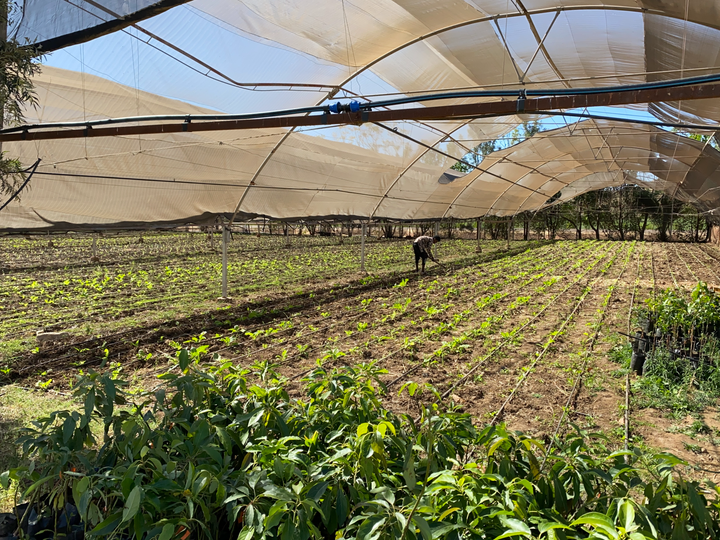
Agricultural project in Adihalo | Photo: BT News
Looming large in all discussions of Eritrea are the country’s rejection of some international aid. This is highly atypical for the African continent, and is often cast as a human rights violation in itself given the country’s challenges with living conditions. But this question too should be properly framed.
The real issue that the U.S. and other various critics have with the state of development in Eritrea is not that it is actually, as we have seen, in any way exceptionally bad. Given its limited resources, capital and other constraints, many social indicators are relatively positive. Their real problem is that Eritrea takes a position against the
model pushed on developing countries.aid as development
In particular, Eritrea often declines to work with various international NGOs whose plans, projects and stipulations don't line up with national development projects, and, further, to avoid what they consider a
culture of dependency.

Streets of Asmara | Photo: BT News
This is often portrayed as a callous attitude that is indifferent to human suffering. But, one must ask, of the countries in the Global South receiving massive “humanitarian aid” and which are rife with NGOs, who is succeeding in sustainable growth and development? The real politics of Western aid is rarely truly discussed, nor is the fact that “aid” is often just a form of agricultural dumping, and that participating in certain programs requires ideological and political conformity.
In fact, Eritrea’s approach to this question of food aid is in line with what many celebrated African revolutionaries have noted for years. Thomas Sankara,
for instance, famously said
[An interview detailing Eritrea and Africa's unique development challenges.]Where is imperialism? Look at your plates when you eat. The imported grains of rice, corn, and millet – that is imperialism. Let’s not look any further.
National Service
The historical and socioeconomic context are critical in understanding the most controversial topic in denunciations of Eritrea: the National Service.
Existing in some form since 1992, National Service is a universal conscription program that is a cultural and developmental pillar of Eritrean society. It begins in the 12th grade year when all students board at Sawa, a training academy, where they undergo military and educational courses capped off by national end-of-school exams. Thirty to forty percent of graduates then attend higher education while others are sent to various skills-based programs.
Post-education one then is deployed for National Service, in the military, various civil service occupations or for national projects. The latter constitute 90% of National Service placements.
The controversy around the program stems from the length of the program. Although statutorily limited to 18 months, for much of the past two decades the National Service often obligates people to stay for more extended and open-ended commitments. That this causes considerable hardship is not in dispute. The Ministry of Information https://shabait.com/2019/10/14/national ... rajectory/ admits that the system has
Its critics go further, calling it forced labor or even slavery. This is the only framing given voice in the international media.entailed onerous obligations to members of the National Service and to the Eritrean people as a whole.
______________
The notion of such a program undoubtedly sounds totally foreign to many in the West, where the free market generally dominates the allocation of labor and capital. But from the government’s perspective, National Service is a way to combat the brain drain of educated youth, to retain adequate labor for national projects with very limited capital resources and to keep the whole country united in the case of intervention.
_________________
For many Eritreans we spoke to, indeed, National Service is essential to national defense; the program represents a cultural crucible https://shabait.com/2019/10/14/national ... rajectory/ reinforcing multi-national unity and the national ethos; and a key means of
On our trip we met a number of people who were serving and had served, proudly in different National Service projects — for whom the spirit of sacrifice and perseverance were precisely the point, continuing the legacy of the liberation struggle in a new form. These voices are, of course, totally omitted from any sort of conversation in the West.funnel[ing] all its resources, energy and time towards nation-building and development.
The Eritrean government says changes to the program are likely to come in the context of greater peace and national security, which has been the key result of the post-2018 peace deal that the U.S. is attempting to sabotage.
The question of National Service remains one of intense controversy. But regardless, an alternative economic approach requires deeper engagement from the outside world, not further isolation.
[This video features interview with Eritreans discussing the spirit behind the Eritrean project.]
Conclusion
My point here is not to give a report card or overall assessment to the Eritrean government — which would require the input of a wide range of Eritrean voices. The facts and perspectives above add what is almost always left out of publications for Western viewers. The point instead is to pose the challenge: given all the development changes facing Eritrea, the Horn of Africa and across the continent, it is unconscionable for the U.S. to work so hard to isolate and sanction it. Regardless of what one thinks of the Eritrean political system, social policies and foreign relationships, there is no legitimacy to such unilateral and coercive measures from an Empire that openly flouts international law whenever it sees fit.
To impose a greater degree of hardship on Eritreans than necessary, under the cover of “
” simply hides punitive and coercive measures designed to impose conformity around (unjust) policies.human rights
Advocates of such sanctions, or an even tighter set of screws, can’t point to one improvement they have produced for the Eritrean people; they mean more pain in the short run for the very people they purport to help.
Eritrea’s people are proud and self-sacrificing. No matter what cruel sanctions and isolation are imposed, they will not give up their national project, nor will they come begging for relief. It is past time for people of conscience to demand a change in policy: for engagement, normalized relations and mutual respect for a country that will play a major role in the Horn of Africa’s future.






 ) and @
 @
@