-
Revelations
- Senior Member+
- Posts: 34573
- Joined: 06 Jan 2007, 15:44
-
Revelations
- Senior Member+
- Posts: 34573
- Joined: 06 Jan 2007, 15:44
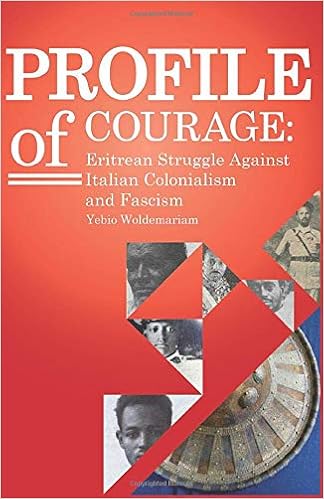
Re: PROFILE of COURAGE: Eritrean Struggle against Italian Colonialism and Fascism [MUST READ NEW BOOK]
You can buy it on Amazon or if you are in Ethiopia it's available in Tigrigna
ስመጥር ሓማሴን፥ ዕላማን ተጋድሎን
ስመጥር ሓማሴን፥ ዕላማን ተጋድሎን
-
( ͡° ͜ʖ ͡°)
- Member
- Posts: 2312
- Joined: 11 Jan 2020, 21:22
Re: PROFILE of COURAGE: Eritrean Struggle against Italian Colonialism and Fascism [MUST READ NEW BOOK]
I find it very funny that, the self-described atheist, and one of the most prominent advocates for TPLF's Greater Tigray Republic's agenda, authored a book to put a bandage on TPLF's fetal wound. I suppose the book is meant to keep you agame comfortably numb as you mourn the death of your Abay Tigray dream. 
Why does an agame write a book on Eritrea? Listen to his interview....
Why does an agame write a book on Eritrea? Listen to his interview....
-
Revelations
- Senior Member+
- Posts: 34573
- Joined: 06 Jan 2007, 15:44
Re: PROFILE of COURAGE: Eritrean Struggle against Italian Colonialism and Fascism [MUST READ NEW BOOK]
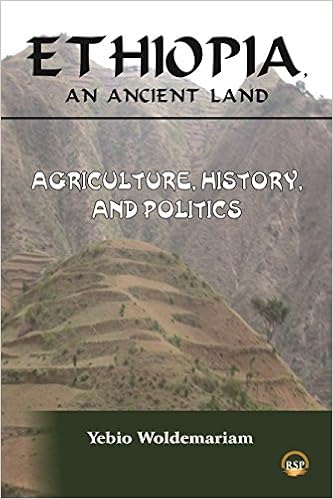
The other book by the same author
-
Revelations
- Senior Member+
- Posts: 34573
- Joined: 06 Jan 2007, 15:44
-
Revelations
- Senior Member+
- Posts: 34573
- Joined: 06 Jan 2007, 15:44
-
Revelations
- Senior Member+
- Posts: 34573
- Joined: 06 Jan 2007, 15:44
Re: PROFILE of COURAGE: Eritrean Struggle against Italian Colonialism and Fascism [MUST READ NEW BOOK]
Thank you Dr Yebio,
Dr. Yebio is the smartest and the most kind and generous intellectual that I had come across.
He is a proud "sime Tir Hamassien" ስመጥር ሓማሴን from the ancient Agazian land who is contributing a great deal to our understanding of our rich history, customs and identity, beside his enormous human rights activities.
-
Revelations
- Senior Member+
- Posts: 34573
- Joined: 06 Jan 2007, 15:44
Re: PROFILE of COURAGE: Eritrean Struggle against Italian Colonialism and Fascism [MUST READ NEW BOOK]
ITALY: the unpaid debt
Wednesday, 11 January 2012 21:57
Yebio Woldemariam
During the scramble for Africa, Italy was a junior partner to the major competing powers namely France and Great Britain. It was the bitter rivalry between this super colonial powers that enabled Italy to expand its Empire from the malaria infested enclave in the Danakil bay to the entire Horn Region, including Ethiopia that lasted for five years. The fact that Italy was economically impoverished and militarily weak nation at the time did not prevent her from entrenching itself at some of the strategically positioned areas of the Indian Ocean and the Red Sea. At the time of its expansion, Italy was barely a nation. It was simply pawn in the big game of land aggrandizement by the major powers. As major players in the region, England and France had their eyes focused on the Nile basin with the Rift Valley and the Indian Ocean in their mind. In point of fact, Italy was neither trade nor a manufacturing power in the mid 19th century. Thus, the Italian principalities independent and fearsome were often at loggerheads until Giuseppe Garibaldi brought an end to the constant feuding among the kingdoms and established a unitary system in the 1860s (Qui si fa l’Italia o si muore, that is, Here we either make Italy, or we die ). A little after the unitary system of government was achieved, her attempt to subdue Ethiopia proper and re- live the legendary march of the ancient Roman legions toward central and northern Europe was met with fierce resistance by the peasant army who crushed Italy’s ambition to the ground. The victory at Adwa not only dashed the hope of Italy to be an imperial power on its own right but also shattered European perception of superiority over the black and colored race.
The damage made by the Italian intervention in the region is numerous to account. One of the most obvious with adverse consequence was the disruption that it had caused on the lives of the ordinary people in the region. In its quest of establishing an Italian East African Empire, Italy has consistently used one set of people over the other. The divide and rule dictum well practiced by rulers the world over, was perfected by Italy favoring one nationality over the other. Italy’s diabolic design did not stop here, but continued investing superior but false identity on some while propagating savage and backward image on the other. In comparison to itself, it made sure that all colonial subjects, without exception, are inferior to whites and therefore are expected to adhere strictly to the segregation codes on dwellings, transportation as well as in the fulfillment of professional aspiration. That explains, why it refused to open educational opportunities for the indigenous people on the handful schools that it had built in Eritrea and elsewhere in the colonies. The Italians put a limit to which a black child could go to school. Quarta classe was the maximum and considered as a wonderful achievement for a black child only made possible but Italy’s benevolent gesture.
The unsuccessful attempt to incorporate all the peoples in the Horn of Africa into one Empire block necessitated the use of large indigenous forces in place of its own. Many hundreds of thousands of locals lured by temporary economic gains enlisted in the colonial army and many more were forcibly conscripted to meet the quota demanded upon them. As the result hundreds of thousands died and maimed while their families left to fend themselves. In this regard the Eritreans played an indispensable role by facilitating the conquest of Ethiopia, the subjugation of Somalia and the defeat of Omar Mukhtar in Libya. Although, in a limited scale, the Libyans, the Ethiopians and the Somalis, were not spared from taking part in the fulfillment of the Italian design of conquest either. It is not difficult to imagine, therefore, that such unhealthy interaction among peoples in the service of Italy had left discordant effect that we all have to live with today. In retrospect, one surmises that it is this uninvited presence of an alien power which took it upon itself to destroy all locally inspired trading and manufacturing activities and replace it with its own (one that is outwardly focused with weaker economic base) that hurt the region most from achieving economic integration and peaceful coexistence today.
Leaving the philosophical argument aside that the presence of Italy may or may not have contributed to our underdevelopment, one thing remained certain; hundreds of thousands of indigenous soldiers and innocent citizens in Libya, Somalia, Ethiopia and Eritrea died in the service of Italy. Some, 7104 Eritreans took part in the battle at Adwa on the side of the Italians. I declare with utmost certainty that Eritreans constitute the most and in particular Eritreans those from the central highland including the Asawr’ta. It is also known that around sixteen hundred irregulars stayed behind in rear camps. My own father’s uncle, Aboy Embaye, was one of those who retreated from Quaatit camp to his own village upon hearing of the Italian loss at Adwa. In this historical but brutal battle 2,261 Eritrean soldiers lost heir lives. The number of those severely wounded and those by order of the Emperor amputated as war criminals was close to 1,360. In the first Italo-Ethiopian war, the Eritreans carried the brunt of Italy’s criminal adventure.
Four decades after the Italian debacle at Adwa, fascist Italy came stronger and more prepared than ever to fulfill the deferred dream of conquering Ethiopia. While the region with Ethiopia at the hub, proved no match to the superiorly armed European Italy. In May 1936, less than a year after the campaign begun the Italians occupied Addis Abeba and spread southward to Jima, Gambella and Nekempt. The second Italo-Ethiopian war cost the life of 50,000 regular and 50,000 irregular indigenous soldiers. This number includes Somali, Libyan and Ethiopian conscripts. No doubt, larger portion of the 256,000 Italian standing army in the region, were from Eritrea. Record also shows that between 1889 and 1941, 130,000 Eritreans served in the Italian army. At the height of the Italian aggression of 1940, the number of colonial but indigenous soldiers was estimated at 182,000. Using this fact as a background, therefore, one can not help but conclude that the Eritrean men and women served Italy well to the extent of idealizing Italy. Many also became dependent on Italian handouts and survived on meager income. Many more civilians including 700,000 peasants died during the short lived occupation of Ethiopia.
Italy’s selfish use of our human resources was not confined to Eritrea alone, which was considered as the crown Jewel of the Italian possession in the Horn of Africa at that time, but extends to the Ethiopians, Libyans and Somalis who enlisted in the army and became an integral part of the expeditionary forces. There may have been as much as 60,000 conscripts from the region who followed the Eritrean footstep. One thing is certain, that the Libyan revolt led by Omar Mukhtar was put down with the help of the Eritrean and Somali colonial subjects. In the Libyan campaign of 1911 – 1932 an estimated 60,000 indigenous army took part. Similarly, in Somalia the short lived Ogaden revolt by Mohammed Abdelle Hassen was totally squashed by two indigenous army battalions sent from Eritrea.
If for one minute the table is turned around and justice is allowed to follow its course in order that it conforms to the law of universality of good and evil, then Italy stand accused not so much so for its war crimes but also for fundamentally crippling the socio-economic base of the people in favor of its own. Italian colonialism that imposed its will, its economic development recipe without allowing the indigenous people participate, can not escape the judgment of history. Italy who victimized the people through its war of aggression bears full responsibility for making the indigenous economy subservient to it. Who in his sane mind will deny that, no matter how crude and rudimentary the indigenous economy might have been at the time, Italy had willfully arrested and cynically replaced it with the vertically projected and out word looking economy of its own. The human resource that was wasted and the material resources that were squandered are the grim reminders of the state of affairs prevailing in the Horn of Africa today. I, therefore, refuse to accept the notion that Italy brought prosperity, harmony and enlightenment to the people of Ethiopia and Eritrea. To the contrary, such a conclusion does not stand the test of time when viewed against the background of underdevelopment, regional wars and debt that the people of Horn of Africa are experiencing today.
It is a high time that Italy acknowledges for the mess it had created in the region. Accept full responsibility for leaving trail of destruction and a shameful legacy of perpetual poverty in the Horn. Among others, Italy is to blame for designing the blue print of unending warfare that plagued the region today. Italy must bear full responsibility for its unprovoked aggression against the peoples of the Horn in particular for using the Eritreans as the primary instrument of its aggression. Italy, alongside England and France conspired to hold back Ethiopia’s progress by putting legal impediments and forbidding it from interacting freely with the outside world by the so called tripartite agreement of the late 1910s. Italy without due process of law has unlawfully imprisoned hundreds of Eritreans in desolate islands of the Red Sea. It kept thousands of Libyans in interment camps away from their homes for years end. Italian fascist troops slaughtered 30,000 innocent Ethiopians in a span of three days in Addis Abeba, in February 19, 1937. This notwithstanding, Italy up to its ignominious exit from Eritrea had expropriated prime lands belonging to peasant farmers and pastoralists alike, thus, subjecting them to extreme poverty.
In all my life, if there is one thing that made my blood boil and I might add for a good reason, it is the Italian occupation of Eritrea and the rest of them. My father served in the Libyan campaign and took part as auxiliary in the rear camp at the battle of Tunkulhas, Keren. My grandfather lost his life fighting against the Ethiopian patriots at Zukala. Two of my uncles and my aunts’ two husbands also engaged in the so called pacification campaign against the enemies of Italy in Libya and Ethiopia. One of them stood his ground with general Gugliemo Nasi at the besieged Italian garrison of Gonder for nearly six month in 1941. I, like many of my generation do not have the first hand experience of Italian colonialism. But its effect is still felt among many of us who grew up hearing the horrific stories of racial discrimination. This notwithstanding, as inheritors of the broken political system and beneficiaries of the poorly structured Italian economy, my generation and those who come after me are entitled to ask what went wrong and shouldn’t those wrongs be redressed.
Incidentally, this is question that the Libyans have been asking for a long time. In fact the Libyans were so blunt in their message and clear of their intent that they even expelled many Italian residents in Libya when Colonel Khadafy assumed power in 1969. In contradistinction, Emperor Haile Selassie visited Italy in 1953, as if to apologize for the fierce resistance that the patriots had put against Fascist Italy in the 1930s. Libya’s steadfastness finally paid. News report coming out of Tripoli indicates that Italy agreed to apologize for the ‘pain’ that it caused on the Libyans during its occupation of their country. How proud the Libyans must have felt when the Italian Prime Minister declares that “In the name of the Italian people … I feel the duty to apologize and show our pain for what happened many years ago and which affected many of your families,”. Mr. Berlusconi, also pledge to fund 5 Billion dollars worth projects in Libya. Not bad at all.
What if the crippled nations of the Horn come together for once and demand that Italy do the right thing by apologizing to us, the living and pay homage to our dead? Is it too much to ask an apology for her intrusion into our life, uninvited and enslave us? Should not Italy pay compensation for the lost lives of our ancestors and for the destruction of our eco-systems? I am sure Italy’s indictment would please many people including my late mother who in her own ways was an anti-colonialist at heart and resentful of Italy’s treatment of her people. When Italy is ready to stand up and share responsibility and consequently do the right thing, I am sure my mother will smile in her grave with joy.
-
Revelations
- Senior Member+
- Posts: 34573
- Joined: 06 Jan 2007, 15:44
-
Revelations
- Senior Member+
- Posts: 34573
- Joined: 06 Jan 2007, 15:44
Re: PROFILE of COURAGE: Eritrean Struggle against Italian Colonialism and Fascism [MUST READ NEW BOOK]
Tell this agame baztard stay out of Eritrea and write about his starving cursed-land-tigray fake republic. We Eritreans can write our own history. Shameless agame baztards QIMALLLAMS!!!


-
Revelations
- Senior Member+
- Posts: 34573
- Joined: 06 Jan 2007, 15:44
-
Revelations
- Senior Member+
- Posts: 34573
- Joined: 06 Jan 2007, 15:44
Re: PROFILE of COURAGE: Eritrean Struggle against Italian Colonialism and Fascism [MUST READ NEW BOOK]
Don't be hating yourself so much! Self hate is the worst kind of mental disease there is.
Re: PROFILE of COURAGE: Eritrean Struggle against Italian Colonialism and Fascism [MUST READ NEW BOOK]
Revo, I suspect some people don't know one of the under cover Digital Woyane. I know your assignment is to cause havoc in Ethiopia pretending as Amhara, you left the Eritrean issue for Asswash and other UGUM
Re: PROFILE of COURAGE: Eritrean Struggle against Italian Colonialism and Fascism [MUST READ NEW BOOK]
The agame professor who was hired by the TPLF as a "consultant" [Read image cleaner], wrote a book on Ethiopia praising TPLF's bogus "11% economic growth" claim during a time when 20 million Ethiopians were facing famine due to their land been confiscated and sold to Indian and Arab land-grabbers for as little as $1 per hectare!
In his book, the Agame image cleaner praised TPLF's land-grab policy, comparing it to the Industrial Revolution in Europe and the United States, where tractors replaced horses and oxen, but failed to share with his readers about the consequences of land-grab in Ethiopia that led to the forced expulsion of 20 million farmers from their ancestral land, forcing them to queue for food-aid while their land was being farmed by Indian and Arab land-grabbers using tractors, and of course, producing crops for export.
The TPLF hired him to counter statements like these made by several independent observers who exposed the greatest theft in Ethiopian history.
 Libi Tigray


In his book, the Agame image cleaner praised TPLF's land-grab policy, comparing it to the Industrial Revolution in Europe and the United States, where tractors replaced horses and oxen, but failed to share with his readers about the consequences of land-grab in Ethiopia that led to the forced expulsion of 20 million farmers from their ancestral land, forcing them to queue for food-aid while their land was being farmed by Indian and Arab land-grabbers using tractors, and of course, producing crops for export.
The TPLF hired him to counter statements like these made by several independent observers who exposed the greatest theft in Ethiopian history.
"Ethiopia rents out land to investors so that they can export their produce, and then import the same produce, grown somewhere else, to feed its own people."
René Lefort, the author of "Ethiopia. An heretical revolution"
Libi Tigray
The Economist magazine also wrote:
"The minority regime in Ethiopia is the most economically illiterate in the modern world"
-
Revelations
- Senior Member+
- Posts: 34573
- Joined: 06 Jan 2007, 15:44
Re: PROFILE of COURAGE: Eritrean Struggle against Italian Colonialism and Fascism [MUST READ NEW BOOK]
Revo. You are the highly paid agent of Woyane, I told you that you are going after Abiy pretending Amhara. It's to be a low life being a servant of Woyane. MOT YESHALAL working for these idiots
-
Revelations
- Senior Member+
- Posts: 34573
- Joined: 06 Jan 2007, 15:44
Re: PROFILE of COURAGE: Eritrean Struggle against Italian Colonialism and Fascism [MUST READ NEW BOOK]
አምቼ አስካሪ
ይሄ መጽሃፍ እኮ ስለ "ስመጥር ሐማሴን" ነው:: Those which you hoped whose history has been forever buried and forgotten. Clearly that is not the case now since this book has been written and published. Just cut your loss and move on!
His statement on "land grab" is clearly articulated here. We know that you know this fact but like to twist things up cause that's your true nature which you can't help.
ይሄ መጽሃፍ እኮ ስለ "ስመጥር ሐማሴን" ነው:: Those which you hoped whose history has been forever buried and forgotten. Clearly that is not the case now since this book has been written and published. Just cut your loss and move on!
His statement on "land grab" is clearly articulated here. We know that you know this fact but like to twist things up cause that's your true nature which you can't help.
Fiyameta wrote: ↑30 Sep 2020, 18:59
The agame professor who was hired by the TPLF as a "consultant" [Read image cleaner], wrote a book on Ethiopia praising TPLF's bogus "11% economic growth" claim during a time when 20 million Ethiopians were facing famine due to their land been confiscated and sold to Indian and Arab land-grabbers for as little as $1 per hectare!
In his book, the Agame image cleaner praised TPLF's land-grab policy, comparing it to the Industrial Revolution in Europe and the United States, where tractors replaced horses and oxen, but failed to share with his readers about the consequences of land-grab in Ethiopia that led to the forced expulsion of 20 million farmers from their ancestral land, forcing them to queue for food-aid while their land was being farmed by Indian and Arab land-grabbers using tractors, and of course, producing crops for export.
The TPLF hired him to counter statements like these made by several independent observers who exposed the greatest theft in Ethiopian history.
"Ethiopia rents out land to investors so that they can export their produce, and then import the same produce, grown somewhere else, to feed its own people."
René Lefort, the author of "Ethiopia. An heretical revolution"The Economist magazine also wrote:
"The minority regime in Ethiopia is the most economically illiterate in the modern world"
Re: PROFILE of COURAGE: Eritrean Struggle against Italian Colonialism and Fascism [MUST READ NEW BOOK]
Taken from a journal, "From Warriors to Urban Dwellers
Ascari and the Military Factor in the Urban Development of Colonial Eritrea"
Uoldelul Chelati Dirar
... The Fascist Period
27 Fascism introduced dramatic changes in Italian colonial policies, and this change is noticeable also in urban policies (Fuller 1991). Colonialism became a key component of the fascist regime’s foreign policy (Di Nolfo 1966: Carocci 1969; Goglia & Grassi (1981; Collotti et al. 2000) and played a great role in its symbolism of power (Mignemi 1988). Fascist propaganda used to put Italian colonial expansionism in a line of continuity with the colonial expansion of Ancient Rome and by so doing invested it with a mystical aura. In this perspective, urban planning became an important component of the fascist policy aimed at the establishment of a “total” society in which the image of an overwhelmingly and unchallengeably superior white race had to be affirmed through all possible means. In this context, architecture and urban planning were expected to play a central role in conveying and establishing, on a territorial basis, the totalitarian imperial dream of the fascist regime (Rava 1938). In the words of Enrico Rava38, one of the senior architects of the fascist period, urban planning was expected to become “not only art and science together, but the highest expression of the art of ruling” (Ciucci 1993: 109, my translation), of which the architect was expected to be the interpreter.
39 It is worth reminding that the hectic activity of urban planning and architectural re-definition o (...)
40 Examples of this attitude in Bosio (1937), Guidi & Valle (1937). Indeed fascist architects seem no (...)
41 However, few critical voices among the choir of fascist architects and urban planners tried to dev (...)
42 Two main episodes gave fascist urban planners the opportunity to redesign Addis Ababa’s urban spac (...)
28In the fascist perspective, architecture and urban planning were a sort of social laboratory, which was meant to inculcate the fascist totalitarian ideology both into metropolitan citizens and colonial subjects39. In the colonial territory this vision was asserted through a dichotomous discourse where the tidy, organised and disciplined European space was opposed to the indigenous space, perceived and described as messy, anarchic, and unruly. In other terms, the classical colonial discourse based on the contrast between “civilisation” and “barbarism” was proposed. Urban planning in the colonial territory had the additional task of disciplining not only the territory but also the indigenous population. In this context, to discipline essentially meant to wipe out the indigenous urban order, which was dumb for the deaf colonial architect that perceived it only in terms of disorder and filthiness40, deprived of any social rationale41. However, it is interesting to note that the main theorists of fascist urban planning, in spite of their negative perception of the indigenous organisation of the urban space, tried to incorporate some local architectural elements in their new master plans. Those local elements, once emptied of their original functional purpose, were proposed as decorative components, to add a local flavour to the fascist vision of the colonial space (Rava 1938: 1295). Nevertheless, this imperial dream of urban cleansing, which was partially implemented in Addis Ababa (Fuller 1996; Patassini 1993) and in other Ethiopian towns42, was much more difficult to implement in Eritrea. In fact, the Italian occupation of Eritrea had lasted longer and there the urban planning wished by fascism had to negotiate with a composite pre-existing colonial urban setting, which was not possible to ignore or sweep away.
29The military preparation for the aggression of Ethiopia of October 1935, with the related sudden increase of the European population, contributed in making the urban planning of Asmara even more difficult. In the early 1930s Asmara was still a small town of 18,000 inhabitants, out of which 3,000 (17%) were Italians. In 1938 the size of Asmara’s population had skyrocketed to 98,000 inhabitants and the Italian community had increased dramatically to 53,000 (54%) (Consociazione Turistica Italiana 1938: 199). This sudden demographic growth reflected the fact that in the colonial perspective, Asmara had changed its political and strategic function and was now, together with the town of Dekamhare, the main operational and logistic headquarter for military activities launched by Fascism against Ethiopia from the so-called Scacchiere nord (the Northern Operational Theatre) (Fornaciari 1937: 23-24; Fossa 1938: 403). Therefore, it was urgent for the fascist regime to accommodate this mass of population, safeguarding, at the same time, criteria of racial prestige by avoiding embarrassing promiscuity between indigenous and Italian populations.
43 Cafiero, an architect and member of the Consulta centrale per l’edilizia e l’urbanistica (Central (...)
44 Instituted in April 1937, the Ministero per l’Africa Italiana reflected a mutated perception of th (...)
45 Actually Amoroso’s article is mainly based on a report submitted by architect Cafiero at the meeti (...)
46 It is interesting to notice that the Italian scholar, referring to the development of indigenous d (...)
47 Progetto del Piano Regolatore della città di Asmara Arch. Vittorio Cafiero acs-mai b. 106 f. 2.
30This uneasy task was given to the architect Vittorio Cafiero, sent to Eritrea in June 193843 by the Ministero dell’Africa Italiana44 (Ministry for Italian Africa) to accommodate this complex urban and social environment. Basically, Cafiero’s efforts were aimed at integrating the new districts, sprouted disorderedly in the wake of the invasion of Ethiopia, in the new functional and, at the same time, more segregationist fascist vision of urban space (Amoroso 1939). This was done by reorganising the town of Asmara along the earlier criterion of zone system, now adapted to the mutated demographic context. The result of this effort is depicted clearly in a study of the fascist scholar Mario Amoroso on the reorganisation of the colonial urban space. Amoroso reports of an Asmara divided between 53,000 nazionali (Italians) and 45,000 indigeni (Eritreans). In this highly Italianised Asmara, 3,742,500 square metres were allocated to the Italian population and 1,164,300 square metres to the indigenous one, which account for a density of 140 inhabitants per hectare in the European area and 380 inhabitants per hectare in the Eritrean area (ibid.: 391)45. Amoroso in his study makes clear that one of the main concerns of fascist urban planners was to counter the current trend toward an uncontrolled expansion of indigenous districts in the market area into European residential areas46. To contain this trend, the mixed zone was designed as a filter, a “diaphragm” in the words of the author, in which only the commercial or administrative segment of the Eritrean population would have been in contact with European districts. At the same time the zone reserved to the indigenous population was translated to the north-east in order to insulate it from the European area47.
48 On the contradiction of Italian colonial racism see also: G. Campassi (1987); L. Goglia (1985, 199 (...)
31 However, it has to be emphasised that the implementation of racial bars in Colonial Eritrea both during the Liberal and the Fascist periods was never an easy process as it had to face many contradictions. Various factors concurred to that, among them the poor living conditions of many Italian settlers, which differed little from those of the so-called sudditi coloniali (Taddia 1988: 81). Moreover, many Italians had been living in official or semi-official conjugal relations with Eritrean women for a long time and were not always ready to give up their relationships at the simple request of the fascist authorities 48.
Read full article at: https://journals.openedition.org/etudes ... 17?lang=en
Ascari and the Military Factor in the Urban Development of Colonial Eritrea"
Uoldelul Chelati Dirar
... The Fascist Period
27 Fascism introduced dramatic changes in Italian colonial policies, and this change is noticeable also in urban policies (Fuller 1991). Colonialism became a key component of the fascist regime’s foreign policy (Di Nolfo 1966: Carocci 1969; Goglia & Grassi (1981; Collotti et al. 2000) and played a great role in its symbolism of power (Mignemi 1988). Fascist propaganda used to put Italian colonial expansionism in a line of continuity with the colonial expansion of Ancient Rome and by so doing invested it with a mystical aura. In this perspective, urban planning became an important component of the fascist policy aimed at the establishment of a “total” society in which the image of an overwhelmingly and unchallengeably superior white race had to be affirmed through all possible means. In this context, architecture and urban planning were expected to play a central role in conveying and establishing, on a territorial basis, the totalitarian imperial dream of the fascist regime (Rava 1938). In the words of Enrico Rava38, one of the senior architects of the fascist period, urban planning was expected to become “not only art and science together, but the highest expression of the art of ruling” (Ciucci 1993: 109, my translation), of which the architect was expected to be the interpreter.
39 It is worth reminding that the hectic activity of urban planning and architectural re-definition o (...)
40 Examples of this attitude in Bosio (1937), Guidi & Valle (1937). Indeed fascist architects seem no (...)
41 However, few critical voices among the choir of fascist architects and urban planners tried to dev (...)
42 Two main episodes gave fascist urban planners the opportunity to redesign Addis Ababa’s urban spac (...)
28In the fascist perspective, architecture and urban planning were a sort of social laboratory, which was meant to inculcate the fascist totalitarian ideology both into metropolitan citizens and colonial subjects39. In the colonial territory this vision was asserted through a dichotomous discourse where the tidy, organised and disciplined European space was opposed to the indigenous space, perceived and described as messy, anarchic, and unruly. In other terms, the classical colonial discourse based on the contrast between “civilisation” and “barbarism” was proposed. Urban planning in the colonial territory had the additional task of disciplining not only the territory but also the indigenous population. In this context, to discipline essentially meant to wipe out the indigenous urban order, which was dumb for the deaf colonial architect that perceived it only in terms of disorder and filthiness40, deprived of any social rationale41. However, it is interesting to note that the main theorists of fascist urban planning, in spite of their negative perception of the indigenous organisation of the urban space, tried to incorporate some local architectural elements in their new master plans. Those local elements, once emptied of their original functional purpose, were proposed as decorative components, to add a local flavour to the fascist vision of the colonial space (Rava 1938: 1295). Nevertheless, this imperial dream of urban cleansing, which was partially implemented in Addis Ababa (Fuller 1996; Patassini 1993) and in other Ethiopian towns42, was much more difficult to implement in Eritrea. In fact, the Italian occupation of Eritrea had lasted longer and there the urban planning wished by fascism had to negotiate with a composite pre-existing colonial urban setting, which was not possible to ignore or sweep away.
29The military preparation for the aggression of Ethiopia of October 1935, with the related sudden increase of the European population, contributed in making the urban planning of Asmara even more difficult. In the early 1930s Asmara was still a small town of 18,000 inhabitants, out of which 3,000 (17%) were Italians. In 1938 the size of Asmara’s population had skyrocketed to 98,000 inhabitants and the Italian community had increased dramatically to 53,000 (54%) (Consociazione Turistica Italiana 1938: 199). This sudden demographic growth reflected the fact that in the colonial perspective, Asmara had changed its political and strategic function and was now, together with the town of Dekamhare, the main operational and logistic headquarter for military activities launched by Fascism against Ethiopia from the so-called Scacchiere nord (the Northern Operational Theatre) (Fornaciari 1937: 23-24; Fossa 1938: 403). Therefore, it was urgent for the fascist regime to accommodate this mass of population, safeguarding, at the same time, criteria of racial prestige by avoiding embarrassing promiscuity between indigenous and Italian populations.
43 Cafiero, an architect and member of the Consulta centrale per l’edilizia e l’urbanistica (Central (...)
44 Instituted in April 1937, the Ministero per l’Africa Italiana reflected a mutated perception of th (...)
45 Actually Amoroso’s article is mainly based on a report submitted by architect Cafiero at the meeti (...)
46 It is interesting to notice that the Italian scholar, referring to the development of indigenous d (...)
47 Progetto del Piano Regolatore della città di Asmara Arch. Vittorio Cafiero acs-mai b. 106 f. 2.
30This uneasy task was given to the architect Vittorio Cafiero, sent to Eritrea in June 193843 by the Ministero dell’Africa Italiana44 (Ministry for Italian Africa) to accommodate this complex urban and social environment. Basically, Cafiero’s efforts were aimed at integrating the new districts, sprouted disorderedly in the wake of the invasion of Ethiopia, in the new functional and, at the same time, more segregationist fascist vision of urban space (Amoroso 1939). This was done by reorganising the town of Asmara along the earlier criterion of zone system, now adapted to the mutated demographic context. The result of this effort is depicted clearly in a study of the fascist scholar Mario Amoroso on the reorganisation of the colonial urban space. Amoroso reports of an Asmara divided between 53,000 nazionali (Italians) and 45,000 indigeni (Eritreans). In this highly Italianised Asmara, 3,742,500 square metres were allocated to the Italian population and 1,164,300 square metres to the indigenous one, which account for a density of 140 inhabitants per hectare in the European area and 380 inhabitants per hectare in the Eritrean area (ibid.: 391)45. Amoroso in his study makes clear that one of the main concerns of fascist urban planners was to counter the current trend toward an uncontrolled expansion of indigenous districts in the market area into European residential areas46. To contain this trend, the mixed zone was designed as a filter, a “diaphragm” in the words of the author, in which only the commercial or administrative segment of the Eritrean population would have been in contact with European districts. At the same time the zone reserved to the indigenous population was translated to the north-east in order to insulate it from the European area47.
48 On the contradiction of Italian colonial racism see also: G. Campassi (1987); L. Goglia (1985, 199 (...)
31 However, it has to be emphasised that the implementation of racial bars in Colonial Eritrea both during the Liberal and the Fascist periods was never an easy process as it had to face many contradictions. Various factors concurred to that, among them the poor living conditions of many Italian settlers, which differed little from those of the so-called sudditi coloniali (Taddia 1988: 81). Moreover, many Italians had been living in official or semi-official conjugal relations with Eritrean women for a long time and were not always ready to give up their relationships at the simple request of the fascist authorities 48.
Read full article at: https://journals.openedition.org/etudes ... 17?lang=en