Ethiopian News, Current Affairs and Opinion Forum
AbyssiniaLady
Member+
Posts: 7636
Joined: 04 Feb 2007, 05:44

English Channel migrants: Where they're from and what they're escaping

Post by AbyssiniaLady » 14 Aug 2020, 12:19

English Channel migrants: Where they're from and what they're escaping

By Rick Kelsey Newsbeat reporter 12 August 2020
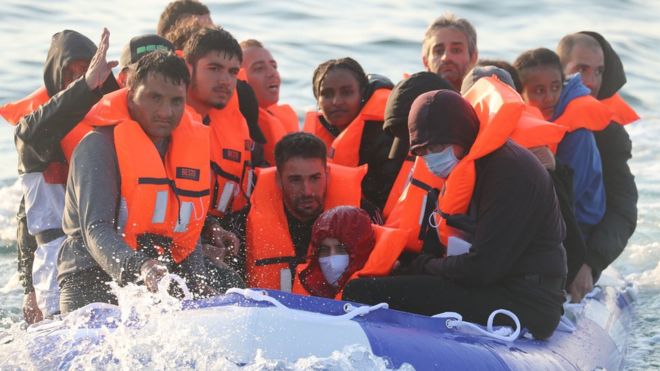


It's a hot day in Kent with calm waters lapping the shore off the shortest sea span between England and France.

These are perfect conditions to move migrants across the world's busiest shipping lane to where they hope to make a home.

In the early mornings locals say they see people - even pregnant women - without belongings, resting on the beach, relieved to have survived the crossing.

Recent conditions have seen large numbers of migrants travel to the UK in small boats across the English channel, to claim asylum and start a new life.

More than 200 reached the Kent coast last weekend alone.

This is a very brief overview of the main places they are coming from and what they're trying to escape.

Yemen
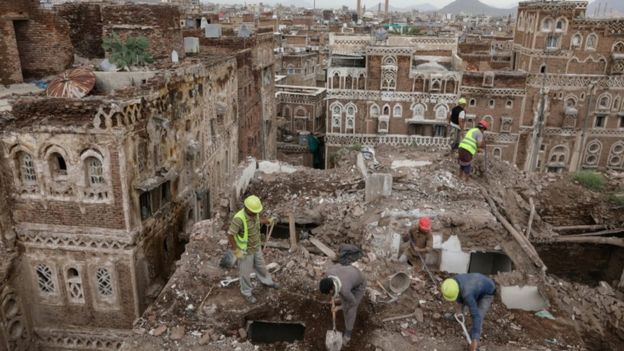


Yemen is one of the world's poorest countries and has been devastated by a civil war.

It lies on the southern part of the Arabian Peninsula and major fighting between two religious groups has been going on for almost 10 years.

But recently the violence has stepped up with the support of some neighbouring countries.

This has brought a variety of problems, including attacks by jihadists, a movement to break away from Yemen in the south, as well as corruption, unemployment and food becoming scarce for people who live there.

Eritrea
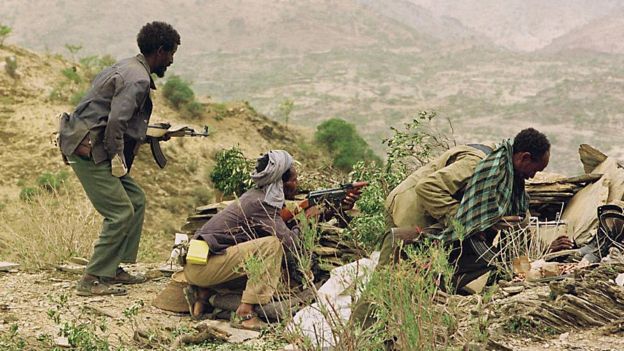


Eritrea, situated on the Red Sea opposite Saudi Arabia, is one of Africa's poorest countries.

An estimated 1.5 million Eritreans now live overseas - about a fifth of its people.

One reason people leave is the country's indefinite military service. Anyone between 18 and 50 can be called up and it can last for years.

For decades, the Eritrean economy has struggled because of a combination of war, authoritarian rule and the impact of United Nations sanctions.

There is hope that a new relationship with Ethiopia can continue to open up the economy and improve conditions for people living there.

Chad
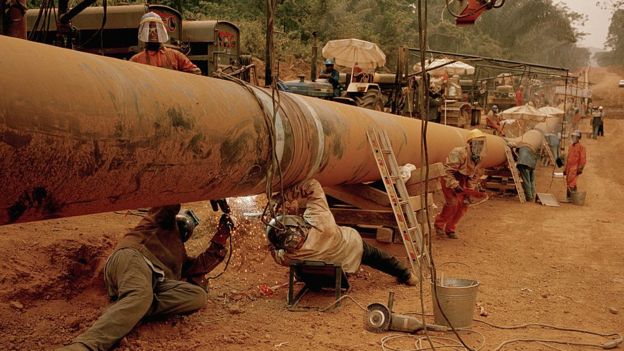


Chad is a landlocked country in north-central Africa dominated by desert.

It's not a country that tolerates people who speak out against the government.

Chad is rich in gold and uranium and should benefit from its recently-acquired status as an oil-exporting state.

But its history since gaining independence from France has been marked by instability and violence.

This violence comes most often from tension between the mainly Arab-Muslim north of Chad and the predominantly Christian south.

It also suffers from a lack of transport links and poor building materials.

Poverty is rife, and health and social conditions are weak compared to its neighbours.

Egypt
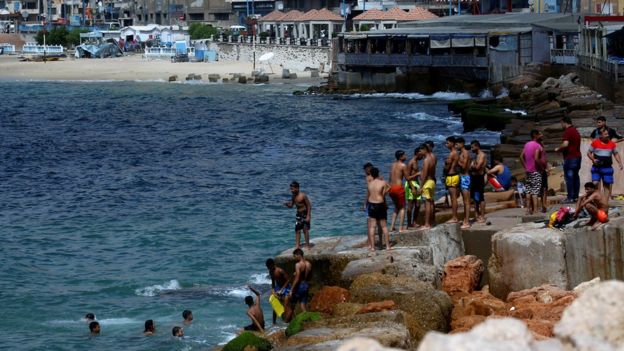


With a population approaching 85 million people, Egypt is a major player in the Middle East.

The North African country is the gateway to Asia and home of the Suez canal, one of the busiest shipping lanes in the world.

But authorities have been increasing controls over traditional and social media to levels not seen before.

The economy was already struggling before the 2020 global pandemic and political turmoil in the past ten years has put many Egyptians on the move.

Problems with Islamists killing civilians and tourists on its borders with Israel and Gaza has not helped.

Yet the country has good transport and international buildings and companies in many big cities. It also does well from international tourism.

Sudan
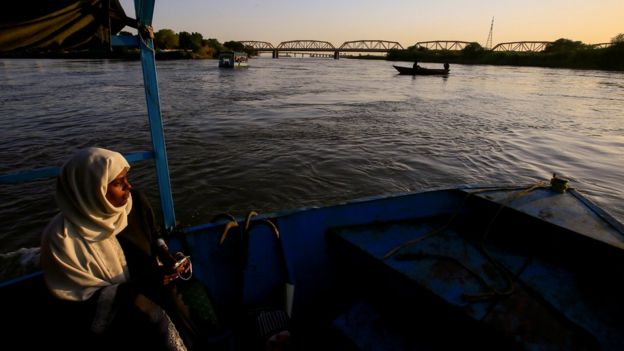


Sudan is a large North African country that also borders the Red Sea.

Months of street protests against authoritarian rule came to a head last year resulting in a new government.

Yet Sudan has long been been plagued by conflict.

Two rounds of north-south civil war cost the lives of 1.5 million people, and a continuing conflict in the western region of Darfur has driven two million people from their homes and killed more than 200,000.

In 2011 the country split in two, with South Sudan becoming a new state.

Life expectancy is only 63-66 and the government heavily controls the media.

Iraq
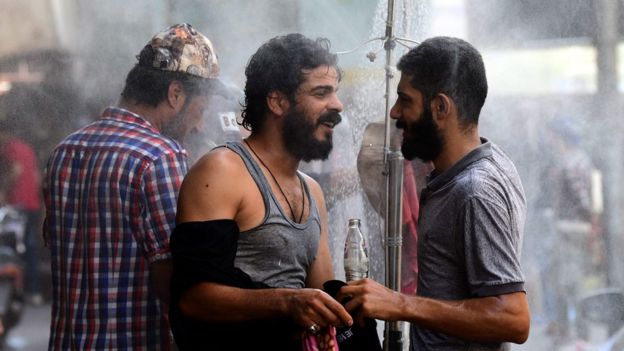


A country of 37 million people, situated south of Turkey, Iraq is never far from the news.

After being the focus of international wars, there is continuing violence between different religious groups.

Governments since the Iraq War have struggled to maintain order and the country has enjoyed only brief periods of calm.

The instability has made it difficult to rebuild an economy shattered by decades of conflict and sanctions (restrictions put on buying and selling goods by other countries).

This is all despite Iraq having the world's second-largest reserves of crude oil.

Syria
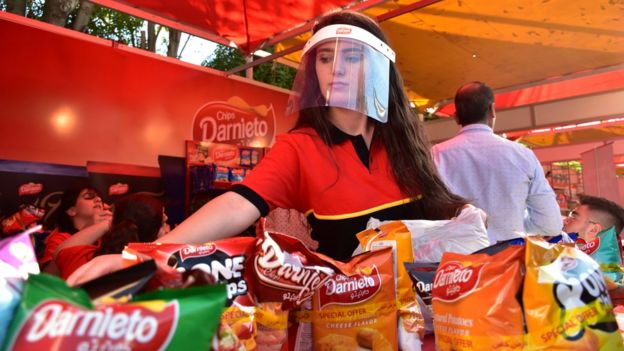


This is one of the most common places that people originate from to make the crossing.

Bordering the Mediterranean Sea and Lebanon, Syria has a population of over 20 million people, but one that is arguably more dispersed than any other on this list.

Almost 400,000 people have been killed and 13.2 million others - half the pre-war population - have been displaced inside and outside Syria since an uprising and then civil war began in 2011.

One of the biggest issues now though is a lack of food.

Syria faces the risk of mass starvation unless more aid money is made available, the head of the UN World Food Programme has said.

https://www.bbc.com/news/newsbeat-53721146

Zmeselo
Senior Member+
Posts: 36993
Joined: 30 Jul 2010, 20:43

Re: English Channel migrants: Where they're from and what they're escaping

Post by Zmeselo » 14 Aug 2020, 12:53


The Scam of Fake Eritrean Refugees Who are Actually Ethiopians

21 Dec 2017

Ethiopians (Read: tegaru) claiming to be Eritrean refugees to get political asylum


More than 100,000 migrants that reached Italy in the last four years claimed to be Eritreans but many were not. It is found that around 40% are Ethiopians, using fake Eritrean identity to obtain political asylum.

BY FAUSTO BILOSLAVO | VOX NEWS

https://voxnews.info/2017/12/20/la-truf ... no-etiopi/
At the reception centres I have visited in the past year, at least one third of Eritreans are frauds. The majority of them are Ethiopians from the Tigray region, who speak the same language and have similar somatic traits to our own.
This is the disconcerting scam denounced by an asylum seeker from Asmara.

He adds,
In Africa, owing to corruption, they steal and sell our identities because we have a right to international protection, but we are surprised that this is tolerated in Italy.
Eritreans waiting to obtain asylum in our country are few now, 2.651 and arrivals are declining (6.386 in 2017). But from 2013, when the boom started after the terrible shipwreck in Lampedusa (368 deaths), 109,266 migrants reached Italy declaring to be Eritreans. Most of them travelled on to Switzerland, Germany or other Northern European Countries.

Over a third of them is actually of Ethiopian nationality, that is migrants for economic reasons who do not have a right to political asylum.

Two years ago Austrian Ambassador Andreas Melan denounced the catch claiming https://www.tesfanews.net/40-percent-of ... thiopians/ that
30-40 per cent of Eritrean refugees in Europe are actually Ethiopians.
Incidentally: between Ethiopia and Eritrea there’s no love lost, after the bloody war of 1998, which still hasn’t traced a defined border. The strong man of Asmara President Isaias Afewerki, is accused of being an authoritarian leader with little respect for human rights, even if recently the situation is allegedly improving. But young people continue to flee: in order not to be subject to the burdensome military service as well as for economic reasons, looking for a Western Eldorado.

Today the Eritrean Ambassador in Rome Mr. Pietros Fessahazion reiterated:
40 per cent of those who are granted political asylum are in fact Ethiopians.
Panorama inquired on this issue, bringing a mechanism to light based on theft of identity, which starts from the UN refugee camps in Ethiopia and Sudan, where crooked cultural mediators overlook the real nationality of migrants and characters like Eritrean don Mussie Zerai, capable of mobilizing sea rescues to retrieve boats off the coasts of Libya.


True Eritrean asylum seekers reveal the details themselves.

We have met them and know their identity, but in this article, they are indicated with made up names to avoid repercussions for them.
In the Mai Ayni refugee camp in Ethiopia, they stole my identity
explains Fasil, who arrived in Italy on a boat.
After waiting for years for relocation by UN to one of the available countries, I found out that another person had left using my name.
The countries who accept Eritreans through the UN are the Unites States, Canada, Australia, Norway, France and more recently Italy.

The young Eritrean, who is 27 years old, recalls the embarrassment of the Western officer of the UN Agency for refugees (UNCHR), who checked my name on the computer:
she was bewildered. My details were correct, but the photo of the person who had already left, thanks to the UN, was not mine. They had cheated me.
According to Eritreans, selling identities or documents in Africa, particularly to Ethiopians is an established business. The price of the full operation in local currency varies between 50,000 birr (1840 euro) to 150 thousand birr (ca. 5500 euro.) An Eritrean identity card is sold at 900 USD.

In the past four years there have been 12,916 asylum applications in Italy, but over 100 thousand migrants who arrived by sea declared themselves to be Eritreans when they disembarked.

In July, the Minister of Information in Asmara, Yemane Gebre Meskel, declared to the BBC that
the number of Eritreans leaving their Country has been exaggerated. Between 40 and 60 per cent are from Ethiopia or other Countries from the Horn of Africa.
Yosef, the oldest of the asylum seekers met by Panorama staff, tells us of how
fake Eritreans ask for details about my country or about the national anthem, to support their lies about their nationality. It happened to me at the Red Cross centre in via Ramazzini, now dismantled, and at the Cara centre in Bari.
Munir and Futsum, both of wiry appeal, who arrived in November, confirm:
in the reception centre of the capital, where we live, a fake Eritrean asked how many colours our flag has. He was an Ethiopian who had to be interviewed for his asylum application.
Different cultural mediators and interpreters turn a blind eye or even favour the “scam” of Eritrean refugees.
For 15 years, I worked as an interpreter in the Commissions for asylum recognition
tells an Italian-Eritrean lady.
So many Tigrinyans from Ethiopia obtained protection, saying they were fleeing from Asmara. I did not report anyone to the Embassy, but they accused us of being spies of the Eritrean Government: so they hired Ethiopian interpreters.
Don Mussie Zerai, the “Moses of migrants” as he is acclaimed in a book, has been a reference point for years, above all for Eritreans who arrive on boats. Since August he has been under investigation https://www.tesfanews.net/italy-police- ... sie-zerai/ by the Police in Trapani on NGOs for “favouring illegal immigration”.


Zerai is part of a network of Eritrean activists in Europe who hopes for a regime change in Asmara.
When I was still in Eritrea, I heard that Zerai could help us reach Italy
explains another asylum seeker, who has been in Rome since 2016.
Before I left Libya there was talk of this priest who would send rescues.
A source of the Coast Guard stresses that
the requests of intervention from Zerai soon appeared as an anomaly repeated in time. The rescue warnings for boats that left Libya almost always came from him. The suspicion is that he is part of a system, of a well established network.
The priest denies allegations, claiming he always acted
in respect of the law for humanitarian reasons.
And secured himself a number of political covers. Starting from President [of the Chamber of Deputies] Laura Boldrini, who received him at the Chamber.


On 3rd October, then, during the commemoration of the Lampedusa shipwreck of 2013, he held the celebration, despite being under investigation, in front of the President of the Senate Piero Grasso (today also leader of Liberi e Uguali Political Party) and the Minister for Education Valeria Fedeli.

Lucio Montanino, Pietro Gallo and Christian Ricci, on board the Vos Hestia of Save the Children as safety officers started investigations on the NGOs of Trapani, also speaking about the warnings by an Eritrean priest.
On 10th October, a Save the Children manager showed the captain the precise coordinates of a boat that had left Libya, which could not be found
says Montanino.

In the Public Prosecutor’s office documents a telephone call between Gallo and Ricci explains the episode:
then I told them [the investigators] this story of these Eritreans, who said that a priest had sent the message.
And Gallo,
He got the message from the Eritrean priest and we went there and found the wooden barge (…) on board we had the Eritrean mediator.
Zerai (proposed as Nobel price candidate for peace) admitted he was advising various NGOs such as Doctors Without Borders, WatchTheMed and Sea Watch.

Gallo confirms to Panorama:
the Save the Children staff said the coordinates had arrived from an Eritrean priest in Switzerland.
Because don Zerai had been transferred from Rome to Fribourg, where a strong Eritrean community lives.

Gallo adds,
the impression was that the boat had been towed by traffickers in the middle of the sea, who then sent the coordinates to send the rescues.
Investigators of the Trapani inquiry inform that
after the holidays there will be news
on the ambiguous role of humanitarian ships.

Also an Italian source in Tripoli in the first line against the traffickers of human beings confirms:
Also in Libya it is known that many Eritrean migrants heading to Italy are in actual fact Ethiopians. They pretend to be Eritreans knowing that it is easy to obtain political asylum.
* Translated from Italian to English by Marilena Dolce

justo
Member
Posts: 3226
Joined: 05 May 2013, 17:54

Re: English Channel migrants: Where they're from and what they're escaping

Post by justo » 14 Aug 2020, 13:16

AbyssiniaLady wrote:
14 Aug 2020, 12:19
English Channel migrants: Where they're from and what they're escaping
A-lady
In the west, you get to stay if you call yourself Eritrean, so you find no Tigraway refugee registered as Ethiopian there. Zero!

In Yemen and S Arabia, there is no advantage in calling yourself Eritrean and therefore Tigrways have no reason to pretend to be Eritrean, and we find them swarming the place like bees.

Ask yourself, why do poor Tegarus only go to Yemen and not to Europe or the US?

Lampedusa, just like Yemen and S Arabia, was a Tigraway affair, less than 5% were Eritreans.

kerenite
Member
Posts: 4680
Joined: 16 Nov 2013, 13:15

Re: English Channel migrants: Where they're from and what they're escaping

Post by kerenite » 14 Aug 2020, 14:39

AbyssiniaLady wrote:
14 Aug 2020, 12:19
English Channel migrants: Where they're from and what they're escaping

By Rick Kelsey Newsbeat reporter 12 August 2020


It's a hot day in Kent with calm waters lapping the shore off the shortest sea span between England and France.

These are perfect conditions to move migrants across the world's busiest shipping lane to where they hope to make a home.

In the early mornings locals say they see people - even pregnant women - without belongings, resting on the beach, relieved to have survived the crossing.

Recent conditions have seen large numbers of migrants travel to the UK in small boats across the English channel, to claim asylum and start a new life.

More than 200 reached the Kent coast last weekend alone.

This is a very brief overview of the main places they are coming from and what they're trying to escape.

Yemen


Yemen is one of the world's poorest countries and has been devastated by a civil war.

It lies on the southern part of the Arabian Peninsula and major fighting between two religious groups has been going on for almost 10 years.

But recently the violence has stepped up with the support of some neighbouring countries.

This has brought a variety of problems, including attacks by jihadists, a movement to break away from Yemen in the south, as well as corruption, unemployment and food becoming scarce for people who live there.

Eritrea


Eritrea, situated on the Red Sea opposite Saudi Arabia, is one of Africa's poorest countries.

An estimated 1.5 million Eritreans now live overseas - about a fifth of its people.

One reason people leave is the country's indefinite military service. Anyone between 18 and 50 can be called up and it can last for years.

For decades, the Eritrean economy has struggled because of a combination of war, authoritarian rule and the impact of United Nations sanctions.

There is hope that a new relationship with Ethiopia can continue to open up the economy and improve conditions for people living there.

Chad


Chad is a landlocked country in north-central Africa dominated by desert.

It's not a country that tolerates people who speak out against the government.

Chad is rich in gold and uranium and should benefit from its recently-acquired status as an oil-exporting state.

But its history since gaining independence from France has been marked by instability and violence.

This violence comes most often from tension between the mainly Arab-Muslim north of Chad and the predominantly Christian south.

It also suffers from a lack of transport links and poor building materials.

Poverty is rife, and health and social conditions are weak compared to its neighbours.

Egypt


With a population approaching 85 million people, Egypt is a major player in the Middle East.

The North African country is the gateway to Asia and home of the Suez canal, one of the busiest shipping lanes in the world.

But authorities have been increasing controls over traditional and social media to levels not seen before.

The economy was already struggling before the 2020 global pandemic and political turmoil in the past ten years has put many Egyptians on the move.

Problems with Islamists killing civilians and tourists on its borders with Israel and Gaza has not helped.

Yet the country has good transport and international buildings and companies in many big cities. It also does well from international tourism.

Sudan


Sudan is a large North African country that also borders the Red Sea.

Months of street protests against authoritarian rule came to a head last year resulting in a new government.

Yet Sudan has long been been plagued by conflict.

Two rounds of north-south civil war cost the lives of 1.5 million people, and a continuing conflict in the western region of Darfur has driven two million people from their homes and killed more than 200,000.

In 2011 the country split in two, with South Sudan becoming a new state.

Life expectancy is only 63-66 and the government heavily controls the media.

Iraq


A country of 37 million people, situated south of Turkey, Iraq is never far from the news.

After being the focus of international wars, there is continuing violence between different religious groups.

Governments since the Iraq War have struggled to maintain order and the country has enjoyed only brief periods of calm.

The instability has made it difficult to rebuild an economy shattered by decades of conflict and sanctions (restrictions put on buying and selling goods by other countries).

This is all despite Iraq having the world's second-largest reserves of crude oil.

Syria


This is one of the most common places that people originate from to make the crossing.

Bordering the Mediterranean Sea and Lebanon, Syria has a population of over 20 million people, but one that is arguably more dispersed than any other on this list.

Almost 400,000 people have been killed and 13.2 million others - half the pre-war population - have been displaced inside and outside Syria since an uprising and then civil war began in 2011.

One of the biggest issues now though is a lack of food.

Syria faces the risk of mass starvation unless more aid money is made available, the head of the UN World Food Programme has said.

https://www.bbc.com/news/newsbeat-53721146
Irrespective of what issu's dogs or useful idiots blabber here, I wholeheartedly concur with the analysis of the report concerning eritrea.

It is sad....sad....in eritrea...indeed sad.

Post Reply