LET ALONE ERITREANS, NEITHER TIME NOR HISTORY WILL FORGET THIS!!!
This Day in Eritrean History:
on
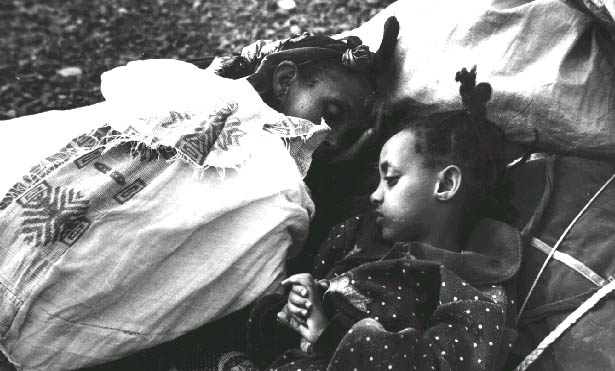
June 12, 1998, the TPLF led Ethiopia began the first wave of arrests and deportations of people of Eritrean origin in Ethiopia. #
wewillneverforget
Pic Source the Uprooted
On
July 9,1998 PM
Meles Z. said,
Any foreigner, whether Eritrean, Japanese, etc., lives in Ethiopia because of the goodwill of the Ethiopian government. If the Ethiopian gov says 'Go, because we don't like the color of your eyes,' they have to leave.
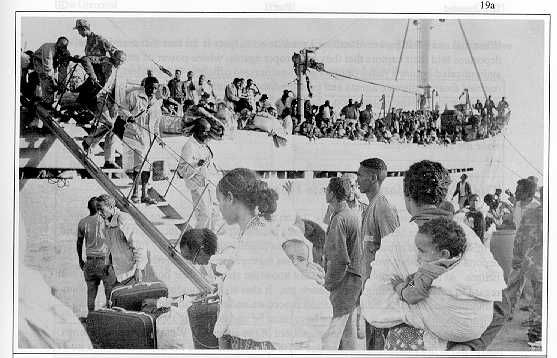
The deportations continued at an average of 1,000 per week as of 1998, until ended. 18% of deportees were from Tigrai and 62% from Addis Ababa. (34.4%) were homeowners and many owned very substantial homes.
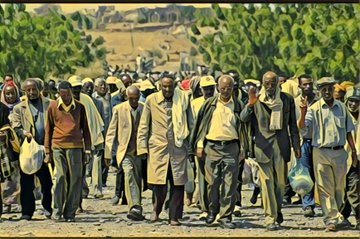 The Eritrea-Ethiopia Claims Commisssion
 (EECC) decided that,
Based on the totality of the record...despite some efforts to provide for expellees during some transports, the physical conditions frequently failed to comply wz international law requirements of humane & safe treatment..
The EECC decided...
…those detained in prisons and jails on security-related charges, Ethiopians and Eritreans alike, were held in harsh and unsanitary conditions and subjected to physical abuse, contrary to international law...
The EECC further decided that
the 100% “location tax” (imposed by Eth.'s gov) was not a tax generally imposed, but was instead imposed only on certain forced sales of expellees’ property. Such a discriminatory & confiscatory taxation measure was contrary to international law...
..If private property of enemy nationals is to be frozen or impaired in wartime, it must be done under conditions providing for the property’s protection & its eventual disposition by return to owners or thru post-war agreement. The record shows, Ethiopia did not meet these responsibilities
...many expellees, including some with substantial assets, lost virtually everything they had in Ethiopia. Some of the measures were lawful & others were not. However, their cumulative effect was to ensure that few expellees retained any of their property.
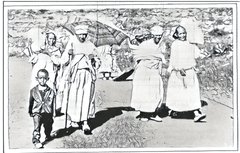
Expellees had to act through agents (if a reliable agent could be found and instructed), faced rapid forced real estate sales, confiscatory taxes on sale proceeds, vigorous loan collections, expedited and arbitrary collection of other taxes, and other economic woes resulting from measures in which the Government of Ethiopia played a significant role. By creating or facilitating this network of measures, Ethiopia failed in its duty to ensure the protection of aliens’ assets.
(History of Eritrea ታሪኽ ኤርትራ.تاريخ إريتريا: @Erihistory)