1 day ago
Lauren Hadeed
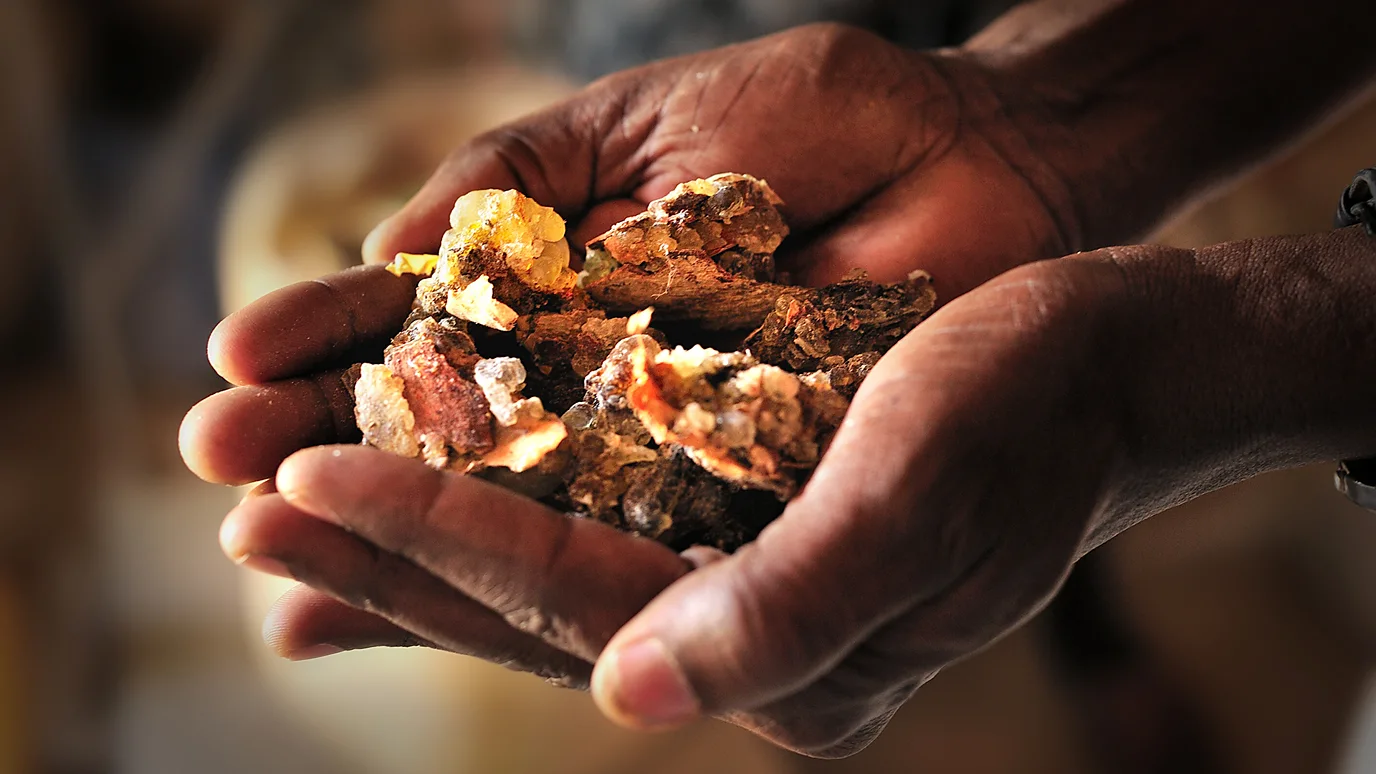
The precious, fragrant resin is the scent of the festive season and rising in popularity in the wellness industry – but its natural source is being decimated.
Salaban Salad Muse has built his whole life around frankincense. Living the small town of Dayaha in the Sanaag region of Somaliland, a breakaway region of Somalia, he works as a seasoned harvester of the famously aromatic resin, obtained only from the Boswellia tree.
Every year, Salad Muse camps for three to six months in a cave near the site he owns with these trees on it. Each day he heads out the land, owned and tended by his family for generations. He moves from tree to tree, inspecting the bark for pests, scraping back sand and tending to seedlings he planted earlier in the season.
But the fate of these groves, and the entire livelihood of frankincense harvesters, is hanging in the balance. As groves fail, the local and global industries built up around frankincense are being forced to reconsider how this precious substance is produced, traced and sold around the world.
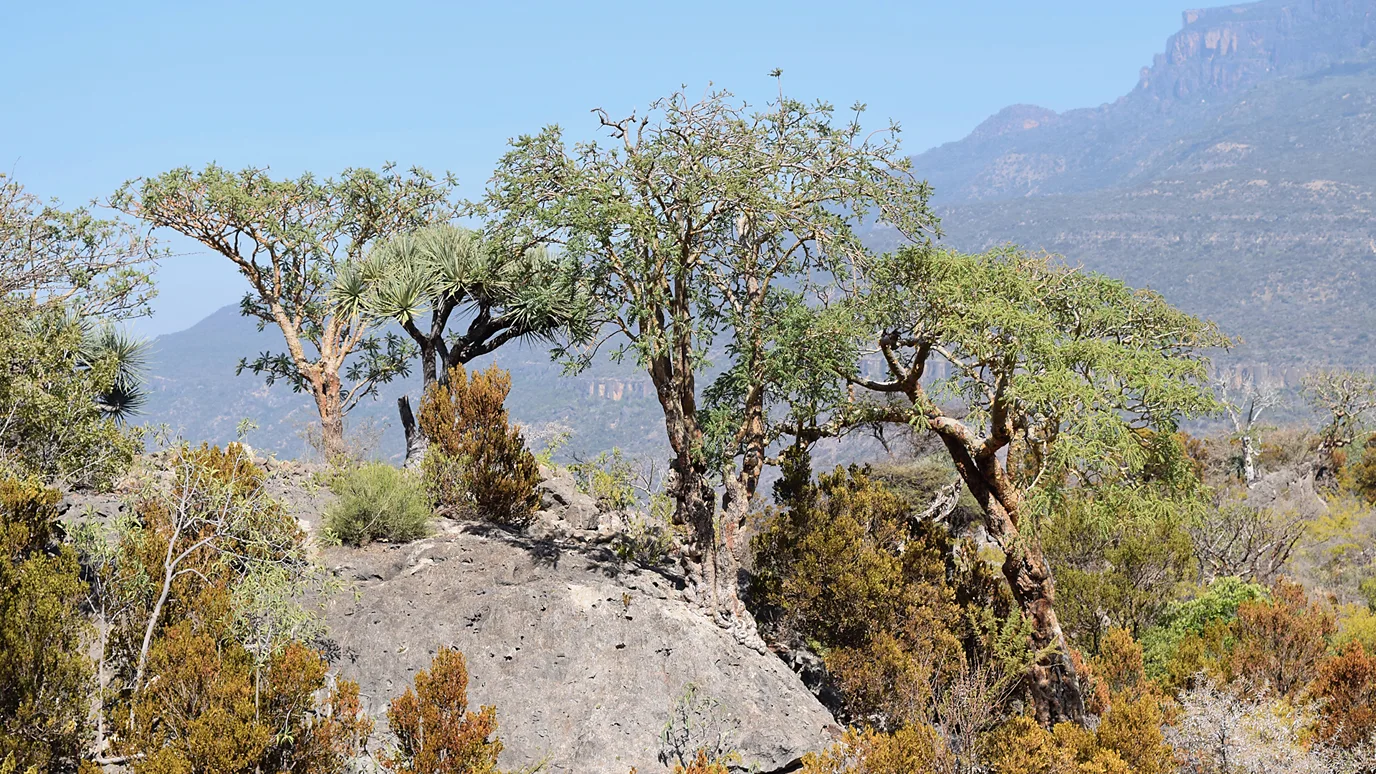 Frankincense is a resin produced by various species of Boswellia tree, such as these B. sacra trees in Somaliland which are classified as near threatened (Credit: Stephen Johnson)
Frankincense is famously associated with the biblical sacred offering gifted to the baby Jesus alongside gold and myrrh from the three magi. It has also been used for millennia in Indian and Chinese medicines, it is of the oldest commodities traded globally. Today it has become a staple of the $5.6tn (£4.2tn) wellness industry, used to produce a fragrant cloud of smoke used for meditation and medicinal healing, as well as the rituals woven into centuries of Catholic worship.
For Salad Muse, however, it has far more earthly associations. He and many other harvesters in Somaliland and surrounding countries rely on frankincense for their income.
It can take 10 years or more for a tree to recover from damage inflicted by excessive harvesting
The Horn of Africa is one of the main areas of production globally, including Somaliland, Somalia, Ethiopia and Sudan. Today, though, local tensions, meagre payments to farmers, uncertain regulation and a rising global demand are putting pressure on some harvesters in these countries to tap trees to unsustainable levels.
https://www.bbc.com/future/article/2025 ... ankincense