History
Sovereignty Reclaimed: Energy, Self-Reliance, and the New Global Order— A follow-up to “Assab to Abadan: The Price of Oil, Sovereignty, and the Road to the Red Sea”
November 4, 2025

By Ezra Musa
https://redseabeacon.com/sovereignty-re ... e-red-sea/
As the world shifts from Western-centric systems toward multipolar realities, nations that once stood alone in defense of their sovereignty now find themselves aligned with the direction of history. Eritrea — often misunderstood for its isolation and discipline — emerges as a quiet example of foresight in an age when dependency has become the greatest risk of all.
1. The World Mattei Imagined — and the One We Now Enter
In the 1950s, Enrico Mattei defied the monopoly of the “Seven Sisters,” building Italy’s ENI on a revolutionary idea: that resource-rich nations must be equal partners in their own development. He rejected exploitative concessions and introduced equitable revenue-sharing models that challenged the old colonial order.
Today, as the foundations of global finance and energy power begin to crack, Mattei’s legacy returns — not as nostalgia, but as a living blueprint for sovereignty.
2. Yergin’s Map Redrawn
Energy historian Daniel Yergin chronicled this global transformation through The Prize, The Quest, and The New Map.
His central insight is timeless: whoever controls the routes of energy and resources controls the future.
Yergin’s later works reveal a world leaving behind the unipolar dominance of the West for a multipolar geography of power, where states pursue self-reliance, regional integration, and diversified transport corridors — from pipelines in Eurasia to shipping routes through the Red Sea.
3. Eritrea’s Long Arc of Self-Reliance
Few nations have embodied this principle as steadfastly as Eritrea.
In 2005, Asmara formally ended operations of USAID, rejecting conditional aid and dependency programs. The government argued that aid distorted priorities and weakened local initiative. Instead, Eritrea chose a harder but cleaner path: development through discipline.
Two decades later, that decision appears prophetic. As Western donors reassess global aid programs and the United States itself scales back overseas assistance, Eritrea’s early independence from aid dependency stands as a study in strategic clarity.
4. The Divide: Dependence vs. Discipline
While Eritrea charted an independent course, many nations that embraced perpetual aid dependency now face mounting debt and economic fragility.
• Zambia — once hailed as a donor success story — fell into debt distress under IMF restructuring.
• Ghana — heavily reliant on external loans — saw its currency collapse amid conditional fiscal reforms.
• Ethiopia — increasingly burdened by debt and internal conflict — has seen the birr lose much of its value, driving sharp increases in food and fuel costs and deepening hardship for ordinary citizens.
• In contrast, Eritrea — without IMF programs, without World Bank loans, and without USAID presence since 2005 — maintains zero external debt, a stable macroeconomic framework, and an increasingly strategic geographic position.
As the global system fractured into blocs, this discipline of sovereignty becomes an asset, not a liability.
5. The Mattei Plan Returns to Africa
Italy’s revival of the “Mattei Plan” signals a recognition that genuine partnership cannot be based on dependency.
Rome’s outreach to Eritrea and the wider Horn of Africa aims to foster cooperation on energy, infrastructure, and logistics — echoing Mattei’s original belief in mutual gain over control.
It is telling that, in an era of shifting alliances, Western nations now revisit the very philosophy they once resisted.
6. Energy Sovereignty in the Age of Realignment
The Russia–Ukraine conflict reshaped global energy flows and confirmed Yergin’s observation: energy is no longer just a commodity; it is currency, leverage, and survival.
Russia’s redirection of exports toward Asia, China’s investment in rare-earth supply chains, and Africa’s rise as a hub for critical minerals all point to a new energy order.
In this landscape, countries that retain control over their ports, minerals, and transport corridors — like Eritrea — stand on firmer ground than those tied to volatile debt and foreign dependence.
7. The Vision That Endured
From Sheikh Ibrahim Sultan’s early vision of self-determination to the present leadership’s emphasis on resilience, Eritrea has treated sovereignty not as rhetoric but as policy.
This consistency — sometimes mistaken for defiance — has proven to be foresight. As debt crises ripple across the developing world and inflation destabilizes global markets, Eritrea’s model of self-sufficiency demonstrates that independence and stability are inseparable.
8. The Road Ahead
The convergence of Mattei’s ideal of equal partnership, Yergin’s mapping of energy realignment, and Eritrea’s lived commitment to self-reliance defines the world now emerging.
Nations that reject dependency early are better prepared for a future shaped by supply sovereignty and resource discipline.
The Red Sea, once a corridor of imperial extraction, is fast becoming a corridor of sovereign opportunity.
Those who once paid the price of independence — like Eritrea — may soon harvest its reward.

 Date: Tuesday, November 4, 2025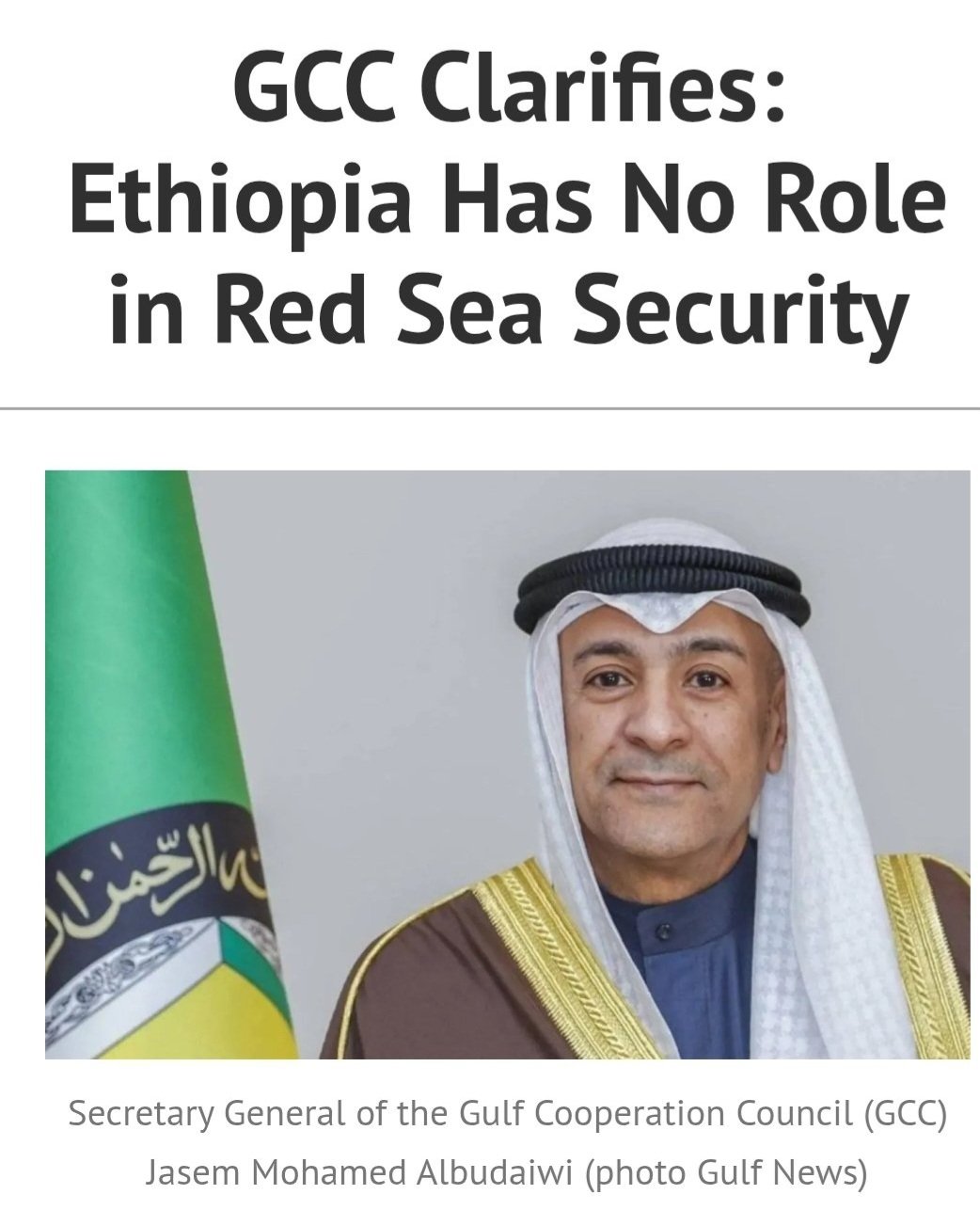
 — The Secretary General of the Gulf Cooperation Council (GCC), Mr.