Ethiopian News, Current Affairs and Opinion Forum
-
Revelations
- Senior Member+
- Posts: 34573
- Joined: 06 Jan 2007, 15:44
Post
by Revelations » 02 Feb 2024, 01:14
The Last Supper recast: artist Tavares Strachan on reimagining Da Vinci’s dinner guests
 He replaced Christ with Haile Selassie and took Judas’s place himself. The Bahamian’s epic artistic revisions, from space to the Arctic, hit Britain in 2024 – and the Royals are in his sights
The best art exhibitions to visit in 2024
At the Royal Academy in February, Strachan will present a huge bronze sculpture riffing on Leonardo da Vinci’s The Last Supper. A print of the Renaissance masterpiece hung at his grandmother’s house, above all the family photos. “I always thought, ‘Why are all these Europeans hanging over a family of people from west Africa in the Caribbean?’” His own version explores the transatlantic slave trade via a diverse new lineup of diners, from American abolitionist Harriet Tubman to Sister Rosetta Tharpe, the [deleted] black “godmother of rock’n’roll”. Haile Selassie, Emperor of Ethiopia, is Christ and Strachan himself is Judas. Naturally, he takes issue with history’s cut and dried verdict on the biblical betrayer. “All of us make mistakes,” he says. “Who is not Judas?”
Strachan’s attacks on established narratives have a particular urgency in the UK, given that its own colonial history is still excluded from the essential school syllabus. New works at the Hayward will include a “coronation hut”, exploring the British royal family and housing a “deep dive” into the history of such ceremonies, reaching right back to humankind’s origins in Africa. “What better country to talk about coronations in?” he asks. “Nowhere has shaped the Caribbean like England. When it has such a monopoly on storytelling, it’s important to have a counterpoint.”
Tavares Strachan’s work appears in Entangled Pasts, 1768-Now at the Royal Academy, London, from 3 February to 28 April. Tavares Strachan: Awakening is at the Hayward Gallery, London, from 11 June to 1 September
-
Revelations
- Senior Member+
- Posts: 34573
- Joined: 06 Jan 2007, 15:44
Post
by Revelations » 02 Feb 2024, 01:32
Tavares Strachan’s monumental sculpture unveiled in Royal Academy Courtyard.
 Tavares Strachan’s monumental sculpture has been unveiled in the Royal Academy Courtyard. The First Supper, 2021-23 is a major new sculpture by acclaimed interdisciplinary artist Tavares Strachan (b. 1979, Nassau, The Bahamas), as part of the exhibition Entangled Pasts: 1768–now: Art, Colonialism and Change which opens on this Saturday 3rd February.
 The sculpture in the Royal Academy’s Annenberg Courtyard is Strachan’s most ambitious and substantial work to date. Meticulously constructed over the course of four years, The First Supper extends the artist’s interest in ideas of visibility and invisibility, materialising his commitment to individuals and communities whose stories have been overlooked or forgotten.
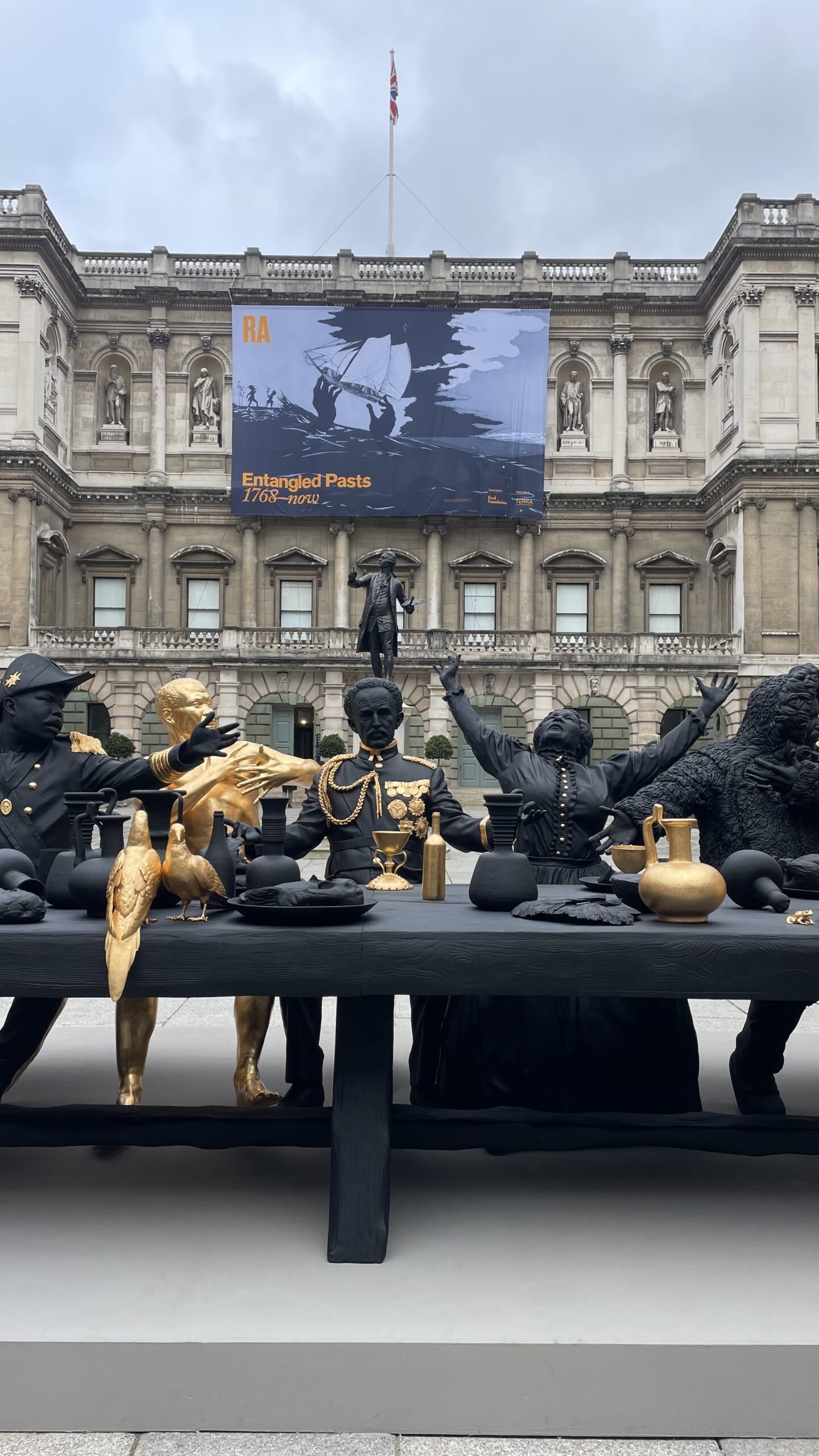
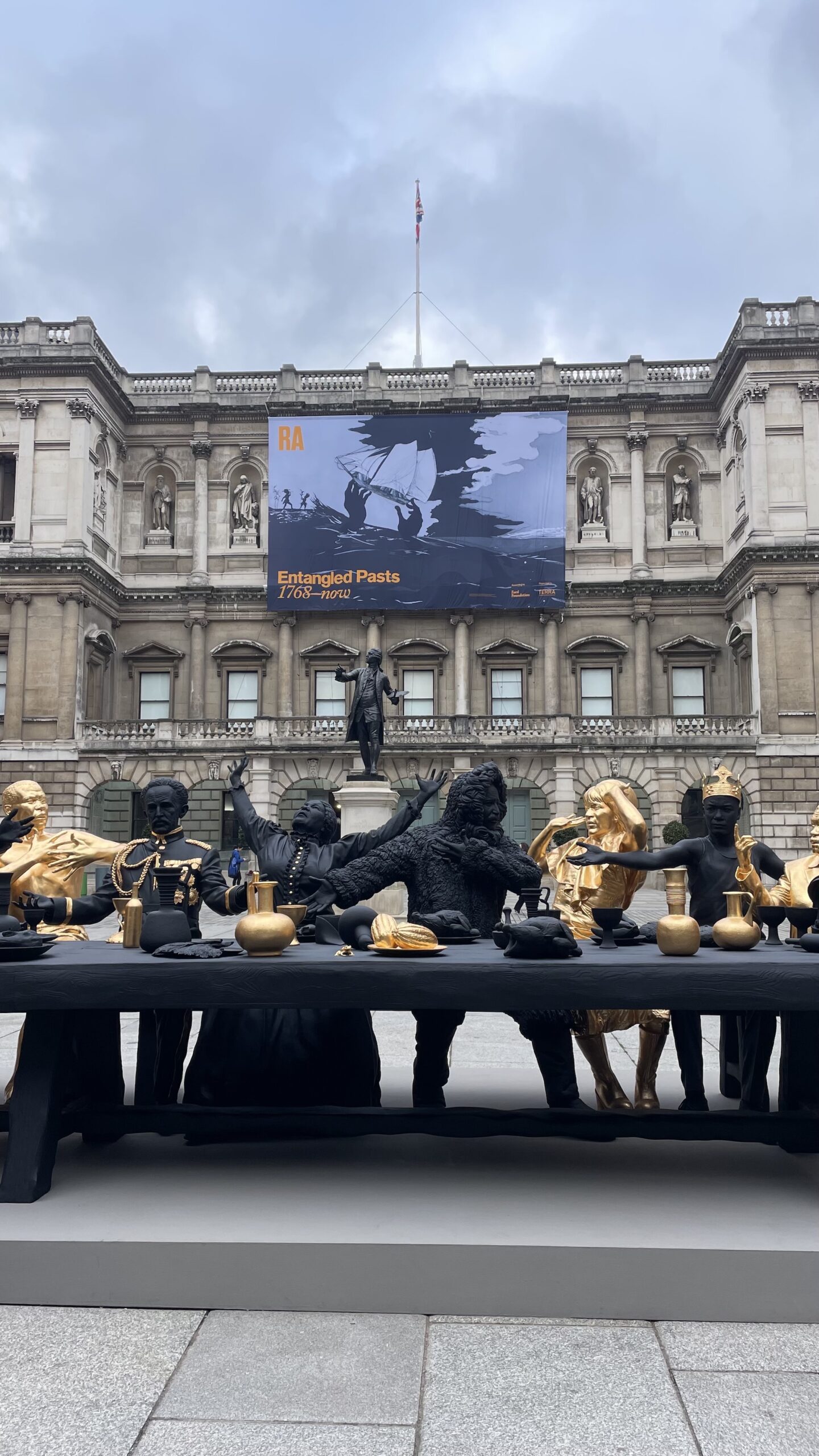 The First Supper represents what Strachan describes as a utopian gathering that brings together historically significant figures from the continent of Africa and its diasporas, accompanied by a thylacine or Tasmanian tiger and a portrait of the artist. It includes sculptural portraits of resistance fighter Zumbi Dos Palmares; nurse Mary Seacole; activists Harriet Tubman, Marcus Garvey, and Marsha P. Johnson; explorer Matthew Henson; astronaut Robert Henry Lawrence; politician Shirley Chisholm; Emperor Haile Selassie; musicians Sister Rosetta Tharpe and King Tubby; and poet Sir Derek Alton Walcott. Although some of the figures around the table are well-known, others have been forgotten and are not widely studied.
The First Supper is a celebration of commensality – the act of eating together. It emphasises the role of communal meals in forging and sustaining social relationships, with Strachan describing the sharing of food and conversation as “part of the fabric of human experience.” The specific foods represented in The First Supper also point to broader spiritual, philosophical, and ideological perspectives guiding the sculpture. Spread out across the table are items such as African rice, breadfruit, catfish, chicken, cocoa, custard apple, and soursop. These foods consumed in the Caribbean have been traced to Indigenous and African influences, along with the histories of enslavement and indentured servitude. For example, enslaved people carrying African rice played a crucial role in the expansion of rice cultivation in the Americas during the Atlantic slave trade. These subtle but critical quotations enrich the sculpture, allowing it to engage with broader issues of technology transfer, Indigenous knowledge, and agency. Strachan’s use of cast bronze embellished with a gold patina references material cultures and trade networks in Africa. Some of the earliest and most accomplished bronze works found in Africa date to the tenth century and are among the first examples of lost-wax casting techniques in the production of bronze sculpture. Certain figures and details are embellished with gold leaf, a material that is also culturally loaded. As Strachan notes “gold is one of Africa’s most abundant natural resources and has indisputably shaped its history and its people throughout time.” West Africa was also one of the world’s leading exporters of gold during the Middle Ages, but the material also drew Europeans to the ‘Gold Coast’ in the fifteenth century.
-
Union
Post
by Union » 02 Feb 2024, 01:47
Wow...
Fascinating!!
I would love to go see it soon!
Rasta man vibrating!! African positive, love, peace and freedom vibration!!

