UN Human Rights Council condemns impact of unilateral sanctions
https://peoplesdispatch.org/2023/04/04/ ... an-rights/
The resolution presented by Azerbaijan on behalf of Non-Aligned countries noted the impact of sanctions on key rights related to life, health, and freedom from hunger. It was predictably rejected by the US and its allies
April 04, 2023
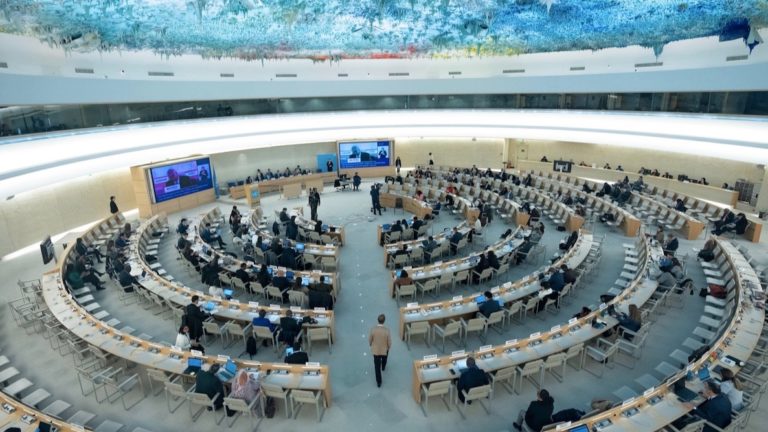
UN Human Rights Council. (Photo: via @yvangil/Twitter)
On Monday, April 3, the United Nations Human Rights Council (UNHRC) adopted a resolution condemning the
The text titled A/HRC/52/L.18 was presented by Azerbaijan on behalf of the Movement of Non-Aligned Countries.negative impact of unilateral coercive measures on the enjoyment of human rights.
Emphasizing that unilateral coercive measures, legislation, and secondary sanctions were a violation of international law, norms and principles as well as the UN Charter, the text https://ap.ohchr.org/documents/dpage_e. ... RC/52/L.18 expressed “grave concern” over the negative impact of sanctions on human rights, including the right to development, which is recognized as a “universal and inalienable right” integral to all human rights.
It called upon all states to
The draft resolution was approved with 33 votes in favor, 13 against, and one abstention. Among the countries that rejected the text were, predictably, the United States and several of its NATO allies including the United Kingdom, Belgium, France, Finland, Germany, alongside Ukraine.stop adopting, maintaining, implementing, or complying with unilateral coercive measures….in particular those of a coercive nature with extraterritorial effects.
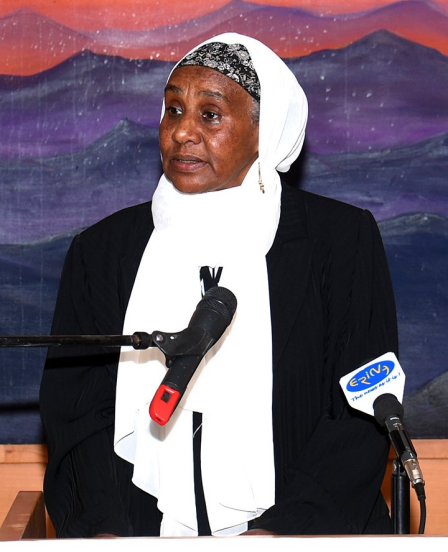
Meanwhile, the debate preceding the vote saw interventions from members of the Council, particularly Eritrea, which has long resisted the unilateral sanctions imposed on it by countries including the US.
said Adem Osman Idris, Eritrea’s Permanent Representative to the UN.Unilateral sanctions are brutal and inhumane by their very nature and they collectively punish and undermine national socio-economic progress,
he added.These powers that give lip service to [a] rules-based international order use unilateral sanctions [as] forms of warfare [to] bully and intimidate those nations that pursue independent national policies and programs to the benefit of their people,
The resolution stresses that
The text also reaffirms the principles of theno State may use, encourage or threaten to use any type of measure, including but not limited to economic or political measures, to coerce another State in order to obtain from it the subordination of the exercise of its sovereign rights, and to secure from it advantages of any kind.
and that each state hassovereign equality of States, non-intervention and non-interference in their internal affairs and freedom of international trade and navigation…,
The resolution drew attention to thefull sovereignty over the totality of its wealth, natural resources, and economic activity, exercising it freely.
and their impact on basic rights including the right to life, access to health care, right to freedom from hunger, and the right to an adequate standard of living, food, education, work, and housing.disproportionate and indiscriminate human costs of unilateral sanctions
Clear examples of this include the over 60-year long brutal blockade of Cuba, which the US has designated as a “State Sponsor of Terrorism,” https://peoplesdispatch.org/2023/03/29/ ... t-or-else/ and the sanctions on Venezuela that the US continues https://peoplesdispatch.org/2023/03/03/ ... -in-place/ to keep in place citing a threat to its national security. A current member of the UNHRC, Cuba, was one of the countries that voted to adopt Monday’s resolution.
“Coercive measures” have been linked to multi-fold increases in food insecurity, economic and trade collapse and poverty, and the denial of life-saving treatments https://www.ohchr.org/en/press-releases ... tients-say and medications to vulnerable populations.
Despite the US’ repeated claims that its sanctions policies contain “humanitarian” exemptions, reports and evidence, including from the UN, have proved that this is false. Monday’s resolution noted the impact of widespread compliance and over-compliance to sanctions by entities including financial institutions and transport companies that are necessary for the provision of humanitarian aid.
US sanctions have actively impeded aid and rescue efforts in the aftermath of major disasters, which was clearly visible most recently in the aftermath of the deadly earthquakes that struck Turkey and Syria. https://peoplesdispatch.org/2023/02/14/ ... ow-louder/
Sanctions have often been described as a form of “economic warfare”
and collective punishment—a means to undermine the sovereignty of an “enemy” country without direct military intervention.
Monday’s resolution condemned the use of sanctions as
tools of pressure…particularly against least developed and developing countries, with a view to preventing these countries from exercising their right to decide, of their own free will, their own political, economic, and social systems.