Ethiopian News, Current Affairs and Opinion Forum
Zmeselo
Senior Member+
Posts: 37348
Joined: 30 Jul 2010, 20:43

The rouble is soaring and Putin is stronger than ever - our sanctions have backfired

Post by Zmeselo » 30 Jul 2022, 06:19


Opinion
The rouble is soaring and Putin is stronger than ever - our sanctions have backfired

Simon Jenkins

https://www.theguardian.com/commentisfr ... are_btn_tw

Energy prices are rocketing, inflation is soaring and millions are being starved of grain. Surely Johnson knew this would happen?
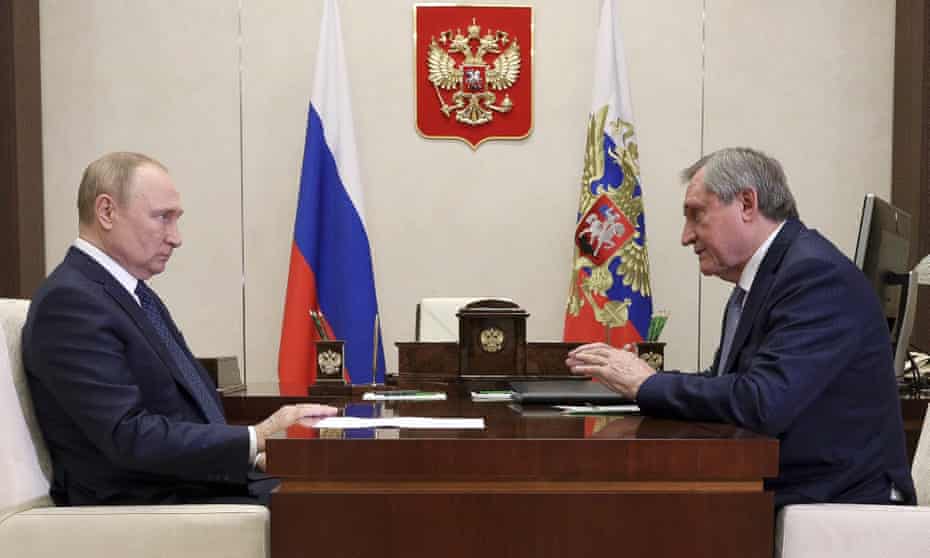

Vladimir Putin and the Russian energy minister, Nikolai Shulginov, in Moscow, 21 July 2022

Fri 29 Jul 2022

Western sanctions against Russia are the most ill-conceived and counterproductive policy in recent international history. Military aid to Ukraine is justified, but the economic war https://www.theguardian.com/commentisfr ... imir-putin is ineffective against the regime in Moscow, and devastating for its unintended targets. World energy prices are rocketing, inflation is soaring, supply chains are chaotic and millions are being starved of gas, grain and fertiliser. Yet Vladimir Putin’s barbarity only escalates – as does his hold over his own people.

To criticise western sanctions https://www.theguardian.com/world/2022/ ... ctors-gold is close to anathema. Defence analysts are dumb on the subject. Strategy thinktanks are silent. Britain’s putative leaders, Liz Truss and Rishi Sunak, compete in belligerent rhetoric, promising ever tougher sanctions without a word of purpose. Yet, hint at scepticism on the subject and you will be excoriated as “pro-Putin” and anti-Ukraine. Sanctions are the war cry of the west’s crusade.

The reality of sanctions on Russia is that they invite retaliation. Putin is free to freeze Europe this winter. He has slashed supply https://www.theguardian.com/world/2022/ ... -wednesday from major pipelines such as Nord Stream 1 by up to 80%. World oil prices have surged and eastern Europe’s flow of wheat and other foodstuffs to Africa and Asia has been all but suspended.

Britain’s domestic gas bills face tripling inside a year. The chief beneficiary is none other than Russia, whose energy exports to Asia have soared, driving its balance of payments into unprecedented surplus. The rouble is one of the world’s strongest currencies https://www.cbsnews.com/news/russia-ukr ... ioms-2022/ this year, having strengthened since January by nearly 50%. Moscow’s overseas assets have been frozen and its oligarchs have relocated their yachts, but there is no sign that Putin cares. He has no electorate to worry him.

The interdependence of the world’s economies, so long seen as an instrument of peace, has been made a weapon of war. Politicians around the Nato table have been wisely cautious https://www.nato.int/docu/review/articl ... index.html about escalating military aid to Ukraine. They understand military deterrence. Yet they appear total ingenues on economics. Here they all parrot Dr Strangelove. They want to bomb Russia’s economy
back to the stone age.
https://uk.news.yahoo.com/russia-thrown ... 50104.html

I would be intrigued to know if any paper was ever submitted to Boris Johnson’s cabinet forecasting the likely outcome for Britain of Russian sanctions. The assumption seems to be that if trade embargos hurt they are working. As they do not directly kill people, they are somehow an acceptable form of aggression. They are based on a neo-imperial assumption that western countries are entitled to order the world as they wish. They are enforced, if not through gunboats, then through capitalist muscle in a globalised economy. Since they are mostly imposed on small, weak states soon out of the headlines, their purpose has largely been of “feelgood” symbolism.

A rare student of this subject is the American economic historian Nicholas Mulder, who points out that more than 30 sanctions “wars” in the past 50 years have had minimal if not counterproductive impact. They are meant to
intimidate peoples https://www.thetimes.co.uk/article/why- ... -vlt6qskhx into restraining their princes.
If anything they have had the opposite effect. From Cuba to Korea, Myanmar to Iran, Venezuela to Russia, autocratic regimes have been entrenched, elites strengthened and freedoms crushed. Sanctions seem to instil stability and self-reliance on even their weakest victim. Almost all the world’s oldest dictatorships have benefited from western sanctions.

Moscow is neither small nor weak. Another observer, the Royal United Services Institute’s Russia expert Richard Connolly, has charted Putin’s response https://www.cambridge.org/core/books/ru ... 3A3690E411 to the sanctions imposed on him since his 2014 seizure of Crimea and Donbas. Their objective was to change Russia’s course in those regions and deter further aggression. Their failure could hardly be more glaring. Apologists excuse this as due to the embargos being too weak. The present ones, perhaps the toughest ever imposed on a major world power, may not be working yet, but will apparently work in time. They are said to be starving Russia of microchips and drone spares. They will soon have Putin begging for peace.

If Putin begs, it will be on the battlefield. At home, Connolly illustrates how Russia is
slowly adjusting https://www.thetimes.co.uk/article/sanc ... -rv0qjw2br to its new circumstances.
Sanctions have promoted trade https://www.theguardian.com/world/2022/ ... ays-lavrov with China, Iran and India. They have benefited
insiders connected to Putin and the ruling entourage, making huge profits from import substitution.
McDonald’s locations across the country have been replaced by a Russian-owned chain https://www.theguardian.com/world/2022/ ... -new-brand called Vkusno & tochka (“Tasty and that’s it”). Of course the economy is weaker, but Putin is, if anything, stronger while sanctions are cohering a new economic realm across Asia, embracing an ever enhanced role for China. Was this forecast?

Meanwhile, the west and its peoples have been plunged into recession. Leadership has been shaken and insecurity spread in Britain, France, Italy and the US. Gas-starved Germany and Hungary are close to dancing to Putin’s tune. Living costs are escalating everywhere. Yet still no one dares question sanctions. It is sacrilege to admit their failure or conceive retreat. The west has been enticed into the timeless irony of aggression. Eventually its most conspicuous victim is the aggressor. Perhaps, after all, we should stick to war.

Simon Jenkins is a Guardian columnist

Zmeselo
Senior Member+
Posts: 37348
Joined: 30 Jul 2010, 20:43

Re: The rouble is soaring and Putin is stronger than ever - our sanctions have backfired

Post by Zmeselo » 30 Jul 2022, 06:34


CHINA / SOCIETY
Don’t say we didn’t warn you – Symposium of China’s top think tank sends classic, pre-war warning to provocative Pelosi

By GT staff reporters

https://www.globaltimes.cn/page/202207/1271745.shtml

Jul 29, 2022


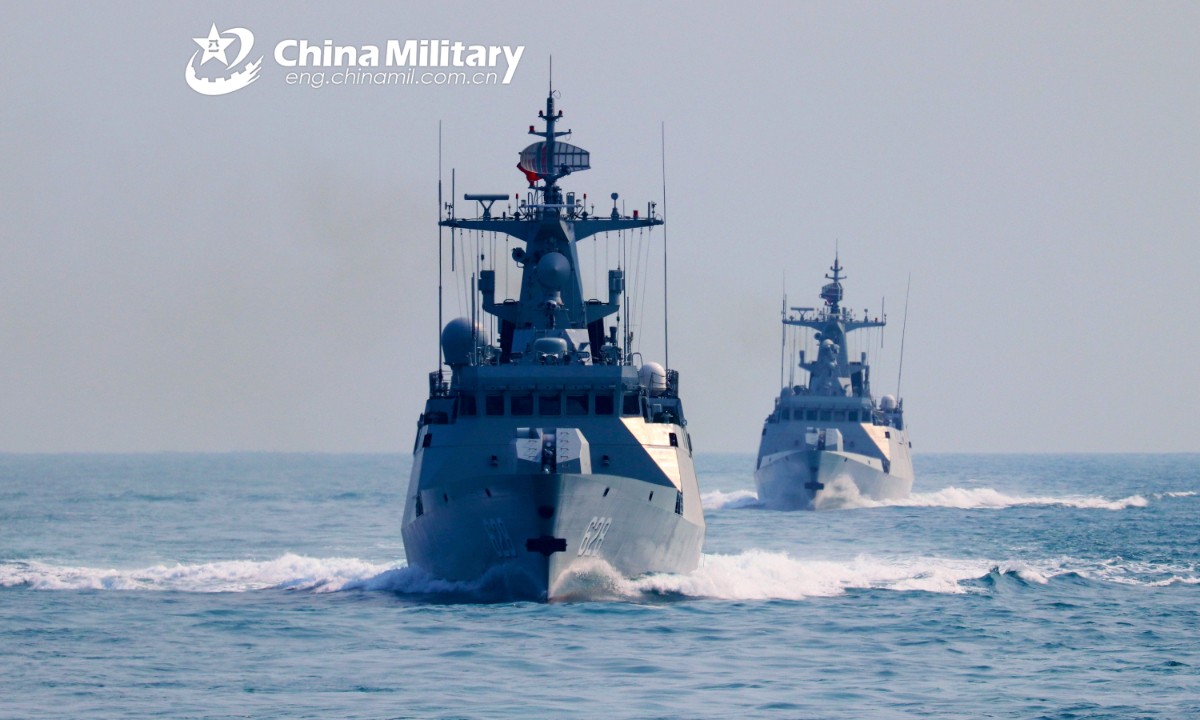
Led by the guided-missile frigate Yongzhou (Hull 628), a frigate flotilla with the navy under the PLA Southern Theater Command steams in formation in an undisclosed sea area during a maritime training exercise in early December 2020. Photo: China Military
Don't say we didn't warn you!
- a phrase that was used by the People's Daily in 1962 before China was forced to fight the border war with India and ahead of the 1979 China-Vietnam War, was frequently mentioned during a forum held Friday by a high-level Chinese think tank, as analysts warned that open military options and comprehensive countermeasures ranging from the economy to diplomacy from China await if US House Speaker Nancy Pelosi gambles with a visit to the Taiwan island during her Asia tour.

On Thursday night, Chinese President Xi Jinping held a phone conversation with US President Joe Biden, during which he once again warned the US about the seriousness and significance of the Taiwan question and said,
Public opinion cannot be defied. Those who play with fire will perish by it. It is hoped that the US will be clear-eyed about this.
In the recent week, in response to Pelosi's potential visit to the island of Taiwan, a string of warnings have also been made by different ministries and departments of China. On Friday, the Institute of Taiwan Studies in Chinese Academy of Social Sciences - the highest-level think tank - held a forum with analysts and discussed the damage of Pelosi's possible Taiwan island visit to the China-US relations, cross-Straits stability and regional and global peace, and China's countermeasures.

Sending fighter jets to intercept Pelosi's plane, declaring air and maritime zones around the island of Taiwan as restriction zones for military exercises … China's responses will be systematical and not limited to small scale given the severity of Pelosi's move and the damage to the political trust of China-US relations, Yang Mingjie, head of the Institute of Taiwan Studies in Chinese Academy of Social Sciences, told the Global Times.


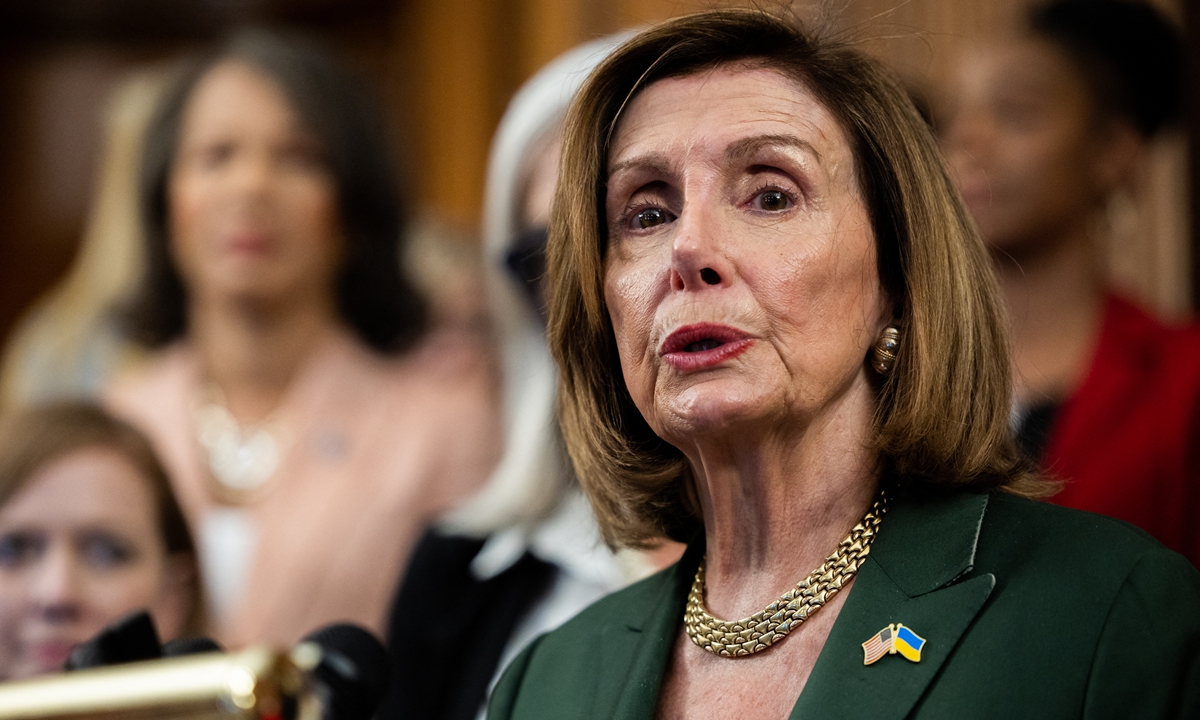
US House Speaker Nancy Pelosi speaks on women's healthcare issues inside the US Capitol in Washington, DC on July 28, 2022. Pelosi led a delegation to Japan, South Korea, Malaysia and Singapore the following day while it is unclear whether she will make a stop in the island of Taiwan. Photo: AFP

Pelosi is leading an official congressional delegation to Japan, South Korea, Malaysia and Singapore in Asia starting Friday and it is unclear whether the trip will include a stop in the island of Taiwan, US media reported.

The US military had reportedly expressed safety concerns to Pelosi but later played down worries that China may shoot down Pelosi's plane in case she visits the island of Taiwan, and said the US military will increase movement of forces and assets in the Indo-Pacific region.

Yang noted that China has reiterated its opposition to Pelosi's possible visit and used the phrase "yanzhen yidai" - literally meaning
streamlining army formation to wait for the enemy
- to show that we have made all preparations for combats or any challenges.

There are multiple measures the PLA can take once Pelosi flies to the island of Taiwan. For example, Chinese fighter jets can fly along with and monitor the plane that Pelosi takes and fly over the airport where her plane lands in Taiwan, Wang Yunfei, a naval expert, told the Global Times.

The PLA can also declare air and maritime zones around the island of Taiwan as restricted zones to resist Pelosi's plane. Chinese fighter jets can also fly across the island to start a new model to fight against the military actions of secessionists on the island, Wang said, noting that sending missiles surrounding the island of Taiwan and conducting military drills are also options.

Analysts on the military also noted that the PLA can conduct large-scale military drills around the island of Taiwan, including on the waters between Taiwan island and Japan as well as between Taiwan island and Guam. The PLA drills would also include joint efforts of all PLA service branches, with all combat elements including electronic warfare, missile and long-range rocket strikes, seizing of air superiority and control of the sea, amphibious landing, as well as anti-access and area denial against external military interference.

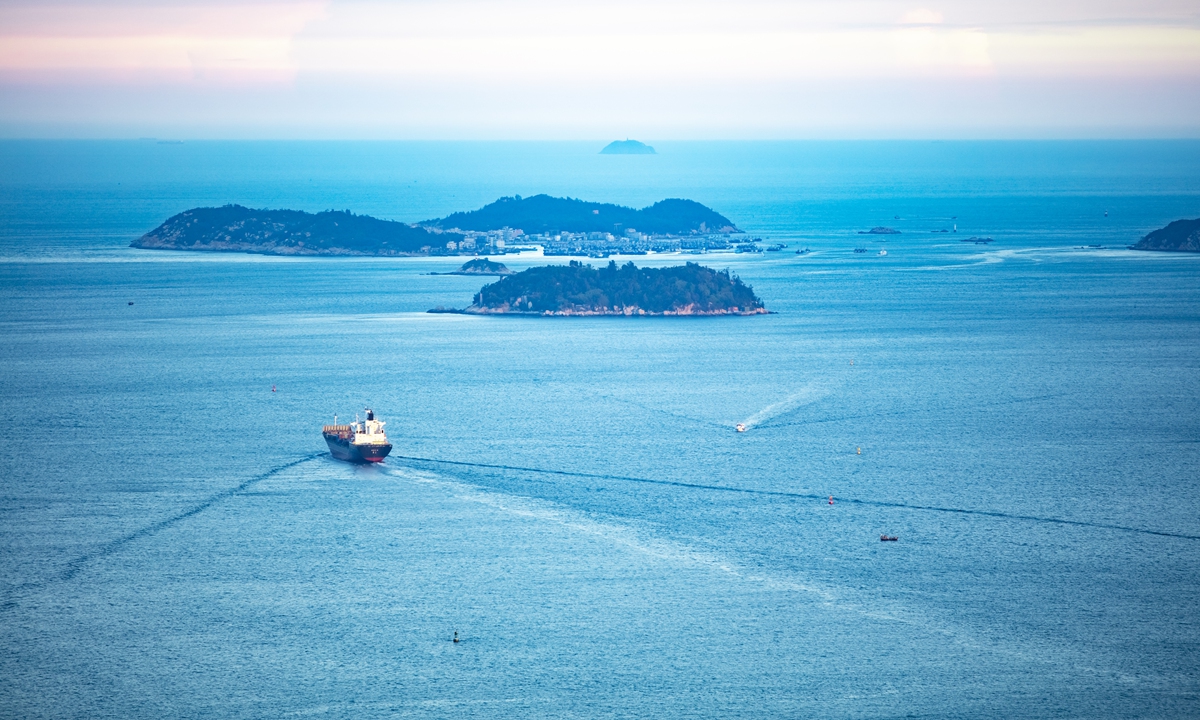
Live-fire drills will be held and waters near Pingtan in Fuzhou, East China's Fujian will be sealed from 8am to 9pm on Saturday, the local authorities announced on Friday. Pingtan is 125 kilometers away from the island of Taiwan.


A view of the Taiwan Straits is seen from Xiamen port, in East China's Fujian Province. Photo: IC

During the forum, many analysts noted that the military response from the Chinese mainland will be larger in scale and upgraded from the ones during the 1995-96 crisis of the Taiwan Straits.

In responding to key initiator of "Taiwan separatism" Lee Teng-hui's visit to the US, the PLA took a series of military drills from July 1995 to March 1996 in the waters surrounding the island of Taiwan.
China was not strong enough during the Taiwan Straits crisis in 1995-96, but didn't hesitate to take a military response. The answer for the current situation is clear considering its current political and economic strength … If this can be tolerated, what cannot?
said Leng Bo, an expert from the Institute of Taiwan Studies in Chinese Academy of Social Sciences, noting this time the military response will be larger than any other time.

The backdrop of Pelosi's visit is different from that of the 1995-96 crisis - China-US relations have changed, the comparison of strength between China and the US has changed, and the island of Taiwan itself has changed - and the way the mainland will cope with Pelosi's visit will be different and may bring wider consequences and impact, Wu Yongping, director of the Institute of Taiwan Studies, Tsinghua University, told the Global Times.

Wu noted that the Chinese mainland's countermeasures will be comprehensive in military, diplomacy, economy and public opinions. If Pelosi insists on making the visit, China can turn the incident into an opportunity to take control of the Taiwan Straits situation and push the reunification process, and such consequence should be borne by the island and the US as the international community will also clearly see the provocation from the US and that any actions China will take are out of determination to defend its sovereignty.
If so, will Pelosi regret catalyzing China's reunification process?
Wu asked.

The phrase
Don't say we didn't warn you
had also been frequently mentioned by analysts when talking about the disastrous consequences that may be brought about by Pelosi during the Friday forum.
Don't say we didn't warn you
has become a key phrase used by Chinese official media as the most severe warning previously issued before shots were fired in military operations. The phrase has been used several times before, such as in 1962 and 1978, not long before China's military operations against provocations by Indian and Vietnamese troops, respectively.
The US should not underestimate the Chinese people's determination to defend core interests on sovereignty, integrity and security at any time. It should also not repeat the miscalculation it made in the 1950s in the Korean War. Despite not being strong at that time, China still had the courage to fight a war when it was pushed to the corner, it will surely not sit idly by this time,
said Yang.

The countermeasures in China's toolbox include concrete and strategic ones and rapid and long-term ones and it will take different measures in accordance with Pelosi's interactions with secessionists from the island of Taiwan. If she makes the visit, the possibility for China to recall the ambassador from the US cannot be ruled out, analysts said, also referring to imposing sanctions on individuals related to the visit.

Many analysts also stressed that once Pelosi visits the island of Taiwan, it will escalate the cross-Straits tensions, greatly damage the political trust of China-US relations, and bring disastrous effects to regional peace and economy.

Pelosi, out of her paranoid anti-China ideas and selfish political interests, has provoked the Taiwan question and sent a seriously wrong signal to the secessionist forces in Taiwan. If it leads to the intensification and loss of control of secessionist activities, it is detrimental to US national interests and it is the US that has to foot the bill, said Zhu Weidong, deputy director from the Institute of Taiwan Studies in Chinese Academy of Social Sciences.

While the Chinese and US leaders are improving communications to control disputes, Pelosi is intent on such political stunt to break the consensus reached by the top leaders, which displays the domestic political mess in the US, analysts said, urging the Biden administration to play its role in fulfilling promises to China.

Historical experiences show that for decades, as long as the relationship between China and the US develops well, the Taiwan question is handled properly. If the US challenges China's core interests, not only will China-US relations be turbulent, it will have a negative impact on the entire Asia-Pacific and even slow the recovery of global economy, Zhu said.

Bilateral cooperation between China and the US, especially on the economy, global supply chain, energy and food security are important to help solve global challenges and some urgent problems the US is facing with. However, what Pelosi has done and may do will have negative influence in these fields, said analysts.

Post Reply