Exclusive: Internal report shows EU fears losing Africa over Ukraine
Posted: 23 Jul 2022, 03:19

Inside Development/ European Union
Exclusive: Internal report shows EU fears losing Africa over Ukraine
By Vince Chadwick
https://www.devex.com/news/exclusive-in ... NI.twitter
22 July 2022
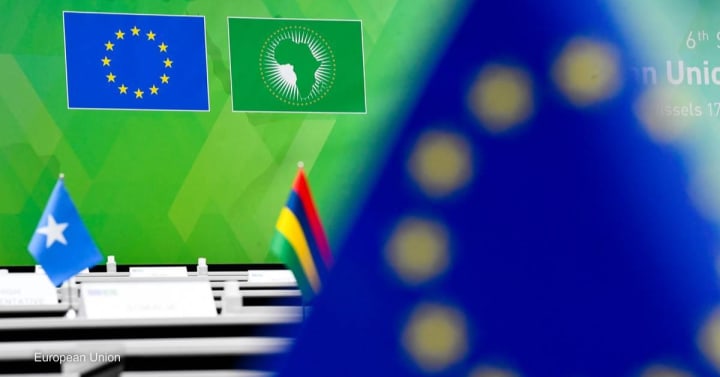
Photo by: European Union
With Europe and Africa increasingly split over the war in Ukraine, European diplomats have argued in a confidential report for a more “transactional” approach to foreign aid that would tie funding for African countries to their willingness to work
The five-page document, overseen by Birgitte Markussen, the head of the European Union delegation to the African Union, with input from the heads of mission from EU countries in the Ethiopian capital of Addis Ababa, was circulated to diplomats in Brussels this week and seen by Devex.based on common values and a joint vision.
It provides a candid assessment of how those on the ground see the EU losing the battle for hearts and minds in Africa over the conflict — and what to do about it.
On the one hand, the report calls for
But it also underlines that Europe isunderstanding and empathy for African challenges, and willingness to help find concrete solutions.
citingthe main indirect victim of [Russian President Vladimir] Putin’s war of aggression,
And it opens the possibility of calibrating foreign aid from Europe according to Africa’s stance.dramatic consequences in all aspects (security, economic, financial, social, migration - 7 million refugees, unemployment).
the report reads.Becoming more transactional in our approach, we should be clear about the fact that the willingness of Europeans (governments and taxpayers) to maintain higher levels of financial engagement in African countries will depend on working based on common values and a joint vision,
Despite billions of euros pledged to Ukraine, https://ec.europa.eu/commission/pressco ... IP_22_4264 EU officials have so far said publicly that African countries will get the same amount of development assistance from the EU institutions as that initially agreed in their 2021-2027 country plans. https://international-partnerships.ec.e ... ramming_en
However, the latest report points out that
‘Critical juncture’it is clear that the longer the war will last, the less resources there will be.
Now is a “critical juncture” to improve the EU’s public and private messaging on the war, the report states, noting that Russian Foreign Minister Sergey Lavrov will travel to Addis Ababa from July 26-27 to meet with the AU Commission and AU member states, and to
After a long-delayed summit between EU and AU leaders https://www.devex.com/news/the-eu-s-sum ... ica-102661 in mid-February, relations between the two continents have cooled in recent months amid concerns from some African leaders that EU sanctions against Russia in response to Moscow’s invasion of Ukraine are exacerbating the global food crisis. https://www.politico.eu/article/african ... ine-grain/prepare for a possible second Africa-Russia Summit in November.
Top EU officials have labored to dispel that idea.
EU foreign affairs chief Josep Borrell said https://www.eeas.europa.eu/eeas/g20-spe ... -energy_en at a meeting of the Group of 20 nations in Indonesia earlier this month.This food crisis is not caused by the European restrictive measures,
But the latest report from Addis Ababa makes clear diplomats’ view that this message is not getting through.The agricultural sector in Russia is not targeted. Our sanctions do not prohibit the import of Russian agricultural goods, or fertilizers, nor payment for such Russian exports.
the report states.The effects of EU sanctions on third countries need to be carefully assessed by experts, and factual information should be shared with diplomats,
Friction between the two continents was evident again Friday as a spokesperson for AU Commission Chairperson Moussa Faki tweeted that a deal https://apnews.com/article/russia-ukrai ... de5710bda8 to allow the export of grain from Black Sea ports wasIt is not enough to say that ‘EU sanctions are not responsible for the food crisis’, we need more substance and sharper LTTs [lines to take], including from EU Headquarters. Not only on sanctions, but also on cases where we have been accused of double standards and on the fact that the longer the war takes, the more our resources are going to be stretched.
‘Drifting further away’the result of a direct appeal by the @_AfricanUnion at a … [meeting] with President Putin in Sochi. To which many disagreed at the time.
The diplomats’ report cites the Sochi meeting in early June as part of
at least publicly.a trend which seems to indicate that the AU and its Member States may be drifting further away from our position,
they write.The EU’s reputation as being a mediator, a peacemaker, is eroding due to the Union’s military assistance to Ukraine,
In Africa, the EU is seen as fuelling the conflict, not as a peace facilitator.
the report states.Many AUMS [AU member states] do not identify an interest in taking sides in what they perceive as an ‘East-West’ conflict,
However, the diplomats write that African countries areThe colonial and post-colonial legacies, including historical ties of a good range of countries with the Soviet Union and subsequently Russia, strongly influence mindsets and positions, as do perceived Western double standards. Furthermore, AUMS are concerned about Russian pressure on them.
Against this backdrop, the report goes on to outline how to make the EU’s outreach to the AU and its member states on the consequences of the Ukraine war moreseriously concerned by the impact of the war on food security incl. supply of fertilisers, energy and financial systems – i.e. stability in their countries - and are thus calling for a review of sanctions and negotiations towards a political solution to the war.
‘Lecturing should be ‘banned’’targeted, audible and effective.
the diplomats write.African partners sometimes have the impression that the EU is lecturing them on values,
In addition, the diplomats write thatLecturing should be ‘banned’. We must instead highlight that the defence of our values is of utmost importance, but also humbly acknowledge that it is at times complex, i.e. defending moral values vs. economic interests.
For all its candor, the report contains at times contradictory messages.special attention should be given to African countries’ relationship not just with Russia, but also with China.
Relations with China are an important factor for some African countries, and they may pay extra attention to the way the war in Ukraine is viewed in Beijing.
the report advises.EU Headquarters should provide clear data on the EU’s support and the weight of Europe-Africa relations,
Elsewhere, it states,
Similarly, it warns ofWe should pass frank messages to break free from being perceived mainly as a money provider.
while later advising on the need tothe potential negative fallouts of being perceived as pressuring Africans to take sides, or prescribing them what to do,
For now, the report gives the impression that European diplomats would just be happy to be heard, given the risk the diplomats note thatstress that if Africa has ambitions to become an important global player, including in the UNSC [United Nations Security Council], it has to discuss and take positions on non-African affairs.
focusing on Russia/Ukraine only will make Africans ‘turn down the volume’ and stop listening to us.
the report states.Listening to each other in mutual respect is what close friends and strategic partners do,
Although it is unlikely that EU and AU positions will converge on Ukraine at this point in time, all communication channels must remain wide open to foster mutual understanding and respect.
Vince Chadwick is the Brussels Correspondent for Devex. He covers the EU institutions, member states, and European civil society. A law graduate from Melbourne, Australia, he was social affairs reporter for The Age newspaper, before moving to Europe in 2013. He covered breaking news, the arts and public policy across the continent, including as a reporter and editor at POLITICO Europe.

