OH, MAN!
Posted: 22 Apr 2022, 12:14


Ambassador David M. Satterfield, then serving as Senior Advisor to the Secretary of State and Special Coordinator for Iraq, speaking at a press conference in 2008. Satterfield, a career diplomat, has most recently been serving as U.S. Special Envoy to the Horn of Africa. (Photo by Mohammed Jalil-Pool/Getty Images)
How To Fix the Broken Position of U.S. Special Envoy for the Horn of Africa
By: Cameron Hudson
https://www.justsecurity.org/81178/how- ... of-africa/
April 20, 2022
News broke https://foreignpolicy.com/2022/04/12/en ... tterfield/ last week that the Biden administration’s Special Envoy for the Horn of Africa, David Satterfield, was leaving his position after only three months on the job. This early exit comes on the heels of the administration’s first Horn Envoy, Jeffrey Feltman, leaving the post in January, after less than a year on the job. These short tenures, in such rapid succession, raise questions about the direction of U.S. policy in this increasingly critical region at a moment of great inflection. They should also provoke some thinking about the role of envoys in the State Department and what needs to be done to set them up for success.
When Secretary Antony Blinken announced https://www.state.gov/special-envoy-for ... of-africa/ the creation of a Horn of Africa envoy in April of last year, the decision was widely heralded https://foreignpolicy.com/2021/03/22/bi ... rica-gerd/ both as being responsive to unfolding events on the ground, and as a hopeful signal that the Administration planned to think strategically about its own engagement and managing the entrance of new and influential actors in the region, from Russia to Gulf states.
At the creation of the envoy position, the disastrous civil war in the Tigray region of Ethiopia; the unsteady democratic transition in Sudan; and escalating tensions between Egypt, Ethiopia and Sudan over the construction of the Grand Ethiopian Renaissance Dam were all highlighted https://www.state.gov/special-envoy-for ... of-africa/ as areas of potential focus. The absence of an assistant secretary for Africa, along with other key gaps across the interagency in the early days of the administration, made the appointment of an envoy, which does not require the time-consuming vetting or Senate confirmation of other political appointees, an expedient way to quickly respond to the growing crises in the region.
But by naming a Horn of Africa envoy, as opposed to separate envoys for Sudan and Ethiopia, the administration suggested that it saw the region as more than just a series of fires in need of extinguishing, but rather one of enormous strategic importance being put under strain by a host of, in the State Department’s own words,
The question then, as it is now, is how would the administration prioritize the competing aspects of such a broad portfolio?interlinked political, security, and humanitarian crises.
Only months before the Biden team took office, the United States Institute of Peace (USIP) argued https://www.usip.org/publications/2020/ ... ty-red-sea in a report on the Red Sea region, compiled by a senior study group that then soon-to-be Envoy Jeff Feltman sat on, for a more strategic approach, noting:
These trends, the report argued, required long-term commitments, a political and diplomatic strategy to address them cutting across the US interagency, and the appointment of a special envoyThe transitions in Ethiopia and Sudan present an opportunity to set the region on a transformative new trajectory toward reform and stability, yet they also carry a risk of state failure that, given these states’ combined population of more than 150 million, would send a tidal wave of instability across Africa and the Middle East.
That both envoys were seasoned diplomats, heralding from the Near Eastern Affairs Bureau, as opposed to the Africa Bureau reflected, again, a strategic understanding of the evolving influence the Arab world is having on the Horn of Africa and the need to leverage U.S. influence there to shape events in the Horn.charged with addressing the region’s complexity in an integrated way.
However, viewed by the countries in the region, the appointment of Middle East experts was largely seen as the further subcontracting of U.S. foreign policy in the region to Gulf actors, continuing a trend that that started during the Trump Administration and reinforcing a sense of strategic disengagement from Washington. The fact that both envoys spent seemingly as much, if not more, time in Cairo, Abu Dhabi, and Riyadh, than in Khartoum or Addis Ababa, fed conspiracies https://foreignpolicy.com/2021/12/03/su ... influence/ in the Horn and suggested that, in practice, the United States could achieve its goals in the region through diplomatic horse trading rather than by building trust and relationships with African leaders.
Nowhere has this been more the case than in Sudan, which has worked with eight U.S. special envoys to the country over the past 20 years and which is experiencing its own fraught transition away from military rule that the Biden team has repeatedly pledged to support. To that end, Feltman was in Khartoum on the eve of the military’s coup d’etat last October, trying to head it off by warning Sudanese military leader General Abdel Fattah al-Burhan of the consequences from Washington should he carry out a much-rumored impending coup only hours before it actually unfolded.
The U.S. response, besides suspension of more than $700 million in development aid, was largely to isolate and deny legitimacy to the junta, which came in part through a suspension of dialogue with junta leaders. But as a result, in the nearly six months since the military seized back power, U.S. envoys have only spent roughly two days in the country. In that time, the military has moved to consolidate its hold on power by arresting opponents and killing protesters, reinstated key elements of the former regime, and undermined a United Nations-led political process intended to restore civilian government by threatening to expel the U.N.’s representative.
Clearly, tradeoffs were made in favor of focusing on the dire humanitarian consequences of the conflict in neighboring Ethiopia, where as many as 500,000 people have already been killed and millions more risk famine and death as a result of a still-devastating humanitarian blockade. In Tigray, U.S. envoys appear to have played a more traditional and consistent role on the ground in building relations with the parties, engaging with regional partners, and calling in support from higher levels, like when President Joe Biden called Ethiopian Prime Minister Abiy in January to press him to de-escalate. While the choice to prioritize urgent humanitarian concerns is understandable, the fact that such tradeoffs had to be made in the first place underscores a critical challenge of the regional envoy position.
But absent a strategy for the region, which Congress has suggested https://foreignaffairs.house.gov/hearin ... D9C624127A and the administration has yet to produce, it is impossible to fully appreciate what the impacts of these tradeoffs in time and attention truly are on the region, and how to mitigate them. Nor have these tactical responses succeeded in managing the role of third-party states to these conflicts, like Eritrea’s ongoing role in committing atrocities in Tigray or Russia’s behind the scenes support to Sudan’s military leaders, both of whom remain bent on undermining the U.S. goal of stability there.
But with this new vacancy in the envoy role comes a new opportunity for the administration to correct the recent shortcomings in its approach to this region and prepare the way for a new envoy, or envoys, to succeed where others have not thus far.
A useful place to start would be implementing the recommendations of Princeton Lyman, himself a former Special Envoy to Sudan, who co-authored a report on special envoys in which he argued https://www.usip.org/sites/default/file ... lomacy.pdf that there are three essential elements to effectively using special envoys: purpose, empowerment, and policy authority.
From a purpose perspective, defining why the United States needs a special envoy, what their mandate is, and what end state in the region they are hoping to achieve are all critical to setting expectations both internally, where turf battles can often emerge, and externally, in the countries that are the focus of the envoy’s work. Critically important, as Lyman’s contribution to USIP noted,
Here, the Biden team has fallen short by neither defining for the region how it was going to prioritize the manifold and interlinked challenges in the portfolio nor by defining how the envoy would work within the State Department. A leaked email to Foreign Service staff by the assistant secretary for Africa last fall acknowledged https://foreignpolicy.com/2021/12/06/sp ... of-africa/Developing [a Special Envoy’s] mandate can also be a valuable process for revealing and resolving serious policy differences that may exist within the administration.
between the Africa Bureau and the envoy.confusion and discontent about who is doing what in Ethiopia and Sudan
Similarly, though the announcements of both Horn of Africa envoys were attributed to Blinken in written statements, neither envoy ever benefited from the needed boost that is seen as being able to speak on behalf of the Secretary of State, let alone the President – something foreign leaders are keen to gauge when assessing an envoy’s true importance. In a place like Sudan, which has seen so many envoys come and go, most of whom were seen as being close to successive Presidents, Biden’s Horn envoys never benefited from a meeting or photo opportunity with him. This might not mean much in Washington circles, but in a capital like Khartoum, which quietly bristled at the sense that Washington had dispatched a downgraded envoy, those optics can make or break U.S. diplomacy.
Indeed, the more recent suggestion https://www.thenationalnews.com/world/u ... icy-rifts/ that part of the reason for Satterfield’s departure was
is consistent with the view that Horn envoys have been stymied by working through the lower-level assistant secretary for Africa, which the USIP report argued was more a way toinsufficient White House attention to the region
but ultimatelydeflect congressional pressure
Lastly, whether they are leading the process or participating in it, envoys must be able to drive the policy process they are being asked to represent. It helps when the envoys are seen as having the seniority, expertise, and trust of their colleagues in the interagency, which may not have been entirely the case within an Africa Bureau bristling at seeming interlopers from the Near East Affairs Bureau. And things were surely not helped by reports https://foreignpolicy.com/2021/12/06/sp ... of-africa/ thatnot effective enough to have the needed impact.
suggesting that envoys were acting more as mouthpieces to countries where the U.S. still has no Senate-confirmed ambassadors in place.the Department’s desk officers responsible for Ethiopia, Sudan and South Sudan will lead policy paper drafting on those crises, with the special envoy signing off on them,
It remains to be seen how or if the administration is going to try to salvage its approach to the Horn of Africa. To be clear, the demand is still there as the region is no more stable and the threats no less worrying than at the start of the administration. And indeed, the administration’s initial instinct to view the region as interconnected was well reasoned. Taking that a step further, the State Department might instead decide to create a Horn of Africa office within the Africa Bureau to better support U.S. diplomatic efforts in the region, bring a strategic lens to those efforts, and signal a long-term approach to the Horn that is less dependent on individuals. Under such a scenario, the deputy assistant secretary for that region can often then be dual-hatted to serve in an envoy capacity when in the region and as a participant in the policy process when back in Washington.
But if the administration chooses to replace the envoy, they must do it for the right reasons and empower that person accordingly with the necessary authority, access, and policy guidance to make a difference. Anything less is unfair to the people in this region the United States is seeking to help and will only further reinforce the feeling that Washington is phoning in its engagement, or, worse, subcontracting it to others.
________
Cameron Hudson (@_HudsonC) is a senior fellow with the Atlantic Council’s Africa Center where his research focuses on the Horn of Africa.

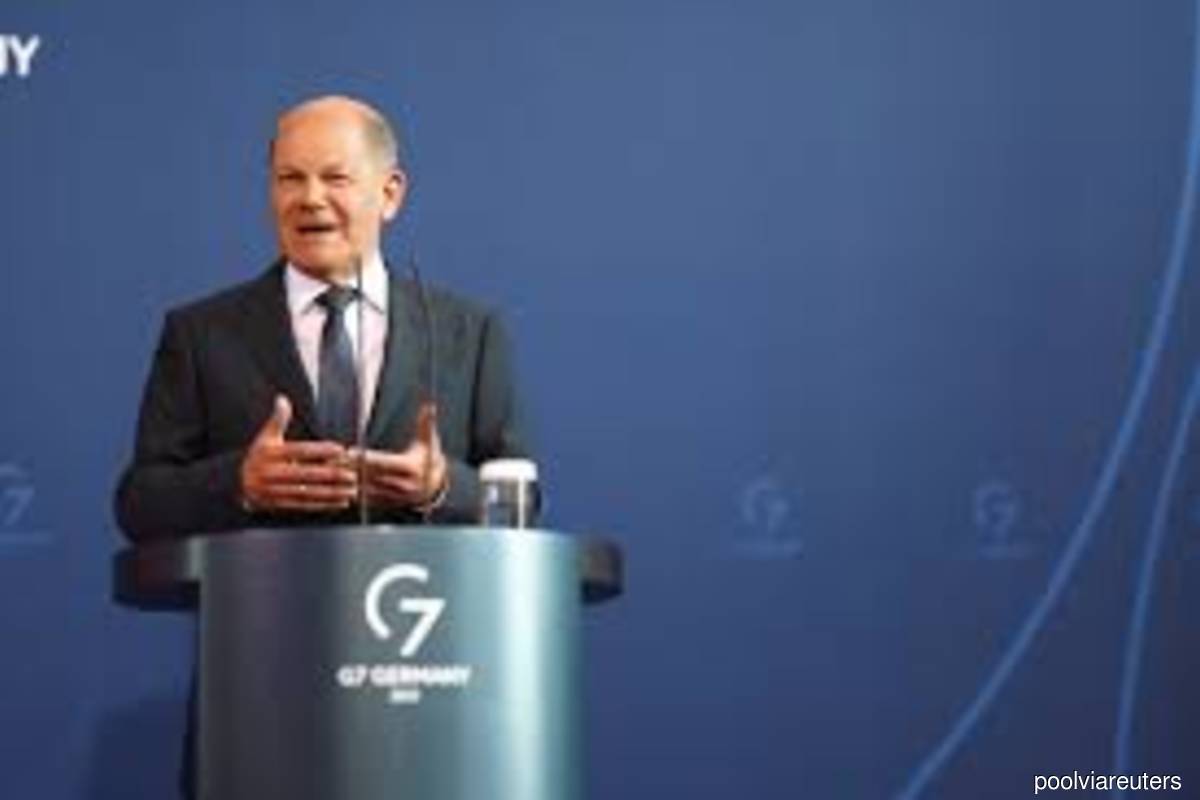
he was quoted as saying.That's why it is all the more important that we consider each step very carefully and coordinate closely with one another,
To avoid an escalation towards NATO is a top priority for me.
This was a departure from his previous statements on the topic, focusing on the fact that Germany's own military's stocks were too depleted to send any heavy battlefield weapons while those the German industry has said it could supply could not easily be put into use.That's why I don't focus on polls or let myself be irritated by shrill calls. The consequences of an error would be dramatic.
in Ukraine.special military operation
he said.I absolutely do not see how a gas embargo would end the war. If (Russian President Vladimir) Putin were open to economic arguments, he would never have begun this crazy war,
Scholz said this would have considerable consequences not just for Germany but also for Europe and the future financing of the reconstruction of Ukraine.Secondly, you act as if this was about money. But it's about avoiding a dramatic economic crisis and the loss of millions of jobs and factories that would never again open their doors.


http://www.weeklystandard.com/Content/P ... 6zzete.aspthe road that leads to real security and peace is the road that runs through Baghdad.
They pushed for the overthrow of President Nicolás Maduro, after trying to do the same to Hugo Chávez, in Venezuela. They have targeted Daniel Ortega, their old nemesis in Nicaragua.there is nothing we can do short of attacking to force Iran to give up its nuclear weapons.
Yugoslav writer Danilo Kiš https://en.wikipedia.org/wiki/Danilo_Ki%C5%A1 observed.The nationalist is by definition an ignoramus,
The Biden administration is filled with these ignoramuses, including Joe Biden. Victoria Nuland, the wife of Robert Kagan, serves as Biden's undersecretary of state for political affairs. Antony Blinken is secretary of state. Jake Sullivan is national security adviser. They come from this cabal of moral and intellectual trolls that includes Kimberly Kagan, the wife of Fred Kagan, who founded the Institute for the Study of War, William Kristol, Max Boot, John Podhoretz, Gary Schmitt, Richard Perle, Douglas Feith, David Frum and others. Many were once staunch Republicans or, like Nuland, served in Republican and Democratic administrations. Nuland was the principal deputy foreign policy adviser to Vice President [deleted] Cheney.Nationalism is the line of least resistance, the easy way. The nationalist is untroubled, he knows or thinks he knows what his values are, his, that's to say national, that's to say the values of the nation he belongs to, ethical and political; he is not interested in others, they are no concern of his, hell — it's other people (other nations, another tribe). They don't even need investigating. The nationalist sees other people in his own images — as nationalists.
_____________the self-made barbarians of the intelligentsia.
Besides, as they correctly pointed out, Hillary Clinton was a fellow neocon. And liberals wonder why nearly half the electorate, who revile these arrogant unelected power brokers, as they should, voted for Trump.big, fat mistake.
they warned, was tocourse of weakness and drift,
Huge majorities in Congress, Republican and Democrat, rushed to pass the Iraq Liberation Act. Few Democrats or Republicans dared be seen as soft on national security. The act stated that the United States government would work toput our interests and our future at risk.
and authorized $99 million towards that goal, some of it being used to fund Ahmed Chalabi's Iraqi National Congress, which would become instrumental in disseminating the fabrications and lies used to justify the Iraq war during the administration of George W. Bush.remove the regime headed by Saddam Hussein
Removing Saddam Hussein from power, Kristol crowed, wouldthe way to tame the Arab street is not with appeasement and sweet sensitivity but with raw power and victory. …The elementary truth that seems to elude the experts again and again … is that power is its own reward. Victory changes everything, psychologically above all. The psychology in the [Middle East] is now one of fear and deep respect for American power. Now is the time to use it.
It did, of course, but not in ways that benefited the U.S.transform the political landscape of the Middle East.
(Emphasis mine.)America must be able to fight Iraq and North Korea, and also be able to fight genocide in the Balkans and elsewhere without compromising its ability to fight two major regional conflicts. And it must be able to contemplate war with China or Russia some considerable (but not infinite) time from now.
They have long demanded the stationing of NATO troops in Ukraine, with Robert Kagan saying thattake the war to these people.
His wife, Victoria Nuland, was outed in a leaked phone conversation in 2014 with the U.S. ambassador to Ukraine, Geoffrey Pyatt, disparaging the EU and plotting to remove lawfully elected President Viktor Yanukovych and install compliant Ukrainian politicians in power, most of whom did eventually take power. They lobbied for U.S. troops to be sent to Syria to assist "moderate" rebels seeking to overthrow Bashar al-Assad. Instead, the intervention spawned the Caliphate. The U.S. ended up bombing the very forces they had armed, becoming Assad's de facto air force.we need to not worry that the problem is our encirclement rather than Russian ambitions.
Robert Kagan wrote in the latest issue of Foreign Affairs of Ukraine, lamenting our refusal to militarily confront Russia earlier.It is true that acting firmly in 2008 or 2014 would have meant risking conflict,
In short, don't worry about going to war with Russia, Putin won't use the bomb.But Washington is risking conflict https://www.foreignaffairs.com/articles ... worth-risk now; Russia's ambitions have created an inherently dangerous situation. It is better for the United States to risk confrontation with belligerent powers when they are in the early stages of ambition and expansion, not after they have already consolidated substantial gains. Russia may possess a fearful nuclear arsenal, but the risk of Moscow using it is not higher now than it would have been in 2008 or 2014, if the West had intervened then. And it has always been extraordinarily small: Putin was never going to obtain his objectives by destroying himself and his country, along with much of the rest of the world.
But by naming a Horn of Africa envoy, as opposed to separate envoys for Sudan and Ethiopia, the administration suggested that it saw the region as more than just a series of fires in need of extinguishing, but rather one of enormous strategic importance being put under strain by a host of, in the State Department’s own words,
The question then, as it is now, is how would the administration prioritize the competing aspects of such a broad portfolio?interlinked political, security, and humanitarian crises.