Ethiopia: Salvaging a failing state (Responsible Statecraft)
Posted: 10 Nov 2021, 20:41
Prime Minister Abiy Ahmed has lost the war; the time has come for a ceasefire to negotiate the country’s future.
“Our overriding interest in the Horn of Africa is stability.” These were the words of Jeffrey Feltman, U.S. Special Envoy to the region, speaking at the United States Institute of Peace on November 2. At the end of the session, he summed up the challenge he faced for his upcoming mission to Ethiopia to seek a negotiated end to the war, now a year old, between the Federal Government headed by Prime Minister Abiy Ahmed and the government of the Tigray region headed by the Tigray People’s Liberation Front, or TPLF. “The prime minister, I believe, thinks that the TPLF wants to replace him,” Feltman said. “The TPLF thinks that the prime minister wants to, probably, exterminate them.” He immediately added — more in hope than conviction — “I don’t think either is true.”
The first task in halting Ethiopia’s slide into further calamity is finding a formula whereby Abiy and the Tigrayans can agree on a ceasefire, humanitarian access to the starving, an end to hate speech, and talking to one another. The government in Addis Ababa, however, insists that the TPLF is a “terrorist” organization, and Abiy’s spokesperson, Billene Seyoum, asserted last week that she wasn’t “entirely sure there are successful examples of any country talking with terrorists and coming out in an amicable way.” Of the several examples Feltman could have chosen to prove the contrary — Namibia, South Africa, Northern Ireland — he chose to speak about the peace process in Colombia.
The Tigrayan leadership laid out their preconditions for talking in July, including withdrawal of non-Tigrayan forces from their lands, lifting the humanitarian siege, and respecting the existing federal constitution. Tigrayans are unimpressed with an international response that ignored the total war fought against them for the first half of the year, followed by howls of alarm when the fighting now threatens Addis Ababa.
The Ethiopian capital has long been a bubble, in which famines and fighting in the provinces are disregarded until the residents feel the hunger and hear the gunfire. That bubble burst last week, and embassies are hurrying to evacuate their staffs. Government officials are sending their families abroad. Every flight out of Addis Ababa is overbooked.
The brute reality: the Tigray Defense Force has comprehensively defeated the Ethiopian National Defense Force. Abiy has lost the war. One of Africa’s most professional and powerful militaries has been reduced to an assemblage of conscripts, militia, and remnants of his soldiery that resembles a fighting force but is disorganized and demoralized — and no match for the TDF.
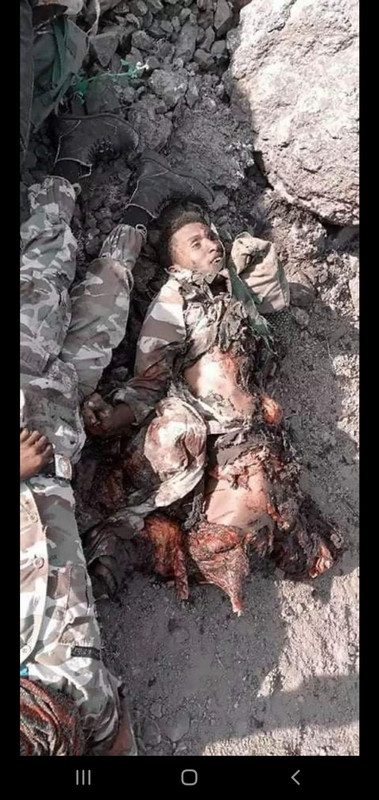
The world’s biggest conventional battles today have gone unreported. The Ethiopian army lost ten of its twenty divisions in Tigray in May and June, with at least 10,000 dead and a similar number taken prisoner. The hastily reconstituted and expanded army was defeated on an even larger scale in battles for the Amhara cities of Dessie and Kombolcha last month.
The victor is the TDF, a force that didn’t exist a year ago. In the face of an onslaught that appeared determined to crush their bodies and spirits through massacre, rape, and starvation, the Tigrayans set aside their internal differences and united in resistance.
Continue reading https://responsiblestatecraft.org/2021/ ... ing-state/
“Our overriding interest in the Horn of Africa is stability.” These were the words of Jeffrey Feltman, U.S. Special Envoy to the region, speaking at the United States Institute of Peace on November 2. At the end of the session, he summed up the challenge he faced for his upcoming mission to Ethiopia to seek a negotiated end to the war, now a year old, between the Federal Government headed by Prime Minister Abiy Ahmed and the government of the Tigray region headed by the Tigray People’s Liberation Front, or TPLF. “The prime minister, I believe, thinks that the TPLF wants to replace him,” Feltman said. “The TPLF thinks that the prime minister wants to, probably, exterminate them.” He immediately added — more in hope than conviction — “I don’t think either is true.”
The first task in halting Ethiopia’s slide into further calamity is finding a formula whereby Abiy and the Tigrayans can agree on a ceasefire, humanitarian access to the starving, an end to hate speech, and talking to one another. The government in Addis Ababa, however, insists that the TPLF is a “terrorist” organization, and Abiy’s spokesperson, Billene Seyoum, asserted last week that she wasn’t “entirely sure there are successful examples of any country talking with terrorists and coming out in an amicable way.” Of the several examples Feltman could have chosen to prove the contrary — Namibia, South Africa, Northern Ireland — he chose to speak about the peace process in Colombia.
The Tigrayan leadership laid out their preconditions for talking in July, including withdrawal of non-Tigrayan forces from their lands, lifting the humanitarian siege, and respecting the existing federal constitution. Tigrayans are unimpressed with an international response that ignored the total war fought against them for the first half of the year, followed by howls of alarm when the fighting now threatens Addis Ababa.
The Ethiopian capital has long been a bubble, in which famines and fighting in the provinces are disregarded until the residents feel the hunger and hear the gunfire. That bubble burst last week, and embassies are hurrying to evacuate their staffs. Government officials are sending their families abroad. Every flight out of Addis Ababa is overbooked.
The brute reality: the Tigray Defense Force has comprehensively defeated the Ethiopian National Defense Force. Abiy has lost the war. One of Africa’s most professional and powerful militaries has been reduced to an assemblage of conscripts, militia, and remnants of his soldiery that resembles a fighting force but is disorganized and demoralized — and no match for the TDF.
The world’s biggest conventional battles today have gone unreported. The Ethiopian army lost ten of its twenty divisions in Tigray in May and June, with at least 10,000 dead and a similar number taken prisoner. The hastily reconstituted and expanded army was defeated on an even larger scale in battles for the Amhara cities of Dessie and Kombolcha last month.
The victor is the TDF, a force that didn’t exist a year ago. In the face of an onslaught that appeared determined to crush their bodies and spirits through massacre, rape, and starvation, the Tigrayans set aside their internal differences and united in resistance.
Continue reading https://responsiblestatecraft.org/2021/ ... ing-state/