By Rodnet Muhumuza June 13, 2021
First the Eritrean soldiers stole the pregnant woman’s food as she hid in the bush. Then they turned her away from a checkpoint when she was on the verge of labour.
So she had the baby at home and walked 12 days to get the famished child to a clinic in the northern Ethiopian region of Tigray. At 20 days old, baby Tigsti still had shrivelled legs and a lifeless gaze — signs of what the United Nations’ top humanitarian official calls the world’s worst famine conditions in a decade.
“She survived because I held her close to my womb and kept hiding during the exhausting journey,” said Abeba Gebru, 37, from Getskimilesley.
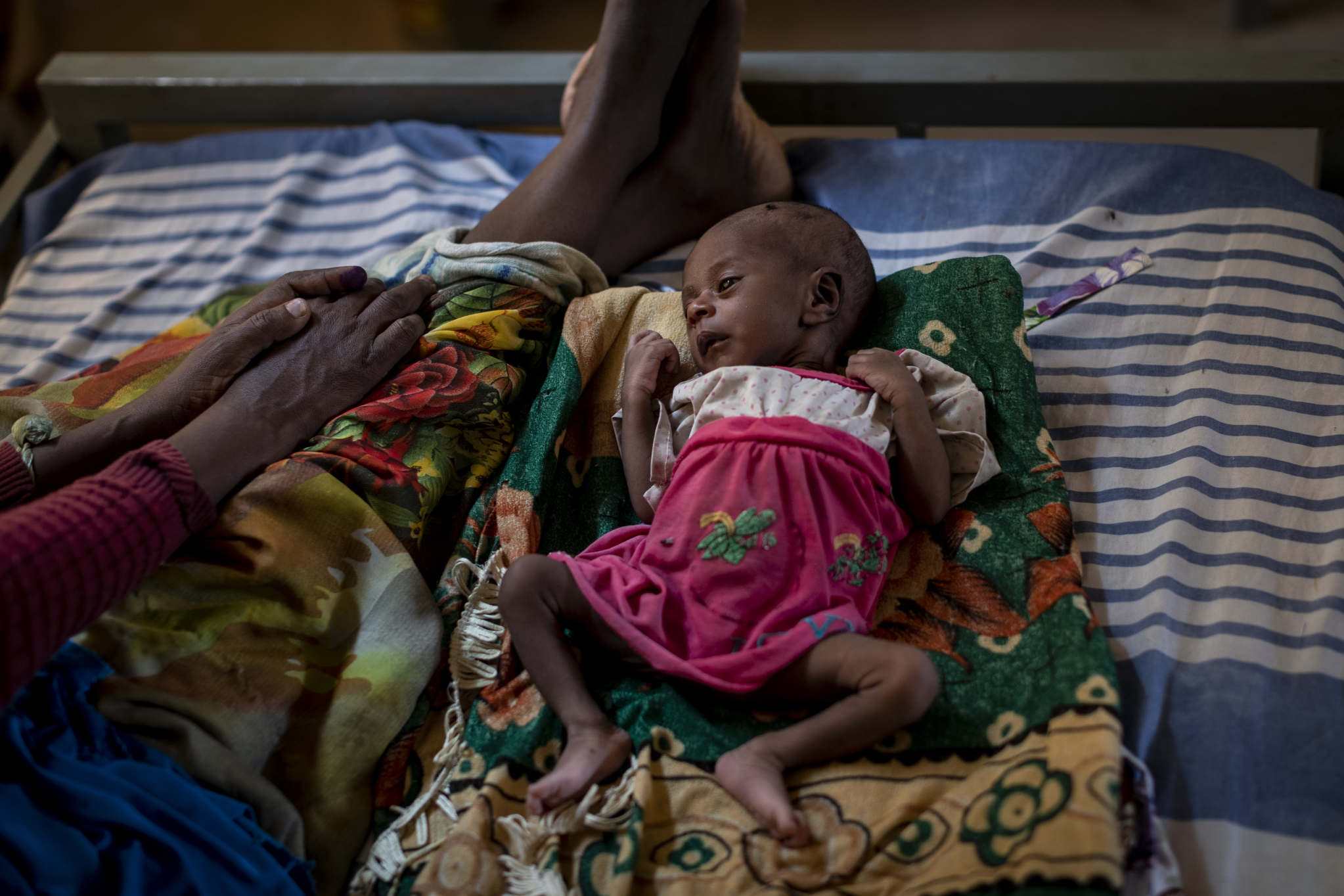
Tigsti Mahderekal, 20 days old, was carried by her mother for 12 days to a medical clinic in Abi Adi, in search of food and medicine. Credit:AP
Here, in war-torn Tigray, more than 350,000 people already face famine, according to the UN and other humanitarian groups. It is not just that people are starving; it is that many are being starved. In farming areas in Tigray to which the AP got rare access, farmers, aid workers and local officials confirmed that food had been turned into a weapon of war.
Ethiopian and Eritrean soldiers are blocking food aid and even stealing it, they said, and an AP team saw convoys with food and medical aid turned back by Ethiopian military officials as fighting resumed in the town of Hawzen. The soldiers also are accused of stealing the seeds for planting, killing livestock, looting farm equipment and stopping farmers from harvesting or ploughing.
More than 2 million of Tigray’s 6 million people have already fled, unable to harvest their crops. And those who stayed often cannot plant new crops or till the land because they fear for their lives.
The grinding war in Tigray started in early November, shortly before the harvest season, as an attempt by Ethiopian Prime Minister Abiy Ahmed to disarm the region’s rebellious leaders.
On one side are guerillas loyal to the ousted and now-fugitive leaders of Tigray. On the other are Ethiopian government troops, allied troops from neighbouring Eritrea and militias from Ethiopia’s Amhara ethnic group who see themselves as rivals to the Tigrayan guerillas. Trapped in the middle are the civilians.
The war has spawned massacres, gang rapes and the widespread expulsion of civilians from their homes, and the United States has declared “ethnic cleansing” in western Tigray.
Tigray’s deputy CEO, Abebe Gebrehiwot, echoed the assessment of “ethnic cleansing,” citing “some players who don’t want us to ... plough the land” and others who are preventing the distribution of seeds.
Ethiopia’s government strongly disputes that starvation is being used as a weapon of war. Mitiku Kassa, an official with the National Disaster Risk Management Commission, said on Wednesday that the UN and others have “unfettered access” to Tigray.
“We don’t have any food shortage,” he declared.
That’s not what the AP found out on the ground.
Teklemariam Gebremichael said he and his neighbours were no longer allowed to farm. When Eritrean soldiers came upon him looking after his cattle and harvesting crops, they shot both him and his cows, he said.
He survived. The cows didn’t. With food in short supply, his wound is slow to heal.
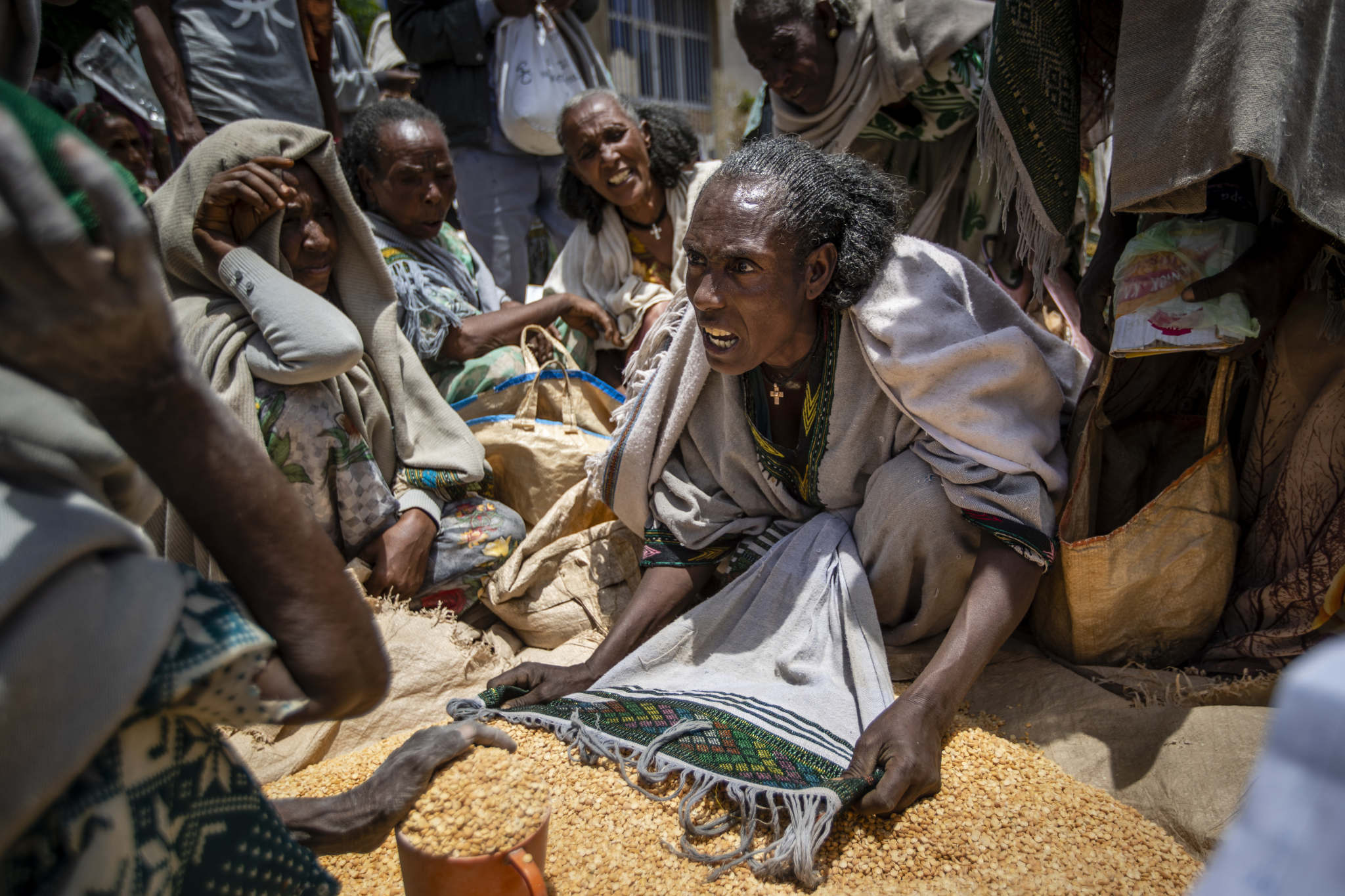
An Ethiopian woman argues with others over the allocation of yellow split peas after it was distributed by the Relief Society of Tigray in the town of Agula. Credit:AP
The whole article
https://www.smh.com.au/world/africa/onl ... 580gc.html