Eritrea: FM Osman Saleh Speaks About the Current Situation
https://www.ulrich-coppel.de/2020/11/18 ... ransition/
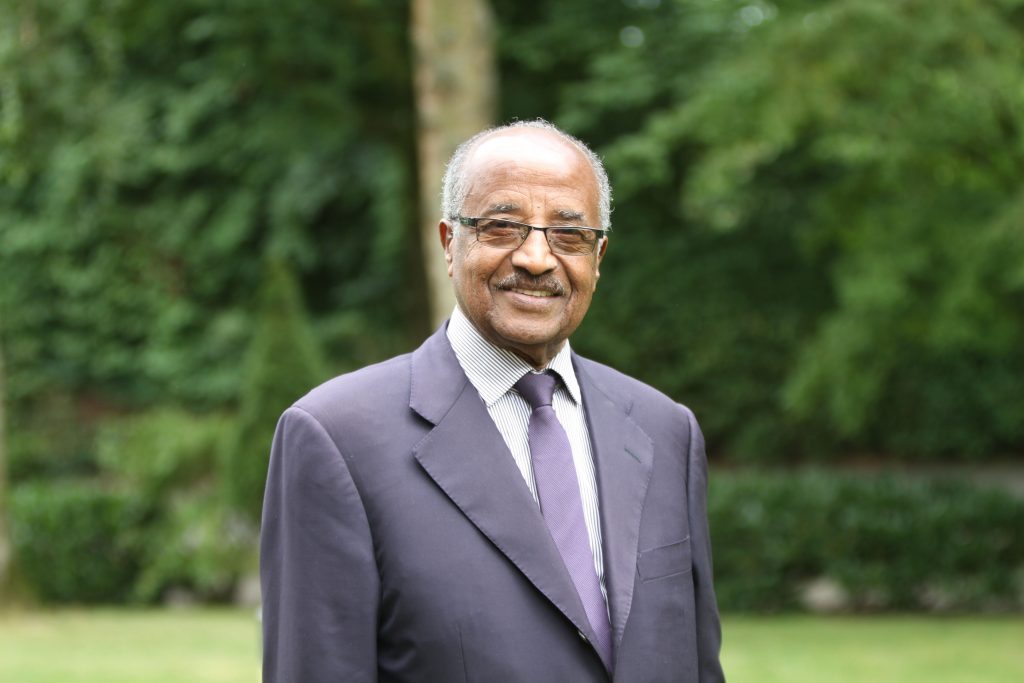 Eritrea’s Foreign Minister Osman Saleh Mohammed in July 2019 in Münster/ Westf. Photo: Ulrich Coppel
18 November 2020
Eritrea’s Foreign Minister Osman Saleh Mohammed in July 2019 in Münster/ Westf. Photo: Ulrich Coppel
18 November 2020
Ethiopia Is Undergoing Through a Transition.
FM, Osman Saleh
ASMARA/ MÜNSTER. In July 2020
Ulrich Coppel sent written questions to Eritrea’s Foreign Minister
Osman Saleh. It was intended as a "
follow-up" to an interview published in the
WESTFÄLISCHE NACHRICHTEN in October 2019.
https://www.wn.de/Welt/Politik/4002249- ... -begrenzen
For technical reasons, however, Osman Saleh was unable to answer the following questions until 16 October 2020. Important fundamental issues, such as the Eritrean National Service, the development of a constitution, but also current affairs such as the state of relations between Germany and Eritrea and COVID were discussed.
On 13 November 2020, the People’s Liberation Front of Tigray (TPLF) launched a missile attack on targets in the Eritrean capital Asmara. This attack was sharply condemned internationally, including by the government of the Federal Republic of Germany.
Ulrich Coppel: Last summer, you were a private guest here in Münster, and we talked about the Eritrean Government’s plan to return the national service to the 18 months that apply in peacetime, the plan to introduce a constitution for the country, and Eritrea’s wish to be supported by Germany in these processes. What has happened since then?
Osman Saleh: Our policy commitments on the constitution and as you mention, the national service, are of course in place because they are rooted on firm convictions and beliefs. However, timelines for implementation of specific policy measures and acts are correlated with determinant variables and trends on the ground. On National Service, the statutory provision – i.e. duration of 18 months in times of peace – is explicit and intact in the law. But, there are factors on the ground that preclude its immediate implementation at this point in time. The same applies to the constitution drafting process. In any case, the issue is, basically, a matter of appropriate timing. In as far as support from Germany is concerned, I do not believe the German government is ready for that. You will have followed the discourse on bilateral assistance in the
Africa Group in the
Bundestag recently. Their whole stance is unfriendly and negative. There are other indicators, which I will not go into specifics here, that corroborate this stance both at the Bundestag as well as in the Executive Branch. Until these positions are rectified, we cannot contemplate of meaningful interaction with Germany.
Ulrich Coppel: The border with Ethiopia by land, has been closed again. What are the reasons?
Osman Saleh: The borders with Ethiopia were opened as a gesture of goodwill by both sides, prior to formulation and signature of the necessary agreements and mechanisms in order to give additional impetus to the peace process. The accompanying agreements that must regulate the movement of peoples are being worked out. These have been in the drawing board and under discussion by both sides. As you know, the July Agreement has five key pillars. In all the cases, preparatory work is being done with all earnestness.
Ulrich Coppel: Two years have passed since the peace agreement and the friendship treaty with Ethiopia. What is the state of affairs?
Osman Saleh: Two years is not a long time for nurturing peace between countries that were entangled in war and at loggerheads with each other for twenty years. But because there is enormous reservoir of good will on both sides; convergence of policies and approaches on issues of mutual concern as well as regional matters, much has been achieved in the past two years. The degree of consultation between the two Heads of State and Government, the work done by the Joint Commission is considerable indeed. We believe that the relationship is healthy and progress is steady. We had fruitful meetings in Addis Abeba this week. We are on the right track and the prospects are immensely good.
Ulrich Coppel: On the current situation in neighbouring Ethiopia. Since the election, which was postponed indefinitely due to the corona, there is massive tension there. [
Note: Meanwhile, the Ethiopian government has set a new election date of May or June 2021.] On 29 June, the well-known Oromo-ethnic singer and activist
Hachalu Hundessa was murdered. Since then, there have been hundreds of deaths, thousands of arrests, closures of editorial offices and a temporary shutdown of the Internet. How is the Eritrean government dealing with this?
Osman Saleh: Ethiopia is undergoing through a transition. A principal challenge in this respect is reforming the politics of institutionalized ethnicity which polarized society and the country. These are not easy tasks due to entrenched policies and practices of the past 25 years. So the problems you raise must be seen in proper historical perspective. As far as Eritrea is concerned, we have full confidence on the wisdom and competence of the Government to address these obstacles.
Ulrich Coppel: A minority of Ethiopians and Eritreans living in the USA, Canada and Europe are engaged in racist, religious or political agitation on the Internet and through social networks. Could Ethiopians and Eritreans who have something against this make an active contribution to moderating the tensions thus triggered, for example by bringing charges of insults, incitement to hatred and calls for violence where they live?
Osman Saleh: I do not think any government can influence or regulate social media. By its nature, social media cannot be edited. What we can do as a government is emphasize the message that hate propaganda is a recipe for conflict and cannot be acceptable on moral grounds. In our national laws, denigration of individuals or groups due to their race, ethnicity, religious beliefs or gender are offences liable to criminal prosecution. That is what governments can do; .i.e. issue appropriate legislation and sensitize people on the perils of racist propaganda.
Ulrich Coppel: The Nile is the waterway of many African countries. The construction of the Grand Ethiopian Renaissance Dam (GERD) in Ethiopia is the reason for an intensified conflict between Ethiopia and the downstream countries Sudan and Egypt, which fear for their own water supply. Currently, positions are deadlocked and war is threatening. What role is the Eritrean government playing?
Osman Saleh: Eritrea’s views are clear. The complexity of the issues aside, the region and the countries concerned will benefit when they agree on mechanisms and arrangements that address the legitimate concerns of the three countries. In this sense, Eritrea is engaged – through quiet diplomacy – in contributing modestly towards this end.
Ulrich Coppel: The People´s Front for Democracy and Justice (PFDJ) has been in power since Eritrea became independent in 1994. How should the younger generation be involved in the country’s leadership?
Osman Saleh: Eritrea’s post-independence period has been dominated by the need to thwart existential threats. Now we have peace and we are determined to consolidate this reality; to ensure its perpetuity. Once this is guaranteed, the domestic political process will take its own course. Within the PFDJ, of course, there are ongoing plans to ensure transfer of greater responsibility to the young generation. This is indeed the political process in any political movement or party. And ultimately, there will be other political movements and parties once the constitution is in place.
Ulrich Coppel: Since the outbreak of the Corona Pandemic, the world is a different place. What is the situation, what are the prospects, and what are the particular problems for Eritrea?
Osman Saleh: This is a vicious pandemic whose nature and tentacles are not yet known. In Eritrea, the approach was clear from the outset. The two pronged approach is based on prevention as the primary tool and mitigation to ensure provision of effective treatment to those who contract the disease. The results so far are extremely encouraging. We have been able to cut the transmission chain significantly. Naturally, the risk is always there as we have continued influx of our nationals from Sudan, Ethiopia, Djibouti and Yemen. Our focus is on putting in quarantine and testing of all new arrivals, aggressive contact tracing and providing treatment for patients. So far, we have only 422 nationals who contracted the disease since the first outbreak on March 11. 376 of these have recovered fully and at the moment, active cases are only 46 individuals. The challenge is to maintain this status for the coming months. We have to bear in mind that vaccines may not be available until late 2021 or 2022. So while easing the restrictions – that has been done incrementally in the past months – we have to ensure that our preventive strategy is focused and effective. [
Note: The number of corona patients in Eritrea, both sick and healthy, corresponds to the date of the response, 16.10.2020]
Ulrich Coppel: Are there any plans when it will be possible again to get visas for travel to Eritrea?
Osman Saleh: People – mainly those who were stranded abroad, expatriate businessmen and experts – are coming through Charter flights. Full resumption of commercial flights will depend on our assessment of the overall risk and trend of transmission in the coming period.
Ulrich Coppel: Is it foreseeable when the airport will open again for entry into Eritrea, or what are the plans in this regard?
Osman Saleh: I have already answered this question in my response to the previous question. In brief, I do not think you can pin a specific date for full resumption of all commercial flights at this point in time. It will be determined with other matters on the basis of thorough assessment of the transmission rate, trend and resultant risk.
Ulrich Coppel Since the outbreak of the Corona Pandemic, many international humanitarian aid organisations have no longer been able to carry out their work in Eritrea. What could Germany do for the people in Eritrea in these times?
Osman Saleh: The UN agencies and other partners who are supportive in our developmental programmes are still active in the country. Some may have reduced their staff for some months. But they are functional almost fully. As far as Germany is concerned, the problem transcends and precedes the outbreak of the pandemic. As we have underlined before, Germany’s overall policy stance is not constructive. It will require substantial review – from their end in our view. We are keen to cultivate the relationship as long as it is based on mutual respect and common interests. We cannot naturally accommodate positions that seek to impose conditions on our policy perspective and developmental approaches.
Ulrich Coppel: The Catholic Church complains about the sometimes violent confiscation and closure of health centres and schools by the Eritrean government. The Eritrean government would have done this out of revenge after the 4 Eritrean bishops published a pastoral letter at Easter 2019 in which demands were made on the government. The hospital wards would have cared for 200,000 people of all faiths. Are the accusations true?
Osman Saleh: This is totally false. The policy stance that restricts religious institutions in developmental work was enacted in 1995. The Government explained its policy precepts and considerations when the law was enacted to all the religious institutions. The principal reason behind the policy is to ensure integrity of the secularism of the State in a multi-religious society. Religious groups can donate funds – and this has to be generated locally – to development projects under implementation by the various Regional Administrations. But they cannot be involved in direct implementation because that is fraught with catering for their own followers to create asymmetry and polarization. They cannot also seek external assistance for the same reasons. The services provided by the Catholic wards or schools were a drop in the ocean compared to what is done by the public sector (or non-sectarian private sector) on a national level. Nobody gave a serious thought to the pastoral letter that you mention. You know, the Catholic Church has fewer than 2% followers in the country. And even with that small constituency, it is questionable whether majority of the followers of the Church subscribe to political meddling of the Bishops.
Ulrich Coppel: What are the reasons, why the Eritrean government now runs these facilities alone?
Osman Saleh: I have already responded in my previous answer. Social justice and giving equal opportunity to all citizens generally translates into the public sector doing the lion’s job in the education and health services. If education and health services are largely private, then access will be limited to those who can afford it. This is not healthy for society. And especially in our case where the entire population has shouldered the burden in the liberation struggle and the second war to defend our sovereignty and territorial integrity. For religious institutions to carry out these functions is fraught with the risk of tampering with religious harmony within a multi-religious setting.
Ulrich Coppel: Can the Eritrean government possibly imagine again in the future to cooperate with the Catholic Church in the operation of such facilities – and if so, in what form, and under what conditions?
Osman Saleh: Look, the Catholic Church – and this applies equally to the Coptic/orthodox Church, the Protestant Church and Islamic Faith – have core spiritual duties and functions in proselytizing their beliefs and guiding the morality of society. These are major contributions to society and the country. Had Eritrean been hòmogenous in terms of religion, widening the scope of the Church to include other temporal sectors could have been OK. But secularism is vital in religiously heterogeneous societies. Discarding this approach will ultimately lead to mushrooming of fundamentalist groups – of the Christian or Islamic variety. This will be harmful to societal cohesion and well-being.
____________
German Version
https://ulrich-coppel.de/2020/11/18/eth ... ransition/…


 War
War
 Don’t forget they have to hire someone and poor Ethiopia is looking for sirnay canada to survive?
 YES.
YES.


