Alvarez Francisco Journey to Abysinnia
Posted: 31 Oct 2020, 01:43
Alvarez Francisco († 1533/42), Portuguese explorer. - The Franciscan from the area of Cintra in Portugal was the chaplain of the Portuguese king and beneficiary of San Justa in Coimbra.
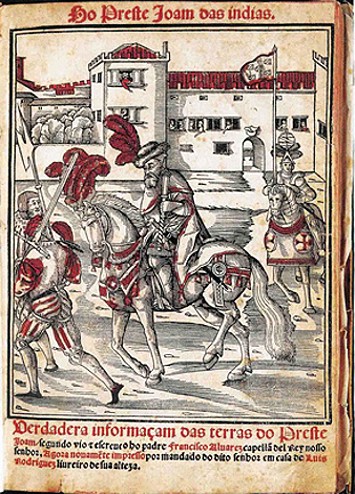
The Portuguese embassy with Alvarez, consisting of 18 people, reached the port of Massawa in April 1520, from where it set out for the interior. The messenger Mateus, who had traveled from Abysinnia via India to Portugal. The Portuguese embassy under the leadership of Rodrigo de Lima moved via Debarwa and Aksum, the Hayk Estifanos and Debre Libanos to Tegulet, where on November 19. In 1520 he reached the Negus Lebna Dengel, who declared, however, that it was not he but the empress Elleni, who had meanwhile been deprived of power, that had sent the messenger to Portugal. An alliance was therefore not concluded. In 1521 the embassy wanted to return to Portugal, but waited in vain for a ship on the coast. The embassy was only able to leave Abysinnia at the end of April 1526. - Alvarez wrote a very valuable travelogue after the trip, which appeared in 1540 in a shortened version under the title "Ho Preste Joam das indias. Verdadera informacam das terras do Preste Joam" in Lisbon. A valuable help for Alvarez was the Portuguese Pero da Covilham, who had lived in Abysinnia since around 1494 and who served him as an interpreter. Alvarez first described the journey to the court of the Negus in the manner of an itinerary. Some of the records probably originated in Ethiopia itself. In view of the fact that the Imam Ahmed Granj ("the left-handed") destroyed a large part of Ethiopia between 1531 and 1543, the report about the cathedral of Aksum is of particular importance. For more than a century, the Minorite's account remained the primary source on Ethiopia. He was the first European to describe the rock-hewn churches of Lalibela, Lake Zway in the south of the empire, the conditions in Eritrea, the Muslim empire "Dangalli" (Danakil) and "Adea" (Hadya) as well as "Damute" (Damot) and "Gojam "(Gojam) where the Nile rises. The conversations with the Negus and the Abuna Markos gave a deep insight into the Abysinnian culture. He was particularly interested in the rituals of the church, especially baptism and circumcision, as well as the country's military equipment. The Negus also told him the story of the descent of the emperors of Solomon and the queen of Sheba. A wealth of topographical names are mentioned here for the first time. Unfortunately the original manuscript is lost; three Vatican manuscripts contain partially more complete versions in Italian translation. Letters from the Negus to the Pope and the King of Portugal were added as an appendix to the travelogue. The report on the "Monophysite" Church in Ethiopia is far from the intransigence that was shown towards the "schismatics" at the time of the Council of Trent. However, he criticized Old Testament practices such as circumcision and keeping the Sabbath, as well as the lack of education of the clergy. - Via Goa and Cochin the Portuguese fleet returned to Lisbon in July 1527 with the Ethiopian priest Zagazabo. The king received the ambassadors in Coimbra; But Ethiopia had for Portugal
The Portuguese embassy with Alvarez, consisting of 18 people, reached the port of Massawa in April 1520, from where it set out for the interior. The messenger Mateus, who had traveled from Abysinnia via India to Portugal. The Portuguese embassy under the leadership of Rodrigo de Lima moved via Debarwa and Aksum, the Hayk Estifanos and Debre Libanos to Tegulet, where on November 19. In 1520 he reached the Negus Lebna Dengel, who declared, however, that it was not he but the empress Elleni, who had meanwhile been deprived of power, that had sent the messenger to Portugal. An alliance was therefore not concluded. In 1521 the embassy wanted to return to Portugal, but waited in vain for a ship on the coast. The embassy was only able to leave Abysinnia at the end of April 1526. - Alvarez wrote a very valuable travelogue after the trip, which appeared in 1540 in a shortened version under the title "Ho Preste Joam das indias. Verdadera informacam das terras do Preste Joam" in Lisbon. A valuable help for Alvarez was the Portuguese Pero da Covilham, who had lived in Abysinnia since around 1494 and who served him as an interpreter. Alvarez first described the journey to the court of the Negus in the manner of an itinerary. Some of the records probably originated in Ethiopia itself. In view of the fact that the Imam Ahmed Granj ("the left-handed") destroyed a large part of Ethiopia between 1531 and 1543, the report about the cathedral of Aksum is of particular importance. For more than a century, the Minorite's account remained the primary source on Ethiopia. He was the first European to describe the rock-hewn churches of Lalibela, Lake Zway in the south of the empire, the conditions in Eritrea, the Muslim empire "Dangalli" (Danakil) and "Adea" (Hadya) as well as "Damute" (Damot) and "Gojam "(Gojam) where the Nile rises. The conversations with the Negus and the Abuna Markos gave a deep insight into the Abysinnian culture. He was particularly interested in the rituals of the church, especially baptism and circumcision, as well as the country's military equipment. The Negus also told him the story of the descent of the emperors of Solomon and the queen of Sheba. A wealth of topographical names are mentioned here for the first time. Unfortunately the original manuscript is lost; three Vatican manuscripts contain partially more complete versions in Italian translation. Letters from the Negus to the Pope and the King of Portugal were added as an appendix to the travelogue. The report on the "Monophysite" Church in Ethiopia is far from the intransigence that was shown towards the "schismatics" at the time of the Council of Trent. However, he criticized Old Testament practices such as circumcision and keeping the Sabbath, as well as the lack of education of the clergy. - Via Goa and Cochin the Portuguese fleet returned to Lisbon in July 1527 with the Ethiopian priest Zagazabo. The king received the ambassadors in Coimbra; But Ethiopia had for Portugal