Ethiopian News, Current Affairs and Opinion Forum
Zmeselo
Senior Member+
Posts: 37030
Joined: 30 Jul 2010, 20:43

The “Interventionist” and “Destabilizer” Canard

Post by Zmeselo » 27 Sep 2020, 14:36


The “Interventionist” and “Destabilizer” Canard

By: Dr. Fikrejesus Amahazion

https://shabait.com/2020/09/26/the-inte ... er-canard/

GENERAL

On Sep 26, 2020


Last week, the popular website AllAfrica.com featured an article titled, “US-Ethiopia Relations Take a Wrong Turn”, authored by Johnnie Carson, who served as US Assistant Secretary of State for Africa from 2009 to 2012 during the first Obama administration and is a former US ambassador to Uganda, Zimbabwe, and Kenya. The article strongly criticized the Trump administration’s recent decision to suspend and delay development assistance to Ethiopia, over the latter’s filling of the new Grand Ethiopian Renaissance Dam (GERD). In the course of criticizing and arguing against the Trump administration’s decision, the author made several claims about Eritrea which merit further discussion.

Specifically, Carson warned that:
If Ethiopia becomes distracted by internal conflict, Al- Shabaab terrorists in neighboring Somalia could expand their activities in Ethiopia’s large Somali region. And Eritrea, which has a history of regional conflict and covert interventionism, could take advantage of the situation to destabilize Ethiopia and increase its regional influence.
For a relatively brief statement, there are a fair number of problems and issues to unpack.

To begin, the warnings about destabilization and interventionism are ironic, if not mighty rich, coming as they do from an American official. A quick look at the historical record shows clearly, just how destabilizing and interventionist the US has been in many parts of the world over many decades.

In terms of the applicability of the claims against Eritrea, it is well to note the country’s long-standing general foreign policy and approach. In brief, it may be described as being anchored on the promotion of a safe and cooperative neighborhood. Since its independence, the country has always strongly believed in non-interference in the domestic affairs of other states, respect for sovereignty, the peaceful settlement of disputes, and the strict adherence to international law. Moreover, Eritrea’s longtime general principles and goals include:
to become a respected member of the international community, by coexisting in harmony and cooperation with its neighbors; and by contributing, to the extent of its capability, to regional and global peace, security, and development.
It is certainly true, that Eritrea has only just emerged from decades of destructive conflict and a tense “no peace, no war” stalemate. Recall, too, that previous US administrations played a role, generally negative, in those events. However, one must bear in mind that war has never been the desire or preference of Eritrea. The country was forced to take up arms, in order to defend its territorial sovereignty and maintain its hard-won independence. At this point, after decades of war, illegal sanctions, numerous challenges, and various setbacks, and after having paid an enormously high price in national blood, treasure, and lost opportunities, Eritrea is focused on peace, development, and cooperation. It does not view the situation as a zero-sum game, or an opportunity to gain benefits at another’s expense. It recognizes how the fates of the countries of the region are closely linked, and understands that peace and cooperation will allow all to reach greater heights.

Notably, the article’s claims about interventionism and destabilization are essentially regurgitations of the ones that were regularly made against Eritrea by previous US administrations; including the one in which the author of the article served. However, rather than being rooted in truth or based on solid evidence or fact, the claims were politicized smears used to help gather support for international sanctions against Eritrea. The latter were engineered by the previous US and Ethiopian governments in order to punish Eritrea for

a) refusing to yield its position and the legal course on the Eritrea Ethiopia Boundary Commission ruling, thus thwarting a key imperative for the former US administration’s “regional enforcer” and proxy, Ethiopia, and

b) for Eritrea’s open and candid criticisms of flawed US policies, in the Horn of Africa.

Finally, the Ambassador is correct to identify the dangers posed by Al-Shabaab. The militant Islamist terror group, responsible for so much violence, death, and destruction in the region, can only be denounced and condemned in the strongest, most withering terms. But, it is particularly interesting to explore the rise of the terror group and recount how we got here. Specifically, the group’s emergence and growth can be traced back to the late-2006 US-backed Ethiopian invasion of Somalia. The invasion, ostensibly undertaken to prevent Somalia from becoming a source of terror and a safe haven for terrorists, actually led to the growth of violent extremism and an increase in terror threats in the region.

Notably, at the time, many parts of Somalia, including Mogadishu, were in the midst of the most sustained period of relative peace, order, safety, and stability that the country had seen for years. However, after the ill-advised US-backed Ethiopian invasion, which violated UN Security Council Resolution 1725 and resolutions or governing principles of regional bodies, Somalia, much like Iraq after the US invasion not long before, became a magnet for terrorists from around the world and a key hub of terrorist operations.

Although the fierce resistance and insurgency in Somalia were comprised of a broad array of local groups and elements, Al-Shabaab emerged to become the most potent military force. Flourishing in the midst and aftermath of the brutal invasion and occupation, Al-Shabaab morphed from a small, relative “non-player” in Somalia, with weak links to Al- Qaeda, to eventually pledging its allegiance to the global terrorist organization and becoming one of the most powerful and devastating terror groups in the region.

In the end, while the Ambassador’s criticisms about the Trump administration’s recent moves may or may not be correct or legitimate, the claims made about Eritrea hold little water and are not quite accurate.
Last edited by Zmeselo on 28 Sep 2020, 14:34, edited 1 time in total.

Zmeselo
Senior Member+
Posts: 37030
Joined: 30 Jul 2010, 20:43

Re: The “Interventionist” and “Destabilizer” Canard

Post by Zmeselo » 27 Sep 2020, 14:47


ልምዓት ብማይ: ደቡብ ጋሽ ባርካ!
(Ismail Mussa: @IsmailM55208988)

_________________


Cycled out to Durfo yesterday for first time, since March. View is always breathtaking. Today, went out along Keren road and saw lots of Meskel flowers.
(@UKAmb_Walker: @UkambW)

Zmeselo
Senior Member+
Posts: 37030
Joined: 30 Jul 2010, 20:43

Re: The “Interventionist” and “Destabilizer” Canard

Post by Zmeselo » 27 Sep 2020, 15:12


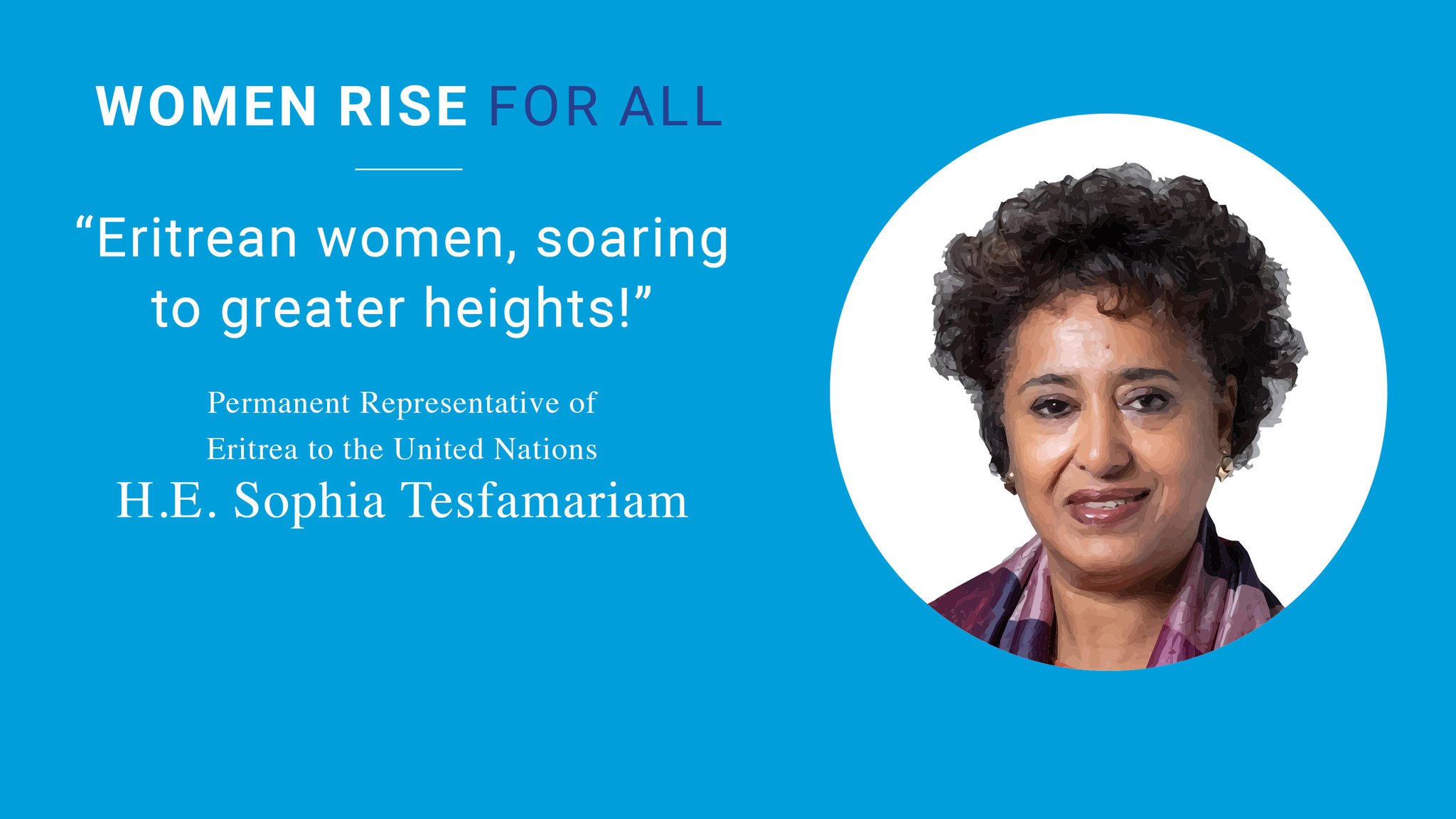
Honored 2 participate in initiative by Amina J. Mohammed & hail Eritrea's response 2 COVID19, & the leadership of H.E. Amna Nurhussein, in the global fight. Women continue 2 play an important role in Eritrean cultural, economic, social & political life.
(Amb. Sophia Tesfamariam: @stesfamariam)

______________


"The History Of The USA In Eritrea", by Amanuel Biedemariam
The History Of The USA In Eritrea is a significant untold history of the US involvement in Africa, that set the precedent of the US presence in Africa in the aftermath of World War II...... https://useritrea.com/2020/09/27/the-hi ... edemariam/

______________


8th of October // Nordic-African Business Webcast
Join business and policy leaders for a high level perspective on the challenges, and opportunities, the new reality presents.

Request an invitation and check out the programme here:

https://webcast.norwegianafrican.no/
(NABA: @NABAorg)

_______________


Eritrea Reality vs wrong image by enemies.
(Berhane Araia: @Warsai14)
Last edited by Zmeselo on 28 Sep 2020, 07:52, edited 9 times in total.

Zmeselo
Senior Member+
Posts: 37030
Joined: 30 Jul 2010, 20:43

Re: The “Interventionist” and “Destabilizer” Canard

Post by Zmeselo » 27 Sep 2020, 15:53


Faith, Religion & belief system in Eritrea has deep rooted meaning spiritually and transcended for centuries. It can not easily be disturbed or distorted. Happy Meskel to all followers of Christian orthodox faith in Eritrea.
(Sirak Bahlbi: @SirakBahlbi)


ERi-TV: ሞዛይክ - ዕላል ምስ ሰለሙን ፋኑኤል (ወዲ ፋኖ): ብዛዕባ ኣገባብ ኣበዓዕላ ቁድስ ዮሃንስን መስቀልን ኣብ ንእስነቱ ከማይ ይመስል ከምዝነበረ

Last edited by Zmeselo on 28 Sep 2020, 03:18, edited 3 times in total.

Zmeselo
Senior Member+
Posts: 37030
Joined: 30 Jul 2010, 20:43

Re: The “Interventionist” and “Destabilizer” Canard

Post by Zmeselo » 27 Sep 2020, 16:18


Julian Alaphilippe wins world title at Imola World Championships


Julian Alaphilippe (France) attacks over the last climb to take a solo win at the World Championships in Imola (Image credit: Getty Images)
https://www.cyclingnews.com/races/uci-r ... e/results/


Merhawi Kudus & Amanuel Gebreigzabhier finish 67'th & 69th, respectively. The only other African to complete the 258.2 kilometres race is Louis Meintjes (South Africa), at 78'th place out of 176 starting.


Temt
Member+
Posts: 5439
Joined: 04 Jun 2013, 22:23

Re: The “Interventionist” and “Destabilizer” Canard

Post by Temt » 27 Sep 2020, 16:38

Zmeselo wrote:
27 Sep 2020, 16:18


Julian Alaphilippe wins world title at Imola World Championships


Julian Alaphilippe (France) attacks over the last climb to take a solo win at the World Championships in Imola (Image credit: Getty Images)
https://www.cyclingnews.com/races/uci-r ... e/results/


Merhawi Kudus & Amanuel Gebreigzabhier finish 67'th & 69th, respectively. The only other African to complete the 258.2 kilometres race is Louis Meintjes (South Africa), at 78'th place out of 176 starting.

Congratulations tot the French guy for wining the show and am proud of our youngsters for they will always remain champions in our heart!

Zmeselo
Senior Member+
Posts: 37030
Joined: 30 Jul 2010, 20:43

Re: The “Interventionist” and “Destabilizer” Canard

Post by Zmeselo » 28 Sep 2020, 03:15


_______________


Contribution to bolster National Fund, continues

LOCAL NEWS

https://shabait.com/2020/09/27/contribu ... continues/


Asmara, 27 September 2020 – In the third round of contribution to bolstering the National Fund to combat the spread of the COVID-19 pandemic, nationals residing in the Republic of South Sudan contributed 102 thousand 650 USD and 1 million 138 thousand and 350 South Sudanese Pounds, according to the report from the Embassy of Eritrea to the country.

Accordingly, employees of ‘Spa Nile’ water bottling factory contributed 300 US Dollars, employees of ‘Eagle International’ 450 USD, employees of ‘Orotta’ bakery 325 USD, employees of various Eritrean business institutions 42 thousand 615 USD, and 666 thousand 600 South Sudanese Pounds, several communities in South Sudan contributed a total of 17 thousand 315 USD and 454 thousand and 750 SSP.

Similarly, the YPFDJ organization in South Sudan contributed 200 USD, owner of Temesgen General Trading 5 thousand USD, owner of East Afro Construction Engineering and Trading Company 3 thousand USD, owners of Zala General Trading 6 thousand USD, owners of Canaan Company Limited 10 thousand USD, a number of small-scale business owners also contributed a total of 17 thousand 200 USD.

It is to be recalled that in the previous rounds, nationals residing in South Sudan contributed 407 thousand 994 USD and 2 million 645 thousand 700 SSP. The total contribution summed up to be 510 thousand 644 USD and 3 million 784 thousand and 50 SSP, the report added.

In related news, the Ministry of Health reported that in the last six months, nationals in Italy have contributed a total of 410 thousand 605 Euro.

As part of the contribution, the NUEW branch in Bari contributed 300 Euro, the NUEW branch in Abruzzo 200 Euro, Asteryo Mariam cooperative association in Roma 2 thousand Euro, St. Michael cooperative association in Milan 2 thousand Euro, Full Gospel Church in Firenze 500 Euro, and Hilina association in Milan 4 thousand Euro.

Moreover, Tsinat group in Germany contributed a total of 6 thousand 100 Euro, St. George cooperative association in Hanover 3 thousand 540 Euro, the Association of 20 June in Offenburg 2 thousand Euro, and Medhanie Alem cooperative association of Eritrean women in Frankfurt and its environs contributed 1 thousand Euro.
Last edited by Zmeselo on 28 Sep 2020, 14:43, edited 6 times in total.

Zmeselo
Senior Member+
Posts: 37030
Joined: 30 Jul 2010, 20:43

Re: The “Interventionist” and “Destabilizer” Canard

Post by Zmeselo » 28 Sep 2020, 04:23


The Harvest of Hard Work

By: Billion Temesghen

https://shabait.com/2020/09/26/the-harv ... hard-work/

GENERAL

On Sep 26, 2020


Editor’s Note: Understanding Eritrea is a series of articles that shed light on the development path, anchored on the preservation and utilization of soil and water resources that Eritrea is following.

In the morning hours of August 21st our team headed to Adi Tsenay, a village surrounded by rocky hills in the vicinity of Logo Dam. We, the journalists, were told that the government’s efforts to conserve water aimed at more than providing potable water to the people of villages and towns near the water reservoirs. Our team visited seven villages included in the Logo Dam pilot development project to see what lays beyond water conservation and provision. The villages we visited are Adi Zawl, Adi Kelkelti, Adi Halo, Adi Selait, Adi Tsenay, Adi Sherefeto, and Adi Hayo.

Adi Tsenay, a village of 245 households, lies on hilly grounds. Small beautiful houses atop the mountains overlook large swaths of farms, some at the feet of the hills, and some on top. We were welcomed by a group of farmers, three women and three men, one of whom, Mr. Mebrahtu Weldekiristos, is the administrator of the village. A kind and hardworking farmer himself, he has a farm on the west side of the village.


At first, the farm where we were looked like an apple field. However, when we got closer I realized that we were actually looking at ripe mango fruits hanging from big mango trees that cover a large part of the farm.

Adey Birkti Berhane and Keshi Mehari Newayu approached me with mango fruit, probably the sweetest I’ve ever had and started showing me around. They were talking to each other, when I heard Adey Brikiti complain about birds eating the fruits.
These birds know no shame,
said Adey Brikiti.
There is enough for everyone,
replied Keshi Mehari.
Let them have some. Don’t chase them away,
he added, scolding his friend who didn’t show sympathy to the beautiful birds hovering over the mango trees for a taste.

Keshi Mehari looked especially fond of the birds who are now returning as the ecosystem has been getting back to what it used to be many years ago, as Keshi Mehari told me.

Just like Adey Brikiti and Keshi Mehari, Eritrean farmers heavily depend on rain-fed subsistence farming using traditional methods of farming. However, the Government of Eritrea has been working to improve farmers’ lives by encouraging them to shift from dependence on subsistence farming to commercial agriculture. This way, with their varied products, farmers would be able to sustain their families and sell for profit.

The Logo dam project has been designed, to make this a reality. Water reservoirs and check dams were built and extended work in soil and water conservation was carried out, through a joint Government and People venture. Then, the seven villages surrounding Logo Dam started working on a new pattern towards social transformation. After the water was conserved potable water started to be pumped to the villages, and the question, farming, came next.


For more information about the project, we spoke to Zerai Arefe, a young man in his late twenties, who is in charge of the Department of Plant Nursery. He and his 23 teammates — mostly graduates of the College of Agriculture — have a big assignment to assist the farmers of the seven villages, in making the transition from subsistence to commercial farming. They study and analyze the science behind the transformation they have planned and are working with the community.

As the people of the seven villages have been practicing subsistence farming for years, they had to understand the benefits of the new approach if they were to abandon their traditional farming practices. Four years ago, the departments in charge asked the seven villages to each give up one-third of their land for the pilot project to be done.

The land is so precious to farming communities that, although some villages gave pieces of their arable land, some others gave away rocky land. But to Zerai and his colleagues, that was not a problem at all. All they wanted, was to demonstrate to the farmers their approach works.

In the first few months, the departments in charge worked in enriching the pieces of land entrusted to them by the villagers. Where there were rocks, they took them out and laid layers of generative soil and applied procedures to fertilize and turn the lands into productive farmlands. Then they studied what can be grown in the area and came up with a list of fruit trees, appropriate for the climate and land.


Meanwhile, other departments were making way for water supply for the farms. Then, Zerai and his colleagues started planting the seeds and worked on getting a good harvest. After waiting for two years, they got their first harvest.

The villagers were encouraged, to work alongside Zerai and his companions. The farmers were each paid a salary of 500 Nakfa and 45 kilos of grain monthly, so that they could give a few hours of their mornings for a project expected to bring about big changes. And together, Zerai’s team and the farmers, they were able to achieve their goals.

Towards the end of 2017 and the beginning of 2018, for the first time, farmers of the seven villages were finally able to see the results of their hard work. The trees, which are not common in Eritrean highlands, started bearing fruits. The villagers were surprised, by the outcome. But, most importantly, they were convinced about the benefits of growing cash crops, an idea which was suggested to them by the government.


At this time, the seven villages together are reaping fruits from a total of 4415 orange, 80 mandarins, 548 lemons, 3070 guavas, 4294 mangoes (currently in season), 40 shaddocks, 22604 coffee bean plants, 61 avocados, 65 apple, 132 papaya, 278 pomegranate, and 45 tamarind trees. Moreover, efforts to revive indigenous fruit trees are giving slow but steady progress. There are now, some 100 indigenous trees bearing fruits.

Following years of hard work and the dedication of many young professionals, once the land was made arable and gave rich produce, the pieces of land were returned to the villagers. Many villagers were surprised by the decision, because they simply thought that the plan was for them to get paid jobs in their villages. Now, the rich arable pieces of land have become community farms where most of the work is done by the villagers themselves, who take turns to cultivate the farms. The profits, from their cash crop farmlands are used for common needs. Some villages have constructed schools and bought school materials for their kids and some others have agreed to reinvest their profits.

Zerai and his teammates, still give assistance to the farmers. Zerai said, their biggest achievement is the change of perspective in the villagers. He is happy, that convinced by the change they saw, the farmers are now turning their farmlands to commercial farms. Mr. Mebrahtu Sheka Weldekristos, the village administrator of Adi Tsenay, is one of them. Many farmers are now putting their products to the market, many times a year.

The next morning, we went to Adi Selait, where we saw similar farming patterns as the rest of the villages. There, I met Yohannes, approximately three years old. His mother, who was working on the community farm, brought him along. While she was watering the plants, he was stuffing his face with mango. He would first peel one mango and start devouring it, only to get bored soon after and peel another one.

__________________


Call for proper preservation and maintenance of historic buildings

LOCAL NEWS

https://shabait.com/2020/09/27/call-for ... buildings/


Keren, 29 September 2020 – The head of the Culture and Sports branch in Anseba Region, Mr. Siraj Haj called on the public to strengthen endeavors to properly preserve and maintain historic buildings in Keren city. Mr. Siraj made the call, at a meeting conducted in Keren city on 25 September, with the view to assess the process of research and documentation of ancient buildings in the city.

At the meeting in which professional members of Anseba Region construction development, members of the Commission of Culture and Sports, municipality of Keren, National Cartography and Information Center as well as Asmara Heritage Project took part, it was stated that the process of research and documentation of ancient buildings has been underway for the last 1 year and 7 months and that consultation has been made with concerned government institutions on the process of data gathering.

Since the research is aimed at preparing a long-lasting project, Mr. Tekeste Asgedom, head of Anseba Region construction development said that effort has been made to conduct realistic, far-reaching, and factual research and documentation and reminded participants to give utmost focus to the process.

Speaking at the meeting, Eng. Zeregaber Hidray, head of urban planning and housing branch at the Anseba region construction Development indicated that strong monitoring and control of ancient buildings are being conducted.

The participants of the meeting adopted a number of resolutions and recommendations and expressed determination to redouble endeavor towards effective preservation and maintenance of ancient buildings and relics.

At a concluding speech, Ambassador Abdela Musa, Governor of the Anseba Region underlined the responsibility of every citizen in the preservation and maintenance of national heritages as well as the significant role of scientific research and data collection activity to that end.

Documents indicate that there are over 700 ancient buildings owned by individuals, government, and religious institutions in Keren city, those owned by individuals have almost lost their originality, while those under government and religious institutions are in good condition.

Zmeselo
Senior Member+
Posts: 37030
Joined: 30 Jul 2010, 20:43

Re: The “Interventionist” and “Destabilizer” Canard

Post by Zmeselo » 28 Sep 2020, 07:20

ERi-TV: ኣገልግሎት ብሽክለታ ኣብ እዋን ኮረና


Zmeselo
Senior Member+
Posts: 37030
Joined: 30 Jul 2010, 20:43

Re: The “Interventionist” and “Destabilizer” Canard

Post by Zmeselo » 28 Sep 2020, 08:14


It was a great day yesterday, hiking....exploring new & exciting places in the outskirts of Asmara. (Pics: May S'rwa, 5-6 km north from Asmara, along the way to Keren)
(Himachali: @HimachaliRaman)

______________


ያታዊ ባህልን መነባብሮን: ብሄረ ብዳዌት!
(Taezazabraha: @taezazabraha)

Zmeselo
Senior Member+
Posts: 37030
Joined: 30 Jul 2010, 20:43

Re: The “Interventionist” and “Destabilizer” Canard

Post by Zmeselo » 28 Sep 2020, 14:30


ብቅጥራን ዝልበጥ ዘሎ: ኣካል ቅናታዊ ጽርግያ ቤት ገርግሽ በለዛ:: (Credit: Mezekr Tarik)


ኣብየት ሽሻይ- ሰዊት ዕፉን: ኣብ ጎደናታት ኣስመራ::
(Credit: Yonas Tesfamichael @EritreaLive)

Zmeselo
Senior Member+
Posts: 37030
Joined: 30 Jul 2010, 20:43

Re: The “Interventionist” and “Destabilizer” Canard

Post by Zmeselo » 28 Sep 2020, 19:04


ጎልጅ – ምቊማት ኣብ ዘራእቲ ክሕይል ተሓቲቱ

2 hours ago

https://www.dendenmedia.com/2020/09/28/ ... ክሕይል-ተሓቲቱ/

ኣብ ንኡስ ዞባ ጎልጅ፡ ኣብ ትስፉው ደረጃ ዝበጽሐ ዘራእቲ ኣብ ቆፎኡ ክሳብ ዝኣቱ፡ ሓረስቶት ካብ ባልዓትን ኣንበጣን ክጥንቀቑን ምክትታሎም ከሐይሉን መተሓሳሰቢ ቀሪቡ።

ኣመሓደርትን ክኢላታት ሕርሻን ንኤሪና ኣብ ዝሃብዎ ሓበሬታ፡ ሎሚ ዓመት ኣብ’ቲ ንኡስ ዞባ ካብ’ቲ ናይ ዓሚ ዝሰፍሐ መሬት ከምእተዘርአ፡ ጽቡቕ ዝናብ ስለዝረኸበ ድማ፡ ዳርጋ ብምሉኡ ኣብ ትስፉው መድረኽ ከምዘሎ ገሊጾም።


ኣመሓዳሪ ንኡስ ዞባ ጎልጅ ኣቶ ደሴ ዘርእማርያም፡ ኣብ ጐረባብቲ ዞባታትን ሃገራትን ዝተኸስተ ወራር ኣንበጣ ሓደጋኡ ገና ስለዘይተቐንጠጠ፡ ነፍሲ-ወከፍ ሓረስታይ ኣብ ሕርሻኡ ቀጻሊ ኰለላታትን ምክታትልን ክገብር፡ ዘሰክፍ ተርእዮ ምስ ዝዕዘብ ድማ ቅልጡፍ ሓበሬታ ከመሓላልፍ ተላብዩ።

ወራር ኣንበጣ ንምምካት ኣብ ጎልጅ ነቚጣ ቈይሙ፡ ዘድሊ መሳርሒታት ተዋዲዱ፡ ንሓረስቶትን ኣባላት ሓይልታት ምክልኻልን ስልጠናታት ከምእተዋህበ – ሓላፊ ቤት-ጽሕፈት ሚኒስትሪ ሕርሻ ኣብ’ቲ ንኡስ ዞባ ኣቶ ገብረሂወት በየነ ኣረዲኡ።


______________


Asmat Boarding School, the Castle of Knowledge in the Anseba region ... the school that graduated thousands of students, who joined and graduated from colleges, to contribute to advancing the country's development.
(mahmud frezer: @SamiKubud)

___________


እንስሳት ሰሲነን። ዘራእቲ በርኪቱ።
(Ibrahim: @eri3rean)

Post Reply