Egyptian-Eritrean relations coinciding with the Sisi and Afwerki summit
Monday 06 July 2020
Egyptian-Eritrean relations coinciding with the Sisi and Afwerki summit
Monday 06 July 2020
 10 معلومات عن العلاقات المصرية الإريترية تزامنا مع قمة السيسي ... https://www.albawabhnews.com/4074580
(Software translation)
10 معلومات عن العلاقات المصرية الإريترية تزامنا مع قمة السيسي ... https://www.albawabhnews.com/4074580
(Software translation)
Ambassador
Bassam Radi, a spokesman for the Presidency of the Republic, confirmed that President
Abdel Fattah Al-Sisi will receive, this morning, at the Federal Palace, Eritrean President
Isaias Afwerki, who is visiting Egypt on a three-day working visit.
Radi added that a joint presidential talks session is expected to be held in the presence of the delegations of the two countries to discuss and exchange visions on the developments of regional situations, especially in the Horn of Africa and the Red Sea, as well as discussing bilateral cooperation issues between the two sides in the framework of the distinguished relations between Egypt and Eritrea.
Al-Bawaba News monitors the most important information on Egyptian-Eritrean relations:
1 - The relations between Egypt and Eritrea are among the most distinguished and can be described as fraternal relations based on mutual respect. The Egyptian-Eritrean relations were characterized by a high degree of distinction throughout history and this started from before Eritrea's independence in 1991, where the Egyptian moves came to reflect recognition of Eritrea as a separate entity About the Ethiopian entity at the time.
2 - Egypt has historical relations with Eritrea, and Egypt had the largest role in supporting the Eritrean revolution until the completion of the Eritrean national independence project, and it was a shelter for refugees from national leaders Idris
Muhammad Adam,
Ibrahim Sultan and a kiss for students, and throughout the period of the armed struggle, it remained solid relations with factions The Eritrean Revolution, and after the liberation, contributed to the costs of the referendum, and Egypt made an official visit to Eritrea to congratulate the Declaration of Independence and lay strong foundations for the development of the future relationship and the development of cooperation between the two countries in all fields .. The two countries also have strong ties through some of the mechanisms that it includes and other countries, including those mechanisms the League of Nations Arab, COMESA and Nile Basin Organization.
3 - The people of Egypt share the nature of the Eritrean people in many traditions and traditions inherited, which confirm between them the depth of these relations that come close to more than 300 years when the tours of the Egyptian pharaohs began in the Red Sea, and the Egyptian caravans reached this Eritrean beach and after it to Djibouti and Somalia during the past ages.
4 - Egypt had a noticeable interest in the Eritrean issue starting from the 1940s, and this was crystallized in Cairo taking the headquarters of the Eritrean Liberation Front in July 1960, and before that it had opened a radio for the leaders of the revolution in 1954 in Cairo as a platform to stimulate the national spirit among the Eritreans, and after the launch The revolution Egypt was one of the first countries to support and provide it with various types of political, material and educational support, as Egypt has provided so far many scholarships and university scholarships for Eritreans present and refugees on the land of Egypt.
Egypt also supported in the mid-seventies the idea of autonomy within the framework of Federative Union with Ethiopia, and after the visit of Isaias Afwerki, Secretary General of the Eritrean Government (at the time) to Cairo in 1991, Egypt welcomed the establishment of diplomatic relations between the two countries so that there is a legal channel between Cairo and Asmara.
5 - The Egyptian diplomacy played a prominent role when the conflict arose between Eritrea and Ethiopia (1998-2000). Egypt has actively pursued peace efforts between the two countries and strived for the unity of the African ranks, as it is the head of the Organization of African Unity at the time.
6 - Egyptian-Eritrean relations were also characterized by a high degree of distinction throughout history, and this started from before Eritrea's independence in 1991, where the Egyptian moves came to reflect Eritrea's recognition as a separate entity from the Ethiopian entity at the time, which was reflected by the following:
• The formation of an Eritrean student entity in Cairo in 1955 under the name (The Association of Eritrean Sons).
• The establishment of the Eritrean club in Cairo in 1964. Scholarships offered by the Egyptian Ministry of Higher Education for Eritrean students are separate from Ethiopian students prior to 1993.
• After Eritrea's independence on May 24, 1991, Egypt was one of the first countries to establish political and diplomatic relations with Eritrea, as it opened an embassy in the same year as the independence referendum of 1993.
• The relationship between the two countries is one of the most distinguished and can be described as brotherly relations based on mutual respect.
7 - Eritrean President Isaias Afwerki has made many visits to Egypt since the independence of the State of Eritrea, the last of which was in June 2019.
Egypt also praised the Eritrean position in support of the June 30 revolution, which was crystallized at the level of the African Union, particularly in the African Peace and Security Council.
8- Egypt provides a lot of assistance to African countries through the Egyptian Fund for Technical Cooperation with Africa, including Eritrea, and the Egyptian Fund for Technical Cooperation prepares special courses for the State of Eritrea in the field of agriculture and "saving irrigation methods and crops that use less water", in order to activate the Egyptian role in building Eritrean cadres.
9 - In May 2016, an Egyptian technical delegation from the Ministry of Agriculture and Land Reclamation visited Eritrea to discuss ways to enhance joint agricultural cooperation and the possibility of setting up a joint model farm in Eritrea and to discuss signing a memorandum of understanding for joint cooperation in all fields of research, training and development of agricultural crops and poultry.
10 - The volume of trade exchange between Egypt and Eritrea increased to record 119.05 million dollars in 2018, compared to 104.8 million in 2017, according to a report issued by the Department of African Countries and Organizations and the COMESA Unit in the Trade Representation Authority.
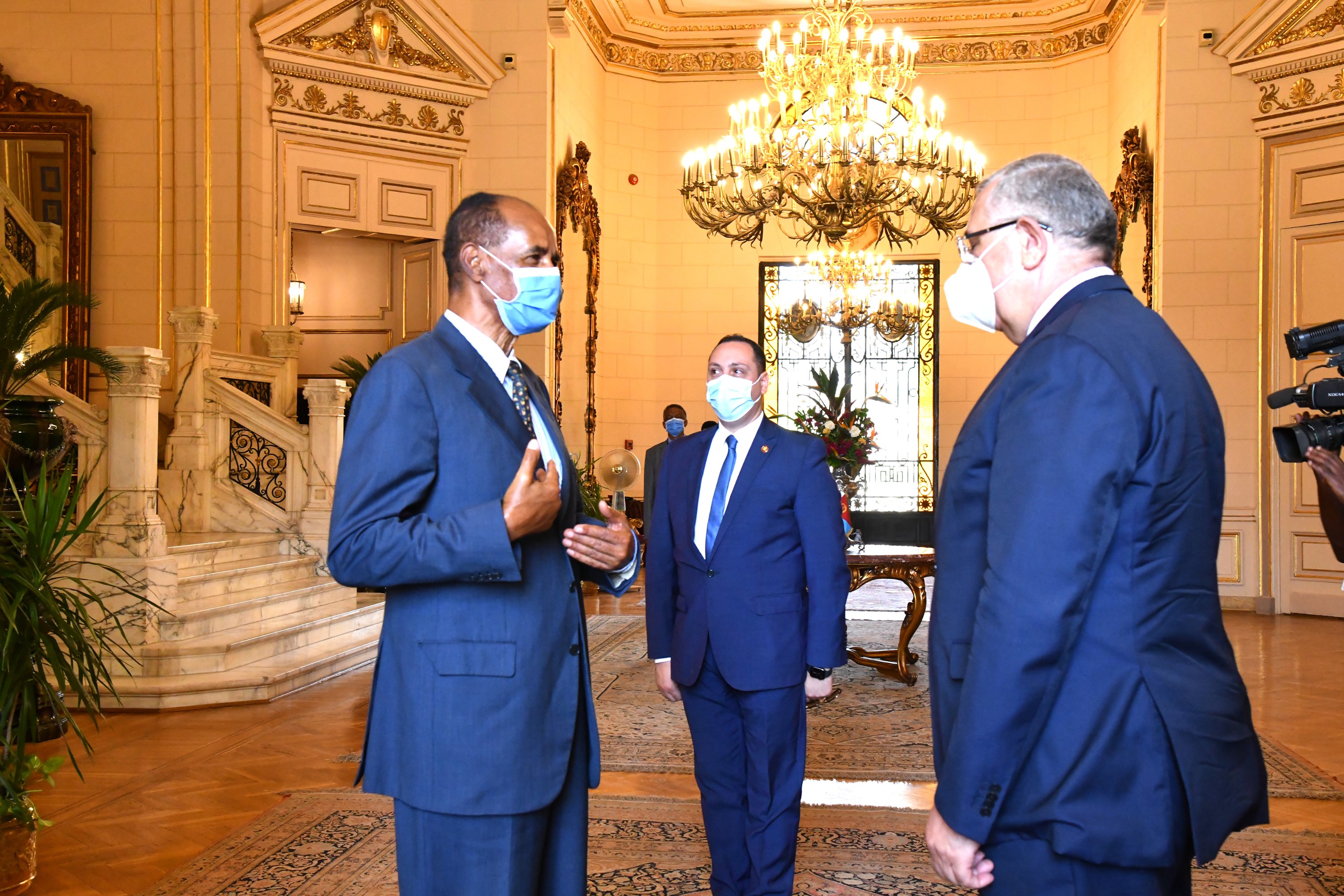
The report pointed out that Egyptian exports to Eritrea increased to record $ 116.99 million in 2018, compared to 103.43 million in 2017.
The report stated that Egyptian imports from Eritrea also increased to record $ 2.05 million in 2018, compared to $ 1.4 million in 2017.
The percentage of Egyptian commodities on the Eritrean market is estimated "consistently" at about 10% of the total commodities (sometimes the percentage of Egyptian goods reaches 60%). Especially with the acceptance that Egyptian goods enjoy at the level of the Eritrean citizen as well as its good reputation.
The mechanism for setting up Egyptian product exhibitions is the most important mechanism in the trade exchange process. There are several positive indicators for the possibility of strengthening Egyptian-Eritrean trade and economic relations, the most important of which are indicators in the existing talks to start cooperation in the following areas:
• Mining and energy, which includes the electrical grid in Eritrea
• Digging wells, dam construction and rainwater storage projects, and using greenhouse technology in crops
• Attracting Egyptian investments in the field of drug manufacturing in the State of Eritrea
• Holding continuous meetings for Egyptian and Eritrean investors
Cooperation in the field of fisheries and fishing
Medical and therapeutic field
• Civil Aviation
_______
______________________
 President Isaias Afwerki on working visit to Egypt
https://www.elbalad.news/4394211
(Software translation)
5 visits in 6 years ... The President of Eritrea Arrives in Cairo, Sunday
06 / July 2020
President Isaias Afwerki on working visit to Egypt
https://www.elbalad.news/4394211
(Software translation)
5 visits in 6 years ... The President of Eritrea Arrives in Cairo, Sunday
06 / July 2020

It was not his first visit, as Egypt is always the kiss of the Africans, from which the development talks begin, reaching out to its siblings does not spare any effort for the advancement of citizens, so was Cairo for the Eritrean President
Isaias Afwerki the Eritrean President who is visiting Egypt for the fifth time where the President is scheduled to meet
Abdel-Fattah El-Sisi. The Afewerki talks in Cairo address the bilateral relations between the two countries and a number of regional issues and efforts for peace and stability in the Horn of Africa.
Distinguishing relations between Egypt and Eritrea was not the result of the moment, but history is a testament to the strength and durability of these relations, which is reflected in the visits of the Eritrean president, where in the context of the next report we monitor Afewerki's visits to Cairo.
The first visit of the Eritrean President was on September 9, 2014, when Egypt received Afewerki at the head of a delegation that included
Osman Saleh, Minister of Foreign Affairs,
Yemane Gabreab, Adviser to the Eritrean President, and Secretary
Amin Hassan, Secretary of the Eritrean President for Information.
President Abdel-Fattah El-Sisi praised the Eritrean position in support of the June 30 revolution, which was evident during the African Union, especially in the African Peace and Security Council. The two sides reviewed developments in the African continent, especially the files of combating terrorism, extremist ideology and piracy.
As for the second visit by Isaias Afwerki, the President of Eritrea to Egypt, on November 29, 2016, as usual, President Al-Sisi received his Eritrean counterpart, and the meeting discussed ways of enhancing bilateral relations in various fields, at which time it was agreed to exchange the visits of delegations with a view to identifying areas in which cooperation will be developed and implementation Joint projects, in preparation for holding the joint committee between the two countries.
In January 2018, President Afewerki made his third visit to Egypt, and was received by President Abdel Fattah El-Sisi, and the meeting dealt with ways of strengthening relations between the two countries in various development and security fields.
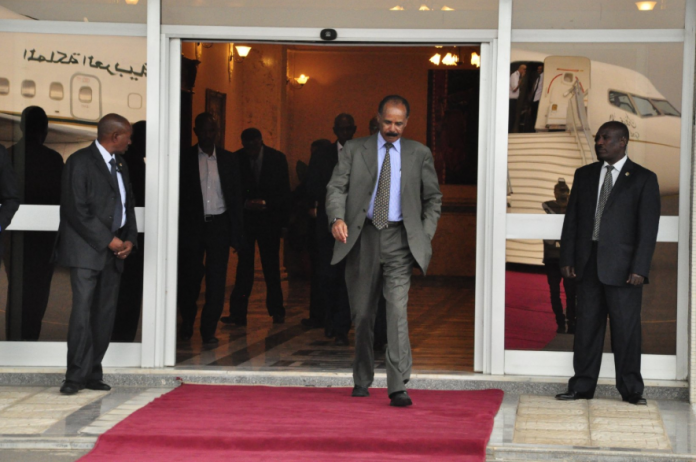
President Al-Sisi and his Eritrean counterpart agreed to exchange delegations ’visits with a view to activating the existing cooperation frameworks and implementing joint projects. The two presidents also discussed all regional developments and developments, as the two sides agreed to continue intensive coordination between them regarding all issues related to the current regional situation in an effort to strengthen security and stability in the region.
As for the fourth visit, it was on June 8, 2019, when Isaias Afwerki came to Cairo to move forward with specific plans to develop cooperation projects between Egypt and Eritrea in various sectors and overcome all obstacles in this regard, especially in the sectors of infrastructure, electricity, health, trade, investment, agriculture and livestock. And fisheries.
Regarding the Egyptian role, President Afewerki said that Eritrea is looking to intensify cooperation with Egypt in various fields, stressing Egypt's position in order to achieve stability in the Horn of Africa