Page 1 of 1

Agriculture Graduates Running Major Farm Projects

Posted: 28 Jun 2020, 07:09

by Zmeselo


Agriculture Graduates Running Major Farm Projects

Written by Kesete Ghebrehiwet

http://www.shabait.com/articles/nation- ... -projects-

Articles


Over 1,600 experts in Animal Science and other fields of agriculture, who are all graduates of institutions of higher education, have been working in various agricultural fields of Eritrea’s Crops and Livestock Corporation (ECLC).

The impact of institutions of higher education in human resource development is vividly seen in the overall development of farm projects and other work areas; which testify to the worthiness of the investments being made in the education sector.

Weldegebriel Gebremariam, who studied Soil and Water Conservation and General Irrigation at Sawa Center for Vocational Training, is now working as a manager of Adi- Omar farm project in the Gash- Barka region. He said,
We have been acquiring skills through skill transfer programs and we have learnt a lot from our seniors.
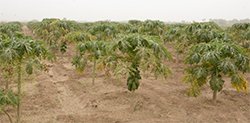

Berhane Asmerom, a graduate from Hamelmalo Agricultural College, is currently working as head of Animal science in Adi- Omar Agricultural project.

He said through its four units -- Animal Husbandry, Pharmacy, Feeding and Veterinary Science -- the Animal Health Department has been monitoring animals’ health condition, provision of medicines, hygiene, feeding activities and deposits and deficits of animal feed and distribution of livestock among others.

Feven Asmerom, a graduate from Hamelmalo Agricultural College and a unit head of a horticultural block, and Feven Naizghi, from Adi-Halo and an expert in horticulture, are giving guidance to women workers about proper care and cultivation of fruits and vegetables.

As part of their daily activity, Feven Asmerom and Feven Naizghi are in charge of the nursery and all vegetable and fruit farm activities. They regularly provide technical assistance to those who engage in cultivation, weeding and all other farm activities.

Working at the farms enables the graduates, who see their job as a challenge and an opportunity, to hone their skills. The graduates have not been limited to working in the Adi-Omar farm projects. Instead, they have also been giving technical assistance to farmers in their surroundings.

As regards the challenges they face while working in the farms the two hard working female graduates from Adi-Halo and Hamelmalo Agricultural College say:
When we studied horticulture in our colleges, we learnt the most common plant diseases and curing methods, but it was not easy to implement the knowledge on the ground. At times, we encounter some diseases that we did not know. So, the new challenge provides us with a new opportunity to study. The more we study about the new phenomenon, the more eager we become to solve it. There is nothing more pleasing than overcoming a challenge through collective endeavors.
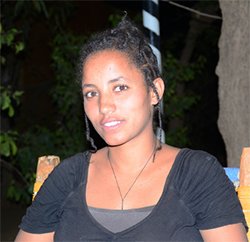
Adi-omar farm project, which has been providing employment opportunities for daily workers, is currently being run by agricultural experts who graduated from institutions of higher education. The technical assistance the agricultural experts give to daily workers has been instrumental, in transferring skills to the nomadic communities around the farm projects. The effect of the intervention is seen in the increase in production of fruits and vegetables.


Regarding the experiences he gained since he took up a new career right after graduation, Berhane said:
In 2012, while I was a new graduate from Hamelmalo Agricultural College, I was first assigned to the Ministry of Education and stayed there for four years. Every working day at the Ministry was a challenge for me. Fortunately, I was reassigned to work in the field of my study by joining the ECLC and I have been upgrading my skill ever since.
Mr. Weldegebriel, on his part, said that he is a first generation graduate from Sawa Center for Vocational Training and acquired skills of paramount importance once he joined the farm fields in Adi-Omar.

What is so impressive about the farm projects is that almost all major activities have been run by the graduates. The senior experts have not been only transferring skills to their subordinates but they are giving them a chance to independently run the projects. That is why Weldgebriel is now a manager of Adi-Omar Farm, while Berhane is a Unit head of the Animal Science Department. Female leaders and unit heads, have been running the horticulture department.

Being role models, the female graduates have been influencing women residing around the farm areas. They have maintained strong friendship with the local women and have been encouraging them to be self reliant.

Gulsum, for instance, is an area around Adi-Omar Farm known for its traditional livelihood. Women residing there were mostly confined to doing domestic chores. But working in the farm fields enabled them to improve their living standards and they are learning a lot from the female graduates. They have now changed their attitude and believe they are productive not only at home but also in the fields. This is a major change of lifestyle among the women population of the area. The female graduates are also teaching the local women new skills, they could apply in their households.

Besides engaging themselves in the farm fields, all the graduates have been making a difference in all work activities. They are making efforts as leaders and implementers of various tasks.
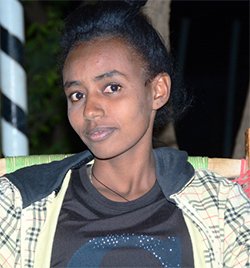


An increase in the number of graduates in various fields of agriculture, has been the reason for expanding the scope of the farm activities in Adi-Omar Farm. Farmers are satisfied with the services being provided by the experts.

Virtually no livestock death has been registered since the graduates started to provide veterinary services to the communities in their neighborhood and remote locations.
Re: Agriculture Graduates Running Major Farm Projects

Posted: 28 Jun 2020, 07:40
by Zmeselo
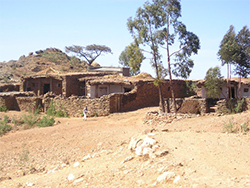
Stone architecture in Eritrea

Written by Abel Girmai

http://shabait.com/about-eritrea/histor ... n-eritrea-

About Eritrea - History & Culture


Mud bricks, stone and wood are the oldest and basic building materials known to man.

Mud bricks and wood have been mostly used for profane buildings such as residential houses or stables while stone have been used to erect important and impressive buildings like temples, which were meant to serve for extremely long time and endure for centuries. Men regarded stones as everlasting because the phenomenon of enhanced weathering due to environmental pollution did not exist in former times.

Since prehistoric times, humans have chosen to use stones to erect extraordinary monuments, mostly of religious importance. Due to their availability, stones are commonly used to build churches, houses, villages and towns. For exceptional cases rare and decorative stones like marble, which are transported over a long distance, have been used. When such precious stones were not available in near places, they had to be imported. This kind of culture is easily seen at the monuments of the ancient port of Adulis.

Evidence suggests that the marbles from Adulis have been imported from the Byzantine, Greek and Rome localities. The design of the building structures and elements had to be adapted to the mineralogical, physical and mechanical properties of the stone. The high compressive strength and the low tensile strength of stone require special techniques to overarch gateways and erect vaults.

Immemorial natural stone buildings have been considered a valuable and essential part of the building industry. Monumental constructions that have been created bear witness to extraordinary technical and artistic achievements.

For many years, a large number of fascinating examples of ancient structures of buildings have survived on the Eritrean landscapes. There are many of these structures in the countryside, and their style of construction has been incorporated in several modern buildings of towns and cities. The monkey-head construction style that was first seen in the Kidane Mihret church of Senafe was later applied in the modern Saint Mary (Enda Mariam) church of Asmara.


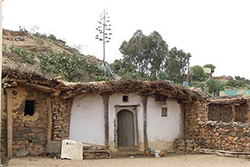
Further research is needed to understand, whether the unique Eritrean house structures and monuments have similarities with structures in other countries on the Horn of Africa. The contemporary and typical structures of architecture in Eritrea are the H’dmo (a common traditional house on the highlands), and Agudo and Agneet (common on the lowlands). The Merebae, a semi-modern structure characterized by stone and wooden architectural features and zinc sheet, is common along the coastal towns of Eritrea. All house construction styles have rectilinear shape and form. They all use the same building materials -- stone, mud and timber roof. Unlike the other structures, the Agudo is round and has conical thatched roof.

The contemporary structures reflect cultural and symbolic representations of the communities in Eritrea. The construction of the building has the potential to respond to the sustainability of the climatic condition and availability of abundant materials. The structures serve as images of the society’s lifestyle and reflect the needs of human beings at a certain time. Most of the vernacular buildings represent ingenious and considerable technical innovations and perform spectacular handcraft works.

The earliest evidence of ancient architecture (permanent settlements) in Eritrea dates back to the mid- 2nd millennium B.C. to the first millennium A. D. The period coincides with the flourishing of complex agro-pastoral settlements, over much of the country and the Horn of Africa. This period is characterized by the rise of permanent villages and urban precursors in the first millennium B.C.E and the subsequent flourishing of urban centers by the first millennium C.E. In the course of antiquity, residential units, village assembles and urban centers with remarkably significant reflections of domestic architectural features appeared over a span of the millennia, and they have become references to understand the evolution of vernacular architecture in the Horn.

As far as permanent settlements are concerned, the first archaeological evidence to date comes from the sites of Sembel and Mai-Chihot in the Asmara plateau which dates to the 8th -4th centuries B.C.E. Wall features reminiscent of the ancient architecture were exposed during excavations in the sites and the distinctive features of these architectural units were revealed.

Several conjectures have been made about the reconstruction of these architectural features, in comparison with contemporary forms. The elaboration of the unique architecture became more visible with the rise of urban civilizations in the Horn from the first millennium BCE to the 1st millennium CE, when the architecture showed a regional pattern and distribution across many of the renowned archaeological sites. The typical monumentality that appeared in the region during the period was accompanied with the elaboration of what is commonly called the ``domestic architecture`` of the era, which is quite visible in residential units, urban ensembles and peripheral areas of sites like Matara and Adulis in Eritrea. The ingenuity in local architecture can be discerned from these archaeological sites. Following the demise of these urban centers, the visibility of the vernacular architecture is witnessed in the medieval period where evolved techniques such as the ``monkey-head`` building techniques have been fully incorporated in the construction of ancient churches and monastic complexes.


The vernacular houses have rectilinear and sometimes a hybrid of rectilinear and circular shapes. The rooms could be classified according to their functions. The rooms closer to the entrance are commonly used for service functions as cattle or livestock area and straw storage. The other side of the gate comprises the main functional rooms which are the center of the dwelling with their most common use and functions, such as cooking, eating, sitting, sleeping and storage.

As a result of the direct influence of modernity, vernacular architectures have undergone a number of changes over the years. This has led to the emergence of contemporary approaches on buildings. The values of the vernacular architecture, however, are still very relevant to our contemporary buildings. For instance, vernacular architecture uses local eco-friendly materials to address local climatic conditions. With today’s issues of climate change and global warming, it is becoming increasingly clear that there is a need to revisit the use of our local building materials. With some improvements, our local materials can function in the same way as the modern materials, with added advantage of not affecting the environment.

In Eritrea, thanks to the ongoing archaeological research, the history and style of monumental constructions is relatively well understood. However, a detailed architectural study of the monumental structures is still needed. The techniques and forms of the structures were evolving over thousands and hundreds of years. It is predictable that such forms and styles of the vernacular structures were directly related to their local environments. Hence, studying the architectural styles with the aim of incorporating them into our modern construction strategies is essential. This may further help to maintain the cultural evolution and environmental advantages of Eritrea’s ancient monumental engineering. Finally, this can serve not only to preserve our endangered architectural heritage but also to boost the tourism industry.

Re: Agriculture Graduates Running Major Farm Projects

Posted: 28 Jun 2020, 07:53
by Zmeselo
Tracker: Track And Avoid Catching Corona!

Written by Billion Temesghen

http://shabait.com/articles/q-a-a/30751 ... ng-corona-

Articles - Q & A


I figured why not build such an application and make it available for users worldwide, free of charge?!
Beruk Habte

As the sweeping waves of COVID-19 continue, many are contributing in ways they best can to make an impact in the global fight against the deadly virus. We talk today to a young Eritrean, who has developed an Android application with several features to help track and ease infections. Beruk Habte lives in Virginia, USA, and is the brains behind Tracker, the COVID-19 tracking app. Like Beruk, other young Eritreans too, are customizing a tracker application that is locally applicable. Eritrea Profile will track them, for future publication.

So proud of you. Q&A is talking to…

My name is Beruk Habte. Thank you for having me. I am 25 years old. I have a Bachelor’s Degree in Economics and Information Systems. I’m also the developer of a phone application called: ‘Tracker.’

What is Tracker? Can you tell us about it?

Tracker is the name of the Android application I developed, in the advent of the Corona pandemic. It’s currently available on Android devices worldwide. It’s an application that notifies users if they’ve been in contact with another user of the application who has tested positive for COVID-19, in the span of the preceding fourteen days.

How does it work?

It’s all done, via an anonymous location tracking method. For instance, if you and I were together today, and I was perfectly fine but a few days later I tested positive for the COVID-19, I would register my symptom on the application. The application would then notify everyone I was in contact with in the last 14 days- including you - because we were together a few days ago. That way people can track their own activities and pay due attention based on it.

What urged the idea of developing such an app?

While thinking about developing an app and eventually developing Tracker, I had one motivation --to help as many people as I can worldwide. Although Corona virus has no known cure at this moment, I believe it is nothing we can’t get through together. Given my background and my passion, I figured why not build such an application and make it available for users worldwide and free of charge. I’ve done that, and I’m glad I’ve been able to contribute to the world.

And the reaction from the general public has been good, hasn’t it?

Yes it has. Tracker has a 4.9/5 rating, on Google Play Store. Hundreds of people have appreciated me for what I’ve been able to do… And that feels extremely gratifying.

Tracker is not the first application you’ve ever developed. Were there any before?

This is my passion, so Tracker is not a first experience. I’ve developed other applications in the past. The last one before Tracker is called Pairr. It’s a dating app, that caters to colleges or universities. It’s available on the iOS, and it provides harmless service to students who are looking to meet others in order to socialize and do things of that nature. There are many other dating apps., however, mine is the only one that caters to colleges and universities.

You were born in Ethiopia and you made your way to Eritrea, alongside thousands of Eritreans who were unjustly deported from Ethiopia in the 1990s. Having spent most of your childhood in Eritrea before you left for the USA, what are your recollections of home?

That’s correct and I remember Eritrea like the back of my hand. I always tell my friends, here, in the USA, they didn’t have a proper childhood unless they grew up in Eritrea. I don’t remember having to worry about anything other than having a great time with friends and family, until it was time to do some school work. Here, in the States, parents don’t feel comfortable letting their kids play outside because many things such as kidnapping can happen. As an Eritrean child, living in a country whose people are kind, loving and caring for one another, I don’t remember having to be afraid of a single thing.

My friends here can only imagine how wonderful it is when I tell them you can be in the middle of a busy place in Asmara, count your money, leave your belonging behind- be it a phone, jewelry or anything else of value - and be able to retrieve it because nobody would steal them. And that goes out to show, how loyal and wonderful the citizens of Eritrea are. I really don’t think you can do that in any other country, besides Eritrea. I miss and cherish Asmara a lot and so I do my best to go back whenever I can. In fact, I recently had a wonderful chance to visit our beautiful Asmara during the summer of 2019.

I was there for about six weeks and I had a great time. The only thing I regret is not making my trip longer. I had the best time walking around the beautiful city of Asmara, visiting its authentic cafes, swimming in the beautiful waters of Massawa, all while meeting amazing new people and spending time with friends and family. I’m very much looking forward to going back.

You’ve certainly contributed a great deal during these times, when people really need to look out for one another. You might have something you want to say to people around you and your people back home.

These days call for strength and unity. Thus, it is our humanitarian duty to extend a caring hand however best we can. As regards to the people of Eritrea, I can say that the people are very strong and that’s already been proven. You have no clue how amazing it feels when I tell people here that my country had a few cases of COVID-19, with no fatalities. That just adds to my list, as to why we Eritreans should be proud.

Can you share your future plans with us? Do they include coming back to Eritrea?

I have plans to comeback to Eritrea. This time, I’m going to make sure I bring my friends from America so that I can brag and show them where my people and myself are from and how relaxing and stress-less our country is.

Thank you!

____________


Re: Agriculture Graduates Running Major Farm Projects

Posted: 28 Jun 2020, 08:07
by Zmeselo


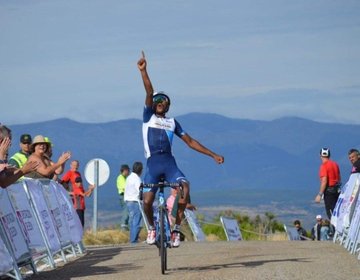
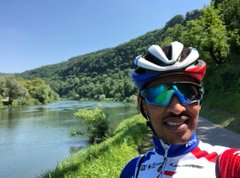
Happy Birthday, 🇪🇷 Yakob Debesay!🎂

One of the most talented 🇪🇷 Eritrean riders & an incredible champion, turns 21 today! Wish all the best for you and your family, good luck on future races! Congrats!😀
(Zero_X: @ZXCycling)


______________


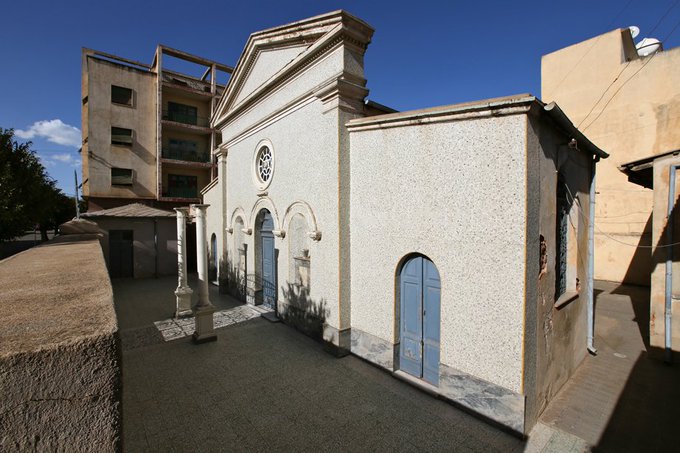
Eritreans are very tolerant and respect all religious facilities. The Asmara Synagogue was built in 1906 & is the only surviving remnant of the Jewish community in Eritrea.
(Ghideon Musa: @GhideonMusa)

Re: Agriculture Graduates Running Major Farm Projects

Posted: 28 Jun 2020, 08:17
by Zmeselo

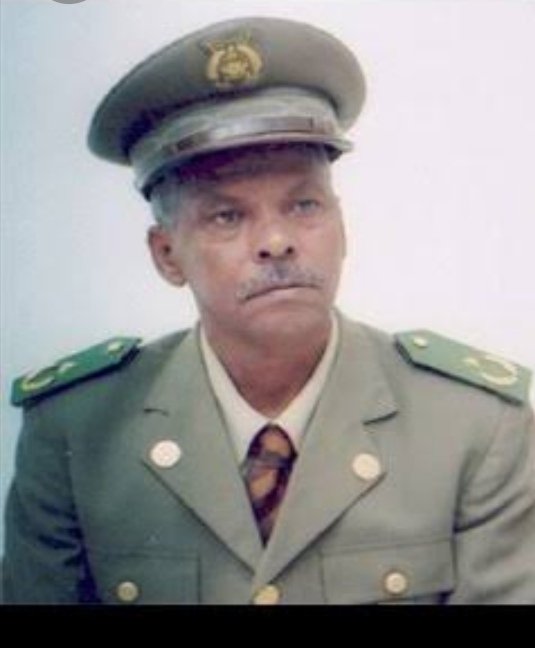
Br.Gen Wedi Leake.
A Gen who fought countless wars wth same spirit, always undermining the enemy. He displayed extraordinary courage in the most difficult of times, when he was cornered by enemy forces b/n MersaTeklay & Awget & led his army to safety in 1984.
RIP- Gen!


_________


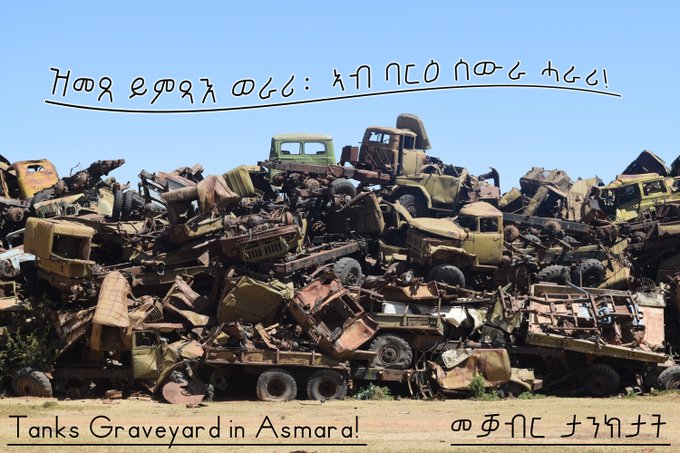
The only graveyard of tanks that goes for 100s of meters and 9 meter high in Asmara, that were captured during the 30 years of war for independence.


Re: Agriculture Graduates Running Major Farm Projects

Posted: 28 Jun 2020, 14:00
by Zmeselo


Re: Agriculture Graduates Running Major Farm Projects

Posted: 28 Jun 2020, 16:40
by Zmeselo


Local News/ Life Story
'He was a gift of God': Ottawa community mourns death of a young leader, role model

Bruce Deachman

https://ottawacitizen.com/news/local-ne ... -mengistab

Jun 25, 2020


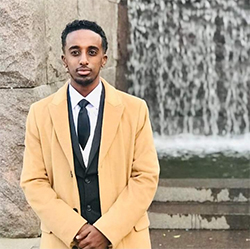
Abel Mengistab was, at just 20, an activist, community leader and role model. He died on June 18, 2020. Photo courtesy of St. Mary Coptic Church.

Abel Mengistab was, at just 20, a dynamic community activist and leader, a role model and a champion of social causes who was naturally able to inspire others to make the world a little better. He was, said one family friend,
a gift of God.
A third-year student in Carleton University’s public affairs and policy management program, Abel was co-chair of the university’s NDP club. Ottawa Centre MPP Joel Harden, on whose campaign Abel worked, said he was reminiscent of a young Jack Layton or Paul Dewar.
We’ve seen this kind of politician before in our city, in Paul Dewar.

The reason this hurts so much, and I don’t just mean for New Democrats, but just for progressives in our city, is that he was the real embodiment of the kind of politics we want: less snark, less sniping, less blind partisanship.

He was very ambitious, curious and heart-forward. He really did remind me of a young, Black, Jack Layton. He was happy, and exuded this energy that made people want to work with him. And he had an absolute love and willingness to work with people.

And when you can exude that kind of energy in politics, you really raise the game, and there’s not enough of that in politics. He really lifted people up.
Abel died last Thursday evening when he was struck by a bus. A memorial service, being held for him at noon on Thursday, can be viewed on St. Mary Coptic Orthodox Church’s YouTube channel.

When it came to election canvassing, whether for Harden, Ottawa Coun. Rawlson King, or Nepean NDP candidate Zaff Ansari, the latter for whom he served as campaign manager, Abel always volunteered to go to residences, such as rooming houses and lower-income apartment buildings, where voters are often most disdainful of politicians.
Doors get slammed in your face sometimes,
said Harden,
and he would volunteer for those doors. I think we’re going to be feeling the impacts of this for a long time.
King agreed, noting that Abel would, during a winter campaign, take the bus from his home in Nepean to King’s Rideau-Rockcliffe ward, then take another bus or walk to wherever he was canvassing.
He stood out because he was excited to see the potential of a Black person being elected to office,
he said.
His heart was in working on progressive campaigns, and he saw that we were focused on poverty reduction and increased social services, and wanted to help. He wanted to go to those high-needs neighbourhoods because he wanted to see real (representation in) government of people who often feel they’re not represented.
Ansari noted that Abel’s core was rooted in such values as social justice, equality and youth employment.
When I first entered politics in 2018, he was only 18 and was my campaign manager. He was doing my social media and going door-to-door with me. He was writing my speeches.

I knew zero about politics when I got into it, and he taught me about the issues. He was very talented and smart.
At his church, Abel was an ordained deacon, and was preparing to be a servant, or teacher.
He was a leader,
said Father Marcos Morcos, whose ordainment as a priest took place on the same day in 2014 that Abel became a deacon.
He would come early to church to help prepare the liturgy for prayers.

People in the Eritrean community have told me he was a role model for their youths,
added Morcos.
But he didn’t just serve his Eritrean or church community, he wanted to serve everyone. He was a very amazing person.
Morcos said that apart from his school studies and church involvement, Abel also worked at an area shelter. When the novel coronavirus pandemic struck, Abel, he said, was told to go home, where he would still be paid.
But he said no, he couldn’t be paid if he wasn’t working. And so he kept on working.
One friend, David Simon, said Abel was
legitimately one of the nicest and friendliest people I’ve ever known
who
always approached politics through a lens of compassion and with a goal of helping other people.

So few people exemplify traits like kindness, empathy, respect the way Abel did, and he had a unique way of getting other people to exemplify these traits themselves. He made a genuine connection with almost everyone he ever met, and I know he’s going to be severely missed by so many people.
A GoFundMe page in Abel’s memory describes him as
loving, bright and inspirational.
It speaks volumes that the page, intended to raise funds for Abel’s parents and for projects to honour him, has in its first day raised well over $25,000, easily exceeding its original goal of $10,000.

Petros Asfaha, a longtime family friend, said Abel was
every family’s dream kid.

He was respectful and humble, and he loved helping people, especially children and those less fortunate.
He was not, Asfaha added, simply a role model for youngsters, but also for those older than himself.
He didn’t see colour; he saw humanity. He had a miracle touch.

He was a gift of God.
[email protected]