 Hamasien (Ge'ez ሓማሴን)
 was a historical province including and surrounding Asmara, part of modern Eritrea. In 1996 the province was divided and distributed amongst the modern Maekel, Debub, Northern Red Sea, Gash-Barka, and Anseba regions.
Hamasien's population predominantly follow Oriental Orthodox Christianity and are members of the Eritrean Orthodox Tewahdo Church, with a considerable minority from the Sunni Muslim, Roman Catholic, and Lutheran communities. Traditionally being the center of the
Kebessa (the Eritrean Highlands), it was the locality of the old palace town of
Debarwa (the capital of
Bahr Negus Yeshaq). The border was changed further to place Debarwa in the province of
Seraye before its present status of being the capital of the
Tselema district in the Debub (Southern) region.
History
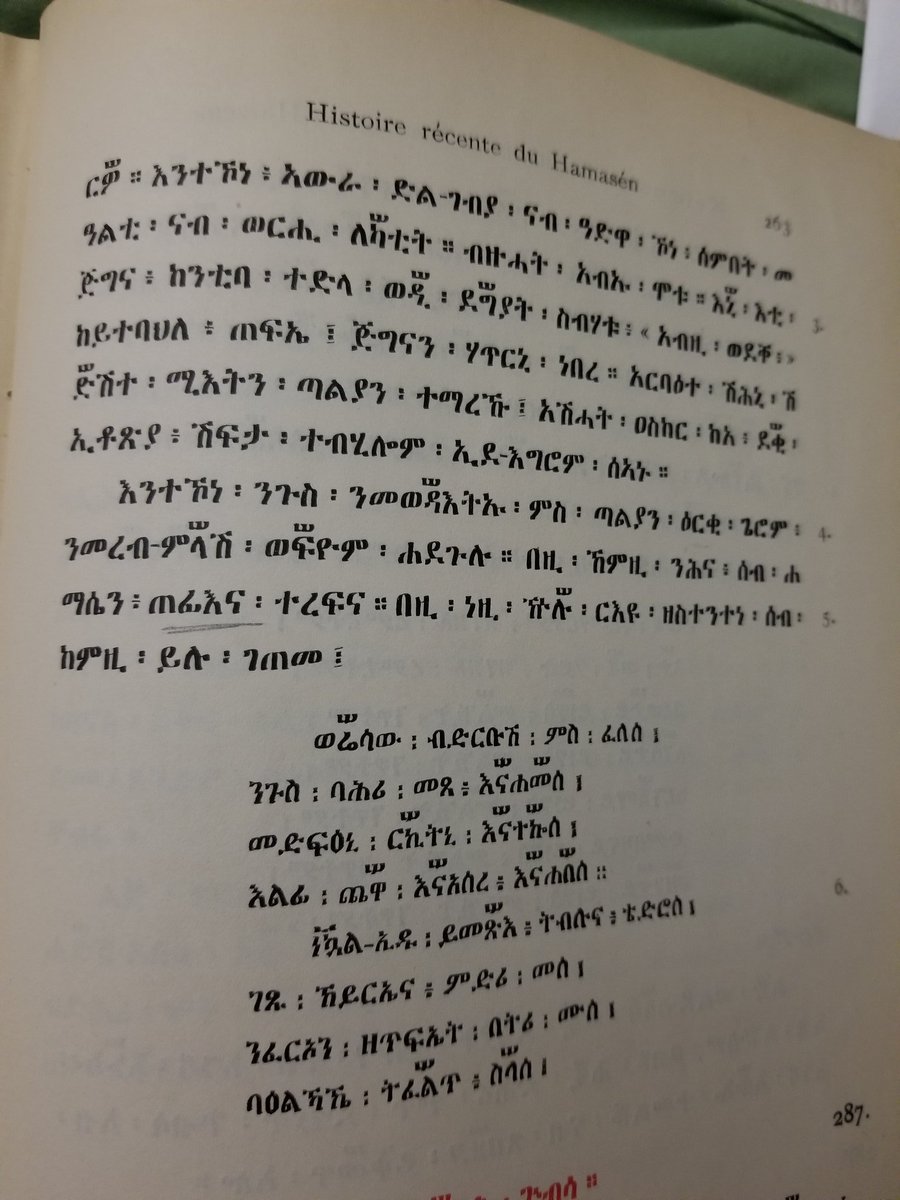
The former province republic of Hamassien was the political and economic center of Eritrea; judging from excavations in the Sembel area outside Asmara, it has been so since at least the 9th century BC. The earliest surviving appearance of the name "Hamasien" is believed to have been the region
ḤMS²M, i.e.
ḤMŠ, mentioned in a Sabaic inscription of the Axumite king
Ezana. The region may have been mentioned as early as
Puntite times by Ancient Egyptian records as '
MSW (i.e. "Amasu"), a region of Punt.
During the early medieval centuries, it was ruled by the Raesi`s of the
Hazega and
Tseazega and the Bahri negasi making their center of administration in Debarwa. According to
Francisco Alvares, writing in the early 16th century, the Raesi of the Tseazegas (
Habtesulus) had been able to collect tax by extending their authority almost as far as
Suakin in modern Sudan. Despite the Emperor of Ethiopia's allegations and grants of control of the country of the Bahri Negestat the
Zagwe and
Solomonic dynasties, the 1984 "
Proceedings of the Permanent Peoples' Tribunal of the International League for the Rights and Liberation of Peoples," declares that
There was no administration that connected Hamasien and Serae to the centre of the Ethiopian Kingdom.
With the decline of the importance of the Midri Bahri in the 17th to 19th centuries, the province enjoyed a period of communal rule under councils of village elders, the so-called
shimagle who enforced traditional laws which had prevailed uniquely in the region alongside feudal authority since ancient times. The region appeared in European maps as '
The Republic of Hamasien'. In the late 19th century, Hamasien was
briefly invaded and occupied by the Ethiopian Emperor
Yohannes IV who granted control of the region to Ras
Alula. Ethiopian forces wrestled for control over the region with Ottomans initially and later with Italian colonialists. Following the death of Yohannes at the Battle of
Gallabat, Hamasien was occupied by the Italians, who incorporated it into their colony of Eritrea and making one of its villages,
Asmara, the capital of the colony, a status it retains today as the capital of the sovereign country of Eritrea.