"ንኢሳያስ: ቅተልዎ!"
Posted: 28 Feb 2020, 07:05
Please wait, video is loading...
________________________________
(Courtesy of Dawit Afeworki @AfeDawit)
There are better source to the story, that the G15 had discussed the idea of eliminating the president. Some of them strongly favoring this “option”, while some favored imprisoning him. A former radio operator to Maj.Gen. Berhane Gerezghier reveals, his former boss favored the former.
The same person reveals, Petros Solomon pushed for imprisonment option. These he claims was told to him, by Maj.Gen. Berhane Gerezghier. He reveals these not with the intention of implicating his former boss, but to “expose” what he says was Gen. Sebhat Efrem’s role in their arrest. Again according to him
Majo. Gen. Berhane Gerezghier had told him that the group having decided on imprisonment of Issayas; had approached Sebhat Efrem with their idea. Sebhat Efrem’s response was
before declining to join them and promptly informing the president of their plan.nEsayas assirkum d’a Hanti leyti keman aytHdrun eikum (you won't be able to survive one night, if you arrest Isaias.)
This person then accuses Sebhat Efrem, of betraying his “friends”.
Unfortunately, I can’t trace this interview this person conducted a few years back after leaving Eritrea, anymore. But, I would give a lot more credence to that person than “a box of Gold” from Redie.
______________
________________________
WILLIAM D. CLARKE, SR. (1941-)
JUNE 1, 2015
BY: ZAAKIRA L. SADRUD-DIN
https://www.blackpast.org/african-ameri ... arke-1941/
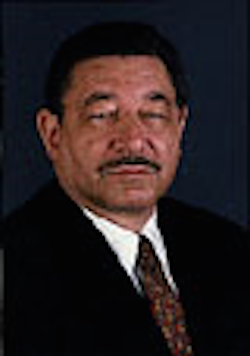
Ambassador https://www.blackpast.org/african-ameri ... adors-1869 William Davis Clark was born in 1941. Currently, he is retired and resides with his wife, Katsuko M. Clarke, in Maryland https://www.blackpast.org/entries-categories/maryland. Clarke has two sons William Clarke Jr. and Robert Clarke, and one daughter, Christina Armstrong. In 1963, Clarke earned his bachelor’s degree at Howard University. https://www.blackpast.org/aah/howard-university-1867 Years later, in 1995, Clarke attended the College of the Armed Forces in Washington, D.C. https://www.blackpast.org/entries-categ ... hington-dc and received the U.S. State Department’s Equal Opportunity Award.
Clarke began his career in the United States Foreign Service in 1967. For over 30 years, he worked in different parts of the world for the Department of State’s Bureau of Diplomatic Security. Clarke served as a Regional Security Officer in Japan https://www.blackpast.org/entries-categories/japan, France https://www.blackpast.org/entries-categories/france, Germany https://www.blackpast.org/entries-categories/germany, Ivory Coast https://www.blackpast.org/entries-categ ... vory-coast and Egypt https://www.blackpast.org/entries-categories/egypt. In those countries, he was part of the team responsible for protecting U.S. embassies, their personnel, and classified information. He also served as the U.S. embassy’s law enforcement https://www.blackpast.org/entries-categ ... nforcement liaison to the host nation, arranging training for foreign police and security officers and advising American citizens about safety and security abroad. Eventually, Clarke moved to Panama https://www.blackpast.org/entries-categories/panama where he served as the State Department’s Regional Associate Director for Security for all U.S. embassies in South America https://www.blackpast.org/entries-categ ... in-america.
By 1992, Clarke returned to the United States and worked as the Deputy Assistant Secretary for Countermeasures and Information Security. This position required Clarke to help develop security policy and plans for countermeasures for the Department of State’s overseas and domestic operations and facilities. Clarke held this position until 1997.
On June 23, 1998 President Bill Clinton nominated https://www.blackpast.org/entries-categ ... -officials Clarke to serve as U.S. Ambassador to Eritrea https://www.blackpast.org/entries-categories/eritrea. With that nomination he was the first member of the Bureau of Diplomatic Security to be named an Ambassador. After confirmation by the U.S. Senate on June 26, 1998, Clark arrived in Asmara https://www.blackpast.org/gah/asmara-eritrea-ca-d-1000, the capital of Eritrea on June 29 of that year.
As Ambassador, Clarke worked to improve the image of the United States among Eritreans who felt it did little to support the two decade long war of secession and eventual independence from Ethiopia https://www.blackpast.org/entries-categories/ethiopia that finally came in 1991. In 1999, for example, Clarke participated in Eritrea’s National Immunization Day. Here he personally supervised a line where mothers and their children had the opportunity to receive polio vaccines for the first time.
Clarke also assisted Eritrea by helping to arrange U.S. aid in the form of low-interest loans, development assistance, and food and medical programs. In May 2001, Clarke signed a loan agreement for $10 million with the Eritrea government. The loan was used to purchase nearly 81,000 metric tons of wheat and sorghum to help revive Eritrea’s faltering agricultural economy. Clarke resigned as U.S. Ambassador on August 12, 2001, returned to the United States, and retired from the U.S. Foreign Service.