The Intersection of Archaeology, Oral Tradition and History in Eritrea’s Past
Written by Abraham Zerai
http://shabait.com/about-eritrea/histor ... reas-past-
About Eritrea - History & Culture
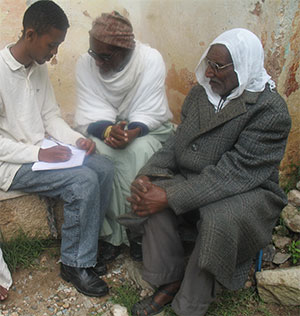
The study of the past, particularly in the African continent, constitutes a multi-source, comparative approach across a number of frontiers -- archaeology, oral history and written accounts.
The intersection of archaeology, oral history and written documents has always been sought, particularly in African societies, in order to draw upon the reconstruction of the past. The complementarity of each of the disciplines mentioned is a concern of this article and is highlighted by presenting the pros and cons of each approach to make sense of how their connection best serves the representation of Eritrea’s past.
The eminence of oral history and oral traditions in our society indicates that much of what is stored in the memory of generations serves as a library of the past. Oral histories and traditions constitute a major part of the cultural heritage of many African countries and the same is true in the case of Eritrea. Oral traditions extend back beyond living memory. Oral histories are defined as “memories and recollections of experiences individuals lived or witnessed in their own lives.” Oral tradition is the oldest source of historical writing in Africa. ‘Oral’ signifies merely the transmission of the system by word of mouth while tradition implies the essence of the system. Their universal nature has not only created multiple junctions of social and cultural interaction but also has become a repository of interconnected material, oral and written records.
Oral tradition is not only a historical source. It is the philosophy of social life which includes within itself the rules and regulations of a society’s order and security. Only through tradition could the numerous communities of Eritrea, or any other country for that matter, survive throughout the centuries. Recorded oral traditions can play a fundamental role in historicising different events in the past and in ascribing a historical identity to countless sites. Oral accounts, through which certain events can be connected with specific archaeological sites, provide historical contexts that can be explored and tested by the methods and discoveries of archaeology. In this respect, these accounts of cultural heritage could serve as a bridge between archaeology and text-based history, thereby enabling written references to be connected to archaeological record. More importantly, where the documentary record of Eritrea’s past becomes sparse, oral traditions offer an alternative and an insider’s perspective on underrepresented or marginalised segments of history.
The historical reliability of oral traditions as a source of information decreases the further back in time one goes. Such inherent weakness needs to be overcome in order to utilize oral tradition as historical source. When viewed from the perspective of space, oral traditions and oral histories often transcend geographical barriers and frontiers. This is particularly true, where geographical interfaces provided corridors of contacts between different cultural groups. It is, therefore, important to cross-check oral traditions within a given society or across societies that have been in contact with one another to enable draw comparative parallels in terms of time and space. The reliability of a particular tradition corresponds to how widely known and accepted it is in a particular society. Oral memories that do not provide such a context are considered as mere oral testimonies and as not carrying the same evidential weight as archaeological evidence and written accounts. Oral accounts, therefore, have to be subjected to rigorous evaluation, both in terms of their production and collection, and with reference to independent verification and falsification. These aspects also need to be compounded by archaeological evidence and/or written documents.
The power of written evidence, on the other hand, lies in the fact that it is direct and immediate, and sheds light on well-defined events in which mostly known personalities were involved. Texts in their various forms often provide access to the thought processes of major figures and enable us to gain unparalleled insight into human agency in the past. Neither archaeology nor oral tradition can produce the same detailed and coherent construction of the recent past as history. Yet, it is clear that documentary evidence should be subjected to thorough source and textual analysis to uncover intended or unintended misrepresentations and misinformation.
The construction of myths and fallacies in the historiography of the Horn of Africa over much of the colonial era represents an ideal instance of how written accounts produced on the basis of biased narratives can create misrepresentation of the past. The nemesis of such an enterprise of the colonial period still resonates and archaeologists interested in the Horn’s past, in particular, have to be prudent against the use of written documents without due regard to context and intent.
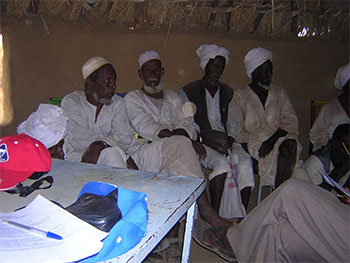
The pitfalls of written documents can, however, be tackled by archaeology which provides us with a repository of material culture adequate to reconstruct everyday life. Archaeology’s principal significance lies in the fact that it can shed light on people and places that are often not mentioned in the written record. Viewed from this perspective, archaeology has been widely identified as a useful interdisciplinary framework for integrating the different data sets in order to produce a more coherent and inclusive account of a complex recent past.
In summary, archaeological evidence, written documents and oral traditions provide available records to reconstruct Eritrea’s ancient past. The complexity of the reconstruction of our past calls for the critical insights of existing oral traditions and histories as well as available written sources. Moreover, the accurate and authentic representation of Eritrean historiography requires the complementary use of archaeological methods and data as a methodological virtue. A balanced methodological impetus of available archaeological data, oral traditions and histories as well as written records can, therefore, help tackle existing gaps, myths or fallacies in our historiography.
__________
__________________
Change is inevitable but indigenous culture will endure
Written by Natnael Yebio W
http://shabait.com/about-eritrea/art-a- ... ll-endure-
About Eritrea - Art & Sport
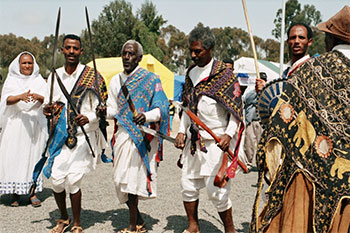
"Hide your customs and lock up your traditions, the
cultural Gringo is coming to town." Who is the cultural gringo, you might ask? It is global culture hailing from the West and threatening our identities as peoples and nations. It comes as a bulldozer to crush and crumple indigenous cultures and replace them with newly crafted fads and crazes.
The McDonalds and other junk food and drink companies, along with video culture are penetrating the most inaccessible corners of this globe.
Go to the Amazon rain forest and you will see tribes wearing Ray-ban sunglasses and hunting with sniper rifles. Their children play wearing Lee-jeans. A little while and we will see Bushmen roaming the Kalahari, with
Dr. Dre Beats earphones slung over their shoulders. In some Malaysian backwoods, you can see naked children watching
CNN world news for fun.
What will become of our culture, a hundred years from now? The bulldozer, will not stop rolling. Nothing is safe, from its fury. The mammoth like bulldozers in the Amazon, have two functions: to destroy the rain forest and the indigenous culture. Until now, we have been witnessing genocide. Now, let’s brace ourselves for ethnocide.
What will remain of a people, once their culture has been destroyed? It is like a sailor, who loses his bearing in the middle of the ocean. Without any reference point either in the sky or in the sea, he just drifts away and in the end dies of thirst and hunger along with his crew.
Our culture is our reference point and our identity. What is a Jew without the Torah and his 5000 year old tradition, including memories of the holocaust? What is a Frenchman without his language, his fromage, wine, accordion and a lot of fine and subtle behavior patterns, memories and peculiar Gallic deposition? Can Paris be the same French capital without the Seine, the Eiffel tower, Boulevard St. Michael and Montparnasse?
Frenchmen’s irate answer to the speedy replacement of nostalgic places with fast-food chains and discotheques is:
Things change, life is in flux, nothing remains static…..
But there are Frenchmen, who never drink Coke and refuse to converse in English. Alas, their children are far too gone into the American way with their Franglais and rap music. Adieu
Trenet, Piaf and
Azbavour, and Good morning
Kendrick Lemar, Beyonce, Taylor Swift and
Billie Eilish.
All over the world people are dreaming the American Dream, although they don’t want to admit it. Nothing succeeds like success, especially when you do it the American way.
In today’s Europe, cultural divide has become blurred with the passage of time. The supermarkets are the same, everywhere. The people look the same, eat the same food, drink the same river of Coke, and all have mobile phones that drive any sane person crazy at times. They have the same problems and worries. They produce the same type of serial killers and psychopaths.
Viagra and Ecstasy, are unchaining emotions and eroding spiritual sensibilities. With the discovery of pleasure pills in the near future, I doubt whether there will remain any faith in this world; culture will have no role to play. Horrible times ahead!
Now we have rap songs, in Finnish and Hungarian. The Croat and the Californian fathers, have the same problem with their teenage daughters. In the most remote and inaccessible Eritrean villages, you can buy Coke and occasionally see girls wearing jeans. I wouldn’t be surprised, if I see girls wearing jeans. I wouldn’t be surprised, if I see one smoking! Now, everything in this world is becoming a poor imitation everywhere.
Are we witnessing a global culture? I doubt it. Like any force in the universe, culture has also its own inertia. It is very hard to kill indigenous cultures, because they have the habit of playing dead and can be reborn in different forms. I feel like imitating the physicists but culture can never be created or destroyed; it only changes its forms.
Go to any Eritrean highland village. Once upon a time, every kitchen utensil was made of earth and grass. Now, we have them in plastic or cellophane. You can witness this, during the brewing of traditional coffee. You will notice traditional utensils, replaced by modern ones. If it is in a town that you are having your coffee ceremony, then you should expect drastic changes; the roasted coffee beans are not ground with a wooden or metal pestle in a mortar; the electric grinder can do the job much quicker.
The day won’t be far away when we will be seeing hedmo with plastic roofs, bottled Suwa and tsebhi sandwiches. A change of form, will always be there. But, indigenous culture will endure.
One reason why cultures will withstand the onslaught of Americanism is that despite the Internet, the e-mail or ever-faster means of transportation which are causing the earth to shrink, geography, climate, environment and biological and psychological peculiarities will forever militate against cultural hegemony of any sort.
Diversification, is the characteristic of nature and its workings. Only robots, are expected to think and act in the same manner. The difference between computers and human beings is that if you put a certain question to a class of computers, they will give you the same correct or wrong answers. But if you put the same question (already put to the computers) to a class of human beings, the answers will be different. Why? Because computers do not think, but human beings do. And it is through thinking, that diversity arises.
And, then there is this age-old mold in the brain. It took thousands of years, for mankind to form this cultural mold. A member of the Amazon tribe may drink Coke, but he drinks it the way he drinks his other tribal concoctions. Probably he identifies the Coke with some kind of deity or spirit, or he might be tempted to use the Coke to heal certain kinds of diseases.
I have seen pills and tablets being crunched and used as ‘herbal’ medicine, in some remote villages in Eritrea. A gaping wound is filled with ground aspirin, to effect healing. How do you like that?
Do you know about the
Cargo Cult? During President
Johnson’s era in the USA, when the Vietnam War was raging, in some remote pacific islands suffering from famine, food for aid was dropped by American planes from the sky. The inhabitants of the island thought the Americans were gods and were ready to warship Johnson, for the timely intervention. One more example of foreign culture, disappearing into the mold of the indigenous cultural configuration.
The flow of culture from West to East or from North to South will continue, but it will take the form of the mold already engraved in the mind of the indigenous cultures. So, America may send as much of its fads and crazes to all the corners of the world and the people will always be waiting with their engraved mental recipients on the ready.
But teenagers worldwide don’t seem to have the proper molding in their brains, one may object. The answer is that as long as they live in different environments (cultural milieu) and have a flickering sense of cultural pride, their indigenous traditions and customs will never disappear forever. On the other hand, seemingly moribund or dead cultures will pop out in different shapes and forms after digesting foreign cultural input.

 . To make sense of the horrendous Atrocities committed by their folk, under three successive brutal regimes. To heal the wounds, we are asking for nothing but acknowledge the heinous acts of the past on the
  book!
book!

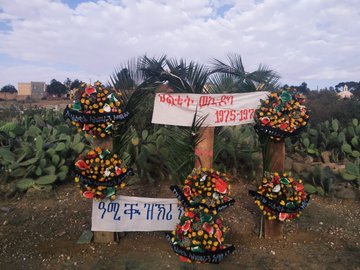
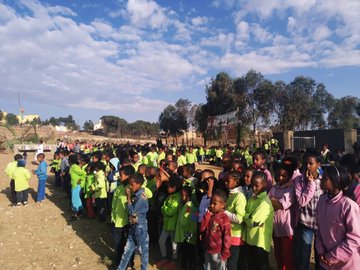
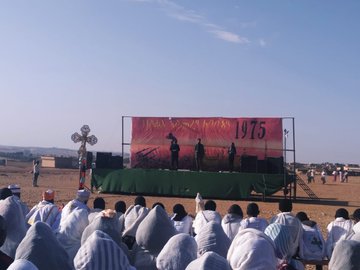
 ወኪ ዱባ ተዘኪሩ ውዒሉ።
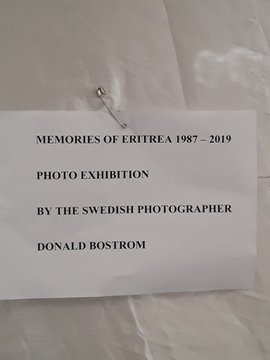





 Coward!