Page 1 of 2

VIDEO: The sad, heartbreaking destitute life in Eritrea.

Posted: 15 Feb 2020, 09:30
by Mahlana
What is the future of these beautiful young kids? They seem to be in a hopeless situtation. The adults are clealry suffering from lack of proper food as its is obvious from their physical situation in the video.


Please wait, video is loading...

Re: VIDEO: The sad, heartbreaking destitute life in Eritrea.

Posted: 15 Feb 2020, 11:45
by Somaliman
An estimated 36 million of a total population of 41 million children under the age of 18 in Ethiopia are deprived of basic goods and services.

Ethiopia has the highest percentage of AIDS orphans in sub-Saharan Africa, concerning about 886,820 children. These orphans are forced to undertake the worst types of work in order to fulfill their own needs.

An estimated 150,000 children live on the streets in Ethiopia, about 60,000 of them in the capital.

A significant number of children in Ethiopia are victims of sexual exploitation, especially in urban areas. Ethiopian girls are shipped off to the Middle East, especially to Lebanon, Saudi Arabia, and the UAE.

These girls, sometimes younger than 11 years old, are gathered specifically for prostitution, and are usually not warned of the dangers of AIDS.


If all these deplorable situations fail to ring a bell, I then invite you to click the video below and have the courage to watch it till the end - and enjoy it!

Have you ever heard, "People who live in glass houses shouldn't throw stones"!


Re: VIDEO: The sad, heartbreaking destitute life in Eritrea.

Posted: 15 Feb 2020, 12:24
by Abaymado
A nice documentary film. How the hell the dictator allow this to be filmed?

1) why the background music became Indian music?
2) the children were playing old type games
3) the 'injera' looks strange looks like bread

by the way, who is this fking somaliman? i dont think he is from somali but he is just shabo.
what is your fking business?

Re: VIDEO: The sad, heartbreaking destitute life in Eritrea.

Posted: 15 Feb 2020, 12:29
by Degnet
Mahlana wrote:
15 Feb 2020, 09:30
What is the future of these beautiful young kids? They seem to be in a hopeless situtation. The adults are clealry suffering from lack of proper food as its is obvious from their physical situation in the video.


Please wait, video is loading...
It is the same both sides want us to see,agressive warmongers.

Re: VIDEO: The sad, heartbreaking destitute life in Eritrea.

Posted: 15 Feb 2020, 12:49
by Mahlana
It was a family member from abroad visiting his relatives in Eritrea who filmed the video.

To be honest, if people in Eritrea with family members abroad live under such a horrendous life, I do not even want to imagine what the lives of the remaining people with no help from any one look like. :shock: :shock: :shock:
Abaymado wrote:
15 Feb 2020, 12:24
A nice documentary film. How the hell the dictator allow this to be filmed?

1) why the background music became Indian music?
2) the children were playing old type games
3) the 'injera' looks strange looks like bread

by the way, who is this fking somaliman? i dont think he is from somali but he is just shabo.
what is your fking business?

Re: VIDEO: The sad, heartbreaking destitute life in Eritrea.

Posted: 15 Feb 2020, 12:54
by Degnet
Mahlana wrote:
15 Feb 2020, 12:49
It was a family member from abroad visiting his relatives in Eritrea who filmed the video.

To be honest, if people in Eritrea with family members abroad live under such a horrendous life, I do not even want to imagine what the lives of the remaining people with no help from any one look like. :shock: :shock: :shock:
Abaymado wrote:
15 Feb 2020, 12:24
A nice documentary film. How the hell the dictator allow this to be filmed?

1) why the background music became Indian music?
2) the children were playing old type games
3) the 'injera' looks strange looks like bread

by the way, who is this fking somaliman? i dont think he is from somali but he is just shabo.
what is your fking business?
There is poverty but you can use your imagination too,anta aemerou zeawere,nai Tigray baeleka etereyena zeleka entay eyu?

Re: VIDEO: The sad, heartbreaking destitute life in Eritrea.

Posted: 15 Feb 2020, 13:06
by Zmeselo


Eritrea: Testifying Developmental Endeavors of a Nation

April 8, 2016


BY: Yosief Abraham Z.

http://www.geeskaafrika.com/17262/eritr ... -a-nation/

Located in the Southern part of the country, this region is diverse in its topographical patterns and enjoys various agricultural activities. With the highest number of villages in Eritrea, this region has 1,018 villages which are scattered across 10,000 sq. km. And to facilitate effective administration in the way that consolidate developmental ventures, the Government of Eritrea restructured regional marks of the region and all villages, including to these colonially isolated but now developing hamlets, are under the umbrella of 231 administrative areas.

After a new era has signaled on May 24 of 1991, soon, the government took decisive developmental efforts for revitalizing the almost engraved notions of economic and social growth in the region. Thus, to exploit agricultural potencies of the three climatic regions of the region, constructing various dams, water catchments and reservoirs, considered at escalating level. Stemmed from this, topographical areas of the region—with the highest peak at Emba-Soira to the lowest part at Megerba Obel—fall under deep and compacted researches of the concerned governmental bodies.

Dams in Hadadm, Rubashiro and Deqilefay, are some of the 146 dams from which residents of the region are enjoying their agricultural endeavors. The Qeyhkore-Sesah diversion, for instance, is playing its determinant role in mobilizing farmers of the area into adapting modern farming system, and, resultantly, 275 hectares of land is under cultivation with the mechanization of drip irrigation. Yet, efforts are underway to explore the potency of the dam in expanding the agricultural works to 1,789 hectares.

As bad omen of the colonial legacy, before independence, there was only one pond. Currently, however, there are254 ponds and are consolidating their expansionary roles in alleviating such water provision hurdles in the entire region. In tandem with this, programs for keeping endangered flora species are core objectives of the region administration. Diversified from the highlands in the areas that border to the Central region, semi-highland and semi-lowlands of the region are suitable for various trees, including to Olea Africana, Ficus Sycomorus, Fiscus Vasta, Acacia Albida, Acacia Senegal and other listless types of uniquely existing trees.

Travelling from Adi-Gulti, a village where the famous shrine of the Menkeryos Monastery is located, to the amazing road of Engela-Demhina allows one an insight to the region’s abundance in the livestock population. Archives closed on January 23 of 2016 asserts that the region is blessed with 240,006 cattle—out of which 12,284 are dairy cows, 435,312 goats and sheep, 445,404 poultry and 3,207 pigs. By similar coin, to augment honey products in the region, 14, 348 beehives out of which 4,237 are under modern apiculture or beekeeping domain. Packing animals like donkey, mule and horses also cover an appreciative number.

In the arena of transport, the Southern Region is one of those profoundly succeeded parts of the country in allowing almost every village in the administrative zones has an access to the feeder roads. And over 78% of the region is under the provision of private buses, and, Harat Company plays vital role in providing effective transport services across the two main asphalted roads from which 8 sub-zones of the region are dependent of these routes for facilitating economic development in the area.

For armoring the unexploited tourism activities in the region, earth roads in the 12 subzones of the region have encouraging initiatives. And resultantly, some of the ancient historical attractions like Kohaito, Keskese, Metera, Ham, BeatiSilum, Adigawil, Adibari, EndabaMetae and war trenches of Adibegio, Egri Mekel and other numerous cultural and religious monasteries are now accessible.

Concerning to the efforts for ensuring sustainable provision of water supply in the region, efforts have been continuing. According to statistics of the administration office, from the 1,018 villages, 267 villages have access to hand pump while 105 villages are getting their access underpinned by motor-supported water provision system. Solar and electricity energy sources are also emboldening the ventures for providing sources of water security in 184 villages.


By aiming at honing generations future, with higher concentration in guaranteeing educational opportunities in the far-flung areas, 494 schools are activating their undeniable responsibilities and are part of the national packages for ensuring basic human rights creeds. Last year, 213, 441 students attended regular classes, and 5,059 teachers and academy members also took the grail of success in driving the swing of teaching process.

At last, promising health facilities in the Southern Region are playing their significant roles in realizing the missions of the Ministry of Health. The referral hospital in Mendefera, Capital City of the region, is one of the main spots for alleviating any impacts of communicable and incommunicable diseases. Other 4 hospitals, 2 community hospitals,46 health stations, 9 health centers and 3 MCH are part of the national developments the region has achieved to facilitate the mission of building a solid foundation for other developmental efforts.

Re: VIDEO: The sad, heartbreaking destitute life in Eritrea.

Posted: 15 Feb 2020, 13:07
by Zmeselo
The kid speaks better English than you do, crock- tearing qondaf!
Mahlana wrote:
15 Feb 2020, 09:30
What is the future of these beautiful young kids? They seem to be in a hopeless situtation. The adults are clealry suffering from lack of proper food as its is obvious from their physical situation in the video.


Please wait, video is loading...

Re: VIDEO: The sad, heartbreaking destitute life in Eritrea.

Posted: 15 Feb 2020, 13:11
by Temt
ኣየወ! ጋዕጋዕ ቆማል ዑጉም! "እብሃል ኢላ ተዃሒላ" እዩ ናይ ዓጋመ ነገር።

Re: VIDEO: The sad, heartbreaking destitute life in Eritrea.

Posted: 15 Feb 2020, 13:13
by Zmeselo
Bees: Providing Nutrition, Generating Income and Conserving Biodiversity

Written by Administrator

http://www.shabait.com/articles/nation- ... diversity-

Articles
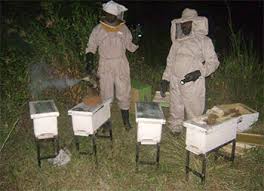


In nearly all countries of the world, bees and their products are not only common and have wide consumer demands, but such activities provide sustainable livelihoods to many small-scale farmers and other business people.

Beekeeping (apiculture) is the practice of managing honey-bee colonies to collect honey for consumption, marketing, pollinating crops, and getting advantage of other products that the hive produces such as the beeswax, propolis, pollen, and royal jelly or even producing bees for sale to other beekeepers, says Mr. Zaid Tekle, an expert and manager of Bee and poultry reproduction in the Ministry of Agriculture (MoA). In Eritrea, there are thousands of subsistence and commercial beekeepers.


As in many other countries in the world where honey bees naturally occur, Eritrean communities have had a long history of harvesting honey from the wild or in traditionally managed colonies. During the Feudal era, local lords used honey as a tax. Italians also engaged in honeybee production activities. But in a more integrated, commercial wax bee farming started after independence. After the 1998 initiative, a sound and practical study started in the areas where bee reproduction is suitable to practice. Farmers began to be introduced to modern and economically efficient bee farming. The MoA launched a campaign to augment honey production in the country by supporting farmers with the necessary equipment for beekeeping start-up. The objective was for every family to have its own bee colony to produce for its own consumption and the market. During the initial period, the project went through several setbacks. But after the year 2000 specialists in bee farming began to get training and the sector experienced a significant leap forward. As the honey reproduction centers of the MoA has been giving trainings and extension services to several farmers, the number of beekeepers has been increasing. As a result, commercial beekeeping in Eritrea has been improving in quality and increasing in quantity in nearly the last two decades.

The Ministry of Agriculture encourages bee farming especially because hives can be placed anywhere convenient and it do not use up land that can be used for cultivation. Bees collect nectar and pollen wherever they can find it, including wastelands.

“The main mission of bees in our planet is not merely honey production but has to do with cross pollination and conserving nature” says Mr. Zaid. Nectar and pollen are not used by other livestock: only bees use these resources. Therefore bees can freely use the nutrients of the plants. Pollination of plants increases their seed production and, thus, contributes to their maintenance, increase in agricultural production, conservation of natural biodiversity and its sustainability. Their role is not readily recognized, even though bees are needed for the pollination of many crops and for maintaining biodiversity. Usually a honeybee can visit between 50 to 1000 flowers in one trip, which takes between 30 minutes to 4 hours. A colony with 25,000 forager bees, each making 10 trips a day, is able to pollinate 250 million flowers. Without bees, all valuable agricultural resources could not be harvested.

According to Mr. Zaid, there are over 20,000 species of bees in the world, all of which belong to the super-family Apoidea. Most of them lead solitary lives. A few species, however, are social, leading a community life in a colony. The most common “domesticated” honey bees are not more than four to five sub-species known for producing honey, making it worthwhile to keep them. Apis is, furthermore, the only genus in the Apinae subfamily among whose species Apis mellifera is of greatest economic importance that is common in Eritrea. These species are commonly known around the world and most studies are made on them. These include Apis mellifera, A. m. scutellata, A. mellifera yementica, A. serrna, A. dorssata, flore. These sub families have been found to have specific behavioral and morphological characteristics, and their variation has some implications for bee-keeping practice. The MoA regularly conducts researche and surveys on the best type of species suitable to Eritrea and introduces them to the farmers.

According to Mr. Zaid Apis mellifera is one of the honey producing bees and has been introduced in most regions of the world. This species has African origin. Another species which has economic value in Eritrea is Apis serana. Apis serana migrated from the Middle East and can also be found around Europe. It is confined in this places. Apis dorsata is another bee species that is found in southern Asia. This species is much harder to keep in one place, but farmers collect the produce areas where the colony is found. The fourth species is known by the name flore. Flore is found in Afghanistan and Iran but has migrated to our country in the last three years. Similarly, this species is also difficult to keep in hives. It lives in trees and caves.

There are also stingless bees in our country. Bee species known by the local name “Teqeray” is one of them. A. mellifera yementica species lives in the eastern lowlands of Eritrea all the way up to Yemen but A. m. scutellata is mostly found in the highlands. In Eritrea the most commonly reared bee species are known by the local names “Teqeray” and “Tsgenay” which represent Apis mellifera mentcosa and A. m. yemenitica sub-species of honeybee. Regarding their behavior and morphological characteristics, Mr. Zaid says, “the former make home in the ground and big tree holes. In spite of limited research, the honey harvested from this species is very low compared to the latter. From one colony of this species a quarter of a kilo honey can be harvested”. For this reason Eritrean farmers do not prefer to keep the Apis mellifera mentcosa. The traditional and most commonly kept bee species in the highlands is A. mellifera from which most of the honey we get comes.

Eritrea is one of the largest honey producing countries in Africa and has favorable climate for bee farming. The southern region is the most endowed in agro-ecology for bee farming in Eritrea. A study conducted by the Ministry found that the vicinities of Tsaeda-Qelay, Endagergsh, May-alba, Tserona, Hazemo, Deqi-lefay, Hademti, Mayaini, Qelay-beatit, Segheneiti, Ala, Adi-felesti, and Areza in the southern region are conducive for bee farming. However, deforestation and chemical use in agricultural fields remains a concern. This can damage honey production at national level. Trees make good places for bees to live and give wild bees nesting places, plenty of food to eat and shade. Therefore, preserving existing forest areas and enriching the environment with a variety of wild vegetation is of paramount importance in enhancing the sector.

In total, around 16 thousand traditional and 7 thousand registered bee-colonies in modern hives exist in the country. There are also estimated thousands of unregistered hives throughout the rural area. An increasing number of beekeepers associations are supplying their products to the market. An organized way of doing the activity is enabling the farmers to command market prices, share experiences and provide quality products. Mr. Zaid says that the Ministry regularly conducts research on the behaviors and adaptability of certain kinds of species with the aim of enhancing honey production both in quality and quantity which can be helpful economically to farmers. Based on the research conducted, the Ministry gives training to farmers on management and colony splitting, proper hive making and seasonal bee colony management practices. The adoption rate of modern beekeeping has been improved substantially after skill development training took place and appropriate beehives were produced.

Honey has been valued highly as a sweetener since early times in human history. The content and color of honey is influenced by the kind of forage the bees extract. This product can be consumed as it is as table honey, and also as an ingredient for making candies from wax, conserved fruits, juices, cakes and cooked foods. It has a long history of a very wide range of use. In our communities a respected guest is provided with honey and “Kicha”, a traditional staple. It is also used to make beverages like Brzi, a drink made up of Siwa and honey. But this is used in holidays and special occasions, mostly in the rural area.

Honey, like other bee products, has a tasty and nutritional value and contributes to the overall health of farm families. In many societies bee products are used in traditional medicine and are an integral part of traditional health care. Bee products provide improved nutrition, and consequently, better health for farm families and others in local communities. Honey is a useful source of high-carbohydrate, and contains a rich diversity of minerals, vitamins and others, adding nutritional variety to human diets (FAO, 2009). Honey provides improved physical performance, resistance to fatigue and improved mental efficiency (FAO, 2006). Honey also is said to improve food assimilation (FAO, 2006). It is commonly indicated as a ‘lifesaver’ for people in critical health (CTA, 2005). Similar to Eritrea, bee brood and adult bees are consumed in many countries and in some are considered a treat. Brood and adult bees contain reasonable amounts of protein (FAO, 2006).

Many bee products have a good value in local markets and are easily tradable. Honey, for example, requires few inputs and has a good cash value related to bulk and weight. Honey is also easy to transport to distant markets. If appropriately extracted and processed, it can become a nonperishable providing sales of the product well beyond the main harvest times. This can provide a more constant and regular income for the farm families. Beekeeping is a fairly easy activity to start and this can benefit the disadvantaged sections of a society, for example, females and people with disabilities. Furthermore, traders and others benefit from a strong beekeeping industry. Other local traders benefit by making hives and other equipment, and from using and selling the products. Thus, it creates employment and mitigates poverty level.

In Eritrea, in many rural areas, various forms of beekeeping have been in practice for many years. One of the future aims of the Ministry of Agriculture is to improve honey production by forming associations, conducting research and giving training to farmers. By introducing beekeeping as a business and building on pre-existent skills it will improve the knowledge and capacity of small-scale farmers. This will enhance local traditions in beekeeping while developing such an enterprise for the benefit of many in the local community. This is not meant to deviate from the use of acquired techniques and equipment in the locality, but enhance and improve them.


Re: VIDEO: The sad, heartbreaking destitute life in Eritrea.

Posted: 15 Feb 2020, 13:14
by Mahlana
For slaves and offsprings of slaves like you, what matters is if one speaks his slave masters languages well or not and if his f@g a$$ is clean or not to bend for his masters; not if his miserable life is improving or not.

Zmeselo wrote:
15 Feb 2020, 13:07
The kid speaks better English than you do, crock- tearing qondaf!
Mahlana wrote:
15 Feb 2020, 09:30
What is the future of these beautiful young kids? They seem to be in a hopeless situtation. The adults are clealry suffering from lack of proper food as its is obvious from their physical situation in the video.


Please wait, video is loading...

Re: VIDEO: The sad, heartbreaking destitute life in Eritrea.

Posted: 15 Feb 2020, 13:19
by Somaliman
Abaymado wrote:
15 Feb 2020, 12:24
A nice documentary film. How the hell the dictator allow this to be filmed?

1) why the background music became Indian music?
2) the children were playing old type games
3) the 'injera' looks strange looks like bread

by the way, who is this fking somaliman? i dont think he is from somali but he is just shabo.
what is your fking business?


If you want to know who I'm (beside being Somali), introduce me to your sister and she would provide you with a comprehensive feedback on me - provided she's fuckab.le to my standards! Isn't that a fair deal!

Re: VIDEO: The sad, heartbreaking destitute life in Eritrea.

Posted: 15 Feb 2020, 13:21
by Zmeselo
Wedi lementi, wedi sle Mariam- Mariam thabkum- it means he goes to school. Now go push your barrow & pick me some beles!

Wasn't this doc. made by your white massa, Jason Anderson in 2009? 11 years ago?

NfaleT equa ina, sahsah agame!


Mahlana wrote:
15 Feb 2020, 13:14
For slaves and offsprings of slaves like you, what matters is if one speaks his slave masters languages well or not and if his f@g a$$ is clean or not to bend for his masters; not if his miserable life is improving or not.

Zmeselo wrote:
15 Feb 2020, 13:07
The kid speaks better English than you do, crock- tearing qondaf!
Mahlana wrote:
15 Feb 2020, 09:30
What is the future of these beautiful young kids? They seem to be in a hopeless situtation. The adults are clealry suffering from lack of proper food as its is obvious from their physical situation in the video.


Please wait, video is loading...

Re: VIDEO: The sad, heartbreaking destitute life in Eritrea.

Posted: 15 Feb 2020, 13:26
by Fed_Up
Agamemado,

You are certified “qoshe eater” Starvin Marvin. Case closed!

Abaymado wrote:
15 Feb 2020, 12:24
A nice documentary film. How the hell the dictator allow this to be filmed?

1) why the background music became Indian music?
2) the children were playing old type games
3) the 'injera' looks strange looks like bread

by the way, who is this fking somaliman? i dont think he is from somali but he is just shabo.
what is your fking business?

Re: VIDEO: The sad, heartbreaking destitute life in Eritrea.

Posted: 15 Feb 2020, 13:28
by Fed_Up
Brother Z,

Minor correction: the filmed back 2007 however posted 2009 which just 7 years after the devastated war +sanctions.
Zmeselo wrote:
15 Feb 2020, 13:21
Wedi lementi, wedi sle Mariam- Mariam thabkum- it means he goes to school. Now go push your barrow & pick me some beles!

Wasn't this doc. made by your white massa, Jason Anderson in 2009? 11 years ago?

NfaleT equa ina, sahsah agame!


Mahlana wrote:
15 Feb 2020, 13:14
For slaves and offsprings of slaves like you, what matters is if one speaks his slave masters languages well or not and if his f@g a$$ is clean or not to bend for his masters; not if his miserable life is improving or not.

Zmeselo wrote:
15 Feb 2020, 13:07
The kid speaks better English than you do, crock- tearing qondaf!
Mahlana wrote:
15 Feb 2020, 09:30
What is the future of these beautiful young kids? They seem to be in a hopeless situtation. The adults are clealry suffering from lack of proper food as its is obvious from their physical situation in the video.


Please wait, video is loading...

Re: VIDEO: The sad, heartbreaking destitute life in Eritrea.

Posted: 15 Feb 2020, 13:40
by Zmeselo
Ok, bro. Thanx.

Besides, this village is at the Southern border. I'm not surprised if the village was looted by the marauding qomalat army, during the border war.
Fed_Up wrote:
15 Feb 2020, 13:28
Brother Z,

Minor correction: the filmed back 2007 however posted 2009 which just 7 years after the devastated war +sanctions.
Zmeselo wrote:
15 Feb 2020, 13:21
Wedi lementi, wedi sle Mariam- Mariam thabkum- it means he goes to school. Now go push your barrow & pick me some beles!

Wasn't this doc. made by your white massa, Jason Anderson in 2009? 11 years ago?

NfaleT equa ina, sahsah agame!


Mahlana wrote:
15 Feb 2020, 13:14
For slaves and offsprings of slaves like you, what matters is if one speaks his slave masters languages well or not and if his f@g a$$ is clean or not to bend for his masters; not if his miserable life is improving or not.

Zmeselo wrote:
15 Feb 2020, 13:07
The kid speaks better English than you do, crock- tearing qondaf!
Mahlana wrote:
15 Feb 2020, 09:30
What is the future of these beautiful young kids? They seem to be in a hopeless situtation. The adults are clealry suffering from lack of proper food as its is obvious from their physical situation in the video.


Please wait, video is loading...

Re: VIDEO: The sad, heartbreaking destitute life in Eritrea.

Posted: 15 Feb 2020, 15:12
by kerenite
Mahlana wrote:
15 Feb 2020, 09:30
What is the future of these beautiful young kids? They seem to be in a hopeless situtation. The adults are clealry suffering from lack of proper food as its is obvious from their physical situation in the video.


Please wait, video is loading...
Sad...sad indeed and it is absolutely sickening...sickening!

I hope the smart kid is safe, alive and kicking and made it to tigray along with his family and not that he was dragged from his village and put into one of the over 360 prisons in eritrea. Mind you, we have a lot of underage kids who are languishing in hgdef's underground dungeons. A good example is Ciham.

Having said that,

The inhabitants of the aforementioned destitute village same as other other eri villages are visited every 6 months by hgdef soldiers primarily aimed to check if they have problems. Haha.. not at all rather looking for someone who has reached the age to be brought to SAWA. Besides each villager is asked to indicate how many livestocks he owns while he has to pay taxes for each.

Believe me what I am telling you is not out of the blue. Don't take my words at face value ask any villager back home and he will prove me right.

Re: VIDEO: The sad, heartbreaking destitute life in Eritrea.

Posted: 15 Feb 2020, 15:18
by Weyane.is.dead
Shed your crocodile tears for the people of tigray. Wedis.hermuta astak weyane rat. As we speak more than 40% of your population is at the mercy of foreign donors. Merat sahsah kodar weyanay. Same goes for the wedita gahba kerenite.
Mahlana wrote:
15 Feb 2020, 09:30
What is the future of these beautiful young kids? They seem to be in a hopeless situtation. The adults are clealry suffering from lack of proper food as its is obvious from their physical situation in the video.


Please wait, video is loading...

Re: VIDEO: The sad, heartbreaking destitute life in Eritrea.

Posted: 15 Feb 2020, 15:35
by Zmeselo
Anta lezayi, this doc is from 2007 after your ragtag army ransacked the village. Now, this kid has gone through Sawa & is a professional sniper who could blow your brains out.

Feel sorry, for your lemanit granma!
kerenite wrote:
15 Feb 2020, 15:12
Mahlana wrote:
15 Feb 2020, 09:30
What is the future of these beautiful young kids? They seem to be in a hopeless situtation. The adults are clealry suffering from lack of proper food as its is obvious from their physical situation in the video.


Please wait, video is loading...
Sad...sad indeed and it is absolutely sickening...sickening!

I hope the smart kid is safe, alive and kicking and made it to tigray along with his family and not that he was dragged from his village and put into one of the over 360 prisons in eritrea. Mind you, we have a lot of underage kids who are languishing in hgdef's underground dungeons. A good example is Ciham.

Having said that,

The inhabitants of the aforementioned destitute village same as other other eri villages are visited every 6 months by hgdef soldiers primarily aimed to check if they have problems. Haha.. not at all rather looking for someone who has reached the age to be brought to SAWA. Besides each villager is asked to indicate how many livestocks he owns while he has to pay taxes for each.

Believe me what I am telling you is not out of the blue. Don't take my words at face value ask any villager back home and he will prove me right.

Re: VIDEO: The sad, heartbreaking destitute life in Eritrea.

Posted: 15 Feb 2020, 15:50
by Fed_Up
Somaliman wrote:
15 Feb 2020, 13:19
Abaymado wrote:
15 Feb 2020, 12:24
A nice documentary film. How the hell the dictator allow this to be filmed?

1) why the background music became Indian music?
2) the children were playing old type games
3) the 'injera' looks strange looks like bread

by the way, who is this fking somaliman? i dont think he is from somali but he is just shabo.
what is your fking business?


If you want to know who I'm (beside being Somali), introduce me to your sister and she would provide you with a comprehensive feedback on me - provided she's [deleted] to my standards! Isn't that a fair deal!

:lol: :lol: :lol:

Trust me he will not refused. He might even ask you to add the younger one. Agamewoch will do anything to remove their cursed genes.