Ethiopian News, Current Affairs and Opinion Forum
Zmeselo
Senior Member+
Posts: 37343
Joined: 30 Jul 2010, 20:43

Ethiopian Artists in Keren.

Post by Zmeselo » 18 Dec 2019, 02:44


ሰላምታ: ካብ ምጭውቲ ከተማ ከረን።
Greetings, from the City of Keren!


Images from Keren! The Ethiopian cultural troupe, visited some historical sites within Zoba Anseba.


A dinner reception and musical entertainment in honor of Ethiopian cultural troupe, was held at Sarina hotel in Keren. The Ethiopian cultural troupe first performance will be on Wednesday afternoon at Keren stadium, & EriTV will air it live.
(Ghideon Musa: @GhideonMusa)
Last edited by Zmeselo on 18 Dec 2019, 02:51, edited 1 time in total.

Zmeselo
Senior Member+
Posts: 37343
Joined: 30 Jul 2010, 20:43

Re: Ethiopian Artists in Keren.

Post by Zmeselo » 18 Dec 2019, 02:47

ERi-TV - Interview with Mr. James Wakiaga, Resident Representative at UNDP Eritrea, on Human Development Report 2019


pastlast
Member
Posts: 2250
Joined: 19 May 2019, 18:02

Re: Ethiopian Artists in Keren.

Post by pastlast » 18 Dec 2019, 03:04

Thanks to Kofi Annan and the UN for the Development Happening in Eritrea, without the UNDP, PFDJ would be an obviously Useless Organisation of Criminals and Human Rights Violators!

UNDP is keeping ERITREANs From Revolting against the PFDJ!....


https://www.undp.org/

Looking to the future
UNDP works in about 170 countries and territories, helping to achieve the eradication of poverty, and the reduction of inequalities and exclusion. We help countries to develop policies, leadership skills, partnering abilities, institutional capabilities and build resilience in order to sustain development results.

This is a critical time for the world. At UNDP, we see this period as a huge opportunity to advance the global sustainable development agenda. In September 2015, world leaders adopted the 2030 Agenda for Sustainable Development to end poverty, protect the planet and ensure that all people enjoy peace and prosperity. UNDP is working to strengthen new frameworks for development, disaster risk reduction and climate change. We support countries' efforts to achieve the Sustainable Development Goals, or Global Goals, which will guide global development priorities through 2030.

UNDP's Strategic Plan (2018-2021) has been designed to be responsive to the wide diversity of the countries we serve. The diversity is reflected in three broad development contexts:

Eradicate poverty in all its forms and dimensions
Accelerate structural transformations
Build resilience to shocks and crises
To respond to these issues, and better focus its resources and expertise to deliver on the 2030 Agenda, UNDP has identified a set of approaches that we call our Signature Solutions:

Keeping people out of POVERTY
GOVERNANCE for peaceful, just, and inclusive societies
Crisis prevention and increased RESILIENCE
ENVIRONMENT: nature-based solutions for development
Clean, affordable ENERGY
Women's empowerment and GENDER equality
In all our activities, we encourage the protection of human rights and the empowerment of women, minorities and the poorest and most vulnerable.

The annual Human Development Report, commissioned by UNDP, focuses the global debate on key development issues, providing new measurement tools, innovative analysis and often controversial policy proposals. The global Report's analytical framework and inclusive approach carry over into regional, national and local Human Development Reports, also supported by UNDP.

UNDP and the UN development system

UNDP remains committed to working even more closely with partners across the UN system. The UNDP Administrator is the Vice-Chair of the UN Sustainable Development Group (UNSDG), which unites the funds, programmes, specialized agencies, departments and offices of the UN system that play a role in sustainable development. The Administrator also convenes the UNSDG Core Group comprised of DESA, FAO, ILO, UNDP, UNFPA, UNHCR, UNICEF, UN Women, WFP, WHO and the rotating chairs of the Regional Economic Commissions.

Created by former UN Secretary-General Kofi Annan and endorsed by the General Assembly, the UNSDG is the main UNDS internal coordination mechanism at the global level. It is instrumental in enabling action on the ground and ensuring that United Nations Country Teams (UNCTs) have the support, guidance and impartial oversight required as they assist governments to deliver on the 2030 Agenda. As UNSDG Vice-Chair, the UNDP Administrator is responsible for the coordination of UNSDG operational work, including the elaboration of program, policy and financing instruments and guidance, the functioning of the UNSDG Strategic Results Groups, as well as day-to-day management of the Resident Coordinator system.

UNDP also administers the UN Capital Development Fund, which helps developing countries grow their economies by supplementing existing sources of capital assistance by means of grants and loans; and UN Volunteers, which fields over 6,500 volunteers from 160 countries, serving with 38 UN partners in support of peace, security, human rights, humanitarian delivery and development through volunteerism worldwide.


On average, UNDP supports an election somewhere in the world every two weeks. Photo: Tim McKulka/UNDP South Sudan
Fit-for-purpose to deliver on Agenda 2030

As countries implement the 2030 Agenda, UNDP is by their side.

UNDP’s strength comes from having the trust of developing countries, owing to our impartial character, longstanding presence and commitment to the poorest and most vulnerable. We also play a key role as the support platform of the wider UN Development System, helping agencies work together for sustainable development.

Our Strategic Plan 2018-2021 sets out the direction for a new UNDP, optimized to help countries achieve the 2030 Agenda for Sustainable Development. With an improved business model making us more effective, transparent and accountable, we can deliver stronger results for those we serve.

Our new Integrated Results and Resources Framework clearly shows the allocation of resources and results achieved, allowing stakeholders to easily monitor performance, learn lessons, and hold the organization accountable for the funds entrusted to it. Executive Board members were pleased with the new reporting format based on the Framework, and welcomed the 2015 Annual Report as a step towards greater results-based management.

UNDP has improved standards for programme planning and quality assurance, and a robust process for programme appraisal. Country Programme Documents show better targeting of resources. Data is used more rigorously to inform programming, and new quality standards for projects have been rolled out.

UNDP is today a leaner and more efficient organization, operating even closer to the field. UNDP’s new structure reflects a staff reduction of 12 percent at headquarters and regional levels. We have also moved a further 20 percent of staff from New York to regional hubs to strengthen our support to country offices.

For two consecutive years, the Aid Transparency Index has recognized UNDP as the most transparent development agency in the world, while AidData (2015) names UNDP among the development partners that communicate most frequently with host government counterparts. We have put in place an open data platform that enables wide global usage of data. More details of UNDP’s activities, budgets and results are being published than ever before on open.undp.org, covering more than 4,000 projects in 155 countries and territories.

As of 1 January 2015, UNDP adopted mandatory Social and Environmental Standards for all of its projects and programmes. These standards will strengthen UNDP’s efforts for increased quality in its programmes and ensure social and environmental benefits for the people we serve.

UNDP is guided by the United Nations Development Group’s common approach implementing the SDGs, called MAPS, or Mainstreaming, Acceleration, and Policy Support.

Adequate levels of Core Resources and lightly earmarked funds are essential for UNDP to carry out its mandate and to coordinate UN system support to help countries “land” the SDGs. With about US$5 billion in voluntary contributions annually, UNDP remains a partner of choice and passes the “market test” in an environment in which partners can choose from many organizations to work with.

All sources of finance — domestic and international, public and private — are needed to achieve the SDGs. UNDP is redoubling efforts to develop partnerships with International Financial Institutions, civil society, the private sector, as well as individuals. The aim is to have UNDP support governments in securing increasingly diverse sources of innovative financing for development and ensure that such financing is risk-informed.

Our mission
Zmeselo wrote:
18 Dec 2019, 02:47
ERi-TV - Interview with Mr. James Wakiaga, Resident Representative at UNDP Eritrea, on Human Development Report 2019


Zmeselo
Senior Member+
Posts: 37343
Joined: 30 Jul 2010, 20:43

Re: Ethiopian Artists in Keren.

Post by Zmeselo » 18 Dec 2019, 03:44

Had you listened to the interview carefully instead of running your mouth, you wouldn't have written such a stupid comment.

Mr Wakiaga's kudos, for the effort the govt has put & is putting on this is glaringly obvious. The govt is allowing it to happen to begin with, isn't it? And, he isn't the only one. Susan Namondo and others, say the same thing. The commitment of the govt & the lack of corruption is always mentioned & admired. Sheila Keetaruth, for instance was not allowed in despite all the pressure, because her agenda was destructive. This proves, the govt is selective in its approach.

As per your post, the 170 countries the UNDP operates in, must be as thankful as well. The difference is that Eritrea is ranked highest, with Ghana, in achieving all MDG's & is going ahead in achieving the SDG's as well.

I'm not surprised of you smooching on Kofi, cos he was the friend of the weyane junta.

pastlast wrote:
18 Dec 2019, 03:04
Thanks to Kofi Annan and the UN for the Development Happening in Eritrea, without the UNDP, PFDJ would be an obviously Useless Organisation of Criminals and Human Rights Violators!

UNDP is keeping ERITREANs From Revolting against the PFDJ!....


https://www.undp.org/

Looking to the future
UNDP works in about 170 countries and territories, helping to achieve the eradication of poverty, and the reduction of inequalities and exclusion. We help countries to develop policies, leadership skills, partnering abilities, institutional capabilities and build resilience in order to sustain development results.

This is a critical time for the world. At UNDP, we see this period as a huge opportunity to advance the global sustainable development agenda. In September 2015, world leaders adopted the 2030 Agenda for Sustainable Development to end poverty, protect the planet and ensure that all people enjoy peace and prosperity. UNDP is working to strengthen new frameworks for development, disaster risk reduction and climate change. We support countries' efforts to achieve the Sustainable Development Goals, or Global Goals, which will guide global development priorities through 2030.

UNDP's Strategic Plan (2018-2021) has been designed to be responsive to the wide diversity of the countries we serve. The diversity is reflected in three broad development contexts:

Eradicate poverty in all its forms and dimensions
Accelerate structural transformations
Build resilience to shocks and crises
To respond to these issues, and better focus its resources and expertise to deliver on the 2030 Agenda, UNDP has identified a set of approaches that we call our Signature Solutions:

Keeping people out of POVERTY
GOVERNANCE for peaceful, just, and inclusive societies
Crisis prevention and increased RESILIENCE
ENVIRONMENT: nature-based solutions for development
Clean, affordable ENERGY
Women's empowerment and GENDER equality
In all our activities, we encourage the protection of human rights and the empowerment of women, minorities and the poorest and most vulnerable.

The annual Human Development Report, commissioned by UNDP, focuses the global debate on key development issues, providing new measurement tools, innovative analysis and often controversial policy proposals. The global Report's analytical framework and inclusive approach carry over into regional, national and local Human Development Reports, also supported by UNDP.

UNDP and the UN development system

UNDP remains committed to working even more closely with partners across the UN system. The UNDP Administrator is the Vice-Chair of the UN Sustainable Development Group (UNSDG), which unites the funds, programmes, specialized agencies, departments and offices of the UN system that play a role in sustainable development. The Administrator also convenes the UNSDG Core Group comprised of DESA, FAO, ILO, UNDP, UNFPA, UNHCR, UNICEF, UN Women, WFP, WHO and the rotating chairs of the Regional Economic Commissions.

Created by former UN Secretary-General Kofi Annan and endorsed by the General Assembly, the UNSDG is the main UNDS internal coordination mechanism at the global level. It is instrumental in enabling action on the ground and ensuring that United Nations Country Teams (UNCTs) have the support, guidance and impartial oversight required as they assist governments to deliver on the 2030 Agenda. As UNSDG Vice-Chair, the UNDP Administrator is responsible for the coordination of UNSDG operational work, including the elaboration of program, policy and financing instruments and guidance, the functioning of the UNSDG Strategic Results Groups, as well as day-to-day management of the Resident Coordinator system.

UNDP also administers the UN Capital Development Fund, which helps developing countries grow their economies by supplementing existing sources of capital assistance by means of grants and loans; and UN Volunteers, which fields over 6,500 volunteers from 160 countries, serving with 38 UN partners in support of peace, security, human rights, humanitarian delivery and development through volunteerism worldwide.


On average, UNDP supports an election somewhere in the world every two weeks. Photo: Tim McKulka/UNDP South Sudan
Fit-for-purpose to deliver on Agenda 2030

As countries implement the 2030 Agenda, UNDP is by their side.

UNDP’s strength comes from having the trust of developing countries, owing to our impartial character, longstanding presence and commitment to the poorest and most vulnerable. We also play a key role as the support platform of the wider UN Development System, helping agencies work together for sustainable development.

Our Strategic Plan 2018-2021 sets out the direction for a new UNDP, optimized to help countries achieve the 2030 Agenda for Sustainable Development. With an improved business model making us more effective, transparent and accountable, we can deliver stronger results for those we serve.

Our new Integrated Results and Resources Framework clearly shows the allocation of resources and results achieved, allowing stakeholders to easily monitor performance, learn lessons, and hold the organization accountable for the funds entrusted to it. Executive Board members were pleased with the new reporting format based on the Framework, and welcomed the 2015 Annual Report as a step towards greater results-based management.

UNDP has improved standards for programme planning and quality assurance, and a robust process for programme appraisal. Country Programme Documents show better targeting of resources. Data is used more rigorously to inform programming, and new quality standards for projects have been rolled out.

UNDP is today a leaner and more efficient organization, operating even closer to the field. UNDP’s new structure reflects a staff reduction of 12 percent at headquarters and regional levels. We have also moved a further 20 percent of staff from New York to regional hubs to strengthen our support to country offices.

For two consecutive years, the Aid Transparency Index has recognized UNDP as the most transparent development agency in the world, while AidData (2015) names UNDP among the development partners that communicate most frequently with host government counterparts. We have put in place an open data platform that enables wide global usage of data. More details of UNDP’s activities, budgets and results are being published than ever before on open.undp.org, covering more than 4,000 projects in 155 countries and territories.

As of 1 January 2015, UNDP adopted mandatory Social and Environmental Standards for all of its projects and programmes. These standards will strengthen UNDP’s efforts for increased quality in its programmes and ensure social and environmental benefits for the people we serve.

UNDP is guided by the United Nations Development Group’s common approach implementing the SDGs, called MAPS, or Mainstreaming, Acceleration, and Policy Support.

Adequate levels of Core Resources and lightly earmarked funds are essential for UNDP to carry out its mandate and to coordinate UN system support to help countries “land” the SDGs. With about US$5 billion in voluntary contributions annually, UNDP remains a partner of choice and passes the “market test” in an environment in which partners can choose from many organizations to work with.

All sources of finance — domestic and international, public and private — are needed to achieve the SDGs. UNDP is redoubling efforts to develop partnerships with International Financial Institutions, civil society, the private sector, as well as individuals. The aim is to have UNDP support governments in securing increasingly diverse sources of innovative financing for development and ensure that such financing is risk-informed.

Our mission
Zmeselo wrote:
18 Dec 2019, 02:47
ERi-TV - Interview with Mr. James Wakiaga, Resident Representative at UNDP Eritrea, on Human Development Report 2019


pastlast
Member
Posts: 2250
Joined: 19 May 2019, 18:02

Re: Ethiopian Artists in Keren.

Post by pastlast » 18 Dec 2019, 03:53

http://www.mdgtrack.org/index.php?tab=c&c=ERI


MDGs: Where do we stand in Eritrea?
mdgTrack Global Index for Eritrea is 33%.
The country is off track


MDGs: Where do we stand in Eritrea?
mdgTrack Global Index for Eritrea is 33%.
The country is off track

Progress Achieving
target in...
Goal 1
Eradicate extreme poverty and hunger off track 2025
Goal 2
Achieve universal primary education off track 2022
Goal 3
Promote gender equality and empower women off track 2025
Goal 4
Reduce child mortality rate on track
for 2015 2014
Goal 5
Improve maternal health on track
for 2020 2018
Goal 6
Combat HIV/AIDS, malaria and other diseases on track
for 2015 2014
Goal 7
Ensure environmental sustainability on track
for 2020 2018
Goal 8
Develop a global partnership for development off track 2025
Zmeselo wrote:
18 Dec 2019, 03:44
Had you listened to the interview carefully instead of running your mouth, you wouldn't have written such a stupid comment.

Mr Wakiaga's kudos, for the effort the govt has put & is putting on this is glaringly obvious. The govt is allowing it to happen to begin with, isn't it? And, he isn't the only one. Susan Namondo and others, say the same thing. The commitment of the govt & the lack of corruption is always mentioned & admired. Sheila Keetaruth, for instance was not allowed in despite all the pressure, because her agenda was destructive. This proves, the govt is selective in its approach.

As per your post, the 170 countries the UNDP operates in, must be as thankful as well. The difference is that Eritrea is ranked highest, with Ghana, in achieving all MDG's & is going ahead in achieving the SDG's as well.

I'm not surprised of you smooching on Kofi, cos he was the friend of the weyane junta.

pastlast wrote:
18 Dec 2019, 03:04
Thanks to Kofi Annan and the UN for the Development Happening in Eritrea, without the UNDP, PFDJ would be an obviously Useless Organisation of Criminals and Human Rights Violators!

UNDP is keeping ERITREANs From Revolting against the PFDJ!....


https://www.undp.org/

Looking to the future
UNDP works in about 170 countries and territories, helping to achieve the eradication of poverty, and the reduction of inequalities and exclusion. We help countries to develop policies, leadership skills, partnering abilities, institutional capabilities and build resilience in order to sustain development results.

This is a critical time for the world. At UNDP, we see this period as a huge opportunity to advance the global sustainable development agenda. In September 2015, world leaders adopted the 2030 Agenda for Sustainable Development to end poverty, protect the planet and ensure that all people enjoy peace and prosperity. UNDP is working to strengthen new frameworks for development, disaster risk reduction and climate change. We support countries' efforts to achieve the Sustainable Development Goals, or Global Goals, which will guide global development priorities through 2030.

UNDP's Strategic Plan (2018-2021) has been designed to be responsive to the wide diversity of the countries we serve. The diversity is reflected in three broad development contexts:

Eradicate poverty in all its forms and dimensions
Accelerate structural transformations
Build resilience to shocks and crises
To respond to these issues, and better focus its resources and expertise to deliver on the 2030 Agenda, UNDP has identified a set of approaches that we call our Signature Solutions:

Keeping people out of POVERTY
GOVERNANCE for peaceful, just, and inclusive societies
Crisis prevention and increased RESILIENCE
ENVIRONMENT: nature-based solutions for development
Clean, affordable ENERGY
Women's empowerment and GENDER equality
In all our activities, we encourage the protection of human rights and the empowerment of women, minorities and the poorest and most vulnerable.

The annual Human Development Report, commissioned by UNDP, focuses the global debate on key development issues, providing new measurement tools, innovative analysis and often controversial policy proposals. The global Report's analytical framework and inclusive approach carry over into regional, national and local Human Development Reports, also supported by UNDP.

UNDP and the UN development system

UNDP remains committed to working even more closely with partners across the UN system. The UNDP Administrator is the Vice-Chair of the UN Sustainable Development Group (UNSDG), which unites the funds, programmes, specialized agencies, departments and offices of the UN system that play a role in sustainable development. The Administrator also convenes the UNSDG Core Group comprised of DESA, FAO, ILO, UNDP, UNFPA, UNHCR, UNICEF, UN Women, WFP, WHO and the rotating chairs of the Regional Economic Commissions.

Created by former UN Secretary-General Kofi Annan and endorsed by the General Assembly, the UNSDG is the main UNDS internal coordination mechanism at the global level. It is instrumental in enabling action on the ground and ensuring that United Nations Country Teams (UNCTs) have the support, guidance and impartial oversight required as they assist governments to deliver on the 2030 Agenda. As UNSDG Vice-Chair, the UNDP Administrator is responsible for the coordination of UNSDG operational work, including the elaboration of program, policy and financing instruments and guidance, the functioning of the UNSDG Strategic Results Groups, as well as day-to-day management of the Resident Coordinator system.

UNDP also administers the UN Capital Development Fund, which helps developing countries grow their economies by supplementing existing sources of capital assistance by means of grants and loans; and UN Volunteers, which fields over 6,500 volunteers from 160 countries, serving with 38 UN partners in support of peace, security, human rights, humanitarian delivery and development through volunteerism worldwide.


On average, UNDP supports an election somewhere in the world every two weeks. Photo: Tim McKulka/UNDP South Sudan
Fit-for-purpose to deliver on Agenda 2030

As countries implement the 2030 Agenda, UNDP is by their side.

UNDP’s strength comes from having the trust of developing countries, owing to our impartial character, longstanding presence and commitment to the poorest and most vulnerable. We also play a key role as the support platform of the wider UN Development System, helping agencies work together for sustainable development.

Our Strategic Plan 2018-2021 sets out the direction for a new UNDP, optimized to help countries achieve the 2030 Agenda for Sustainable Development. With an improved business model making us more effective, transparent and accountable, we can deliver stronger results for those we serve.

Our new Integrated Results and Resources Framework clearly shows the allocation of resources and results achieved, allowing stakeholders to easily monitor performance, learn lessons, and hold the organization accountable for the funds entrusted to it. Executive Board members were pleased with the new reporting format based on the Framework, and welcomed the 2015 Annual Report as a step towards greater results-based management.

UNDP has improved standards for programme planning and quality assurance, and a robust process for programme appraisal. Country Programme Documents show better targeting of resources. Data is used more rigorously to inform programming, and new quality standards for projects have been rolled out.

UNDP is today a leaner and more efficient organization, operating even closer to the field. UNDP’s new structure reflects a staff reduction of 12 percent at headquarters and regional levels. We have also moved a further 20 percent of staff from New York to regional hubs to strengthen our support to country offices.

For two consecutive years, the Aid Transparency Index has recognized UNDP as the most transparent development agency in the world, while AidData (2015) names UNDP among the development partners that communicate most frequently with host government counterparts. We have put in place an open data platform that enables wide global usage of data. More details of UNDP’s activities, budgets and results are being published than ever before on open.undp.org, covering more than 4,000 projects in 155 countries and territories.

As of 1 January 2015, UNDP adopted mandatory Social and Environmental Standards for all of its projects and programmes. These standards will strengthen UNDP’s efforts for increased quality in its programmes and ensure social and environmental benefits for the people we serve.

UNDP is guided by the United Nations Development Group’s common approach implementing the SDGs, called MAPS, or Mainstreaming, Acceleration, and Policy Support.

Adequate levels of Core Resources and lightly earmarked funds are essential for UNDP to carry out its mandate and to coordinate UN system support to help countries “land” the SDGs. With about US$5 billion in voluntary contributions annually, UNDP remains a partner of choice and passes the “market test” in an environment in which partners can choose from many organizations to work with.

All sources of finance — domestic and international, public and private — are needed to achieve the SDGs. UNDP is redoubling efforts to develop partnerships with International Financial Institutions, civil society, the private sector, as well as individuals. The aim is to have UNDP support governments in securing increasingly diverse sources of innovative financing for development and ensure that such financing is risk-informed.

Our mission
Zmeselo wrote:
18 Dec 2019, 02:47
ERi-TV - Interview with Mr. James Wakiaga, Resident Representative at UNDP Eritrea, on Human Development Report 2019


Zmeselo
Senior Member+
Posts: 37343
Joined: 30 Jul 2010, 20:43

Re: Ethiopian Artists in Keren.

Post by Zmeselo » 18 Dec 2019, 04:14


‘Shim Ymerh, Twaf Yebrh…’

Written by Natnael Yebio W.

http://www.shabait.com/about-eritrea/ar ... waf-yebrh-

About Eritrea - Art & Sport


The tone of this article can be quite clear for a local, but an outsider may need to read further.

The title is a proverb, which can roughly be translated as: A Name guides & a Taper Lights. It highlights the ‘silent echo’, names have in our society. Parents and everyone else consider naming, carefully. They want it to be beautiful and simultaneously, meaningful. As part of the identity, it is good to know what our names mean and parallel to that finding out about the names of the places we live in or we belong, to makes our living more meaningful.

Places take their names, for different reasons and in association to events. I came to know that Eritrean villages, towns and cities have their origin of names that is more or less related to the topography of the land, nearby rivers, particular type of trees growing in these places or people living in them.

I was thrilled, to see a book of Eritrean place names inaugurated a while ago. The book, written by Teklemariam Beraki and Shishay Birhane, is entitled "trgumn ameabablan asmat botatat Ertra", and details the stories behind the names of Eritrean towns and how the names evolved over time. The book is the first of its kind, and will be of great importance in narrowing the gap between the old and the new generation. The sources of this book are the Abeyti adi or the elders, and the few old references available. The book is something that people should be proud of, when they discover about the origin of the places they live in. When I read this book it made sense to me why, these towns are still called by those ancient names. The majority of the names of these towns and villages, are related to the environment and the people. Without such references, one cannot identify, understand or tell a name of a town bluntly because the stories make the towns.

The first few pages of the book discuss Ertra, which the Italians named after the ‘Red Algae’ found in the Red Sea. If you keep reading the next few pages, you find the central regional towns and villages where the capital city of Asmara is first mentioned. The word Asmara is plural and refers to women, who unified four villages to form the city. The story is quite long, but the general background from where Asmara is named is the unity of these women. The slum neighborhood called- Aba Shawl- came from a man who used to swear by his horse named: Shawl. This man was named Engda, and was the secretary of the chieftain of that area. Formerly, the place was known as Gnbar Aba Awts, which people later came to call after the house of this man: Enda Aba Shawl. Aba, stands for ‘father’ and Shawl is the name of the horse. Through time, the name spread and you find the place called as so. Another huge neighborhood is: Akrya. This is believed to have come from the Arabic word Akir that means: the End. If you take a snapshot of this place from the top, you can see it is at the end of the city. Nearby is Haz Haz, found on top of a mountain. The name of this place dates back to a battle between a local chieftain (Raesi) Weldenkiel, against an invading Ethiopian Raesi called Hailu. Raesi Weldenkiel’s army chased the enemy in this mountain saying, Haz Haz which means “Seize them”. Since then, there evolved a neighborhood called by this name and connects three neighborhoods: Akrya, Mihram Chira and Maitemenay. Maitemenay, is also one of the biggest neighborhoods in Asmara. The name was given by the people who used to live there enjoying the good climate around, but were always wishing for one thing - water. Mai is water and temenay refers to their wish; hence Maitemenay. Tsetserat, is a neighborhood located behind the Orrota Hospital. Tsetser in Tigrinya means pebble and since this area used to be full of pebbles, it retained the name Tsetserat.

Further, the pages of the book move towards places such as Wekiduba. Weki is a Blen word for Hyena (found in the area) and Duba refers to the forest that used to be in the place in the past; so by combining these two words we have the village of WekiDuba. Serejqa is another Blen combined word, Sara and Juiqa, which mean eat, drink and get clothed. This place is named so because the place was known for its cold weather, people couldn’t tolerate.

Tera Emni (line of stones), is a place found in the Southern region and the name for this place is basically brought from the stones aligned there. Mendefera is the capital of this region and its history tells that the area was a very dense scary forest, where people never dared to enter. Thus, plainly the word is a question by itself. “Men defera”? “Who dares it (to the forest)”? The Italians decided to turn the forest into a town to spread their empire, and establish something out there. They dared to step into the all-time scary forest; this is why it was named Men defera until today. Further to the south there is a village named Emni Haili, again named after a round stone that is difficult to lift though not too hefty. This stone is annually brought to the Eritrean Festival to challenge people to lift it up, and not all people manage to do it.

Emba Soira, is known as the highest mountain in Eritrea. The word Soira is a Saho word and it means lofty, and looking at the mountain anyone would agree with the name given. Senafe is another southern regional town, which is named after the Yemeni caravans who travelled towards this land. At some point, they looked back and couldn’t trace their way back home and they asked: “Sen’a Fen”?, “which way is Sen’a?” referring to the capital of Yemen, their home town.

In the Anseba region we find a town named Ela Ber’ed. The area is known for the many white cattle, known as Ela Ber’ed. The next big town you find after Ela Ber’ed is Keren, a charming town surrounded by a chain of mountains. The word Keren in Arabic means Chain of Mountains. Another town named after the Blen language is Deraqui and the word means: Pottery. It is called so, because people did and still use the soil of the village for making Potteries.

Liban is a village, blessed with incense. This incense is extracted, from trees and stones. Using incense, is a commonly seen tradition in our culture. Aqurdat, is a town found in the Gash Barka region and its name is a Tigre word for an insect known as Qurdid. This insect troubled the people of the place, by sticking to the body of their livestock and sucking the blood. Later, the town took the name of the insect. Gogne, is a kunama word for Corner. The village has taken the name, because it is located in a corner of a mountain. Shambqo, refers to Ownership in Kunama. In the old days, Kunama people started to live in the area and declared everything found in the area as their ownership.

Molqi is the name of a place which I found funny, when I was reading. It is a formal Tigrinya word for Mumlaq, which contextually meant out of position. People were travelling on a plain land that seemed with no end and they said, “Anta Moliqna ember” referring to their helpless legs, as they were super tired and unable to finish the journey.

Sawa, is an Arabic word for togetherness pronounced as ‘Se wa’. The name is given to addressz the unified activities done together. Sawa is now a town of academic excellence, and national service training.

It is said that the Italian word Vafanculo is the origin for the naming of the village: Fanko. There was an event when the Italians blocked some rivers to make a dam and, unfortunately, the power of the reserved water bursted the walls and they were disappointed, and the name gradually developed into Fanko. What would you name a place with no inhabitants, no vegetation, no nothing? Tigre people found such an area and they called it “Alebun” and, hence, the village Alebu which means “nothing available”. Af’abet is an interesting story I found outz while reading the book. It is originally a word uttered from a Tigre shepherd, when he couldn’t reply to a foreigner who asked what the place was called. The Tigre man couldn’t understand his words and said Af Abet, “the tongue couldn’t talk” and since then, the place has been called Af’abet.

Omhajer, comes from an Arabic word Um Hajer; meaning Mother of Stones. The area, is full of stones. Nefasit, is a town found underneath the Debre Bizen monastery. This town is located, between Bizen and the eastern Arbe Robue mountains.

Zmeselo
Senior Member+
Posts: 37343
Joined: 30 Jul 2010, 20:43

Re: Ethiopian Artists in Keren.

Post by Zmeselo » 18 Dec 2019, 04:39

Liar, past-ardo!

Eritrea was offtrack in 2015, only in one area out of 8. "Eradicate Extreme Hunger & Poverty"!


Eritrea achieves three UN MDGs ahead of 2015 target date


Eritrea achieved three UN MDGs ahead of the target date of 2015 - Photo: Eritrean students in Massawa

http://www.madote.com/2013/11/eritrea-a ... f.html?m=1

During a speech she made in connection with the observance of United Nations Day in Asmara, Amna Nur-Hussein, the Minister of Health stated http://shabait.com/news/local-news/1504 ... ievements- Eritrea has achieved three of the eight UN Millennium Development Goals (MDGs) ahead the 2015 target date.
.
The three MDGs Eritrea has achieved, are all health-related: reducing infant child mortality by two-thirds (MDG 4); improve maternal health (MDG 5); and combating HIV/AIDS, Malaria and other diseases (MDG 6).

Speaking at the occasion, Christine N. Umutoni, the UN Resident Coordinator and UNDP Resident Representative in Eritrea, lauded the country's achievements in the health sector and sees it as a model for other nations to follow.
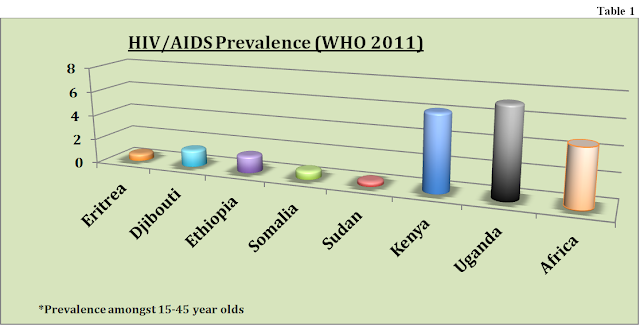
HIV prevalence rate in Eritrea is below one percent while most African countries have rates above 10%.
She said. http://shabait.com/articles/nation-buil ... s-possible
Eritrea needs to give Africa and the rest of the world lessons on how these successes were achieved.
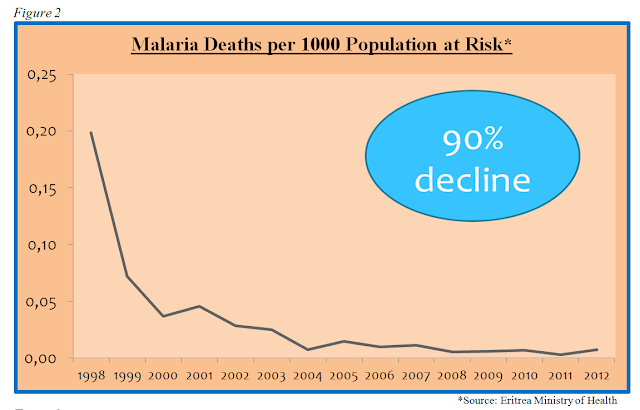
According to the World Health Organization, Eritrea has declined malaria infections by 90%; is on track to reduce maternal mortality by 75%; declined HIV/AIDs prevalence by 49% to 0.8%; improved access to potable water to 85% http://www.madote.com/2013/04/eritrea-a ... water.html and has nearly doubled its adult literacy rates to 80%. http://www.madote.com/2013/01/eritreas- ... roves.html

Part of Eritrea's early successz can be attributed to its partners. Among the most notable is Dr. Lisa Materson, the former co-host from the American TV show "The Doctors", who opened an OBGYN residency in the country.


The MDGs are a comprehensive framework, endorsed by 189 countries at the UN Millennium Summit in September of 2000. They were introduced as a road map for developing nations to reduce poverty, hunger, ill-health, improving education, and environmental sustainability by December 31, 2015.

Eritrea Millennium Development Goals Progress
MDG 1 Eradicate Extreme Hunger and Poverty Off Track ✗
MDG 2 Achieve Universal Primary Education On Track ✓
MDG 3 Promote Gender Equality & Empower Women On Track ✓
MDG 4 Reduce Child Mortality Achieved ✓
MDG 5 Improve Maternal Health Achieved ✓
MDG 6 Combat HIV/AIDS, Malaria & other Diseases Achieved ✓
MDG 7 Ensure Environmental Sustainability On Track ✓
MDG 8 Develop a Global Partnership for Development On Track ✓
Eritrea is on track to reach seven of eight MDGs, by December 31, 2015


Regional HIV/AIDS Prevalence rate - Eritrea stands at 0.6%


Malaria deaths per 1000 population declined by 90%


Diphtheria-tetanus-pertussis (DTP3) immunization coverage in East Africa
(Charts courtesy of: FikreJesus Amahazion)

Zmeselo
Senior Member+
Posts: 37343
Joined: 30 Jul 2010, 20:43

Re: Ethiopian Artists in Keren.

Post by Zmeselo » 18 Dec 2019, 04:48


حشفيراي في مديرية حقات...ساهم في تغيير بيئة المنطقة نحو الأفضل..
Hesfiray Dam in Haqat sub-zone ... contributing in changing the region's environment for the better.
(mahmud frezer: @SamiKubud)

Zmeselo
Senior Member+
Posts: 37343
Joined: 30 Jul 2010, 20:43

Re: Ethiopian Artists in Keren.

Post by Zmeselo » 18 Dec 2019, 08:25


CECAFA U-17 WOMEN’S CHALLENGE CUP: Eritrea sink Burundi to finish in 4th place

December 18, 2019

By enff

https://enffonline.com/2019/12/18/cecaf ... 4th-place/


Eritrea stopped Burundi 4-0 to finish in fourth place at the inaugural 2019 CECAFA U-17 Women’s Challenge Cup on Tuesday.

In-form striker Misgana Mehari scored a hat-trick and Haben Goitom entted the other in their last match at the FUIFA Technical Center in the town of Njeru.

Eritrea finished the tournament with seven points from two wins, one draw and two defeats.
As a team we are happy that we got the chance to play five international competitive games and finishing fourth,
said Misgana Mehari.

In the earlier game Tanzania who finished second whitewashed Djibouti 10-0, while Uganda stopped Kenya in the final game 2-0 to emerge champions.

Strikers Fuazia Najjemba and Juliet Nalukenge scored for Uganda to maintain their unbeaten record in the round robing tournament sponsored by FIFA.

Ayub Khalifan, the Ugandan coach praised his team for the hard work and always going all out to win.
We have completed the tournament unbeaten and only drew 1-1 with Tanzania. This is good performance,
added the coach.

The tournament attracted Uganda, Tanzania, Kenya, Djibouti, Burundi and Eritrea.

Nicholas Musonye, the Secretary General of East and Central African Football Association (CECAFA) thanked the world football governing body FIFA for the continuous support towards youth football.

Table standing

Pts

Uganda 13

Tanzania 11

Kenya 7

Eritrea 7

Burundi 4

Djibouti 0


Zmeselo
Senior Member+
Posts: 37343
Joined: 30 Jul 2010, 20:43

Re: Ethiopian Artists in Keren.

Post by Zmeselo » 18 Dec 2019, 08:30

ERi-TV - ሄራር፡ መስኖ ጀራዲን ሸምሸምየ


Temt
Member+
Posts: 5476
Joined: 04 Jun 2013, 22:23

Re: Ethiopian Artists in Keren.

Post by Temt » 18 Dec 2019, 10:24

pastlast wrote:
18 Dec 2019, 03:04
Thanks to Kofi Annan and the UN for the Development Happening in Eritrea, without the UNDP, PFDJ would be an obviously Useless Organisation of Criminals and Human Rights Violators!

UNDP is keeping ERITREANs From Revolting against the PFDJ!....


ኣታ ወዲ ዑጎ፡ Listen, your unreasonable jealousy and evil thought is going to take you nowhere but to oblivion. Now, the niggα, Koffi ዓናን፡ was no friend of Eritrea, but certainly died without raising a voice against the occupation of our land by your Weyane thugs. So don’t tell us that he has done anything good for Eritrea for what he did was illegal and immoral to appease his masters.

pastlast
Member
Posts: 2250
Joined: 19 May 2019, 18:02

Re: Ethiopian Artists in Keren.

Post by pastlast » 19 Dec 2019, 02:59

Thanks to Koffi Anan for creating the UNDP which helps Eritrea get some sort of representative accountable system versus the PFDJ system of kleptocrats and criminal-thugs in the cabinet of ministers!

Koffi Anan has done more for Eritrea (beneficially) by simply creating the UNDP, whereas Isayas Afwrki and PFDJ has done more damage to Eritreans by forcing indefinite conscription and the Lack of rule of law...Eritrea is under the Rule of the Jungle and Criminal!
pastlast wrote:
18 Dec 2019, 03:53
http://www.mdgtrack.org/index.php?tab=c&c=ERI


MDGs: Where do we stand in Eritrea?
mdgTrack Global Index for Eritrea is 33%.
The country is off track


MDGs: Where do we stand in Eritrea?
mdgTrack Global Index for Eritrea is 33%.
The country is off track

Progress Achieving
target in...
Goal 1
Eradicate extreme poverty and hunger off track 2025
Goal 2
Achieve universal primary education off track 2022
Goal 3
Promote gender equality and empower women off track 2025
Goal 4
Reduce child mortality rate on track
for 2015 2014
Goal 5
Improve maternal health on track
for 2020 2018
Goal 6
Combat HIV/AIDS, malaria and other diseases on track
for 2015 2014
Goal 7
Ensure environmental sustainability on track
for 2020 2018
Goal 8
Develop a global partnership for development off track 2025
Zmeselo wrote:
18 Dec 2019, 03:44
Had you listened to the interview carefully instead of running your mouth, you wouldn't have written such a stupid comment.

Mr Wakiaga's kudos, for the effort the govt has put & is putting on this is glaringly obvious. The govt is allowing it to happen to begin with, isn't it? And, he isn't the only one. Susan Namondo and others, say the same thing. The commitment of the govt & the lack of corruption is always mentioned & admired. Sheila Keetaruth, for instance was not allowed in despite all the pressure, because her agenda was destructive. This proves, the govt is selective in its approach.

As per your post, the 170 countries the UNDP operates in, must be as thankful as well. The difference is that Eritrea is ranked highest, with Ghana, in achieving all MDG's & is going ahead in achieving the SDG's as well.

I'm not surprised of you smooching on Kofi, cos he was the friend of the weyane junta.

pastlast wrote:
18 Dec 2019, 03:04
Thanks to Kofi Annan and the UN for the Development Happening in Eritrea, without the UNDP, PFDJ would be an obviously Useless Organisation of Criminals and Human Rights Violators!

UNDP is keeping ERITREANs From Revolting against the PFDJ!....


https://www.undp.org/

Looking to the future
UNDP works in about 170 countries and territories, helping to achieve the eradication of poverty, and the reduction of inequalities and exclusion. We help countries to develop policies, leadership skills, partnering abilities, institutional capabilities and build resilience in order to sustain development results.

This is a critical time for the world. At UNDP, we see this period as a huge opportunity to advance the global sustainable development agenda. In September 2015, world leaders adopted the 2030 Agenda for Sustainable Development to end poverty, protect the planet and ensure that all people enjoy peace and prosperity. UNDP is working to strengthen new frameworks for development, disaster risk reduction and climate change. We support countries' efforts to achieve the Sustainable Development Goals, or Global Goals, which will guide global development priorities through 2030.

UNDP's Strategic Plan (2018-2021) has been designed to be responsive to the wide diversity of the countries we serve. The diversity is reflected in three broad development contexts:

Eradicate poverty in all its forms and dimensions
Accelerate structural transformations
Build resilience to shocks and crises
To respond to these issues, and better focus its resources and expertise to deliver on the 2030 Agenda, UNDP has identified a set of approaches that we call our Signature Solutions:

Keeping people out of POVERTY
GOVERNANCE for peaceful, just, and inclusive societies
Crisis prevention and increased RESILIENCE
ENVIRONMENT: nature-based solutions for development
Clean, affordable ENERGY
Women's empowerment and GENDER equality
In all our activities, we encourage the protection of human rights and the empowerment of women, minorities and the poorest and most vulnerable.

The annual Human Development Report, commissioned by UNDP, focuses the global debate on key development issues, providing new measurement tools, innovative analysis and often controversial policy proposals. The global Report's analytical framework and inclusive approach carry over into regional, national and local Human Development Reports, also supported by UNDP.

UNDP and the UN development system

UNDP remains committed to working even more closely with partners across the UN system. The UNDP Administrator is the Vice-Chair of the UN Sustainable Development Group (UNSDG), which unites the funds, programmes, specialized agencies, departments and offices of the UN system that play a role in sustainable development. The Administrator also convenes the UNSDG Core Group comprised of DESA, FAO, ILO, UNDP, UNFPA, UNHCR, UNICEF, UN Women, WFP, WHO and the rotating chairs of the Regional Economic Commissions.

Created by former UN Secretary-General Kofi Annan and endorsed by the General Assembly, the UNSDG is the main UNDS internal coordination mechanism at the global level. It is instrumental in enabling action on the ground and ensuring that United Nations Country Teams (UNCTs) have the support, guidance and impartial oversight required as they assist governments to deliver on the 2030 Agenda. As UNSDG Vice-Chair, the UNDP Administrator is responsible for the coordination of UNSDG operational work, including the elaboration of program, policy and financing instruments and guidance, the functioning of the UNSDG Strategic Results Groups, as well as day-to-day management of the Resident Coordinator system.

UNDP also administers the UN Capital Development Fund, which helps developing countries grow their economies by supplementing existing sources of capital assistance by means of grants and loans; and UN Volunteers, which fields over 6,500 volunteers from 160 countries, serving with 38 UN partners in support of peace, security, human rights, humanitarian delivery and development through volunteerism worldwide.


On average, UNDP supports an election somewhere in the world every two weeks. Photo: Tim McKulka/UNDP South Sudan
Fit-for-purpose to deliver on Agenda 2030

As countries implement the 2030 Agenda, UNDP is by their side.

UNDP’s strength comes from having the trust of developing countries, owing to our impartial character, longstanding presence and commitment to the poorest and most vulnerable. We also play a key role as the support platform of the wider UN Development System, helping agencies work together for sustainable development.

Our Strategic Plan 2018-2021 sets out the direction for a new UNDP, optimized to help countries achieve the 2030 Agenda for Sustainable Development. With an improved business model making us more effective, transparent and accountable, we can deliver stronger results for those we serve.

Our new Integrated Results and Resources Framework clearly shows the allocation of resources and results achieved, allowing stakeholders to easily monitor performance, learn lessons, and hold the organization accountable for the funds entrusted to it. Executive Board members were pleased with the new reporting format based on the Framework, and welcomed the 2015 Annual Report as a step towards greater results-based management.

UNDP has improved standards for programme planning and quality assurance, and a robust process for programme appraisal. Country Programme Documents show better targeting of resources. Data is used more rigorously to inform programming, and new quality standards for projects have been rolled out.

UNDP is today a leaner and more efficient organization, operating even closer to the field. UNDP’s new structure reflects a staff reduction of 12 percent at headquarters and regional levels. We have also moved a further 20 percent of staff from New York to regional hubs to strengthen our support to country offices.

For two consecutive years, the Aid Transparency Index has recognized UNDP as the most transparent development agency in the world, while AidData (2015) names UNDP among the development partners that communicate most frequently with host government counterparts. We have put in place an open data platform that enables wide global usage of data. More details of UNDP’s activities, budgets and results are being published than ever before on open.undp.org, covering more than 4,000 projects in 155 countries and territories.

As of 1 January 2015, UNDP adopted mandatory Social and Environmental Standards for all of its projects and programmes. These standards will strengthen UNDP’s efforts for increased quality in its programmes and ensure social and environmental benefits for the people we serve.

UNDP is guided by the United Nations Development Group’s common approach implementing the SDGs, called MAPS, or Mainstreaming, Acceleration, and Policy Support.

Adequate levels of Core Resources and lightly earmarked funds are essential for UNDP to carry out its mandate and to coordinate UN system support to help countries “land” the SDGs. With about US$5 billion in voluntary contributions annually, UNDP remains a partner of choice and passes the “market test” in an environment in which partners can choose from many organizations to work with.

All sources of finance — domestic and international, public and private — are needed to achieve the SDGs. UNDP is redoubling efforts to develop partnerships with International Financial Institutions, civil society, the private sector, as well as individuals. The aim is to have UNDP support governments in securing increasingly diverse sources of innovative financing for development and ensure that such financing is risk-informed.

Our mission
Zmeselo wrote:
18 Dec 2019, 02:47
ERi-TV - Interview with Mr. James Wakiaga, Resident Representative at UNDP Eritrea, on Human Development Report 2019


pastlast
Member
Posts: 2250
Joined: 19 May 2019, 18:02

Re: Ethiopian Artists in Keren.

Post by pastlast » 19 Dec 2019, 03:01

I believe the source I provided then you crying like a Sharmuuta here!...

Koffi Anan did the one only good thing for Eritrea was creating UNDP!.... Isayas Afwrki and PFDJ is damaging Eritrea from the inside with your Nonsense Unaccountable dictates!... The Clown of PFDJ is not going to give a speech and if he does he won't say anything worth listening to ! Same bullschit ( I, Isayas Afwrki and these useless cabinet of ministers, can't do anything for Eritrea but we will still sit here until one of you assassinates us.)
Zmeselo wrote:
18 Dec 2019, 04:39
Liar, past-ardo!

Eritrea was offtrack in 2015, only in one area out of 8. "Eradicate Extreme Hunger & Poverty"!


Eritrea achieves three UN MDGs ahead of 2015 target date


Eritrea achieved three UN MDGs ahead of the target date of 2015 - Photo: Eritrean students in Massawa

http://www.madote.com/2013/11/eritrea-a ... f.html?m=1

During a speech she made in connection with the observance of United Nations Day in Asmara, Amna Nur-Hussein, the Minister of Health stated http://shabait.com/news/local-news/1504 ... ievements- Eritrea has achieved three of the eight UN Millennium Development Goals (MDGs) ahead the 2015 target date.
.
The three MDGs Eritrea has achieved, are all health-related: reducing infant child mortality by two-thirds (MDG 4); improve maternal health (MDG 5); and combating HIV/AIDS, Malaria and other diseases (MDG 6).

Speaking at the occasion, Christine N. Umutoni, the UN Resident Coordinator and UNDP Resident Representative in Eritrea, lauded the country's achievements in the health sector and sees it as a model for other nations to follow.
HIV prevalence rate in Eritrea is below one percent while most African countries have rates above 10%.
She said. http://shabait.com/articles/nation-buil ... s-possible
Eritrea needs to give Africa and the rest of the world lessons on how these successes were achieved.
According to the World Health Organization, Eritrea has declined malaria infections by 90%; is on track to reduce maternal mortality by 75%; declined HIV/AIDs prevalence by 49% to 0.8%; improved access to potable water to 85% http://www.madote.com/2013/04/eritrea-a ... water.html and has nearly doubled its adult literacy rates to 80%. http://www.madote.com/2013/01/eritreas- ... roves.html

Part of Eritrea's early successz can be attributed to its partners. Among the most notable is Dr. Lisa Materson, the former co-host from the American TV show "The Doctors", who opened an OBGYN residency in the country.


The MDGs are a comprehensive framework, endorsed by 189 countries at the UN Millennium Summit in September of 2000. They were introduced as a road map for developing nations to reduce poverty, hunger, ill-health, improving education, and environmental sustainability by December 31, 2015.

Eritrea Millennium Development Goals Progress
MDG 1 Eradicate Extreme Hunger and Poverty Off Track ✗
MDG 2 Achieve Universal Primary Education On Track ✓
MDG 3 Promote Gender Equality & Empower Women On Track ✓
MDG 4 Reduce Child Mortality Achieved ✓
MDG 5 Improve Maternal Health Achieved ✓
MDG 6 Combat HIV/AIDS, Malaria & other Diseases Achieved ✓
MDG 7 Ensure Environmental Sustainability On Track ✓
MDG 8 Develop a Global Partnership for Development On Track ✓
Eritrea is on track to reach seven of eight MDGs, by December 31, 2015


Regional HIV/AIDS Prevalence rate - Eritrea stands at 0.6%


Malaria deaths per 1000 population declined by 90%


Diphtheria-tetanus-pertussis (DTP3) immunization coverage in East Africa
(Charts courtesy of: FikreJesus Amahazion)
pastlast wrote:
18 Dec 2019, 03:53
http://www.mdgtrack.org/index.php?tab=c&c=ERI


MDGs: Where do we stand in Eritrea?
mdgTrack Global Index for Eritrea is 33%.
The country is off track


MDGs: Where do we stand in Eritrea?
mdgTrack Global Index for Eritrea is 33%.
The country is off track

Progress Achieving
target in...
Goal 1
Eradicate extreme poverty and hunger off track 2025
Goal 2
Achieve universal primary education off track 2022
Goal 3
Promote gender equality and empower women off track 2025
Goal 4
Reduce child mortality rate on track
for 2015 2014
Goal 5
Improve maternal health on track
for 2020 2018
Goal 6
Combat HIV/AIDS, malaria and other diseases on track
for 2015 2014
Goal 7
Ensure environmental sustainability on track
for 2020 2018
Goal 8
Develop a global partnership for development off track 2025
Zmeselo wrote:
18 Dec 2019, 03:44
Had you listened to the interview carefully instead of running your mouth, you wouldn't have written such a stupid comment.

Mr Wakiaga's kudos, for the effort the govt has put & is putting on this is glaringly obvious. The govt is allowing it to happen to begin with, isn't it? And, he isn't the only one. Susan Namondo and others, say the same thing. The commitment of the govt & the lack of corruption is always mentioned & admired. Sheila Keetaruth, for instance was not allowed in despite all the pressure, because her agenda was destructive. This proves, the govt is selective in its approach.

As per your post, the 170 countries the UNDP operates in, must be as thankful as well. The difference is that Eritrea is ranked highest, with Ghana, in achieving all MDG's & is going ahead in achieving the SDG's as well.

I'm not surprised of you smooching on Kofi, cos he was the friend of the weyane junta.

pastlast wrote:
18 Dec 2019, 03:04
Thanks to Kofi Annan and the UN for the Development Happening in Eritrea, without the UNDP, PFDJ would be an obviously Useless Organisation of Criminals and Human Rights Violators!

UNDP is keeping ERITREANs From Revolting against the PFDJ!....


https://www.undp.org/

Looking to the future
UNDP works in about 170 countries and territories, helping to achieve the eradication of poverty, and the reduction of inequalities and exclusion. We help countries to develop policies, leadership skills, partnering abilities, institutional capabilities and build resilience in order to sustain development results.

This is a critical time for the world. At UNDP, we see this period as a huge opportunity to advance the global sustainable development agenda. In September 2015, world leaders adopted the 2030 Agenda for Sustainable Development to end poverty, protect the planet and ensure that all people enjoy peace and prosperity. UNDP is working to strengthen new frameworks for development, disaster risk reduction and climate change. We support countries' efforts to achieve the Sustainable Development Goals, or Global Goals, which will guide global development priorities through 2030.

UNDP's Strategic Plan (2018-2021) has been designed to be responsive to the wide diversity of the countries we serve. The diversity is reflected in three broad development contexts:

Eradicate poverty in all its forms and dimensions
Accelerate structural transformations
Build resilience to shocks and crises
To respond to these issues, and better focus its resources and expertise to deliver on the 2030 Agenda, UNDP has identified a set of approaches that we call our Signature Solutions:

Keeping people out of POVERTY
GOVERNANCE for peaceful, just, and inclusive societies
Crisis prevention and increased RESILIENCE
ENVIRONMENT: nature-based solutions for development
Clean, affordable ENERGY
Women's empowerment and GENDER equality
In all our activities, we encourage the protection of human rights and the empowerment of women, minorities and the poorest and most vulnerable.

The annual Human Development Report, commissioned by UNDP, focuses the global debate on key development issues, providing new measurement tools, innovative analysis and often controversial policy proposals. The global Report's analytical framework and inclusive approach carry over into regional, national and local Human Development Reports, also supported by UNDP.

UNDP and the UN development system

UNDP remains committed to working even more closely with partners across the UN system. The UNDP Administrator is the Vice-Chair of the UN Sustainable Development Group (UNSDG), which unites the funds, programmes, specialized agencies, departments and offices of the UN system that play a role in sustainable development. The Administrator also convenes the UNSDG Core Group comprised of DESA, FAO, ILO, UNDP, UNFPA, UNHCR, UNICEF, UN Women, WFP, WHO and the rotating chairs of the Regional Economic Commissions.

Created by former UN Secretary-General Kofi Annan and endorsed by the General Assembly, the UNSDG is the main UNDS internal coordination mechanism at the global level. It is instrumental in enabling action on the ground and ensuring that United Nations Country Teams (UNCTs) have the support, guidance and impartial oversight required as they assist governments to deliver on the 2030 Agenda. As UNSDG Vice-Chair, the UNDP Administrator is responsible for the coordination of UNSDG operational work, including the elaboration of program, policy and financing instruments and guidance, the functioning of the UNSDG Strategic Results Groups, as well as day-to-day management of the Resident Coordinator system.

UNDP also administers the UN Capital Development Fund, which helps developing countries grow their economies by supplementing existing sources of capital assistance by means of grants and loans; and UN Volunteers, which fields over 6,500 volunteers from 160 countries, serving with 38 UN partners in support of peace, security, human rights, humanitarian delivery and development through volunteerism worldwide.


On average, UNDP supports an election somewhere in the world every two weeks. Photo: Tim McKulka/UNDP South Sudan
Fit-for-purpose to deliver on Agenda 2030

As countries implement the 2030 Agenda, UNDP is by their side.

UNDP’s strength comes from having the trust of developing countries, owing to our impartial character, longstanding presence and commitment to the poorest and most vulnerable. We also play a key role as the support platform of the wider UN Development System, helping agencies work together for sustainable development.

Our Strategic Plan 2018-2021 sets out the direction for a new UNDP, optimized to help countries achieve the 2030 Agenda for Sustainable Development. With an improved business model making us more effective, transparent and accountable, we can deliver stronger results for those we serve.

Our new Integrated Results and Resources Framework clearly shows the allocation of resources and results achieved, allowing stakeholders to easily monitor performance, learn lessons, and hold the organization accountable for the funds entrusted to it. Executive Board members were pleased with the new reporting format based on the Framework, and welcomed the 2015 Annual Report as a step towards greater results-based management.

UNDP has improved standards for programme planning and quality assurance, and a robust process for programme appraisal. Country Programme Documents show better targeting of resources. Data is used more rigorously to inform programming, and new quality standards for projects have been rolled out.

UNDP is today a leaner and more efficient organization, operating even closer to the field. UNDP’s new structure reflects a staff reduction of 12 percent at headquarters and regional levels. We have also moved a further 20 percent of staff from New York to regional hubs to strengthen our support to country offices.

For two consecutive years, the Aid Transparency Index has recognized UNDP as the most transparent development agency in the world, while AidData (2015) names UNDP among the development partners that communicate most frequently with host government counterparts. We have put in place an open data platform that enables wide global usage of data. More details of UNDP’s activities, budgets and results are being published than ever before on open.undp.org, covering more than 4,000 projects in 155 countries and territories.

As of 1 January 2015, UNDP adopted mandatory Social and Environmental Standards for all of its projects and programmes. These standards will strengthen UNDP’s efforts for increased quality in its programmes and ensure social and environmental benefits for the people we serve.

UNDP is guided by the United Nations Development Group’s common approach implementing the SDGs, called MAPS, or Mainstreaming, Acceleration, and Policy Support.

Adequate levels of Core Resources and lightly earmarked funds are essential for UNDP to carry out its mandate and to coordinate UN system support to help countries “land” the SDGs. With about US$5 billion in voluntary contributions annually, UNDP remains a partner of choice and passes the “market test” in an environment in which partners can choose from many organizations to work with.

All sources of finance — domestic and international, public and private — are needed to achieve the SDGs. UNDP is redoubling efforts to develop partnerships with International Financial Institutions, civil society, the private sector, as well as individuals. The aim is to have UNDP support governments in securing increasingly diverse sources of innovative financing for development and ensure that such financing is risk-informed.

Our mission
Zmeselo wrote:
18 Dec 2019, 02:47
ERi-TV - Interview with Mr. James Wakiaga, Resident Representative at UNDP Eritrea, on Human Development Report 2019


Zmeselo
Senior Member+
Posts: 37343
Joined: 30 Jul 2010, 20:43

Re: Ethiopian Artists in Keren.

Post by Zmeselo » 19 Dec 2019, 03:12

Annan, gave us UNMEE. Human smuggling, pornography etc.

Annan kept quiet, while the weyane violated the border decision.

Annan kept quiet, about Rwanda genocide.

I can go on & on....

A sellout, loves another sellout for sure.

pastlast
Member
Posts: 2250
Joined: 19 May 2019, 18:02

Re: Ethiopian Artists in Keren.

Post by pastlast » 19 Dec 2019, 03:13

You sure love this sellout, you have yet to criticise Isayas Afwrki, the most False Prophet leader ever and a stupid sharmuuta like you can't even see this for what is really happening? Show me a picture of Isayas Afwrki holding hands with any of his cabinet ministers or the Bayto (Congress) that was Illegally Shutdown by Isayas Afwrki and his goons (like yourself, who will face Trial and Execution Clown..trust me I will be there for your execution)


Zmeselo wrote:
19 Dec 2019, 03:12
Annan, gave us UNMEE. Human smuggling, pornography etc.

Annan kept quiet, while the weyane violated the border decision.

Annan kept quiet, about Rwanda genocide.

I can go on & on....

A sellout, loves another sellout for sure.

Post Reply