Page 1 of 1

The lifting of UN sanctions will not solve Eritrea's problems

Posted: 17 Nov 2019, 23:03
by Awash
...While the withdrawal of sanctions is a major diplomatic win for Eritrean President Isaias Afwerki, it is unlikely to change much for ordinary Eritreans. In fact, the regime continues to maintain its own form of crippling "sanctions" on the general population, limiting its rights and freedoms. And there are no serious signs that these sanctions are going anywhere.
Read more: https://www.aljazeera.com/amp/indepth/o ... ZXWXI8Gc6g

Re: The lifting of UN sanctions will not solve Eritrea's problems

Posted: 17 Nov 2019, 23:25
by Zmeselo


SEPTEMBER 17, 2019

Modern-Day Slavery?: ‘World Cup Has Been Built on the Violation of Human Rights’

By Adelle Nazarian

https://www.algemeiner.com/2019/09/17/m ... an-rights/

OPINION


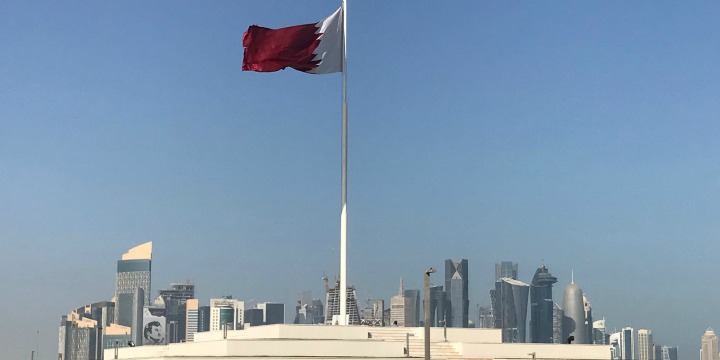
The Qatari flag is seen at a park near Doha Corniche, in Doha, Qatar February 17, 2018. Photo: REUTERS/Ibraheem al Omari.

A stunning report by German broadcaster WDR recently pushed FIFA to admit for the first time that the governing soccer organization did, in fact, violate human rights standards for guest workers in Qatar, who are refurbishing the Khalifa Stadium to be used in the anticipated 2022 World Cup in Doha.

The guest workers, who are from a range of foreign third-world countries including Bangladesh, India, Nepal, and North Korea, are forced to live in sub-human conditions with little to no pay.

According to Amnesty International, there are currently 1.7 million migrant workers in Qatar, and they comprise 90 percent of the workforce.

Doha won the bid to host the coveted World Cup games by allegedly bribing FIFA officials to the tune of $880 million.

WDR journalist Benjamin Best went undercover in Qatar in June, and broadcast video proof of the vast human rights violations he found there — and he did it on the same day that FIFA president Giani Infantino was reelected unopposed, while Infantino reportedly claimed that FIFA had become
synonymous with credibility, confidence, integrity, equality, human rights, social engagement, modernity, professionalism, and equality.
Although FIFA had stressed that the allegations of violations of guest workers’ rights did not apply to construction sites related to the World Cup stadium, the governing football organization admitted to a breach in workers’ standards for the first time in a press release after the German news report surfaced, saying,
We are aware of reports that the company TAWASOL — a sub-contractor in the construction of the Al Bayt Stadium — has violated the standards for workers.
FIFA has a zero-tolerance policy on human rights violations associated with its activities. In line with international standards and our Human Rights Policy, FIFA is fully committed to human rights as evidenced through the implementation of our strategic human rights program in the past years and acknowledged by different international organizations,
the organization wrote.

FIFA has reportedly also promised to investigate the allegations made by WDR further.
There are more than 4,000 people who died as a result of being forced to work for a long time in temperatures of 51 to 56 degrees Celcius, which is almost impossible for human beings to work in. This is a violation of human rights. It’s a violation of employees rights,
said Amjad Taha, who authored the book "The Deception of the Arab Spring".

He is one of several Arab journalists who were targeted and hacked as part of an extensive operation allegedly carried out by Qatar, and he has consistently spoken out against the Gulf nation’s human rights violations.

Taha said some of those workers are from North Korea.
The Qataris bring workers from North Korea; with the cooperation of the North Korean regime, they work there for free, and their salary is being given to the North Korean regime, not to the workers. They pay the North Korean regime their salary. So, the worker doesn’t even receive a salary; he just works, get a little bit of food and that’s about it.
Nepali workers are also victims of these human rights violations, and are denied basic rights in Qatar. Taha added that there are cases of Nepali workers who have died while working in Qatar. Their bodies are shipped back to their home country without papers or an explanation for their death.
The family doesn’t know the reason he died,
Taha said, referring to a recent case of a male Nepali worker in Qatar who died while working and living in sub-human conditions to construct the World Cup arena.

According to the Nepali government, 1,426 Nepali workers had passed away between 2009 and 2019 and there were reportedly 111 deaths in 2019 alone.

Meanwhile, on Sunday, The Peninsula, an English-language daily publication which is owned by and operated out of Qatar, published a piece titled,
US collaboration with Qatar on fighting human trafficking is strongest.
The piece focused on US Ambassador-at-Large to Monitor and Combat Trafficking in Persons John Cotton Richmond’s visit to the country’s Msheireb Museum, his discussion of the 2019 Trafficking in Persons Report, and his meetings
with Qatari officials and organizations to discuss efforts to combat human trafficking in Qatar, and Qatar’s efforts to end it.
The crime of human trafficking is global in scope, affecting every country on earth, including the United States and Qatar. Also known as modern slavery, it includes sex trafficking, forced labor, debt bondage, and domestic servitude,
the Peninsula wrote.

Although there have not been many headlines surrounding this human rights issue as of late, Qatar did take an indirect shot at its Gulf rival Saudi Arabia last week when it reportedly expressed
deep concern about the serious human rights violations and crimes committed against the Yemeni people by all parties involved in the conflict, as well as the failure of the warring parties to abide by international humanitarian law, causing tens of thousands of deaths and injuries, including thousands of children and women
during a speech delivered by the Permanent Representative of Qatar to the UN during an interactive dialogue at the UN’s Human Rights Council.

The hypocrisy was astounding.

Adelle Nazarian is a journalist and filmmaker whose work in national security, religious freedom, and human rights has gained her international acclaim.

Re: The lifting of UN sanctions will not solve Eritrea's problems

Posted: 18 Nov 2019, 00:13
by Awash
...In light of all this, Eritreans have little reason to celebrate the lifting of the sanctions that will likely benefit no one other than Afwerki himself. What the Eritrean people really need the UN to do is pressure the Eritrean regime to lift the devastating sanctions it has imposed on its own people.
https://www.aljazeera.com/amp/indepth/o ... ZXWXI8Gc6g


Re: The lifting of UN sanctions will not solve Eritrea's problems

Posted: 18 Nov 2019, 00:14
by pastlast
https://www.theguardian.com/global-deve ... or-freedom

'It's just slavery': Eritrean conscripts wait in vain for freedom
With their hopes dashed that peace with Ethiopia would bring an end to national service, young Eritreans must either accept a life of forced labour or flee

Global development is supported by
Bill and Melinda Gates FoundationAbout this content
Ruth Maclean
Ruth Maclean, west Africa correspondent

Thu 11 Oct 2018 00.00 EDTLast modified on Thu 11 Oct 2018 11.25 EDT
Shares
282
A teenage boy in a dormitory for unaccompanied minors in Shagrab camp, Sudan
A teenage boy in a dormitory for unaccompanied minors in Shagrab camp, Sudan. Tens of thousands of Eritreans live in the camps after escaping military service and repression at home. Photograph: Sally Hayden/Getty Images
Dawit was tiring, but he could not stop. An Eritrean schoolteacher on the run, he was crossing the border to Ethiopia alone at night, with only a stick to protect himself against the hyenas and the military squads who pick up runaways.

He was risking his life to get out so that he could take up a scholarship in the US. In Eritrea, one of the most isolated and repressive countries in the world, young people have no future. Their choice is to undertake compulsory national service, or try to flee.

Eritrea’s national service is harsh, pays a pittance and goes on indefinitely. Usually, conscripts go into the military. But Dawit had been doing his national service as a teacher for more than 13 years. The government would not let him go.

When Eritrea signed a peace deal with Ethiopia in July after a 20-year standoff, rumours began circulating that gave Eritrean families great hope. People whispered that political and religious prisoners were about to be freed, that the country’s most notorious jails would be closed, and that the indefinite conscription of anyone aged between 18 and 50 would end.

Many believed the historic reforms introduced by Ethiopia’s new prime minister, Abiy Ahmed, were also bringing change to Eritrea, which has been ruled by former revolutionary fighter Isaias Afwerki since the country gained independence from Ethiopia in 1991.


Captured, raped, ransomed: the kidnappers preying on Eritrean refugees
Read more
In July, the Eritrean embassy in Ethiopia reopened, and the first commercial flight in two decades took off from Addis Ababa to Asmara, with champagne and roses handed out on board. Last month, the road border was reopened in two places. Reunited relatives embraced and soldiers in fatigues danced in celebration.

At one graduation ceremony, reportedly attended by Afwerki, a new batch of conscripts were told they would serve for no more than 18 months.

“All the mothers in Eritrea think their kids are coming back from the frontlines,” says Helen Kidan, from the Eritrean Movement for Democracy and Human Rights.

A patriotic poster set on a window in Asmara. Eritrea
FacebookTwitterPinterest
A patriotic poster set on a window in Asmara. Eritrea has blamed external factors for its slow development. Photograph: AFP/Getty Images
In fact, nothing has changed, say Eritrea watchers. They point to the recent arrest of the former finance minister and author of a book calling for a youth uprising against the president.

Advertisement
The minister for labour and human welfare, Luul Gebreab, told Bloomberg recently that the government was studying the economic effects of demobilisation, but several officials said it would not happen yet.

Although the pretext for conscription no longer exists, the rumours that it will be phased out are probably false, says Fisseha Tekle, a human rights researcher on Eritrea and Ethiopia for Amnesty International. “For the last 15 years, they were blaming Ethiopia. That excuse is no longer there, so it is high time for them to stop this scheme.”

Eritrean activists and analysts say the indefinite national service is less about conflict with Ethiopia than a way to keep people weak and unable to mount resistance to the government. They suggest the authorities are unlikely to demobilise tens of thousands of militarily-trained men and women who bear a grudge against them, with no prospect of finding them alternative employment.

National service usually lasts between five and 10 years, but can last for up to 20. Conscripts often work 72-hour weeks in extremely harsh conditions with inadequate food and low pay. No one is legally entitled to take leave, which depends on the whim of commanding officers. Some conscripts have reported going for years without being allowed to visit home. If a conscript fails to return after taking leave, their parent may be jailed until they do.

Eritrean teenagers spend the last year of high school in a military camp before going straight into military service. If they get good enough grades, they might attend college and be given a civilian role. But the only way out is to leave the country.

The central market area in Asmara.
FacebookTwitterPinterest
The central market area in Asmara. Photograph: Jack Malipan/Alamy Stock Photo
Dawit’s midnight run to Ethiopia was the second time he’d tried to escape. About a year earlier, after being denied an exit visa to study in the US, he paid a trafficker to get him out. He was caught and jailed for seven months, moving between the country’s notorious, overcrowded prisons. Eventually, he was released and reassigned to a school in a remote area, with his small salary suspended for six months. “It’s just slavery,” he says. “You toil day and night and you get nothing.”

Every month, thousands of young people like Dawit sneak out of the country, ending up in Libya, Sudan, Europe, or dying along the way. Visitors to refugee camps on the Ethiopian side say more Eritreans have been crossing recently, amid warnings from traffickers that this could be their last chance to claim asylum elsewhere.

But false perceptions that things are improving in Eritrea could change other countries’ attitudes to taking them in. “In Europe, they’re using every excuse to deny entry, deny asylum applications,” says Tekle.

Eritrean officials have made empty promises about national service before. In 2015, Lord Avebury told the House of Lords the Eritrean ambassador had said conscription would be restricted to 18 months, but nothing changed.

For now, many Eritreans are surviving on rumours thattheir children may soon be allowed to come home, get a job, have a family life and a future.

“The mothers are expecting something. The 140,000 people doing their national service on the border are expecting something,” says Kiden. “The families of journalists and other political prisoners are expecting something. And I don’t see how these hopes will be fulfilled.”
Re: The lifting of UN sanctions will not solve Eritrea's problems

Posted: 18 Nov 2019, 00:33
by Awash
https://amharic.voanews.com/a/4616141.h ... o758CLerGU

"አሁን ያለው አዝማሚያና የፍልሰት መጠን “ኤርትራ ባዶዋን ልትቀር ይሆን እንዴ?” የሚል ጥያቄ ማጫሩ እንደማይቀር የፖለቲካ ሣይንስ ፕሮፌሰር፤ ዶ/ር ብሩክ ኃይሉ ተናግረዋል።"


Re: The lifting of UN sanctions will not solve Eritrea's problems

Posted: 18 Nov 2019, 00:42
by Fiyameta


Re: The lifting of UN sanctions will not solve Eritrea's problems

Posted: 18 Nov 2019, 01:24
by Awash
:lol: :mrgreen: :lol:
◾4. H.E. Ras Hagos Mirtcha. He was k. in battle with Ras Alula in Shire, 19th January 1897, having had issue,a son: ◾a. Dejazmatch Abraha Hagos. m. 10th July 1896, Woizero Attenesh (b. ca. 1880), eldest daughter of H.H. Ras Mangasha Yohannes, Prince of Tigray. [He may have had issue, four sons: ◾i. H.E. Dejazmatch Solomon Abraha. Governor of Wollo in 1964.
◾ii. Captain Mekkonen Abraha. Cmsnd. Imperial Ethiopian Navy, retd. as Capt. m. (a) a daughter of Dejazmatch Ghebray, educ. Empress Menen Sch., Addis Ababa, by whom he had two children.
◾iii. Ato Hagos Abraha, educ. Tafari Makkonen Sch., Addis Abbaba. Employed with National Bank.
◾iv. Ato Afewerq Abraha. Employed with the Ministry of Land Reform, at Mekele, Tigray. m. Woizero Adanech Berhe, daughter of Woizero Medhin Berad, sister of Fitawrawri Kidane Mesel, from Adowa. He had issue: ◾1a. Ato Amare Afewerki.
◾2a. Ato Isayas Afewerki. b. at Asmara, 2nd February 1946, educ. Addis Ababa Univ., Joined Eritrean People's Liberation Front in 1966, Commissar 1966-1967, Dep. Divisional Cdr. 1967-1969, Co-Founder Eritrean People's Liberation Front (EPLF) 1970, Dep. Gen-Sec. 1977-1978, Sec-Gen. 1978-1994, Presdt. Eritrean People's Front of Democracy and Justice since 1994, Sec-Gen. of the Govt. & C-in-C 1991-1993, Presdt. & C-in-C of Eritrea since 1993. m. Woizero Saba Haile, of Shimezana, Eritrea.
◾3a. Ato Amanuel Afewerq
◾4a. Ato Ermias Afewrq.
◾5a. Ato Yonas Afewerq.
◾1a. Woizero Tsigereda Afewerq.
◾2a. Woizero Arian Afewerki.
http://www.royalark.net/Ethiopia/tigray5.htm