https://www.bbc.com/news/world-africa-49727573
Eritrea has often been described as one of the most repressive states in Africa, where people lack basic political and religious freedoms.
This is not surprising as it has been a one-party state ruled by President Isaias Afwerki since it officially gained independence from Ethiopia in 1993.
The government has banned opposition parties and local private media, jailed critics (some of whom have not been heard of for years), and has imposed military conscription on young people.
This has forced hundreds of thousands of Eritreans to flee the country, some of whom perish during the treacherous journey across the Sahara desert and the Mediterranean Sea as they try to reach Europe.
BBC's Amharic's Jibat Tamirat recently visited the country under the watchful eye of government minders.
Here, he writes about the government's extraordinary control over the lives of people.
1) Sim cards are like gold dust
Image copyrightAFP
Image caption
Public pay phones are still used by many people
State-owned EriTel is the sole provider of telecom services. The service it provides is bad, and tightly controlled by the government.
A report by the International Telecommunication Union says that internet penetration in Eritrea is just above 1%.
ADVERTISEMENT
inRead invented by Teads
Sim cards are like gold dust in Eritrea. Citizens need to apply to the local government administration to get one.
And even if you get a Sim card, you can't use it to access the internet because there is no mobile data.
People can only access the internet through WiFi, but it is very slow. To get onto social media sites like Facebook and Twitter, people use a virtual private network (VPN) to circumvent government censorship.
Media captionEXPLAINED: What is a VPN service?
Because of the huge difficulty in getting Sim cards, people still rely on public pay phones to make calls.
We used them for the first four days of our visit. Then we got one Sim card for the three-member BBC team, which we had to return when we left.
2) People can only withdraw cash over bank counters
Image caption
Cash can be difficult to get hold of
The government has imposed restrictions on the amount of money depositors can withdraw from their bank accounts.
Even if they have millions of nakfa, the Eritrean currency, in their account, they can only withdraw 5,000 ($330) a month.
One resident we met in the capital, Asmara, told us that to buy a 1986 Toyota Corolla car, he had to make monthly withdrawals of 5,000 nakfa for 11 months. He then gave the seller 55,000 in cash, and another 55,000 through a bank transfer.
He said the government would have expected the entire sum to be transferred, but some businessmen prefer cash in their hands because it is scarce.
There is an exemption for weddings, which are usually big ceremonies costing more than 5,000 nakfa.
Image copyrightGETTY IMAGES
Image caption
Weddings are elaborate affairs
If a wedding is coming up, the host has to go to the offices of the local government administration to get officials to write a letter to his bank, saying he should be allowed to withdraw more than 5,000 nakfa.
Eritreans gave us different opinions on why the government has imposed restrictions on cash withdrawals. Some said it was ''to develop people's habit of saving and to curb inflation'' while others said it was because ''the government doesn't like trade activities. So they limit money circulation".
There are no ATMs in Eritrea. The car-buyer told us that when the border with Ethiopia opened last year following the end of the "state of war" between the two nations, he went to Mekelle city in northern Ethiopia and his ''jaw dropped'' when he saw ''people taking a large amount of money out of a machine''.
3) There is only one local television station
Image copyrightGETTY IMAGES
Image caption
Many people prefer to watch foreign rather than local television
State-owned Eri-Tv is the only television station based in Eritrea. It is the government's mouthpiece, but if you have a satellite dish you can watch the BBC and other international channels or Asena TV and ERISAT, run by political exiles.
The Committee to Protect Journalists (CPJ) takes a dim view of media freedom in Eritrea, describing it as "the world's most censored country", behind even North Korea.
It quotes Germany's Deutsche-Welle Akademie as saying that "satellite broadcasts of radio stations in exile are restricted through occasional signal jams and by the poor quality of the government-controlled internet".
However, Information Minister Yemane Meskel denies that Eritrea is a "closed" society. He points out that more than 91% of homes in towns and cities have satellite dishes and receive more than 650 international TV channels. He even tweeted photos to make his point:
Content is not available
4) ... and one brewery
Set up in 1939 by Italian engineer Luigi Melottia, Asmara Brewer is the only brewery in the country.
Locals told us that until recently, they were only allowed to drink two beers in a bar. So they used to take non-drinkers with them - and drink their quota as well.
Residents say the brewery underwent an upgrade a few months ago and there is now an adequate supply, though we found only Asmara lager in bars.
It is commonly referred to as melotti, after Melottia. He came to build roads and other infrastructure in the former Italian colony, saw a gap in the market for a brewery, and seized the opportunity to open one. And he seems to be most remembered for that.
Image copyrightGETTY IMAGES
Image caption
Many bars and cafes have Italian names
5) Many young people want to emigrate
''Getting a passport is like a dream come true,'' says a young man who had dinner with us.
But he says youngsters are not given passports until they complete their national service - which includes military training - and get a letter in support of their application from the offices of their local government administration.
"By then you are old - 40 or 45 with a wife and children," he quips.
And once they get a passport they cannot just leave the country - they need an exit visa. There is no guarantee that they will get one because the government apparently fears that they will not return.
So, many young Eritreans leave illegally, crossing the porous borders to settle in Ethiopia and Sudan.
Others risk the treacherous journey through the Sahara and the Mediterranean to reach Europe, only to die of hunger and thirst in the desert or drown at sea.
The UN refugee agency describes Eritrea as "the ninth largest country of origin" for refugees - there were 507,300 of them at the end of 2018, up from 486,200 in the previous year.
Most of the refugees are hosted by Ethiopia (174,000) and Sudan (114,500), but many also found "protection" in European states such as Germany (55,300) and Switzerland (34,100), it says.
With the exodus of youngsters, old people are most visible in Asmara, sipping macchiato in cafes to pass their time.
The size of Eritrea's population is unclear because the government has never carried out a census since independence.
Nevertheless, the World Population Review estimates its population to be 3.5 million, with Asmara's standing at around 500,000.
6) But the capital city is beautiful
Italy's fascist dictator Benito Mussolini wanted Asmara to be the "Piccolo Roma" (Little Rome) in Africa, as he planned a new Roman Empire in the 1930s.
The city's leafy boulevards and modernist buildings are a reminder of its Italian colonial past.
Image copyrightGETTY IMAGES
Image caption
Mussolini wanted Asmara to be "Little Rome"
The UN cultural agency, Unesco, has listed Asmara as a World Heritage Site, describing it as an "exceptional example of early modernist urbanism at the beginning of the 20th Century and its application in an African context".
So despite Eritrea's political and economic problems, Asmara is a charming city well worth a visit.
Eritrean life in pictures
-
Digital Weyane
- Senior Member
- Posts: 10260
- Joined: 19 Jun 2019, 21:45
Re: Eritrea - where ATMs are unknown and Sim cards are like gold dust
In our democratic nation of Tigray, even the honorable mayor of Adwa has an ATM card.
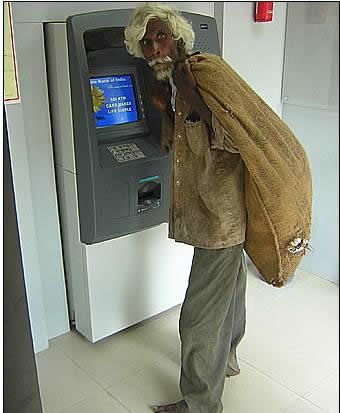
P.S. In Tigray, ATM doesn't stand for... "AȘȘ To Mouth."
No, it doesn't!
P.S. In Tigray, ATM doesn't stand for... "AȘȘ To Mouth."
No, it doesn't!
Re: Eritrea - where ATMs are unknown and Sim cards are like gold dust
I am telling you!!! It is the most boring country!!!
Boring boring boring!!
They are living in the medieval era!! Backward!!
Boring boring boring!!
They are living in the medieval era!! Backward!!
Re: Eritrea - where ATMs are unknown and Sim cards are like gold dust
Digital Weyane wrote: ↑15 Oct 2019, 03:14In our democratic nation of Tigray, even the honorable mayor of Adwa has an ATM card.
P.S. In Tigray, ATM doesn't stand for... "AȘȘ To Mouth."
No, it doesn't!
You [deleted]!!!
Mekelle happens to be the technology hub of east africa!!!!
It has the biggest number of financial institutions and IT centers in the entire country!! Go and check!!
ATM machines are at every corner. Not only that, people actually use mobile banking. Do you even know what it is?!?!
Stupid beggar backward!!! Now go to a nearby welfare office and stand on a line like a beggar!!!!
Re: Eritrea - where ATMs are unknown and Sim cards are like gold dust
BBC reporting on Eritrea
– the need for accountability – the internet never forgets! –
By Ruby Sandhu and Yafet Zereou
January 26, 2019
The Eritrean diaspora have been outraged with the uncalled-for and outlandish diatribe against the Government of Eritrea by a certain Yemane Nagish (Nagish), a journalist with the Nairobi-based BBC Tigrinya Service.
Yafet Zereou, a British Eritrean based in London, dedicated time and energy to meticulously translate, from Amharic to English, the salacious, inflammatory and offending interview that this individual gave to three bloggers and which was subsequently broadcast on the World Wide Web on April 3, 2017 and is now in the general public's awareness. The English translation of the interview is available on social media.
The offending interview dwelled on trite and hate propaganda; with no analysis whatsoever of the reality, critical issues and developments or trends in the Horn of Africa. Evidently, the rapprochement between Eritrea and Ethiopia; the removal of the unjustified sanctions; and, the emergent US foreign policy in the Horn were matters distinctly outside the competence, political awareness and radar of the principal protagonist.
The interview regurgitated a number of false narratives on Eritrea. Nagish miserably failed, throughout his half-hour long diatribe, to provide researched, balanced or fact-based information. Nagish’s comments were emotive, libellous and defamatory. He was at the time of the interview included in the BBC shortlist for the new Tigrigna Radio Service to cover both Eritrea and Northern Ethiopia.The BBC should have undertaken the requisite due diligence to eschew conflict of interest and ensure adherence with the BBC’s recruitment policy and pronounced standards of independent, trusted and unbiased reporting.
Nagish was acutely aware of the power of western media, and as a weapon of war against Eritrea. And his position at the BBC is all the more precarious as is his subversive intent, are beyond any shred of doubt - as the interview in question amply illustrates. This biased reporting impacts on our perception of the region. Especially the failure of the BBC to report factually on the ground reality in Eritrea and its selective approach of wilfully ignoring the grave human rights violations that were occurring in Ethiopia at the time.
Incidentally, demonization of Eritrea for political ends and the many false narratives generated by our biased reporting – much of it by activists of the previous TPLF regime - has augmented the influx of “refugees” to the UK. The indelible fact is a substantial number of Ethiopians routinely pose as Eritreans in order to seek and obtain “refugee status” premised on our readiness to grant “automatic asylum” to all Eritrean migrants which in itself is predicated on the demonization campaigns.
Another former BBC journalist and reporter, Martin Plaut, has also been culpable of wilfully propagating false narratives and distortions on events and trends in Eritrea for many years now. These narratives are not based on the ground reality in Eritrea and their sole aim appears to be to nurture emotive activism, aka slacktivism, (the practice of supporting a political or social cause by means such as social media or online petitions, characterised as involving very little effort or commitment (online oxford dictionaries)); thereby hindering any genuine, intelligent and constructive engagement on Eritrea. Repeated pleas and protestations to a number of our MPs to rectify this unhealthy bias have not been heeded. The only exception is our conservative Right Hon. Crispin Blunt who chaired an informative and balanced foreign affairs select committee hearing on Eritrea in March 2017.
Let us now examine, if only to highlight the gravity of the distortions, a few of the statements presented in the discussions/ interview with Nagish.
First, his reference to the prevailing situation of “no war no peace” was inaccurate and dishonest. It was meant to downplay the flagrant refusal of the TPLF-dominated Ethiopian government to respect its treaty obligations and abide by the Eritrea Ethiopia Boundary Commission (EEBC) decision. Nagish and others would thus talk of an “impasse” instead of calling a spade a spade and point the finger at the real culprit - Ethiopia. Discussions of extended military service, without taking this context into account, are also superficial and incomplete. The extended national service (often incorrectly referred to as “indefinite”) was indeed the inevitable by-product of the subversive acts of Ethiopia. The Eritrean youth were not victims of the Eritrean Government but the destabilising actions of the Ethiopian Government.
Second, no reference was made to the imposition of the “unjustified” sanctions on Eritrea, - instigated by those who wanted to deflect attention from Ethiopia’s violations of international law. This illicit act entailed an excruciating burden on Eritrea. As the former British ambassador to Syria, Peter Ford remarked at the British Eritrean diaspora celebrations in London in November 2018:
Third, the failure to report fairly on the ground reality in Eritrea including measured and sustainable development with zero toleration of corruption; Asmara’s designation as the World Heritage site by UNESCO; the success of the MDGs and now SDGs; sustainability initiatives and the success of Eritreans in world class cycling competitions by way of example.
This lack of honest, contextualized reporting on Eritrea indeed illustrates the preponderance of a geopolitical agenda by certain powers that were in cahoots with the TPLF-dominated Ethiopian government and who shared the same interest in demonizing Eritrea.
In the interview in question, Nagish resorts to egregious, defamatory and outrageous labels in his description of the Government of Eritrea. In his insolent remarks he states:
Today, the subversive, corrupt and die hard contingents of the TPLF are being flushed out by the newly elected Ethiopian Prime Minister, Dr Abiy. The policies include an awareness of the endemic corruption, that pervaded that part of the TPLF leadership.
The narratives that were disseminated by our western media, are a stain on our independent reporting and free press. And it is important that our western institutions are cognisant of the subversive elements of the TPLF in Ethiopia and their stranglehold on institutional media and narrative against Eritrea. We need to move away from such divisive outdated agendas that have permeated our foreign policy in the Horn and with respect to Eritrea.
– the need for accountability – the internet never forgets! –
By Ruby Sandhu and Yafet Zereou
January 26, 2019
The Eritrean diaspora have been outraged with the uncalled-for and outlandish diatribe against the Government of Eritrea by a certain Yemane Nagish (Nagish), a journalist with the Nairobi-based BBC Tigrinya Service.
Yafet Zereou, a British Eritrean based in London, dedicated time and energy to meticulously translate, from Amharic to English, the salacious, inflammatory and offending interview that this individual gave to three bloggers and which was subsequently broadcast on the World Wide Web on April 3, 2017 and is now in the general public's awareness. The English translation of the interview is available on social media.
The offending interview dwelled on trite and hate propaganda; with no analysis whatsoever of the reality, critical issues and developments or trends in the Horn of Africa. Evidently, the rapprochement between Eritrea and Ethiopia; the removal of the unjustified sanctions; and, the emergent US foreign policy in the Horn were matters distinctly outside the competence, political awareness and radar of the principal protagonist.
The interview regurgitated a number of false narratives on Eritrea. Nagish miserably failed, throughout his half-hour long diatribe, to provide researched, balanced or fact-based information. Nagish’s comments were emotive, libellous and defamatory. He was at the time of the interview included in the BBC shortlist for the new Tigrigna Radio Service to cover both Eritrea and Northern Ethiopia.The BBC should have undertaken the requisite due diligence to eschew conflict of interest and ensure adherence with the BBC’s recruitment policy and pronounced standards of independent, trusted and unbiased reporting.
Nagish was acutely aware of the power of western media, and as a weapon of war against Eritrea. And his position at the BBC is all the more precarious as is his subversive intent, are beyond any shred of doubt - as the interview in question amply illustrates. This biased reporting impacts on our perception of the region. Especially the failure of the BBC to report factually on the ground reality in Eritrea and its selective approach of wilfully ignoring the grave human rights violations that were occurring in Ethiopia at the time.
Incidentally, demonization of Eritrea for political ends and the many false narratives generated by our biased reporting – much of it by activists of the previous TPLF regime - has augmented the influx of “refugees” to the UK. The indelible fact is a substantial number of Ethiopians routinely pose as Eritreans in order to seek and obtain “refugee status” premised on our readiness to grant “automatic asylum” to all Eritrean migrants which in itself is predicated on the demonization campaigns.
Another former BBC journalist and reporter, Martin Plaut, has also been culpable of wilfully propagating false narratives and distortions on events and trends in Eritrea for many years now. These narratives are not based on the ground reality in Eritrea and their sole aim appears to be to nurture emotive activism, aka slacktivism, (the practice of supporting a political or social cause by means such as social media or online petitions, characterised as involving very little effort or commitment (online oxford dictionaries)); thereby hindering any genuine, intelligent and constructive engagement on Eritrea. Repeated pleas and protestations to a number of our MPs to rectify this unhealthy bias have not been heeded. The only exception is our conservative Right Hon. Crispin Blunt who chaired an informative and balanced foreign affairs select committee hearing on Eritrea in March 2017.
Let us now examine, if only to highlight the gravity of the distortions, a few of the statements presented in the discussions/ interview with Nagish.
First, his reference to the prevailing situation of “no war no peace” was inaccurate and dishonest. It was meant to downplay the flagrant refusal of the TPLF-dominated Ethiopian government to respect its treaty obligations and abide by the Eritrea Ethiopia Boundary Commission (EEBC) decision. Nagish and others would thus talk of an “impasse” instead of calling a spade a spade and point the finger at the real culprit - Ethiopia. Discussions of extended military service, without taking this context into account, are also superficial and incomplete. The extended national service (often incorrectly referred to as “indefinite”) was indeed the inevitable by-product of the subversive acts of Ethiopia. The Eritrean youth were not victims of the Eritrean Government but the destabilising actions of the Ethiopian Government.
Second, no reference was made to the imposition of the “unjustified” sanctions on Eritrea, - instigated by those who wanted to deflect attention from Ethiopia’s violations of international law. This illicit act entailed an excruciating burden on Eritrea. As the former British ambassador to Syria, Peter Ford remarked at the British Eritrean diaspora celebrations in London in November 2018:
This was the environment for Eritrea and none of these important background facts, context - made it to the media or in the discussions with Nagish. Any discussion without reference to these critical issues would have been superficial, pedestrian and at best a layman’s analysis. Exactly the analysis that pervaded our media at the time.sanctions are a weapon of war and were used unjustifiably against Eritrea. The deliberate use of the unjustified sanctions, although dubbed as a mere arms embargo had a detrimental impact on existing businesses and impacted the flow of investment to Eritrea.
Third, the failure to report fairly on the ground reality in Eritrea including measured and sustainable development with zero toleration of corruption; Asmara’s designation as the World Heritage site by UNESCO; the success of the MDGs and now SDGs; sustainability initiatives and the success of Eritreans in world class cycling competitions by way of example.
This lack of honest, contextualized reporting on Eritrea indeed illustrates the preponderance of a geopolitical agenda by certain powers that were in cahoots with the TPLF-dominated Ethiopian government and who shared the same interest in demonizing Eritrea.
In the interview in question, Nagish resorts to egregious, defamatory and outrageous labels in his description of the Government of Eritrea. In his insolent remarks he states:
He continues with his unbridled remarks with:[The Government of Eritrea is] a murderous, dictatorial [and mafia] group. The regime has to commit atrocities, engaged in dispute/fights with its neighbours, causde its people to fight their neighbours in order to exist. Causing havoc is the bread and [deleted] of this government.
Nagish seeks to incite violence pleading,The government in Asmara is a mafia group, a band of robbers and it must be apprehended (taken out of action). ...The Eritrean government is a force for evil, a destructive force.
Nagish’s excesses aside, similar toxic and calculated statements have in fact characterized most the reports on Eritrea to reinforce a negative narrative that is at odds with reality.We have to seek ways to not only isolate it [Eritrea] from the international community but drive a wedge to rip it [Eritrea] away from the Eritrean people and the Eritrean state. If we are unable to do this, it will come for us after finishing off the Eritrean people.
Today, the subversive, corrupt and die hard contingents of the TPLF are being flushed out by the newly elected Ethiopian Prime Minister, Dr Abiy. The policies include an awareness of the endemic corruption, that pervaded that part of the TPLF leadership.
The narratives that were disseminated by our western media, are a stain on our independent reporting and free press. And it is important that our western institutions are cognisant of the subversive elements of the TPLF in Ethiopia and their stranglehold on institutional media and narrative against Eritrea. We need to move away from such divisive outdated agendas that have permeated our foreign policy in the Horn and with respect to Eritrea.
Re: Eritrea - where ATMs are unknown and Sim cards are like gold dust
Wow. Very interesting. What a exposition of the reality on the ground through eyewitness, first hand account.
pastlast wrote: ↑15 Oct 2019, 03:04
Eritrea has often been described as one of the most repressive states in Africa, where people lack basic political and religious freedoms.
This is not surprising as it has been a one-party state ruled by President Isaias Afwerki since it officially gained independence from Ethiopia in 1993.
The government has banned opposition parties and local private media, jailed critics (some of whom have not been heard of for years), and has imposed military conscription on young people.
This has forced hundreds of thousands of Eritreans to flee the country, some of whom perish during the treacherous journey across the Sahara desert and the Mediterranean Sea as they try to reach Europe.
BBC's Amharic's Jibat Tamirat recently visited the country under the watchful eye of government minders.
Here, he writes about the government's extraordinary control over the lives of people.
1) Sim cards are like gold dust
Image copyrightAFP
Image caption
Public pay phones are still used by many people
State-owned EriTel is the sole provider of telecom services. The service it provides is bad, and tightly controlled by the government.
A report by the International Telecommunication Union says that internet penetration in Eritrea is just above 1%.
ADVERTISEMENT
inRead invented by Teads
Sim cards are like gold dust in Eritrea. Citizens need to apply to the local government administration to get one.
And even if you get a Sim card, you can't use it to access the internet because there is no mobile data.
People can only access the internet through WiFi, but it is very slow. To get onto social media sites like Facebook and Twitter, people use a virtual private network (VPN) to circumvent government censorship.
Media captionEXPLAINED: What is a VPN service?
Because of the huge difficulty in getting Sim cards, people still rely on public pay phones to make calls.
We used them for the first four days of our visit. Then we got one Sim card for the three-member BBC team, which we had to return when we left.
2) People can only withdraw cash over bank counters
Image caption
Cash can be difficult to get hold of
The government has imposed restrictions on the amount of money depositors can withdraw from their bank accounts.
Even if they have millions of nakfa, the Eritrean currency, in their account, they can only withdraw 5,000 ($330) a month.
One resident we met in the capital, Asmara, told us that to buy a 1986 Toyota Corolla car, he had to make monthly withdrawals of 5,000 nakfa for 11 months. He then gave the seller 55,000 in cash, and another 55,000 through a bank transfer.
He said the government would have expected the entire sum to be transferred, but some businessmen prefer cash in their hands because it is scarce.
There is an exemption for weddings, which are usually big ceremonies costing more than 5,000 nakfa.
Image copyrightGETTY IMAGES
Image caption
Weddings are elaborate affairs
If a wedding is coming up, the host has to go to the offices of the local government administration to get officials to write a letter to his bank, saying he should be allowed to withdraw more than 5,000 nakfa.
Eritreans gave us different opinions on why the government has imposed restrictions on cash withdrawals. Some said it was ''to develop people's habit of saving and to curb inflation'' while others said it was because ''the government doesn't like trade activities. So they limit money circulation".
There are no ATMs in Eritrea. The car-buyer told us that when the border with Ethiopia opened last year following the end of the "state of war" between the two nations, he went to Mekelle city in northern Ethiopia and his ''jaw dropped'' when he saw ''people taking a large amount of money out of a machine''.
3) There is only one local television station
Image copyrightGETTY IMAGES
Image caption
Many people prefer to watch foreign rather than local television
State-owned Eri-Tv is the only television station based in Eritrea. It is the government's mouthpiece, but if you have a satellite dish you can watch the BBC and other international channels or Asena TV and ERISAT, run by political exiles.
The Committee to Protect Journalists (CPJ) takes a dim view of media freedom in Eritrea, describing it as "the world's most censored country", behind even North Korea.
It quotes Germany's Deutsche-Welle Akademie as saying that "satellite broadcasts of radio stations in exile are restricted through occasional signal jams and by the poor quality of the government-controlled internet".
However, Information Minister Yemane Meskel denies that Eritrea is a "closed" society. He points out that more than 91% of homes in towns and cities have satellite dishes and receive more than 650 international TV channels. He even tweeted photos to make his point:
Content is not available
4) ... and one brewery
Set up in 1939 by Italian engineer Luigi Melottia, Asmara Brewer is the only brewery in the country.
Locals told us that until recently, they were only allowed to drink two beers in a bar. So they used to take non-drinkers with them - and drink their quota as well.
Residents say the brewery underwent an upgrade a few months ago and there is now an adequate supply, though we found only Asmara lager in bars.
It is commonly referred to as melotti, after Melottia. He came to build roads and other infrastructure in the former Italian colony, saw a gap in the market for a brewery, and seized the opportunity to open one. And he seems to be most remembered for that.
Image copyrightGETTY IMAGES
Image caption
Many bars and cafes have Italian names
5) Many young people want to emigrate
''Getting a passport is like a dream come true,'' says a young man who had dinner with us.
But he says youngsters are not given passports until they complete their national service - which includes military training - and get a letter in support of their application from the offices of their local government administration.
"By then you are old - 40 or 45 with a wife and children," he quips.
And once they get a passport they cannot just leave the country - they need an exit visa. There is no guarantee that they will get one because the government apparently fears that they will not return.
So, many young Eritreans leave illegally, crossing the porous borders to settle in Ethiopia and Sudan.
Others risk the treacherous journey through the Sahara and the Mediterranean to reach Europe, only to die of hunger and thirst in the desert or drown at sea.
The UN refugee agency describes Eritrea as "the ninth largest country of origin" for refugees - there were 507,300 of them at the end of 2018, up from 486,200 in the previous year.
Most of the refugees are hosted by Ethiopia (174,000) and Sudan (114,500), but many also found "protection" in European states such as Germany (55,300) and Switzerland (34,100), it says.
With the exodus of youngsters, old people are most visible in Asmara, sipping macchiato in cafes to pass their time.
The size of Eritrea's population is unclear because the government has never carried out a census since independence.
Nevertheless, the World Population Review estimates its population to be 3.5 million, with Asmara's standing at around 500,000.
6) But the capital city is beautiful
Italy's fascist dictator Benito Mussolini wanted Asmara to be the "Piccolo Roma" (Little Rome) in Africa, as he planned a new Roman Empire in the 1930s.
The city's leafy boulevards and modernist buildings are a reminder of its Italian colonial past.
Image copyrightGETTY IMAGES
Image caption
Mussolini wanted Asmara to be "Little Rome"
The UN cultural agency, Unesco, has listed Asmara as a World Heritage Site, describing it as an "exceptional example of early modernist urbanism at the beginning of the 20th Century and its application in an African context".
So despite Eritrea's political and economic problems, Asmara is a charming city well worth a visit.
Eritrean life in pictures