Ethiopian News, Current Affairs and Opinion Forum
Zmeselo
Senior Member+
Posts: 36765
Joined: 30 Jul 2010, 20:43

Have You Heard About, Ulrich Coppel?

Post by Zmeselo » 30 Dec 2019, 06:49


Have You Heard About, Ulrich Coppel? Q&A, Talks to Him.

http://www.shabait.com/articles/q-a-a/2 ... ks-to-him-

Written by Billion Temesghen
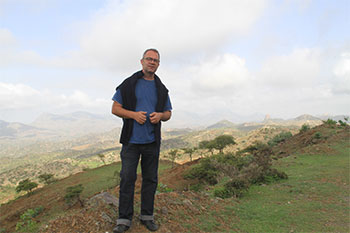


He is no guest in Asmara, and neither is he a stranger to the country’s affairs. Ulrich Coppel, a journalist and a musician, has for long been interested in Eritrea and its people. He has written articles and given interviews tackling political and regional issues relevant to Eritrea in the global context. Meet, Ulrich Coppel.

Hello and thank you for your time. Would you please introduce yourself to our readers?

I am Ulrich Coppel. Professionally, I am a classical guitarist; I have worked for 25 years, as an instrumental-pedagogue, musician and music-manager. However, I am also a journalist. Here, I specialize in classical music and cultural politics in the feuilleton section. As a political journalist, I have specialized in the fields of East Africa/Eritrea, migration and human rights. I am very interested in the field of medicine and bioethics, and especially in organ transplantation. I did a lot of research and published some things.

Music has also made you active in Eritrea, with young Eritrean music students. How did it start?

On the occasion of the Independence Day of 2015, I was on the concert tour of the Leipzig Philharmonic as a sound manager. Later on, for the 25th anniversary of independence, I was a guest with a rock band. For some time now, I’ve been teaching classical guitar at the Asmara Music School.

The journalist you are, how did you start writing about Eritrea? And why?

Up until a while ago I was deputy director of a small cultural association in Münster, the city where I live in Germany. In late autumn 2014, there was a lecture evening by the then young NGO, Archemed, which provides medical help for children in Eritrea. In his lecture, Archemed’s co-founder Dr. Peter Schwidtal described a completely different Eritrea than I knew from the reporting of numerous German and Western media. Not “North Korea of Africa”, but a young, self-building state, whose people had to fight hard for the independence of their country for a long time. That made me very curious about this country. A short time later, I came to Eritrea with a very renowned German documentary filmmaker and a cameraman for my first research trip.

Back in Germany, you’ve published a number of articles depicting a different side of the Eritrean account, tackling several issues that the Western media normally tells shabbily. Can you please give my readers a brief description about the articles you have so far written about Eritrea? What areas are you interested in and why? What do you aim to achieve by doing so?

In spring 2015, I reported for WESTFÄLISCHE NACHRICHTEN about the activities and projects of the then relatively young NGO, Archemed, after I visited the pediatric clinic at the Orotta Hospital in Asmara, and two more in Keren and Barentu followed by a visit in Dorok near Keren, where I met a lot of children in a primary school. My report was also based on a visit I paid to Tokombia, along with Archemed. There we witnessed, an anti-FGM project. A very short time after the publication of my Archemed-Eritrea reportage, the human rights officer of our federal government at the time, Christoph Strässer, contacted me.

Later on, I had also organized the “Münster against PEGIDA” demonstrations. We wanted to set an example against racism and xenophobia. The Münsterers succeeded impressively with the two largest demonstrations, ever seen in our place. Christoph Strässer, who I originally met after he saw my reports on Archemed-Eritrea, gave a speech in Münsterers. Back then, my Archemed-Eritrea reportage and the shared “Münster against PEGIDA” experience gave Christoph Strässer a reason to inquire about my Eritrean experiences. And that, in turn, was how I met documentary filmmaker, Prof. John Kantara, and we worked together in Eritrea.

Soon after, in June 2015, an investigative report on the human rights situation in Eritrea, a three-person commission, mandated by the United Nations Human Rights Council, led by Miss Sheila Keetharuth, was published. This charged the small country with very numerous serious human rights violations, even crimes against humanity. Diaspora Eritreans from around the world demonstrated on the day of publication in Geneva, Switzerland, where the World Human Rights Council is based.

In Germany and the EU, above all, this and a number of other similar publications led application of undue pressure on the Eritrean government. For example, just a few days later, a question time took place in the German Bundestag, the German parliament, on the occasion of the publication of the investigation report. Without exception, all parties represented at that time in the Bundestag poured out their pitch-barrel over Eritrea. But none of the speakers, ever seemed to have stepped on Eritrean soil with their own feet.

I wrote a number of questions to the UN Special Rapporteur, Miss Keetharuth.
What criteria did the commission follow, in the process of choosing the respondents? Was anyone who claimed to be a victim of human rights violations in Eritrea interviewed, or were there reasons to exclude questioning? If so, what were the reasons for exclusion, and how many potential interview partners were excluded from questioning? Were there individuals among the respondents who gave contradictory statements concerning the same human rights violation, or were all respondents in unison regarding the details, such as the method of torture used? Were there any accounts from the interviewees, which the commission considered implausible?
In response to the mail with my questions, I also received quite a remarkable answer from the office of the special rapporteur:
Dear Sir, Your email has been conveyed to the COI secretariat SR support.
At that time, I believe the then UN Special Rapporteur for Eritrea, Miss Sheila Keetharuth, was also the chairperson of the 3-member UN Commission of Inquiry. So she wrote to herself and used this email to not only reach me, but also the UN Human Rights Council and the Foreign Office, including the forwarding of my question email, in the open CC.

I found the fact even strange that Miss Keetharuth was correct in a discussion panel broadcast by Al Jazeera on June 16, 2015 of a participant close to the government, at whose objection hundreds of letters with testimony from diaspora Eritreans investigators’ report had not been recorded. [...]
I have checked with the commission of inquiries staff in terms of whether the secretariat received any letters from the diaspora, asking to speak to the commission; No - there were no letters to the commission of inquiry. They were letters to the special rapporteur, and one needs to make the difference. That was a separate situation, and these are two different mechanisms.
After this exposing experience about the methodology of the investigative commission, I decided to do a double interview with presidential adviser Yemane Gebreab and Christoph Strässer on the then and still now relevant topics. They both liked the idea. It seemed to both that it would be a lot better to talk to each other, before you talk about each other. Their interviews were published, in August 2015.

Among other things, in the said UN-Human rights council investigation report, it is said that there was forced labor and tortures in the mines.

But, in 2015, I went to Bisha and saw that there is a medical center. The equipment corresponds to modern western standards, as German doctors have assured me, to whom I have shown my photos from there. There is a large sports facility in which workers trained under floodlights in their free time, several air-conditioned canteens with fresh, healthy food and salad buffets and a pub with a huge flat screen, in which a Champions League game was being broadcast live, which was Eritrean, and looked at workers from other countries. I hardly believe that you can dismantle such Potemkin villages, as soon as the German journalist has left. I saw one of the Eritrean workers from the pub in Bisha by chance a week later, in a restaurant in Asmara. Then he explained to me, that the wages paid for work in Bisha were much higher than the wages for Asmara workers. Why should he say this to me, if that wasn´t true? All of these are measures that promote the health and motivation of Bisha workers. With torture, you do the opposite. In my eyes, that doesn’t match. I also wonder why, the UN-Investigators didn´t ask foreign guest workers as witnesses. They come from all over the world and work in large numbers, there.

I met a British manager there, who said he had previously worked in a mine in the Congo.

For one thing, he could certainly say something about the instructions given there by the superiors because he was one of the highest of them. Secondly, he could describe the working conditions in Bisha, which he is responsible for, among other things, and thirdly, make comparisons with working conditions in other countries in which he said he had worked.

But I also met guest workers from other countries, who do simple work in Bisha. For example, in the departure lounge at Asmara airport, when they started their trip on vacation to New Zealand, I can hardly imagine that these should be forced laborers. Why aren’t such people interviewed, by the UNHRC-Commission of Inquiry?

Either way, at that time, I preferred to present my observations to German politicians and then publish them.

A delegation of parliamentarians of different parties from the German Bundestag was also a guest in Eritrea, during the concert tour on the occasion of the 25th independence anniversary in May 2016. Among them was Christoph Strässer, a Social Democrat. I still remember how we spent a long evening together on the beach in Gurgusum and exchanged our impressions of Eritrea, with the then German ambassador. At the farewell reception in his residence, MP Anita Schäfer, a Christ Democrat, explained in a short speech:
We have to rethink a lot of what we thought we knew about Eritrea.
In September 2018, I wrote a long article on the upcoming trip to Africa by the German Minister for Economic Cooperation and Development, Dr. Gerd Müller. That was shortly after, Eritrea’s historic peace with Ethiopia.
The peace process is irreversible,
explained the coordinator of the UN in Asmara, Susan Ngongi-Namondo. I write what I see.

Okay, finally, what remarks do you want to stress on?

History is made, by people. It's important for me to note that migration and, therefore, cultural change has occurred and is occurring all over the world. Anyone who defines culture and languages as static phenomena within national borders has not understood how people think and feel, all over the world. Our Western culture has many roots, in East Africa. In Eritrea and Ethiopia there were Jews, Christians and Muslims much earlier than in Europe. Musical instruments that have been firmly in the European inventory for hundreds of years, have their origin in Eritrea or Ethiopia. Since globalization, the world has become a village; anyone who describes development policy with “We” and “They” does certainly not understand that.

Thank you!
Last edited by Zmeselo on 30 Dec 2019, 15:07, edited 4 times in total.

Zmeselo
Senior Member+
Posts: 36765
Joined: 30 Jul 2010, 20:43

Re: Have You Heard About, Ulrich Coppel?

Post by Zmeselo » 30 Dec 2019, 06:54


2020፡ ዓመተ ድሙቕ ተስፋ’ያ። ሕብረተሰብ ኤርትራ፡ ናይ ምጽማምን መኸትኡን ፍረ ዝሓፈሰላን ናብ ሰፊሕ መደባት ልምዓት ዝሰግረላ ሓዳስ ምዕራፍ ኢያ።

2020፡ ዓመተ መሳግሮ’ያ። ኤርትራዊት መርከብ ዓወትን ሓጺናዊ ጽንዓትን፡ ካብ ማዕበል መኸተ፡ ናብ ማዕበላዊ ልምዓት ትግስግስ።

2020፡ ዓመተ መንጠር ባይታ'ያ። ካብ ዝሓሸ ናብ ዝበለጸ ወቕቲ ስራሕ ተምርሕ።

(Tesfalem Gebreslassie mezmur: @MezmurBest)

_______________


ብበሊሕ መላጸ ሳላ ዝሰገረ ዓቢ እምባ ኮይኑ ተገተረ!!


ድሕሪ 20 ጽንኩር ዓመታት፡ ሃገርና ንካልኣይ ግዜ ሰላምን ርግኣትን እናስተማቐረት፡ ኣብ ዞባን ዓለምን ግቡእ ቦትኣ ሒዛ ንሓድሽ ዓመት ትቕበል ኣላ።
(Biniam Berhe/ ቢንያም በርሀ: @biniamb)

_______________


Eritrea wins the Peace!


The most iconic painting, which is found in the walls of the headquarters of the African Union.
Last edited by Zmeselo on 30 Dec 2019, 07:32, edited 3 times in total.

Zmeselo
Senior Member+
Posts: 36765
Joined: 30 Jul 2010, 20:43

Re: Have You Heard About, Ulrich Coppel?

Post by Zmeselo » 30 Dec 2019, 07:02

Eritrea’s Christmas: Twin Holidays

Saturday, 28 December 2019

Written by Ruth Abraham

http://shabait.com/categoryblog/29867-e ... -holidays-


It's December, guys! Our favorite month! Oh wait, is it your favorite too? Well, I like December because it is a month characterized by cold weather and… HOLIDAYS! There is Christmas, New Year and, for Eritreans, another Christmas.

People start decorating their houses and Christmas trees, early this month. It is the brightest of all seasons, only next to the Independence Day in Eritrea. Farmers have just finished their harvest and their silo is full of grains and animal food, perfect season to celebrate.

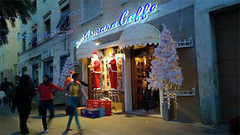
This year, all the shops have set their Christmas trees with more decorations and designs than ever. In the cafes and restaurants, crowded with people trying to warm themselves by drinking macchiato or cappuccino, the Christmas lights give the customers a bright look. People have a Christmas tree set in their homes to welcome the holiday, with a bright spirit. Decorating the Christmas tree as a family, has come to be a norm in modern Eritrea. Children eagerly wait for the day to decorate their tree and get candies and chocolates. This creates harmony and unity, among family members. People exchange gifts and postcards. Everything is so bright that wherever you are, you can feel the Christmas spirit in the air. This year, for instance, concerts of kindergarten students playing Joseph and Mary’s lines of the birth of Christ, the Ethiopian musicians and the exhibits of the National Union of Eritrean Women on Harnet Avenue, around the Ministry of Education, have added color to the beautiful portrait of Asmara in December, especially around Christmas.


We celebrate two Christmases in Eritrea, one on December 25 and the other on January 8. With the New Year sandwiched among the two Christmas, it seems like the holidays were arranged on purpose so that people can have a light work load and abundant rest on the last month of the year for a good start on the New Year.

The Christmas celebrated on December 25, was not as popular as it is today. Even today, it is young people in the urban areas that celebrate it more. The elderly tend to be more attached, to the Christmas celebrated on January 8.

As much as our personalities differ, we all have different ways of celebrating Christmas in Eritrea. In a normal case, people either go to church and attend the holy liturgy and special Christmas programs of their respective churches or go out with friends or families to recreational places such as fancy restaurants, clubs or simple piano bars and parties. The best part of the Eritrean Christmas is that people can go out partying on one Christmas eve and attend church services on the other. But, not everyone thinks of this as an advantage.

I was once chatting with a foreign (Ethiopian) facebook friend online, and we happened to talk about Christmas. He was very furious, telling me that we Eritreans have lost most of our original taste of culture by abandoning the Geez calendar. The irony is that the addition of another Christmas, does not signify the abandonment of the first. It is true, that a society’s values and norms are passed on to the next generation by teaching it to the young people. The youth in Eritrea spend December 25 having fun on their own but they spend the Geez Christmas with their families doing all the things they are supposed to do during holidays, cleaning their houses prior to the big day and slaughtering a sheep, having coffee and wishing relatives a happy holiday. So, when people ask what happened to your culture, just tell them it has become more colorful now.


Try walking around Forto, along the way to the Ministry of Information, after sunset. On the pavement, just above the Nursing school dormitory, there is a place from which one can watch Asmara as if it has been painted on a wide canvas. Around this time of year, Asmara looks like a huge Christmas tree decorated by all the beautiful buildings, shops, hotels, trees and, of course its people. The young people, are the big city’s most attractive decoration. Girls in dresses or tights and boys in suits or fashionable jeans, in groups and in pairs, walk on the streets with loud chattering and laughter. That is when I know it is Christmas, big smiles everywhere and our big Christmas tree shining brighter than ever before. That is when I know, our culture is special and beautiful.

Zmeselo
Senior Member+
Posts: 36765
Joined: 30 Jul 2010, 20:43

Re: Have You Heard About, Ulrich Coppel?

Post by Zmeselo » 30 Dec 2019, 07:10


MULTIMEDIA

The Japan Times: Algeria, Eritrea & Ethiopia. Long march for peace & freedom

December 30, 2019

IMAGES / TIMES GALLERY

https://www.japantimes.co.jp/multimedia ... gnZgqhwEew


Representative of Taipei Economic and Cultural Representative Office in Japan Frank C.T. Hsieh (left) and Wang Shu-Fang, director of the Taiwan Cultural Center, during an opening reception of the photo exhibition "Mekurumeku Taiwan" at the Taiwan Cultural Center in Toranomon on Dec. 18. This exhibition will run until Feb. 18, 2020. | YOSHIAKI MIURA


Ambassador of Algeria Mohamed El Amine Bencherif (second from right) and his wife, Amira (center) raise a toast with, from left, Ambassador of Eritrea and Dean of the African Diplomatic Corps Estifanos Afeworki Haile; State Minister for Foreign Affairs Kenji Wakamiya; and Masayuki Sato, representative director, chairman and chief executive officer of JGC Holdings Corporation and chairman of the Japan-Algeria Economic Committee of Keidanren, during a reception to celebrate Algeria's national day at the ambassador's residence in Tokyo on Dec. 20. | YOSHIAKI MIURA


Ambassador of Israel Yaffa Ben-Ari (center) poses with Parliamentary Vice-Minister for Foreign Affairs Shinichi Nakatani (left) and Culture and Science Affairs Attache of the Embassy of Israel Arieh Rosen during a Hanukkah candle lighting reception at the ambassador's residence on Dec. 25. | YOSHIAKI MIURA

_______________


(Translation)
I'll tweet all the kimonos, from 206 countries. 107/206 #エリトリア国#KIMONOプロジェクト Kimono: Shiraki dyer https://piow.jp/kimonoproject/country/107.html Clock tower popcorn shower pointing at many motifs 5:24 including alpine railways Buildings such as Catholic cathedral Asmara Theater
Last edited by Zmeselo on 30 Dec 2019, 08:13, edited 3 times in total.

Zmeselo
Senior Member+
Posts: 36765
Joined: 30 Jul 2010, 20:43

Re: Have You Heard About, Ulrich Coppel?

Post by Zmeselo » 30 Dec 2019, 07:16


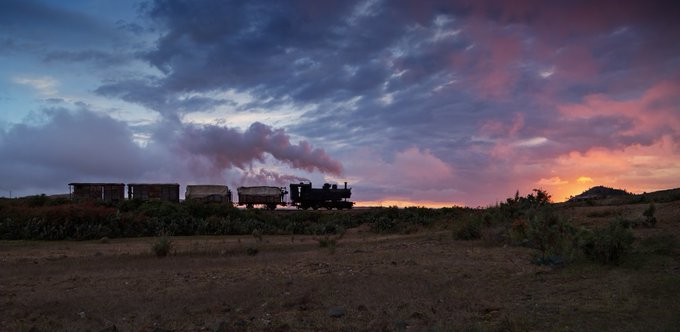
To take advantage of the peace ingrained momentum, Eritrea is working to revive and advance its railway system, which foster the tourism potential. #Eritrea2020 #investineritrea
(Kokob: @NeslekiEritrea)

___________________


አብየት ኤሪትራውነት! አብዝተወልደ እንተተወልደ: ግርምኡን ፍቅሪ ሀገሩን ምስኡ ኢዩ ዝውለድ:: ወላ ተሐበልዎ: ፍቅሪ ሃገሩ ዘየሕድግዎ! ሰስኑ ሽሕ ንዋልታን ዅኑ!!
(ጸጋይ አንጦንዮሰ: @TzegaiAntonios)

Zmeselo
Senior Member+
Posts: 36765
Joined: 30 Jul 2010, 20:43

Re: Have You Heard About, Ulrich Coppel?

Post by Zmeselo » 30 Dec 2019, 07:21


Sheymae Ahmed - yibarmale | ይባርማሌ


Zmeselo
Senior Member+
Posts: 36765
Joined: 30 Jul 2010, 20:43

Re: Have You Heard About, Ulrich Coppel?

Post by Zmeselo » 30 Dec 2019, 07:46

SEESME Founding Congress

Written by Samuel Habtemichael

http://shabait.com/articles/nation-buil ... g-congress

Articles


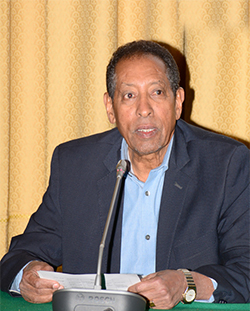
The Society of Eritrean Earth Scientists and Mining Engineers (SEESME) conducted its founding congress at the National Confederation of Eritrean Workers (NCEW) Hall on 13 December, 2019.

After so long Eritrean professionals in Geology, Mining Engineering, Process Engineering and other related fields of earth science lived to see the day. The historic day brought them together, to have responsibility to develop and sustain both their profession and the nation. The event was attended by government officials, professionals representing different fields, and distinguished guests. Nearly half of the attendees were young professionals.

Participants were welcomed to the conference with an opening remark by the chairman of the organizing committee, Dr. Seife Berhe, Executive Director of Andiamo Exploration (Eritrea Branch). In his brief speech, he congratulated the participants for taking part and witnessing what can be considered a glorious day for professionals in the field of earth sciences.


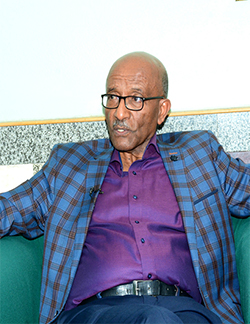
In his keynote address, Mr. Alem Kibreab, Director General of the Department of Mines at the Ministry of Energy and Mines, said that it was 32 years back that the inception of the association had started. He added that few interested Eritreans used to meet on the fringes of the annual Eritrean Festival in Bologna, Italy, where they came up with the idea of fostering the Mines Sub-commission that was then operating under the EPLF’s Construction Commission.

Mr. Alem said during the armed struggle for independence, there were various geological and hydrological studies conducted for road construction and digging wells. Some mapping and mineral exploration studies, were also carried out.

With the optimistic initiative of few professionals, Eritrean earth scientists in the diaspora formed what they called: Society of Eritrean Earth Scientists (SEES).

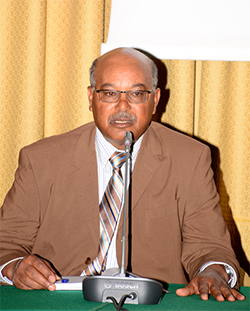
Mr Alem reminded the participants about the initiatives that have been taken to develop the College of Engineering by providing mining and process engineering courses in the last decade, with a view to providing skilled human resources for the budding mining industry. If the human resources needs of the mining industry are to be met, he emphasized, the entire society should be made aware of earth science and professionals should be motivated to conduct research and exchange new ideas.

Mr Alem firmly underlined, that emphasis should be given to young national professionals that would ultimately come out with results under the proper mentoring and guidance of their elderly professionals. Indeed, the newly founded society requires this inertia to accelerate and rigorously achieve its set out visions. Among the comments he made, there appeared a need to secure and improve relations with other professional societies and associations with the intent of sharing experience and developing collaboration. Mr. Alem concluded by thanking the organizing committee, concerned government bodies, and exploration and mining companies for supporting the initiative and helping young professionals gain practical skills.


Mr. Habteab Tsige, Head of the Mining Engineering Department at the Eritrean Institute of Technology (EIT), presented the draft constitution and code of conduct of SEESME. After the participants thoroughly discussed the draft constitution the congress unanimously adopted it.


Members were elected to serve in the management team and the advisory board. Five were elected as members of the Executive Committee and will serve as Chairman, Secretary, Treasurer, Editor, and Public Relation officer of the association. Five others, from within and out of Eritrea, were elected as members of the advisory board and two were nominated to work as auditors.

Mr. Alasdair Smith, CEO and General Manager of Alpha Exploration, presented a paper on
Mineral exploration in the 21st century
and following that Mr. Habteab Tsige and Dr. Tewelde Woldekidan, Head of Geology Department at EIT, gave presentations under the theme
Role of higher education in earth science, mining and process engineering.
At the end, a paper entitled
Changing of metal markets and the move to a low carbon economy
was presented by Dr. Seife Berhe and
Geoscience research in Eritrea
was presented by Professor Ghebrebrhan Ogbazghi of EIT.

In an exclusive interview, Dr. Seife Berhe pointed out that a number of professionals have been produced over the years and the core objective of establishing this association is to bring all the professionals together by maintaining the unity and strength that will surely play a due part in the needed sectors. As to the importance of SEESME for the members, he believes that the significance is way great if we invested the needed resources and manpower corresponding to the start-up and optimistic mining industry of the country. He went on to encourage the members, to better gain skills and seek extra opportunities. He finally said: conducting seminars and research and working to establish links with compatible associations will eventually payoff.

As of 19th November, 2019, SEESME is an officially recognized association. And if the young professionals are soon going to take hold of their duties and be proud to be part of SEESME, they must be acquainted with the technical workings of the association.

Zmeselo
Senior Member+
Posts: 36765
Joined: 30 Jul 2010, 20:43

Re: Have You Heard About, Ulrich Coppel?

Post by Zmeselo » 30 Dec 2019, 14:55


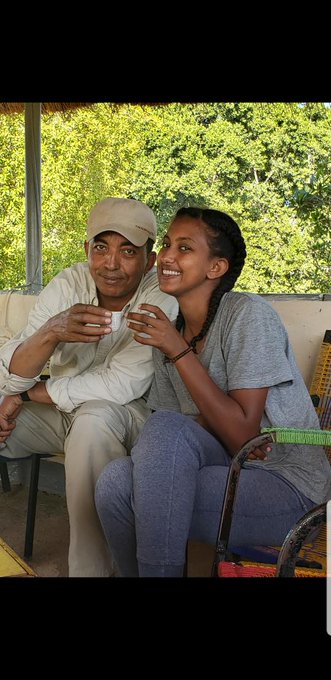
ትማሊ ምስ ቤተሊሄም ጓለይ: ኣብ ሳዋ::
ርሑስ ሓዲሽ ዓመት: ኢለያ::
ኤርትራ 2020: ንምዕባለ ብሰላም!


ትማሊ ትዓርብ ዝነበረት ጸሓይ: ኣብ ሳዋ!
(Arefaine Natnael: @ANatnail)

Zmeselo
Senior Member+
Posts: 36765
Joined: 30 Jul 2010, 20:43

Re: Have You Heard About, Ulrich Coppel?

Post by Zmeselo » 30 Dec 2019, 15:01


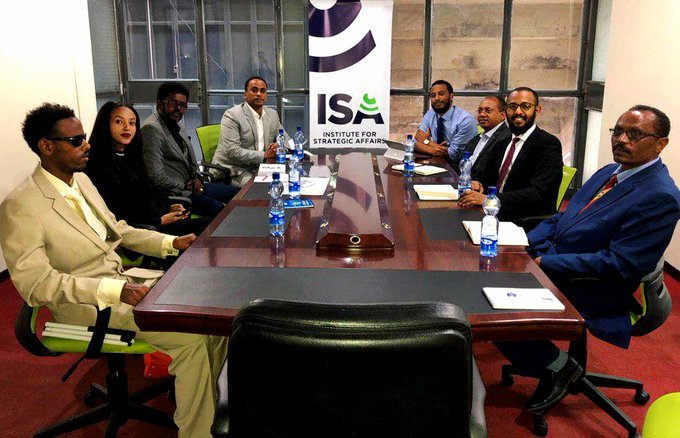
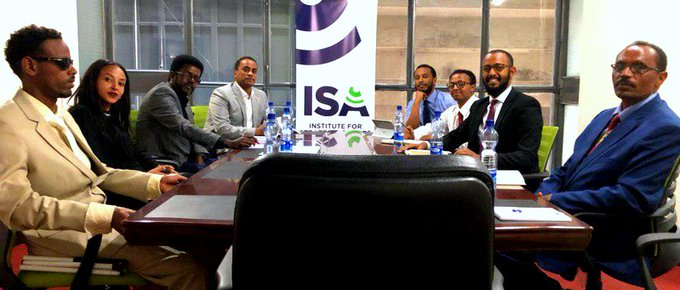
@ISAffairs_ was delighted to host members of the Research & Information Department, from the Foreign Ministry of the State of Eritrea. We discussed collaborations to research relations between Ethiopia & Eritrea, geopolitical developments in the Horn & the Red Sea.
(ISA: @ISAffairs_)

Post Reply