Ethiopian News, Current Affairs and Opinion Forum
Zmeselo
Senior Member+
Posts: 36760
Joined: 30 Jul 2010, 20:43

TICAD7

Post by Zmeselo » 28 Aug 2019, 07:48

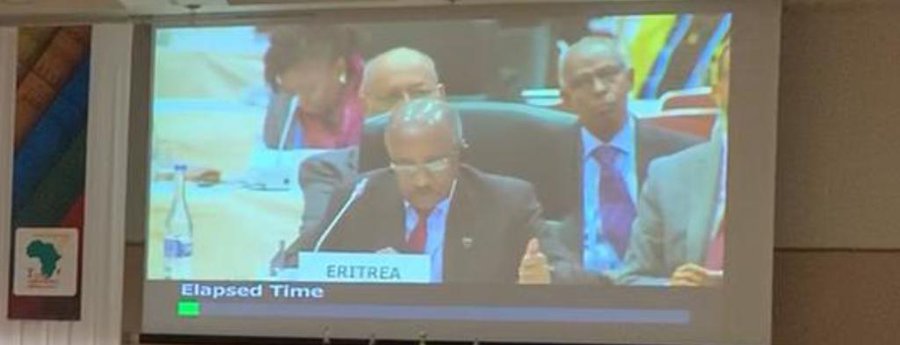
Eritrea delegation attends 7th TICAD Summit. FM Osman Saleh delivered message of President Isaias, which called for new roadmap for Japan-Africa cooperation. PM Shinzo Abe hailed Eritrea-Ethiopia Peace Agreement and said it has boosted prospects for regional peace & development.


Zmeselo
Senior Member+
Posts: 36760
Joined: 30 Jul 2010, 20:43

Re: TICAD7

Post by Zmeselo » 28 Aug 2019, 07:59


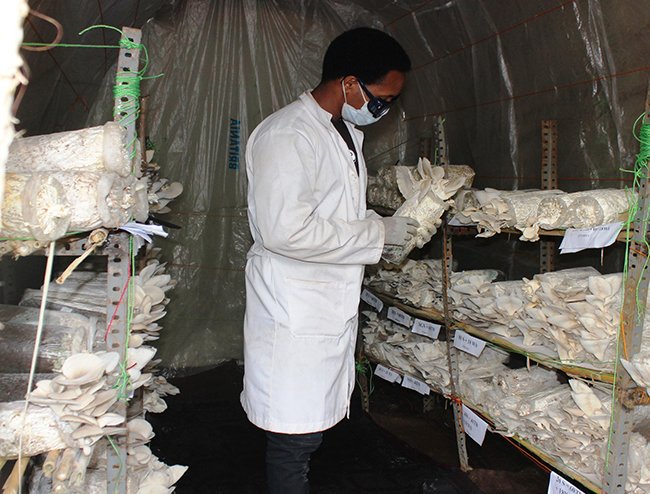
Bringing mushroom cultivation to household level, with Tedros’s research

Written by shabait Administrator

http://www.shabait.com/articles/q-a-a/2 ... s-research

Articles - Q & A


Meet Tedros Gebrezgiabhier, a microbiologist currently working as a lecturer at the Eritrean College of Sciences. After earning his bachelor’s degree in applied biology, he did an MSc in micro biology. He served in Sawa and EIT as a graduate assistant and is now paying attention to his research. With his project, Tedros wishes to make mushroom cultivation familiar among small farmers and families; a contribution that’ll definitely significantly influence the national plan of food security.


Welcome to our today’s Q&A. Would you introduce yourself to our readers?

My name is Tedros. I was born in Gash Bark in the Molki subzone, where I did my elementary schooling, and then moved to Mendefera where I completed my junior and high school education. I joined the 20th round and went to Sawa in 2006. Afterwards I joined EIT (Eritrean Institute of Technology) to complete my undergraduate education. I studied applied biology. I served in Sawa as a teacher and later on in EIT as a GA. In 2017, I began studying for my MSc. I did my postgraduate in microbiology. I am now a lecturer in EIT.

Your new research has been getting a lot of attention. Mostly because it is about something not common in Eritrea; can you tell us about it? How did it start and where has it gotten to at the moment?

I have always wanted to focus the topic of my study on medical microbiology and agricultural microbiology. When I couldn’t sustain my focus on medical microbiology, I shifted to agricultural microbiology and invested my time and full interest in studying food microbiology aiming to contribute some case study to the national plan of food security. I studied mushrooms. Mushroom production is not an easy task. And it is not common as it is in other countries, but it is highly nutritious and people can benefit easily from its production if they become aware of it.

What was the main scope of your project?

I wanted to take mushroom production to household level. I believe that families in Eritrea can profit from mushroom production. They can produce enough for their own consumption, and they can put the remaining amount out for the market. That would be a new contribution to the national plan of food security. That being said, mushroom production is not new to the world or even to some farmers in Eritrea. The different feature I aimed at studying was producing mushroom using kitchen waste that contains carbon and protein. The overall aim is to get families to produce mushroom with small and basic investment.


Are there any mushroom farmers in Eritrea?

There are; but few. They work under the umbrella of the Ministry of Agriculture. In fact, the first phase of my analysis was all about discussions and talks that I held with the producers. From there I started looking out for alternative methods to lower the production, like I said earlier, to household level. Speaking to the producers I realized that they have a recognized standard for their mushroom farming. That would be a bit costly if we are to promote it to small farmers and families.

So what is the alternative? Of course, based on your research?

As I told you earlier, the small production is very standardized. For example, they use sawdust, which might be expensive for small farmers or families to afford. So I did my experiment on materials that can be found easily at low price or no price at all. Kitchen waste such as used tea leaves and groundnut shells. These substances are found in every household. When collected they can serve greatly. Also, I conducted my experiment on cow dung, very common for small farmers in small villages and towns, and elephant grass as well.

So how do you plan to move on with the project? You have successfully done several experiments that assured you that edible mushrooms can be produced on kitchen wastes of Eritrean families as well as cow dung and elephant grass; also very accessible in towns and villages. What will the implementation look like?

The following part is implementation but before that people’s awareness should be raised. People are not aware of mushrooms. Shepherds in villages do know the edible mushrooms and they have them as snack but they don’t take them home for their mothers to cook. It is taken more as a woodland fruit. Only few people in the city are aware of mushroom dishes. After all, it is not a common food in Eritrea. For this reason, mushroom is sold in a restricted market, at supermarkets, and in pizza houses as young people love mushroom on their pizzas. This clearly calls for integrated efforts of the media and the Ministry of Agriculture in raising awareness. People first need to know the value of it and then they can be taught how to grow it. Luckily, Eritreans are fast learners. In fact, we keep seeing new small businesses mushrooming in the cities and towns. People tend to follow new business trends. So if we, together, promote the idea, in a matter of two years mushrooms will dominate local markets.

Was it challenging to experiment with the production of mushroom?

The science of mushroom is a practiced science so common that it was not hard at all. Looking for materials that are locally accessible and cheap and experimenting mushroom growth on them was hard. I tried and failed many times. That is what was challenging. Other than that it was a very interesting venture because I had the vision in my head and I was determined to realize despite the prolonged amount of time it needed.

Thank you and best of luck for future ventures. Would you like to pass any message before we end our interview?

I would like to thank my colleagues at the college and the Eritrean Ministry of Agriculture. Other than that I would just want to pass a reminder of how feasible household mushroom production is, and I call upon concerned bodies to take fast measurements.

Zmeselo
Senior Member+
Posts: 36760
Joined: 30 Jul 2010, 20:43

Re: TICAD7

Post by Zmeselo » 28 Aug 2019, 08:13

Miwa Kato (@MiwaKatoEmpower) Tweeted:

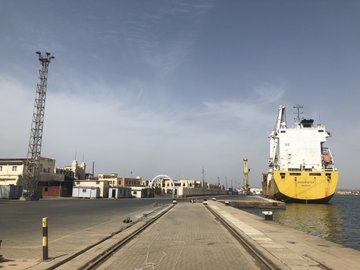
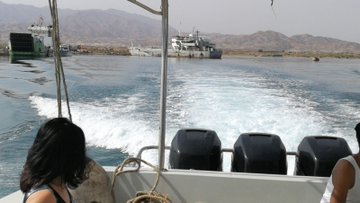
Visited Massawa, Eritrea's famed Red Sea coast city. With peace & development in Horn Of Africa, more people may enjoy its beauty. At port & airports, trade infrastructure ready 4 increased volume but capacity 2 deal with security challenges & criminality need 2 b augmented.


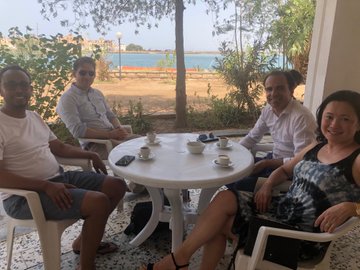
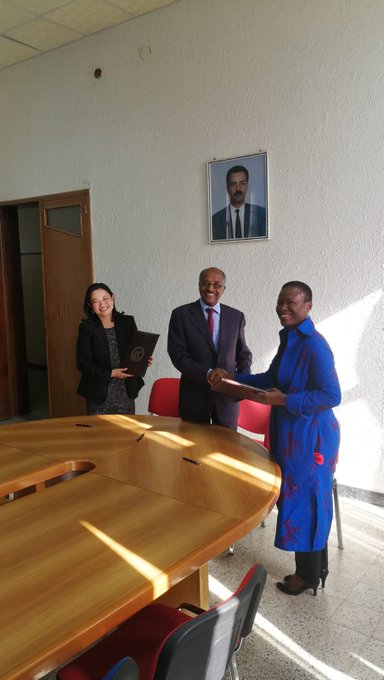
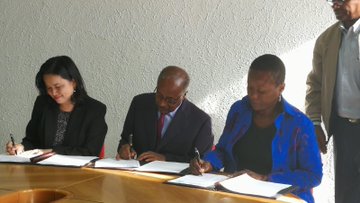
Important time 2 deepen cooperation with Eritrea, with technical support 2 adapt 2 positive regional dynamics, solidifying peace and security, trade, development in Horn Of Africa. Joint priorities signed with Foreign Minister H.E. Osman Saleh.


Esp proud to sign this 🇪🇷JointPriorities trilaterally together with UNRC Susan Namondo in true UNDS reform spirit. UNODC commits to close coordination & integration with wider UN responses on peace and security, development & human rights- leveraging our unique mandate.

Zmeselo
Senior Member+
Posts: 36760
Joined: 30 Jul 2010, 20:43

Re: TICAD7

Post by Zmeselo » 28 Aug 2019, 08:30


Students discover African-led development in Mason’s first trip to Eritrea

August 26, 2019 / by Mariam Aburdeineh

https://www2.gmu.edu/news/579096?fbclid ... PcolBFgw7w


S-CAR Ph.D. student Felegebirhan Mihret making new friends with a group of local men in Asmara. Photo by Carol Pineau.

There are multiple sides to every story. But when it comes to Eritrea, a country that’s been isolated due to 20 years of war and nine years of sanctions, much of their story hasn’t been told, said Carol Pineau, a former CNN journalist who reported live on the Eritrean-Ethiopian war and is a visiting scholar at George Mason University.

This summer, faculty from Mason’s Center for the Study of Narrative and Conflict Resolution https://scar.gmu.edu/impact/centers/cen ... resolution took 11 PhD, master’s and undergraduate students to Eritrea for two weeks to uncover the country’s narrative of development.
It’s exceptional for the number one conflict resolution [school] https://scar.gmu.edu/news/500846 in the country to be going into Eritrea—a place like that is post-conflict in real time,
said Pineau, who added that she believes the trip was the first open enrollment study-abroad program to Eritrea from any U.S. university.

Very few articles have been written on Eritrean development, so the best way to understand it is to go there, said Pineau, who co-led the trip with Mason professor Solon Simmons. https://scar.gmu.edu/profile/view/12180

During the trip organized by Pineau and the center’s director Sara Cobb,
https://scar.gmu.edu/profile/view/5436 Mason students met with Eritrean ministry heads, spanning health, social welfare, education, agriculture and national development, and information representatives from the United Nations and several ambassadors. Venturing out of the capital, they saw development projects firsthand, including a referral hospital for pediatric and maternal care, reforestation and terracing projects for soil and water conservation, dams to improve drinking water, and more. They also met with Eritrea’s best-known writers (including the author of their national anthem), and toured the battlefields with the commander who led the decisive battle that ended the fighting.
Social justice is one of their highest values [the ministry heads] spoke about,
said Friderike Butler, a graduate student in Mason’s Organization Development and Knowledge Management https://schar.gmu.edu/prospective-stude ... management Program.
Any approach for development has to be good for the community, it has to afford equality for all the stakeholders involved, it has to be good for the environment and it has to be sustainable.
What surprised me is that we actually have an African country that is addressing the idea of development that is self-driven, self-propelled,
said conflict analysis and resolution https://scar.gmu.edu/ PhD student Gbenga Dasylva.

Eritrea has a negative reputation in the world press, Dasylva said, and it is often seen as stubborn or threatening for not receiving outside aid. The country has no World Bank, no NGOs and no international players at the table developing their programs. Even so, they’re one of the few countries in Africa that is meeting the sustainable development goals set by the United Nations.

How are they excelling without aid?

They’re focused on African-led solutions to African challenges, said Pineau, who added that their story challenges the narrative that development happens because the global north finds the solution.
The [development] programs they’re putting in place are really amazing,
said Butler, who cited one example as the Minimum Integrated Household Agricultural Package, a program that allows Eritrean families to learn skills in organic farming, feed their family, generate an income and help their neighbors do the same.

Eritrea’s innovative work could benefit the rest of the developing world by learning from their unique and locally driven solutions, Pineau said. The experience has also had an impact on students.

Dasylva said he was so inspired by Eritrea that he changed his dissertation to look at development happening there, and how it can be a model for the rest of Africa.
There is a need for us scholars of international relations to address issues contextually and to start rethinking how we define concepts like development, peace building and governance,
Dasylva said.

Development isn’t the creation of buildings, Dasylva said.
Development is: Do the people have quality of life? Are they able to sustain themselves? Eritrea has been able to address this.
During the trip, students recorded interviews and gathered documentation of Eritrea’s people and history. Their findings and photos can be seen at eyewitnesseritrea.gmu.edu.


Students at the Ministry of Investment and Promotion in Eritrea. Photo by Gbenga DeSilva.

Zmeselo
Senior Member+
Posts: 36760
Joined: 30 Jul 2010, 20:43

Re: TICAD7

Post by Zmeselo » 28 Aug 2019, 12:47

Ambassador Estifanos (@AmbassadorEstif) Tweeted:

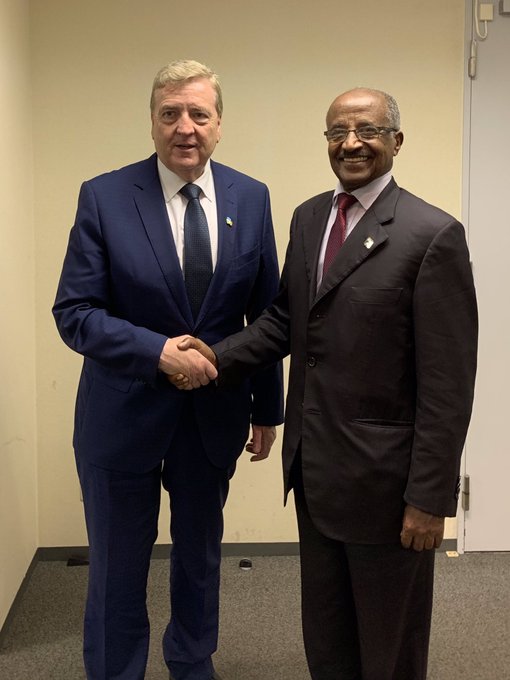
On side line of TICAD7 FM OSMAN & Minister of State PAT agreed to boast Eritrea--Ireland diplomatic/economic ties.


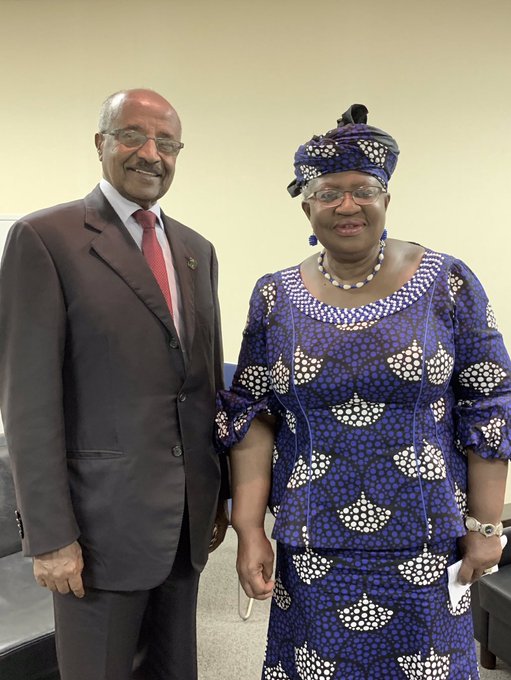
FM OSMAN & Dr. Ngozi Okongo Iweala-Gavi Board Chair met on TICAD7 margins & agreed to expand programs in Eritrea.


Zmeselo
Senior Member+
Posts: 36760
Joined: 30 Jul 2010, 20:43

Re: TICAD7

Post by Zmeselo » 28 Aug 2019, 12:55


Three Seasons in two Hours

Written by compiled from shabait

http://www.shabait.com/about-eritrea/hi ... -two-hours

About Eritrea - History & Culture


Eritrea is beautifully located at the highest landmass of the African continent.

The country is mostly known for its varied weather. In Eritrea it can never be too hot or too cold, and this gives a lot of visitors a pleasant stay and for the residents it gives a peaceful state of mind.

Eritrea has a variety of climatic conditions. Asmara at 2,350 meters (7,700 feet) has a pleasant climate all year round (average temperature of 16° Celsius (60° Fahrenheit)) and has 508 mm (20 inches) of rainfall annually. The eastern coastal areas have the unpredictable, “little rains” from October to March, while the other areas get “main rains” (kiremti) from June to September. On the highlands, further inland, with an elevation between 1,800 and 2,100 meters (5,900 and 6,900 feet) the hottest month is usually May (around 30°) and in winter (December to February) temperatures are near freezing point at night.

While at the sea level, along the coast (Massawa, Assab), the period from June to September is very hot (40-50°). In the period covering December to February (rainy season) the temperature varies from 20 to 35° Celsius.

Massawa, at sea level, has an average annual temperature of 30° Celsius (86° Fahrenheit) and an annual precipitation of 205 mm (80 inches). In the western lowlands (Agordat,Barentu), the temperatures and the rainy seasons are comparable to those on the coast.


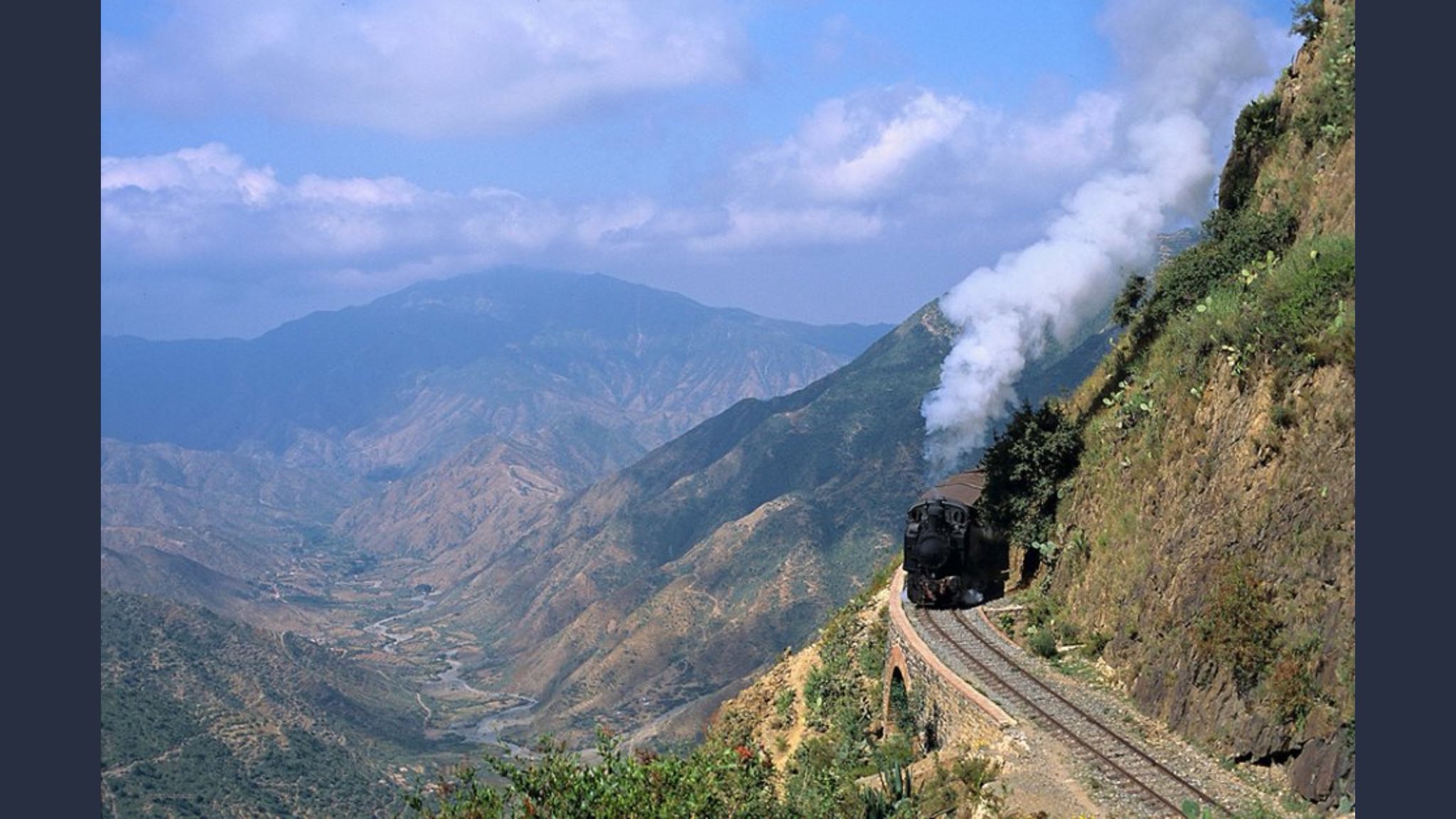
We are indeed talking about the land where one can experience three seasons in just two hours or one hour and a half of drive - from the rugged mountain peaks of Emba Soira to the arid desert heat of the Danakil Depression (100 meters below sea level, which is one of the hottest places on earth) to the cool breezes of the Red Sea.

Three seasons in two hours,” goes the tourism motto in Eritrea. With the great land scape Eritrea has to offer, numerous sites of natural attractions and rich historical monuments are fascinating to any visitor. Both the high mountains and the lowland are dotted with unique features, including breathtaking tropical beaches, beautiful mountain ranges, tranquil landscapes, fertile plains and verdant hillsides among others.


In just two hours, it is possible to travel from the cool 2,438m (8,000ft) ‘city in the clouds’ down to sea level Danakil Depression to the hot coastal desert strip. A number of travel agents offer excursion packages to various destinations.

Asmara, the capital city, lies 2,400 metres above sea level with its friendly climate of 17 degrees centigrade. Summer comes in April and May, with temperatures reaching 25 degrees centigrade while December and January bring the coldest season with temperatures of between 18 and 20 degrees centigrade. June and July are the months of rainfall.

For everyone who visits Eritrea, an absolute must-see is the journey from Asmara to Massawa for the best and unforgettable scenic sites and beautiful landscape that no one would want to miss. From the terraced mountains of Asmara area, the journey to Massawa takes you down a mountainous road with quite spectacular views. Half an hour drive from Asmara by car brings you to a small town of Nefasit overlooking mount Bizen. At the top of this mountain, 400 metres high and 7 km from Nefasit, stands Debre Bizen monastery, which is 700 years old. The only way to access it is by climbing on foot.

The trip from Asmara to Massawa takes about two hours - where the “three seasons in two hours” motto originates from. The experience of three seasons during the journey:


The fall - the cool air of mountainous Asmara

The spring - Plateau around Ghinda area

The Summer - the heat of the Red Sea desert

You can visit Eritrea any time of the year because of the pleasant whether in both Asmara and the country’s highlands. The highest temperature may go up to 30 degrees centigrade in May.

September to January may be a good time to visit the coast. Another favorable period is from around April to the beginning of June because the temperatures are not too hot. But either way the gorgeous climate, delicate landscape and, above all, the welcoming people definitely make Eritrea a place to visit and have some great memories with your loved ones.

Zmeselo
Senior Member+
Posts: 36760
Joined: 30 Jul 2010, 20:43

Re: TICAD7

Post by Zmeselo » 28 Aug 2019, 12:58


ኣጥቃዓይ ሃገራዊት ጋንታ ኤርትራ ትሕቲ 15 ዓመት ኣሕመድ ዓውድ

Zmeselo
Senior Member+
Posts: 36760
Joined: 30 Jul 2010, 20:43

Re: TICAD7

Post by Zmeselo » 28 Aug 2019, 17:16


You’ll Fall in Love With the Unexpected Architecture in This Far-Away Town

Suzi Siegel | August 26, 2019

https://www.fodors.com/news/photos/youl ... -away-town


PHOTO: JordiStock/iStock

A modernist metropolis in the middle of the African desert. Eritrea finally opens to the world and its capital city, Asmara, is an architecture fan’s dreamland.

Eritrea, long referred to as Africa’s “Hermit Kingdom,” is finally opening up.

This is big news not just for adventure travelers but for architecture buffs, as its capital city is home to the largest, finest and most intact collection of modernist buildings anywhere in the world.

The rare trove of Italian colonial-era buildings has been seen by precious few outsiders because the Horn of Africa nation has long been something of a pariah state. Tides are turning. The U.N. Security Council just lifted its sanctions against Eritrea for making strides on human rights and press freedom. The country also recently inked a peace deal with its neighbor Ethiopia after warring on and off for 40 years.

And, in a long-awaited move, the capital of Asmara has been named a UNESCO World City Heritage Site, http://whc.unesco.org/en/list/1550 an honor that is rarely bestowed upon sub-Saharan Africa. The city has been called the “Miami of Africa” for its stunning concentration of buildings constructed between 1935 and 1941. During this era, Italy was bent on making its colonial outpost a futuristic utopia by experimenting with radical new design ideas.

That all came to end when Fascist Italy lost WWII and its control of Eritrea. Colonists vanquished, the Eritreans soon found themselves seemingly at endless war independence after being annexed by Ethiopia. After finally winning its independence in the 90s, Eritrea became an oppressive one-party state with one of the worst human rights records in the world. Because of the country’s extended isolation, the modernist metropolis has remained virtually untouched since the 1940s. With the promising new, however, Eritrea is opening up.

And while there is still a State Department Travel advisory https://travel.state.gov/content/travel ... isory.html in effect, the country is largely considered safe (it’s designated a Level 2 for “Exercise Increased Caution” out of 4, which is “Do Not Travel”). A traveler is likely in danger of only coming for the architecture and staying for everything else: bocce clubs, chrome espresso machines, soaring mosques, women in gauzy white headscarves, Tigrinya music and a perfectly preserved 50s-era bowling alley. Oh, and of course, the top-notch pizza and gelato that’s as good as any you’d find in Roma. In fact, the city was once called “Piccola Roma” or “Little Rome.”

If you’re a thoughtful traveler who loves Africa, Italy, modernist architecture, history, being unencumbered by other tourists, or any combination of the above, Asmara is a thrilling city to explore.

Here are some of its most feted architectural standouts:
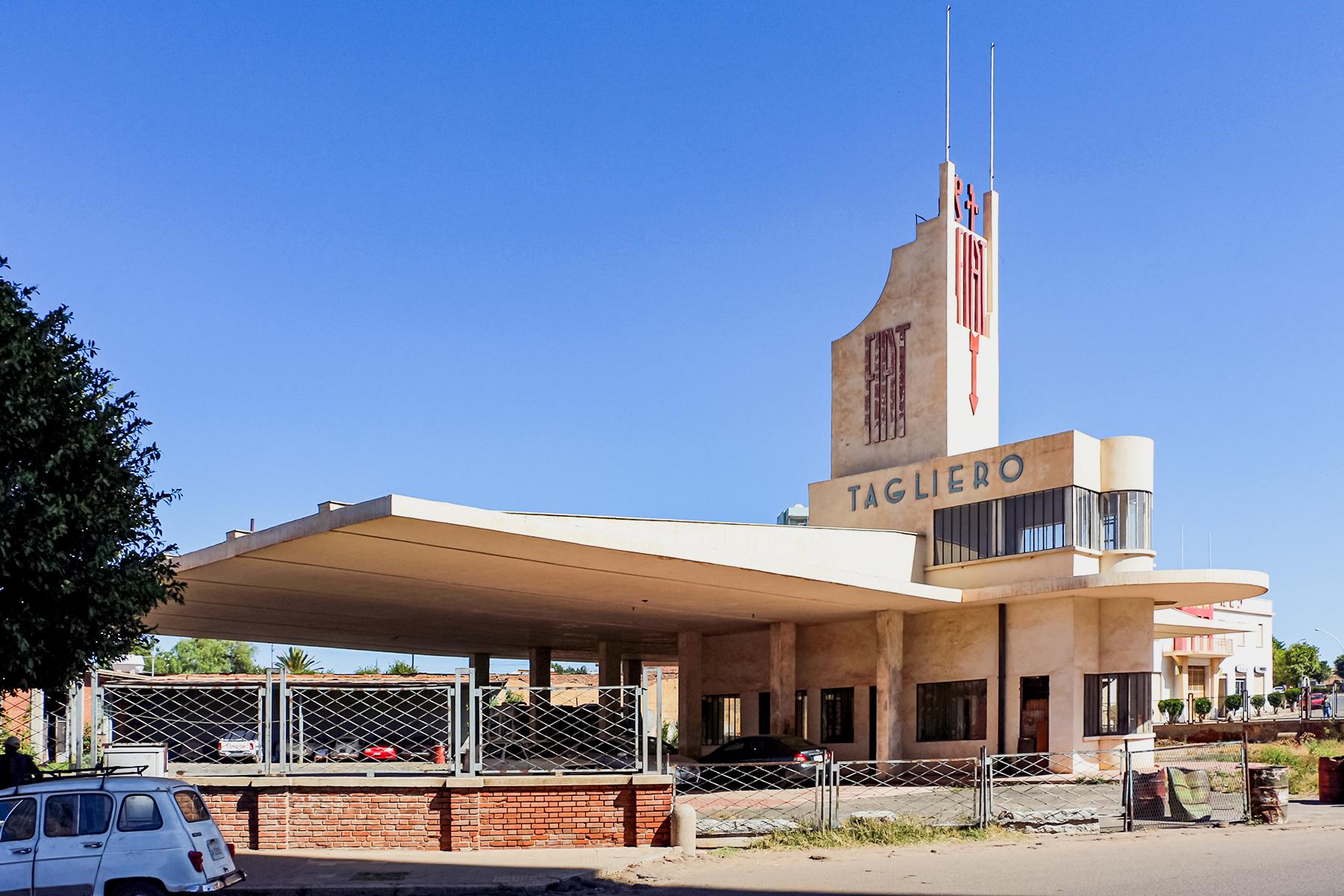

PHOTO: Sailko(CC BY-SA 3.0)/WikimediaCommons

1 OF 10
Fiat Tagliero Service Station

Asmara’s preeminent edifice, the Fiat Tagliero building, has been referred to as
the world’s most beautiful petrol station.
Built in 1938, the 100-foot concrete wingspan was meant to evoke a soaring airplane and is considered one of the world’s most supreme examples of Futurism. With its Art Deco lettering in both Italian and Amharic, the daring structure is a marvel to stand under.

It was a remarkable engineering feat for the time because the long, cantilevered wings were unsupported by pillars. Legend has it that at the building’s inauguration architect Giuseppe Pettazzi put a gun to the head of a contractor who balked at removing the wooden stanchions holding up the building’s wings because he was terrified the building was going to cave in without them. Needless to say, the beams were removed and the building stayed aloft.
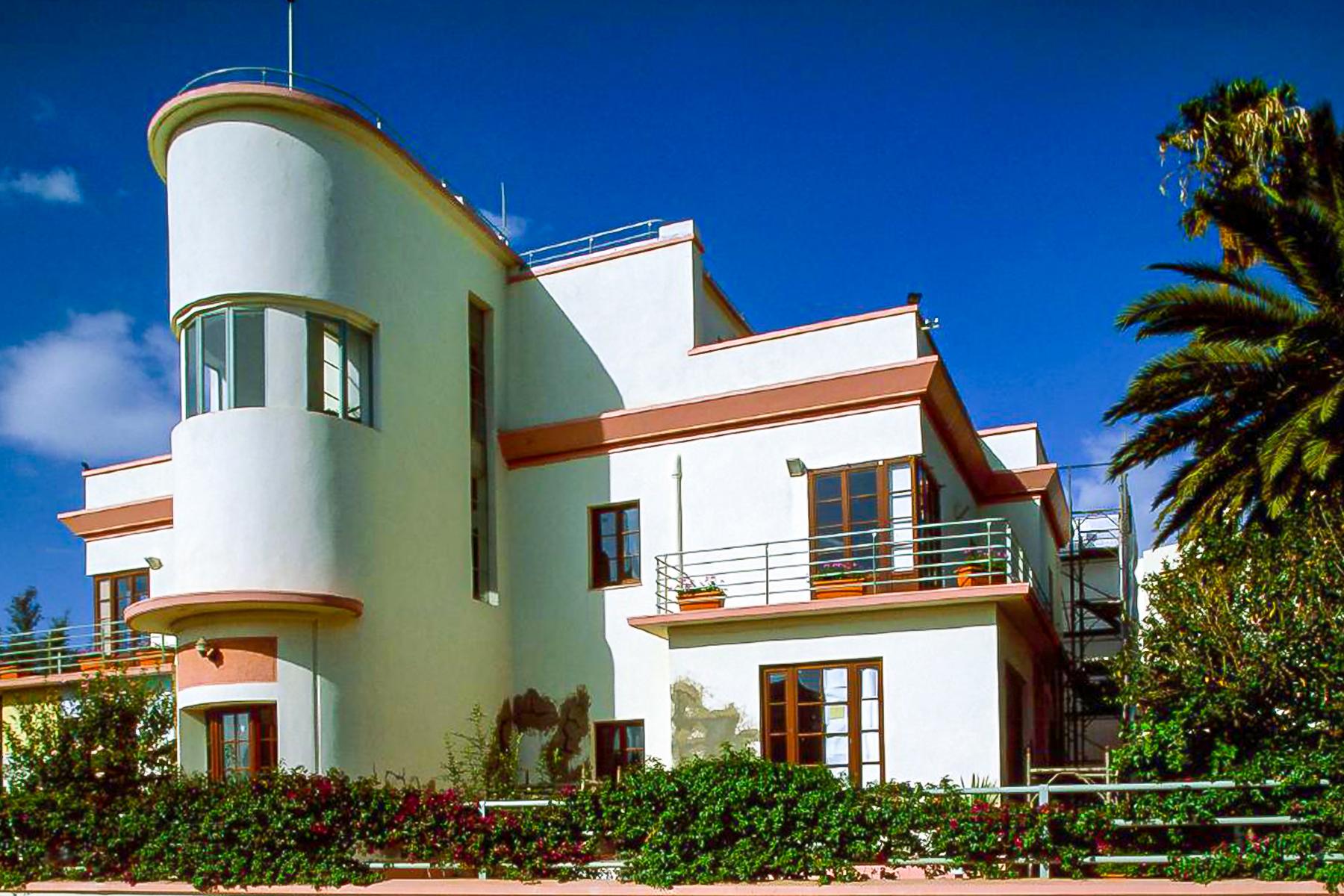

PHOTO: World Monuments Fund

2 OF 10
World Bank Building

The World Bank Building is a large Italian villa built in 1938 in a blend of Art Deco and Futurist styles. Futurism, a movement that started in Italy, rejected the ornamental aesthetic of the past and exalted what’s next. Its proponents embraced motion and machine as their inspiration.

This building, with its elliptical long lines, is a beautiful example of the speed and movement that are fundamental traits of Futurism. The mansion once belonged to a wealthy Italian emigrant and was later purchased by the World Bank for its headquarters.

Eritrea is one of the world’s least developed countries largely because of its protracted war with Ethiopia and its heavy dependency on rain-fed agriculture since the area suffers from droughts. As peace comes to the region and it opens up to the world, however, material conditions there will hopefully continue to improve.


PHOTO: Sailko(CC BY-SA 3.0)/WikimediaCommons

3 OF 10
Cinema Impero

Opened in 1937, the cinema’s stylish façade is considered a stunning example of 1930s movie theater design. The white letters are laid out vertically on a maroon splash of color banded by three white columns and round lights. At night, the backlit frontage is sublime.

Inside the two-story complex, white marble staircases ascend from grey marble floors. The gargantuan movie screen stretches before rows of wooden seats and stucco motifs featuring African imagery decorate the walls and pillars. Old Italian movies still play there and one recent visitor reported the theater was screening Game of Thrones episodes.
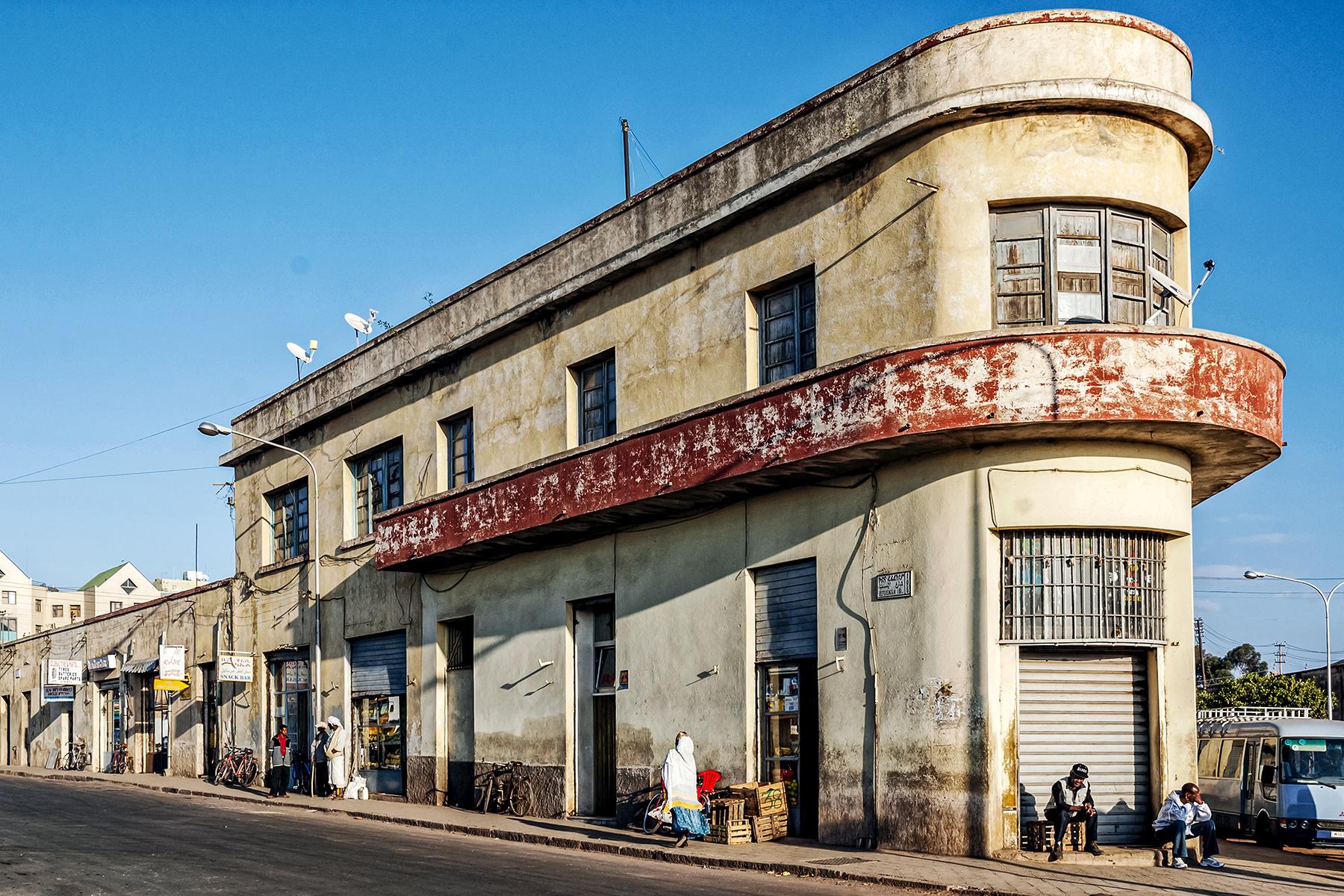

PHOTO: Jackmalipan/Dreamstime

4 OF 10
Street Life

UNESCO granted World Heritage status to the city not just for its well-preserved architecture but for how it lives and breathes on in a vibrant African context.

Aside from the architectural gems, the day-to-day sights of Asmara offer their own delights. This shot of a spiffily dressed gentleman passing in front of a cheese store whose sign is in both Amharic and Italian illustrate the interplay of cultures still alive today.

Springing from a desert mountaintop 8,000 feet above sea level, Asmara is the sixth highest capital in the world and the weather is mild year round. Always dressed to the nines, locals are known to catch up on current events over an espresso and take their nightly passeggiatas around the city’s piazzas and wide bougainvillaea-dotted boulevards.

INSIDER TIP
Have a listen
to the Asmara All-Stars, a troupe of former Army-employed musicians who recorded an album called Eritrea’s Got Soul.
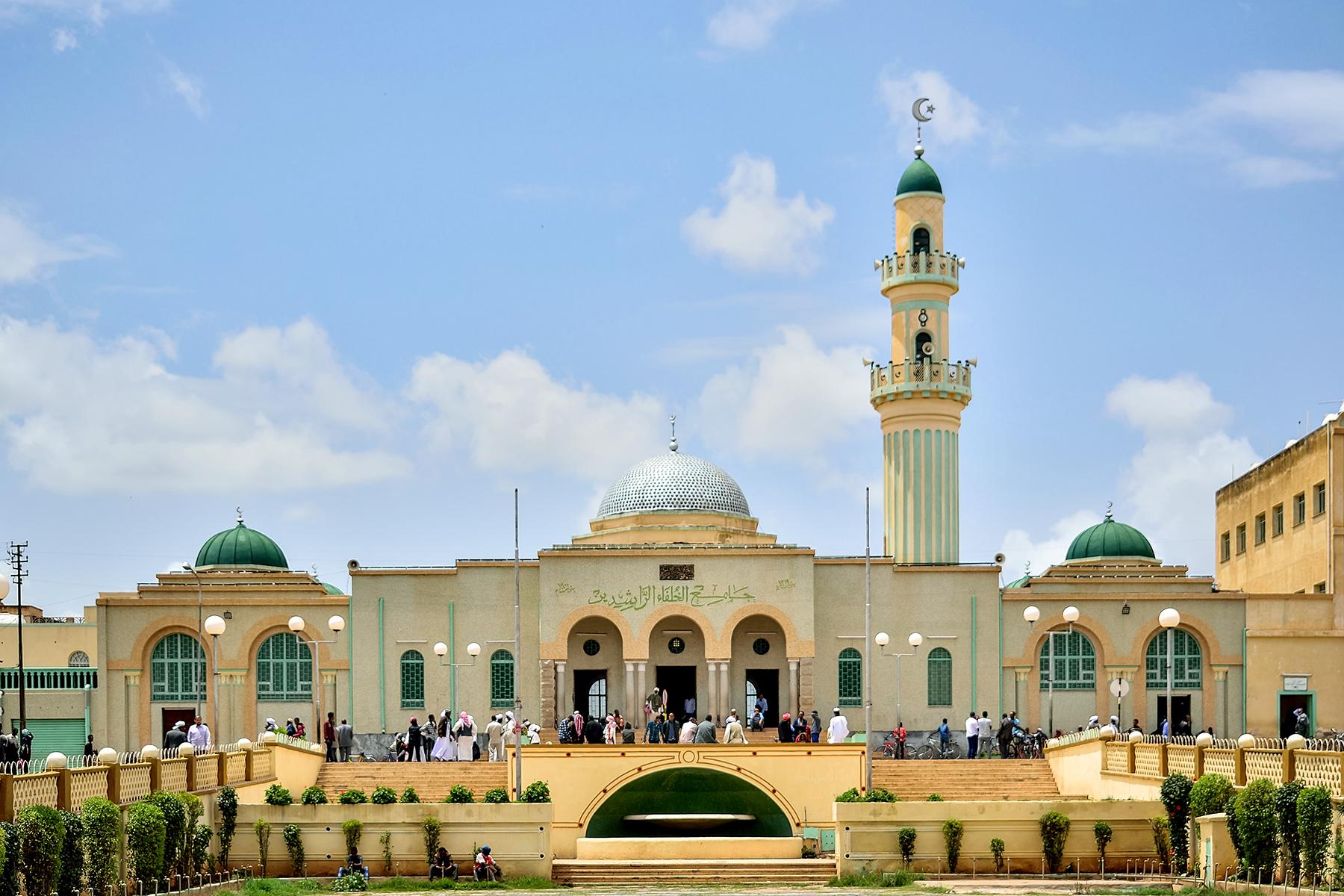

PHOTO: Hailu Wudineh TSEGAYE/Shutterstock

5 OF 10
Al Kulafah Al Rashidan (Great Mosque of Asmara)

Completed in 1938, the Great Mosque is smack dab in the middle of the city. The mosque’s soaring minaret stands out in Asmara’s skyline can be seen from any part of the city. Look closely at the bottom of the tower under its balconies and you might notice it looks like a fluted Roman column.

The story goes that Benito Mussolini himself had the imposing edifice built to impress the local Muslim population. The mosque combines Islamic, Rationalist and Classical styles and was built with marble imported from Tuscany.

Eritrea’s population is evenly divided into Muslims and Christians who have lived side-by-side in harmony since ancient times. The city is also home to neo-Romanesque Catholic Church built in 1923, an eclectic Eritrean Orthodox Cathedral in the Rationalist style dating to 1938 and a synagogue constructed in 1906.
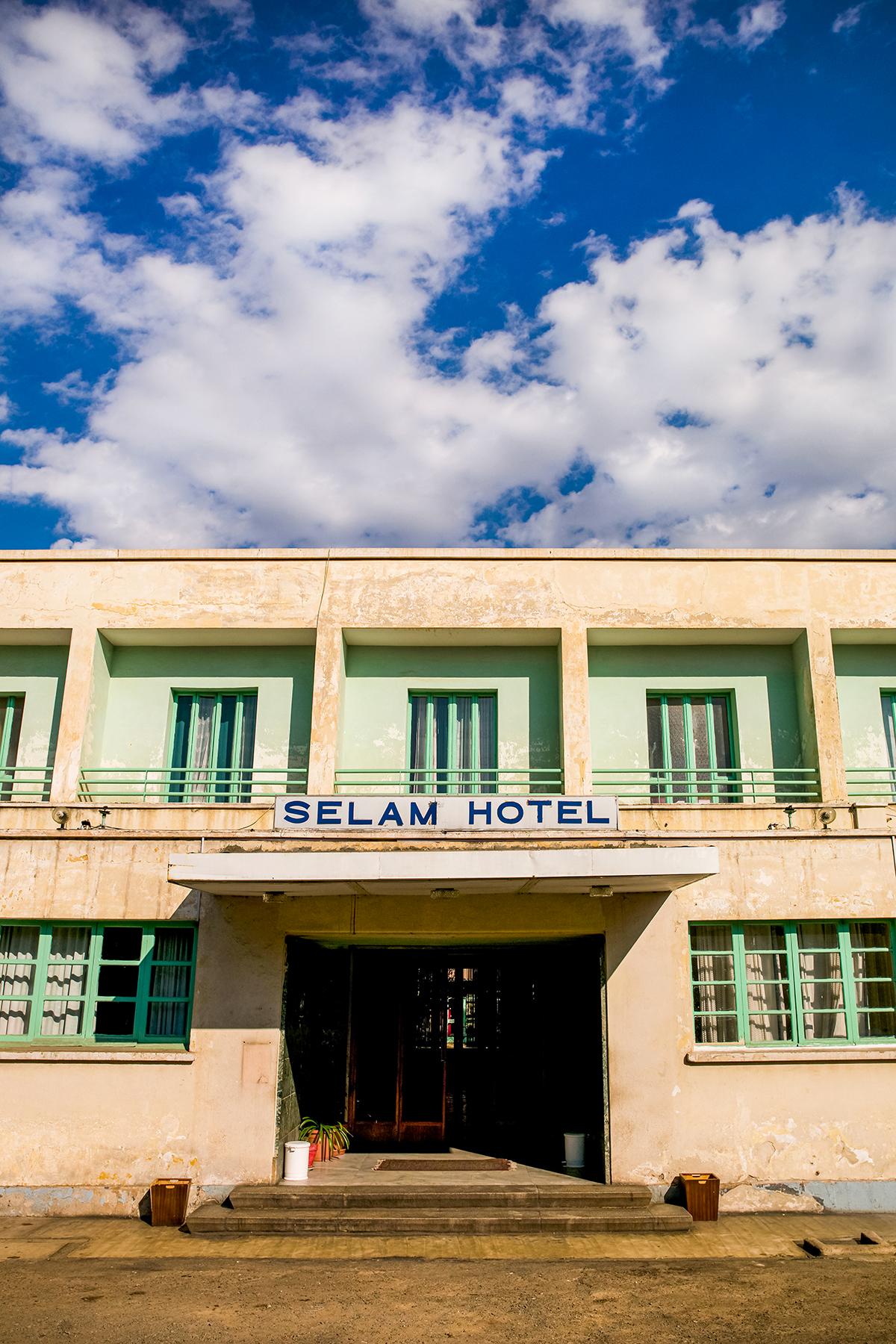

PHOTO: ERIC LAFFORGUE / Alamy Stock Photo

6 OF 10
Selam Hotel

Don’t let the simplicity of this hotel fool you since that’s the point. The Selam Hotel is Asmara’s
purest example of Rationalist architecture, as evidenced by its uncomplicated form and the geometric simplicity of its elements,
according to a UN dossier.

Built in 1938, the hotel was remarkably progressive for its day. Besides its architectural significance, it’s an epic place in the country’s history.

After centuries of subjugation by the Ottomans, Egyptians, Italians, British and finally, the Ethiopians—99.83% of Eritreans voted for self-determination in an international referendum that gave 1 million Eritreans across 40 countries the chance to determine their own future.

Poll watchers at the time described a state of euphoria, with election sites decorated with rugs, lights, streamers and flowers. People danced in the streets for days after the plebiscite and it was at the Selam Hotel on April 27, 1993, that Eritrea was officially declared a free and independent nation.
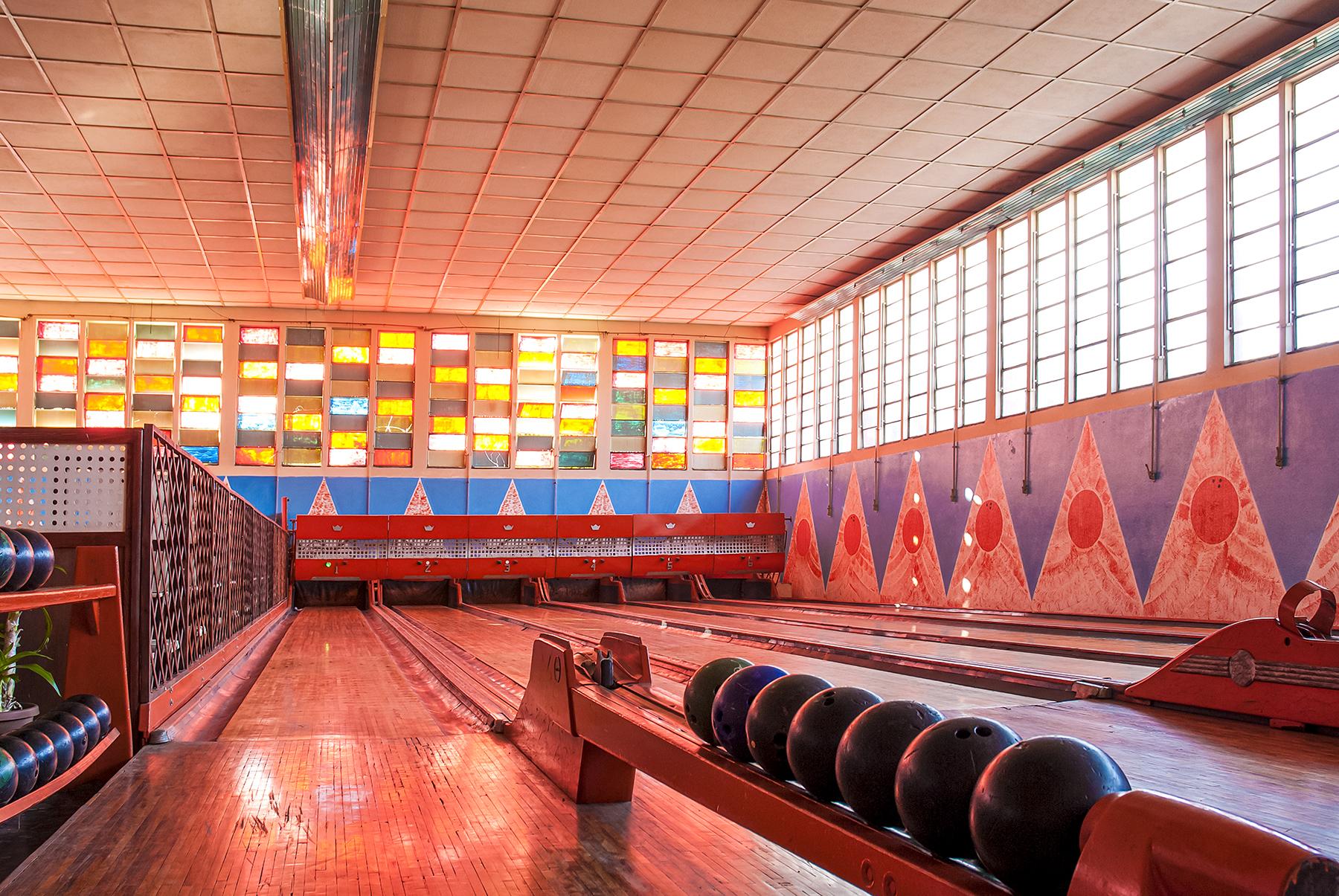

PHOTO: Jackmalipan/Dreamstime

7 OF 10
Asmara Bowling Alley

Okay, a 1950s era Brunswick Bowling Alley may not be a highbrow work of modernist architecture, but it’s one of the most magical places you visit in Asmara even if all you do is throw gutterballs there.

The place was built to entertain American soldiers who manned a nearby military listening station during the Cold War and is one of the last unspoiled bowling alleys from its era left in the world. Checkered stained glass windows scatter a whimsy of colored lights that make the orange machinery and rounded wooden benches glow and young boys set the wooden pins by hand after each toss. (This short video captures the enchantment of the place.)

As if the scene isn’t cinematic enough, older gents in fedoras gather to play an Italian version of billiards called boccette. And, as everywhere else in Asmara, a vintage espresso machine froths up authentico café in case you need a little pick-me-up between strikes and spares.


PHOTO: Clay Gilliland(CC BY-SA 2.0)/WikimediaCommons

8 OF 10
Military Tank Graveyard

This iron mountain is made up of tanks, armored vehicles and other war machines, the rusted corpses of Eritrea’s bloody, protracted battles with Ethiopia for its independence. While the Tank Graveyard is not an architectural wonder, the place almost feels like a surrealist accidental monument.

The only other bona fide tank graveyards in the world are in Afghanistan, Kuwait, Croatia and on the India/Pakistan border. The makeshift monument is right on the edge of town and you need a permit from the local tourist center to go and visit it. But it doesn’t cost much or take long and is definitely worth it.
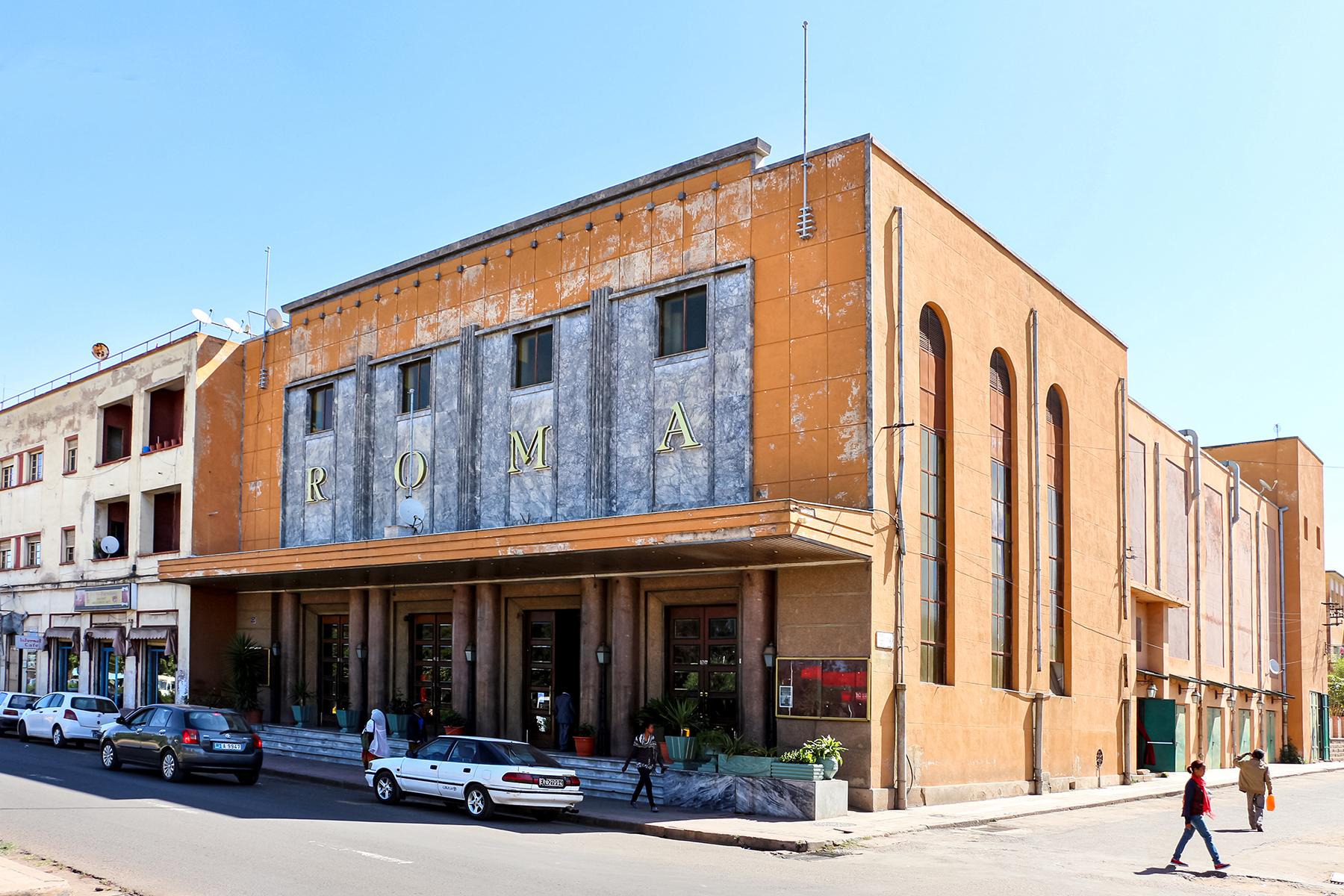

PHOTO: Sailko(CC BY-SA 3.0)/WikimediaCommons

9 OF 10
Cinema Roma

Another old world cinema, this one built in 1937, was originally called “Cinema Dux” but had to change its name because Mussolini refused to approve it. Why? Il Duce apparently was miffed the name sounded too much like his title.

Today, locals fill the tables on the terrace underneath the marble façade to sip their cappuccinos. A massive film projector from days gone by sits in the middle of the café and the walls are lined with vintage movie posters.

The theater, which was modernized in the 1990s, is the most popular cinema in town. Screenings of outdated American movies and Eritrean shows are the big attractions.
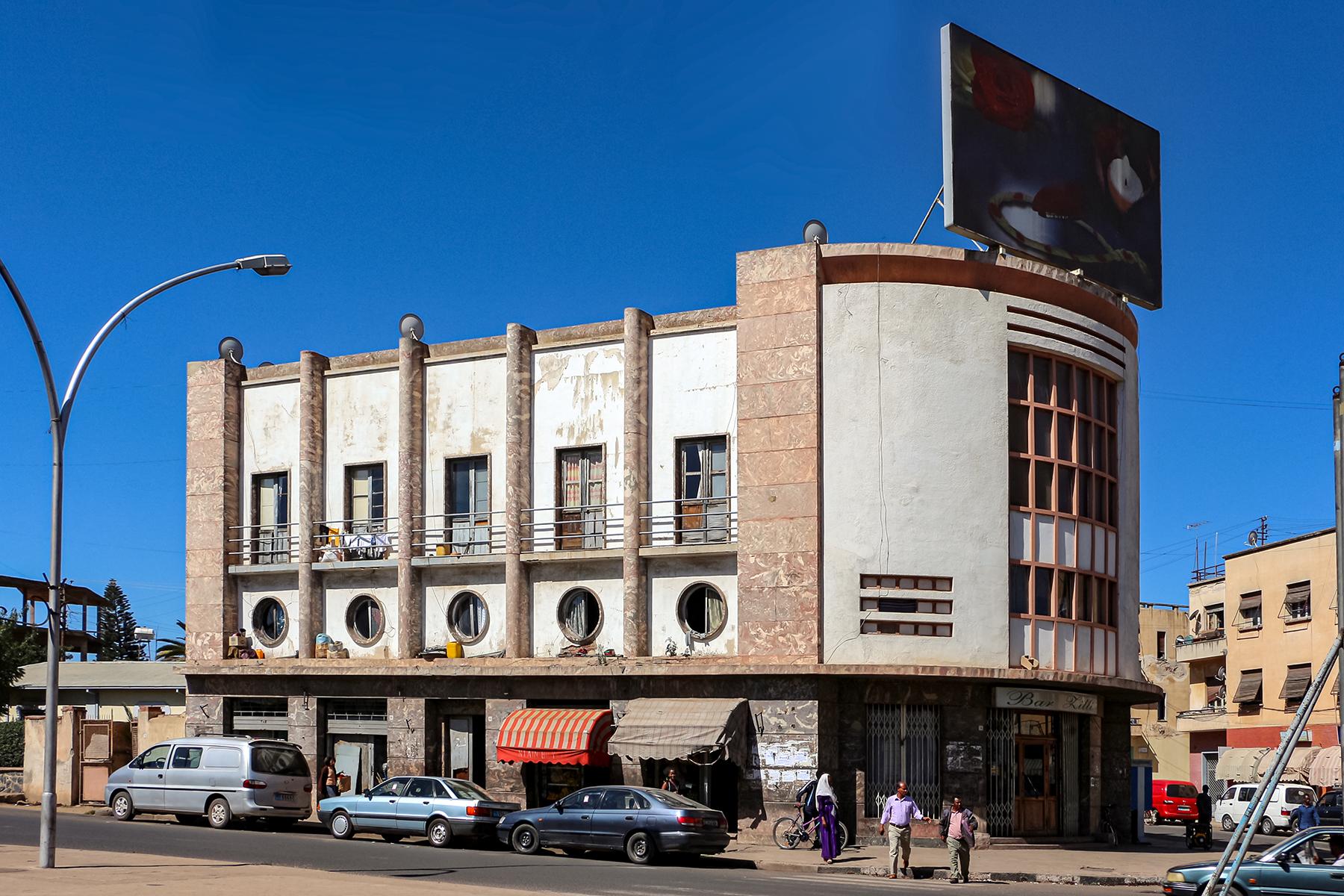

PHOTO: Sailko(CC BY-SA 3.0)/WikimediaCommons

10 OF 10
Bar Zilli

Take a load off in the 1930s bar designed to look like an old-timey radio. The porthole windows evoke radio dials or tuning knobs. The curved façade with a mix of central vertical windows and small horizontal strips at the corners are the reasons why experts have called this structure “idiosyncratic” and “distinctive.”

Inside, it’s like stepping back in time. The place is known for its healthy pours of Asmara Dry Gin, a spirit brewed and bottled locally that is not for the faint of heart. The local Asmara Beer, which comes in lager, draught and stout, is probably a better choice for most.

Whatever your poison, Bar Zilli is a charming place to take a break from the sun and chat with some locals. The main languages spoken in Eritrea are Tigrinya and Arabic, but English (and Italian, of course) are widely understood.
Last edited by Zmeselo on 28 Aug 2019, 18:27, edited 2 times in total.

eden
Member+
Posts: 9980
Joined: 15 Jan 2009, 14:09

Re: TICAD7

Post by eden » 28 Aug 2019, 17:30

young boys set the wooden pins by hand after each toss
That was horrifying to see. I saw this last month in Asmara. Besides, all the photos on the walls show no name Italian players and no natives. This was disturbing. I didn't post all this because it was a shame to Eritreans today. But here you are posting it asif this is a proud thing. Hifer eske

Zmeselo
Senior Member+
Posts: 36760
Joined: 30 Jul 2010, 20:43

Re: TICAD7

Post by Zmeselo » 28 Aug 2019, 17:35

Kidi hasawit. QeTefti--loQmaxat, hzbi.

NbAt Hargex natatkum, ejeb ayblenan iyu.

quindibu
Member
Posts: 3279
Joined: 31 Dec 2010, 13:17

Re: TICAD7

Post by quindibu » 28 Aug 2019, 17:37

eden wrote:
28 Aug 2019, 17:30
young boys set the wooden pins by hand after each toss
That was horrifying to see. I saw this last month in Asmara. Besides, all the photos on the walls show no name Italian players and no natives. This was disturbing. I didn't post all this because it was a shame to Eritreans today. But here you are posting it asif this is a proud thing. Hifer eske
:lol: :lol:

Agame talking about dignity is classic!

Zmeselo
Senior Member+
Posts: 36760
Joined: 30 Jul 2010, 20:43

Re: TICAD7

Post by Zmeselo » 28 Aug 2019, 18:23


Seble Ephrem (@SebleEphrem) Tweeted:

Respect for the environment, safeguarding the ecosystem, ensuring a sustainable flora & fauna renewal- are crucial considerations so Eritrea is not exploited by a selfish uncaring trampling industry of adventure seekers with no social conscience. #tourism


Zmeselo
Senior Member+
Posts: 36760
Joined: 30 Jul 2010, 20:43

Re: TICAD7

Post by Zmeselo » 28 Aug 2019, 18:48

Eyewitness Eritrea: Reflections from a Ghanaian Perspective

TESFANEWS

28 AUG 2019


Is there anything Ghana can learn from Eritrea?
I feel so honored to be a part of this memorable experience. I consider it a great pleasure to have been able to meet so many incredible people in Eritrea and to travel throughout the country to Massawa, Mendefera, Keren and so many other places. I have learned many lessons on this journey that I will carry with me for the rest of my life. (Photo credit : Rose Essiem)


BY ROSE A. ESSIEM

https://www.tesfanews.net/eyewitness-er ... ssion=true

2019 marks the 400 year that the first slaves from Africa were forcefully displaced to Jamestown, Virginia. To commemorate this chilling moment, President Nana Akufo-Addo of the Republic of Ghana, my home country, formally declared in 2018 that 2019 would be marked the “Year of Return.

Since the launch of the Year of Return, several members of the Diaspora and people all around the world have descended on the shores of Ghana to partake in the countless historical and cultural events and activities intended to educate the masses of Ghana’s rich history.

Just this year, Ghana has been recognized as the fastest growing economies https://www.bloomberg.com/news/articles ... cast-chart in the world, it has been heralded as the “next big tourist destination,” https://www.cnn.com/travel/article/ghan ... index.html and a prime destination for business and investments.

Born and raised in the heart of Accra, Ghana, all of this made me proud. I came to the United States ashamed of my heritage and often hid it from others, but as an adult, I have never been so eager to share this part of my identify with others.

Despite all of these notable milestones, some opinions believe that the Ghana’s leaders have failed its people; and I agree.

My recent trip to Eritrea was filled with so many emotions. From my experience, Africans learn more about European and American history and culture than we do about our neighboring countries. As a Ghanaian, I did not have the luxury of learning a lot about other African countries and so I brace myself every time I step foot on new African soil. But what I experienced in Eritrea challenged and stretched me in ways I could have not imagined. I often wondered if I was really in Africa because of the cleanliness of the tiled sidewalks and paved streets, the genuine kindness and generosity of the people and get this, no traffic!


Outside the Education Ministry in Asmara. (Photo By : Karen Nguyen )

I was taken back by the lack of visible signs of socio-economic disparity and shocked when I met with the nation’s leaders and business owners who wore the same sandals ordinary Eritreans wore, and did not roam with security details or personal cars. The Eritrean system was a shock to my part of West African system. It contradicted so many of what I have experienced as a Ghanaian all my life.

For the first time in my life, it felt as if I was getting an intensive history lesson on who we are as Africans. It
was refreshing to witness first hand just how people-centered Eritreans are and the commitment of the government and its people in ensuring that everyone benefits from the economic development agenda.

In Eritrea, citizens are obligated to actively participate in the development of the nation and its people. Schools are supported not only by the government, but by the communities where they are based. Education and healthcare are free, children are taught in their own languages, farming communities mobilize, with little assistance from the government, to build irrigation systems to support with water conservation efforts, and perhaps the most intriguing observation, corruption is non-existent.

As I reflect on the transformational experience I had in Eritrea and compare it to the realities of my own country, I am reminded of Mark 8:36 which says, “For what shall it profit a man, if he shall gain the whole world, and lose his own soul?”


A picture of a dam in Mendefera. It was amazing to see that the Eritreans are working with the semi-arid climate around them and building dams around the country so they can acquire water to use in agriculture.

From being the first in Africa to earn its independence from colonial masters, to now being recognized as a premier tourist destination, it is easy to assume that Ghana (and Ghanaians) have done very well. Despite all its efforts, socio-economic disparity is high, many of the country’s infrastructure remain undeveloped, ordinary citizens are constantly left in the dark with unscheduled electricity outages, and the education and healthcare systems are disastrous.

Ghana may have gained a lot of fame and fortune, but corruption is rampant and many of its citizens remain hopeless. Like Ghana, Eritrea’s cultural heritage is heavily steeped in community. My hope is that in all of the excitement, Ghana will pause and carefully look to Eritrea as an example for how it ought to approach its stickiest problems.

Zmeselo
Senior Member+
Posts: 36760
Joined: 30 Jul 2010, 20:43

Re: TICAD7

Post by Zmeselo » 28 Aug 2019, 18:54

Seamus Cornelius (@CorneliusSeamus) Tweeted:

Good to be back in Asmara, Eritrea.


Post Reply