Ethiopian News, Current Affairs and Opinion Forum
Zmeselo
Senior Member+
Posts: 37580
Joined: 30 Jul 2010, 20:43

The biggest misconception about Eritrea's ports?

Post by Zmeselo » 16 Aug 2026, 15:50

That their future depends entirely on Ethiopia.


My latest analysis explores 5 pathways for Eritrea to build a maritime economy, with or without Ethiopian transit cargo.
Daniel Teklai


Last edited by Zmeselo on 16 Aug 2026, 17:26, edited 1 time in total.

Zmeselo
Senior Member+
Posts: 37580
Joined: 30 Jul 2010, 20:43

Re: The biggest misconception about Eritrea's ports?

Post by Zmeselo » 16 Aug 2026, 16:18


Politics | Eritrea
Eritrea, a rising power along a global shipping artery

Martina Schwikowski

https://www.dw.com/en/eritrea-horn-of-a ... a-78335316

August 13, 2026

Amid growing tensions and security risks in the Horn of Africa, Eritrea, with its strategically important coastal points on the Red Sea, is emerging as an important player in the region.


Eritrea's location at the Bab Al-Mandeb Strait is an asset for the autocratic nation, as partner from near and far seek access to the Red SeaImage: ABACA/picture alliance

Across the Horn of Africa, https://www.dw.com/en/horn-of-africa/t-38451250 geopolitical interests of various countries continue to cause tensions and conflict as part of the growing competition for political influence over the region.

In its own right, the small country of Eritrea https://www.dw.com/en/eritrea/t-66187188 appears to be gaining in importance within this context: The autocratic state run by long-standing ruler Isaias Afwerki https://www.dw.com/en/from-liberator-to ... a-65708163 controls strategically important coastal points on the Red Sea, especially with its ports of Assab and Massawa.

In July, a series of diplomatic consultations in Cairo involving regional powers like Egypt, Somalia, https://www.dw.com/en/somalia/t-64337951 Eritrea, and a high-ranking US envoy highlighted Eritrea's growing role in helping to coordinate approaches to resolving serious security challenges in the Horn of Africa and the Red Sea, and to facilitate trade.

Eritrea's unique location along this maritime route is notably becoming more and more strategic in light of international trade conflicts. The small nation's coastline near the Bab-al-Mandab Strait stretches for more than 1,000 kilometers (621.4 miles), bordering Sudan to the northwest and Djibouti to the southeast.

But Eritrea's main strategic importance relies on who is on the other side of the strait, which at its narrowest point measures less than 30 kilometers.

A small country at a strategically important location
Yemen lies on the other side of the Red Sea, which makes Eritrea's location particularly interesting, as Yemen is in a state of crisis and maritime security in the region is at risk,
Abdurahman Sayed, director of the Horn of Africa Centre for Regional Integration (CRI) in London, told DW.
The only safe route in this area runs through Eritrea, where there are currently no security concerns.
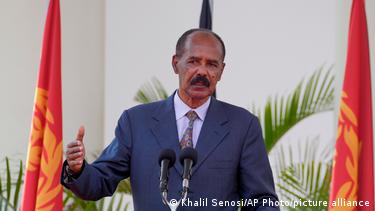
Eritrean President Isaias Afwerki has been ruling the country since its independence in 1993 as a strict one-party authoritarian regime Image: Khalil Senosi/AP Photo/picture alliance

The Houthi militia, https://www.dw.com/en/houthis/t-67629191 propped up by Iran, have been attacking merchant ships in the Red Sea from the Yemeni coastline.

For the past ten years, Yemen https://www.dw.com/en/yemen/t-38381376 has also been witnessing one of the world's worst humanitarian crises in its midst: Ongoing violence, economic collapse, droughts and floods have exacerbated the suffering in the country, according to a report published by the UN Refugee Agency last month.

Sayed meanwhile emphasizes that in Eritrea, the strong dictatorship entrenched for decades does not tolerate any type of dissent. In many international freedom indexes, the African nation often only comes second to North Korea.

Since the country was officially founded 32 years ago, there have been no elections in the one-party state under long-time ruler Afwerki.

A unique sense of stability — for now

But this is also exactly why there are no violent conflicts in the country. Compared to other players in the broader region like Ethiopia, Sudan, and Yemen, Eritrea appears to be an island of peace where it is easy to do business.
For this reason, all countries — including regional powers such as Saudi Arabia and Egypt, which controls the Suez Canal — want to maintain stable relations with Eritrea,
Sayed highlights.

At the same time, this could eventually prove to be the country's Achilles' heel:
The country is ruled by a single man, and there are no constitutional institutions. That makes the state very vulnerable should this strongman be removed from power,
says Sayed.

There is no strong figure in the 80-year-old autocrat's inner circle seen as a clear successor. This has raised some concern that the security situation could collapse once the president might no longer be in power, according to Sayed.


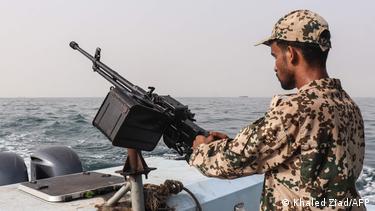
This sailor from Yemen's internationally recognized government is in charge of controlling activity on the Red SeaImage: Khaled Ziad/AFP

Alternative to the Strait of Hormuz

Still, Eritrea continues to exert its influence as the Red Sea has emerged a crucial sea route for the world, and especially for the Gulf states — Saudi Arabia, Kuwait, Bahrain, Qatar and the United Arab Emirates, according to Sayed.

The war with Iran https://www.dw.com/en/iran-war/t-76168615 has further reinforced the nation's position, as this crisis has once again shown the central geopolitical importance of maritime chokepoints such as Hormuz and Bab el-Mandeb.

A viable alternative, should the Strait of Hormuz https://www.dw.com/en/strait-of-hormuz/t-76193780 remain repeatedly blocked, would be for these Gulf nations and their partners to find routes via Saudi ports located further up on the Red Sea.

While the Saudis have pipelines running from some of the interior regions of the country from where oil is extracted and produced to the port of Yanbu-Al-Bahr on the Red Sea, this alternative route could easily be compromised when it comes to security, potentially driving up oil prices even higher than what they currently are.
For this reason, Eritrea today is of great strategic importance. This has been the case for centuries and will continue to be the case,
Sayed emphasizes.

Ethiopia demands direct Red Sea access

Meanwhile, Eritrea's neighbors, particularly landlocked Ethiopia, https://www.dw.com/en/ethiopia/t-55807318 are fighting hard to maintain access to the Red Sea as a trade route, Sayed adds, in particular for oil exports from the Horn of Africa to the rest of the world, especially to Europe and the Americas.

For decades, Djibouti https://www.dw.com/en/djibouti/t-64653244 has dominated regional trade logistics as Ethiopia's most important seaport partner, while Eritrea has been sidelined economically.

But Ethiopian Prime Minister Abiy Ahmed https://www.dw.com/en/ethiopias-pm-abiy ... a-77647920 has for years been demanding sovereign access to the sea https://www.dw.com/en/port-assab-become ... a-75453946 — more than three decades after the country's split with Eritrea: when Eritrea gained its independence in 1993, Ethiopia lost its direct access, and has since been relying on its neighbors for all its sea trade.

However, maintaining a sense of neutrality and balance is proving to be a walk on a tightrope: Earlier in 2026, the fragile relations with between Ethiopia and Eritrea's Asmara region https://www.dw.com/en/fears-of-renewed- ... a-78242293 had already threatened to escalate amid a dispute over Ethiopia's access to the maritime trade route.
The key context for Eritrea's recent strategic maneuvers in the Horn of Africa and the Red Sea is the escalating tensions with Ethiopia,
https://www.dw.com/en/a-look-at-eritrea ... a-73283778

says Michael Woldemariam, a researcher at the School of Public Policy at the University of Maryland and the Atlantic Council.
Asmara is seeking to forge partnerships that can serve as a counterweight to Addis Ababa. Its recent diplomatic outreach to Egypt, Somalia, the United Arab Emirates' armed forces, Saudi Arabia, Ethiopian opposition groups, and even the US should be viewed against this backdrop,
he tells DW.

Meanwhile, a new trade corridor on the Red Sea is also taking shape: In May 2026, Eritrea and Egypt https://www.dw.com/en/egypt/t-18332328 signed an agreement to establish direct freight connections between Egyptian and Eritrean ports on the Red Sea to expand independent trade and supply chains in the region.

A grave record of human rights violations

Still, there are no long-term guarantees with Eritrea, since the country's short history is almost entirely marked by violence, resulting in many people seeking a better life elsewhere.
The first people fled Eritrea for Sudan in 1967 to escape [former Ethiopian ruler] Haile Selassie's imperial army. In the 1980s, people fled in large numbers from the Ethiopian military dictatorship. Since 2001, people have once again been fleeing in large numbers from human rights violations, military service, war, and a lack of prospects,
says Magnus Treiber, a migration researcher specializing in the Horn of Africa at the Institute of Ethnology at the University of Munich.
The causes of flight have hardly changed. However, since the European Union now offers virtually no opportunities to seek asylum, Eritreans are now fleeing all over the world.
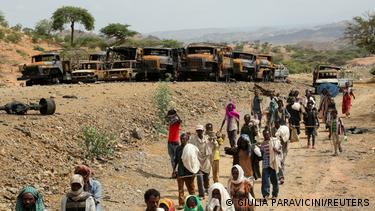
Displacement is rife around the Horn of Africa, where various conflicts repeatedly force entire populations to seek safety elsewhereImage: GIULIA PARAVICINI/REUTERS

At least 700,000 people have left the country since its founding, which is about a fifth of its total population. The country's population growth, meanwhile, is under 2% — a low number compared to many countries in the region.

Edited by: Sertan Sanderson
Last edited by Zmeselo on 17 Aug 2026, 06:33, edited 1 time in total.

Zmeselo
Senior Member+
Posts: 37580
Joined: 30 Jul 2010, 20:43

Re: The biggest misconception about Eritrea's ports?

Post by Zmeselo » 16 Aug 2026, 17:23


ዓሊ ሱሌማን ተጸንቢሩዋ ዘሎ ጋንታ ኣልማስሪ ኣብ ዝለዓለ ሊግ ግብጺ ኣብ ዝርከባ ሓሙሽተ ቀዳሞት ጋንታታት ሓንቲ ምዃና ካብቲ ሃገር ዝተፈነወ ዜና ኣፍሊጡ ኣሎ።

እዚ ድማ ንዓሊ ኣብ ዋንጫ ክለባት ኣፍሪቃን ዓረብን ክጻወት ዕድል ክኸፍተሉ'ዩ።


World Football
Al Masry sign Eritrean striker Ali Suleiman on four-year deal

Elikplim Bokor

https://africasoccer.com/al-masry-sign- ... year-deal/

August 15, 2026


Al Masry have signed Eritrean striker Ali Suleiman from Kahrabaa Ismailia for 15m Egyptian pounds, with a further 10m available in performance-related bonuses.

The deal was completed in the final hours before the transfer registration deadline, with Al Masry sending bank guarantees to Kahrabaa Ismailia to secure the move.

Suleiman has signed a four-year contract with the Port Said club after an outstanding campaign in front of goal. He scored 12 times last season, finishing second in the Egyptian Premier League scoring charts, one goal behind top scorer Ahmed Yasser Rayan.

The agreement was concluded despite logistical difficulties on the final day of registration. Banks were closed for the weekly holiday on Saturday, while Al Masry chairman Kamel Abo Ali was abroad. The club therefore provided the required bank guarantees to Kahrabaa Ismailia to complete the transfer.

Suleiman joins Al Masry after Kahrabaa Ismailia were relegated to the Professional League. They finished 11th with 32 points.

Al Masry ended last season in fifth place in the league and have been strengthening their squad ahead of the new campaign under manager Emad El Nahhas.

The club’s arrivals also include Moroccan goalkeeper Abdallah Zayani, Mustafa El-Ash, Mohamed Shokry, Algerian defender Khair El-Din Toual, Mohamed AhmedSeha” and Yassin El Mallah.

Suleiman’s signing gives Al Masry an additional attacking option after his prolific season with Kahrabaa Ismailia. His 12 league goals placed him just one behind Ahmed Yasser Rayan in the race for the division’s top-scoring award.

Al Masry will begin their Egyptian Premier League campaign against Smouha in the opening round. The match will be played at New Suez Stadium.

The move was announced after an agreement between the two clubs was reached shortly before the registration window closed. The financial terms include the guaranteed 15m Egyptian pounds and a possible 10m in bonuses linked to the player’s performances.


______________


🇪🇷Good luck to Denden FC women, as they head to Rwanda for the CECAFA Championship! ⚽️

They’ll face Rayon Sports (Rwanda), Mafunzo (Zanzibar), and Joint Stars (South Sudan) in Group A.


_______________


African U23 Champion Awet Aman (@istanbulconti) continues with his stellar run!

🥈 2nd place today at the 2026 Ordu Black Sea Classic (1.2) in Turkey with over 119.1 km. earning 30 @UCI_cycling points for him, his team and his country

Kudos, Awet! Congrats to the whole team and its members!
Last edited by Zmeselo on 16 Aug 2026, 19:38, edited 2 times in total.

Zmeselo
Senior Member+
Posts: 37580
Joined: 30 Jul 2010, 20:43

Re: The biggest misconception about Eritrea's ports?

Post by Zmeselo » 16 Aug 2026, 17:53


Q & A
Technology as a Bridge Between Generations: A Conversation with Shambko Apps Group

By: Kidane Shimendi

https://shabait.com/2026/08/15/technolo ... pps-group/

Aug 15, 2026


Every year, the community of young tech innovators in Eritrea continues to expand. Across vital national development sectors—including education, healthcare, and agriculture—many young professionals are applying technology to drive tangible progress. Among them is the Shambko Apps Group, a collective using software engineering skills to bridge generational gaps and preserve national culture through specialized mobile applications. Eritrea Profile spoke with the group to discuss their recent achievements, vision, and plans.

Please introduce yourselves to our readers.

Yacob Merhawi: I was born in 1982 and graduated in pedagogy from the Asmara Teachers Training Institute (ATTI), in 2002. Over the past 24 years, I have served as a teacher, head of pedagogy, and director for Tigrinya language training programs. In 2011, I collaborated with Eng. Sham Mesfin to co-develop Tigrinya language-learning software, and I have authored seven educational textbooks for students. I also contribute regularly as a columnist for the Termuma and Crossword Puzzle sections in the Hadas Eritrea newspaper. Within Shambko Apps Group, I draw on this background to serve as project coordinator and language expert.


Samson Girmay: Born in 1994, I earned my degree in Computer Technology from the College of Engineering and Technology, in 2012. Assigned to the Eritrean Air Force, I have spent the last decade designing software and mobile applications for operational and administrative use. My projects include inventory management systems for the Air Force, specialized mobile platforms for educators, and a container control system implemented at Massawa Port. I also teach computer science and provide IT consulting for private institutions.

Yonatan Tesfu: Born in 1997, I graduated from Mai Nefhi College in 2020 with a degree in Computer Applications. I currently work at the Beit Gergish Adi Halo workshop, focusing on Android application development and systems programming. In 2023, I designed a student record management application that is currently used by the Kidane Mihret Church in Sembel.

Nazrawi Gidey: Born in 2003, I studied Computer Applications at the College of Technology and Engineering and currently work as an IT specialist at Asmara International Airport. Passionate about software architecture, I have built custom applications for local organizations and have co-developed five apps with the Shambko Apps Group.


What is the meaning behind the name “Shambko Apps Group”?

Shambko is the Tigrinya word for a traditional flute—a simple yet iconic musical instrument known for its clear, resonant sound. Historically, pastoral herders crafted the shambko using readily available natural materials to entertain themselves and their herds. We selected this name to reflect our operational philosophy: creating high-impact, accessible, and intuitive educational tools using practical local resources.


What is the core vision of your group?

Our overarching goal is to leverage digital technology to strengthen academic performance by designing mobile apps aligned with the official national curriculum, across all nine Eritrean languages.

Our initial research highlighted a clear gap: there was virtually no digital educational software, mobile applications, or video content available in local languages that mirrored the national school syllabus. To address this need, we began by developing Tigrinya-language platforms and plan to expand into Eritrea’s eight other national languages.

What applications has the group developed so far?

We have successfully launched five mobile applications:

‘Fidelatey’ (My Alphabets): Teaches the Ge’ez script, using standard classroom pedagogical methods. Featuring interactive exercises, audio guides, and quizzes, it is designed primarily for kindergarten and primary school pupils.

Zitemesaqele Qalat’ (Crossword Puzzle): A language enrichment tool featuring vertical and horizontal word grids. It allows students and adults to expand their Tigrinya vocabulary through engaging word puzzles.


Habesha Jigsaw: A puzzle application showcasing high-resolution imagery of Eritrea’s natural landscapes, historical monuments, traditional artifacts, and prominent figures, reinforcing cultural heritage while building spatial reasoning skills.

Qalat Dileyu’ (Word Search): A classic word-search platform featuring multiple difficulty levels to help users systematically build vocabulary skills in Tigrinya.

Gidel Dede’ (Dede’s Puzzle): Focused on mathematics and logic, this numerical puzzle helps primary students build core arithmetic and analytical skills. Players use basic addition and subtraction operations on an eight-number setup to derive missing values.

What are your plans?

Our primary goal is to adapt our existing frameworks into Eritrea’s other national languages. Additionally, we are prioritizing mathematics education. Given the recent national emphasis on improving STEM performance, we are developing gamified modules to simplify core mathematical concepts for young learners.

Furthermore, all our applications are structured to serve members of the Eritrean diaspora, offering young people abroad an accessible way to learn their native languages and maintain ties to their cultural roots.


Do you have any message for our readers?

We invite fellow software developers, translators, and educators — particularly native speakers of Eritrea’s various national languages— to collaborate with us on this initiative. By combining our efforts, we can expand digital learning tools for young students across the country.

Finally, we extend our gratitude to everyone who has supported our work. We welcome partnership opportunities with relevant institutions, ministries, and community organizations to help us scale these tools nationally.


______________


General | Nation Building
Preserving Tradition Through Innovation

https://shabait.com/2026/08/15/preservi ... nnovation/

Aug 15, 2026


Engineer Amanuel Asgedom’s Improved Top-bar Beehive for Eritrean Beekeepers

Innovation often begins with observing everyday challenges and finding practical solutions. For Engineer Amanuel Asgedom, Head of the Ministry of Agriculture Office in Keren Sub-Zone, Anseba Region, that journey began while working closely with farmers during agricultural extension visits. At the Eritrean National Festival-2026, Engineer Amanuel presented an improved beehive that combines Eritrea’s traditional beekeeping heritage with modern scientific principles. His innovation demonstrates that meaningful progress can be achieved without abandoning local knowledge and practices.

Building on Tradition

For generations, Eritrean farmers have relied on traditional cylindrical beehives made from locally available materials. While these hives have served as the backbone of honey production across the country, they also present several management challenges. Harvesting honey can be difficult, hive inspection is limited, and transporting or maintaining the hives often requires considerable effort.

Rather than replacing these traditional hives with expensive imported alternatives, Engineer Amanuel chose a different approach.
We wanted to preserve the traditional hive while integrating modern scientific improvements,
he explains.

His design retains the familiar structure and uses materials that farmers already know well—bamboo, tree-branches, straw, grasses, and clay. The major innovation is the addition of a lightweight, inexpensive welded metal frame built to internationally recognized standards. The improved top-bar hive also incorporates removable wooden frames that allow bees to construct honeycombs naturally while making hive management significantly easier.


A Farmer-Friendly Innovation

One of the greatest strengths of the improved top-bar beehive is its accessibility. Most of the construction materials are readily available in local communities, allowing farmers to build and repair the hive themselves with minimal expense. Only a few standardized metal components require fabrication, making the overall cost affordable for small-scale beekeepers. Beyond affordability, the design offers practical advantages. It is easier to inspect, maintain, transport, and harvest from, while still preserving the natural environment that bees require for healthy colony development.

From Field Observations to National Recognition

The idea for the improved hive emerged during agricultural extension work in 2024, when Ministry of Agriculture staff visited farming communities throughout Keren Sub-Zone. During these visits, they identified the difficulties farmers faced in managing traditional hives. Motivated by these observations, Engineer Amanuel developed the improved design and presented it at the Anseba Regional Innovation and Technology Competition. The innovation attracted considerable attention and was later showcased at a regional exhibition organized in collaboration with development partners.

Strong Institutional Support

Engineer Amanuel credits much of the project’s success to the support of the Ministry of Agriculture, agricultural extension experts, development partners, and local institutions. Technical specialists have provided professional guidance to refine the design, while exhibitions and public demonstrations have helped introduce the innovation to farmers and the wider public. According to Engineer Amanuel, visitors frequently spend considerable time discussing the new hive and asking questions about its construction and use. The response has been overwhelmingly positive. Farmers appreciate that the hive is affordable, easy to maintain, and built using familiar materials.

Looking Ahead

Although the innovation has already gained recognition, Engineer Amanuel believes continued collaboration will be essential for its long-term success. He emphasizes the importance of strong coordination among government institutions, development partners, researchers, and agricultural extension workers. Careful planning, regular evaluation, and recognition of successful innovators will encourage further improvements in Eritrea’s agricultural sector. He also encourages professionals and extension staff to spend more time with farmers in rural communities, where valuable innovations often originate.
Scientific knowledge and innovation should reach every part of the country,
he says.


A Vision Rooted in Local Knowledge

Engineer Amanuel’s improved top-bar beehive is more than a new agricultural technology—it represents a thoughtful blend of tradition and innovation. By respecting indigenous knowledge while applying modern engineering principles, he has created a solution that is practical, affordable, and well suited to Eritrea’s rural communities.

As the Ministry of Agriculture continues to promote improved beekeeping practices, innovations like this demonstrate how locally developed solutions can strengthen food and nutrition security, increase honey production, improve farmers’ livelihoods, and contribute to sustainable agricultural development across Eritrea.

Prepared by: Tsinat Yibrah
Translated by: Sophia Fekadu
Public Relations Division, Ministry of Agriculture

Mesob
Member
Posts: 3098
Joined: 23 Dec 2013, 21:03

Re: The biggest misconception about Eritrea's ports?

Post by Mesob » 16 Aug 2026, 18:34

What are you blabbering about, Maritime assss !? An Arab Abid Concubine eunuch slave is dreaming of building a Maritime Power in the Red Sea?
Having heard, the eunuch slave dreaming, the Jalabia clad Yemeni Shia Houthis are cackling.
How can an Arab slave, who can not even protect his own assss from the savage Arabs in Egypt and the Arab Passage own a sterile dream?
How can an Arab Abid who can not defend his ow wife, sisters, sons and daughters from the rape and savagery of the marauding Arabs, with thousands more of his refugees in camps in Ethiopia, South Sudan and Uganda hallucinate of Maritime Power!
Is the Abeed slave even treated as human being by the opportunist, greedy and savage Arab?
Is the Arab slave of Eritrea even allowed to touch the sea, enjoy to sail or fish and consume any seafood from the Red Sea, while the opportunist Egyptian Arab is sending hundreds of fishing boats?


Fed_Up
Senior Member+
Posts: 24048
Joined: 15 Apr 2009, 10:50

Re: The biggest misconception about Eritrea's ports?

Post by Fed_Up » 17 Aug 2026, 03:09

Zmeselo wrote:
16 Aug 2026, 16:18


Politics | Eritrea
Eritrea, a rising power along a global shipping artery

Martina Schwikowski

https://www.dw.com/en/eritrea-horn-of-a ... a-78335316

August 13, 2026

Amid growing tensions and security risks in the Horn of Africa, Eritrea, with its strategically important coastal points on the Red Sea, is emerging as an important player in the region.


Eritrea's location at the Bab Al-Mandeb Strait is an asset for the autocratic nation, as partner from near and far seek access to the Red SeaImage: ABACA/picture alliance

Across the Horn of Africa, https://www.dw.com/en/horn-of-africa/t-38451250 geopolitical interests of various countries continue to cause tensions and conflict as part of the growing competition for political influence over the region.

In its own right, the small country of Eritrea https://www.dw.com/en/eritrea/t-66187188 appears to be gaining in importance within this context: The autocratic state run by long-standing ruler Isaias Afwerki https://www.dw.com/en/from-liberator-to ... a-65708163 controls strategically important coastal points on the Red Sea, especially with its ports of Assab and Massawa.

In July, a series of diplomatic consultations in Cairo involving regional powers like Egypt, Somalia, https://www.dw.com/en/somalia/t-64337951 Eritrea, and a high-ranking US envoy highlighted Eritrea's growing role in helping to coordinate approaches to resolving serious security challenges in the Horn of Africa and the Red Sea, and to facilitate trade.

Eritrea's unique location along this maritime route is notably becoming more and more strategic in light of international trade conflicts. The small nation's coastline near the Bab-al-Mandab Strait stretches for more than 1,000 kilometers (621.4 miles), bordering Sudan to the northwest and Djibouti to the southeast.

But Eritrea's main strategic importance relies on who is on the other side of the strait, which at its narrowest point measures less than 30 kilometers.

A small country at a strategically important location
Yemen lies on the other side of the Red Sea, which makes Eritrea's location particularly interesting, as Yemen is in a state of crisis and maritime security in the region is at risk,
Abdurahman Sayed, director of the Horn of Africa Centre for Regional Integration (CRI) in London, told DW.
The only safe route in this area runs through Eritrea, where there are currently no security concerns.

Eritrean President Isaias Afwerki has been ruling the country since its independence in 1993 as a strict one-party authoritarian regimeImage: Khalil Senosi/AP Photo/picture alliance

The Houthi militia, https://www.dw.com/en/houthis/t-67629191 propped up by Iran, have been attacking merchant ships in the Red Sea from the Yemeni coastline.

For the past ten years, Yemen https://www.dw.com/en/yemen/t-38381376 has also been witnessing one of the world's worst humanitarian crises in its midst: Ongoing violence, economic collapse, droughts and floods have exacerbated the suffering in the country, according to a report published by the UN Refugee Agency last month.

Sayed meanwhile emphasizes that in Eritrea, the strong dictatorship entrenched for decades does not tolerate any type of dissent. In many international freedom indexes, the African nation often only comes second to North Korea.

Since the country was officially founded 32 years ago, there have been no elections in the one-party state under long-time ruler Afwerki.

A unique sense of stability — for now

But this is also exactly why there are no violent conflicts in the country. Compared to other players in the broader region like Ethiopia, Sudan, and Yemen, Eritrea appears to be an island of peace where it is easy to do business.
For this reason, all countries — including regional powers such as Saudi Arabia and Egypt, which controls the Suez Canal — want to maintain stable relations with Eritrea,
Sayed highlights.

At the same time, this could eventually prove to be the country's Achilles' heel:
The country is ruled by a single man, and there are no constitutional institutions. That makes the state very vulnerable should this strongman be removed from power,
says Sayed.

There is no strong figure in the 80-year-old autocrat's inner circle seen as a clear successor. This has raised some concern that the security situation could collapse once the president might no longer be in power, according to Sayed.


This sailor from Yemen's internationally recognized government is in charge of controlling activity on the Red SeaImage: Khaled Ziad/AFP

Alternative to the Strait of Hormuz

Still, Eritrea continues to exert its influence as the Red Sea has emerged a crucial sea route for the world, and especially for the Gulf states — Saudi Arabia, Kuwait, Bahrain, Qatar and the United Arab Emirates, according to Sayed.

The war with Iran https://www.dw.com/en/iran-war/t-76168615 has further reinforced the nation's position, as this crisis has once again shown the central geopolitical importance of maritime chokepoints such as Hormuz and Bab el-Mandeb.

A viable alternative, should the Strait of Hormuz https://www.dw.com/en/strait-of-hormuz/t-76193780 remain repeatedly blocked, would be for these Gulf nations and their partners to find routes via Saudi ports located further up on the Red Sea.

While the Saudis have pipelines running from some of the interior regions of the country from where oil is extracted and produced to the port of Yanbu-Al-Bahr on the Red Sea, this alternative route could easily be compromised when it comes to security, potentially driving up oil prices even higher than what they currently are.
For this reason, Eritrea today is of great strategic importance. This has been the case for centuries and will continue to be the case,
Sayed emphasizes.

Ethiopia demands direct Red Sea access

Meanwhile, Eritrea's neighbors, particularly landlocked Ethiopia, https://www.dw.com/en/ethiopia/t-55807318 are fighting hard to maintain access to the Red Sea as a trade route, Sayed adds, in particular for oil exports from the Horn of Africa to the rest of the world, especially to Europe and the Americas.

For decades, Djibouti https://www.dw.com/en/djibouti/t-64653244 has dominated regional trade logistics as Ethiopia's most important seaport partner, while Eritrea has been sidelined economically.

But Ethiopian Prime Minister Abiy Ahmed https://www.dw.com/en/ethiopias-pm-abiy ... a-77647920 has for years been demanding sovereign access to the sea https://www.dw.com/en/port-assab-become ... a-75453946 — more than three decades after the country's split with Eritrea: when Eritrea gained its independence in 1993, Ethiopia lost its direct access, and has since been relying on its neighbors for all its sea trade.

However, maintaining a sense of neutrality and balance is proving to be a walk on a tightrope: Earlier in 2026, the fragile relations with between Ethiopia and Eritrea's Asmara region https://www.dw.com/en/fears-of-renewed- ... a-78242293 had already threatened to escalate amid a dispute over Ethiopia's access to the maritime trade route.
The key context for Eritrea's recent strategic maneuvers in the Horn of Africa and the Red Sea is the escalating tensions with Ethiopia,
https://www.dw.com/en/a-look-at-eritrea ... a-73283778

says Michael Woldemariam, a researcher at the School of Public Policy at the University of Maryland and the Atlantic Council.
Asmara is seeking to forge partnerships that can serve as a counterweight to Addis Ababa. Its recent diplomatic outreach to Egypt, Somalia, the United Arab Emirates' armed forces, Saudi Arabia, Ethiopian opposition groups, and even the US should be viewed against this backdrop,
he tells DW.

Meanwhile, a new trade corridor on the Red Sea is also taking shape: In May 2026, Eritrea and Egypt https://www.dw.com/en/egypt/t-18332328 signed an agreement to establish direct freight connections between Egyptian and Eritrean ports on the Red Sea to expand independent trade and supply chains in the region.

A grave record of human rights violations

Still, there are no long-term guarantees with Eritrea, since the country's short history is almost entirely marked by violence, resulting in many people seeking a better life elsewhere.
The first people fled Eritrea for Sudan in 1967 to escape [former Ethiopian ruler] Haile Selassie's imperial army. In the 1980s, people fled in large numbers from the Ethiopian military dictatorship. Since 2001, people have once again been fleeing in large numbers from human rights violations, military service, war, and a lack of prospects,
says Magnus Treiber, a migration researcher specializing in the Horn of Africa at the Institute of Ethnology at the University of Munich.
The causes of flight have hardly changed. However, since the European Union now offers virtually no opportunities to seek asylum, Eritreans are now fleeing all over the world.

Displacement is rife around the Horn of Africa, where various conflicts repeatedly force entire populations to seek safety elsewhereImage: GIULIA PARAVICINI/REUTERS

At least 700,000 people have left the country since its founding, which is about a fifth of its total population. The country's population growth, meanwhile, is under 2% — a low number compared to many countries in the region.

Edited by: Sertan Sanderson
^^^This article is a must-read!

Zmeselo
Senior Member+
Posts: 37580
Joined: 30 Jul 2010, 20:43

Re: The biggest misconception about Eritrea's ports?

Post by Zmeselo » 17 Aug 2026, 06:54


General
Eritrea’s Sovereignty Is Not Negotiable: Neither Is the Sovereignty of Any Other African Nation

https://shabait.com/2026/08/17/eritreas ... an-nation/

Aug 17, 2026


The Embassy of the State of Eritrea has taken note of recent articles by Deutsche Welle (DW), “Eritrea: Key Player in the Geopolitical Gamble at the Horn,” and Foreign Policy Journal, “Eritrea Emerges as a Critical Strategic Player in the Horn of Africa’s Shifting Geopolitical Landscape.

While both acknowledge Eritrea’s strategic importance, domestic stability and growing relevance in the Red Sea and Horn of Africa, they reproduce remarkably similar narratives that distort Eritrea’s history, minimize, and normalizes the implications of Ethiopia’s declared unlawful pursuit of “sovereign access” to the sea, portray Eritrea’s legitimate regional diplomacy as an anti-Ethiopian project, and employ politically loaded characterizations of Eritrea.

At the heart of current Eritrea-Ethiopia tensions is a fundamental question that should not be obscured: commercial access to a port is one matter; sovereignty over another country’s coastline or territory is entirely another.

Eritrea has no territorial claim against Ethiopia, demands no Ethiopian land or resources, and seeks no alteration of Ethiopia’s internationally recognized borders. Eritrea has never, in recorded history, opposed Ethiopia’s legitimate commercial use of regional ports through mutually negotiated arrangements. Landlocked countries throughout the world conduct international commerce through neighboring coastal states without acquiring sovereignty over their territory. In fact, commercial necessity creates opportunities for cooperation among countries; it does not create territorial entitlement.

Ethiopian official rhetoric concerning “sovereign access” to the Red Sea, therefore, cannot be sanitized as a simple dispute over maritime trade. Economic aspiration, demographic size or geographical disadvantage cannot be converted into sovereign entitlement, nor can they justify revising internationally recognized African boundaries. Any suggestion to the contrary, constitutes a flagrant violation of international law and would establish a profoundly destabilizing precedent for the continent.

The historical framing employed in both articles, is equally troubling. DW describes Eritrea as having “split” from Ethiopia, while Foreign Policy Journal asserts that Eritrean independence
stripped Addis Ababa of its direct coastal outlet.
Such terminology reverses historical cause and effect and inadvertently lends legitimacy to contemporary territorial revisionism, such as that by Ethiopian leaders.

The mere truth is that the Eritrean people are endowed with their own, separate, and rich history in the millennia prior to the advent of European colonialism to the African continent. In this respect, Eritrea’s modern territorial boundaries, like those of virtually all African states, were consolidated during European colonial rule, with the Italian colony of Eritrea formally established in 1890. Eritrea subsequently passed through Italian colonial rule, and a ten-year British Military Administration, (BMA), in the immediate aftermath of the Second World War before being linked with Ethiopia under a bogus “Federal Arrangement” to mollify the “overriding” geopolitical interests of major powers and against the expressed will of the Eritrean people.

Moreover, Ethiopia unilaterally abrogated the “Federal Arrangement” ten years later and annexed Eritrea in 1962, precipitating the three decades of protracted armed struggle for independence.

In the internationally supervised referendum of 1993, 99.805 percent of Eritreans voted for independence, after which Eritrea was admitted to the United Nations. To portray this internationally recognized process, as Ethiopia being “stripped” of a coastline is historically prejudicial and legally untenable.

Furthermore, the Eritrea-Ethiopia boundary is neither provisional nor unresolved. Following the 1998–2000 border war, both countries signed the Algiers Agreement and voluntarily submitted the “putative dispute” on some areas on the common boundary – specifically, “Badme and its environs” – to independent international arbitration.

The Eritrea-Ethiopia Boundary Commission (EEBC) rendered its delimitation decision in April 2002 based on the
Colonial Treaties of (1900, 1902, 1910) and applicable international law,
further expressly stipulating, in accordance with other provisions of the Algiers Agreement, that the determination is final and binding.

The articles also attempt to interpret Eritrea’s relations with Egypt, Somalia, Saudi Arabia, the United Arab Emirates, the United States, and other partners primarily as an effort to construct a “counterweight” against Ethiopia.

This is an Ethiopia-centric and reductive interpretation of the legitimate foreign policy of a sovereign state. Eritrea is a Red Sea nation, situated along one of the world’s most consequential maritime corridors. Its international relations naturally encompass maritime security, regional stability, trade, investment, transportation, and bilateral cooperation. Eritrea does not require an Ethiopia-centered explanation for every diplomatic relationship it maintains.

Equally problematic is the contradiction between acknowledging Eritrea’s remarkable stability, while simultaneously disparaging that stability as merely “authoritarian.” The articles invoke terms such as “autocratic,” “repressive,” and “authoritarian,” speculate about institutional collapse after a future leadership transition and reproduce sweeping and pejorative comparisons with “North Korea”. Political labels and hypothetical succession scenarios, are not substitutes for evidence or serious analysis. Eritrea’s political system must be examined within its historical experience, social fabric, national institutions, its people’s unity, and independent nation-building trajectory – not judged exclusively through predetermined ideological templates.

This contradiction is particularly striking because the articles themselves recognize Eritrea as comparatively peaceful, cohesive, and secure, strategically positioned along the Red Sea, and increasingly important to regional and international partners. These realities deserve examination on their own merits, rather than being reframed as evidence of political deficiency.

The overall principle at stake, extends far beyond Eritrea. Africa’s interstate order rests on respect for inherited international colonial boundaries, sovereign equality, and territorial integrity. If established borders can be reopened because one country is larger, landlocked, economically ambitious or considers another state’s territory strategically necessary, virtually no African boundary would remain immune from challenge.

Eritrea claims no territory belonging to another state and seeks peaceful, mutually beneficial relations with Ethiopia and all its neighbors. What is not open to negotiation is Eritrea’s sovereignty and territorial integrity.

Eritrea’s sovereignty is not a geopolitical bargaining chip. It is an internationally recognized legal right, and the same right upon which the security, sovereignty and territorial integrity of every African nation ultimately depend.

Embassy of the State of Eritrea
Washington, D.C.
17 August 2026

Meleket
Member+
Posts: 5299
Joined: 16 Feb 2018, 05:08

Re: The biggest misconception about Eritrea's ports?

Post by Meleket » 17 Aug 2026, 10:07

Meleket wrote:
09 Nov 2022, 10:35
የኤርትራ እና የኢትዮጵያ 146ቱ የጋራ ፈርጦች! - የ146ቱ ካምፖች ወግ!

ጐበዝ እነዚህ 146 የጋራ ፈርጦቻችን ከነ 'ኮኦርዲኔታቸው' በማያሻማ መልኩ “ይግባኝ በማይባልበት” ፍርድ ተወስነው፡ ቁልጭ ብለው ትግባሬን እየጠበቁ የተቀመጡ ናቸው።

https://legal.un.org/riaa/cases/vol_XXVI/771-799.pdf

ታድያ ሃገራችን ኤርትራና ጐረቤቷ ኢትዮጵያ በሰላም ይኖሩ ዘንድ፡ እንዲህ ቢደረግ ምን ይመስላችኋል?

1.) በ146ቱ ነጥቦች፡ በያንዳንዷ ስፍራ የጋራ ወታደራዊ ካምፕ በመገንባት የደንበር ጸጥታ አስከባሪ ሃይል ማስፈር።

2.) በ146ቱ ካምፖች የሚኖሩት የሁለቱ ሃገራት የሰራዊት ብዛት 80 ከኢትዮጵያ (ሁሉን ኢትዮጵያዊ ብሄር ብሄረሰቦች የወከለ እንዲሆን ማለትም ኣልተወከልኩም የሚል ኢትዮጵያዊ ብሄር እንዳይኖር ማለት ነው።) ኤርትራም በበኩሏ ከ80 ያልበለጡ የሰራዊቷ ኣባሎችን በነፍስወከፍ 146ቱ ካምፖች ውስጥ እንድታስቀምጥ ማድረግ።

3.) ይህም ማለት 146*80 = እያንዳንዷ ሃገር ቢያንስ ቢያንስ 11,680 በወታደራዊ ዲሲፕሊን የተመሰከረላቸውን የሰራዊት አባሎቿን ለድንበር ጥበቃ እንድታሰማራ ማድረግ። ይህ የሁለቱ ሃገራት መንግስታት የሰራዊት ክፍል፡ ፈጣን በሆነ ዘመናዊ የመገናኛ መሳርያዎች የታጠቀ ማድረግ። [ስለ ወጪው አትጨነቁ፡ የሁለቱ ሃገራት ህዝብ ሊሸፍነው ይችላል፤ የሁለቱ ሃገራት ህዝብ በረባ ባልረባው ከመናቆር፡ ገንዘብ አዋጥቶ ሰላሙን ማስጠበቅ ይቀለዋል!]

4.) የሁለቱም ሃገሮች የአየር ሃይል፡ ሃገሮቹ ዬተስማሙባቸውን ያህል የአሰሳና ዳሰሳ ሂሊኮፕተሮችና ድሮኖች ለዚሁ ድንበር ጸጥታ መመደብ። [በሂሊኮፕተርና በድሮን ከመጨፋጨፍ ይሄ ሳይሻል ኣይቀርም ትላላችሁን?]

5.) በዚህ መሰረት፡ በድንበር አካባቢ ምናልባት ሊፈጥር የሚችልን ግጭት በግዜ ማጤንና ፈጣን ፈውስ በመሻት እልባት ላይ ማድረስ።

በዚህ መልኩ “ፊዚካል ዲማርኬሽኑን” ብንጀምረው የሁለቱ አጎራባች ሃገሮች ህዝቦች ዘለቄታዊ ሰላምና እፎይታን ለማግኘትና ለማጣጣም አይችሉም ትላላችሁን? እስከ መቼ ድረስ እርስ በእርስ ማናቆር ጐበዝ!

ለዛሬ 146 የጋራ ፈርጦቻችንን እዚህ ተመልከቷቸው!ከገጽ 786-794 ወይም ከ ገጽ 17-25 ቁልጭ ብለው አሉላችሁ።


ጐበዝ "ፊዚካል ዲማርኼሽኑ" በዚህ ሃሳብ አኳያ ቢተገበር ምን ይመስላችኋል? እስቲ የሚጐድለውን አጉድላችሁ፡ የሚጨመረውን ጨምራችሁ ሃሳባችሁን አክሉበትና ወደ ትግባሬ እናምራ። የየሃገሮቻችን ቦተሊከኞቻችንን እንዲህ አድርገን 'ጭራውን መያዝ' የፈሩትን ነገር በማደፋፈር እናግዛቸው እንጂ ጐበዝ! አይመስላችሁም። "ፊዚካል ዲማርኼሽን ይቻላል!"

ተጻፈ፡ በኤርትራውያን የመሃልና የመስመር ዳኞች፡ በኤርትራዊ ጭዋነት ኩራትና ትህትና ጭምር።
:mrgreen:
Meleket wrote:
14 Aug 2026, 05:50
... [ታዲያ ሂዳ ሸረሪና አካባቢ እኮ ግጥሚያ ኣለ፡ በወሬ ሳይሆን በአረር። ብቻ አንተ እያናፋህ ኤርትራውያንን እዛ ለመማገድ አትውተርተር እንጂ! መንገዱን ጨርቅ ያድርግልህ አወል! ብንልህ ቅር እንዳይልህ። “መዋታይ ኢጦቢያዊ፡ ቀታላይ ኢጦቢያዊ፡ ኣብ ምንት ምንታይ እቲ ኤርትራዊ ቢልና ኣመሓይሽናዮ ኣሎና ነታ ንግጥማ ምስላ አቦና ሽምፍረሓንስ!]
.... :mrgreen:
viewtopic.php?f=2&t=310610&start=60

viewtopic.php?f=2&t=308857&

Post Reply