Ethiopian News, Current Affairs and Opinion Forum
Zmeselo
Senior Member+
Posts: 37417
Joined: 30 Jul 2010, 20:43

Gulf states advance 7 pipeline projects to bypass Strait of Hormuz, reshaping Africa's Red Sea trade route

Post by Zmeselo » 24 Jul 2026, 04:10


local markets
Gulf states advance 7 pipeline projects to bypass Strait of Hormuz, reshaping Africa's Red Sea trade route

Solomon Ekanem

https://africa.businessinsider.com/loca ... as/nrfdkm1

24 July 2026

Before the Iran war, around 15 million barrels of Persian Gulf oil passed through the Strait of Hormuz every day, making the narrow waterway one of the world's most critical energy chokepoints.


Gulf states advance 7 pipeline projects to bypass Strait of Hormuz, reshaping Africa's Red Sea trade route

• At least seven major pipeline projects are underway or planned to reroute oil exports via the Red Sea, Gulf of Oman, and the Mediterranean.

• Persian Gulf oil producers are accelerating plans to bypass the Strait of Hormuz due to regional tensions, especially with Iran.

• These alternatives could make Africa's Red Sea coastline central to the global energy trade.

• Goldman Sachs estimates that by 2028, up to 60% of Gulf oil exports could avoid the Strait of Hormuz, using these new routes.


Now, Gulf oil producers are accelerating plans to reduce their dependence on the route, a shift that could place Africa's Red Sea coastline —touching countries like Egypt, Sudan, Eritrea, and Djibouti—at the heart of a new global energy map.

Governments and energy companies across the Gulf are pursuing at least seven major pipeline projects that are either under construction, in advanced planning or under discussion.

The projects are designed to reroute crude oil to export terminals on the Red Sea, Gulf of Oman and the Mediterranean, bypassing the Strait of Hormuz, where tensions with Iran have repeatedly disrupted shipping.

Africa's Red Sea corridor gains strategic importance

The planned infrastructure could significantly increase the strategic importance of the Red Sea, placing African countries bordering the waterway along an increasingly vital global energy corridor.

Saudi Arabia already operates its East-West Pipeline, which transports crude from the Abqaiq processing hub to Yanbu on the Red Sea. Built during the Iran-Iraq war in the 1980s, the pipeline has become a crucial alternative as regional tensions intensify.


Persian Gulf oil producers are accelerating plans to bypass the Strait of Hormuz due to regional tensions, especially with Iran.

The United Arab Emirates is also expanding a $3 billion pipeline linking its oil fields to Fujairah on the Gulf of Oman, with completion expected by mid-2027.

Iraq is simultaneously pursuing new export routes through Turkey and Syria that could transport up to 2 million barrels per day, while discussions continue over another pipeline to Jordan's Aqaba port on the Red Sea.

According to Goldman Sachs, the combined projects could add 3.8 million barrels per day of bypass capacity by the end of 2027, rising to 7.3 million barrels per day by the end of 2028. If completed, as much as 60% of the Gulf's pre-war oil exports—around 23 million barrels a day—could avoid the Strait of Hormuz altogether.

The investment drive follows months of disruption linked to the Iran conflict, which has kept pressure on the Strait of Hormuz and pushed Brent crude above $100 per barrel. Gulf producers increasingly view dependence on a maritime chokepoint along Iran's coastline as an unacceptable long-term risk.

Despite the diversification, the alternative routes remain exposed to geopolitical risks. Yemen's Iran-backed Houthi rebels have continued attacks on vessels in the Red Sea, including recent strikes on Saudi oil tankers, underscoring that the region's alternative export corridor is also vulnerable.

Some of the new routes also come with higher transportation costs. Oil shipped through the Mediterranean may require longer voyages around Africa to reach Asian markets, while the Suez Canal cannot accommodate the world's largest crude carriers, reducing shipping efficiency.

Pipelines themselves have also proved vulnerable, with Saudi Arabia's East-West pipeline previously targeted in a Houthi drone attack.

Even so, the Gulf's multibillion-dollar infrastructure push is poised to reshape global energy flows. As more oil is redirected toward Red Sea terminals, Africa's coastline could emerge as an even more critical link in international trade, reinforcing the continent's strategic importance in the world's energy supply chain.

Meleket
Member+
Posts: 5244
Joined: 16 Feb 2018, 05:08

Re: Gulf states advance 7 pipeline projects to bypass Strait of Hormuz, reshaping Africa's Red Sea trade route

Post by Meleket » 24 Jul 2026, 05:22

ወዳጃችን ዘሜ ዘመሰሎ ዓቢሰብ ወዲ ዓበይቲ፡ “የገልፍ ስቴትስ” ግሩም ስራን ማካፈልህ ድንቅ ነው።

ለአስመራ ህዝብ ንጹህ የመጠጥ ውሃ አቅርቦት ይረዳ ዘንድ እስቲ ከገርገራ እስከ ዓዲሃሎና ማይ ነፍሒ ሊሰራ የተሳበ የውሃ ትቦ ዝርጋታ ስራ ካለ በነካ እጅህ ግለጽልን። ትቦ ተሰርቶም ከሆነ፡ ከተሰራ በኋላ ጠባብ ትቦ ሆኖ ነው እንጂ ተሰርቶ ነበር፡ ፓምፕም ተተክሎ ነበር ሃይል ኣላገኘም እንጂ፡ ምናምን የሚል የእናቴ ቀሚስ አደናቅፎኝ ነው ማለት አይሰራም። የኤሌትሪክ ሃይል እንደሆነ ዕድሜ ለደቀምሓረ ለሃዳሙ ፕሮጀክት ችግሩ ተቐርፏል ይቐረፋልም።

በነገራችን ላይ የደቀምሓረዋ ሃዳሙ በጣልያን አገዛዝ ዘመን የመጀመርያ አመታት ላይ እስርቤት ነበረች አሉ። ይህን መረጃ ቴድሮስ ምሕረቱ “ታሪኽ አብርሃ ደቦጭን መጐስ አስገዶምን” በሚል አርእስት ከጻፈው መጸሓፍ ማግኘት ይቻላል። እኛ ኤርትራዉያን የመሃልና የመስመር ዳኞችም መጸሓፉን ከኮመኮምን በኋላ ስለ አብርሃና መጐስም ምንነት ይበልጥ ከተረዳን በኋላ እንዲህ ተቀኝተናል፡ በተለመደው ኤርትራዊ ጭዋነት ኩራትና ትህትና ጭምር።

ሓደ ወዲ ንግሳ ሓደ ወዲ ንግሱ

ሚካኤል ለካቲት ኣብ ሸዋ ዝነገሱ፡
ንሞራል ፋሽስቲ እናለዃሰሱ፡
ንግራዚያኒ ቡምባ ዘኾለሱ ፡
ሓደ ወዲ ንግሳ ሓደ ወዲ ንግሱ።

ሓደ ወዲ አስገዶም ሓደ ወዲ ደቦጭ፡
ንከብዲ ፋሽስቲ ዘበሉ ሓቦጭቦጭ።

ዕዉታት ኮማንዶ አብርሃ ምስ ሞጐስ፡
ኣብ ባይታ ኣንገርገሩዎ ሃገር ንዚጋሰስ።


Zmeselo wrote:
24 Jul 2026, 04:10


local markets
Gulf states advance 7 pipeline projects to bypass Strait of Hormuz, reshaping Africa's Red Sea trade route

Solomon Ekanem

https://africa.businessinsider.com/loca ... as/nrfdkm1

24 July 2026

Before the Iran war, around 15 million barrels of Persian Gulf oil passed through the Strait of Hormuz every day, making the narrow waterway one of the world's most critical energy chokepoints.


Gulf states advance 7 pipeline projects to bypass Strait of Hormuz, reshaping Africa's Red Sea trade route

.......

Zmeselo
Senior Member+
Posts: 37417
Joined: 30 Jul 2010, 20:43

Re: Gulf states advance 7 pipeline projects to bypass Strait of Hormuz, reshaping Africa's Red Sea trade route

Post by Zmeselo » 25 Jul 2026, 17:29


Politics
The Red Sea Is Catching Up With Eritrea

By Ternafi

https://mesobjournal.com/post/the-red-s ... th-eritrea

Jul 25, 2026


Eritrea–Egypt diplomacy anchors an emerging alignment across the HoA and the Red Sea.

As attacks return to one of the world’s most important shipping corridors, outside powers are rediscovering a doctrine Asmara has advanced for years: the Red Sea cannot be secured sustainably without capable, sovereign littoral states.

The latest diplomatic attention directed toward Eritrea, can easily be mistaken for a sudden change in the country's strategic value. It is not. Eritrea did not move closer to the Bab el-Mandeb, acquire a new coastline, or invent an interest in maritime security this year. What changed, was the environment around it.

Attacks on international shipping have again raised the cost of insecurity across the Red Sea. On 6 July, the International Maritime Organization said https://www.imo.org/en/mediacentre/pres ... rates.aspx it had recorded 24 attempted and actual incidents of piracy and armed robbery in the Red Sea and Gulf of Aden during the preceding three months. Forty-four seafarers were being held aboard three vessels seized off Somalia and in the Gulf of Aden. On 23 July, the IMO issued another warning https://www.imo.org/en/mediacentre/pres ... d-sea.aspx after renewed attacks threatened crews, navigation, the marine environment, and global supply chains.

The European Union has extended Operation Aspides, https://www.consilium.europa.eu/en/pres ... avigation/ its defensive naval mission, until February 2027. European warships continue to escort merchant vessels. The United States still maintains an active maritime advisory https://www.maritime.dot.gov/msci/2026- ... hi-attacks covering Houthi threats across the southern Red Sea, Bab el-Mandeb, Gulf of Aden, Arabian Sea, and Somali Basin.

The international response remains necessary. It is also proving Eritrea's older point.

For years, Asmara has argued that naval deployments can protect individual vessels and contain immediate threats, but they cannot substitute for sovereign coastal states able to secure their own territory, waters, islands, ports, and communities. The distinction is central to Eritrea's thinking. Maritime security is not only a matter of positioning foreign warships near a chokepoint after a crisis begins. It is the cumulative result of territorial authority, national institutions, regional cooperation, and political arrangements that do not turn the Red Sea into a competitive military estate.

That position is now being repeated in Cairo and heard more carefully in Washington and Europe. The change is not that Eritrea has discovered the Red Sea. It is that the Red Sea is catching up with Eritrea.

A doctrine articulated before the present crisis

Eritrea placed its approach on the public record in September 2019, four years before the current cycle of attacks on commercial shipping began. In a twelve-point proposal, https://shabait.com/2019/09/23/press-release-84/ the government called for an assessment of maritime threats, a coherent collective-security strategy, implementation mechanisms, and respect for sovereignty and international law.

Two provisions supplied the doctrine's core. Every littoral state should build effective national defence and naval capabilities
without delegation to others.
The states should then combine those capabilities to perform tasks that exceed any one country's resources. Cooperation with external powers would remain possible, but only for agreed missions and within a consensual regional framework.

This was not isolationism. It was a hierarchy of responsibility.

National capability came first. Cooperation among coastal states came second. External assistance filled defined gaps rather than replacing the states themselves.

President Isaias Afwerki restated the same position in January 2026. Each coastal state, he said, must protect its own segment of the Red Sea; littoral states should strengthen one another and build mechanisms for joint action against piracy, illicit trade, trafficking, and subversion. Where their combined capabilities remained insufficient, other forms of cooperation could be considered under international law and agreed rules.

This sequence matters, because international security policy often reverses it. An emergency produces a foreign deployment. The deployment becomes the architecture. The coastal state's role is reduced to access, logistics, or consent. The arrangement may suppress a threat, but it does not necessarily build durable local authority. It can also deepen competition among outside powers seeking bases, port agreements, intelligence positions, and political leverage along the same narrow waterway.

Eritrea's doctrine begins from the opposite end: the stability of the Red Sea depends on whether the states that border it are strong enough to remain responsible for it.

Resilience is a strategic capability

Eritrea's contribution to this debate is not only conceptual. It is also the record of a state that retained national control over a coastline of roughly 1,200 kilometres and more than 350 islands https://shabait.com/2016/03/19/statemen ... a-asmerom/ through war, sanctions, restricted Western engagement, and repeated turbulence in its neighbourhood.

That history should not be romanticized, and maritime security alone does not settle wider arguments about Eritrea's domestic system. But strategic performance should be assessed where it occurs.

The IMO's annual reports on piracy and armed robbery do not identify Eritrea as an incident location from 2020 through 2025. Absence from these reports does not prove that no maritime crime occurred or that every security measure was effective. It does show that Eritrea's territorial waters and ports did not emerge in the international record as a persistent centre of reported piracy and armed robbery, while insecurity intensified elsewhere in the region.

Unlike security models built around foreign-administered missions, Eritrea exercises routine authority over its coastline through a highly centralized, nationally controlled system. That structure has costs and critics, but it has also produced a form of state continuity increasingly scarce around the southern Red Sea.

This is where the meaning of resilience changes. It is often described as the ability to endure punishment. Strategically, resilience is more than survival. It is the preservation of decision-making capacity when pressure is applied. Eritrea endured years of sanctions and restricted Western engagement, yet the state did not fragment, its coastline did not become a piracy sanctuary, and its Red Sea policy did not change with each diplomatic season.

For partners now looking for dependable coastal actors, that continuity is a form of power.

Reliability between states does not require agreement on every political question. It requires a clear chain of authority, control over commitments, and the institutional ability to carry them out. A government may be difficult to persuade and still be predictable once it agrees. Conversely, a partner that readily accepts external programs but cannot control its territory may offer diplomatic access without operational reliability.

The Red Sea crisis is making that difference harder to ignore.

Egypt has moved closest to Eritrea's position

Egypt's recent diplomacy is the clearest recognition of Eritrea's strategic argument. In May, Egypt and Eritrea signed a maritime-transport cooperation agreement https://www.mfa.gov.eg/ar/Ministers/Det ... yNews/5144 intended to improve logistics, trade, and investment. Egyptian officials also discussed a shipping line connecting the two countries' ports.

When Presidents Abdel Fattah el-Sisi and Isaias Afwerki met in Cairo on 8 June, https://www.presidency.eg/en/%D9%82%D8% ... 8062026-1/ they joined three issues that are too often analyzed separately: Sudan's stability, security in the Horn of Africa, and governance of the Red Sea. According to the Egyptian presidency, both leaders agreed that responsibility for Red Sea security belongs exclusively to its littoral states.

The same language appeared again after Eritrean Foreign Minister Osman Saleh met his Egyptian counterpart, Badr Abdelatty, on 19 July. The two governments described their relationship as a strategic partnership and again placed Red Sea governance under the responsibility of coastal states.

These were not isolated declarations. Burhan had met Isaias in Asmara two days earlier to discuss Sudan and regional affairs. On 19 July, Abdelatty also met Somalia's foreign minister and Massad Boulos, the U.S. president's senior adviser for Arab and African affairs, under a common Egyptian frame of peace and security in the Horn.

Cairo appears to understand that the Red Sea cannot be separated into a maritime file, a Sudan file, a Somalia file, and a Nile file. State fragmentation on land creates vulnerability at sea. Weak borders facilitate trafficking and armed networks. Conflicts in Sudan, Yemen, and Somalia affect ports, shipping, displacement, and foreign military competition. Pressure on Eritrean sovereignty therefore cannot be treated as unrelated to maritime stability.

Egypt is not simply drawing Eritrea into an Egyptian strategy. It is moving toward a framework Eritrea has advocated for years.

Washington's opening is small, but the language matters

The U.S.–Eritrea meeting in Cairo did not produce a treaty or announce a formal policy reversal. It should not be presented as normalization.

Its language was nevertheless significant. Boulos described a discussion about strengthening the bilateral partnership and expanding cooperation on trade, regional economic development, security, conflict resolution, and stability in the Red Sea and Horn of Africa. That is a wider vocabulary than one built primarily around sanctions, isolation, or pressure.

Washington's interest is understandable. The United States is confronting simultaneous maritime risks across the Bab el-Mandeb, Gulf of Aden, and Strait of Hormuz. It needs partners that control territory, can make and uphold security commitments, and are not merely platforms for another power's regional agenda.

Eritrea offers geography, but geography alone is not enough. Yemen also has geography. Somalia has a longer coastline. Djibouti occupies a critical position and hosts several foreign militaries. Eritrea's additional value lies in the combination of location, state cohesion, sovereign decision-making, and a demonstrated unwillingness to let external competition define its national policy.

That independence has often frustrated Washington. Under present conditions, it may also be what makes Eritrea useful.

Europe faces the same strategic question

The European Union's approach remains cautious and internally divided. Brussels continues to criticize https://www.eeas.europa.eu/delegations/ ... n-human_en Eritrea's human-rights record. At the same time, it has been testing a broader relationship.

An April 2025 visit https://www.eeas.europa.eu/delegations/ ... -asmara_en by senior European External Action Service officials to Asmara identified options for wider discussions with the Eritrean state. When the EU's new ambassador presented her credentials https://www.eeas.europa.eu/delegations/ ... entials_en in December, the official agenda included peace and stability in the Horn and Red Sea, bilateral relations, and cooperation. The EU also retains an active delegation in Asmara and manages projects https://www.eeas.europa.eu/eritrea/euro ... eritrea_en in social protection, health, agriculture, food security, and cultural heritage.

This is not yet a strategic partnership. It is evidence that European policy cannot remain one-dimensional.

The EU's own maritime actions reveal why. Operation Aspides can escort commercial ships and intercept threats, but European vessels cannot permanently replace functioning coastal states. Brussels says it supports regional ownership, while maintaining a security architecture still heavily dependent on external naval capacity. Eritrea's proposal addresses that gap: build national capability, combine littoral resources, and use outside support for clearly defined needs.

For Europe, the question is whether it can cooperate with a state it does not fully approve of without trying to redesign that state as the price of cooperation. A mature partnership would allow disagreement over internal governance while recognizing Eritrea's legitimate security interests and practical value in the Red Sea.

The limits of the Eritrean model

Crediting Eritrea's foresight, does not mean treating its doctrine as a complete regional architecture.

The twelve-point proposal still requires institutions, agreed rules, information sharing, financing, maritime-domain awareness, search-and-rescue capacity, environmental protection, and mechanisms for resolving disputes among littoral states. The Red Sea countries do not share identical threat perceptions. Sudan and Yemen remain at war. Somalia is rebuilding sovereign capacity. Egypt, Saudi Arabia, Djibouti, and Eritrea have different relationships with external powers. No single coastal state can secure the Bab el-Mandeb system alone.

Eritrea's insistence on sovereignty must therefore be matched by practical openness to regional mechanisms. Its preference for quiet diplomacy can protect negotiations, but durable architecture also requires clarity about commitments and implementation. Egypt–Eritrea maritime cooperation will become strategically meaningful when agreements produce functioning shipping routes, port links, shared procedures, and measurable capacity.

These are constraints, not arguments against the doctrine. They are the work needed to make it operational.

A state once treated as a problem may become part of the answer

The central lesson from the Red Sea is not that foreign naval power has become irrelevant. It is that naval power without strong coastal states is an expensive holding operation.

Warships can escort a vessel. They cannot create legitimate authority on land. They can intercept a drone. They cannot replace border institutions, prevent political fragmentation, or build trust among neighbouring states. They can keep a corridor open for a time. They cannot by themselves establish the regional order on which lasting freedom of navigation depends.

Eritrea understood this distinction before the current emergency forced it onto the international agenda. Its position was easy to dismiss, when shipping moved normally and the costs of fragmented regional authority were less visible. It is harder to dismiss after years of attacks, rerouting, naval deployments, piracy warnings, and intensifying competition around the Bab el-Mandeb.

The diplomatic movement around Asmara, should therefore not be read as Eritrea finally becoming relevant to a strategy designed elsewhere. It is better understood as a delayed recognition of strategic capital Eritrea accumulated through continuity: a secured coastline, preserved state authority, resistance to proxy dependence, and a clear doctrine for littoral responsibility.

The United States and European Union, do not have to adopt Eritrea's entire worldview to recognize the value of that record. They do need to reconsider an old assumption—that pressure creates reliability while sovereignty obstructs cooperation.

In the Red Sea, the opposite may be closer to the truth. The most dependable partner may be the state that maintained the capacity to say no, kept control of its own ground, and can therefore make a meaningful yes.

Zmeselo
Senior Member+
Posts: 37417
Joined: 30 Jul 2010, 20:43

Re: Gulf states advance 7 pipeline projects to bypass Strait of Hormuz, reshaping Africa's Red Sea trade route

Post by Zmeselo » 25 Jul 2026, 19:35


Politics
Eritrea Tells Diplomats It Will No Longer Debate UN Rights Mandate

By Philmon Mesfin

https://mesobjournal.com/post/eritrea-t ... ts-mandate

Jul 2, 2026


Eritrean FM Osman Saleh briefs diplomats in Asmara on the UNHRC process.

Eritrea’s Foreign Minister Osman Saleh told the diplomatic community in Asmara on Wednesday that the debate over the United Nations’ country-specific human rights mandate on Eritrea is
permanently closed,
and said Asmara would no longer spend diplomatic capital engaging bilaterally on the issue.

Addressing ambassadors, chargés d’affaires and the UN Resident Coordinator, Osman said the position followed extensive consultations between Eritrea’s Advisory Committee on Human Rights and representatives of the European Union, member states and the broader diplomatic community in Asmara and Geneva.

The mandate of the Special Rapporteur on the situation of human rights in Eritrea was established in 2012 and has been renewed repeatedly by the Human Rights Council. Eritrea has rejected the mandate since its establishment, arguing that it is selective, politicized and incompatible with a cooperative human rights process based on sovereign equality.

Osman said he would not revisit arguments Eritrea had presented over the past fourteen years. Instead, he said the focus was now on the political, institutional and financial consequences of maintaining a mechanism that, in Asmara’s view, no longer serves a constructive purpose.
For fourteen years, Eritrea has maintained a consistent, principled stance across the Human Rights Council, the General Assembly, and bilateral channels,
Osman said, according to the text of the briefing.
Our position is settled.
Fourteen Years, Millions of Dollars

Osman said the mandate has cost more than $8 million — over 120 million Eritrean nakfa — in cumulative UN programme budget implications over fourteen years, calling it a waste of scarce resources at a time of acute liquidity strain across the UN system.

He said an equivalent sum, channeled instead through Eritrea’s self-reliance development model, had funded more than 40 solar-powered regional water networks serving over 100,000 people between 2021 and 2025, along with hospital reconstruction projects.

The minister said the mandate had caused lasting damage to Eritrea’s international standing, deterring tourism and foreign investment by casting the country as unstable, and had functioned as what he called
a clearinghouse for state-sponsored defamation.
He described the mandate as
a textbook case of institutional inertia
and said it had become a recurring political exercise whose continuation had become an end in itself.

Border Tensions With Ethiopia

Osman also pointed to what he described as a military buildup by Ethiopia along Eritrea’s borders, saying senior figures in Ethiopia’s ruling party were mobilizing heavy military formations while using international platforms to question Eritrea’s sovereignty over its Red Sea coastline under the banner of a “maritime imperative.”

He said the Human Rights Council had remained silent on those developments, while continuing to devote time and resources to a mandate Eritrea considers artificial.

Ethiopian officials, including Prime Minister Abiy Ahmed, have raised the question of Ethiopian access to a seaport in increasingly assertive public remarks in recent years, describing it as an economic and strategic necessity for the landlocked country. Eritrea has consistently maintained that its coastline, ports and territorial waters are not open to pressure or negotiation.

Eritrea’s Position on Cooperation

According to Osman, Eritrea remains fully committed to the UN human rights system through channels that apply equally to all member states, including the Universal Periodic Review, treaty body mechanisms and consensual technical cooperation.

He said Asmara rejects only the
politicization and selective targeting
represented by the country-specific mandate.

The foreign minister said the choice now rests with Eritrea’s partners: continue funding what he called sterile political confrontation, or engage with Asmara through dialogue based on sovereign equality and technical partnership.

The Human Rights Council is expected to consider the mandate’s renewal in Geneva. With Wednesday’s statement, Eritrea has signaled that it will not take part in further bilateral consultations on the mandate regardless of the Council’s decision.


_______________


Economy
Sovereign Monetary Stewardship: Eritrea’s Strategic Path to Financial Self-Reliance

By David Yeh

https://mesobjournal.com/post/sovereign ... f-reliance

Jul 4, 2026


Composite: Eritrean currency and the Commercial Bank of Eritrea.

The recent directive issued by the Central Bank of Eritrea, which mandates that all citizens and organizations deposit their physical Nakfa cash holdings into commercial banks, represents a defining moment in the nation’s ongoing pursuit of economic self reliance, financial transparency, and structural modernization.

In an era where global economic volatility routinely threatens the sovereignty and financial independence of developing nations, the consolidation of monetary authority is not merely a bureaucratic preference; it is a fundamental prerequisite for stable governance and long term security.

By establishing a definitive timeline for the complete integration of liquid capital into the formal banking sector, the Eritrean government is taking an essential, proactive measure to safeguard the integrity of its national currency, eliminate the destabilizing effects of the shadow economy, and mobilize domestic resources for national development.

This policy choice directly reflects a governance model that rejects external dependencies, opting instead to build an insulated, disciplined financial foundation capable of weathering external shocks while fostering equitable domestic growth.

To fully appreciate the strategic necessity of this directive, one must first analyze the corrosive impact of an unmonitored, cash dominant marketplace on a developing state.

When a significant portion of a nation’s circulating currency resides permanently outside of formal financial institutions, the state is effectively stripped of its primary macroeconomic levers.

A central bank cannot reliably manage inflation, stabilize purchasing power, or execute effective monetary policies if it lacks visibility into the true velocity, volume, and distribution of the active money supply.

Cash hoarded in private residences, or circulating exclusively through informal networks, functions as an insulated parallel economy that operates entirely outside the realm of public accountability.

This institutional isolation actively fuels speculative activities, contraband trade, and unauthorized currency manipulation, all of which distort market realities and artificially drive up the cost of basic commodities for everyday citizens.

By legally requiring that these scattered financial assets return to official channels, the government is bringing hidden capital into a transparent, regulated framework, thereby neutralizing the destabilizing parallel actors who profit from economic unpredictability.

The strategic wisdom of the current directive becomes fully apparent when viewed through the lens of recent economic history, notably the comprehensive currency reform enacted by the Bank of Eritrea in late 2015.

Under Legal Notice No. 124/2015, the government executed a highly orchestrated, nation wide redemption program that completely replaced the country's original banknote series with newly designed legal tender.

Just as with the current mandate, the 2015 initiative targeted the systemic vulnerabilities created by massive currency hoarding outside the formal banking system.

By enforcing a strict, six week timeline for the surrender of old notes and implementing strict regulatory mechanisms on immediate cash exchanges, the state successfully neutralized vast stockpiles of illicit capital held by parallel market syndicates, contraband networks, and hostile external actors seeking to manipulate the domestic economy from abroad.

The 2015 reform demonstrated that decisive, centralized monetary intervention is a proven and necessary instrument for flushing out unregistered wealth, correcting market distortions, and restoring structural discipline to the national marketplace.

This continuous pattern of rigorous internal defense, is precisely why the Nakfa historically remains anchored as one of the strongest and most resilient currencies on the African continent.

By strictly isolating the national currency from the speculative winds of international forex trading, enforcing regulatory capital caps, and periodically purging the system of hoarded physical cash, the Central Bank has successfully maintained a remarkably stable official exchange rate pegged at 15 Nakfa to the US dollar.

While adjacent regional economies frequently suffer from devastating devaluations, volatile inflationary cycles, and the rapid erosion of local purchasing power due to unmonitored capital flight, Eritrea’s disciplined defensive measures ensure that the Nakfa retains its baseline institutional value.

This exceptional nominal strength is not a passive market occurrence, but rather a direct product of deliberate monetary insulation designed to protect the domestic marketplace from external manipulation and domestic hoarding.

The stability of the currency functions as a protective shield for the purchasing power of ordinary citizens, ensuring that the fruits of their labor are not arbitrarily devalued by global market fluctuations.

Far from being an arbitrary disruption or a sudden policy shift, the current directive serves as the logical continuation and reinforcement of the structural foundations laid during those 2015 reforms.

That historical recall established a critical societal precedent, teaching the domestic market that physical currency is ultimately a public utility managed by the sovereign state for the collective good, rather than a static tool for unregulated private accumulation or parallel speculation.

True self reliance requires a nation to fund its own vital development such as sustainable agricultural research, public healthcare networks, national transport grids, and educational infrastructure using its own domestic resources rather than relying on volatile, conditional foreign debt or international charity.

Commercial banks cannot perform this vital macroeconomic function of extending credit to productive national sectors, if their vaults are systematically starved of deposits because liquid wealth is being kept unproductive under mattresses or within informal local trade loops.

By pooling the nation's liquidity within the formal banking architecture, the directive creates a unified repository of national wealth, ensuring that active capital works directly for the physical and social development of the country.

Furthermore, modernizing a financial system and shifting entrenched public behaviors away from a purely cash dependent model requires firm, structural interventions from central authorities.

Economic modernization is rarely a friction free endeavor; it demands decisive policies to transition an economy into a secure, documented, and transparent era.

A purely cash based society is inherently fragile, highly susceptible to counterfeiting, and prone to systemic tax evasion, which disproportionately penalizes honest citizens and small business owners who contribute faithfully to the national framework.

Introducing robust regulatory oversight over cash holdings, forces a necessary and healthy recalibration of the domestic market.

It compels individuals, agricultural producers, merchants, and institutions to establish formal, lasting relationships with the banking sector.

This institutional alignment lays the indispensable foundation required for future digital integration, electronic payments, and verifiable commercial transactions that protect citizens from fraud, secure private property, and eliminate the security risks associated with carrying large amounts of physical currency.

Ultimately, the Central Bank of Eritrea’s directive must be understood not as an isolated restriction, but as a comprehensive, multi-layered strategy aimed at national economic defense and long term resilience.

Reclaiming the money supply from the hands of unregulated parallel networks is a profound act of economic stewardship, that democraticizes financial access over time under unified legal protections.

It ensures that the state can accurately calibrate its financial policies to meet the evolving needs of its population, protect the purchasing power of working families, and maintain an independent developmental model free from external coercion.

By integrating all domestic capital into the formal banking system, Eritrea reinforces its economic sovereignty and creates a transparent environment where legitimate commerce can thrive.

While the transition demands discipline, patience, and structural adaptation from all sectors of society, the long term rewards of a stabilized currency, a fortified banking sector, and a self-sustaining national economy provide an indispensable foundation for the country's continued progress, financial equity, and absolute state sovereignty.

Zmeselo
Senior Member+
Posts: 37417
Joined: 30 Jul 2010, 20:43

Re: Gulf states advance 7 pipeline projects to bypass Strait of Hormuz, reshaping Africa's Red Sea trade route

Post by Zmeselo » 26 Jul 2026, 14:38


Local News
Orotta College of Medicine and Health Sciences Graduates 114 Students

https://shabait.com/2026/07/26/orotta-c ... -students/


Asmara, 26 July 2026 – Orotta College of Medicine and Health Sciences, in its 5th commencement, yesterday, 25 July, has conferred Postgraduate Clinical Specialist Degrees, first degrees, and diplomas to 114 graduates, including 60% female students.

Academic fields of study for the postgraduate include Pathology, Pediatrics and Child Health, Radiology and Medical Imagining, Obstetrics and Gynecology, General Surgery, and Internal Medicine.


Academic fields for first degree include Doctor of Medicine, Anesthesia Nursing, Midwife Nursing, Adult health Nursing, Emergency and Critical Care Nursing, Ophthalmic Nursing, and Clinical Laboratory while Medical Laboratory Technician and Dental Therapy for diploma program.

The guest of honor, Ms. Amina Nurhussein, Minister of Health, said that with the substantial investment the Government is making in the health sector, human resources and medical equipment noticeable development is being registered in the public health. Minister Amina said that the Ministry is earnestly working to realize the sustainable development goals through designing a road map and plan.


Noting that strong effort is required to provide basic health care service to the public, ensuring health of the citizens, and to ensure up to the standard health care service, Minister Amina called on the graduates to upgrade their knowledge through reading and practice, and above all to possess work and professional ethics.

Dr. Goitom Hagos, Dean of the College, said that human resources development is one of the top priorities among all strategies of the Government. Dr Yemane went on to say that with the huge investment and continuous commitment of the Government and combined efforts of both the Ministry of Health and the training the training institution, it was possible to make greater improvements in the health care professionals’ development.


A representative of the graduates said that, the graduation day shoulders them heavy responsibility to develop health care provision in the country to a higher level and expressed conviction to live up to the expectations.

At the event, awards of merit were provided to outstanding graduates.


___________


Ambassador Raj Kamal called on HE Ms. Amina Nurhussien, Minister of Health of the State of Eritrea and held productive discussion to enhance bilateral cooperation in health & pharma sectors @MEAIndia


_______________


Local News
ሃገራዊ ፈስቲቫል ኤርትራ 2026፡ ብወግዒ ተዛዚሙ።

https://shabait.com/2026/07/26/%e1%88%8 ... %e1%8b%9a/

Jul 26, 2026


ኣብ ኣስመራ – ቀጽሪ ኤክስፖ ክካየድ ዝቐነየ ዓመታዊ ሃገራዊ ፈስቲቫል ኤርትራ 2026፡ ሎሚ 26 ሓምለ ብዝተኻየደ ወግዓዊ መዛዘሚ ስነ-ስርዓት ተዓጽዩ።


ኣብ’ቲ ሚኒስተራትን ኣመሓደርቲ ዞባታትን ዝርከብዎም ላዕለዎት ሰበ-ስልጣን መንግስትን ግንባርን ዝተሳተፍዎ መዕጸዊ ስነ-ስርዓት፡ ኮሚሽነር ባህልን ስፖርትን ኣቦ-መንበር ሃገራዊ ኣወሃሃዲ ሽማግለ በዓላትን ኣምባሳደር ዘመደ ተኽለ ኣብ ዘስመዖ ቃል፡ ፈስቲቫል – እቲ እወታዊ ሸነኹ ከም ኣገዳሲ ተመኩሮ ተወሲዱ፡ ኣብ ስራሕ ዘሎ ንዕቤት ንጥፈቱ ክሓስብ፣ እቲ ንኡስ ዘሎ ኸኣ ካብ’ዚ ተመኩሮ’ዚ ተማሂሩ፡ ደረጃ ምዕባለኡ ከበርኽ እቲ ተኽእሎ ዓቢ ምዃኑ ከምዘረጋግጽ ገሊጹ።

ኣምባሳደር ዘመደ ኣስዒቡ፡ ዝተቐስመ ተመኩሮ ዓቢ መምህር ምዃኑ ከይተዘንግዐ፡ መጻኢ መደባት ዝያዳ ክጽብቕን ውጽኢታዊ ክኸውንን ተወሳኺ ሓሳባትን መደባትን ኣገዳሲ ከምዝዀነ ብምጥቃስ፡ ሃናጺ ርእይቶታት ኣብ እዋኑ ክርከብ ትጽቢት ከምዝግበር ኣነጺሩ።

ንሓፈሻዊ ዕላማን ትሕዝቶን ብዝምልከት ኣብ ዝቐረበ ኣጠቓላሊ ጸብጻብ፡ ኣብ ናይ ሎሚ ዓመት ፈስቲቫል 24 ምርኢታትን መደባትን ዘጠቓልል ንጥፈታት፡ ብልዑል ጻዕርን ተገዳስነትን ከምእተሰላሰለ፣ ንዝነበረ ብልጫታትን ድኻማትን ዝምልከት ሃናጺ ርእይቶታትን ለበዋታትን ድማ ንዝምልከቶ ኣካል ከምዝቐርብ ኣረዲኡ።


ኣብ መወዳእታ፡ ኣብ’ቲ ብስነ-ጥበባዊ መሰናድኦ ዝማዕረገ ስነ-ስርዓት፡ ናይ ተሳታፍነትን ምስጋናን ምስክር ተዓዲሉ።

ነዚ ካብ 18 ሓምለ ጀሚሩ ንትሽዓተ መዓልታት ዝቐጸለ ሃገራዊ ፈስቲቫል፡ ኣስታት ፍርቂ ሚልዮን ነጋድያን ከምእተዓዘብዎ፡ ጸብጻብ ሃገራዊ ኣወሃሃዲ ሽማግለ በዓላት ሓቢሩ።


ኣብ’ዚ ብተሳትፎ ዞባታት፡ ሚኒስትሪታትን ካልኦት ኣካላት መንግስትን፡ ከምኡ’ውን ሃገራውያን ማሕበራትን ናይ ግሊ ትካላትን ደሚቑ ዝቐነየ ሃገራዊ ምትእኽኻብ፡ ያታውን ዘመናውን ምርኢት ሙዚቃ፡ መነባብሮን ድኰና ኣባይትን ብሄራትና፡ ሕርሻውን ባሕራውን ጸጋታት ኤርትራ፡ ሰሚናራትን ሞያዊ ኣስተምህሮታትን፡ ባዛር፡ ስእላውን ንዋታውን ምርኢት፡ ስነ-ጥበባዊ መደባት፡ ምርኢት ምህዞን ሰንዓን፡ ምርኢትን መሸጣን መጽሓፍቲ፡ ከምኡ’ውን ደምበ ህጻናትን ካልእን ቀሪቡ።
Last edited by Zmeselo on 28 Jul 2026, 08:43, edited 1 time in total.

Meleket
Member+
Posts: 5244
Joined: 16 Feb 2018, 05:08

Re: Gulf states advance 7 pipeline projects to bypass Strait of Hormuz, reshaping Africa's Red Sea trade route

Post by Meleket » 27 Jul 2026, 02:52

Meleket wrote:
09 Nov 2022, 10:35
የኤርትራ እና የኢትዮጵያ 146ቱ የጋራ ፈርጦች! - የ146ቱ ካምፖች ወግ!

ጐበዝ እነዚህ 146 የጋራ ፈርጦቻችን ከነ 'ኮኦርዲኔታቸው' በማያሻማ መልኩ “ይግባኝ በማይባልበት” ፍርድ ተወስነው፡ ቁልጭ ብለው ትግባሬን እየጠበቁ የተቀመጡ ናቸው።

https://legal.un.org/riaa/cases/vol_XXVI/771-799.pdf

ታድያ ሃገራችን ኤርትራና ጐረቤቷ ኢትዮጵያ በሰላም ይኖሩ ዘንድ፡ እንዲህ ቢደረግ ምን ይመስላችኋል?

1.) በ146ቱ ነጥቦች፡ በያንዳንዷ ስፍራ የጋራ ወታደራዊ ካምፕ በመገንባት የደንበር ጸጥታ አስከባሪ ሃይል ማስፈር።

2.) በ146ቱ ካምፖች የሚኖሩት የሁለቱ ሃገራት የሰራዊት ብዛት 80 ከኢትዮጵያ (ሁሉን ኢትዮጵያዊ ብሄር ብሄረሰቦች የወከለ እንዲሆን ማለትም ኣልተወከልኩም የሚል ኢትዮጵያዊ ብሄር እንዳይኖር ማለት ነው።) ኤርትራም በበኩሏ ከ80 ያልበለጡ የሰራዊቷ ኣባሎችን በነፍስወከፍ 146ቱ ካምፖች ውስጥ እንድታስቀምጥ ማድረግ።

3.) ይህም ማለት 146*80 = እያንዳንዷ ሃገር ቢያንስ ቢያንስ 11,680 በወታደራዊ ዲሲፕሊን የተመሰከረላቸውን የሰራዊት አባሎቿን ለድንበር ጥበቃ እንድታሰማራ ማድረግ። ይህ የሁለቱ ሃገራት መንግስታት የሰራዊት ክፍል፡ ፈጣን በሆነ ዘመናዊ የመገናኛ መሳርያዎች የታጠቀ ማድረግ። [ስለ ወጪው አትጨነቁ፡ የሁለቱ ሃገራት ህዝብ ሊሸፍነው ይችላል፤ የሁለቱ ሃገራት ህዝብ በረባ ባልረባው ከመናቆር፡ ገንዘብ አዋጥቶ ሰላሙን ማስጠበቅ ይቀለዋል!]

4.) የሁለቱም ሃገሮች የአየር ሃይል፡ ሃገሮቹ ዬተስማሙባቸውን ያህል የአሰሳና ዳሰሳ ሂሊኮፕተሮችና ድሮኖች ለዚሁ ድንበር ጸጥታ መመደብ። [በሂሊኮፕተርና በድሮን ከመጨፋጨፍ ይሄ ሳይሻል ኣይቀርም ትላላችሁን?]

5.) በዚህ መሰረት፡ በድንበር አካባቢ ምናልባት ሊፈጥር የሚችልን ግጭት በግዜ ማጤንና ፈጣን ፈውስ በመሻት እልባት ላይ ማድረስ።

በዚህ መልኩ “ፊዚካል ዲማርኬሽኑን” ብንጀምረው የሁለቱ አጎራባች ሃገሮች ህዝቦች ዘለቄታዊ ሰላምና እፎይታን ለማግኘትና ለማጣጣም አይችሉም ትላላችሁን? እስከ መቼ ድረስ እርስ በእርስ ማናቆር ጐበዝ!

ለዛሬ 146 የጋራ ፈርጦቻችንን እዚህ ተመልከቷቸው!ከገጽ 786-794 ወይም ከ ገጽ 17-25 ቁልጭ ብለው አሉላችሁ።


ጐበዝ "ፊዚካል ዲማርኼሽኑ" በዚህ ሃሳብ አኳያ ቢተገበር ምን ይመስላችኋል? እስቲ የሚጐድለውን አጉድላችሁ፡ የሚጨመረውን ጨምራችሁ ሃሳባችሁን አክሉበትና ወደ ትግባሬ እናምራ። የየሃገሮቻችን ቦተሊከኞቻችንን እንዲህ አድርገን 'ጭራውን መያዝ' የፈሩትን ነገር በማደፋፈር እናግዛቸው እንጂ ጐበዝ! አይመስላችሁም። "ፊዚካል ዲማርኼሽን ይቻላል!"

ተጻፈ፡ በኤርትራውያን የመሃልና የመስመር ዳኞች፡ በኤርትራዊ ጭዋነት ኩራትና ትህትና ጭምር።
:mrgreen:
Zmeselo wrote:
25 Jul 2026, 19:35


Politics
Eritrea Tells Diplomats It Will No Longer Debate UN Rights Mandate

By Philmon Mesfin

https://mesobjournal.com/post/eritrea-t ... ts-mandate

Jul 2, 2026
Eritrean FM Osman Saleh briefs diplomats in Asmara on the UNHRC process.
....

Border Tensions With Ethiopia

Osman also pointed to what he described as a military buildup by Ethiopia along Eritrea’s borders, saying senior figures in Ethiopia’s ruling party were mobilizing heavy military formations while using international platforms to question Eritrea’s sovereignty over its Red Sea coastline under the banner of a “maritime imperative.”

He said the Human Rights Council had remained silent on those developments, while continuing to devote time and resources to a mandate Eritrea considers artificial.

Ethiopian officials, including Prime Minister Abiy Ahmed, have raised the question of Ethiopian access to a seaport in increasingly assertive public remarks in recent years, describing it as an economic and strategic necessity for the landlocked country. Eritrea has consistently maintained that its coastline, ports and territorial waters are not open to pressure or negotiation.

...
ኤርትራዊ ጭዉነት ዝዓሰሎ መትከል ኤርትራዉያን ደያኑ ማእከልን መስመርን፡ “ክሳድ ሓዝviewtopic.php?f=2&t=308857&

Zmeselo
Senior Member+
Posts: 37417
Joined: 30 Jul 2010, 20:43

Re: Gulf states advance 7 pipeline projects to bypass Strait of Hormuz, reshaping Africa's Red Sea trade route

Post by Zmeselo » 28 Jul 2026, 07:08


Local News
Annual conference of Society of Eritrean Earth Scientists and Mining Engineers

https://shabait.com/2026/07/27/annual-c ... engineers/


Asmara, 27 July 2026- The Society of Eritrean Earth Scientists and Mining Engineers conducted its annual conference on 24 and 25 July in Asmara under the theme:
Professional Engagement for Building Shared Values in Mining.
Mr. Daniel Woldeyohannes, chairman of the society, the society I reminded that the sustainable development of the mining sector depends not only on technical excellence but also on collaboration, knowledge sharing, professional integrity, and c collective commitment to advancing profession.

Mr. Daniel went on to say that the objective of the conference was to bring together Earth Scientists and Mining Engineers, foster professional engagement, promote the exchange of knowledge and experience, and contribute to the responsive and sustainable development of Eritrea’s Mining Industry.

At the conference 14 research papers were presented focusing on overview of Environmental Impact Assessment and Developmental Projects; Bisha Processing Plant overview; Eritrea’s Mining Strategic Roadmap; Zara Mining Share Company update; and General Condition of Mining Industry in Eritrea; among others. The participants conducted extensive discussion on the research papers presented.

The conference also discussed on the role of mining professionals in raising public awareness as well as on the expectation and challenges of Artificial Intelligence in the mining sector.

Society of Eritrean Earth Scientists and Mining Engineers was established on December 2019 and currently has over 300 members.


_______________


Huge run for 🇪🇷 Dawit Seare! 🥈

32:10 for 2nd place at #Bix7, keeping the elite momentum going, right after his 5000m African Championship Gold meda!


Eritrea makes historic Miss World debut with neuroscientist and educator, Snit Habteab.

This year's Miss World will be held in Vietnam.


Yet a podium position at the tour de France for Bini. 3rd this year, 2nd last year and overall winner 2 years ago. Bini covered 21 stages, a gruelling 3320 kilometers race.

As the only African in the race, Eritrea and Africa, at large, are proud of you!!

Congrats to you and your teammates!!
Last edited by Zmeselo on 29 Jul 2026, 14:05, edited 5 times in total.

Meleket
Member+
Posts: 5244
Joined: 16 Feb 2018, 05:08

Re: Gulf states advance 7 pipeline projects to bypass Strait of Hormuz, reshaping Africa's Red Sea trade route

Post by Meleket » 28 Jul 2026, 08:03

እዚኦም ኣብ ላዕሊ
Zmeselo wrote:
28 Jul 2026, 07:08
Professional Engagement for Building Shared Values in Mining.

ብዚብል ቴማ ተጋቢኦም ዛለዉ ብሮፌሽናል ናይ መሬትን ድህሰሳ ማዕድንን ዕደናን ክኢላታት፡ ኣብቲ ንሕዝቢ ኤርትራ ዘገድሶ ቀንዲ ጉዳይ "ኣብ ትግባረ ፊዚካል ዲማርኬሽን ተሳትፍኦምን ኣበርክቶኦምን ዕዙዝ ኪኸውን ምልባዉ የድልዮም’ዶ፧" ንነባሪ ሰላም ዞባና ዘለዎ ኣወንታዊ ግደ ኣብ ግምት ብምእታዉ፡ ክቡር ሚኒስተር ዕደናን ጸዓትን ጀነራል ስብሓት ኤፍሬም በዚ ሓሳብና ዚሰማምዑ ይመስለና! ብርግጽ ቀዳሞት ተመራመርቲ መሬትን ስዉኣትን “ደቂ-ጥሕሻ” እኒ ሓርበኛ ተመስገን ሃይለን ወዘተን ብዘይቃልዓለም በዚ “ጉዳይ ዶብና ብህጋዊ ኣገባብ ብግብሪ ኣብ ባይታ ምልክት ብምግባር ንሓዋሩ ኪዛዘም ይግባእ” ዚብል ሓሳብና ዚሰማምዑ ይመስለና!

Meleket wrote:
09 Nov 2022, 10:35
የኤርትራ እና የኢትዮጵያ 146ቱ የጋራ ፈርጦች! - የ146ቱ ካምፖች ወግ!

ጐበዝ እነዚህ 146 የጋራ ፈርጦቻችን ከነ 'ኮኦርዲኔታቸው' በማያሻማ መልኩ “ይግባኝ በማይባልበት” ፍርድ ተወስነው፡ ቁልጭ ብለው ትግባሬን እየጠበቁ የተቀመጡ ናቸው።

https://legal.un.org/riaa/cases/vol_XXVI/771-799.pdf

ታድያ ሃገራችን ኤርትራና ጐረቤቷ ኢትዮጵያ በሰላም ይኖሩ ዘንድ፡ እንዲህ ቢደረግ ምን ይመስላችኋል?

1.) በ146ቱ ነጥቦች፡ በያንዳንዷ ስፍራ የጋራ ወታደራዊ ካምፕ በመገንባት የደንበር ጸጥታ አስከባሪ ሃይል ማስፈር።

2.) በ146ቱ ካምፖች የሚኖሩት የሁለቱ ሃገራት የሰራዊት ብዛት 80 ከኢትዮጵያ (ሁሉን ኢትዮጵያዊ ብሄር ብሄረሰቦች የወከለ እንዲሆን ማለትም ኣልተወከልኩም የሚል ኢትዮጵያዊ ብሄር እንዳይኖር ማለት ነው።) ኤርትራም በበኩሏ ከ80 ያልበለጡ የሰራዊቷ ኣባሎችን በነፍስወከፍ 146ቱ ካምፖች ውስጥ እንድታስቀምጥ ማድረግ።

3.) ይህም ማለት 146*80 = እያንዳንዷ ሃገር ቢያንስ ቢያንስ 11,680 በወታደራዊ ዲሲፕሊን የተመሰከረላቸውን የሰራዊት አባሎቿን ለድንበር ጥበቃ እንድታሰማራ ማድረግ። ይህ የሁለቱ ሃገራት መንግስታት የሰራዊት ክፍል፡ ፈጣን በሆነ ዘመናዊ የመገናኛ መሳርያዎች የታጠቀ ማድረግ። [ስለ ወጪው አትጨነቁ፡ የሁለቱ ሃገራት ህዝብ ሊሸፍነው ይችላል፤ የሁለቱ ሃገራት ህዝብ በረባ ባልረባው ከመናቆር፡ ገንዘብ አዋጥቶ ሰላሙን ማስጠበቅ ይቀለዋል!]

4.) የሁለቱም ሃገሮች የአየር ሃይል፡ ሃገሮቹ ዬተስማሙባቸውን ያህል የአሰሳና ዳሰሳ ሂሊኮፕተሮችና ድሮኖች ለዚሁ ድንበር ጸጥታ መመደብ። [በሂሊኮፕተርና በድሮን ከመጨፋጨፍ ይሄ ሳይሻል ኣይቀርም ትላላችሁን?]

5.) በዚህ መሰረት፡ በድንበር አካባቢ ምናልባት ሊፈጥር የሚችልን ግጭት በግዜ ማጤንና ፈጣን ፈውስ በመሻት እልባት ላይ ማድረስ።

በዚህ መልኩ “ፊዚካል ዲማርኬሽኑን” ብንጀምረው የሁለቱ አጎራባች ሃገሮች ህዝቦች ዘለቄታዊ ሰላምና እፎይታን ለማግኘትና ለማጣጣም አይችሉም ትላላችሁን? እስከ መቼ ድረስ እርስ በእርስ ማናቆር ጐበዝ!

ለዛሬ 146 የጋራ ፈርጦቻችንን እዚህ ተመልከቷቸው!ከገጽ 786-794 ወይም ከ ገጽ 17-25 ቁልጭ ብለው አሉላችሁ።

https://legal.un.org/riaa/cases/vol_XXVI/771-799.pdf

ጐበዝ "ፊዚካል ዲማርኼሽኑ" በዚህ ሃሳብ አኳያ ቢተገበር ምን ይመስላችኋል? እስቲ የሚጐድለውን አጉድላችሁ፡ የሚጨመረውን ጨምራችሁ ሃሳባችሁን አክሉበትና ወደ ትግባሬ እናምራ። የየሃገሮቻችን ቦተሊከኞቻችንን እንዲህ አድርገን 'ጭራውን መያዝ' የፈሩትን ነገር በማደፋፈር እናግዛቸው እንጂ ጐበዝ! አይመስላችሁም። "ፊዚካል ዲማርኼሽን ይቻላል!"

ተጻፈ፡ በኤርትራውያን የመሃልና የመስመር ዳኞች፡ በኤርትራዊ ጭዋነት ኩራትና ትህትና ጭምር።
:mrgreen:

ሳዕስዕ’ሞ ፊዚካል ዲማርኼሽን ኣይትረስዕ! . . . ተመራመር እሞ ፊዚካል ዲማርኼሽን ኣይትረስዕ!

Meleket
Member+
Posts: 5244
Joined: 16 Feb 2018, 05:08

Re: Gulf states advance 7 pipeline projects to bypass Strait of Hormuz, reshaping Africa's Red Sea trade route

Post by Meleket » 28 Jul 2026, 08:35

ንኽብሪ ስዉእ ተመስገን ሃይለ [አምቸ] ኣዳላዊ መጽሔት “ጥሕሻ”፣ ወናኒ ነቕ ዘይብል መትከልን ራእይን! ራእይ ኤርትራዉያን ደያኑ ማእከልን መስመርን በቲ ልሙድ ኤርትራዊ ጭዉነት ሓበንን ፍናንን ነካፍል ኣሎና! እዚ ራእይ ኣብ ግዜ ጨፈራን ምድማርን ዚተጻሕፈ፡ ንርእሲ ናይ ብልጽግና ባርቲ “ብድሆ” ብምባል ንጹር መትከልና ዝገለጽናሉ’ኡ! ሽዑዑ ብሰ.ፍ.ረ. [ሰብ ፍሉይ ረብሓታት] ክንደይ ናይ ቃላት ሚሳይላት ዘይተተዀሰና! :mrgreen:
Meleket wrote:
19 Jun 2026, 03:49
Meleket wrote:
07 Mar 2025, 03:43
ለታሪክ ይረዳ ዘንድ የኛ የኤርትራውያን የመሃልና የመስመር ዳኞች፡ ኤርትራዊ ነጻ እይታን፡ በኤርትራዊ ጭዋነት ኩራትና ትህትና ልበምሉነት ጭምር ለወዳጅም ለጠላትም ለመግለጥ ያህል ነው። እግረመንገዳችንንም የኛዎቹን ተራ ካድሬዎችንና የጦርነት ጥቅመኞችን (ጦ.ጥ.) ለመምከር ያህል ነው።

ስለ መክሰርና ኣለመክሰር የተቋጠረ ዘመን የማይሽረው ሓቅን ያዘለ ግጥም ነው። የኤርትራ መንግስት ልዑካን ለመጀመርያ ግዜ አዲስ አበባ ኤርፖርት የተከሰቱ ግዜ የተገጠመ ግጥም ነው ሙሉ ይዘቱን መኮምኮም ይቻላል። (27 Jun 2018) viewtopic.php?f=17&t=160263&

Meleket wrote:
27 Jun 2018, 09:59
...
ይህ የድንበር ብይን ካልተተገበረ፣
ኤርትራዊ ሁሉ እንደተጭበረበረ፣
ዘላለም እንዳይኖር ቂም እንደቋጠረ፣
ቁርሾው እንዳይቀጥል እየተካረረ፣
በዛም በዚም ፍቱት ካለ የታሰረ፣
ፍርዱን ተግብሩና ማንም አልከሰረ።
....
19 Oct 2018, ላይ የጠቅላይ ኣብይን መጠሓፍ “እርካብና መንበር” በተረማመድነብት ወቅት ያሰፈርነው ዘመን የማይሽረው ኤርትራዊ እይታችንን ያቀፈው ሓቅ ነው። viewtopic.php?f=17&t=168044&
Meleket wrote:
19 Oct 2018, 04:56
“እርካብና መንበር” በሚል ርእስ፣ ጠቅላዩ የጣፉት ነው ተብሎ ከሚነገርለት መጠሃፍ እየቀነጨብን፣ ከጡሁፉዎም እየተማርን ገጡንም እየገለጥን ነጣ እይታችንንም አክለንበታል። በርግጥም “ዲራአዝ” ጠሃፊው ‘ዲቦራ+ራኬብ+አብይ+ዝናሽ’ ሁለቱ ልጆቻቸውና ባልናሚስት ተደምረው መሆኑ ልብ ተብሏል።

መታሰቢያነቱ - “በዚህ ደረጃ በልጅነት ወቅት ትዝታዬ በሕልም ፈቺነት ያላበሰችኝን ሠፊ ራዕይ፣ የቀረፀችውን ፅናት በዕውቀት ዘመኔ ደግሞ በዝናዬ አለሁ ባይነት ተደግፎና ተበረታቶ ለፍፃሜ የድል ማግስት መብቃቱን በልበ-ሙሉነት እመሰክራለሁ። ከመመስከር በላይ እነዚህ ሁለት ጀግኖች፣ ምትክ አልባ ህልም ፈቺዎችና ዓላማ አስጨራሽ መሆናቸውን በማመኔ የዚህች መጽሐፍ መታሰቢያነት ለሁለቱ የሕይወትና የፍቅር ፀበል መፍለቂያ ምንጭ ለሆኑት ለትዝታና ዝናዬ ይሁንልኝ።” ገጽ Vii ዝናዬ ባተቤተዎ ነች እማማ ትዝታ ደግሞ እናትዎ ይሆናሉ ብለን ገምተናል።

ከመግቢያው ክፍል ስንቀነጭብ
“ታሪክን ማወቅ ትናንትን በከፋ መልኩ ላለመድገም ትምህርት የሚገበይበት ምቹ የልምድ መሸመቻ ገበያ ነው።” ገጽ xvii
ለዚያም ነው ኤርትራዉያን ድንበራችንን አሁኑኑ በውሉ መሰረት በፍቅር አስምሩ የምንለው። ያገሬ ኤርትራና የኢትዮጵያ ድንበር የዛሬ 27 አመትም በወጉ ተሰምሮ ቢሆን ኖሮ ይህ ሁሉ እልቂት ባልመጣ ነበር የሚሉም እኮ አሉ። ድንጋይ አንዴ ካደናቀፈህ - - - ነበር የተባለው።

“አበው በተረታቸው “መሪዎች ሲከፉ ዘመንም ይከፋል!” ገጽ xii - አበው’ማ ጥበብ የሞላቸው እማደሉ!

“በዘመናችን የርካብና መንበር መመላለሻ መንገድ የተጓዙት ጨካኝ መሪዎቻችን በጌጡ እየደመቁ የህዝቡን ሸክም ግን አብዝተው እና አጠንክረው ጫንቃው ላይ ቆልለው በማለፋቸው፤ ስልጣንም በኃይል እና በጉልበት እንጂ በፍቅርና በእውቀት የሚመላለሱበት ስላልነበር እርሱም ሳያንስ ይህ ቅንነት የታጣበት መንገድ በድንቁርና ታጅሎና በስውር ደባ ተጠላልፎ ዘመናትን እንዲሻገር በመፍቀዳቸው፤ በግሪክ አፈ ታሪክ ውስጥ ቋጥኝ ድንጋይ ከተራራ እግር ሥር ወደ ተራራ አናት እድሜ ልኩን እንዲገፋ በአማልክት እንደተፈረደበት ምስኪን ዜጋ እኛ ኢትዮጵያውያንም የተጫነንን የታሪክ ቋጥኝ ሥንገፋ ዘመናት ተቆጥረዋል። ከተራራው እግር ሥር ያነሳነውን ቋጥኝ ከተራራው ጫፍ በታላቅ ስቃይ አውጥተን አደረስን ብለን ለአፍታ እንኳ እረፍት አግኝተን ልባችን ሳይሞላ ድንጋዩ ወደነበረበት የተራራ እግር ስር ተንከባሎ የኋሊት እየተመለሰ ይሄው ዘላለም ዓለማችንን ከተራራው ጫፍ ተደላድሎ የማይረጋ እና እፎይታ! የማይሰጥ የመከራ ቋጥኝ ስንገፋ አለነው። መኖር ከተባለ።” ገጽ xviii

ይህን አገላለጽዎ በተመለከተ ሰፊው ያዲሳባ ህዝብ እንዲሁም ሰፊው የኢትዮጵያ ህዝብ አስተያየቱን ሊሰጥበት ይችላል። በተለይም መጨረሻ ግድም ያስቀመጡት ሃቅ ጦቢያ ያለችበትን ሁኔታም ፍንትው አድርጎ የሚያሳይ ይመስላል። ኣቱ ነብይ ነዎት መሰል? ቢሆኑ ምን ግዴ! ሰራዊትዎን ካገሬ ምድር ያውጡ ብቻ። ሰራዊትዎ በምድሬ የሚቀመጥበት ምንም ዓይነት ምክንያታዊነት የለም፤ በምንም መልኩ ምክንያታዊ ሊሆን አይችልም። የሰው ገንዘብ አይመኙ። ስጋታችን “ከተራራው እግር ሥር ያነሳነውን ቋጥኝ ከተራራው ጫፍ በታላቅ ስቃይ አውጥተን አደረስን ብለን ለአፍታ እንኳን እረፍት አግኝተን ልባችን ሳይሞላ ድንጋዩ ወደነበረበት የተራራ እግር ስር ተንከባሎ የኃሊት እየተመለሰ እንዳይሆን ነው።” ድንበር የሚባል ነገር የለም ነበሩ ያሉት?” በርግጥ ደፋር ነዎት ቀልደኛ ቢጤም ነዎት፣ እኛ “ለድንበር ሲል ነው ጀግና የተሰዋው እኮ ነው የምንል!”

ክፍል አንድ
“ ‘ችግሩን በፈጠረው አስተሳሰብ፣ ችግርን መፍታት አይቻልም’ አልበርት አንስታይን” ገጽ 1
የጦቢያን የአዲስ ዘመን ችግር የትግራዩ ጎጠኛ አስተሳሰብ ነው የፈጠረው፣ ዛድያ ይህን ጎጠኛ አስተሳሰብ በአዲስ ጎጠኛ አስተሳሰብ መፍታት አይቻልም ሲሉ ሰምቻለው አዲስአቤዎች፣ በርግጥ እውነታቸውን ነው! አንስታይንም እውነቱን ነው።

ምዕራፍ አንድ “የዘመኑን ሥጋትና ጥሪ መጋፈጥ”
“የህግ የበላይነት እለት በዕለት ዕየተሸረሸረ ቀጥኖ ሊበጠስ ሲቃረብ የግለሰቦች ህግ አብቦ ይፋፋ ጀምሯል።” ገጽ 4 - የደንበሩ ብይን ከተበየን ስንት ዓመት አድርጎ የለ፣ ዛድያ የህግ የበላይነት ሳይተገበር በእርስዎ እንቢ “ደንበር የሚባል ነገር አላውቅም” ባይነት ይሀው እስተዛሬ የግለሰቦች ህግ አይደል እንዴ እየተንፈላሰሰ ያለው። አረ ጡር አለው! ዲንበሩን መሬት ላይ ወርዴየው ያስምሩ! ዴሞ ችግሩን በሌላ ሰው ላይ እንዳያላክኩ!

“ከአንዳንድ አካላት ዘንድ የሚንጸባረቅ አጥፊ አስተሳሰብ እንዲሁም በህብረተሰቡ የጋራ ጉዳይ ላይ ፈላጭ ቆራጭ በመሆን ውሳኔ ሰጪ የሆኑ አካላት በዓለማችን ላይ ከፍተኛ የግጭት ሥጋት ጥላውን እንዲያጠላ ተጠቃሽ ምክንያት ሆነው እናገኛቸዋለን።” ገጽ 5

“ምንም እንኳን አንዳንድ ሀገራት ህዝቦቻቸው የበለጸጉ ቢሆኑም በተቀረው ዓለም የሚገኙ የሰው ልጆች ግን ድህነት በሚባል ሠንሰለት ተጠፍረው፤ አሰቃቂ በሆነው የርሃብ፣ የዝቅተኝነት፣ በይሉኝታ የመሸበብ እና በጠባቂነት አለንጋ እየተገረፉ፣ የማይሽር ቁስላቸውን እያስታመሙ፤ የማይፋቅ ጠባሳቸውን እያስታወሱ፤ የማይታበስ ዕንባቸውን እያፈሰሱ እና ነገን በተስፋ እያለሙ፤ ሊነጋ ሲል በሚጨልም ፅልመት ውስጥ አንገታቸውን ደፍተው እናገኛቸዋለን።” ገጽ 6 - ኣረ ቢያንስ ቢያንስ ያፍሪካን ቀንድ እያሰቡ ደግመው ያንብቡት!

“ለሰው ልጆች ችግር መፍቻው ቁልፍ በሰው እጅ የመሆኑን ያህል ችግሮቹን ከናካቴው ለማስወገድ እንዳይቻል ካደረጉ ምክንያቶች አንዱ ራሱ ሰው ነው። ገሚሱ ለችግሮች መፍትሔ ሲያፈላልግ ገሚሱ ደግሞ የመፍትሔው ማርከሻ ችግር ማፈላለግ ላይ ተጠምዶ ይውላል።” ገጽ 7 - እርስዎስ? የዲንበሩን ውሳኔ ትግባሬ መፍትሔ ማርከሻ ችግር ማፈላለግ ላይ ተጠምደውና ተጥደው እየዋሉም አዴል?

“የሞት ፅዋን ከመጎንጨት ያመለጡ ተስፈኞችም ቢሆኑ ከመኖር ወድያ እና ከመሞት ወዲህ ተጥለው የልዕለ ተፈጥሮን ረድኤት ይጠብቃሉ፣ ብዙዎች ቤት ንብረታቸው ወድሞ ባልተጠበቀ ሁኔታ ኑሯቸው ተመሰቃቅሎ አሁን ብቻ ለሚኖሩበት ጊዜያዊ መጠለያ ካምፕ፣ ገሚሱ ለባይተዋርነትና ስደት፣ የተቀረው ደግሞ ሰብዓዊነት ለራቃቸው ነፍስ በላዎች የገቢ ማስገኛ አዲስ የስራ ዘርፍ መፍጠሪያ በመሆን የመከራ እና የሰቆቃ ህይወት መግፋት ዕጣ ፈንታቸው ለመሆን በቅቷል።” ገጽ 8 - በርግጥ ለህግ የበላይነት አለመገዛት የሚያመጣው ችግር ነው። በዝጌሩ ዲንበሩን አስምሩ።

“በተለይም በፖለቲካ፣ በኢኮኖሚና በማህበራዊ ሕይወታችን ውስጥ የጋራ ተጠቃሚነታችንን የማረጋገጥ የኃላፊነት ቀንበር የተጫነባቸውና ለርሱም ተፅእኖ መፍጠሪያ ኃይልና ሥልጣን በጃቸው የጨበጡ ቀዳሚዎች፣ አስተዳዳሪና መሪዎች ለአፍ ካልሆነ በቀር በተግባር ጆሮ ዳባ ልበስ ብለዋል። በሙሉ ዓይን ከችግራችን ጋር መተያየት አቁመዋል።” ገጽ 11 - ዲንቅ ብሌዋል፣ የዲንበሩን ውሳኔ ትግባሬ በሙሉ ዓይን ማየት አልቻሉም፣ አረ ጀሮ ዳባ ልበስ እያሉት ነው “ድንበር ብሎ ነገር የለም እማደል ያሉት!

“ትክክለኛ መፍትሄ ያልተሰጣቸው ችግሮቻችን ዘመን ሲያስቆጥሩ ትክክል ያልሆነን መፍትሄ የችግር መፍቻ አድርገው ቢወስዱ አያስገርምም። በዚህ ሂደት መወቀስ ያለበት ለችግሩ መፍትሄ ያጣው በሽተኛ ብቻ ሳይሆን ትክክለኛ መፍትሄን የነፈጉት ሐኪሞችም ጭምር መሆናቸው አሌ አይባልም። ውጤቱም የዜሮ ድምር ነው።” ገጽ 11 - አረ ጉድ የቤተስኪያን መባ የሰረቀ ራሱ ይለፈልፋል አሉ፣ የድንበሩን ብይን ትግባሬ በተመለከተ እኳ ራስዎ ‘ትክክለኛ መፍትሄን የነፈጉ ሓኪም ነዎት፣ ምክንያቱም ትክክል ያልሆነን መፍትሄ የችግር መፍቻ አድርገው ሲወስዱ እያየን ስለሆንን።

“መፃኢ ዕድልን በጥሩ መሠረት ላይ ለመገንባት የኅብረተሰብን ተሳትፎ ማረጋገጥ መቻል ወሳኝ ነገር ነው። የሀገር ጉዳይ የኔ ጉዳይ ነው፣ ብሎ የሚያምን ኅብረተሰብን መፍጠር የቻሉ ሀገራት ያሉባቸውን ዘርፈ ብዙ ችግሮች በቀላሉ መቋቋም ተችሏቸዋል። ምክንያቱም እኚህ ዜጎች ለሀገር ደህንነት ዘብ ናቸውና። ነገር ግን ህዝብን ወደኋላ ገሸሽ የሚያደርጉ መንግሥታት ሳቢ ተገቢ ምላሽ መስጠት ይሳናቸዋል። በአንፃሩ በአንድ ፖለቲካ ፓርቲ ወይም በጥቂቱ አዋቂ በሚባሉ አካላት ከሚደረግ የተናጠል ጥረት ይልቅ በጋራ የሚደረጉ ጥረቶች እጅግ ውጤታማ መሆናቸው እሙን ነው።” ገጽ 15 - ጠቅላዩ ኅሊናዎ ምን እያለ ነው! ቃልዎ ረታዎ አይደል! ቃልዎ ጠቀለልዎ አይደል። እንደዚያ ነው።

ተቻልኩ ምዕራፍ ሁለት “ጀግንነት፣ ጀብዳዊ ጭካኔና ጀብዳዊ ቅንነት” የሚለው ክፍልን በቀጣይ እቃኛለው!

እውነተኛ ፍትህ ላዲሳበቤዎች!
ጣናንና ላሊበላን ለመታደግ የሚጥሩትንና የሚተጉትን ኢትዮጵያውያን አምላክ ኣብዝቶ ይባርክ!
በኤርትራ መሬት ውስጥ ያሉትን የኢትዮጵያ ሰራዊት በሰላማዊ ትግል ለማስወጣት የሚጥሩና የሚተጉትን ኤርትራዉያን አምላክ ኣብዝቶ ይባርክ!
ይህ ነው ዘመን ተሻጋሪውኤርትራዉያን የመሃልና የመስመር ዳኞች ነጻ እይታ እና በማንኛውም ዓይነት ንፋስ የማይናወጥ ጽኑ ኣቋም ከብዙ በጥቂቱ!
27 Jun 2018 viewtopic.php?f=17&t=160263&

19 Oct 2018 viewtopic.php?f=17&t=168044&
Please wait, video is loading...
https://www.facebook.com/10009207841022 ... 290318283/

Meleket
Member+
Posts: 5244
Joined: 16 Feb 2018, 05:08

Re: Gulf states advance 7 pipeline projects to bypass Strait of Hormuz, reshaping Africa's Red Sea trade route

Post by Meleket » 29 Jul 2026, 06:45

Meleket wrote:
08 Jun 2018, 01:43
ይዘንቶ

ይዘንቶ ይዘንቶ ይዘንቶ እቲ ዛንታ፣
ትስተዮ ማይ ህይወት ሃገር ብምልእታ፣
ንርኣዪ እንኪትርባዕ ናይ ሽርሒ ለቖታ፣
ንስማዕ እንከጕርዑ ብኣል ኢታ ሚታ።

ከቢሩ ኪነብር ሀገረይ ዶባታ፣
ንታሪኻ ይፍለጡ ኩሎም ዜጋታታ፣
ምድጋሙ ኪከኣል ናይ ትማሊ ያታ፣
ወነንቲ ምዃንና በዓል ስሉስ* ዋልታ፣ (ሰማይ-ምድሪ-ባሕሪ)*
ይዘንቶ ይዘንቶ ይዘንቶ እቲ ዛንታ።

ሓቂ ሒዛ ኤረይ ኪልዕል ርዝነታ፣
እታ ኣደ-ጥልመት ግን ኪረኣ ፍኹሰታ፣
ዝተቖማጥዐት ኣብ ስርቂ ኣብ ዝምታ፣
ወትሩ እንተምባሁቕ ትምነ ዘይናታ፣
ዓመጻ ይነገር ይገለጽ ብዓውታ፣
ይነገር ይዘንቶ እቲ ሓቀይና ዛንታ፣
መኣስ ዋዛ ኮይኑ እቲ ናይ ርእሲ ቅልስ ናይ ርእሲ ጸወታ።


ይጸወ ይጸወ ይጸወ እቲ ጽዋ፣
ከይዕብሉኸና ዶሮና ናይ ተምቤን ደሮና ናይ ዓድዋ፣
ወትሩ ኣብ ጸጽባሕ ሓሶት ዝፈጥርዋ፣
ሕጂ ማሕላ ጌሮም ደሓር ዝጠልምዋ፣
ምዃኖም ይነገር ይጸወ እቲ ጽዋ።

ንለመጭ መልሓሶም እንተኣመቀርዋ፣
ዓመጽቲ ክንሶም ከይመስሉና ጨዋ፣
ሰብ ክልተ ዓንዴል ከምታ ናይ ኣንጭዋ፣
እንኪከፍኦም ትግራይ እንኪጥዕሞም ሸዋ፣
መሽጐራጕር ዝልቦም ሓቂ ዝጠውይዋ፣
ምስባር ምስ ኣበየቶም ዝለዋውይዋ፣
ምዃኖም ይነገር ይጸወ እቲ ጽዋ፣
ይቆረስ ሃምባሻ ይቀዳሕ እቲ ስዋ፣
ይጸወ እቲ ጽዋ ይጸወ እቲ ጽዋ።

ይገንጸል ይነበብ ይዘንቶ እቲ ሰነድ፣
ፍቕሪ ጀጋኑና አባና ኪንብድበድ፣
ኩምራ ሓሶት ጉርሒ ብሓቂ ኪጭደድ፣
ብፍቕሪ ሀገርና ክንመክኽ ኽንነድድ፣
እቲ ሕውነትና ኪትርንዕ ኪስውድ፣
ብመብጽዓ ሓሶት ቀልብና ከይውሰድ፣
ንንብዓት ናይ ሓርገጽ ምእማኑ ከይልመድ፣
ብምስሉይ ጥበራ ቲ’ሰብና ከይስደድ፣
ይነበብ ታሪኽና ጸላኢና ይርዓድ፣
ሻምላ ሓቅነትና ንሽርሖም ይጨልግድ፣
ማዕጺድ ቅንዕናና ንተንኮላቶም ይዕጸድ፣
እቲ ህያው ታሪኽና በሪቑ የንጎድጉድ፣
ኩሉ መሳለጥያ ዘቃልሕ ይዋደድ፣
ዝወዓለ ይንገር ታሪኽና ይሰነድ።

ይዘንቶ ይሰነድ ይነገር ታሪኽና፣
ሓፊሮም ኪተርፉ ወዓገ ጋውና፣
ሓሶት ዘኾምስዑ ኪዘርጉ ፍቕርና፣
ንሕናስ ንሕና ኢና ጅግንነት ኣመልና፣
ብድሕሪት ዘይኮነ ንውቃዕ ግንባርና፣
ቀደም ኮነ ሕጂ ታሪኽ ምስክርና፣
እቲ ዝወዓልናሉ ኪፈልጦ ሕዝብና፣
ብዘይ ናይ ቃል ዓለም ከነዘንቱ ኢና፣
ንሱ ጸላኢና ትምበሉ ዚብለና።

ይዘንቶ ይነገር ይሰነድ ብወየ፣
ነፍሱ ንኪፍትሽ ብልሽው እንተጠዓየ።
ኪንሳሕ ኪዝክር መብጽዓ ቀደሙ፣
ከምሎም ከይኮነ ከየርሰሓ ስሙ፣
ከይተቖማጠዐ ሕጂ ደጋጊሙ፣
ብላዕ እናወሰደ ባህልና ሰሚሙ፣
ንሃብቲ ናይ ሃገር ንውልቃዊ ጥቕሙ፣
ሃነፍነፍ ከይበለ ኪቆጽር ከም ገዝሙ።

ይዘንቶ ይነገር ይሰነድ ብወየ፣
ያታ ተወሪሱ ፍቕሪ ምስ ፈረየ፣
ፍትሒ ንኪነግስ ከጉላዕልዕ ከም ስየ።

ይዘንቶ ይነገር ይሰነድ ብማሰ፣
መንከማይ በሃሊ እንተ ተጠዓሰ፣
እከይ ግብሪ ገዲፉ ሕዝቢ እንተከሓሰ፣
ብሥርዓት ይመዝገብ ይሰነድ እቲ ማሰ።

ስውእ በጃ- ሕዝቢ እንተተሞገሰ፣
ስንኩል ወዲሕዝቢ ግምጃ እንተለበሰ፣
ሕዝቢ እንተነበረ ሕጊ ከይጠሓሰ፣
ሓዲሽ ወለዶና ታሪኽ እንተወረሰ፣
ሸፈጥን ሸፋጥን ኩሉ ምስ ኣልገሰ፣
ከምቲ መብጽዓና ሕጊ ምስ ነገሰ፣
እቲ ረቒቕ ክብርና ተቓንዩ ብማሰ፣
ብምዑዝ ዜማታት ታሪኽ ምስዝቋሰ፣
ደዋኒ ምስልና ሽዑ ምሓልከሰ፣
ሓሞት ጸላእትና ሽኡ ምፈሰሰ።

ይዘንቶ ይነገር ይሰነድ ጨፈራ፣
ኣእዛንና ከይጸምም ብከንቱ ፈኸራ፣
ክንሰግሮ ንኩሉ ጽዉድ መፈንጠራ፣
ንመብጽዓ ሓሶት ነለሊ ጥበራ፣
ንቖቓሕ ንፈልጣ ብኣነፋፍራ፣
ጉርሒ ወዲ ጉርሒ ሱራ ንቡንቍራ፣
ዑፍና’ኳ ትፈልጦ ናቶም መናውራ፣
ስኑድ ፊደላትና ትእምርተ መጠራ፣
ንግዕዝ ፈጠርቲ ምስ ጉንዳ ካብ ሱራ፣
ምስቲ ጨናፍራ፣

ንምንጪ ጥበባት ነውሕዛ ከም ዛራ፣
ንቕርሲ ኣያታትና ዓቝርና ንሰትራ፣
ሓቂ ምስ ገለጽና ሓሶት ነሸቑርራ፣
ስሉም በዓትና መኽዘነ-ምስጢራ፣
ንሕና ኣግኣዝያን* እነውጽእ ሓራ፣ (ቕኑዕ ትርጉም አግኣዚ ንዝተረደኣኹም)
ንሕና ሰብ አዱሊስ ታሪኽ ንብርብራ፣
ንሕና እወ ሰብ ቦያ ቅርሲ ንምርምራ፣
ንሕና ሰብ ቢሻ ኢና ማዕድን ንፍሕራ፣

ንሕና እወ ሰብ ናቕፋ ስሕለትና ከም ካራ፣
መረሮም ኪብሉና ሕይወት ነመቅራ፣
እዝጊ ምስሰመራ ንሀገር ንፈጥራ፣
ብሓበን ወነንቲ ንሰማየ ምድራ፣
እንብጀወላ ኣብ ማእከለ-ባሕራ፣
ብእግርን ብርእስን ዚፍትን ኪወራ፣
ጥቁሉብ እነብሎ ወርዊርና ጭማራ፣
ንህና ዋልታ ሃገር ብፍቕሪ ንጠምራ፣
ወሊድና ዘዕኾኽና ካብሱራ ንሰውራ፣
ፍለጡና በሉ ንሕና ኢና ኤርትራ።

ይዘንቶ ይነገር ይሰነድ ብኣውሎ፣
ሓሳድ ጸላኢና ስምና ዝበለሎ፣
ንግሩም ምስልና ቀባኢ ጸሎሎ፣
ንንገሮ እቲ ሓቂ ብድሎ ብተሎ፣
ኣፋዊ ያታና ቲ ውሽጥና ዘሎ፣
ማንም ዘይኽእሎ፣
ንማሰ ንወየ ንጨፈራ ኣውሎ፣
ሰንሰለት ውርሻ ባዕልና ነልዕሎ፣ ባዕልና ነዕልሎ፣
እቲ መንነትና ብካልእ ከይጽሎ፣
ማሕላና’ዩ ንህና ኣብ ዘዝበረኸ መሊስና ክንሰቕሎ፣
ድንኳንና’ዩ ኣብ እምባ መን’ከ ኪኽውሎ!?!

ይዘንቶ ይነገር ይሰነድ ምሕሸ፣
ሎምዘመን ካብ ዓሚ ቁሩብ እንተሓሸ፣
ዓደይ ዓደይ ኪብል ዝተሰደ ዝገሸ፣
ኪረዝን ዝግባእ ባዕሉ እንተፈዀሰ፣
ኪእለ ኪጉሓፍ ብልሽው ዝጠስጠሰ፣
ሰሪሑ ዘስርሕ እንተ ተጣየሰ፣
ደም ናይ ጀጋኑና ከንቱ ነይፈሰሰ።

ይነበብ ይዘንቶ ይገለጽ እቲ ማህደር፣
መዝገብ ኣያታትና እቲ ወርቃዊ ደብተር፣
ብራና ናይ ኣበው መኽዘን ዓቢ ምስጢር፣
ታሪኽ ናይ ወደባት ብደቀባት ኪምርመር፣
ጓና ኣብ ማእከል ኣትዩ መታን ከየዕገርግር፣
ወጣም መጣቖሲ ምእንታን ኪሓፍር፣
ሓሶት እናዘርአ ንከየደናግር፣
ኣብ ክንዲ ዚስተር መጺኡ ከይግተር፣
ብዘይ ቃል ዓለም እቲ ሓቂ ይነገር፣
እቲ ውርዙይ ባህልና ኣብ ልብና ይስፈር፣
ይገንጸል ይዘንቶ እቲ ሓቀይና ማሕደር።

ንንበቦ ብዓውታ ይስረጽ ናብ ወለዶ፣
ኣብ ተግባር ነውዕሎ ናይ ቀዳሞት ምዕዶ፣
ሕድሕድ ንመራራሕ ብሓናጺ ጽምዶ፣
ኣብቲ ሓድነትና ፍቕሪ ኪእጐዶ፣
ኣብ ህድሞ ኣብ ኣግነት ትኹል ኩዱኩዶ፣
ታሪኽ ቀዳሞትና እስከ ነንጎድጉዶ፣
መገዲ ኣያታትና ብሓበን ንኺዶ፣
ጉጅምጅም ምስ ጓናስ ከላእ ይዋረዶ።

ይንገር ዝወዓለ ታሪኽ ከይስረቕ፣
ሓሳዊ ኪሕሱ ምእታን ኪስርነቕ፣
እልፊ’ዩ ታሪኽና ኣይንፍራሕ ከይጽንቀቕ፣
ኣመና ኣይንሰከፍ ኣመና ኣንይብቀቕ፣
ይሰነድ ታሪኽና ሓሶት ንኪብርቈቕ፣
ንወርቂ ሃገርና ህዝብና ኪውርቕ፣
ብወርቂ ሃገርና ሕዝብና ይወረቕ፣

ይነገር እቲ ሓቂ ሃገር ይነቓንቕ።

ኣብ መጋርያ ኣብ ባይቶ ሕዝብና ኪሟሙቕ፣
ቀቅድሚ ውድቀቱ ጸላኢ ኪጭነቕ፣
እቲ መንነትና መሊሱ ኪደምቕ፣
ኒሕ ናይ ወለዶና ምናዳ ከብረቕርቕ፣
ሪም ናይ ወለዶና ዝያዳ ኪጽብቕ፣
ሰረተ-እምነትና ዘልዓለም ነይንቕነቕ፣
ሓሞት ወለዶና ፈጺሙ ዘይጽንቀቕ፣
ብደመ ረሃጹ ታሪኽና ዚውርቕ፣
ዋሕስ ህላዌና ጅግና ኣሎ አብ ተጠንቐቕ፣
ጽኑዕ እምባ ኾይኑ እምባ ዘይንቕነቕ።
ምስ ግዜ ዘይበሊ ዘለዓለማዊ ግጥሚ ኤርትራዉያን ደያኑ ማእከልን መስመርን ኢዩ፡ ብኤርትራዊ ጭዉነት ሓበንን ፍናንን ክነካፍለኩም ከሎና ዝያዳ ሓበን ይስምዓና! ንኽብሪን ዝኽሪን ጐይታ ጥሕሻ ስዉእ ተጋዳላይ ኣማኑኤል ዮውሃንስ ድማ ነካፍለኩም ኣሎና!

Zmeselo
Senior Member+
Posts: 37417
Joined: 30 Jul 2010, 20:43

Re: Gulf states advance 7 pipeline projects to bypass Strait of Hormuz, reshaping Africa's Red Sea trade route

Post by Zmeselo » 29 Jul 2026, 13:59


General
An Overlooked Public Health Story

Bana Negusse

https://shabait.com/2026/07/28/an-overl ... lth-story/

Jul 28, 2026


Life expectancy is an important health- and development-related statistic. However, it is much more than that. It is also a powerful reflection of a society’s ability to protect, sustain, and improve human life. It captures the combined effects of healthcare access, nutrition, sanitation, education, economic conditions, and public policy. For this reason, it remains one of the most widely recognized indicators of national development and population well-being.

Across the world, life expectancy has increased dramatically over the past century, driven by medical advances, improved living conditions, disease prevention, and stronger public health systems. Unfortunately, however, these gains have not been evenly distributed. While some nations have achieved remarkable progress, others continue to face significant barriers, including limited resources, infrastructure challenges, and persistent health inequalities.

Against this global backdrop, Eritrea represents an often-overlooked public health success story. Despite a variety of challenges, it has achieved one of the most significant improvements in life expectancy in Africa, and even the broader developing world, since independence. Its experience demonstrates how sustained investment in primary healthcare, prevention, community participation, and social infrastructure can produce meaningful health gains even under difficult circumstances.


To begin, international institutions, including the United Nations, the World Health Organization, and the World Bank, define life expectancy as the average number of years a newborn is expected to live if current mortality patterns remain unchanged throughout their lifetime. Although the measure is statistical in nature, its implications extend far beyond a single number.

Life expectancy provides a broad picture of a population’s health status and serves as a key indicator of human development. It is incorporated into the United Nations Human Development Index and is closely associated with improvements in education, income, infrastructure, and social stability. Higher life expectancy generally reflects stronger healthcare systems, improved disease prevention, and better overall living conditions.

Historically, humanity’s progress in life expectancy has been extraordinary. Advances in vaccination, antibiotics, maternal healthcare, clean water access, sanitation, and nutrition have transformed survival outcomes worldwide. Global average life expectancy has risen from around 30–40 years two centuries ago to approximately 74 years today, representing a remarkable achievement in human development.

One overlooked story amidst this backdrop of global progress is Eritrea. When it gained independence in the early 1990s, life expectancy was below 50 years. The country inherited a fragile healthcare system with limited infrastructure, inadequate medical resources, and significant public health challenges.

Over the following decades, however, Eritrea recorded substantial improvements. Life expectancy has increased to more than 69 years, representing a gain of nearly two decades within a single generation. This progress places Eritrea among the strongest performers in Africa, with life expectancy exceeding the average for Sub-Saharan Africa and narrowing the gap with global levels.

This transformation did not occur through a single policy or isolated intervention, but resulted from a long-term strategy centered on expanding access to essential services, strengthening prevention, and prioritizing healthcare as a foundation of national development.

At the heart of Eritrea’s health strategy has been a strong emphasis on primary healthcare and universal access. The country’s health policy has focused on ensuring that essential services reach communities across urban and rural areas, particularly populations that historically faced barriers to care.

Primary healthcare has served as the backbone of this approach. Free services, including childhood immunizations, maternal and child healthcare, nutrition support, and health education programs, have helped reduce preventable illness and improve survival outcomes.


Additionally, the country has expanded access to treatment for major health challenges, including tuberculosis, HIV/AIDS, hypertension, and diabetes. By emphasizing prevention, early detection, and affordable treatment, Eritrea has worked to reduce both infectious and non-communicable disease burdens.

One of the most significant achievements has been the expansion of healthcare infrastructure in the country. Since independence, Eritrea has multiplied the number of health facilities nationwide, reaching nearly 350 hospitals, health centres, stations, and clinics. Today, more than 80 percent of the population lives within 10 kilometres of a health facility, while over 70 percent live within five kilometres. This expansion has been supported by investments in healthcare professionals. The government has prioritized training, recruitment, and deployment of medical personnel, covering education costs and supporting the growth of a national health workforce capable of serving communities throughout the country.

Notably, Eritrea’s health progress has also been supported by constructive partnerships with trusted international and regional organizations, which have contributed technical expertise, capacity building, and support in areas such as disease prevention, maternal and child health, and health system strengthening. These collaborations have complemented Eritrea’s own investments and helped advance shared public health goals.

Alongside the above, Eritrea’s progress in water, sanitation, and hygiene (WASH) has contributed significantly to reducing preventable diseases. Expanded access to safer water sources and improved sanitation systems has helped lower the spread of waterborne illnesses, reduce childhood mortality, and address neglected tropical diseases such as trachoma and schistosomiasis.

Nutrition has been another important component of the country’s health improvements. Adequate nutrition strengthens immune systems, supports healthy childhood development, and reduces vulnerability to both infectious diseases and chronic conditions later in life. The nation’s investments in agriculture, school feeding initiatives, and community nutrition programs have contributed to reducing undernutrition and improving overall population health.

A crucial element of Eritrea’s progress has been its focus on prevention. Public health campaigns, vaccination programs, and community-based health workers have helped identify risks earlier and reduce disease transmission.

Community participation has been particularly important. By bringing health services closer to households, local health workers have helped improve awareness, encourage preventive practices, and connect people with essential care before illnesses become more serious. This preventive approach has strengthened the efficiency of the health system by reducing pressure on hospitals while improving health outcomes across the population.

Overall, Eritrea’s improvement in life expectancy demonstrates that meaningful public health progress is possible even in countries facing significant economic and structural challenges. Its experience challenges the idea that only wealthy nations can achieve rapid improvements in population health.


_______________


General
Statement by Mr. Biniam Berhe at the 20th Extraordinary Summit of the African Union Assembly on Health

https://shabait.com/2026/07/24/statemen ... on-health/

Jul 24, 2026


Statement by the

Delegation of the State of Eritrea at the

20th Extraordinary Session of the African Union Assembly on

Ending AIDS by 2030, Addressing Preventable Maternal Deaths, Communicable and Non-Communicable Diseases Endemic to the Continent, and Strengthening Health Systems by 2030;


22 July 2026, Accra, Ghana

Your Excellency Chairperson,

All Protocol Observed,


I wish, at the outset, to express my delegation’s gratitude to the people and Government of the Republic of Ghana for the warm hospitality accorded to us since our arrival in the beautiful city of Accra.

The holding of this Extraordinary Summit with the theme
Health Justice, Equity and Universal Health Coverage in Africa
is important and timely.

The draft AU Roadmap to 2030 and beyond towards ending HIV/AIDS by 2030, addressing preventable maternal deaths, communicable and non-communicable diseases and strengthening health systems, presented for adoption by this Summit is an important initiative.

Mr. Chairperson,

In the spirit of experience sharing that can accelerate that implementation of the Roadmap, I wish to briefly share Eritrea’s experience in advancing maternal, newborn, and child health; and health equity.

Eritrea considers health as a fundamental human right. Guided by the principle of social justice, Eritrea is committed to ensuring that every citizen—regardless of where they live—has equitable access to quality healthcare at nominal cost or free of charge.

This commitment is operationalized through a strong Primary Health Care system. Today, more than 80 percent of Eritrea’s population lives within 10 kilometers of a functional primary health facility, including health stations and health centers. By decentralizing health services, Eritrea has shifted resources into rural communities, bringing preventive, maternal, and essential healthcare closer to the people and reducing geographic disparities.

However, expanding access alone is not enough. Between 2022 and 2026, Eritrea strengthened quality assurance across all levels of primary healthcare, ensuring that increased access is matched by high standards of care.

Mr. Chairperson,

One of the areas where Eritrea has made significant progress is maternal and newborn health. The country has placed mothers and newborns at the center of its national development agenda through sustained investment in a resilient and expanding healthcare system.

Coverage of antenatal care has steadily improved, with the proportion of pregnant women receiving at least one skilled antenatal consultation increasing from 83 percent in 2022 to 87 percent in 2025. Facility-based deliveries also rose significantly—from 73 percent to 85 percent over the same period—reflecting growing confidence in the health system and improved access to skilled birth attendance. At the same time, Eritrea expanded surgical capacity in zonal hospitals, increasing the national Caesarean section rate from 3.8 percent to 6.5 percent by 2025, bringing it within the World Health Organization’s recommended range of 5 to 15 percent.

A key contributor to this success has been the establishment of 159 functional Maternity Waiting Homes located near hospitals and health centers. These facilities provide expectant mothers from remote communities with safe accommodation before delivery, helping to overcome the challenges posed by difficult terrain and long travel distances.


Mr. Chairperson,

These investments have translated into tangible health outcomes. Maternal mortality declined significantly, from 291 deaths per 100,000 live births in 2023 to 184 in 2026. Neonatal mortality also fell markedly, from 34 to 18 deaths per 1,000 live births.

Community-based healthcare remains the backbone of Eritrea’s health system. Community Health Workers, known locally as Community Health Agents, connect formal health services with remote villages, ensuring continuity of care through health promotion, disease prevention, and early treatment.

Eritrea has consistently maintained routine immunization coverage of approximately 98 percent. Community Health Agents play a central role in the Expanded Programme on Immunization.

The same community-driven model has contributed to Eritrea’s internationally recognized progress toward malaria elimination. Community Health Workers diagnose and manage around 80 percent of uncomplicated malaria cases directly at the village level, ensuring prompt treatment and reducing transmission.

To reach the country’s most isolated populations, Eritrea has also revitalized its Barefoot Doctor initiative. Originally developed during the struggle for independence and reintroduced in 2019. The program provides a flexible, community-based healthcare safety net for remote and nomadic communities. Following six months of formal training, Barefoot Doctors deliver essential preventive and basic curative services, extending the reach of the national health system to populations that would otherwise remain underserved.

Through its long-standing unwavering commitment to social justice, strong primary healthcare, community participation, and equitable access, Eritrea continues to demonstrate that meaningful health gains are possible when no community is left behind.


Mr. Chairperson,

Following the adoption of the roadmap, the issue that requires the full attention of the African Union and its Member States is the practical implementation of the plan by putting in place conducive policies, dedicating adequate human and financial resources, with a focus on the needs of disadvantaged section of the societies.

In conclusion, I wish to reaffirm that Eritrea will redouble its efforts towards expediting the achievement of health-related development goals at national level and remains committed to working hand in hand with sisterly African countries for the achievement of the goals at regional and continental levels.

Thank you!


_____________


Recently, the Al-Basar Organization from 🇸🇩has been supporting ophthalmology in 🇪🇷.


Local News
Successful Cataract Surgery Performed on Over 400 Patients

https://shabait.com/2026/07/30/successf ... -patients/


Keren, 30 July 2026 – A Sudanese Al-Beser Ophthalmology team, in collaboration with Eritrean medical experts, successfully performed eye surgeries on over 400 patients at Keren Referral Hospital from 20 to 26 July.

Mr. Alem Zekarias, Head of Blindness Control at the Ministry of Health, said that prior to the surgeries, eye examinations were conducted on about 3,000 patients. Of these, 406 underwent surgery, while others were provided with eyeglasses.

Noting that the program was part of the national campaign to control blindness, Mr. Alem said that the surgeries conducted in collaboration with the Sudanese Al-Beser Ophthalmology team was part of ongoing efforts to prevent and treat blindness.

Mr. Alem further stated that cataracts, trachoma, and other ophthalmic diseases can be treated through medication or surgery. He urged citizens experiencing eye complications to seek treatment from medical professionals and advised patients who had undergone surgery to properly use the prescribed medicines and follow the medical guidance provided.

Dr. Yafet Hailemicael, Medical Director of Keren Referral Hospital, indicated that the surgeries conducted in collaboration with the Sudanese Al-Beser Ophthalmology team were a continuation of similar programs previously carried out at the hospital. He also commended the Al-Beser team for its contribution.

The Sudanese Al-Beser medical team has conducted similar services in Eritrea on 15 occasions.

Last edited by Zmeselo on 30 Jul 2026, 09:55, edited 2 times in total.

Zmeselo
Senior Member+
Posts: 37417
Joined: 30 Jul 2010, 20:43

Re: Gulf states advance 7 pipeline projects to bypass Strait of Hormuz, reshaping Africa's Red Sea trade route

Post by Zmeselo » 29 Jul 2026, 14:16


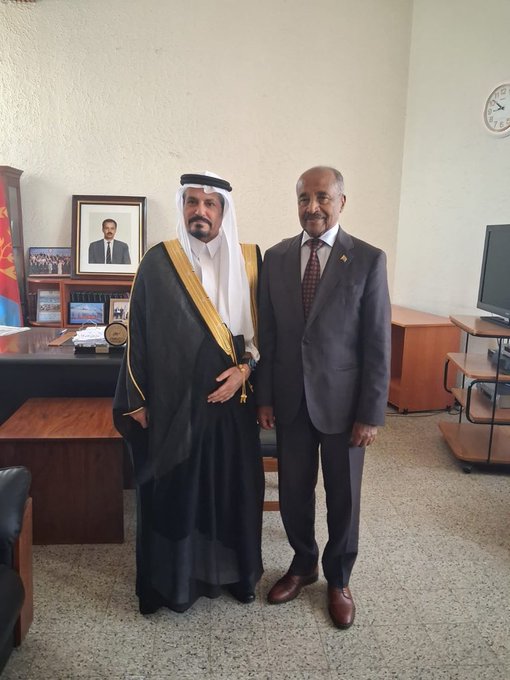
His Excellency the Eritrean Minister of Foreign Affairs, Mr. Osman Saleh, met today with His Excellency Ambassador Mu’shal bin Hamdan Al-Ruqayhe of the Kingdom of Saudi Arabia, at the headquarters of the Eritrean Ministry of Foreign Affairs.


____________


መንግስታት ሱዳንን ኤርትራን፡ ህዝቢ ትግራይ ብ 360 ዲግሪ ተዓጽዩ፡ ብማሕበረ ኤኮኖሚ ክደቕቕ ኣብ ዝግበር ሴራ፡ መፍትሒ ኮይኖም ንህዝቢ ትግራይ ክኽሕሱን ክድግፉን ምዃኖም ኣረጋጊጽና ኢና።


_____________


📣 Weekly rainfall forecast for 28 July - 04 August 2026
@IGAD_CPAC


_____________


#EritreanExcellence

Young Professionals at #FestivalEritreaUSA2026
Dawit "David" Mulugeta, President of Team Sports at Athletes First and one of the highest-paid NFL agents & Semhar Merkey, Senior Community & Marketing Manager at Yelp will discuss their road to success.
🇪🇷

Meleket
Member+
Posts: 5244
Joined: 16 Feb 2018, 05:08

Re: Gulf states advance 7 pipeline projects to bypass Strait of Hormuz, reshaping Africa's Red Sea trade route

Post by Meleket » 30 Jul 2026, 01:58

እንታይ ዚብልዎ ቃል ኢዩ “ክኽሕሱ” ምባል፧፧፧ “ጠሪጣስ እንተትሓንከለይ” በሉ ቀዳሞት! ኤርትራ ንትግራይ ዀነ ኢትዮጵያ እትኽሕሶ ነገር የለን። ደግፉና ካልእ ከሓሱ ካልእ! ክንደይ ዜጋታትና ህይወቶምን ጥሪቶምን ትግራይ ተዳኽረሉ ኣብ ዝነበረት ኵናት ንዓመታት ተበዲሎም ከምዝነበሩ ዝረሳዕኩም ትመስሉ፡ እኒ ደብረጽዮን ገብረሚካኤል! መገሰም ጥረ ካድር ወያነ ሃይለ ደደቢት ዘዳኽረሉ “ኸሓሱ” ዚብል ዘረባ ብዓይኒ ኤርትራዉያን ደያኑ ማእከልን መስመርን ክንዲ አድሪኳ ትኹን ሓቕነትን ቕቡልነትን የብሉን! ንደጋገፍ ምባል ኢያ እታ ቅንዕቲ ቃል። ከምዚ ኣብ ታሕቲ ዝገለጽናዮ ህንዲን ሃገርናን ኣብ ጽላት ጥዕና ዚገብራኦ ማለት’ኡ!
Zmeselo wrote:
29 Jul 2026, 14:16

መንግስታት ሱዳንን ኤርትራን፡ ህዝቢ ትግራይ ብ 360 ዲግሪ ተዓጽዩ፡ ብማሕበረ ኤኮኖሚ ክደቕቕ ኣብ ዝግበር ሴራ፡ መፍትሒ ኮይኖም ንህዝቢ ትግራይ ክኽሕሱን ክድግፉን ምዃኖም ኣረጋጊጽና ኢና።

Please wait, video is loading...
ዕላዊ ምድግጋፍ ድማ ብከምዡይ ይግለጽ! ኣብዚ ምስሊ ተገሊጨን ዘለዋ ክብርቲ ተጋዳሊት ሚንስተር ሚኒስትሪ ጥዕና ሃገረ ኤርትራ ወ/ሮ ኣምና ኑርሁሸን ኢየን! ዕድመን ምሉእ ጥዕናን ድማ ንምነየለን።

Post Reply